
#NNPA BlackPress
Davis, Clarke, Jackson, Kelly Create Caucus for Predominantly Black Institutions
Predominantly Black Institutions represent an increasing cadre of 4-year and 2-year institutions that educate urban and rural Black students whose personal and financial situations limit their ability to pursue higher education in many states On Wednesday, Representative Danny K. Davis (D-IL), Representative Yvette D. Clarke (D-NY), Representative Jonathan Jackson (D-IL), and Representative Robin Kelly (D-IL) […]
The post Davis, Clarke, Jackson, Kelly Create Caucus for Predominantly Black Institutions first appeared on BlackPressUSA.

Predominantly Black Institutions represent an increasing cadre of 4-year and 2-year institutions that educate urban and rural Black students whose personal and financial situations limit their ability to pursue higher education in many states
On Wednesday, Representative Danny K. Davis (D-IL), Representative Yvette D. Clarke (D-NY), Representative Jonathan Jackson (D-IL), and Representative Robin Kelly (D-IL) announced the establishment of a new Congressional Caucus focused on educating policymakers and uplifting the needs of Predominantly Black Institutions.
The Congressional Predominantly Black Institutions Caucus will unite policymakers who share the goal of understanding and advancing policies to support PBIs.
PBIs were established in 2007 via P.L. 110-84, the College Cost Reduction and Access Act, to expand access to important federal grants to assist institutions with limited institutional wealth to include colleges and universities serving large percentages of low-income African-American students.
Prior to 2007, these support grants assisted only a subset of institutions that educate low-income students who are underrepresented in higher education, including: Alaska Native and Native Hawaiian-Serving Institutions; Hispanic Serving Institutions; Historically Black Colleges and Universities (HBCUs); and Tribally Controlled Colleges and Universities.

The 2007 law created grants for PBIs, Asian American and Native American Pacific Islander-Serving Institutions, and Native American-Serving, Non-tribal Institutions to better support low-income and minority students.
Rep. Davis, Senator Barack Obama (D-IL), and Rep. Major Owens (D-NY) championed the legislation to establish PBIs because these under-funded institutions that serve hundreds of thousands of students could not receive institutional aid as similar colleges. Although there were grants to support the important work of HBCUs, PBIs cannot be HBCUs because HBCUs must have experienced affirmative discrimination by the federal government prior to the enactment of the Civil Rights Act of 1964. Thus, Congress changed the Higher Education Act to better assist under-funded colleges in graduating low-income minority students.
PBIs represent an increasing cadre of four-year and two-year institutions that serve as the access point for a growing number of urban and rural Black students whose personal and financial situations limit their ability to pursue higher education in many states.
There are approximately 110 such institutions that serve over 480,000 students. These institutions have minimal institutional wealth and serve a population of students who are low-income, minority, and first-generation, and whose personal finances present special challenges to educational success.
PBIs are required to meet stringent eligibility requirements related to student enrollment, family income, institutional wealth, and percentage of minority students. The PBI Caucus will work to help policymakers understand the needs of PBIs so that policies better assist these important institutions.
“Predominantly Black Institutions play an essential role in educating Black students in Chicago and across the country,” said Rep. Davis. “I am proud that my work to create PBIs helped bring over $45 million to the PBIs in Chicago, including: Chicago State University; Kennedy-King College; Malcolm X College; Olive-Harvey College; Prairie State College; and South Suburban College. I am pleased to join with Reps. Clarke, Jackson, and Kelly to establish the PBI Caucus to help legislators understand the importance of these colleges and universities and to advance policies to help these institutions and their students thrive.”
“For decades, Predominantly Black Institutions have served to empower students of color with an equitable and quality education,” said Rep. Clarke. “I’ve long fought to ensure PBIs have the funding they need to support our nation’s future leaders and take great pride in my work to secure more than $31 million in funding for New York PBIs, including the City University of New York, Medgar Evers College, Borough of Manhattan Community College, Metropolitan College of New York, and others. As members of Congress, we have a moral responsibility to support these colleges for the students who rely on them, and I am honored to stand alongside my colleagues in the creation of this critical PBI Caucus.”
“Black Americans deserve institutions of higher learning that are focused on helping them grow and thrive,” said Rep. Jackson. “That’s why I’m so excited to join my esteemed colleagues to form the first congressional caucus whose sole goal is to advance policies to support Predominantly Black Institutions. Chicagoland is home to a number of these scholarly institutions, and I look forward to working to aid and uplift them and other PBIs across the country.”
“I’m proud to support Predominantly Black Institutions across the nation and at home in the Chicagoland area. PBIs foster Black student success, offer direct support to first-generation and low-income students, and address some of the most pressing challenges facing Black students,” said Congresswoman Robin Kelly. “I am happy to join with Reps. Davis, Clarke, and Jackson to establish the PBI Caucus to advance policies that support these institutions and ensure that their students can achieve their dreams.”
Organizational Quotations:
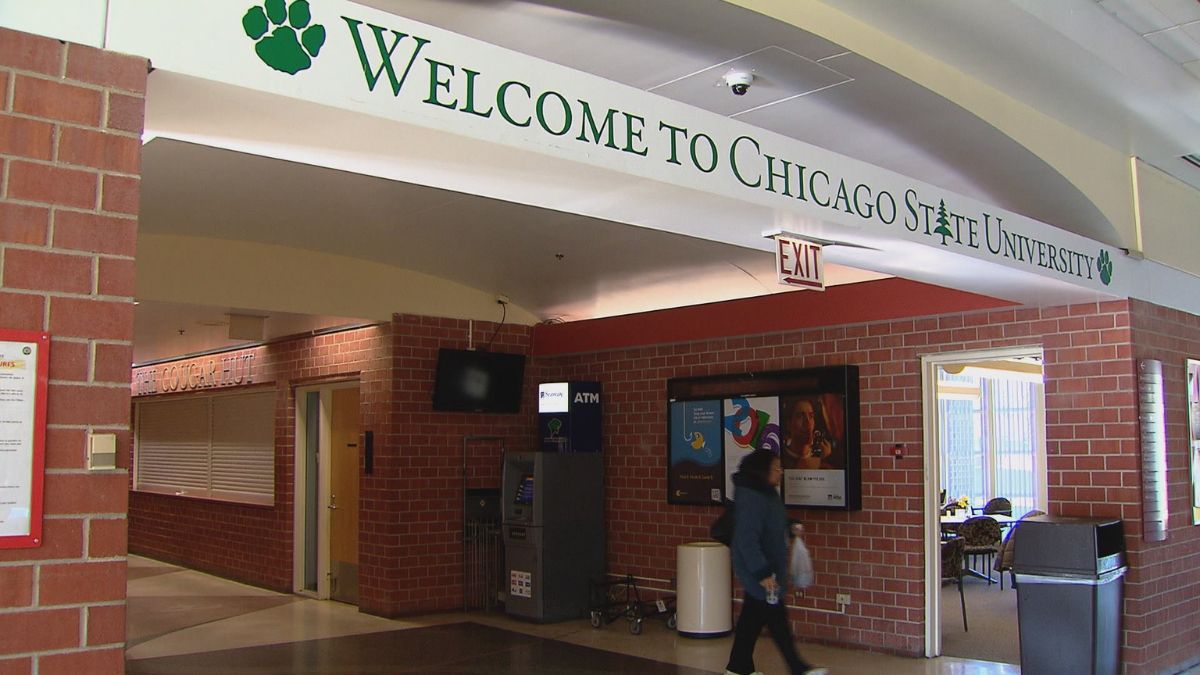
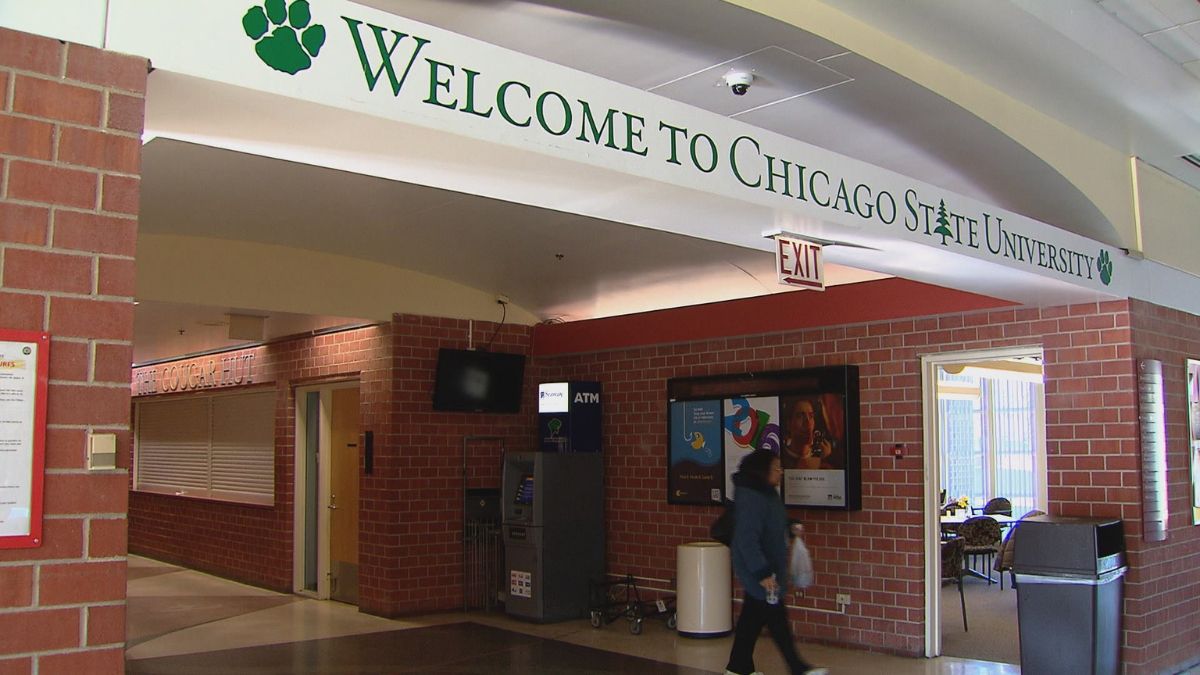
Chicago State University
“We want to thank Reps. Davis, a Chicago State University alumnus, and Clarke, Jackson, and Kelly, for their leadership in forming the Congressional Predominantly Black Institutions Caucus, lifting up the importance of PBI institutions in supporting Black students in higher education all across the nation,” said Zaldwaynaka (“Z”) Scott, Esq., President of Chicago State University. “Minority Serving Institutions play an important role in providing college access to millions of students, often the first in their family to attend college, and the new PBI caucus will aid in bringing needed federal focus to the vital priorities which are unique to this important classification of MSIs.”
Complete College America
“Predominantly Black Institutions are a critical part of our nation’s college completion strategy, creating educational and economic opportunity for learners who have been historically underserved by higher education in America. Complete College America is proud to work closely with numerous PBIs who have been industrious in their work to level the playing field for Black students across the US. Supporting PBIs and providing these institutions and their students with resources and tools tailored to the specific needs of their campus communities will advance local, state, and national goals to educate and train a skilled, smart, and engaged future workforce.” – Yolanda Watson Spiva, President, Complete College America
Kennedy-King College, City Colleges of Chicago
“Funding from PBI grants has allowed Kennedy-King College to build essential systemic supports to ensure positive academic and economic outcomes for our Black students, who comprise over 70% of our student population,” said Dr. Katonja Webb Walker, President of Kennedy-King College. “The flexible nature of these funds leverages our ability to deploy innovative and responsive solutions in ways that traditional funding sources do not. We are truly appreciative of Congressman Davis, Congressman Jackson, Congresswoman Kelly, and Congresswoman Clarke for their continued support of the needs of our students.”
Malcolm X College, City College of Chicago
“PBI funding has served as a critical vehicle for community colleges to eliminate barriers to access, resolve equity issues and support students in successfully completing their educational objectives. Malcolm X College has received nearly $7M in PBI funding to help Black students realize the American dream. My deep appreciation goes to U.S. Reps Danny K. Davis, Yvette Clarke, Jonathan Jackson and Robin Kelly for their advocacy and support of our students.” – David A. Sanders, President, Malcolm X College, one of the City Colleges of Chicago
Medgar Evers College, City University of New York (CUNY)
“I am pleased Congressman Danny K. Davis (D-IL), and our Congresswoman Yvette D. Clarke, of the U.S. House of Representatives (Medgar Evers College’s Representative), along with House of Representatives Jackson (D-IL), and Kelly (D-IL), established a new Predominantly Black Institutions (PBI) Caucus to educate policymakers about PBIs and the great work that PBIs do in positively impacting the social mobility index. Because PBIs serve some of the nation’s neediest students, it is critical that these institutions are provided with adequate resources to positively impact student success and contribute to the knowledge economy of this nation. Many thanks to these Representatives,” said Dr. Patricia Ramsey, President of Medgar Evers College-CUNY
National Association for Equal Opportunity in Higher Education (NAFEO)
Lezli Baskeville, President & CEO of NAFEO, the membership and advocacy association for all HBCUs and PBIs, is especially grateful to Congressman Danny Davis and the other Members of Congress who joined him in establishing a Congressional PBI Caucus. Baskerville recalls, “With leadership from Congressman Davis and then-Congressman Major Owens of New York, in 2004, NAFEO began leading the advocacy group effort that resulted in passage of the legislation establishing a grant program for under-resourced institutions that educate disproportionate of low-income Black Americans. The establishment of PBIs, as part of the class of American colleges and universities known as Minority Serving Institutions, assured that America’s richly diverse higher education system would open wider the doors of opportunity for Black Americans of fewer financial means for whom a high education might not otherwise be possible. Since then, as the ranks of champions for PBIs swelled with unstinting leadership from Reps. Davis, Yvette Clarke (NY), Robin Kelly (IL), and Jonathan Jackson (IL), funding for PBIs has increased but it still lags behind others in its class. The PBI Caucus will provide a potent vehicle through which to raise the volume and expand the ranks of those who will relentlessly advocate for more equitable congressional funding and other investments in PBIs. NAFEO will continue to provide leadership in this vital next step toward equity for PBIs.”
Olive-Harvey College, City Colleges of Chicago
“As a leader of a predominantly Black institution, I would like to thank the U.S. Representatives for creating the PBI Caucus to advance policies that improve Black student retention and graduation rates,” said Dr. Kimberly Hollingsworth, President of Olive-Harvey College (OHC). “Their leadership has been instrumental in increasing college access for Black students and has helped OHC recruit and financially support Black students as they reach their educational goals.”
Prairie State College
“There are not enough words to express my personal gratitude, and the gratitude of the Prairie State College community, to Reps. Davis, Clarke, Jackson, and Kelly for their formation of the PBI Caucus. Rep. Kelly is a resident of our district and a long-time supporter of our work. As a former faculty member at PSC, she knows that we, and other PBI’s, are on the front lines of teaching the next generation of Black and low-income scholars, while simultaneously meeting the workforce needs of our community and local employers.” – Dr. Michael D. Anthony, President of Prairie State College
South Suburban College
“At South Suburban College, we support the creation of the Congressional Predominantly Black Institutions Caucus, extending our appreciation to Representatives Davis, Clarke, Jackson, and Kelly for championing Predominantly Black Institutions. These institutions are vital in offering accessible higher education, particularly for marginalized students, and are often a gateway to the collegiate journey for minority and low-income populations. As a dedicated institution to student achievement, we recognize the invaluable role PBIs play in promoting educational equity. SSC looks forward to collaborating with the PBI Caucus, striving to advance policies that empower PBIs in their mission to deliver high-quality education.” – Dr. Lynette Stokes, President of South Suburban College
Thurgood Marshall College Fund (TMCF)
“We extend our sincere thanks and congratulations to Representatives Davis, Jackson, Clarke and Kelly on the establishment of the Congressional Predominantly Black Institutions (PBI) Caucus,” said Thurgood Marshall College Fund (TMCF) President and CEO Dr. Harry L. Williams. “PBIs play a critical role in educating Black Americans, helping to close the racial wealth gap and educating the diverse workforce needed to ensure America’s global competitiveness. TMCF is proud to represent Chicago State University, Medgar Evers College and York College, three PBIs that do the tremendous work everyday of serving the underserved and we look forward to working closely with the new PBI Caucus for the betterment of these institutions and their students.”
The post Davis, Clarke, Jackson, Kelly Create Caucus for Predominantly Black Institutions appeared first on Chicago Defender.
The post Davis, Clarke, Jackson, Kelly Create Caucus for Predominantly Black Institutions first appeared on BlackPressUSA.











#NNPA BlackPress
Lock In Car Price: Avoid Dealer Payment Traps!
Watch the long-form video https://youtu.be/YANxGwD2CjI Don’t get swayed by monthly payments! Always settle the out-of-the-door price first, including all fees. Only then discuss monthly payments, terms, and potential add-ons. #AutoNetwork #CarBuyingTips #CarSales #DealershipSecrets #Negotiation
The post Lock In Car Price: Avoid Dealer Payment Traps! appeared first on BlackPressUSA.


Watch the long-form video
Don’t get swayed by monthly payments! Always settle the out-of-the-door price first, including all fees. Only then discuss monthly payments, terms, and potential add-ons. #AutoNetwork #CarBuyingTips #CarSales #DealershipSecrets #Negotiation
The post Lock In Car Price: Avoid Dealer Payment Traps! appeared first on BlackPressUSA.

#NNPA BlackPress
Sell Your Car: Get Offers BEFORE Visiting Dealerships!
Watch the video https://youtu.be/zJF32l2Fz8I. Before you step onto a lot, get a written offer for your trade-in from CarMax, Carvana, or even a competing dealer. Make them beat it, or they lose your business. Get that number on paper, not just in your head. #AutoNetwork #TradeInTips #CarBuying #Negotiation #SmartShopping
The post Sell Your Car: Get Offers BEFORE Visiting Dealerships! appeared first on BlackPressUSA.

Watch the video
Before you step onto a lot, get a written offer for your trade-in from CarMax, Carvana, or even a competing dealer. Make them beat it, or they lose your business. Get that number on paper, not just in your head. #AutoNetwork #TradeInTips #CarBuying #Negotiation #SmartShopping
The post Sell Your Car: Get Offers BEFORE Visiting Dealerships! appeared first on BlackPressUSA.
#NNPA BlackPress
The Conversation With Al McFarlane 6/23/26
The conversation continues.
The post The Conversation With Al McFarlane 6/23/26 appeared first on BlackPressUSA.

The conversation continues.
The post The Conversation With Al McFarlane 6/23/26 appeared first on BlackPressUSA.

WORK FROM HOME
Home-based business with potential monthly income of $10K+ per month. A proven training system and website provided to maximize business effectiveness. Perfect job to earn side and primary income. Contact Lynne for more details: Lynne4npusa@gmail.com 800-334-0540



Oakland Museum Presents Landmark Retrospective Celebrating Beloved Bay Area Artist Mildred Howard

Ferry Fares to Increase July 1 as Ridership Hits Record Highs

Stop the Hate Symposium Brings Oakland Together Through Dialogue, Partnership, and Community Healing

Six Months in, Probate Reform Coalition Marks Progress in Protecting Elders From Financial Abuse

A Long Time Coming: School District Kicks Off Massive $97 Million Renovation of West Oakland’s McClymonds High School

IN MEMORIAM: Oakland Dance Legend Reginald Ray-Savage, 67

UC Berkeley Named Top Public University in the U.S. and No. 7 in the World by ‘U.S. News’

NCBW-OBAC Champions Black Women Entrepreneurs at Business en Blaque Expo

Lock In Car Price: Avoid Dealer Payment Traps!

Sell Your Car: Get Offers BEFORE Visiting Dealerships!

The Conversation With Al McFarlane 6/23/26

Media Monday 6/22/26

LIVE! ASK ALMA! — TUES. 6.23.26 7PM EST

Car Buying Secrets: 4 Hidden Checks Before You Sign!

Book Review: Books for College-Bound Students

Q&A with Steven Bradford: Why He Wants Your Vote for California Insurance Commissioner

Oakland Mayor Pushes Charter Overhaul to Clarify Roles in City Government, Increase Accountability and Improve Service Delivery

The Ladies of Delta Sigma Theta Hold Day of Advocacy at the Capitol in Sacramento

OPINION: The Fire of Oakland’s Justin Jones

California Launches Free Diaper Program for Newborns Statewide

How Is AI Affecting California? The State Wants You to Share Your Story

Rep. Kamlager-Dove Introduces Bill to Protect Women in Custody After Reports Detailing Miscarriages and Neglect

More and More, Black Californians Are Worried About Rising Costs of Housing, Energy, Food and Gas

Asm. Jackson Bill Requiring Anti-Hate Speech Training for Calif. Public Officials Sent to “Suspense File”

After 10-Year Wait, Fillmore Heritage Center Reopens in San Francisco

Oakland Post: Week of May 20 – 26, 2026

Oakland Post: Week of May 27 – June 2, 2026

Oakland Post: Week of June 3 – 9, 2026

Advocates Rally at State Capitol to Demand Heat Protections for Incarcerated People; More Funding for DV Survivors
The Conversation With Al McFarlane 6/23/26
Media Monday 6/22/26
LIVE! ASK ALMA! — TUES. 6.23.26 7PM EST
Car Buying Secrets: 4 Hidden Checks Before You Sign!

Is This 550 HP Charger Worth YOUR Money? AutoNetwork Review

Celebrating Juneteenth – Frederick Douglass on education and resistance

LIVE! — ASK ALMA! — TUES. 6.19.26 7PM EST

Hyundai Ioniq 5 Parking, Safety, and 360 View #shorts

2025 Ioniq 5 New Wiper & Powerful Performance! #shorts

Electric SUV Range: Is 259 Miles Enough? #shorts

EV Charging: How Fast Can You Charge an Electric Vehicle? #shorts

Biometric Cooling… Messaging Seats…Come on! 2025 Infiniti QX80 Autograph 4WD

Charged Up: Witness the Magic of a Fully Electric Car! #shorts

Range Rover Sport PHEV Included…: See What’s Inside This Luxury SUV! #shorts

Invisible Hood View: Perfect Parking with X-Ray Vision! #shorts
-
 Art3 weeks ago
After 10-Year Wait, Fillmore Heritage Center Reopens in San Francisco
-
 Activism3 weeks ago
Oakland Post: Week of June 3 – 9, 2026
-

 #NNPA BlackPress3 weeks ago
5 Cleveland Police Officers Injured, Gunfire Erupts During East Side Pursuit
-

 #NNPA BlackPress3 weeks ago
2026 World Cup is Here and Atlanta is Ready For It
-

 Arts and Culture3 weeks ago
COMMENTARY: Black Music is the Sound of Black Freedom: Let Us Reclaim Both This Juneteenth
-

 #NNPA BlackPress3 weeks ago
COMMENTARY: Using Art, Healing, And Community to Transform Mental Health Dialogue
-

 Art3 weeks ago
Oakland Director Boots Dazzles Once Again in ‘I Love Boosters’
-

 #NNPA BlackPress3 weeks ago
Venus Williams Calls a Sabalenka Exit a Tragedy
