
Activism
Officer Fired for Shooting and Killing Sean Monterrosa Has Termination Overturned
Michael Rains, attorney for the Vallejo Police Officers’ Association, said that “several credible sources” have told him that Detective Jarrett Tonn’s termination has been overturned in arbitration.

By Katy St. Clair
Bay City News
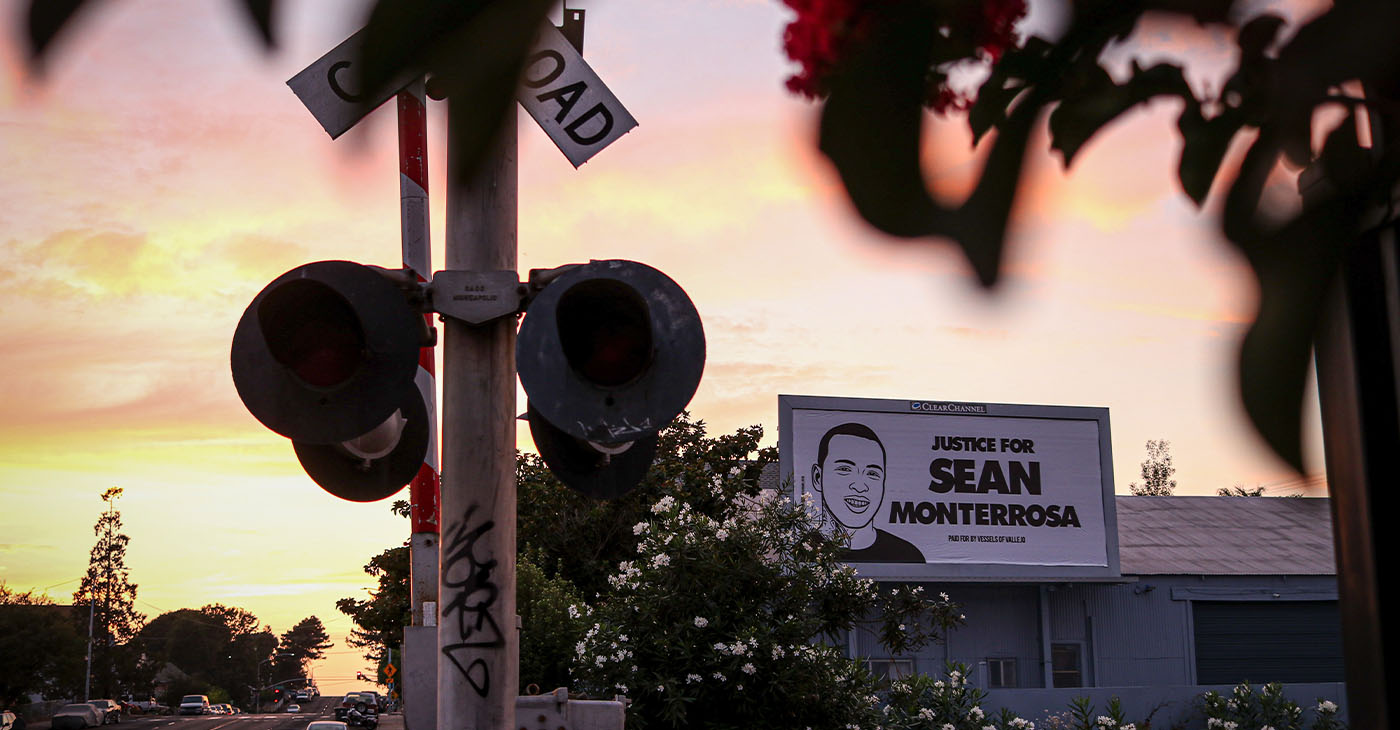
The officer who was fired for shooting and killing a man during George Floyd protests in Vallejo in 2020 could be getting his job back after prevailing in arbitration.
Michael Rains, attorney for the Vallejo Police Officers’ Association, said that “several credible sources” have told him that Detective Jarrett Tonn’s termination has been overturned in arbitration.
Tonn was dismissed from the Vallejo force after he shot Sean Monterrosa, 22, of San Francisco, outside of a Walgreens store on Redwood Street during the early morning hours of June 2, 2020.
The Vallejo Police Department has not commented on whether Tonn will return.
Tonn and two other officers were responding to alleged reports of looting at the store in an unmarked pickup truck. Body camera footage shows Tonn, who is seated in the backseat of the vehicle, stick an AR-15-style assault rifle in between the two officers and fire five times through the windshield at Monterrosa as the police vehicle approached the store.
Monterrosa died a short time later.
Vallejo police have alleged that Tonn fired at Monterrosa because he mistook a hammer in Monterrosa’s sweatshirt pocket for the butt of a gun.
The office of California Attorney General Rob Bonta in May 2021 opened an investigation into the shooting, but there have been no updates in that case and Bonta’s office will not comment on open cases.
Tonn was at first placed on administrative leave for the shooting death, but was fired in 2021 by then-Chief Shawny Williams, who determined that Monterrosa was on his knees with his hands raised when he was shot.
Rains, who has represented two other officers fired by Williams — and prevailed — said the reinstatement of Tonn was the right decision. Rains said Sunday that Tonn applied a reasonable and lawful use of force in the Monterrosa case, and that Williams was wrong to terminate him.
“This is just three for three now with Williams,” he said, referring to the now three officers that have gotten their jobs back. “It demonstrates what a colossal failure he was as a chief in every respect. I’m delighted for Tonn, it’s deserved.”
Rains did not represent Tonn in this case.
But others see Monterrosa’s shooting death as a dark stain on a department known for years of shootings by officers.
The law office of John Burris filed a civil rights suit against the city of Vallejo and its Police Department for Monterrosa’s death, citing alleged tampering with evidence and acting negligently by not reprimanding or re-training Tonn previously despite a “shocking history of shooting his gun at civilians.”
Burris’ office is no longer representing the case and the family is now represented by new counsel, John Coyle, with a jury trial scheduled for January 2025, according to court records.
Nevertheless, Burris commented Sunday on Tonn’s reinstatement, saying he was disappointed but not surprised at the move, because arbitrators in these cases are “biased” toward the police.
“Even though police may have committed in this case an outrageous act, it’s not surprising that that has happened, and it happens more times than not,” he said.
When asked if he was confident that Bonta would file charges against Tonn, Burris chuckled and said that he would wait and see.
“I would not hold my breath,” he said.
Tonn had previously shot three people over five years in Vallejo while on duty, none of which were found to have had firearms, a tenth of the 32 total shootings by the department in one decade, according to attorney Ben Nisenbaum.
Vallejo civil rights attorney Melissa Nold, who represents families of people killed by Vallejo police, said the decision to bring back Tonn had been in the works the minute he was terminated by Williams.
“Unfortunately, I am not surprised at this troubling turn of events because a whistleblower notified me last year via email that Tonn was working a deal to get his job back once they threatened and ran off Chief Williams,” Nold said.
Williams resigned abruptly last November. Williams was repeatedly criticized by the Vallejo Police Officers’ Association, the offices’ union, which had previously voted “no confidence” in him and blamed him for everything from attrition to high crime in the city. But advocates for the families of those killed by police said Williams had been making progress in cleaning up a department that had gained international attention for being violent. During Williams’ tenure, there were no police shootings after the Monterrosa death.
Nold places part of the blame on Tonn’s return on the city, which she said “made no effort” to support his termination. Nold said they are still expecting Bonta to file criminal charges against Tonn and there will be a push to get him decertified as an officer as well.
“He cannot ever go back out onto the streets of Vallejo,” she said. “The liability he would create by being here is astronomical, but sadly no one in the city attorney’s office is smart enough to understand and/or are too corrupt and rotten to care.”
In May, a Solano County judge found that the Vallejo City Attorney’s Office broke the law by deliberately destroying evidence in cases related to police shootings.
The city of Vallejo did not respond to a request for comment.
Members of the family of Monterrosa and their advocates are planning on showing up to the Vallejo City Council meeting on Sept. 12 to protest the return of Tonn, Nold said.
The family will also be holding a “Justice 4 Sean Monterrosa” press conference on Thursday at 11 a.m. at Vallejo City Hall, 555 Santa Clara St., Vallejo.





Activism
Oakland Post: Week of September 23 – 29, 2026
The printed Weekly Edition of the Oakland Post: Week of September 23 – 29, 2026

To enlarge your view of this issue, use the slider, magnifying glass icon or full page icon in the lower right corner of the browser window.
Activism
Oakland Post: Week of September 16 – 22, 2026
The printed Weekly Edition of the Oakland Post: Week of September 16 – 22, 2026
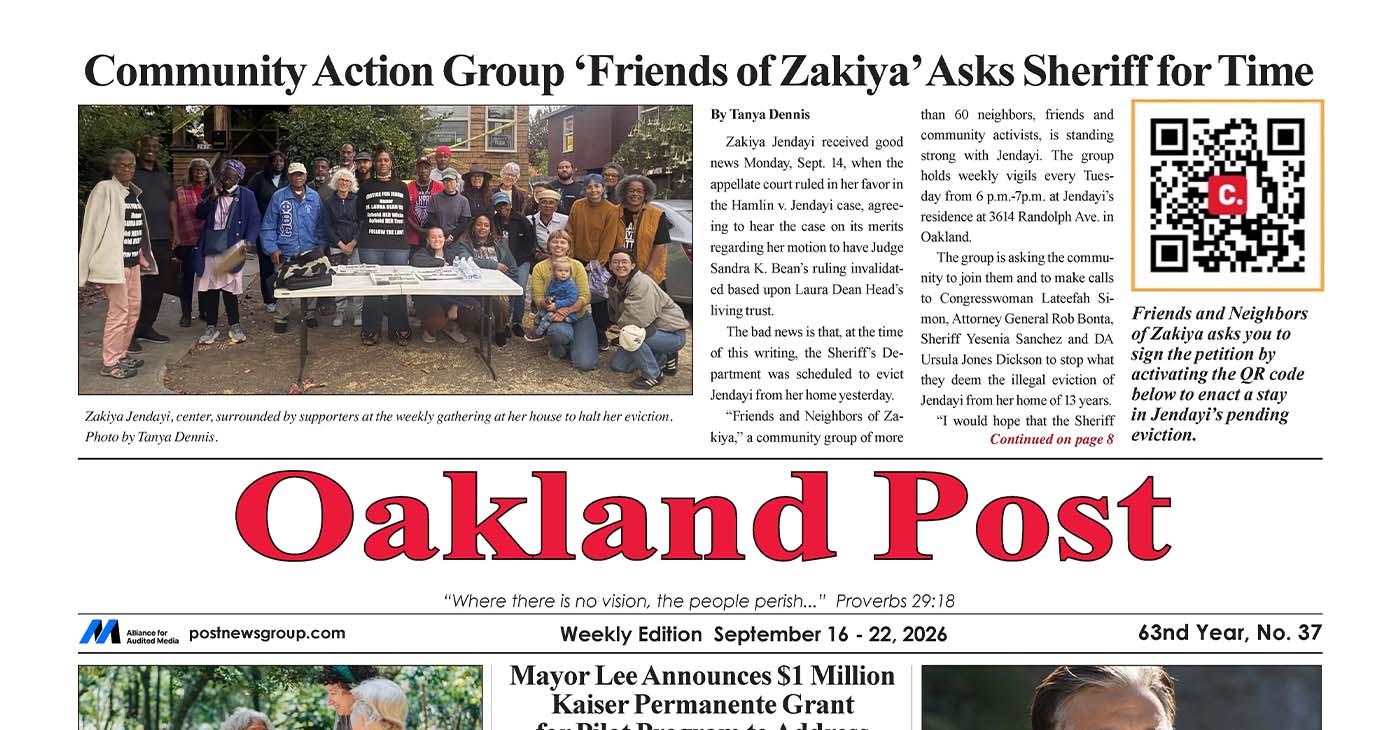
To enlarge your view of this issue, use the slider, magnifying glass icon or full page icon in the lower right corner of the browser window.
Activism
Oakland Post: Week of September 9 – 15, 2026
The printed Weekly Edition of the Oakland Post: Week of September 9 – 15, 2026

To enlarge your view of this issue, use the slider, magnifying glass icon or full page icon in the lower right corner of the browser window.



Asm. Corey Jackson Announces Launch of 24-Hour Childcare in His District

IN MEMORIAM: The Rev. Leon “Sonny” Clark, Longtime Orange County Pastor and Community Leader, Dies at 72

Poll: Becerra Widens His Lead Over Hilton; Californians Split on Wealth Tax

From Historic Memories to New Possibilities: Oakland Celebrates Coliseum 60

County Office of Education Says OUSD Finances Are Getting Healthier, Materially Stronger

LIVE FREE Sunday Dinner Brings Faith, Fellowship and Civic Conversation to Oakland

Remembering Chauncey Bailey as Student Journalists Face Threats to Truth-Telling

BLACspace Cooperative Invites Bay Area to Experience Oakland’s Black Cultural Ecosystem Through a BLAC Map Tour + Party

In Wake of Death on Doorstep, Williams Chapel Baptist Church Calls for Better Care, Funding for Unhoused

Oakland Centenarian Nuna McKee Honored!

Caribbean Nations Produce Action Plan Calling for UK Reparations Over Slavery

Oakland Post: Week of September 23 – 29, 2026

Doulas Are Helping Black California Moms Navigate Pregnancy–Even as High Mortality Rates Persist

Newsom Signs Addictive Social Media Law to Protect Kids

On Your November Ballot: Prop 38 Would Allocate $8.4 Billion to Immunology and Immunotherapy Funding

Less Affluent School Districts, Including Sacramento City, Face Threat of State Takeover

ESSAY: California Can Close Its Colorectal Cancer Gap

California Hispanic Chambers of Commerce Unveils: ‘Powering the Future’ Theme for 47th Annual Statewide Convention

Four Candidates, Including Incumbent Barbara Lee, Qualify for Oakland Mayor’s Race

Oakland Post: Week of August 12 – 18, 2026

From Blueprint to Breakthrough: Tackling Affordable Housing in Oakland

Oakland Observes Black August with Block Parties, Film Showings, Workshops

COMMENTARY: Why Local School Tax Measure G1 Will Not Be on the November Ballot

Standoff for Justice: Our Homes Are Worth Fighting For

Returning to Its Roots, the Oakland Black-Eyed Pea Festival Partners with the Freedom Farmers Market Sept. 12

Oakland Post: Week of August 26 – September 1, 2026

NPRC Scores First Advocacy Victory: David Shaw Finally Gets His Wish to ‘Go Home’

Frontier Airlines’ Return to Oakland Airport Brings Flights, Jobs and Opportunity

Gubernatorial Candidate Steve Hilton Blasts California New Tire Rules; Newsom Hits Back

Chef Sharon Lee Blends Culinary Excellence, Education and Empowerment

The Conversation With Al McFarlane 6/23/26

Media Monday 6/22/26

LIVE! ASK ALMA! — TUES. 6.23.26 7PM EST

Car Buying Secrets: 4 Hidden Checks Before You Sign!

Is This 550 HP Charger Worth YOUR Money? AutoNetwork Review

Celebrating Juneteenth – Frederick Douglass on education and resistance

LIVE! — ASK ALMA! — TUES. 6.19.26 7PM EST

Hyundai Ioniq 5 Parking, Safety, and 360 View #shorts

2025 Ioniq 5 New Wiper & Powerful Performance! #shorts

Electric SUV Range: Is 259 Miles Enough? #shorts

EV Charging: How Fast Can You Charge an Electric Vehicle? #shorts

Biometric Cooling… Messaging Seats…Come on! 2025 Infiniti QX80 Autograph 4WD

Charged Up: Witness the Magic of a Fully Electric Car! #shorts

Range Rover Sport PHEV Included…: See What’s Inside This Luxury SUV! #shorts

Invisible Hood View: Perfect Parking with X-Ray Vision! #shorts
-
 Business4 weeks ago
Frontier Airlines’ Return to Oakland Airport Brings Flights, Jobs and Opportunity
-
 Business4 weeks ago
Gubernatorial Candidate Steve Hilton Blasts California New Tire Rules; Newsom Hits Back
-
 Business4 weeks ago
Chef Sharon Lee Blends Culinary Excellence, Education and Empowerment
-

 Black History4 weeks ago
Jackie Wright Champions Bay Area Stories, Filmmakers and Cultural Institutions
-

 Community4 weeks ago
Big City Mayors Ask for “Yes” Vote on Housing Bond Measure; Conservatives Say “No”
-

 Education4 weeks ago
Gov. Newsom’s Latest Appointees Include Sacramento Advocate for Formerly Incarcerated Students; State’s New Tech Chief
-

 Business4 weeks ago
Oakland Coliseum Project Opens Door for Small Businesses to Build Bigger
-

 Community2 weeks ago
Misnamed ‘Parent’ PAC Seeks to Influence Oakland School Board Elections
