
#NNPA BlackPress
Black College Students Lead Movement to Eliminate Bias in Tech
NNPA NEWSWIRE — “Civics of technology derives from a lot of related concepts, but it’s about how we can use technology to further civic engagement, the democratic process, and social justice — especially anything that will galvanize a group of individuals to create social good,” Cierra Robson, associate director of the Ida B. Wells Just Data Lab, explained.
The post Black College Students Lead Movement to Eliminate Bias in Tech first appeared on BlackPressUSA.

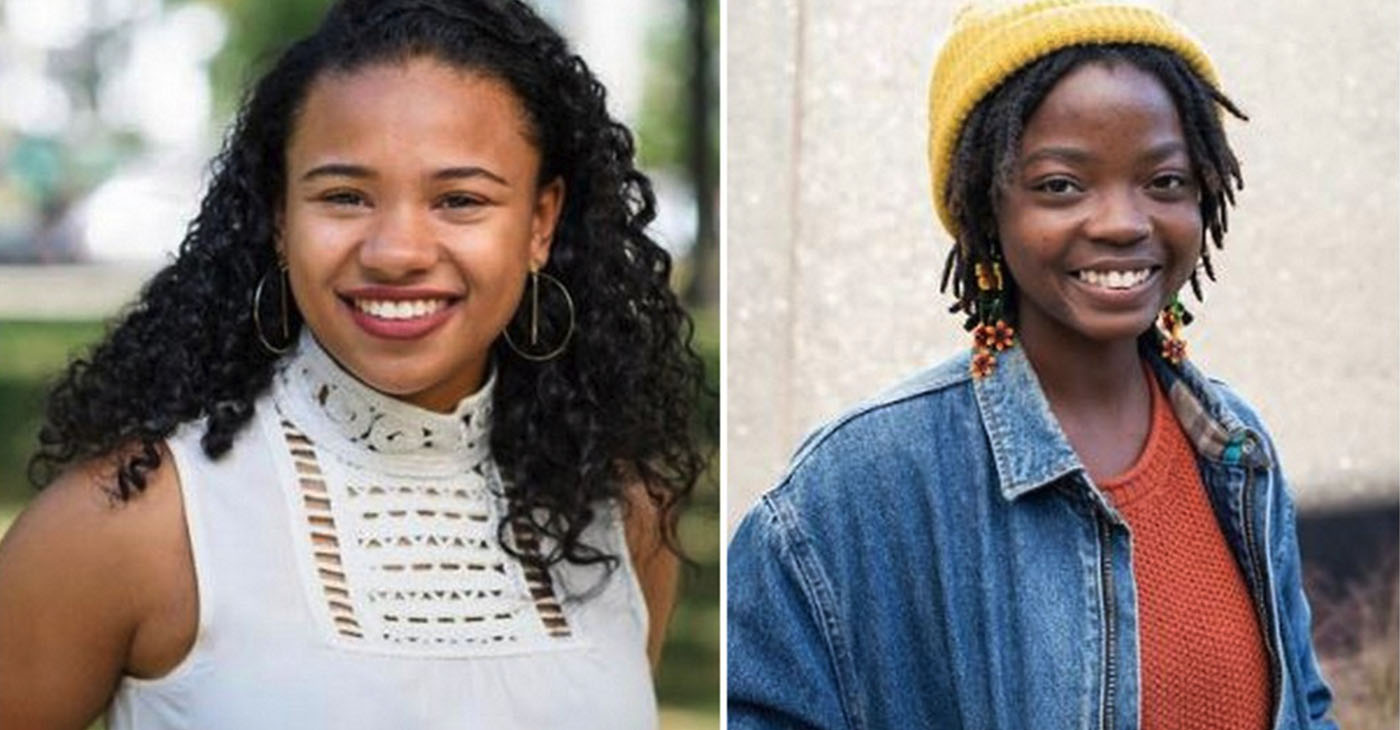
By Nadira Johnson | Word in Black | The Afro
From self-driving cars that can’t detect folks with darker skin to keep from running them over, to digital assistants like Siri that have trouble understanding non-White accents, technology is biased, and it is hurting Black folks.
“A lot of people will look toward technology as the end all, be all solution to a lot of social issues, but often social issues are not solved by technology, and technology often exacerbates these social issues,” said Cierra Robson, associate director of the Ida B. Wells Just Data Lab which brings students, educators, and activists together to develop creative approaches to data conception, production, and circulation.
Founded in 2018 and led by Ruha Benjamin, a sociologist and professor in the Department of African American Studies at Princeton University, the lab focuses on finding ways to “rethink and retool the relationship between stories and statistics, power and technology, data and justice.”
“Civics of technology derives from a lot of related concepts, but it’s about how we can use technology to further civic engagement, the democratic process, and social justice — especially anything that will galvanize a group of individuals to create social good,” Robson explained.

In her role at the lab, Robson works closely with Princeton students on a variety of projects that look at how technology bias is contributing to bias in all areas of our lives, from healthcare, to labor, and education.
Robson first became passionate about finding solutions to biased technology after learning about how the issue leads to violent over-policing.
“When I was an undergrad at Princeton, I had access to this entire wealth of resources that was kind of stuck in the university,” Robson said. “One of the biggest things that I wanted to do when the labs started in the summer of 2020 was figure out a way to get those resources from Princeton into the community, to people who needed them.”
And people do need this information, desperately, because biased technology is killing Black and Brown folks and contributes to higher rates of incarceration and injustice.
“Predictive policing technologies — there’s a whole bunch of them — but one of the ones I focus on a lot is that it predicts where crime is likely to happen in a given city, and that prompts police to go be deployed in those areas so that they can catch whatever crime might happen there,” Robson said. “What they base that data on is an algorithm that uses data on historic police interaction, but no one really stops to think that those historic police interactions are colored by all sorts of discriminatory processes.”
Robson points out that a recent study conducted by Aaron Chalfin, a criminologist at the University of Pennsylvania, found that in Southern cities with large Black populations the homicide rate did not change when more police presence was added. But, more officers made arrests for low-level offenses like alcohol-related infractions, “which are not typically seen as contributing to public safety.”
“The fact is that Black communities are historically over-policed even before the advent of these technologies and algorithms,” Robson explained. “When you feed the data that focuses on arrests only in Black communities into an algorithm that predicts where crime is likely to happen, what you are going to get out of it is that crime only happens in Black and Brown neighborhoods when that’s not true.
“As a result,” Robson said. “Police are deployed overwhelmingly to Black and Brown neighborhoods, and it creates this cycle where more data is being created because there are more police there. This obviously has negative impacts on people’s lives. From the waves of violent policing that we’ve seen for quite some time, it’s evident why you would not want police in your community all the time. There has also been chronic over-policing and under-protection. Just because police are in a neighborhood, does not equate to greater safety in that neighborhood.”
Through her work with the lab and the Civics of Technology conference, Robson hopes to inspire more students to ask critical questions about how data is sourced and how technology is used in Black and Brown communities so that they can use their newfound knowledge to create better practices in whatever fields of work and study they choose to venture in to.
“A lot of them will end up in politics, in the tech industry, as lawyers, doctors, and all sorts of things,” Robson said. “One of the best things that comes out of teaching students of all kinds about this work is that it ripples out in every single environment in our daily lives, whether that be the law, whether that be healthcare, whether that be worker justice and labor.”
Participants in the Ida B. Wells Just Data Lab might go on to earn a doctorate degree or work in the tech industry, but that isn’t required. Robson says if they end up working in another industry entirely, she wants students to be “able to take some of the tools that we teach them about — about fair design practices and questioning what it really means to have something be objective or questioning what it really means for something to be data-driven — into whatever area they’re going into in the future. Hopefully, if we can create enough students to do that, we are creating a new generation with a new awareness so that people are thinking twice about the technologies that they deploy and the data that they use in every area.”
To that end, in early August, the student members of the lab participated in Civics of Technology, a free, two-day virtual conference designed to bring the knowledge they’ve acquired while participating in the lab to the greater public.
Technology and education justice
During the virtual conference, Collin Riggins, a junior at Princeton and a research associate at the lab, and Payton Croskey, a senior at Princeton and creative content director for the lab, led “Reimagining Education Justice: Practices and Tools for Tech Freedom Schools,” a workshop which focused on education justice — from early childhood to college and beyond the traditional classroom. Their goal was to determine how technology can be used to promote better education practices for diverse students if it is used properly.
“The theme for this summer’s convention is Freedom Schools,” Croskey said, “Freedom Schools is where all of the research groups and products stem from. We are rooting ourselves in history before we try to build something new for the future.”
Freedom Schools were created in 1964 as entirely new schools specifically designed for the education and advancement of Black students. Supporters of these schools believed in paying attention to and meeting the unique needs of each individual child. Bringing that concept into the present day, Croskey and Riggins say that if we want to eliminate bias in education, we must similarly listen to and respond to the needs of the communities we wish to serve with technology.
We need to shift to “Thinking how we can build technology and community with those that the technology is seeking to serve,” Croskey said. “If we are building technology for young Black students in New York City, and we are saying that this is going to help them learn, then they also need to be part of that conversation and need to be included in that design.
“Technology is not going to be one size fits all,” Croskey said. “Especially in the education field, technology is going to need to be curated for a specific group and specific environments. Not pushing this one model that everyone needs to follow.”
“Although our goals are revolutionary, our work spawns from a long tradition of Black radical education,” Collins added. “We’re looking at the Freedom Schools, which decided in the summer of 1964 to create entirely different schools for Black students so they could learn frameworks for how to resist and how to function in daily life.”
“Across any institution, and even maybe across the world in general, there is a fixed approach to how you engage with technology,” Collins said. “One of the things the Lab does beautifully is allow people from different backgrounds and disciplines to come together in conversation. This has been very radical to me, especially at an institution like Princeton, which is very tech-driven and quantitatively driven. It’s nice to be able to engage with these concepts through art, or through storytelling, or through speculative fiction, and that not only be accepted but embraced. That inclusivity is rare.”
The two students have also used their time in the lab to focus on the use of surveillance in schools, which has significantly increased given the rising rates of school shootings. Although surveillance may prove useful in keeping some students safe from shooters, Croskey worries this will prove dangerous for Black students and students from other marginalized backgrounds.
“There is a lot of surveillance being used these days with the rise of school shootings. There is a lot of data being collected and a lot of tracking done on students who do not have the power to consent,” Croskey said. In addition, there are “Parents who are not being given the power to truly consent because they are not being given full explanations about how this data is being used or where it will be sent to.”
Their hope is that technology can be reimagined in a way that is “curated for a specific group and specific environments. Not pushing this one model that everyone needs to follow,” Croskey explains.
Connecting technological and environmental justice
It’s been a boiling hot summer with historic droughts ravaging the globe, but many people don’t often think about the connections between technology and environmental justice.
“When you look into it, there are a lot of ways that the technologies that we are using can be harmful to the environment,” said Kenia D. Hale, a fellow at Princeton’s Center for Information Technology. During the Civics of Technology conference, Hale, who is also a graduate of Yale University, led “Reimagining Environmental Justice: Practices and Tools for Tech Freedom Schools,” a session that explored the intersection of the two topics.
Hale says that although the energy needed for a single internet search or email is small, there are approximately 4.1 billion people, or 53.6 percent of the global population, who now use the internet, and the associated greenhouse gasses emitted with each online activity can add up. It turns out that the carbon footprint of our gadgets, the internet, and the systems supporting them account for about 3.7 percent of global greenhouse emissions. This is similar to the amount produced by the airline industry globally.
“I wanted to figure out ways to challenge the idea that technology is automatically better for the environment and spreading more awareness about the ways it can be quite harmful. People think there is no physical impact, but there is actually a lot of physical impact,” said Hale. “You can’t do anything without a laptop, so this isn’t to shame people into not buying one, but more so to spread awareness. Get engaged with the environmental organizations and activist groups that are in your city. It’s better to be more proactive in getting organized with our communities on how to collectively combat these things.”
Hale says that some questions that folks should be asking themselves when determining the environmental impact of a technological tool are who is mining the materials that go into your car, computer, or smartphone, and does the company that makes this product overly contribute to global pollution?
Learning more about the effects of technology on our lives
To learn more about how to spot technology bias and how to advocate for better data sourcing practices in your community, the lab’s research and resources page lists plenty of useful information.
In addition, the lab’s founder and director, Ruha Benjamin, has written extensively about the connections between technology and inequality. Her 2019 book “Race After Technology: Abolitionist Tools for the New Jim Code” explores how new technologies are framed as “benign and pure,” even though they perpetuate social inequities. The book, which was a 2020 winner of the Oliver Cromwell Cox Book Award (for anti-racist scholarship) from the American Sociological Association Section on Race & Ethnic Minorities also shares ideas on how we can combat these inequities.
In addition, “Black Power: The Politics of Liberation, by Kwame Ture and political scientist Charles V. Hamilton, which defines Black Power, presents insights into the roots of racism in the United States and suggests a means of reforming the traditional political process for the future through technology and other tools.
The post Black college students lead movement to eliminate bias in tech appeared first on AFRO American Newspapers.
The post Black College Students Lead Movement to Eliminate Bias in Tech first appeared on BlackPressUSA.














#NNPA BlackPress
NFL: Week Two Recap | Jalen Hurts did not fold; Caleb Williams exits game with injury
Philadelphia Eagles quarterback Jalen Hurts found Darius Cooper with nine seconds left for the game winning touchdown as his team beat the Tennessee Titans 24-20 in Nashville. Hurts finished the day 26/37 for 264 yards. He threw for two touchdowns and two interceptions. Prior to the final drive, the Eagles ran 25 plays for 45 […]
The post NFL: Week Two Recap | Jalen Hurts did not fold; Caleb Williams exits game with injury appeared first on BlackPressUSA.

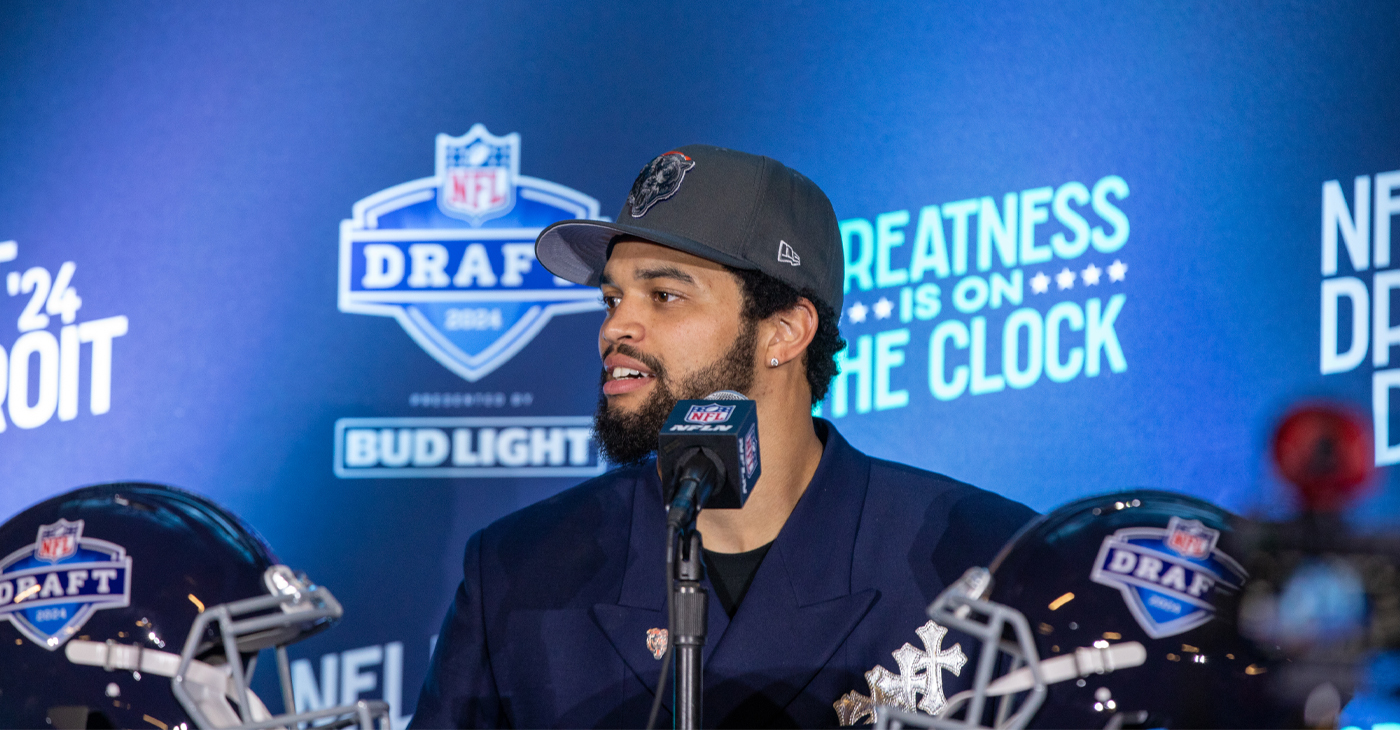
Philadelphia Eagles quarterback Jalen Hurts found Darius Cooper with nine seconds left for the game winning touchdown as his team beat the Tennessee Titans 24-20 in Nashville. Hurts finished the day 26/37 for 264 yards. He threw for two touchdowns and two interceptions.
Prior to the final drive, the Eagles ran 25 plays for 45 yards. During the final drive Hurts went 6-8 with 61 passing yards and the touchdown. Titans defensive tackle — and team captain — Jeffery Simmons said this week that the way to defend Jalen Hurts is to make him “play quarterback.”
Hurts said to Simmons after today’s game: “You started that sh**. I had to finish it.”
Running back Saquon Barkley suffered a stinger in the first half but he ultimately finished the game. He had four carries and nine yards and one catch for eleven yards. He will get an MRI for his injury, but admitted to Cameron Wolfe of the NFL Network he was fine.
Caleb Williams leaves game against Vikings with apparent lower-body injury
Chicago Bears quarterback Caleb Williams was helped off the field with a right leg injury with 7:42 remaining in the fourth quarter. Williams was down, writhing in pain after scrambling to his left. After departing the injury tent, Williams raised his right fist, acknowledging the crowd while expressing his frustration. Testing will commence on Monday to find out more details about his injury.
“We’ll know tomorrow,” Johnson admitted regarding Williams’ injury. “He’s in good spirits. He’s a team player.”
Williams finished the day with 138 passing yards and one interception.
“I’m actually happy it’s nothing with the knee — that was my first inclination,” Johnson said. “But, a hamstring could be pretty damaging as well. So, we’ll see. We’ll see how bad it is tomorrow and we’ll go from there.”
Bryce Young once again dominated the Falcons
Carolina Panthers quarterback Bryce Young is 5-1 against the Atlanta Falcons and is undefeated at Mercedes-Benz Stadium. Today, Young threw for 287 yards and three touchdowns as he led the Panthers to a 34-3 dismembering of the Atlanta Falcons. Georgia Tech alumnus Darren Waller caught two touchdowns and linebacker Devin Lloyd returned one of his two interceptions for a touchdown.
Cooper Rush started his second straight game for the Falcons and it did not go well. The partisan crowd voiced their displeasure after Rush completed 10/17 passes for 86 yards and two interceptions. Jack Strand entered the game for Rush prompting cheers from the Falcons fans. The rookie threw a pick-six on his first career pass attempt. Strand was the first QB to accomplish that feat since Sam Darnold in 2018 and is the first Falcons player to do that since Brett Favre in 1991. Strand finished the day with 59 passing yards and 16 rushing yards.
According to reports, quarterback Michael Penix, Jr. is expected to make his season debut this Thursday at the Green Bay Packers. His return should help the Falcons. They are the first team since the 2008 Rams to not run any plays in the red zone after the first two games to open a season.
The bright spots for the Falcons today were the Spelman College Jaguarettes performing with the Falcons cheerleaders and Florida A&M’s marching band, The Marching 100, also performed during halftime!
Jayden Daniels gets carted off after apparent arm injury
Washington Commanders quarterback Jayden Daniels appeared to injure his left elbow on the final play of the first half in his game against the Dallas Cowboys. During the play, Daniels got stepped on, braced himself for the fall, and his elbow bent the wrong way. Daniels draped a towel over his head as he exited the field on the cart.
He was later ruled out.
Daniels suffered a dislocated elbow to the same arm during week nine of last season against the Washington Commanders, which led to him being shut down for the remainder of the season.
The post NFL: Week Two Recap | Jalen Hurts did not fold; Caleb Williams exits game with injury appeared first on BlackPressUSA.

#NNPA BlackPress
The Complete Negotiation Framework — Every Stage, Every Tactic, Every Win
Master the complete vehicle-purchase negotiation framework with Roosevelt Gist and Roosevelt. Learn every stage, tactic, and win!
The post The Complete Negotiation Framework — Every Stage, Every Tactic, Every Win appeared first on BlackPressUSA.

Roosevelt Gist and Roosevelt deliver the complete vehicle-purchase negotiation framework in Episode 8 of The Color of Our Money Is Green. This episode covers the three foundations of every effective negotiation, the full seven-stage negotiation sequence with exact language for every stage, and five of the most common dealership tactics with the specific response each one requires.
What You Learn in This Episode:
The three foundations that make every negotiation tactic work
The complete seven-stage car-buying negotiation sequence
Exact language for every stage of the dealership conversation
Five common dealership tactics — the turnover, the four-square, the packed payment, spot delivery, and forced add-ons — and how to counter each one
Why signing preliminary paperwork isn’t the same as signing the final contract
___________________________________________________________________
“The Color of Our Money Is Green: A Buyer’s Guide to What Cars Actually Cost” — stan.store/RGist
____________________________________________________________________
AutoNetwork helps serious car shoppers inspect any new vehicle online before walking into a dealership. I’m Roosevelt — I’ve been reviewing cars and shaping digital car buying and credit union auto leasing since before YouTube car reviews existed.
You’ll find detailed walkaround reviews, POV test drives, and buyer-focused breakdowns covering comfort, space, features, and real-world value.
How to use the channel:
Watch the walkaround of the car you’re considering
Visit AutoNetwork.com for the full review
Check CouponsOffersAndDeals.com for current dealer specials
Walk in already knowing what you want — and what it should cost
 AutoNetwork.com
 CouponsOffersAndDeals.com
Affiliate disclosure: some links earn a small commission at no cost to you and help support the channel. Insta360 is one of those partners.
The post The Complete Negotiation Framework — Every Stage, Every Tactic, Every Win appeared first on BlackPressUSA.
#NNPA BlackPress
Mazda CX-90 Luxury: Heated Seats & Premium Comfort! #shorts
Stay toasty in the CX-90! Plush Nappa leather, heated/ventilated seats, and a memory-equipped heated steering wheel deliver ultimate luxury.
The post Mazda CX-90 Luxury: Heated Seats & Premium Comfort! #shorts appeared first on BlackPressUSA.

Experience ultimate comfort in the CX-90. Nappa leather, heated/ventilated seats, 8-way power adjustments, and memory settings for both front passengers. The heated steering wheel with memory tilt/telescope adds premium convenience.
 Watch the full video: https://youtu.be/EH5A4eQ4ipY
#AutoNetwork
The post Mazda CX-90 Luxury: Heated Seats & Premium Comfort! #shorts appeared first on BlackPressUSA.



Doulas Are Helping Black California Moms Navigate Pregnancy–Even as High Mortality Rates Persist

Newsom Signs Addictive Social Media Law to Protect Kids

On Your November Ballot: Prop 38 Would Allocate $8.4 Billion to Immunology and Immunotherapy Funding

Ask California: Golden State Releases New AI Chatbot

Asm. Isaac Bryan’s Bill Banning California Police From ICE Side Jobs Reaches Newsom’s Desk

Assemblymember LaShae Sharp-Collins’s Bill Would Pause Law Enforcement’s Use of Shock Gloves Pending Study

BOOK REVIEW: ‘Laws of Solomon’ Reveals Tender Heart of Former Child Soldier

OPINION: The New American Fear – From 9-11 to AI

Passing for White, Fighting for Black America: The Courage of Walter White

Oakland People’s Arms Embargo Coalition Demands End to Military Shipments Thru Oakland

Barbara Lee Mourns Gloria Steinem, Remembers a Friendship Rooted in Equality

Event Preview: ‘Fashion v. Fascism’ – A Runway Revolution Is Coming to the Bay Area

Two Looming Threats Every Alameda County Elder Should Know About

Oakland Mayor Reads to Children at Bookout Block Party at Marcus Books Store

Tradition Comes to the Streets in 11th Annual Black-Eyed Pea Festival at the Freedom Farmers Market

Less Affluent School Districts, Including Sacramento City, Face Threat of State Takeover

ESSAY: California Can Close Its Colorectal Cancer Gap

California Hispanic Chambers of Commerce Unveils: ‘Powering the Future’ Theme for 47th Annual Statewide Convention

Four Candidates, Including Incumbent Barbara Lee, Qualify for Oakland Mayor’s Race

Oakland Post: Week of August 12 – 18, 2026

From Blueprint to Breakthrough: Tackling Affordable Housing in Oakland

Oakland Observes Black August with Block Parties, Film Showings, Workshops

COMMENTARY: Why Local School Tax Measure G1 Will Not Be on the November Ballot

Standoff for Justice: Our Homes Are Worth Fighting For

Returning to Its Roots, the Oakland Black-Eyed Pea Festival Partners with the Freedom Farmers Market Sept. 12

Oakland Post: Week of August 26 – September 1, 2026

NPRC Scores First Advocacy Victory: David Shaw Finally Gets His Wish to ‘Go Home’

Frontier Airlines’ Return to Oakland Airport Brings Flights, Jobs and Opportunity

Gubernatorial Candidate Steve Hilton Blasts California New Tire Rules; Newsom Hits Back

Chef Sharon Lee Blends Culinary Excellence, Education and Empowerment

The Conversation With Al McFarlane 6/23/26

Media Monday 6/22/26

LIVE! ASK ALMA! — TUES. 6.23.26 7PM EST

Car Buying Secrets: 4 Hidden Checks Before You Sign!

Is This 550 HP Charger Worth YOUR Money? AutoNetwork Review

Celebrating Juneteenth – Frederick Douglass on education and resistance

LIVE! — ASK ALMA! — TUES. 6.19.26 7PM EST

Hyundai Ioniq 5 Parking, Safety, and 360 View #shorts

2025 Ioniq 5 New Wiper & Powerful Performance! #shorts

Electric SUV Range: Is 259 Miles Enough? #shorts

EV Charging: How Fast Can You Charge an Electric Vehicle? #shorts

Biometric Cooling… Messaging Seats…Come on! 2025 Infiniti QX80 Autograph 4WD

Charged Up: Witness the Magic of a Fully Electric Car! #shorts

Range Rover Sport PHEV Included…: See What’s Inside This Luxury SUV! #shorts

Invisible Hood View: Perfect Parking with X-Ray Vision! #shorts
-
 Commentary4 weeks ago
Standoff for Justice: Our Homes Are Worth Fighting For
-
 Activism4 weeks ago
Oakland Post: Week of August 26 – September 1, 2026
-
 Business4 weeks ago
Frontier Airlines’ Return to Oakland Airport Brings Flights, Jobs and Opportunity
-
 Business4 weeks ago
Gubernatorial Candidate Steve Hilton Blasts California New Tire Rules; Newsom Hits Back
-
 Business4 weeks ago
Chef Sharon Lee Blends Culinary Excellence, Education and Empowerment
-

 Education4 weeks ago
Gov. Newsom’s Latest Appointees Include Sacramento Advocate for Formerly Incarcerated Students; State’s New Tech Chief
-

 Community4 weeks ago
Big City Mayors Ask for “Yes” Vote on Housing Bond Measure; Conservatives Say “No”
-

 Business4 weeks ago
Oakland Coliseum Project Opens Door for Small Businesses to Build Bigger
