
Activism
San Bernardino County Voting to Leave California; Establish 51st State
According to real estate developer Jeff Burum, a member of the group, San Bernardino County is not getting its fair share from the state of California. The movement is supported by some local mayors such as Acquanetta Warren, mayor of Fontana, and Bill Velto, mayor of Upland.


Manny Otiko | California Black Media

On Nov. 8, San Bernardino County voters will be presented with a choice on their ballot — leave the state of California and create the 51st state or remain the largest county in the nation.
A consortium in San Bernardino is the latest group of people proposing to alter the boundaries of the state of California. The group wants the county to secede from California and create a 51st state that would be called Empire.
According to real estate developer Jeff Burum, a member of the group, San Bernardino County is not getting its fair share from the state of California. The movement is supported by some local mayors such as Acquanetta Warren, mayor of Fontana, and Bill Velto, mayor of Upland.
“We cannot continue to beg, and crawl … to get resources for our county … Let’s step out and be bold about it and let the people decide what they want to do.” Fontana Mayor Acquanetta Warren told the San Bernardino Board of Supervisors.
Board of Supervisors Chairman Curt Hagman said, “I’m frustrated, too. I’m frustrated with the state of California. It’s becoming, more and more, ‘one size fits all’ for the greatest state in the nation.”
Burum claimed the move has “overwhelming” support. But he is basing his assessment on a survey of 400 San Bernardino County residents by Wallin Opinion Research.
There are more than 2.1 million people living in the county. San Bernardino is the fifth-most populous county in California and the largest in the nation by area. Geographically, it is larger than Connecticut, Delaware, New Jersey and Rhode Island combined.
The issue was first brought up at a meeting of the San Bernardino County Board of Supervisors. And it has continued to be discussed at Board of Supervisors meetings over the past few months.
While Board Chair Hagman supports the move, Supervisor Joe Baca Jr., said he disagrees with the effort.
During public comment at a recent Board of Supervisors meeting, Jane Hunt-Ruble, a San Bernardino County resident, said she opposed the move. But she said it would be popular with people who held anti-government feelings.
“It’s never going to happen,” she said.
A group of Inland Empire-area legislators blasted the move in a joint letter.
“We are shocked with the reasoning behind this initiative, concerned about the cost to taxpayers to essentially ask local officials to do their jobs, and disappointed in the narrative being created regarding our community,” according to a letter signed by Assembly Majority Leader Eloise Gómez Reyes (D-Colton,) State Sen. Connie Leyva (D-Chino,) and Assemblymember Freddie Rodriguez (D-Pomona.)
The Inland Empire legislators also pointed out that in 2020, one-third of the county’s revenue came from state dollars.
However, the San Bernardino Board of Supervisors agreed to put the issue on the ballot. The county’s Board of Supervisors voted 4-0 to put the secession measure on the 2022 ballot. One supervisor was absent.
According to a press statement, the question will be put on the November ballot.
It asks, “Do the people of San Bernardino County want San Bernardino County elected representatives to study and advocate for all options to obtain the county’s fair share of State funding up to and including secession from the State of California?”
Over the years, there have been several efforts led by various groups to partition California — or secede from the state. So far, none of them have succeeded.
The San Bernardino group’s move isn’t the only recent secession movement. In 2020, a group in northern California lobbied to leave the state and merge with parts of Oregon and Idaho. That group was motivated by dissatisfaction with California’s “liberal policies.”
Also, in 2017, there was gathering momentum for a movement calling for California to leave the Union and create its own country. That movement, labeled Calexit, was headed by Louis Marinelli, an American citizen who lived in Russia. According to Bloomberg, the campaign received financial backing from the Russian government. Marinelli later returned to America, renounced Calexit, and ran for a State Assembly seat. He received 6.4% of the vote.
Creating a new state is a complicated process. For example, secession from California would require approval from state legislatures, Congress and a signature from the president of the United States.
The last states to join the union were Hawaii and Alaska, which were admitted in 1959. And the last state to be formed by splitting away from another state was West Virginia, which was created in 1863.









To enlarge your view of this issue, use the slider, magnifying glass icon or full page icon in the lower right corner of the browser window.
To enlarge your view of this issue, use the slider, magnifying glass icon or full page icon in the lower right corner of the browser window.
To enlarge your view of this issue, use the slider, magnifying glass icon or full page icon in the lower right corner of the browser window.


Oakland Probate Dispute Raises Questions About Court-Ordered Property Transfer and Missing Notice

‘Raising a Child Shouldn’t Break the Bank’: California Is Helping Families Save on Childcare Costs

Secretary of State Shirley Weber Pushes Back Against DOJ Demands Over California Voter Rolls

Chase Launches Fraud & Scam Prevention Month

U.S. Rep. Simon Secures More Than $1 Million for Public Safety at Mills College at Northeastern University Oakland, Surrounding Neighborhood

COMMENTARY: Valarie Bachelor and Jennfier Brouhard are Excellent School Board Members and Deserve to Be Reelected

Oakland Faith Leaders Gather to Revitalize the Interdenominational Ministerial Alliance of Oakland

Statue of ‘La Catrina,’ a Beloved Symbol of Dia de Los Muertos, Visits Oakland

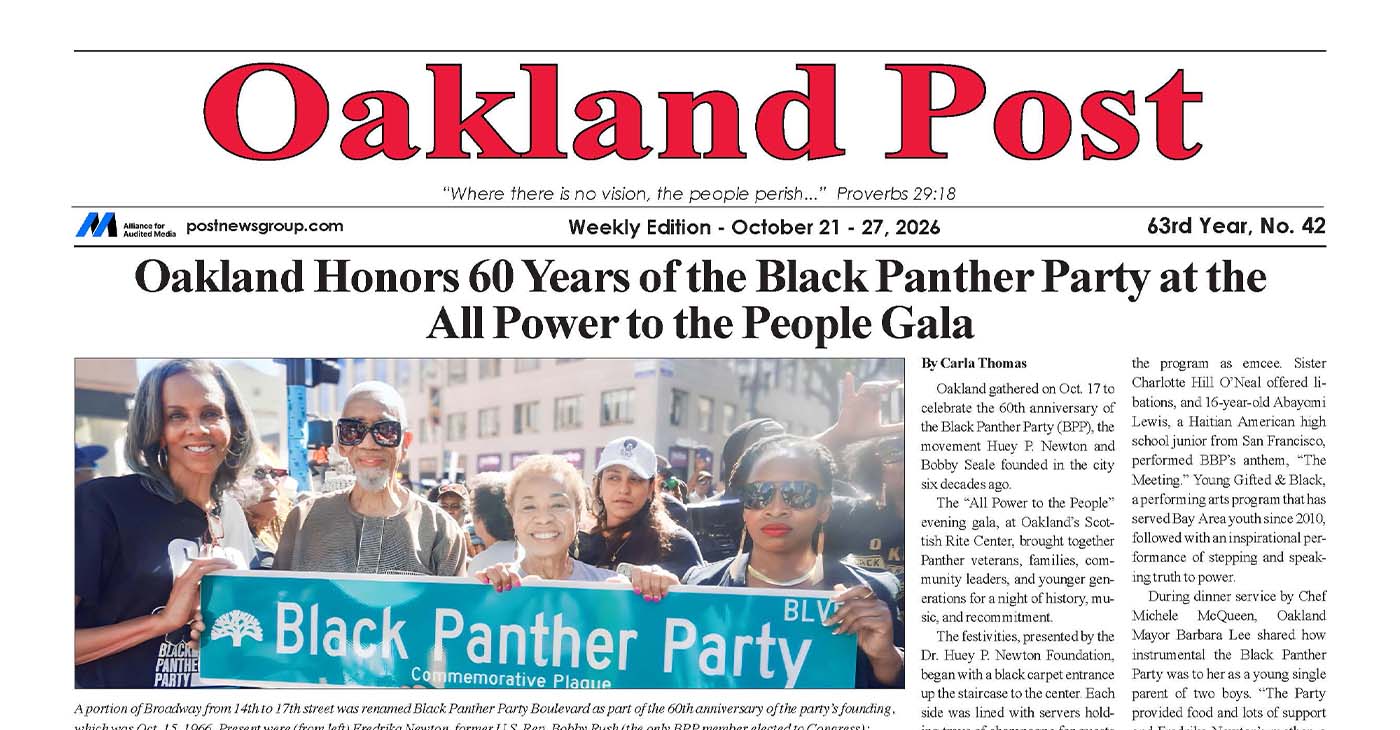
Oakland Honors 60 Years of the Black Panther Party at the All Power to the People Gala

Fate of Bay Area Public Transit Hinges on Regional Transit Measure

Why AC Transit Director Joel Young is My Choice for AC Transit Board Ward 3

Oakland Post: Week of October 21 – 27, 2026

Mayor Barbara Lee Holds Special State of the City Address in Deep East Oakland

Practitioners of African Traditional Spirituality Offer Ancestral Reverence Ritual Oct. 31

It’s Time to Lose Weight Before the Holidays

Misnamed ‘Parent’ PAC Seeks to Influence Oakland School Board Elections

Listening as a Lifeline: A Doula’s Witness to Black Maternal Health

Poll: Becerra Widens His Lead Over Hilton; Californians Split on Wealth Tax

Doulas Are Helping Black California Moms Navigate Pregnancy–Even as High Mortality Rates Persist

County Office of Education Says OUSD Finances Are Getting Healthier, Materially Stronger

Oakland Post: Week of September 9 – 15, 2026

Zakiya Jendayi Arrested, Locked Out of Home by Sheriff’s Deputies

Mayor Lee Announces $1 Million Kaiser Permanente Grant for Pilot Program to Address Homelessness, Clean Up Public Spaces throughout Oakland

Richmond Tiny House Village Farm & Garden Set to Open Gates on Sept. 26

BLACspace Cooperative Invites Bay Area to Experience Oakland’s Black Cultural Ecosystem Through a BLAC Map Tour + Party

Latest Massacre in Haiti Reveals Cruelty U.S. Deportations

OPINION: Nolan Wells’ Death One of Several Signifying Racial Terror Lives on in U.S. South

Oakland People’s Arms Embargo Coalition Demands End to Military Shipments Thru Oakland

Oakland Post: Week of September 16 – 22, 2026

Democratic Clubs Interview Candidates for Oakland School Board

The Conversation With Al McFarlane 6/23/26

Media Monday 6/22/26

LIVE! ASK ALMA! — TUES. 6.23.26 7PM EST

Car Buying Secrets: 4 Hidden Checks Before You Sign!

Is This 550 HP Charger Worth YOUR Money? AutoNetwork Review

Celebrating Juneteenth – Frederick Douglass on education and resistance

LIVE! — ASK ALMA! — TUES. 6.19.26 7PM EST

Hyundai Ioniq 5 Parking, Safety, and 360 View #shorts

2025 Ioniq 5 New Wiper & Powerful Performance! #shorts

Electric SUV Range: Is 259 Miles Enough? #shorts

EV Charging: How Fast Can You Charge an Electric Vehicle? #shorts

Biometric Cooling… Messaging Seats…Come on! 2025 Infiniti QX80 Autograph 4WD

Charged Up: Witness the Magic of a Fully Electric Car! #shorts

Range Rover Sport PHEV Included…: See What’s Inside This Luxury SUV! #shorts

Invisible Hood View: Perfect Parking with X-Ray Vision! #shorts
-
 Black History3 weeks ago
Listening as a Lifeline: A Doula’s Witness to Black Maternal Health
-
 Economy4 weeks ago
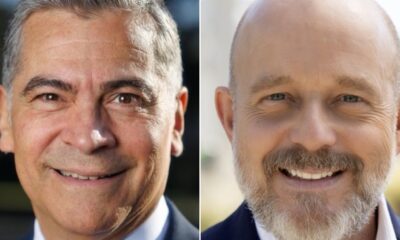
Poll: Becerra Widens His Lead Over Hilton; Californians Split on Wealth Tax
-
 Business4 weeks ago
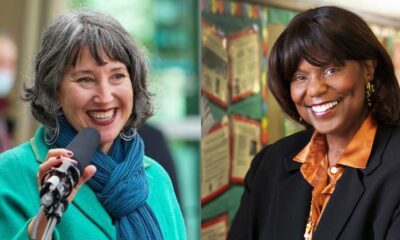
County Office of Education Says OUSD Finances Are Getting Healthier, Materially Stronger
-
 Lead Story3 weeks ago
Zakiya Jendayi Arrested, Locked Out of Home by Sheriff’s Deputies
-
 Art4 weeks ago
BLACspace Cooperative Invites Bay Area to Experience Oakland’s Black Cultural Ecosystem Through a BLAC Map Tour + Party
-
 Business4 weeks ago
From Historic Memories to New Possibilities: Oakland Celebrates Coliseum 60
-
 Community4 weeks ago
Asm. Corey Jackson Announces Launch of 24-Hour Childcare in His District
-
 Black History4 weeks ago
IN MEMORIAM: The Rev. Leon “Sonny” Clark, Longtime Orange County Pastor and Community Leader, Dies at 72
