
Bay Area
California ’22 Primary Election: Black Candidates Running for Statewide Office
The candidates running to fill eight statewide constitutional offices (governor, lieutenant governor, secretary of state (SOS), attorney general, controller, state superintendent of public instruction, insurance commissioner and treasurer) and one California U.S. Senate seat will be listed on all primary ballots.

By Joe W. Bowers Jr., California Black Media
On June 7, California will conduct a primary election — the first opportunity for voters to elect candidates in newly drawn districts based on the 2020 U.S. census. Registered voters will automatically receive a vote-by-mail ballot no later than May 9, with the option to return it to a secure drop box, or vote in-person up to 10 days before the election for those living in Voter’s Choice Act (VCA) counties.
For those not registered to vote, same day registration is possible up until 8 p.m. on Election Day.
The candidates running to fill eight statewide constitutional offices (governor, lieutenant governor, secretary of state (SOS), attorney general, controller, state superintendent of public instruction, insurance commissioner and treasurer) and one California U.S. Senate seat will be listed on all primary ballots.
The primaries for the four positions on the Board of Equalization, the 52 U.S. Congressional, 80 State Assembly, and 20 State Senate seats are listed based on district.
There are 40 State Senators. They serve staggered four-year terms. Twenty of them representing even-numbered districts are up for election this year.
Statewide, there are 145 elections being held to fill these state and federal offices.
California Black Media (CBM) reports that 55 Black candidates are running in 37 of the elections. That’s 25.5% of the races. Blacks make up 5.8% of California’s population.
In nine of the contests more than one Black candidate is competing. Party affiliations represented are: 36 Democrat, 11 Republican, four No-Party Preference, two Nonpartisan, one Green and one Peace and Freedom.
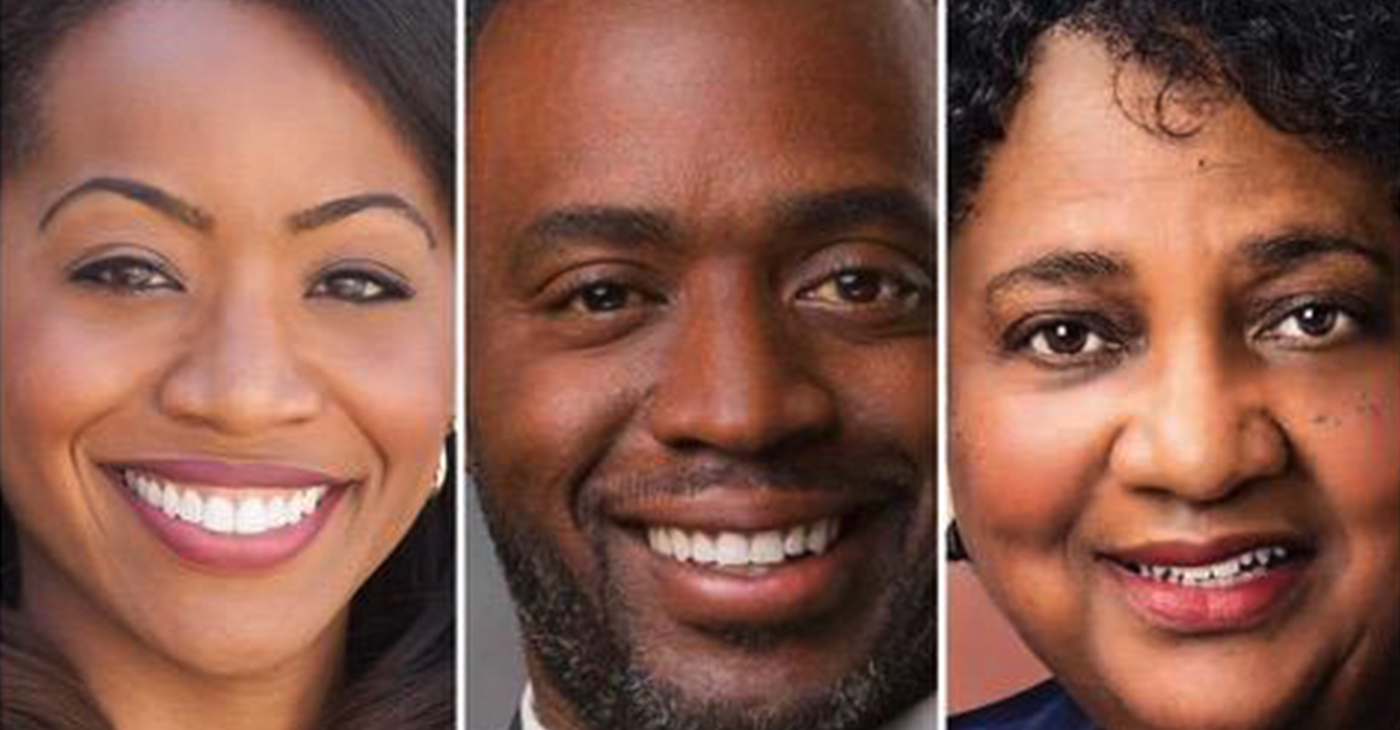
In six statewide contests, 12 Black candidates are on the ballot. Two candidates are incumbents. One is Dr. Shirley Weber, who was appointed California’s first Black SOS by Gov. Gavin Newsom in 2021, replacing California’s current junior U.S. Sen Alex Padilla. This will be the first time Weber has run for office statewide. The other is Tony Thurmond, California’s second Black State Superintendent of Public Instruction. He was elected in 2018 in a close contest.
There are no Black candidates on the ballot running for attorney general or treasurer.
Governor
Running for re-election as the state’s chief executive officer, Newsom faces 25 other candidates on the ballot. Four of those candidates are Black. Shawn Collins is a Republican, an attorney, and a Navy combat veteran. He says, “We can and will make California the best place to start a small business, give parents a real voice in their children’s educations, and bring compassion and law and order together to end the human tragedies on our streets.”
Serge Fiankan is an entrepreneur and has a No Party Preference designation. He says, “As your governor, I will change the status quo and address the real problems we are facing with measurable actions.”
Woodrow “Woody” Sanders III is an entrepreneur/director/engineer and has a No Party Preference designation. Sander’s passion is for restoring California’s “crown as the best state in the union.”
Major Williams is a Republican Businessman. He ran as write-in candidate during Gov. Newsom’s recall election and received 8,965 votes. His campaign slogan is, “It’s time to think major.”
Lt. Governor
Incumbent Lt. Gov. Eleni Kounalakis is running against a field of seven candidates. Angela E. Underwood Jacobs is a Black Republican businesswoman/deputy mayor running against her. Jacobs was the first African American woman elected to serve on the Lancaster City Council.
Secretary of State
Shirley Weber has six opponents for SOS. Before her appointment, Weber served four terms as an Assemblymember representing California’s 79th Assembly District. She is committed to making California the national leader in running inclusive, trustworthy, and transparent elections – expanding the franchise to more of our citizens, ensuring election security and empowering voters to make informed decisions. She is the only Black candidate running for SOS.
State Controller
State Controller Betty Yee is termed out this year. Among six candidates running to replace her is Malia Cohen the first African American woman to serve on the Board of Equalization. Cohen wants to make sure the tax code is fair, that people understand tax incentives are out there to benefit the working class. “I am running because I am committed to equity, empowerment, hope and opportunity for all Californians,” Cohen told CBM.
Superintendent of Public Instruction
There are six candidates running to replace incumbent Tony Thurmond as State Superintendent of Public Instruction. As the chief of K-12 education in the state, Thurmond was instrumental in marshalling the efforts of the Department of Education to help school districts deal with systemic inequities that the pandemic put a spotlight light on.
He is running to achieve his vision that by 2026 all California students will be literate by third grade. For Thurmond, Black student achievement and student achievement in general have been major priorities. Among his challengers is Black public and charter schoolteacher Ainye E. Long.
California Insurance Commissioner
Incumbent Ricardo Lara has eight challengers vying to be the next insurance commissioner. Three of his opponents are Black. Veronika Fimbres is a transgender nurse running as the Green Party candidate. Fimbres, a Black Navy veteran, has pledged to use the bully pulpit that would come from being insurance commissioner to push for universal health care in the state.
Jasper “Jay” Jackson is a paralegal running as a Democrat. His goal is to deliver transparent and speedy services to the people of California.
Vinson Eugene Allen is a medical doctor and businessman running as a Democrat. Allen says, “I will personally address consumer issues and work with insurance carriers for a fair solution to disputes.”
U.S. Senator
The office of U.S. Senate will have two separate contests on the June 7 ballot. One contest is the regular election for the full six-year term beginning January 3, 2023. The other contest is a special vacancy election, to complete the unexpired Senate term of Vice President Kamala Harris.
Sen. Alex Padilla, who was chosen by Gov. Newsom to replace Harris will be competing in both contests. In the full-term contest, he faces 22 opponents. Five are Black. And in the special vacancy contest he has seven opponents. Two are Black.
Black candidates in the full-term US Senate race are: Akinyemi Agbede a mathematician and Democrat; Myron L. Hall podiatric physician and Republican; Daphne Bradford, an education consultant and No Party Preference candidate; Deon D. Jenkins also has a No Ballot Designation and No Party Preference; and John Thompson Parker, a social justice advocate representing the Peace and Freedom Party. Candidates Hall and Bradford are also running in the partial/unexpired term contest.
In the June 7 primary election, the two candidates receiving the most votes advance to the general election. If a candidate receives a majority of the vote (at least 50% plus 1), a general election must still be held.










Activism
Oakland Post: Week of September 23 – 29, 2026
The printed Weekly Edition of the Oakland Post: Week of September 23 – 29, 2026

To enlarge your view of this issue, use the slider, magnifying glass icon or full page icon in the lower right corner of the browser window.
Activism
Oakland Post: Week of September 16 – 22, 2026
The printed Weekly Edition of the Oakland Post: Week of September 16 – 22, 2026

To enlarge your view of this issue, use the slider, magnifying glass icon or full page icon in the lower right corner of the browser window.
Activism
Oakland Post: Week of September 9 – 15, 2026
The printed Weekly Edition of the Oakland Post: Week of September 9 – 15, 2026

To enlarge your view of this issue, use the slider, magnifying glass icon or full page icon in the lower right corner of the browser window.



Asm. Corey Jackson Announces Launch of 24-Hour Childcare in His District

IN MEMORIAM: The Rev. Leon “Sonny” Clark, Longtime Orange County Pastor and Community Leader, Dies at 72

Poll: Becerra Widens His Lead Over Hilton; Californians Split on Wealth Tax

From Historic Memories to New Possibilities: Oakland Celebrates Coliseum 60

County Office of Education Says OUSD Finances Are Getting Healthier, Materially Stronger

LIVE FREE Sunday Dinner Brings Faith, Fellowship and Civic Conversation to Oakland

Remembering Chauncey Bailey as Student Journalists Face Threats to Truth-Telling

BLACspace Cooperative Invites Bay Area to Experience Oakland’s Black Cultural Ecosystem Through a BLAC Map Tour + Party

In Wake of Death on Doorstep, Williams Chapel Baptist Church Calls for Better Care, Funding for Unhoused

Oakland Centenarian Nuna McKee Honored!

Caribbean Nations Produce Action Plan Calling for UK Reparations Over Slavery

Oakland Post: Week of September 23 – 29, 2026

Doulas Are Helping Black California Moms Navigate Pregnancy–Even as High Mortality Rates Persist

Newsom Signs Addictive Social Media Law to Protect Kids

On Your November Ballot: Prop 38 Would Allocate $8.4 Billion to Immunology and Immunotherapy Funding

Standoff for Justice: Our Homes Are Worth Fighting For

Oakland Post: Week of August 26 – September 1, 2026

Frontier Airlines’ Return to Oakland Airport Brings Flights, Jobs and Opportunity

Gubernatorial Candidate Steve Hilton Blasts California New Tire Rules; Newsom Hits Back

Chef Sharon Lee Blends Culinary Excellence, Education and Empowerment

Jackie Wright Champions Bay Area Stories, Filmmakers and Cultural Institutions

Big City Mayors Ask for “Yes” Vote on Housing Bond Measure; Conservatives Say “No”

Oakland Coliseum Project Opens Door for Small Businesses to Build Bigger

Gov. Newsom’s Latest Appointees Include Sacramento Advocate for Formerly Incarcerated Students; State’s New Tech Chief

Misnamed ‘Parent’ PAC Seeks to Influence Oakland School Board Elections

Longtime BWOPA Member Brendalyn Goodall Appointed to California Workforce Development Board

Gov. Newsom Signs Law Shielding Immigration Aid Workers From Doxing Threats

Secretary of State Shirley N. Weber Urges Californians to Vote Early as Voter ID Battle Intensifies

Oakland Post: Week of September 2 – 8, 2026

IN MEMORIAM: Dolly Parton Dead at 80 — How She Built a Legacy of Love and Earned Her Place in Black Culture

The Conversation With Al McFarlane 6/23/26

Media Monday 6/22/26

LIVE! ASK ALMA! — TUES. 6.23.26 7PM EST

Car Buying Secrets: 4 Hidden Checks Before You Sign!

Is This 550 HP Charger Worth YOUR Money? AutoNetwork Review

Celebrating Juneteenth – Frederick Douglass on education and resistance

LIVE! — ASK ALMA! — TUES. 6.19.26 7PM EST

Hyundai Ioniq 5 Parking, Safety, and 360 View #shorts

2025 Ioniq 5 New Wiper & Powerful Performance! #shorts

Electric SUV Range: Is 259 Miles Enough? #shorts

EV Charging: How Fast Can You Charge an Electric Vehicle? #shorts

Biometric Cooling… Messaging Seats…Come on! 2025 Infiniti QX80 Autograph 4WD

Charged Up: Witness the Magic of a Fully Electric Car! #shorts

Range Rover Sport PHEV Included…: See What’s Inside This Luxury SUV! #shorts

Invisible Hood View: Perfect Parking with X-Ray Vision! #shorts
-
 Community3 weeks ago
Misnamed ‘Parent’ PAC Seeks to Influence Oakland School Board Elections
-
 Activism4 weeks ago
Oakland Post: Week of September 2 – 8, 2026
-

 Community3 weeks ago
Richmond Tiny House Village Farm & Garden Set to Open Gates on Sept. 26
-

 Activism3 weeks ago
Oakland Post: Week of September 9 – 15, 2026
-

 Black History3 weeks ago
Latest Massacre in Haiti Reveals Cruelty U.S. Deportations
-

 Black History3 weeks ago
OPINION: Nolan Wells’ Death One of Several Signifying Racial Terror Lives on in U.S. South
-

 Community3 weeks ago
Democratic Clubs Interview Candidates for Oakland School Board
-

 Business2 weeks ago
Mayor Lee Announces $1 Million Kaiser Permanente Grant for Pilot Program to Address Homelessness, Clean Up Public Spaces throughout Oakland
