Connect with us

Post News Group

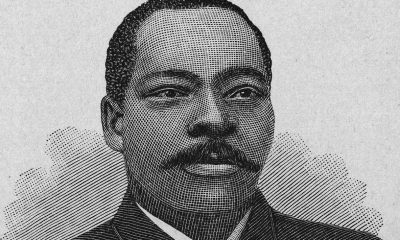
Inventor Alexander Miles patented Safety Feature for Elevators Still in Use Today

Published

on

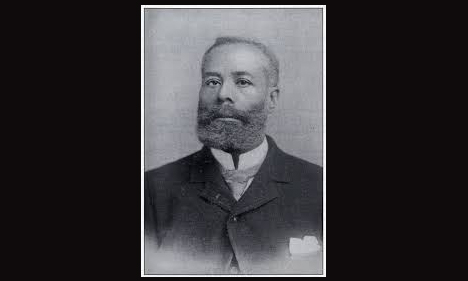
Alexander Miles. Duluth Public Library photo

During the late 19th century, elevators were constructed in a way that required a person to manually open and close its doors. Residential and commercial buildings often hired operators to perform this function.

The problem with this model was that sometimes people would forget to close the shaft doors. This led to many unfortunate accidents.

Alexander Miles (1838–1918) witnessed an open shaft door once. This concerned him as his young daughter, Alice (according to the 1860 census), was with him at the time. Thinking of her safety, Miles knew that the doors needed improving. He then went to work creating a mechanism that closed access to the shaft door while the elevator was in operation on other floors.

His design attached a flexible belt to the elevator cage. When it went over drums positioned at the appropriate spots above and below a floor, it automated the opening and closing of the doors with levers and rollers. In 1887, Miles, an African American inventor and businessman, was granted a patent on this mechanism, one that is still used in elevator design today.

Miles was born in Ohio, near a town called Circleville. His birth year has been recorded as “possibly January 1837” (others report May 1838), and no record exists confirming that he was ever a slave. He had no other siblings. His family relocated to Waukesha, Wis., in the late 1850s.  It was there that he began making a living as a barber.

He later met Candace Dunlap, a widowed mother of two. The couple married and, by 1863, relocated to Duluth, Minn. There, they had one daughter together. Miles continued his profession as a barber and began developing a line of hair care products that included Tunisian Hair Dressing.

The couple quickly prospered. They invested in real estate. Miles operated his barbershop in the upscale St. Louis Hotel, but the profession soon became an adult hobby.

He joined the Duluth Chamber of Commerce, becoming its first African American member; and became active in politics and fraternal organizations.

After just over two decades, Miles sold his real estate investments and relocated his family to Chicago. His business interests then grew, as he founded The United Brotherhood in order to sell life insurance policies to African Americans.

At that time, Blacks were regularly excluded from, if not flat out denied coverage. By age 50, Miles was at the top of his game and worth an estimated half-million dollars. His real estate, hair care business and inventions did well, and he was thought to be the wealthiest Black man in the Midwest during that time.

Later, after relocating to Seattle, it was believed he was the wealthiest Black person in the Pacific Northwest. But his debts would mount and his financial bubble would burst during the recession. Some 20 years later, Miles was broke, widowed, and working as a barber again. His residence was a Seattle rooming house. He died in 1918 and was inducted into the National Inventors Hall of Fame in 2007.

Source:  https://www.thoughtco.com/alexander-miles-improved-elevator-4071713
https://en.wikipedia.org/wiki/Alexander_Miles
https://www.invent.org/inductees/alexander-miles
Image:  https://commons.wikimedia.org/w/index.php?search=alexander+miles&title=Special%3ASearch&go=Go&ns0=1&ns6=1&ns12=1&ns14=1&ns100=1&ns106=1
Duluth Public Library – & Images of America – Duluth Minnesota – Sheldon T. Aubut author

Tamara Shiloh

Tamara Shiloh


About Tamara Shiloh


Tamara Shiloh has published the first two books in her historical fiction chapter book series, Just Imagine…What If There Were No Black People in the World is about African American inventors, scientists and other notable Black people in history. The two books are Jaxon’s Magical Adventure with Black Inventors and Scientists and Jaxon and Kevin’s Black History Trip Downtown. Tamara Shiloh has also written a book a picture book for Scholastic, Cameron Teaches Black History, that will be available in June, 2022.

Tamara Shiloh’s other writing experiences include: writing the Black History column for the Post Newspaper in the Bay area, Creator and Instruction of the black History Class for Educators a professional development class for teachers and her non-profit offers a free Black History literacy/STEM/Podcast class for kids 3d – 8th grade which also includes the Let’s Go Learn Reading and Essence and tutorial program.   She is also the owner of the Multicultural Bookstore and Gifts, in Richmond, California,

Previously in her early life she was the /Editor-in-Chief of Desert Diamonds Magazine, highlighting the accomplishments of minority women in Nevada; assisting with the creation, design and writing of a Los Angeles-based, herbal magazine entitled Herbal Essence; editorial contribution to Homes of Color; Editor-in-Chief of Black Insight Magazine, the first digital, interactive magazine for African Americans; profile creations for sports figures on the now defunct PublicFigure.com; newsletters for various businesses and organizations; and her own Las Vegas community newsletter, Tween Time News, a monthly publication highlighting music entertainment in the various venues of Las Vegas.

She is a member of:

  • Society of Children’s Book Writers and Illustrators (SCBWI)

  • Richmond Chamber of Commerce

  • Point Richmond Business Association

  • National Association of Professional Women (NAPW)

  • Independent Book Publishers Association (IPBA)

  • California Writers Club-Berkeley & Marin

  • Richmond CA Kiwanis

  • Richmond CA Rotary

  • Bay Area Girls Club


Tamara Shiloh, a native of Northern California, has two adult children, one grandson and four great-grand sons. She resides in Point Richmond, CA with her husband, Ernest.

www.multiculturalbookstore.com

About Tamara Shiloh

Tamara Shiloh has published the first two books in her historical fiction chapter book series, Just Imagine…What If There Were No Black People in the World is about African American inventors, scientists and other notable Black people in history. The two books are Jaxon’s Magical Adventure with Black Inventors and Scientists and Jaxon and Kevin’s Black History Trip Downtown. Tamara Shiloh has also written a book a picture book for Scholastic, Cameron Teaches Black History, that will be available in June, 2022. Tamara Shiloh’s other writing experiences include: writing the Black History column for the Post Newspaper in the Bay area, Creator and Instruction of the black History Class for Educators a professional development class for teachers and her non-profit offers a free Black History literacy/STEM/Podcast class for kids 3d – 8th grade which also includes the Let’s Go Learn Reading and Essence and tutorial program.   She is also the owner of the Multicultural Bookstore and Gifts, in Richmond, California, Previously in her early life she was the /Editor-in-Chief of Desert Diamonds Magazine, highlighting the accomplishments of minority women in Nevada; assisting with the creation, design and writing of a Los Angeles-based, herbal magazine entitled Herbal Essence; editorial contribution to Homes of Color; Editor-in-Chief of Black Insight Magazine, the first digital, interactive magazine for African Americans; profile creations for sports figures on the now defunct PublicFigure.com; newsletters for various businesses and organizations; and her own Las Vegas community newsletter, Tween Time News, a monthly publication highlighting music entertainment in the various venues of Las Vegas. She is a member of:
  • Society of Children’s Book Writers and Illustrators (SCBWI)
  • Richmond Chamber of Commerce
  • Point Richmond Business Association
  • National Association of Professional Women (NAPW)
  • Independent Book Publishers Association (IPBA)
  • California Writers Club-Berkeley & Marin
  • Richmond CA Kiwanis
  • Richmond CA Rotary
  • Bay Area Girls Club
Tamara Shiloh, a native of Northern California, has two adult children, one grandson and four great-grand sons. She resides in Point Richmond, CA with her husband, Ernest. www.multiculturalbookstore.com
Continue Reading
Click to comment

Leave a Reply

Your email address will not be published. Required fields are marked *

Activism

Up to the Job: How San Francisco’s PRC Is Providing Work Opportunities That Turn Into Lasting Stability

Each year, PRC serves more than 5,000 clients through a wide range of programs. These include housing navigation, legal advocacy to ensure access to health and public benefits, supportive housing, job and life-skills training, and residential treatment programs. 

Published

on

Black Leadership Council (BLC) Advocacy Day in Sacramento. BLC works to advance meaningful change through policy engagement to unlock the full potential of Black and low-income communities. Photo courtesy of PRC.

By Joe Kocurek, California Black Media

Seville Christian arrived in San Francisco in the 1990s from Kansas City, Mo., a transgender woman coming from a time and place still hostile to who she was.

San Francisco offered a deeper LGBTQ+ history and a more visible community of people like her, but even in a city known for acceptance, building a stable life from scratch was no small task.

After arriving in the city, she turned to Positive Resource Center (PRC) looking for work — and for a foothold — in a new place.

“PRC gave me my first job,” Christian said. “A simple gig — passing out magazines at the San Francisco Pride Parade.”

That first opportunity marked the beginning of a decades-long relationship with PRC, one that has seen Christian grow from client to valued employee, and eventually to policy fellow.

“Today, I’ve been with PRC for 27 years, going on 28,” she said.

Seville Christian’s decades-long relationship with PRC includes as a client, fellow and beloved employee. Photo courtesy of PRC.

Seville Christian’s decades-long relationship with PRC includes as a client, fellow and beloved employee. Photo courtesy of PRC.

Helping people access employment and build sustainable careers has been a cornerstone of PRC’s mission since its inception nearly four decades ago. In its most recent annual impact report, PRC served 443 clients through workforce development services, including career counseling, educational programs, hands-on training, and job search assistance. The average wage earned by PRC clients is $26.48 per hour — approximately 38% above San Francisco’s minimum wage.

To advance this work, organizations like PRC have benefited from funding through California’s Stop the Hate Program, which provides direct support to community-based organizations leading anti-hate initiatives.

Christian’s path was not without challenges. During some rocky years, she experienced periods of housing instability and struggled with addiction. Through PRC, she enrolled in a life-skills program that emphasized using her own lived experience as a means of helping others. The program helped set her on a path toward completing an associate’s degree and ultimately launching a career in case management.

“Today, whether someone is new to the city or has lived here their whole life, I know how to help them navigate to where they need to be,” Christian said.

Each year, PRC serves more than 5,000 clients through a wide range of programs. These include housing navigation, legal advocacy to ensure access to health and public benefits, supportive housing, job and life-skills training, and residential treatment programs.

Members of PRC’s Black Leadership Council meet with a lawmaker in Sacramento. Photo courtesy of PRC.

Members of PRC’s Black Leadership Council meet with a lawmaker in Sacramento. Photo courtesy of PRC.

While PRC was founded to serve people living with HIV, its mission has expanded over the decades to meet the needs of people with disabilities, individuals experiencing homelessness, and those facing mental health and substance use challenges.

According to PRC’s Chief of Public Policy and Public Affairs, Tasha Henneman, some of the organization’s earliest programs remain as vital today as they were at the start.

“Our emergency financial assistance program helped more than 1,200 people this year pay rent, cover medical bills, and keep the lights on,” Henneman said. “And over 1,400 people reached out for legal advocacy, resulting in more than $2.5 million in retroactive benefits unlocked.”

Beyond direct services, PRC is deeply committed to community empowerment and policy change. Programs such as the Black Leadership Council support community leaders in advocating for systemic reform, while the Black Trans Initiative focuses on addressing the unique challenges faced by Black transgender individuals.

A recent study from the Williams Institute highlighted findings that 71% of transgender homicide victims in the U.S. between 2010 and 2021 were Black and that nearly a third of the transgender homicides during that period were confirmed or suspected hate crimes.

PRC’s direct and indirect services can be a lifeline for people experiencing hate and are an example of the resources people can get connected with through the state’s CA vs Hate hotline.

PRC is now also producing a film project that centers the lived experiences of Black trans clients, including individuals like Christian.

PRC welcomed guests to their annual Open House in April, an evening dedicated to connection, reflection, and learning more about the programs and people working every day to support San Franciscans experiencing housing instability, unemployment, and behavioral health challenges. Photo courtesy of PRC.

PRC welcomed guests to their annual Open House in April, an evening dedicated to connection, reflection, and learning more about the programs and people working every day to support San Franciscans experiencing housing instability, unemployment, and behavioral health challenges. Photo courtesy of PRC.

“Our film highlights the health journeys and lived experiences of some of PRC’s Black trans clients,” Henneman said. “Our goal is to give voice, visibility, and agency to the participants — and to bring their stories, both harrowing and inspirational, to policymakers and the broader public.”

The film, expected to be released later this year, is directed by Yule Caise, with assistant director Zarina Codes, a Black transgender San Francisco resident.

Today, Christian continues her relationship with PRC as an ambassador, reflecting on a journey that began with a single job opportunity and grew into a lifelong commitment to service.

“Sometimes I’ll be riding the bus or standing in a grocery store, and someone will come up to me from a women’s shelter,” she said. “They’ll say, ‘Oh, Miss Seville, I just want to thank you. You really helped me with what I was dealing with.’”

She paused, smiling.

“And in those moments,” Christian said, “I think to myself, “Well!.”

A single word that sums up pride in a journey to find the best in herself.

Get Support After Hate:

California vs Hate is a non-emergency, multilingual hotline and online portal offering confidential support for hate crimes and incidents. Victims and witnesses can get help anonymously by calling 833-8-NO-HATE (833-866-4283), Monday to Friday, 9 a.m.–6 p.m. PT, or online at any time. Anonymous. Confidential. No Police. No ICE.

This story was produced in partnership with CA vs Hate. Join them for the first-ever CA Civil Rights Summit on May 11, 2026. More information at www.cavshate.org/summit.

Continue Reading

Activism

Oakland Post: Week of April 22 – 28, 2026

The printed Weekly Edition of the Oakland Post: Week of April 22 – 28, 2026

Published

on

To enlarge your view of this issue, use the slider, magnifying glass icon or full page icon in the lower right corner of the browser window.

Continue Reading

Activism

Up to the Job: How San Francisco’s PRC Is Providing Work Opportunities That Turn Into Lasting Stability

Each year, PRC serves more than 5,000 clients through a wide range of programs. These include housing navigation, legal advocacy to ensure access to health and public benefits, supportive housing, job and life-skills training, and residential treatment programs. 

Published

on

Black Leadership Council (BLC) Advocacy Day in Sacramento. BLC works to advance meaningful change through policy engagement to unlock the full potential of Black and low-income communities. Photo courtesy PRC.

Joe Kocurek | California Black Media  

 Seville Christian arrived in San Francisco in the 1990s from Kansas City, Mo., a transgender woman coming from a time and place still hostile to who she was. 

 San Francisco offered a deeper LGBTQ+ history and a more visible community of people like her, but even in a city known for acceptance, building a stable life from scratch was no small task. 

 After arriving in the city, she turned to Positive Resource Center (PRC) looking for work — and for a foothold — in a new place. 

 “PRC gave me my first job,” Christian said. “A simple gig — passing out magazines at the San Francisco Pride Parade.” 

 That first opportunity marked the beginning of a decades-long relationship with PRC, one that has seen Christian grow from client to valued employee, and eventually to policy fellow. 

 “Today, I’ve been with PRC for 27 years, going on 28,” she said. 

Helping people access employment and build sustainable careers has been a cornerstone of PRC’s mission since its inception nearly four decades ago. In its most recent annual impact report, PRC served 443 clients through workforce development services, including career counseling, educational programs, hands-on training, and job search assistance. The average wage earned by PRC clients is $26.48 per hour — approximately 38% above San Francisco’s minimum wage. 

To advance this work, organizations like PRC have benefited from funding through California’s Stop the Hate Program, which provides direct support to community-based organizations leading anti-hate initiatives. 

Christian’s path was not without challenges. During some rocky years, she experienced periods of housing instability and struggled with addiction. Through PRC, she enrolled in a life-skills program that emphasized using her own lived experience as a means of helping others. The program helped set her on a path toward completing an associate’s degree and ultimately launching a career in case management. 

“Today, whether someone is new to the city or has lived here their whole life, I know how to help them navigate to where they need to be,” Christian said. 

PRC welcomed guests to their annual Open House in April, an evening dedicated to connection, reflection, and learning more about the programs and people working every day to support San Franciscans experiencing housing instability, unemployment, and behavioral health challenges.

PRC welcomed guests to their annual Open House in April, an evening dedicated to connection, reflection, and learning more about the programs and people working every day to support San Franciscans experiencing housing instability, unemployment, and behavioral health challenges.

Each year, PRC serves more than 5,000 clients through a wide range of programs. These include housing navigation, legal advocacy to ensure access to health and public benefits, supportive housing, job and life-skills training, and residential treatment programs. 

While PRC was founded to serve people living with HIV, its mission has expanded over the decades to meet the needs of people with disabilities, individuals experiencing homelessness, and those facing mental health and substance use challenges.  

According to PRC’s Chief of Public Policy and Public Affairs, Tasha Henneman, some of the organization’s earliest programs remain as vital today as they were at the start. 

“Our emergency financial assistance program helped more than 1,200 people this year pay rent, cover medical bills, and keep the lights on,” Henneman said. “And over 1,400 people reached out for legal advocacy, resulting in more than $2.5 million in retroactive benefits unlocked.” 

Beyond direct services, PRC is deeply committed to community empowerment and policy change. Programs such as the Black Leadership Council support community leaders in advocating for systemic reform, while the Black Trans Initiative focuses on addressing the unique challenges faced by Black transgender individuals. 

 A recent study from the Williams Institute highlighted findings that 71% of transgender homicide victims in the U.S. between 2010 and 2021 were Black and that nearly a third of the transgender homicides during that period were confirmed or suspected hate crimes.  

PRC’s direct and indirect services can be a lifeline for people experiencing hate and are an example of the resources people can get connected with through the state’s CA vs Hate hotline.  

PRC is now also producing a film project that centers the lived experiences of Black trans clients, including individuals like Christian.

 “Our film highlights the health journeys and lived experiences of some of PRC’s Black trans clients,” Henneman said. “Our goal is to give voice, visibility, and agency to the participants — and to bring their stories, both harrowing and inspirational, to policymakers and the broader public.” 

The film, expected to be released later this year, is directed by Yule Caise, with assistant director Zarina Codes, a Black transgender San Francisco resident. 

 Today, Christian continues her relationship with PRC as an ambassador, reflecting on a journey that began with a single job opportunity and grew into a lifelong commitment to service. 

“Sometimes I’ll be riding the bus or standing in a grocery store, and someone will come up to me from a women’s shelter,” she said. “They’ll say, ‘Oh, Miss Seville, I just want to thank you. You really helped me with what I was dealing with.’” 

She paused, smiling. 

“And in those moments,” Christian said, “I think to myself, “Well!.” 

A single word that sums up pride in a journey to find the best in herself.  

 Get Support After Hate:

California vs Hate is a non-emergency, multilingual hotline and online portal offering confidential support for hate crimes and incidents. Victims and witnesses can get help anonymously by calling 833-8-NO-HATE (833-866-4283), Monday to Friday, 9 a.m.–6 p.m. PT, or online at any time. Anonymous. Confidential. No Police. No ICE.This story was produced in partnership with CA vs Hate. Join them for the first-ever CA Civil Rights Summit on May 11, 2026. More information at www.cavshate.org/summit.

Continue Reading

Subscribe to receive news and updates from the Oakland Post

* indicates required

CHECK OUT THE LATEST ISSUE OF THE OAKLAND POST

ADVERTISEMENT

WORK FROM HOME

Home-based business with potential monthly income of $10K+ per month. A proven training system and website provided to maximize business effectiveness. Perfect job to earn side and primary income. Contact Lynne for more details: Lynne4npusa@gmail.com 800-334-0540

Facebook

Trending

Copyright ©2021 Post News Group, Inc. All Rights Reserved.