
Bay Area
Housing the Homeless: COVID-19 Has Forced California’s Hand

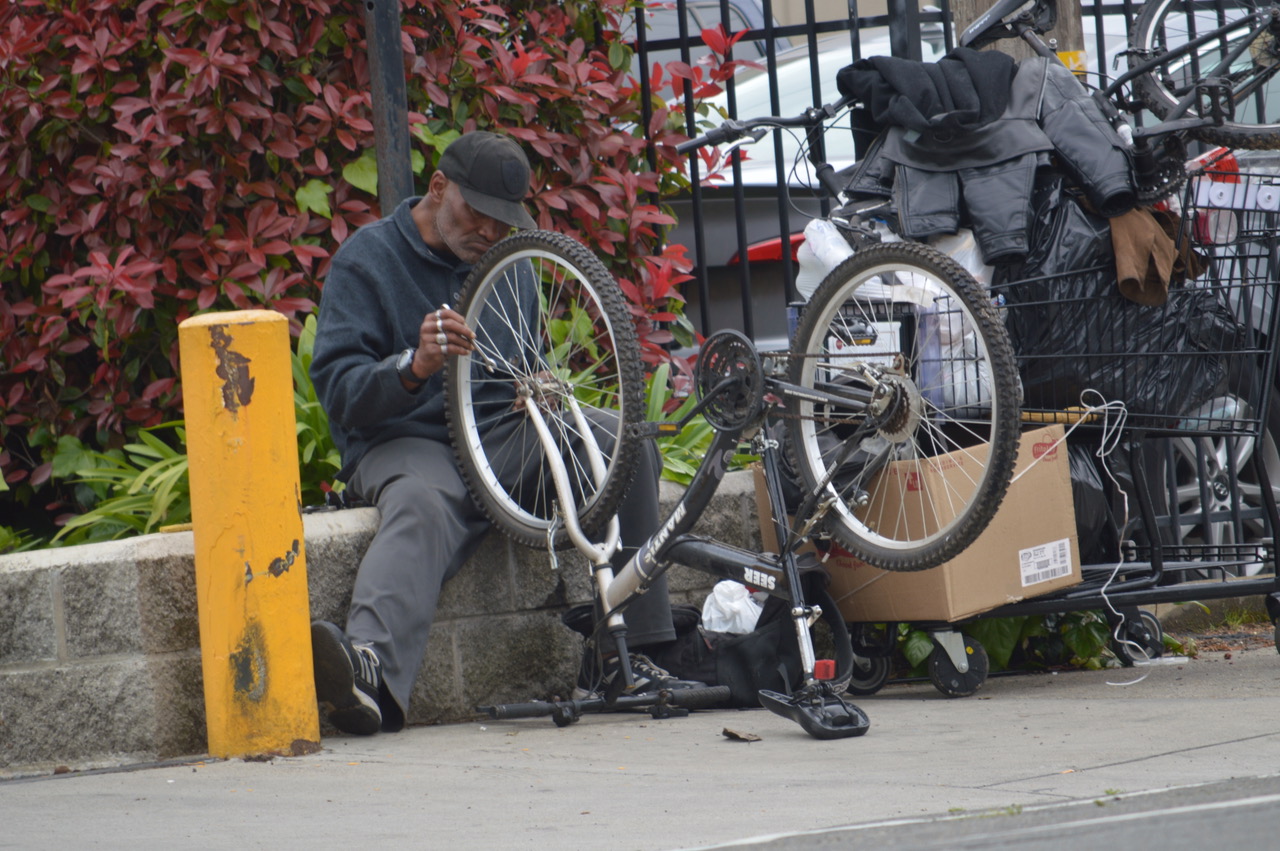
Earlier this month, Gov. Gavin Newsom announced that California was the first state in the nation to secure Federal Emergency Management Agency (FEMA) funding to place unsheltered people in hotel rooms at no cost to them. The state’s action is providing safe isolation for tens of thousands of homeless Californians during the global COVID-19 pandemic.

Almost 129,000 Californians experienced homelessness in 2019. Nearly 40% of them were African Americans.
The state’s effort, dubbed Project Roomkey, set an initial goal of securing up to 15,000 rooms to fast-track getting people off the street since Gov. Newsom instituted a stay-at-home order on March 19. After about a week, county partners had moved 869 homeless individuals off the street, or out of shelters, and into isolation.
“Homeless Californians are incredibly vulnerable to COVID-19 and often have no option to self-isolate or social distance,” Gov. Newsom said. “By helping the most vulnerable homeless individuals get off the street, California can slow the spread of COVID-19 through homeless populations, lower the number of people infected and protect critical health care resources.”
As of April 3, the state reports that local governments had secured 6,867 emergency hotel rooms for shelter. Some homeless advocates say that number is a commendable achievement that begins to move the Newsom administration closer to its goal of mitigating what was perhaps the state’s most pressing problem before the COVID-19 crisis.

Before the onset of the COVID-19 pandemic, state government attempts to speed up housing the homeless – including incentives provided to local governments to increase their housing inventory and efforts to penalize those that didn’t — met stiff resistance from lobbying groups, the state Legislature, county boards, and city councils. Most recently, state senators killed SB 50, a bill that would have lifted local zoning restrictions statewide to allow denser and more multi-unit housing construction.
Now, across California, both the state and local governments are teaming up to solve the state’s homelessness problem like they never have before, sharing up to 75% of FEMA reimbursements for hotel rooms and wraparound support services like meals, security, and custodial maintenance. Local governments and community partners cover behavioral health and medical care costs.
California’s effort to provide emergency shelter for homeless families and individuals takes an innovative approach, homeless advocates say. It brings hotel units online at a rapid pace while providing business to the hospitality industry, a sector among those hardest hit by the Coronavirus crisis.
The state has also deployed 1,305 housing trailers to local governments that will complement the efforts of Project Roomkey.
“California has taken the lead in protecting homeless residents from COVID-19,” said Nan Roman, president of the National Alliance to End Homelessness. “This initiative sets a strong national example of how state leaders can leverage their dollars with FEMA, HUD and other federal funds to address the needs of the most vulnerable homeless populations.”


Activism
Oakland Post: Week of September 30 – October 6, 2026
The printed Weekly Edition of the Oakland Post: Week of September 30 – October 6, 2026


To enlarge your view of this issue, use the slider, magnifying glass icon or full page icon in the lower right corner of the browser window.

Activism
Oakland Post: Week of September 23 – 29, 2026
The printed Weekly Edition of the Oakland Post: Week of September 23 – 29, 2026

To enlarge your view of this issue, use the slider, magnifying glass icon or full page icon in the lower right corner of the browser window.
Activism
Oakland Post: Week of September 16 – 22, 2026
The printed Weekly Edition of the Oakland Post: Week of September 16 – 22, 2026

To enlarge your view of this issue, use the slider, magnifying glass icon or full page icon in the lower right corner of the browser window.



OP-ED: Proposition 44 Would Put a Price on Trust

OP-ED: Proposition 40: It’s Time to Play Chess, Not Checkers

Listening as a Lifeline: A Doula’s Witness to Black Maternal Health

New Protections for Ticket Buyers: Gov. Newsom Signs Assemblymember Isaac Bryan’s Bill

‘We Don’t Talk Trash — We Pick Up Trash!’

Zakiya Jendayi Arrested, Locked Out of Home by Sheriff’s Deputies

Oakland Post: Week of September 30 – October 6, 2026

Asm. Corey Jackson Announces Launch of 24-Hour Childcare in His District

IN MEMORIAM: The Rev. Leon “Sonny” Clark, Longtime Orange County Pastor and Community Leader, Dies at 72

Poll: Becerra Widens His Lead Over Hilton; Californians Split on Wealth Tax

From Historic Memories to New Possibilities: Oakland Celebrates Coliseum 60

County Office of Education Says OUSD Finances Are Getting Healthier, Materially Stronger

LIVE FREE Sunday Dinner Brings Faith, Fellowship and Civic Conversation to Oakland

Remembering Chauncey Bailey as Student Journalists Face Threats to Truth-Telling

BLACspace Cooperative Invites Bay Area to Experience Oakland’s Black Cultural Ecosystem Through a BLAC Map Tour + Party

Standoff for Justice: Our Homes Are Worth Fighting For

Oakland Post: Week of August 26 – September 1, 2026

Frontier Airlines’ Return to Oakland Airport Brings Flights, Jobs and Opportunity

Gubernatorial Candidate Steve Hilton Blasts California New Tire Rules; Newsom Hits Back

Chef Sharon Lee Blends Culinary Excellence, Education and Empowerment

Jackie Wright Champions Bay Area Stories, Filmmakers and Cultural Institutions

Misnamed ‘Parent’ PAC Seeks to Influence Oakland School Board Elections

Oakland Coliseum Project Opens Door for Small Businesses to Build Bigger

Big City Mayors Ask for “Yes” Vote on Housing Bond Measure; Conservatives Say “No”

Gov. Newsom’s Latest Appointees Include Sacramento Advocate for Formerly Incarcerated Students; State’s New Tech Chief

Longtime BWOPA Member Brendalyn Goodall Appointed to California Workforce Development Board

Gov. Newsom Signs Law Shielding Immigration Aid Workers From Doxing Threats

Secretary of State Shirley N. Weber Urges Californians to Vote Early as Voter ID Battle Intensifies

Oakland Post: Week of September 2 – 8, 2026

IN MEMORIAM: Dolly Parton Dead at 80 — How She Built a Legacy of Love and Earned Her Place in Black Culture

The Conversation With Al McFarlane 6/23/26

Media Monday 6/22/26

LIVE! ASK ALMA! — TUES. 6.23.26 7PM EST

Car Buying Secrets: 4 Hidden Checks Before You Sign!

Is This 550 HP Charger Worth YOUR Money? AutoNetwork Review

Celebrating Juneteenth – Frederick Douglass on education and resistance

LIVE! — ASK ALMA! — TUES. 6.19.26 7PM EST

Hyundai Ioniq 5 Parking, Safety, and 360 View #shorts

2025 Ioniq 5 New Wiper & Powerful Performance! #shorts

Electric SUV Range: Is 259 Miles Enough? #shorts

EV Charging: How Fast Can You Charge an Electric Vehicle? #shorts

Biometric Cooling… Messaging Seats…Come on! 2025 Infiniti QX80 Autograph 4WD

Charged Up: Witness the Magic of a Fully Electric Car! #shorts

Range Rover Sport PHEV Included…: See What’s Inside This Luxury SUV! #shorts

Invisible Hood View: Perfect Parking with X-Ray Vision! #shorts
-
 Community3 weeks ago
Misnamed ‘Parent’ PAC Seeks to Influence Oakland School Board Elections
-
 Activism4 weeks ago
Oakland Post: Week of September 2 – 8, 2026
-

 Activism3 weeks ago
Oakland Post: Week of September 9 – 15, 2026
-

 Community3 weeks ago
Richmond Tiny House Village Farm & Garden Set to Open Gates on Sept. 26
-

 Black History3 weeks ago
Latest Massacre in Haiti Reveals Cruelty U.S. Deportations
-

 Black History3 weeks ago
OPINION: Nolan Wells’ Death One of Several Signifying Racial Terror Lives on in U.S. South
-

 Business2 weeks ago
Mayor Lee Announces $1 Million Kaiser Permanente Grant for Pilot Program to Address Homelessness, Clean Up Public Spaces throughout Oakland
-

 Community3 weeks ago
Democratic Clubs Interview Candidates for Oakland School Board
