Connect with us

Bay Area

Joseph Richard ‘Nigerian’ Winters: Ladders of Success

Published

on

The 19th century brought about changes in the architectural designs of many American cities. New materials were used, buildings began to reach skyscraper heights. The downside to these taller buildings was that, in case of fire, residents could not be evacuated as fast or as safe.

At that time, firefighters still used horse-drawn engines to carry their ladders. The length could not be excessive, as this would prevent the engines from turning corners if access to a narrow street or alley was necessary/

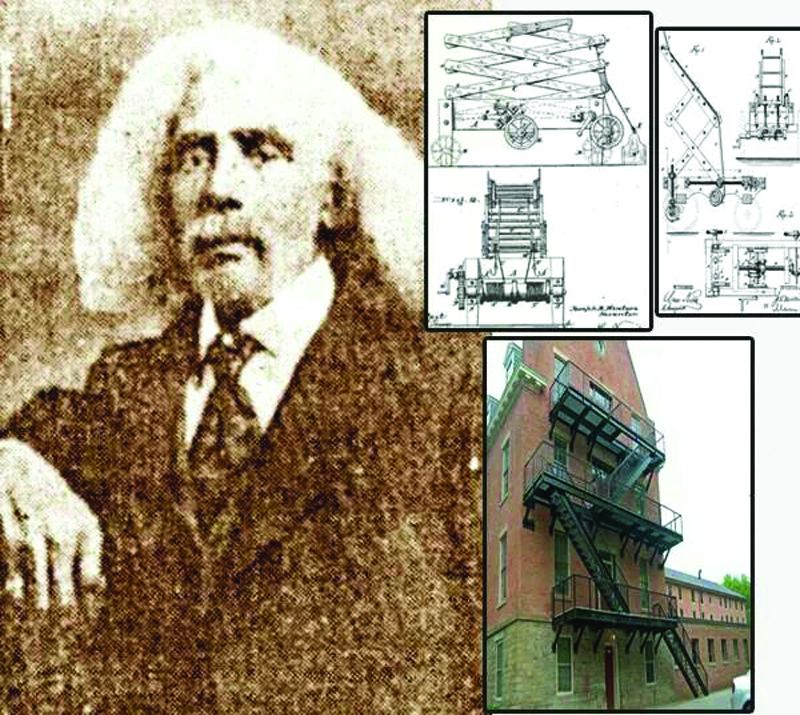
Joseph Winters (1816–1916) thought it would be more effective to mount the ladder on the engine itself, and that it could be fashioned in a way that it could be raised up in sections: foldable and collapsible. As a result, he invented a wagon-mounted fire escape ladder for the city of Chambersburg, Pa. His creation, which later received a patent (1878), would save countless lives within the inner city.
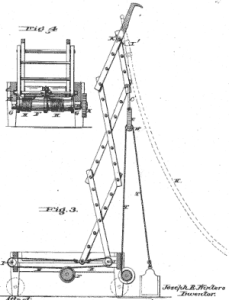
Winters improved upon his design, receiving another patent in 1879. In 1882, he would patent the traditional fire escape: the model attached to the sides of buildings. Although he received much praise for creating lifesaving equipment, little money was made. Soon after, Winters took part in oil prospecting in the Chambersburg area. The venture proved unsuccessful.

He would later dabble in politics, writing a campaign song for Democrat William Jennings Bryan during the 1896 presidential campaign.

That Winters created the original design of the wagon-mounted ladder has been incorrectly reported. George Huttman and George Kornelio introduced the idea in 1849. Winters’ ladder was constructed of a metal frame and parallel steps; the original design was made of wood. It was 29 years after Huttman and Kornelio’s ladder that Winters’ own received a patent.

Winters was raised by his grandmother in Waterford, Va. during a time when many Black families were free, and Quakers were abolitionists. He worked as a farmer and later as a mechanic for the Cumberland Valley Railroad. He was also a fisherman and a hunter.

While working at Harpers Ferry sanding brick molds, Winters’ family decided to move to Chambersburg. There, he was active in the Underground Railroad, helping enslaved people escape to freedom. He wrote in his autobiography, “Ten Days After the Battle of Gettysburg,” that he arranged the meeting between Frederick Douglass and John Brown at the quarry in Chambersburg before the historic Harpers Ferry raid in 1859.

Douglass, however, wrote a different account of the events. His autobiography credits a local barber, Henry Watson. No copies of Winters’ autobiography have survived.

In 2005, a historic marker was placed at the Junior Hose and Truck Company #2 in Chambersburg. It notes Winters’ patents for the fire escape ladder and hose conductor as well as his involvement with the Underground Railroad.

Winters’ marital and parental status remain a mystery to researchers. He died sometime in 1916 near Chambersburg and is buried in the local Mount Lebanon Cemetery.
Tamara Shiloh

Tamara Shiloh


About Tamara Shiloh


Tamara Shiloh has published the first two books in her historical fiction chapter book series, Just Imagine…What If There Were No Black People in the World is about African American inventors, scientists and other notable Black people in history. The two books are Jaxon’s Magical Adventure with Black Inventors and Scientists and Jaxon and Kevin’s Black History Trip Downtown. Tamara Shiloh has also written a book a picture book for Scholastic, Cameron Teaches Black History, that will be available in June, 2022.

Tamara Shiloh’s other writing experiences include: writing the Black History column for the Post Newspaper in the Bay area, Creator and Instruction of the black History Class for Educators a professional development class for teachers and her non-profit offers a free Black History literacy/STEM/Podcast class for kids 3d – 8th grade which also includes the Let’s Go Learn Reading and Essence and tutorial program.   She is also the owner of the Multicultural Bookstore and Gifts, in Richmond, California,

Previously in her early life she was the /Editor-in-Chief of Desert Diamonds Magazine, highlighting the accomplishments of minority women in Nevada; assisting with the creation, design and writing of a Los Angeles-based, herbal magazine entitled Herbal Essence; editorial contribution to Homes of Color; Editor-in-Chief of Black Insight Magazine, the first digital, interactive magazine for African Americans; profile creations for sports figures on the now defunct PublicFigure.com; newsletters for various businesses and organizations; and her own Las Vegas community newsletter, Tween Time News, a monthly publication highlighting music entertainment in the various venues of Las Vegas.

She is a member of:

  • Society of Children’s Book Writers and Illustrators (SCBWI)

  • Richmond Chamber of Commerce

  • Point Richmond Business Association

  • National Association of Professional Women (NAPW)

  • Independent Book Publishers Association (IPBA)

  • California Writers Club-Berkeley & Marin

  • Richmond CA Kiwanis

  • Richmond CA Rotary

  • Bay Area Girls Club


Tamara Shiloh, a native of Northern California, has two adult children, one grandson and four great-grand sons. She resides in Point Richmond, CA with her husband, Ernest.

www.multiculturalbookstore.com

About Tamara Shiloh

Tamara Shiloh has published the first two books in her historical fiction chapter book series, Just Imagine…What If There Were No Black People in the World is about African American inventors, scientists and other notable Black people in history. The two books are Jaxon’s Magical Adventure with Black Inventors and Scientists and Jaxon and Kevin’s Black History Trip Downtown. Tamara Shiloh has also written a book a picture book for Scholastic, Cameron Teaches Black History, that will be available in June, 2022. Tamara Shiloh’s other writing experiences include: writing the Black History column for the Post Newspaper in the Bay area, Creator and Instruction of the black History Class for Educators a professional development class for teachers and her non-profit offers a free Black History literacy/STEM/Podcast class for kids 3d – 8th grade which also includes the Let’s Go Learn Reading and Essence and tutorial program.   She is also the owner of the Multicultural Bookstore and Gifts, in Richmond, California, Previously in her early life she was the /Editor-in-Chief of Desert Diamonds Magazine, highlighting the accomplishments of minority women in Nevada; assisting with the creation, design and writing of a Los Angeles-based, herbal magazine entitled Herbal Essence; editorial contribution to Homes of Color; Editor-in-Chief of Black Insight Magazine, the first digital, interactive magazine for African Americans; profile creations for sports figures on the now defunct PublicFigure.com; newsletters for various businesses and organizations; and her own Las Vegas community newsletter, Tween Time News, a monthly publication highlighting music entertainment in the various venues of Las Vegas. She is a member of:
  • Society of Children’s Book Writers and Illustrators (SCBWI)
  • Richmond Chamber of Commerce
  • Point Richmond Business Association
  • National Association of Professional Women (NAPW)
  • Independent Book Publishers Association (IPBA)
  • California Writers Club-Berkeley & Marin
  • Richmond CA Kiwanis
  • Richmond CA Rotary
  • Bay Area Girls Club
Tamara Shiloh, a native of Northern California, has two adult children, one grandson and four great-grand sons. She resides in Point Richmond, CA with her husband, Ernest. www.multiculturalbookstore.com
Continue Reading
1 Comment

1 Comment

Leave a Reply

Your email address will not be published. Required fields are marked *

Bay Area

Coming to Orinda: A Lecture on Finding the Strength to Heal and Move Past Fear With Divine Love

“Fear can be overcome and even healed in our lives by discovering the strong connection and relationship we have to something bigger than ourselves—God,” says Lisa Troseth, practitioner of Christian Science healing and international speaker. “By learning to lean and rely on this greater, higher good, we can feel moved to love beyond ourselves—and this frees us from fear and so much more.”

Published

on

Lecturer Lisa Troseth will speak on "Moving past fear to healing" on May 23 at the Orinda Library Auditorium. Photo courtesy of the Christian Science Board of Lectureship.

By Oakland Post Staff  

Lisa Troseth, practitioner of Christian Science healing and international speaker, will present her talk, “Moving Past Fear – to Healing,” on May 23, at 2:30 PM, at the Orinda Library Auditorium.

The talk will focus on universal healing precepts found in the Holy Bible, especially in Christ Jesus’ life and teachings, showing how they are available for anyone to understand and experience through the lens of Christian Science. The talk is free, open to the community, and jointly sponsored by First Church of Christ, Scientist, Orinda and First Church of Christ, Scientist, Oakland.

“Fear can be overcome and even healed in our lives by discovering the strong connection and relationship we have to something bigger than ourselves—God,” says Troseth. “By learning to lean and rely on this greater, higher good, we can feel moved to love beyond ourselves—and this frees us from fear and so much more.”

Sharing examples of healing from her own life and professional practice of Christian Science, Troseth will explain why Christian Science is both Christian and scientific, meaning that people can prove its effectiveness for themselves, as fully described in the book Science and Health with Key to the Scriptures, written by the founder of the Christian Science movement, Mary Baker Eddy.

Troseth will also touch on the life of Mary Baker Eddy, who came to understand, confirm, and teach what she felt was original Christian healing. Eddy herself said she was especially inspired by Jesus’ demand, “He that believes on me, the works that I do will he do also; and greater works than these will he do, because I go unto my Father” (found in the Gospel of John 14:12 in the Bible).

For over 150 years, people around the world have worked to follow Christ Jesus in this practice of Christianity and continue to do so today, experiencing healings of physical ills and personal difficulties.

Lisa Troseth has been a Christian Science practitioner for many years, helping people on a daily basis through this scientific approach to prayer.

She travels from her home base in Nyack, New York, to speak to audiences around the world as a member of the Christian Science Board of Lectureship.

Continue Reading

Activism

EBMUD Enshrines the Legacy of  its First Black Board Member William ‘Bill’ Patterson 

Patterson, who died in 2025 at the age of 94, was remembered as a tireless advocate, mentor, and public servant whose influence shaped generations across the East Bay.

Published

on

William “Bill” Patterson, Jr. Courtesy Peralta College District

By Carla Thomas

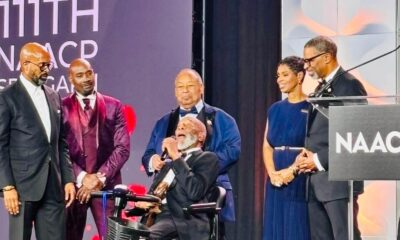
On Tuesday, May 12, Oakland honored a towering community figure, William “Bill” Patterson, with the unveiling of a bronze plaque and the renaming of the East Bay Municipal Utility District (EBMUD) boardroom in downtown Oakland.

Board members, family, colleagues, and mentees gathered to reflect on Patterson’s enduring legacy at the meeting.

Patterson, who died in 2025 at the age of 94, was remembered as a tireless advocate, mentor, and public servant whose influence shaped generations across the East Bay.

“This is well deserved,” said Patterson’s cousin, Maria Simon. “He was such a big part of the Oakland community. It’s heartwarming to know he was known by so many people.

“So many credit him with helping them get their first job. It was especially meaningful when he held the Bible for Mayor Barbara Lee’s swearing-in. He truly believed in the goodness of people, in possibilities, and in the power to bring things to fruition.”

Oakland NAACP President Cynthia Adams described Patterson as a father figure. “He took me under his wing,” she said. “This recognition is a very special moment.”

Fellow NAACP member Robert “Bob” Harris echoed that sentiment, recalling Patterson as “a great member of the NAACP and a proud Kappa Alpha Psi man.”

Patterson’s son, William Patterson Jr., reflected on his father’s professional life.

“My father loved his community, and he loved working with EBMUD and spoke highly of his colleagues,” he said, standing alongside cousin Rise Jones Pichon, a former Santa Clara County Superior Court judge.

EBMUD Board President Luz Gómez praised Patterson’s resilience and dedication.

“As his health declined, he would spend half the day in the hospital and still come to our meetings,” she said. “There will never be another like him.”

Activist Cheryl Sudduth highlighted Patterson’s commitment to workforce development and youth empowerment. “He had the vision to bring water careers to students and the next generation,” she said, noting that participants in one of his initiatives received $2,000 stipends.

Sudduth also summed up one of Patterson’s guiding philosophies: “He told me it’s not enough to have a seat at the table. You need to have access to quality resources, the tools to build the table, and the skills to ensure everyone there can contribute. We should be more than a representation; we should reflect determination.”

EBMUD Board Member Andy Katz emphasized the importance of remembrance.

“When you die, you die twice, physically, and then when people stop saying your name,” he said. “By honoring him this way, his name will continue to be spoken for years to come.”

Others in attendance reflected on Patterson’s broad impact.

“It was a joy to watch him accomplish so much,” said EBMUD Board Member Marguerite Young.

Business leader, Delane Sims added that Patterson became a trusted advisor to multiple Oakland mayors.

“We need young people to learn about him so they can become leaders capable of creating meaningful change,” Sims said.

Following public comments, attendees witnessed the unveiling of the bronze plaque in the boardroom foyer, along with signage officially renaming the space in Patterson’s honor.

Born in 1931, Patterson devoted more than seven decades to public service in Oakland and the broader East Bay. Appointed to the EBMUD Board in 1997, he served for 27 years and became its first African American board president. His leadership extended beyond water governance into civil rights, education, and community development.

A three-term president of the Oakland NAACP, Patterson also advised Oakland’s first Black mayor, Lionel Wilson, and played a key role in advancing equity, public health, and environmental justice. He served on the Urban Strategies Council and the Oakland Public Ethics Commission, further shaping public policy.

In 1971, Patterson was a founding director of the Peralta Colleges Foundation, which provides financial assistance and support to students across Berkeley City College, College of Alameda, Laney College, and Merritt College.

In addition, Patterson mentored countless young people through Oakland’s recreation programs, helping guide future leaders and even professional athletes. Though slight in stature, Patterson will always be remembered as a giant of a man.

Continue Reading

Arts and Culture

Against All Odds: Mary Jackson’s Journey to NASA Engineer

Jackson’s life took a significant turn when she was offered the opportunity to work in a wind tunnel, a facility used to test the effects of air moving over aircraft structures. It was here that her passion for engineering truly took flight. However, there was a challenge: to become an engineer, she needed to take advanced courses that were only offered at a segregated high school.

Published

on

Mary Jackson. Public domain.

By Tamara Shiloh  

When we talk about breaking barriers in science, technology, engineering, and mathematics, the name Mary Jackson deserves a place at the top of the list.

Jackson was born in 1921 in Hampton, Virginia, a place that would later become central to her groundbreaking work. From an early age, she showed a strong aptitude for math and science—subjects that, at the time, were not widely encouraged for African American women. But Jackson was not one to be limited by expectations. She earned degrees in mathematics and physical science from Hampton Institute (now Hampton University), setting the foundation for a career that would change history.

Before joining NASA, Jackson worked as a teacher and later as a research mathematician at the National Advisory Committee for Aeronautics (NACA), the agency that eventually became NASA. Like many African American women of her time, she began her career as a “human computer,” performing complex calculations by hand. It was in this environment that she worked alongside brilliant minds like Katherine Johnson, forming part of a powerful group of African American women whose calculations helped launch America into space.

Jackson’s life took a significant turn when she was offered the opportunity to work in a wind tunnel, a facility used to test the effects of air moving over aircraft structures. It was here that her passion for engineering truly took flight. However, there was a challenge: to become an engineer, she needed to take advanced courses that were only offered at a segregated high school.

Jackson did something truly remarkable. She petitioned the city of Hampton for permission to attend those classes. She didn’t accept “no” as an answer. And she won.

In 1958, Jackson became NASA’s first African American female engineer.

But Jackson’s impact didn’t stop there.

Later in her career, she chose to step away from her engineering position—not because she couldn’t continue, but because she wanted to make a difference. She moved into roles focused on equal opportunity, working to ensure that women and minorities had access to the same opportunities she fought so hard to get.

Jackson’s story gained wider recognition through the book and film Hidden Figures, which highlighted the contributions of African American women at NASA. But long before the spotlight found her, Jackson was doing the work—quietly, persistently, and brilliantly.

Jackson retired from Langley in 1985. Among her many honors were an Apollo Group Achievement Award and being named Langley’s Volunteer of the Year in 1976. She served as the chair of one of the center’s annual United Way campaigns and a member of the National Technical Association (the oldest African American technical organization in the United States).

She and her husband Levi had an open-door policy for young Langley recruits trying to gain their footing in a new town and a new career. A 1976 Langley Researcher profile might have done the best job capturing Mary’s spirit and character, calling her a “gentlelady, wife and mother, humanitarian and scientist.”

For Jackson, science and service went hand in hand.

She died on Feb. 11, 2005, at age 83, at a convalescent home in Hampton, Virginia.

Continue Reading

Subscribe to receive news and updates from the Oakland Post

* indicates required

CHECK OUT THE LATEST ISSUE OF THE OAKLAND POST

ADVERTISEMENT

WORK FROM HOME

Home-based business with potential monthly income of $10K+ per month. A proven training system and website provided to maximize business effectiveness. Perfect job to earn side and primary income. Contact Lynne for more details: Lynne4npusa@gmail.com 800-334-0540

Facebook

Trending

Copyright ©2021 Post News Group, Inc. All Rights Reserved.