Connect with us

Education

Black Travelers Used ‘The Green Book’ to Navigate Jim Crow America

Published

on

The discriminatory laws and practices of the Jim Crow era made traveling by car a dangerous experience for Black families. Travelers were denied access to basic services including gas, hotels and public restrooms along the nation’s highways. Many were greeted with humiliation, threats, and physical violence because a wrong exit was taken. These Sundown Towns, or municipalities that banned Blacks after dark, were scattered across the country.

The desperate need for safe and friendly accommodations brought about the start of a necessary network of shared word-of-mouth advice. Victor Hugo Green, a Harlem-based postal carrier, had grown tired of the maltreatment received by Blacks who dared venture outside of their neighborhoods.

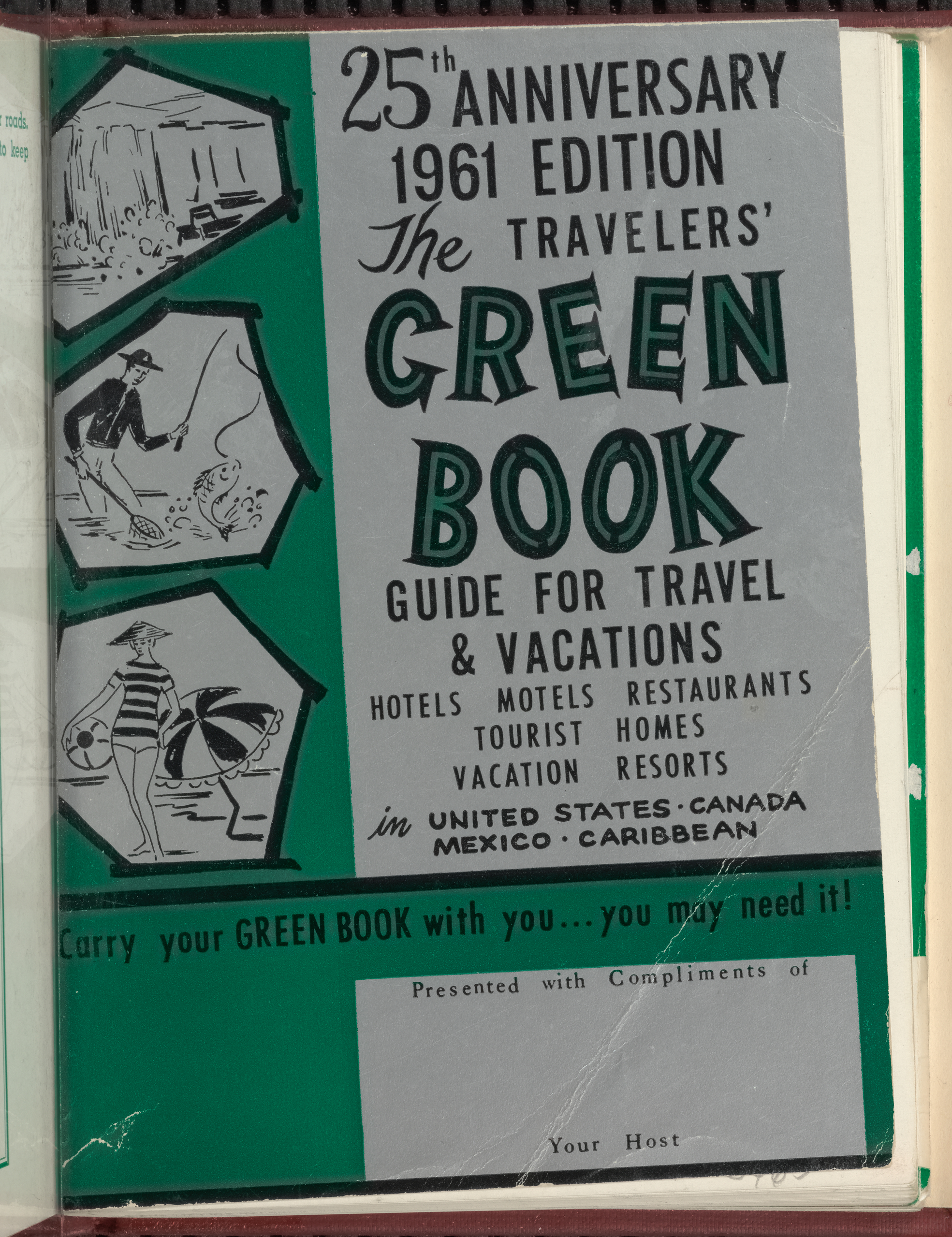
In 1936, he published the first version of  “The Negro Motorist Green Book,” a guidebook for Black travelers that provided a list of hotels, boarding houses, taverns, restaurants, service stations and other establishments throughout the country that served African American patrons.

Green drew his inspiration from guidebooks published for Jewish travelers. He wanted Blacks to also have the freedom to travel without facing hostility. The first edition listed hotels and restaurants in the New York area. But after gathering information from his fellow postal workers throughout the states and offering payment for viable information, Green began to expand later editions.

By the early 1940s, the Green Book boasted listings of thousands of establishments from across the country. Each was either Black-owned or proven to be non-discriminatory. Travelers were able to visit bars and restaurants, enjoy movie theaters, spruce up at a local beauty salon, or simply pass through a town for a quick tour, all without fear.

Rev. Dorothy Wells of Tennessee said that her parents, in 1959, used the Negro Motorist Green Book to plan their honeymoon. The newlyweds drove through the segregated South from Mobile, Ala., to Roanoke, Va.

“It took them about six days, one way, to make the trip,” Wells said during an interview with WMC Action News 5. “… if you wandered into a place where African Americans are not welcome, it could be worse than not safe. You could end up actually being killed.”

Author Kym Clark wrote: “When I was a little girl … I remember us all piling into the car to take trips home to Georgia. Now that was in the early to mid-1960s … we never stopped, not for a hotel, a restaurant or a restroom. My mom would fry up a big batch of chicken that we’d eat along the way, fill up a big thermos with soup and another big thermos with coffee and off we’d go. Now, mind you, that was an 18- to 20-hour trip. It wasn’t until I was an adult that I realized why.”

Green died in 1960. His wife, Alma, then took over as editor. In 1964, the Civil Rights Act banned racial segregation in restaurants, theaters, hotels, parks and other public places. Two years later, after nearly 30 years in print, the Green Book ceased publication.

Tamara Shiloh

Tamara Shiloh


About Tamara Shiloh


Tamara Shiloh has published the first two books in her historical fiction chapter book series, Just Imagine…What If There Were No Black People in the World is about African American inventors, scientists and other notable Black people in history. The two books are Jaxon’s Magical Adventure with Black Inventors and Scientists and Jaxon and Kevin’s Black History Trip Downtown. Tamara Shiloh has also written a book a picture book for Scholastic, Cameron Teaches Black History, that will be available in June, 2022.

Tamara Shiloh’s other writing experiences include: writing the Black History column for the Post Newspaper in the Bay area, Creator and Instruction of the black History Class for Educators a professional development class for teachers and her non-profit offers a free Black History literacy/STEM/Podcast class for kids 3d – 8th grade which also includes the Let’s Go Learn Reading and Essence and tutorial program.   She is also the owner of the Multicultural Bookstore and Gifts, in Richmond, California,

Previously in her early life she was the /Editor-in-Chief of Desert Diamonds Magazine, highlighting the accomplishments of minority women in Nevada; assisting with the creation, design and writing of a Los Angeles-based, herbal magazine entitled Herbal Essence; editorial contribution to Homes of Color; Editor-in-Chief of Black Insight Magazine, the first digital, interactive magazine for African Americans; profile creations for sports figures on the now defunct PublicFigure.com; newsletters for various businesses and organizations; and her own Las Vegas community newsletter, Tween Time News, a monthly publication highlighting music entertainment in the various venues of Las Vegas.

She is a member of:

  • Society of Children’s Book Writers and Illustrators (SCBWI)

  • Richmond Chamber of Commerce

  • Point Richmond Business Association

  • National Association of Professional Women (NAPW)

  • Independent Book Publishers Association (IPBA)

  • California Writers Club-Berkeley & Marin

  • Richmond CA Kiwanis

  • Richmond CA Rotary

  • Bay Area Girls Club


Tamara Shiloh, a native of Northern California, has two adult children, one grandson and four great-grand sons. She resides in Point Richmond, CA with her husband, Ernest.

www.multiculturalbookstore.com

About Tamara Shiloh

Tamara Shiloh has published the first two books in her historical fiction chapter book series, Just Imagine…What If There Were No Black People in the World is about African American inventors, scientists and other notable Black people in history. The two books are Jaxon’s Magical Adventure with Black Inventors and Scientists and Jaxon and Kevin’s Black History Trip Downtown. Tamara Shiloh has also written a book a picture book for Scholastic, Cameron Teaches Black History, that will be available in June, 2022. Tamara Shiloh’s other writing experiences include: writing the Black History column for the Post Newspaper in the Bay area, Creator and Instruction of the black History Class for Educators a professional development class for teachers and her non-profit offers a free Black History literacy/STEM/Podcast class for kids 3d – 8th grade which also includes the Let’s Go Learn Reading and Essence and tutorial program.   She is also the owner of the Multicultural Bookstore and Gifts, in Richmond, California, Previously in her early life she was the /Editor-in-Chief of Desert Diamonds Magazine, highlighting the accomplishments of minority women in Nevada; assisting with the creation, design and writing of a Los Angeles-based, herbal magazine entitled Herbal Essence; editorial contribution to Homes of Color; Editor-in-Chief of Black Insight Magazine, the first digital, interactive magazine for African Americans; profile creations for sports figures on the now defunct PublicFigure.com; newsletters for various businesses and organizations; and her own Las Vegas community newsletter, Tween Time News, a monthly publication highlighting music entertainment in the various venues of Las Vegas. She is a member of:
  • Society of Children’s Book Writers and Illustrators (SCBWI)
  • Richmond Chamber of Commerce
  • Point Richmond Business Association
  • National Association of Professional Women (NAPW)
  • Independent Book Publishers Association (IPBA)
  • California Writers Club-Berkeley & Marin
  • Richmond CA Kiwanis
  • Richmond CA Rotary
  • Bay Area Girls Club
Tamara Shiloh, a native of Northern California, has two adult children, one grandson and four great-grand sons. She resides in Point Richmond, CA with her husband, Ernest. www.multiculturalbookstore.com

Continue Reading
Click to comment

Leave a Reply

Your email address will not be published. Required fields are marked *

Arts and Culture

Against All Odds: Mary Jackson’s Journey to NASA Engineer

Jackson’s life took a significant turn when she was offered the opportunity to work in a wind tunnel, a facility used to test the effects of air moving over aircraft structures. It was here that her passion for engineering truly took flight. However, there was a challenge: to become an engineer, she needed to take advanced courses that were only offered at a segregated high school.

Published

on

Mary Jackson. Public domain.

By Tamara Shiloh  

When we talk about breaking barriers in science, technology, engineering, and mathematics, the name Mary Jackson deserves a place at the top of the list.

Jackson was born in 1921 in Hampton, Virginia, a place that would later become central to her groundbreaking work. From an early age, she showed a strong aptitude for math and science—subjects that, at the time, were not widely encouraged for African American women. But Jackson was not one to be limited by expectations. She earned degrees in mathematics and physical science from Hampton Institute (now Hampton University), setting the foundation for a career that would change history.

Before joining NASA, Jackson worked as a teacher and later as a research mathematician at the National Advisory Committee for Aeronautics (NACA), the agency that eventually became NASA. Like many African American women of her time, she began her career as a “human computer,” performing complex calculations by hand. It was in this environment that she worked alongside brilliant minds like Katherine Johnson, forming part of a powerful group of African American women whose calculations helped launch America into space.

Jackson’s life took a significant turn when she was offered the opportunity to work in a wind tunnel, a facility used to test the effects of air moving over aircraft structures. It was here that her passion for engineering truly took flight. However, there was a challenge: to become an engineer, she needed to take advanced courses that were only offered at a segregated high school.

Jackson did something truly remarkable. She petitioned the city of Hampton for permission to attend those classes. She didn’t accept “no” as an answer. And she won.

In 1958, Jackson became NASA’s first African American female engineer.

But Jackson’s impact didn’t stop there.

Later in her career, she chose to step away from her engineering position—not because she couldn’t continue, but because she wanted to make a difference. She moved into roles focused on equal opportunity, working to ensure that women and minorities had access to the same opportunities she fought so hard to get.

Jackson’s story gained wider recognition through the book and film Hidden Figures, which highlighted the contributions of African American women at NASA. But long before the spotlight found her, Jackson was doing the work—quietly, persistently, and brilliantly.

Jackson retired from Langley in 1985. Among her many honors were an Apollo Group Achievement Award and being named Langley’s Volunteer of the Year in 1976. She served as the chair of one of the center’s annual United Way campaigns and a member of the National Technical Association (the oldest African American technical organization in the United States).

She and her husband Levi had an open-door policy for young Langley recruits trying to gain their footing in a new town and a new career. A 1976 Langley Researcher profile might have done the best job capturing Mary’s spirit and character, calling her a “gentlelady, wife and mother, humanitarian and scientist.”

For Jackson, science and service went hand in hand.

She died on Feb. 11, 2005, at age 83, at a convalescent home in Hampton, Virginia.

Continue Reading

Amsterdam News

School District Extends Supt. Dr. Denise Saddler’s Contract for a Second Year

The Oakland Board of Education has extended Superintendent Denise Saddler’s contract through June 2027, promoting her from interim to permanent superintendent with a salary of $367,765.45 per year.

Published

on

Supt. Dr. Denise Saddler. File photo.

By Post Staff

The Oakland Board of Education voted this week to extend Superintendent Denise Saddler’s contract for another year, from July 1, 2026, to June 30, 2027.

Under the new agreement, Saddler’s job title will become “superintendent”; she will no longer be called “interim.”

Along with the new title, she will receive full superintendent benefits and salary at $367,765.45 per year, according to the employment agreement.

The vote to approve the new contract passed 5-2 at Wednesday night’s board meeting.

Saddler’s original interim contract was for one year. The school board was planning to select a permanent superintendent by the fall but earlier this year decided to delay the search.

The new contract reflects the Board of Education’s “determination that continuity in executive leadership is in the best interests of the district as Oakland Unified continues implementation of its fiscal stabilization strategies, academic priorities, labor relations initiatives, and operational improvements,” the employment agreement reads.

In November, the board approved a $150,000 contract with a consulting firm to carry out that search, but Board President Jennifer Brouhard told KQED last month that the process never got off the ground.

“No work was done, no money has been paid for the work (to) the search firm for the superintendent search,” Brouhard said. “Hopefully, we’ll be resuming that in the early part of the fall.”

Dr. Saddler was born and raised in Oakland, attended local schools, and has dedicated more than 45 years of her career to serving Oakland students and families.

She began her career in 1979 as a teacher of students with disabilities. Over the years, she has served as a teacher, principal, district leader, and teachers’ union president.

While working in OUSD, she has served as principal at Chabot Elementary, area auperintendent, and executive leader for Community Engagement and Educational Transitions. She has also supported schools as a principal coach and substitute principal and taught at UC Berkeley’s Graduate School of Education.

Dr. Saddler holds a Doctorate in Educational Leadership from Mills College and master’s degrees in special education and in Staff Development and Administration.

Continue Reading

Arts and Culture

Book Review: Books on Black History and Black Life for Kids

For the youngest reader, “As You Are: A Hope for Black Sons” by Kimberly A. Gordon Biddle, illustrated by David Wilkerson (Magination Press, $18.99) is a book for young Black boys and for their mothers. It’s a hope inside a prayer that the world treats a child gently, and it could make a great baby shower gift.

Published

on

Photo of Black History Month book covers by Terri Schlichenmeyer.

By Terri Schlichenmeyer

Authors: Various, Copyright: c. 2025, 2026, Publishers: Various, SRPs: $17.99-$18.99, Page Counts: Various, 

Everybody in your family has stories to share.

Your parents have told you some, no doubt. Your grandparents have offered a few, too, and aunties and uncles have spun some good tales. But there’s so much more to know, so grab one of these great books and learn about Black History and Black life.

For the youngest reader, “As You Are: A Hope for Black Sons” by Kimberly A. Gordon Biddle, illustrated by David Wilkerson (Magination Press, $18.99) is a book for young Black boys and for their mothers. It’s a hope inside a prayer that the world treats a child gently, and it could make a great baby shower gift.

If someone said you couldn’t do something that you were clearly able to do, would you fight to do it anyhow?  In the new book, “Remember Her Name! Debbie Allen’s Rise to Fame” by Tami Charles, illustrated by Meredith Lucius (Charlesbridge, $17.99), a young girl in the Jim Crow South is told that she can’t dance because of the color of her skin.

She didn’t listen, though, and neither did her mother, who took her daughter to Mexico, where the girl soared! This is an inspiration for any 5-to-7-year-old; be sure to check out the back-of-the-book information, if you’re an adult fan.

Do you often hear your elders say things that sound like lessons?  They might be, so “Where There is Love: A Story of African Proverbs” by Shauntay Grant, illustrated by Leticia Moreno (Penguin Workshop, $18.99) is a book you’ll like. It’s a quick-to-read collection of short proverbs that you can say every day. Kids ages 4-to-6 will easily remember what they find in this book; again, look in the back for more information.

Surely, you love your neighborhood, which is why the tale inside “Main Street: A Community Story about Redlining” by Britt Hawthorne and Tiffany Jewell, illustrated by David Wilkerson (Penguin Kokila, $18.99) is a book for you.

Olivia’s neighborhood is having a block party, but she’s sad when no one shows up. That’s when she learns that “the government” is discriminating against the people and businesses near where she lives. So, what can she and her neighbors do? The answer might inspire 6-to-8-year-old kids to stand up to wrongs they see, and to help make their neighborhoods stronger and safer.

And finally, if a kid wants a book, where can they go to find it? In “I’m So Happy You’re Here: A Celebration of Library Joy” by Mychal Threets, illustrated by Lorraine Nam (Random House, $18.99) is a good introduction to the best of what a library has to offer. The freedom to walk into a library and borrow a book is the theme here, as is the sheer happiness of being welcomed, no matter who you are.  This is an easy book for kids as young as two and as old as five to enjoy.

On that note, if you want more, head to that library, or a nearby bookstore. They’ll be glad to see you. They’ve got stories to share.

Continue Reading

Subscribe to receive news and updates from the Oakland Post

* indicates required

CHECK OUT THE LATEST ISSUE OF THE OAKLAND POST

ADVERTISEMENT

WORK FROM HOME

Home-based business with potential monthly income of $10K+ per month. A proven training system and website provided to maximize business effectiveness. Perfect job to earn side and primary income. Contact Lynne for more details: Lynne4npusa@gmail.com 800-334-0540

Facebook

Trending

Copyright ©2021 Post News Group, Inc. All Rights Reserved.