
Government
Don’t Miscount Us: Black Leaders Rev up Push for 2020 Census


African-American leaders across the country — and around California — are pulling out all the stops this time. They say Blacks can not afford to be undercounted in the US 2020 Census.
During the last census in 2010, field reps undercounted African Americans across the United States by more than an estimated 800,000 people.
The data census workers collect is used to determine how over $800 billion in federal, state and local money for programs like Medicaid, Head Start, WIC, SNAP, Community Block Grants, Title 1, and more, is distributed among communities throughout the nation. The government also uses that information to decide how many United States representatives each state is allotted in Congress.
“There are certain zip codes and certain populations that are hard to count,” said Cassandra Jennings, president and CEO of the Greater Sacramento Urban League. “Those groups include Blacks, Latinos, Asians, the youth, elderly and renters.”
Jennings also serves as a subcommittee chair for California’s Census 2020 Hard to Count Campaign, tasked with making sure there is full participation among Californians.
In Sacramento County, she is working with 50 partners to develop culturally sensitive outreach methods for targeting Blacks. Trusted messengers in the community, Jennings says, like community based groups and African-American media, including Black-owned radio stations, newspapers and magazines, will help the Urban League get the word out.

Last month, African-American leaders around the country convened a ‘Tele-Townhall’ titled “Make Black Count.” Civil rights leaders, activists, journalists, members of the clergy and concerned citizens joined the conversation via teleconference to get a better sense of ways they can encourage people of African descent living in the United States to participate in the upcoming census.
The National Urban League (NUL), the National Association for the Advancement of Colored People (NAACP), the Lawyers Committee for Civil Rights Under Law (LCCR) and the National Coalition on Black Civic Participation (NCBCP) hosted the town hall, held on Oct. 22.
Stacey Abrams, who ran for governor of Georgia last November, joined Marc H. Morial, president of NUL, the Rev. Al Sharpton, president of NAN, and Melanie Campbell, president of NCBCP, among others, to lead the discussion.
“The Census is important because it is the foundation for all reapportionment — drawing of lines for council seats in cities, county commissions, juries, state legislatures, certainly for members of Congress, and in those communities which elect judges from districts, it also impacts that,” said Morial.
Morial challenged the ‘Tele-townhall’ participants to do all that they can to make sure everyone is fully counted and to hold the US Census Bureau accountable to conduct a full and complete count.
In California, African Americans, in large numbers, mainly live in only about eight of the state’s 58 counties. In those regions, the majority of Blacks reside in tracts that the United States Census Bureau has designated hard to count.
So, in Los Angeles, Alameda, San Bernardino and Sacramento counties, for example, local governments are funneling California census money to support the work Jennings and others are doing to mobilize participation. So far, California has invested $100.3 million toward ensuring a complete count in the state. In total, the state plans to spend about $154.3 million on the 2020 Census.
From March 20-22 next year, Sacramento County census outreach groups, for instance, will hold a “Black Count” public awareness weekend. It will feature a blitz of activities targeting more than 14,000 Blacks in the county, including “pop-ups” at approximately 20 churches in the capital city area to provide volunteer training. There will also be special programs aimed at getting the information to young people.
To effectively reach African-American communities across California, Jennings said, census outreach workers will have to focus on educating people about why the census is important to them. They will also have to explain that every member of each household must be counted, including all children and grandchildren – even if they are not listed on the lease.
During the 2010 census, 10 percent of the estimated 4 million children in the United States that were not counted lived in California, according to the California Complete Count Office.
Special attention would have to be given to elderly populations too, she added, because some of them are isolated from social networks and lack access to computers, smartphones, radios and even television.
For some African Americans, it’s a matter of trust, Jennings added. “It’s important for people to know their information won’t be ‘out there’ or compromised, and if they are concerned about information being reported to landlords, for instance, rest easy, it won’t.”.
The U.S. constitution mandates the federal government to count every resident of the United States every 10 years. Next year’s census will officially kickoff in April.
“The way the count will work is: Beginning March 12, Census 2020 will mail a unique user ID to most U.S. households,” Morial told participants of the ‘Tele-townhall.’ “This will allow heads of households to complete the form online, or by mail, or by phone, ahead of Census Day, which is April 1 2020.









Community
Asm. Corey Jackson Announces Launch of 24-Hour Childcare in His District
Assemblymember Corey Jackson has secured $2 million in state funding for a proposed childcare special district in Moreno Valley and Perris. This funding aims to establish a system providing 24-hour, seven-day-a-week childcare, which would be California’s first special district focused solely on childcare. The initiative seeks to address the area’s designation as a “childcare desert” and high costs for working families. The funding will cover startup, planning, and formation costs for the district. Read more about the specifics of this groundbreaking initiative.

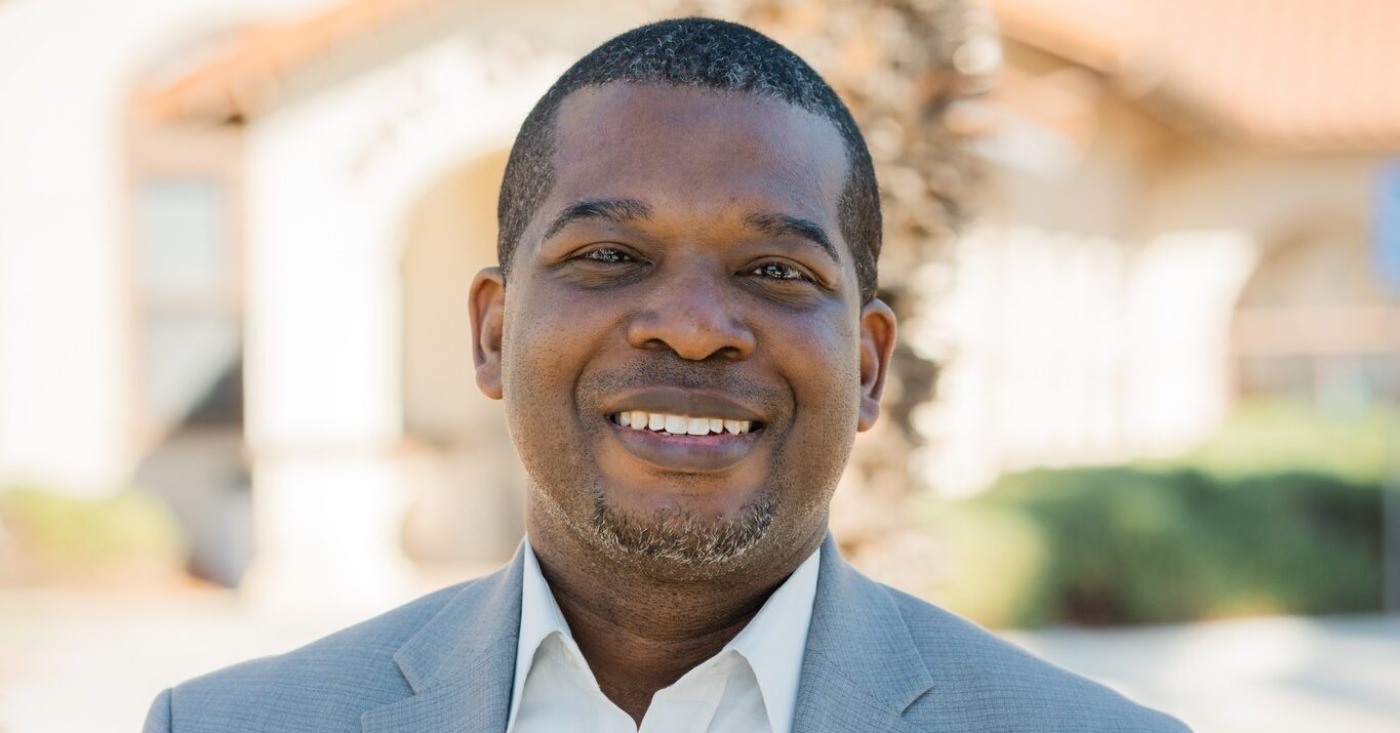
Assemblymember Corey Jackson (D-Moreno Valley) has secured $2 million in state funding to launch a proposed childcare special district serving families in Moreno Valley and Perris, paving the way for a system designed to provide childcare 24 hours a day, seven days a week.
The Moreno Valley-Perris Childcare Special District would be the first special district in California focused specifically on childcare, according to Jackson’s office. The state funding will cover startup, planning, and formation costs and help the district meet requirements set by the Riverside Local Agency Formation Commission, or LAFCO.
The proposed district would coordinate a mixed-delivery childcare system that could include home-based and center-based care. The goal is to provide universal childcare for families who work overnight, early morning, or other nontraditional shifts.
Jackson’s office says Moreno Valley is a certified “childcare desert,” with licensed childcare spaces available for only 15% of children with working parents. Infant care in Moreno Valley averages $2,776 a month, or about 35.7% of median household income. In Perris, licensed infant care can cost more than 60% of an individual worker’s gross median earnings, according to the assemblymember’s office.
“Securing this $2 million in startup funding is a monumental victory for the working-class families of Moreno Valley and Perris who have been trapped in a childcare desert for far too long,” Jackson said.
The proposal follows Jackson’s unsuccessful effort to establish the district through Assembly Bill 2083. The legislation would have created the district as a dependent special district covering Moreno Valley, Perris and their spheres of influence, with Riverside LAFCO responsible for reviewing its formation and boundaries.
The new funding allows the district’s formation to move forward without requiring mandatory contributions from local school districts and other stakeholders, according to Jackson’s office. His spokesperson, Daniel Peeden, said Jackson hopes the district can be operating by 2028.
The proposal has faced questions from some local officials. Moreno Valley City Councilmember Ed Delgado, who is running against Jackson for the 60th Assembly District seat, said he supports affordable childcare but questioned how the proposed district would operate and how much it would ultimately cost.
“Basically, he didn’t have a plan. We didn’t see a plan,” Delgado said, adding that officials had questions about operating costs, insurance and eligibility.
“It’s going to take a lot more than $2 million to create a special district to provide affordable childcare,” Delgado said.
Delgado has suggested working with existing childcare centers to subsidize costs for local families rather than creating a new agency.
Jackson’s office says the program will lower barriers to “workforce participation” and reduce “affordability anxiety” for young families. This landmark District is poised to trigger a virtuous cycle of economic upward mobility and long-term regional prosperity in the 60th Assembly District, his office added.

Economy
Poll: Becerra Widens His Lead Over Hilton; Californians Split on Wealth Tax
A new Public Policy Institute of California poll shows Democrat Xavier Becerra leads Republican Steve Hilton by 22 points in California’s governor’s race, with 60% of likely voters supporting Becerra compared to 38% for Hilton. The September survey also reveals Californians are closely divided on a proposed one-time tax on billionaires, with 52% of likely voters in favor of Proposition 40. Affordability issues are a major factor for voters. Read more to learn about the poll’s additional findings on voter sentiment.
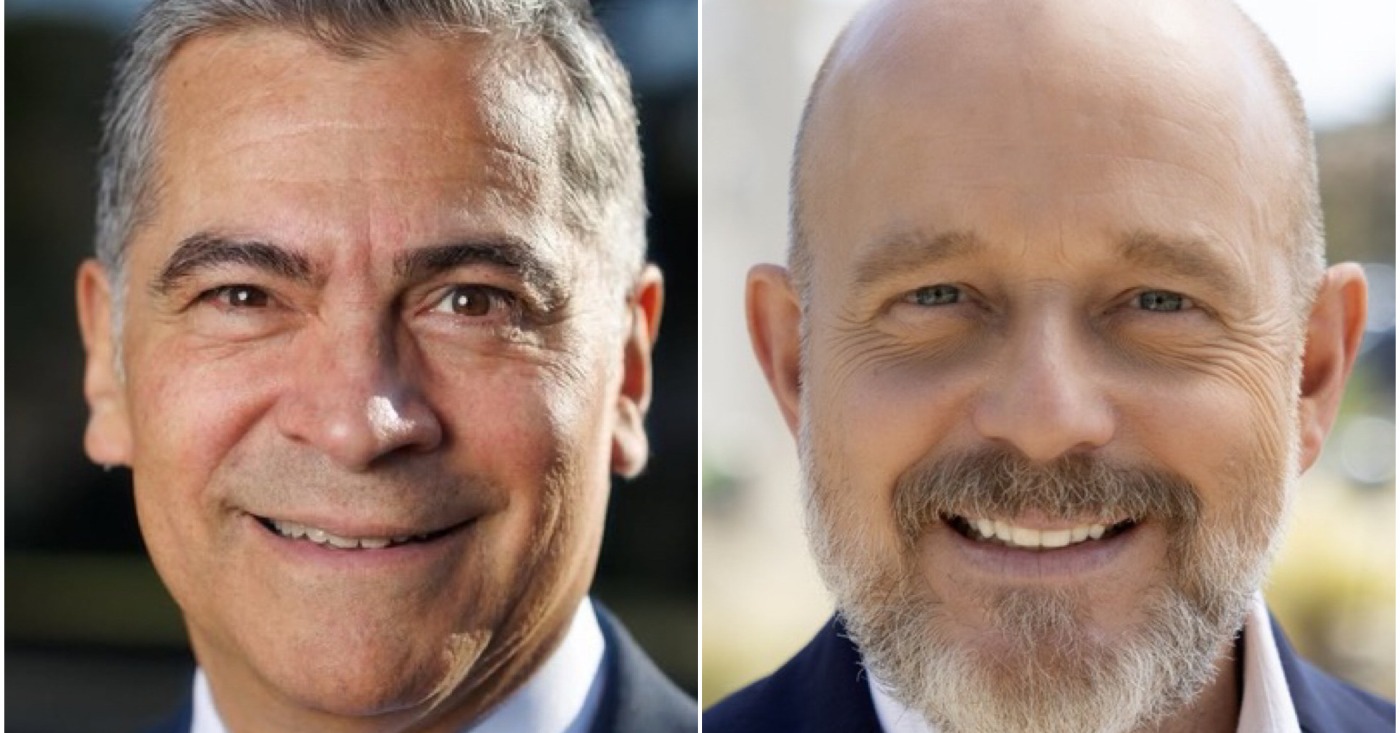
Democrat Xavier Becerra holds a 22-point lead over Republican Steve Hilton in California’s governor’s race, while voters remain closely divided over a proposed one-time tax on billionaires, according to a new Public Policy Institute of California poll.
The September PPIC survey found that 60% of likely voters support Becerra, compared with 38% for Hilton. His lead is actually narrower than it was in July, when he led Hilton 61% to 36%.
Becerra leads among independent voters, with 57% supporting him compared with 38% for Hilton. Party loyalty remains strong, with 93% of Democratic likely voters backing Becerra and 92% of Republicans supporting Hilton.
Hilton leads in the Central Valley, where 52% of likely voters support him compared with 46% for Becerra.
Affordability remains a major factor: 65% of likely voters say candidates’ plans to address cost-of-living issues are “very important” to their vote.
“Affordability continues to be top of mind for Californians when considering their choice for governor,” said Mark Baldassare, PPIC Statewide Survey director and Miller Chair in Public Policy.

The poll also found a narrow split over Proposition 40, a proposed one-time tax of up to 5% on taxpayers with assets exceeding $1 billion. Fifty-two percent of likely voters said they would vote yes, while 46% said they would vote no.
Support for the wealth tax varies sharply by party. Seventy-two percent of Democrats favor Proposition 40, compared with 46% of independents and 21% of Republicans.
Two competing measures also drew majority support. Fifty-one percent back Proposition 41, while 54% support Proposition 42, both of which could affect the wealth-tax proposal.
The findings come as Californians express broader frustration with the state’s political direction. Seventy-one percent of likely voters expect bad economic times in California over the next year.
“Californians are clearly grumpy and aren’t enamored with any particular political party or movement,” Baldassare said.
The survey interviewed 1,745 California adults, including 1,103 likely voters, from Sept. 4-10. The margin of error for likely voters is plus or minus 3.8 percentage points.
Black History
Caribbean Nations Produce Action Plan Calling for UK Reparations Over Slavery
Caribbean nations are developing an action plan with legal options to press the United Kingdom for negotiations regarding slavery reparations. Officials at a recent conference indicated that regional leaders hope for targeted talks at upcoming Commonwealth and UN summits. However, if diplomatic efforts are resisted, the Caribbean nations are prepared to pursue international court action. A spokesperson for the British government recently reiterated its long-held position against paying reparations. Read more about the unified strategy being pursued.

Caribbean nations are producing an “action plan” with legal options to push the United Kingdom (UK) into negotiating a decades-long slavery reparations deal, according to officials at a reparations conference.
Leaders in the region are hoping the UK would agree to targeted and constructive negotiation talks at upcoming Commonwealth and UN summits, but they are ready to take the matter to international courts if Britain continues to resist diplomatic options, according to the Guardian.
Earlier this month, a spokesperson reiterated the British government’s long‑held position that “the UK does not and will not pay reparations”.
Ralph Gonsalves, the former prime minister of St. Vincent and the Grenadines, said the Caricom Regional Conference on Reparations, which was hosted last week by Barbados with the Caricom Reparations Commission (CRC), was key for agreeing to a unified strategy to bring Britain to the negotiating table. Gonsalves is now an elder and adviser for the Repair Campaign, a social movement for reparatory justice.
He said that slavery happened over centuries and reparations had to be realistic and set over decades. “We need a concrete, multigenerational plan,” he said.
On the legal options available to the Caribbean, Gonsalves challenged arguments that Britain did not violate historical laws during transatlantic slavery, adding that the UK’s signature on contemporary UN conventions had established a binding legal obligation for reparative justice.
“The fact is that the consequences of slavery fall squarely under the Committee on the Elimination of Racial Discrimination, which obliges states to help address the consequences of native genocide and slavery,” Gonsalves said.



Asm. Corey Jackson Announces Launch of 24-Hour Childcare in His District

IN MEMORIAM: The Rev. Leon “Sonny” Clark, Longtime Orange County Pastor and Community Leader, Dies at 72

Poll: Becerra Widens His Lead Over Hilton; Californians Split on Wealth Tax

From Historic Memories to New Possibilities: Oakland Celebrates Coliseum 60

County Office of Education Says OUSD Finances Are Getting Healthier, Materially Stronger

LIVE FREE Sunday Dinner Brings Faith, Fellowship and Civic Conversation to Oakland

Remembering Chauncey Bailey as Student Journalists Face Threats to Truth-Telling

BLACspace Cooperative Invites Bay Area to Experience Oakland’s Black Cultural Ecosystem Through a BLAC Map Tour + Party

In Wake of Death on Doorstep, Williams Chapel Baptist Church Calls for Better Care, Funding for Unhoused

Oakland Centenarian Nuna McKee Honored!

Caribbean Nations Produce Action Plan Calling for UK Reparations Over Slavery

Oakland Post: Week of September 23 – 29, 2026

Doulas Are Helping Black California Moms Navigate Pregnancy–Even as High Mortality Rates Persist

Newsom Signs Addictive Social Media Law to Protect Kids

On Your November Ballot: Prop 38 Would Allocate $8.4 Billion to Immunology and Immunotherapy Funding

Less Affluent School Districts, Including Sacramento City, Face Threat of State Takeover

ESSAY: California Can Close Its Colorectal Cancer Gap

California Hispanic Chambers of Commerce Unveils: ‘Powering the Future’ Theme for 47th Annual Statewide Convention

Four Candidates, Including Incumbent Barbara Lee, Qualify for Oakland Mayor’s Race

Oakland Post: Week of August 12 – 18, 2026

From Blueprint to Breakthrough: Tackling Affordable Housing in Oakland

Oakland Observes Black August with Block Parties, Film Showings, Workshops

COMMENTARY: Why Local School Tax Measure G1 Will Not Be on the November Ballot

Standoff for Justice: Our Homes Are Worth Fighting For

Returning to Its Roots, the Oakland Black-Eyed Pea Festival Partners with the Freedom Farmers Market Sept. 12

Oakland Post: Week of August 26 – September 1, 2026

NPRC Scores First Advocacy Victory: David Shaw Finally Gets His Wish to ‘Go Home’

Frontier Airlines’ Return to Oakland Airport Brings Flights, Jobs and Opportunity

Gubernatorial Candidate Steve Hilton Blasts California New Tire Rules; Newsom Hits Back

Chef Sharon Lee Blends Culinary Excellence, Education and Empowerment

The Conversation With Al McFarlane 6/23/26

Media Monday 6/22/26

LIVE! ASK ALMA! — TUES. 6.23.26 7PM EST

Car Buying Secrets: 4 Hidden Checks Before You Sign!

Is This 550 HP Charger Worth YOUR Money? AutoNetwork Review

Celebrating Juneteenth – Frederick Douglass on education and resistance

LIVE! — ASK ALMA! — TUES. 6.19.26 7PM EST

Hyundai Ioniq 5 Parking, Safety, and 360 View #shorts

2025 Ioniq 5 New Wiper & Powerful Performance! #shorts

Electric SUV Range: Is 259 Miles Enough? #shorts

EV Charging: How Fast Can You Charge an Electric Vehicle? #shorts

Biometric Cooling… Messaging Seats…Come on! 2025 Infiniti QX80 Autograph 4WD

Charged Up: Witness the Magic of a Fully Electric Car! #shorts

Range Rover Sport PHEV Included…: See What’s Inside This Luxury SUV! #shorts

Invisible Hood View: Perfect Parking with X-Ray Vision! #shorts
-
 Business4 weeks ago
Frontier Airlines’ Return to Oakland Airport Brings Flights, Jobs and Opportunity
-
 Business4 weeks ago
Gubernatorial Candidate Steve Hilton Blasts California New Tire Rules; Newsom Hits Back
-
 Business4 weeks ago
Chef Sharon Lee Blends Culinary Excellence, Education and Empowerment
-

 Black History4 weeks ago
Jackie Wright Champions Bay Area Stories, Filmmakers and Cultural Institutions
-

 Community4 weeks ago
Big City Mayors Ask for “Yes” Vote on Housing Bond Measure; Conservatives Say “No”
-

 Education4 weeks ago
Gov. Newsom’s Latest Appointees Include Sacramento Advocate for Formerly Incarcerated Students; State’s New Tech Chief
-

 Business4 weeks ago
Oakland Coliseum Project Opens Door for Small Businesses to Build Bigger
-

 Community2 weeks ago
Misnamed ‘Parent’ PAC Seeks to Influence Oakland School Board Elections
