
Community
After the Medical Students ‘Die-In,’ What Next at UCSF?

By Leland Kim and Laura Kurtzman, UCSF News
UC San Francisco medical students helped sparked a national movement in December when they launched #whitecoats4blacklives to bring attention to racial health care disparities.
Their act of courage inspired UCSF leaders to address racism head-on in its annual leadership retreat and has renewed a much-needed dialogue throughout campus.
A group of UCSF medical students gathered in a closed meeting last month to talk about race, racism and racial disparities.
They were troubled by recent grand jury decisions not to indict white police officers who were involved in the deaths of two unarmed African American men, Michael Brown in Ferguson, Mo., and Eric Garner in New York City, and wanted to channel their frustration into something constructive.
The students, including many from the UCSF Underrepresented In Medicine (UIM) mentoring program, decided to hold a “die-in” at UCSF while wearing their white coats, symbolic of those in the health profession. They and their peers of all ethnic backgrounds tapped into student networks across the country.
In just five days, a national movement called #whitecoats4blacklives was born.
It catalyzed thousands of students, faculty and staff in more than 80 colleges across the country. At UCSF, students from all professional Schools (Dentistry, Medicine, Nursing and Pharmacy) and the Graduate Division participated, as well as some faculty and staff members.
The hashtag dominated social media on Dec. 10, garnering widespread media attention and sparking a much-needed national conversation about racism being more than a just criminal justice issue.
“As students, we were able to use the momentum from the #whitecoats4blacklives movement to demonstrate the urgency of dealing with the issues of race, micro-aggressions and inequality that affects UCSF faculty, staff, students, and most importantly the patients we all serve,” said student organizer Sidra Bonner, a second-year student in the School of Medicine.
“It is my hope that this movement leads to improvement of the social medicine curriculum, specifically continued learning and skill development around this issue of bias, creation of a robust mentorship/advising system for all students, as well as commitment to strengthening the pipeline for underrepresented students in medicine by increased availability of scholarships and administrative support,” said Bonner.
The die-in had a ripple effect across UCSF.

Students hosted a town hall event on Dec. 12 to open up a dialogue about race and racism. School of Pharmacy Dean B. Joseph Guglielmo (far left), School of Nursing’s Monica McLemore (second from left), and School of Nursing Dean David Vlahov (center) were among the participants. Photo by Paul Day.
A student-initiated town hall held two days after attracted faculty members, deans and many of the University’s top leaders, who talked openly with students about the UCSF’s ongoing challenge with diversity.
Chancellor Sam Hawgood, MBBS, has made race and racial inequities a priority in his administration.
“This is an issue that goes beyond any one school or department; this is a campus issue,” he said. “Diversity is going to be an important priority for the entire UCSF community. I thank our students for initiating this conversation.”
And organizers of the School of Medicine’s annual leadership retreat this month decided to change the event’s agenda to discuss the enduring question of race in America – and how racial dynamics play out at UCSF.
“Our students are asking us to acknowledge, to think and to do something about the problem of racial and ethnic injustices,” said Bruce Wintroub, MD, interim dean of the School of Medicine, introducing a daylong colloquy that was rich in both data and personal stories about what it means to be black and brown in America.
“It is very easy to talk about racial disparities at other places,” he said. “It is much harder for us to take an honest look at the problems we have at UCSF.”
The leadership retreat, which took place on Jan. 8 and 9, was the first one ever to focus solely on race/ethnicity and health disparities.
It came as the School of Medicine has launched a six-year, $9.6 million effort to hold its departments accountable for achieving diversity, provide the resources to recruit and retain a more diverse faculty, create a culture of diversity and inclusion and expand the pool of scientific talent, which gets smaller at each level of training.
“This retreat was the first time in my 32 years at UCSF that I feel we have started to have an authentic conversation about race and the impact of racism and unconscious bias on our students, faculty and patients,” said Renee Navarro, MD, PharmD, vice chancellor of Diversity and Outreach. “I applaud the students who organized and implemented the #whitecoats4blacklives movement. They were the spark that led to this event.”
Some of those students were invited to participate in the leadership retreat and share their experiences with the group to help facilitate organizational change.
At times, nervous energy was palpable as students recalled instances of racism on campus. Some community members, participants noted, have accused UCSF being an “elitist ivory tower.”
White faculty members listened attentively, and some were candid enough to admit that they hadn’t really thought about racism and its impact on students and patients in a meaningful way.
“Being on the panel and speaking to an audience of accomplished and powerful people at UCSF were terrifying,” said Angela Broad, a second-year medical student. “It was really difficult sharing those experiences but the informal conversations I had throughout the day were very heartening. So many faculty, deans and staff thanked me for sharing my story.”
Compelling presentations and anecdotes by faculty of color helped shape the day’s conversation.
Neal Powe, MD, MPH, MBA, vice chair of the Department of Medicine and chief of medical services at San Francisco General Hospital and Trauma Center, shared a story about being pulled over by the police in North Carolina while in town to give a lecture. A police officer suspiciously questioned Powe about his destination, instructed him to keep his hands on the steering wheel and asked him if he had drugs in the car.













Community
WCCUSD Joins Statewide Organic School Food Purchasing Cooperative
Other districts involved include: Alameda USD, Albany USD, Berkeley USD, Capistrano USD, Cupertino Union SD, Hayward USD, Laguna Beach USD, Lagunitas Elementary SD, Mt. Diablo USD, North Monterey County USD, Pajaro Valley USD, San Leandro USD, San Ramon Valley USD, Santa Clara USD, Sausalito Marin City SD, Tahoe-Truckee USD and West Contra Costa USD.

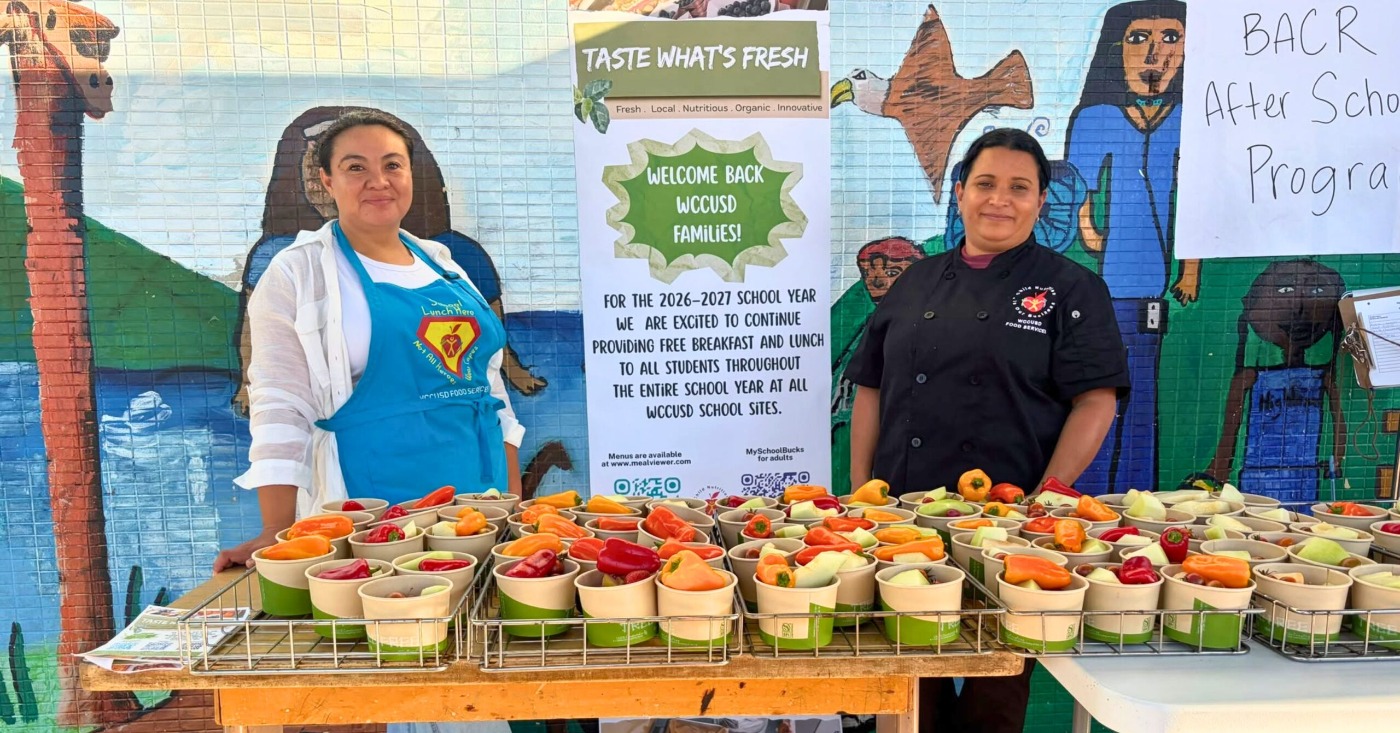
Seventeen California public school districts, including West Contra Costa Unified (WCCUSD), have joined a purchasing cooperative to pool their buying power and expand access to organic food in school meals.
The nonprofit Conscious Kitchen recently announced the launch of the Conscious Organic School Food Purchasing Cooperative. Its founding districts serve more than 300,000 students combined.
The cooperative partnered with food distributors UNFI and Sysco to expand the organic products available to participating districts. Combining schools’ purchasing demand helps distributors plan with suppliers while creating more dependable markets for organic farmers and food makers, according to Conscious Kitchen.
Other eligible California school districts can access the cooperative’s products and pricing through its existing contracts without conducting their own bids. Mt. Diablo Unified School District serves as the lead district for the cooperative’s grocery bid.
Other districts involved include: Alameda USD, Albany USD, Berkeley USD, Capistrano USD, Cupertino Union SD, Hayward USD, Laguna Beach USD, Lagunitas Elementary SD, Mt. Diablo USD, North Monterey County USD, Pajaro Valley USD, San Leandro USD, San Ramon Valley USD, Santa Clara USD, Sausalito Marin City SD, Tahoe-Truckee USD and West Contra Costa USD.
Barbara Jellison, WCCUSD’s executive director of food services, said the cooperative builds on years of work bringing fresh, organic food into school kitchens.
“The next challenge has always been how to make that possible for more districts,” Jellison said. “The Co-op gives schools a way to take what we have learned and move it to a completely different scale.”

Community
Democrats, Community Groups Back Measure EE to Change How Oakland Is Governed
Along with clearer executive responsibility, the Charter reform would also create new checks and balances, including an independent Budget and Legislative Analyst office, City Council confirmation of key appointments, expanded council hearing and subpoena authority, and give the council the ability to override a mayoral veto with six votes.
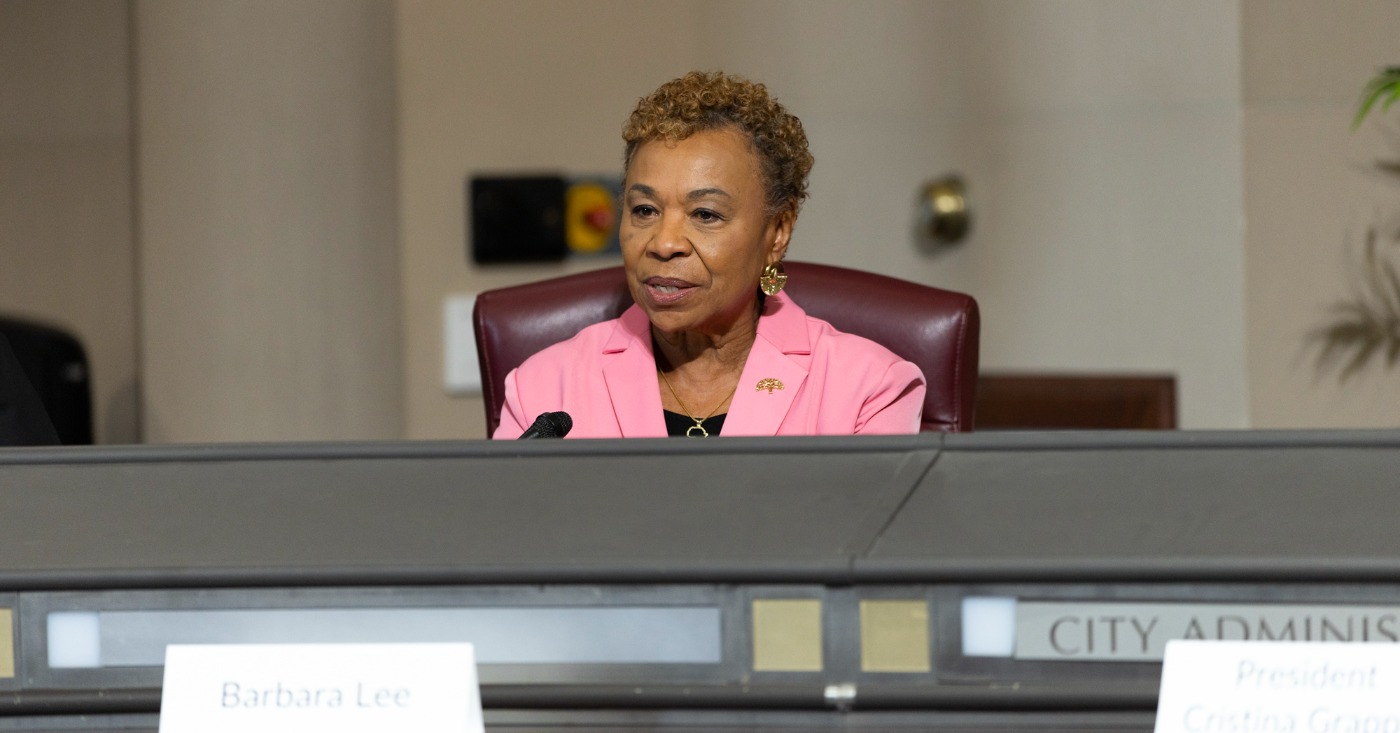

The Alameda County Democratic Party has voted to endorse Measure EE, the Oakland Charter reform measure on the November 2026 ballot. The party’s endorsement is announced alongside a broad coalition of organizations spanning labor, business, faith, and community advocacy, including Oakland Rising Action that are also supporting the measure.
Those supporters include:
- League of Women Voters of Oakland
- AFSCME Council 57
- SPUR
- Bay Area Council
- Black Women Organized for Political Action
- Faith in Action East Bay
- Oakland Chamber of Commerce
- Oakland Rising Action
- Revitalize East Bay
- Empower Oakland
Measure EE would reform Oakland’s hybrid governance system by establishing a strong-mayor structure, making the mayor the city’s chief executive, responsible for delivering effective, efficient services.
The measure would also reform and expand responsibilities of City Councilmembers.
Measure EE would create clearer lines of responsibility for the performance of city government, allowing voters to evaluate the mayor based on how effectively the city delivers services and produces results.
Along with clearer executive responsibility, the Charter reform would also create new checks and balances, including an independent Budget and Legislative Analyst office, City Council confirmation of key appointments, expanded council hearing and subpoena authority, and give the council the ability to override a mayoral veto with six votes.
“Oakland voters deserve a City Hall where they know exactly who’s responsible when something goes wrong and exactly who to credit when it gets fixed. Measure EE puts that responsibility squarely with the mayor, backed by real checks and balances, so Oakland can finally move as fast as its problems demand. That’s why the Alameda County Democratic Party is proud to stand behind it,” said Igor Tregub, chair of the Alameda County Democratic Party.
Oakland Rising Action, a collaboration of racial, economic, and environmental justice organizations, has also issued a press statement explaining its support for Measure EE.
Measure EE “represents a critical opportunity for residents to clarify the governance role of the Oakland Mayor and City Council, so we, as residents, know who to hold accountable for the execution of voter-approved and budgeted services within city departments,” the statement said.
Measure EE would reform Oakland’s Charter, which is the city’s Constitution, strengthening “the role of the mayor as the CEO of Oakland, with the city administrator being hired and managed by the mayor explicitly.”
The measure would also strengthen oversight of city departments by mandating reporting directly to the City Council and provide the mayor with veto power in approving policies and the budget.
Measure EE was placed on the ballot by the Oakland City Council in June 2026. For more than half a year, the mayor’s working group on Charter reform engaged residents and elected officials on the options for governance of Oakland, which led to Measure EE.
“Oaklanders need clarity about who is responsible for the management of our city departments, our tax dollars, and our voter-approved ballot measures,” said Pecolia Manigo, executive director of Oakland Rising.
“The average resident believes that we already have a strong mayor system,” she continued. “However, this is simply not the truth in our City Charter. It is time for us to stop talking about the Charter changes Oakland needs. This is the first of many Charter reforms that are needed to improve conditions in Oakland, especially the flatlands. It’s time all voters start paying attention to who is making decisions for Oakland. This election allows us to say how we believe Oakland should be governed.”
Business
Veterans Housing Project Proposed for South Richmond
According to the development team’s presentation, the project has an estimated total cost of nearly $158 million. The presentation outlines five phases encompassing entitlement and construction documents, community outreach, soil remediation and utility work, podium and building construction, solar technology integration, and interior buildouts.
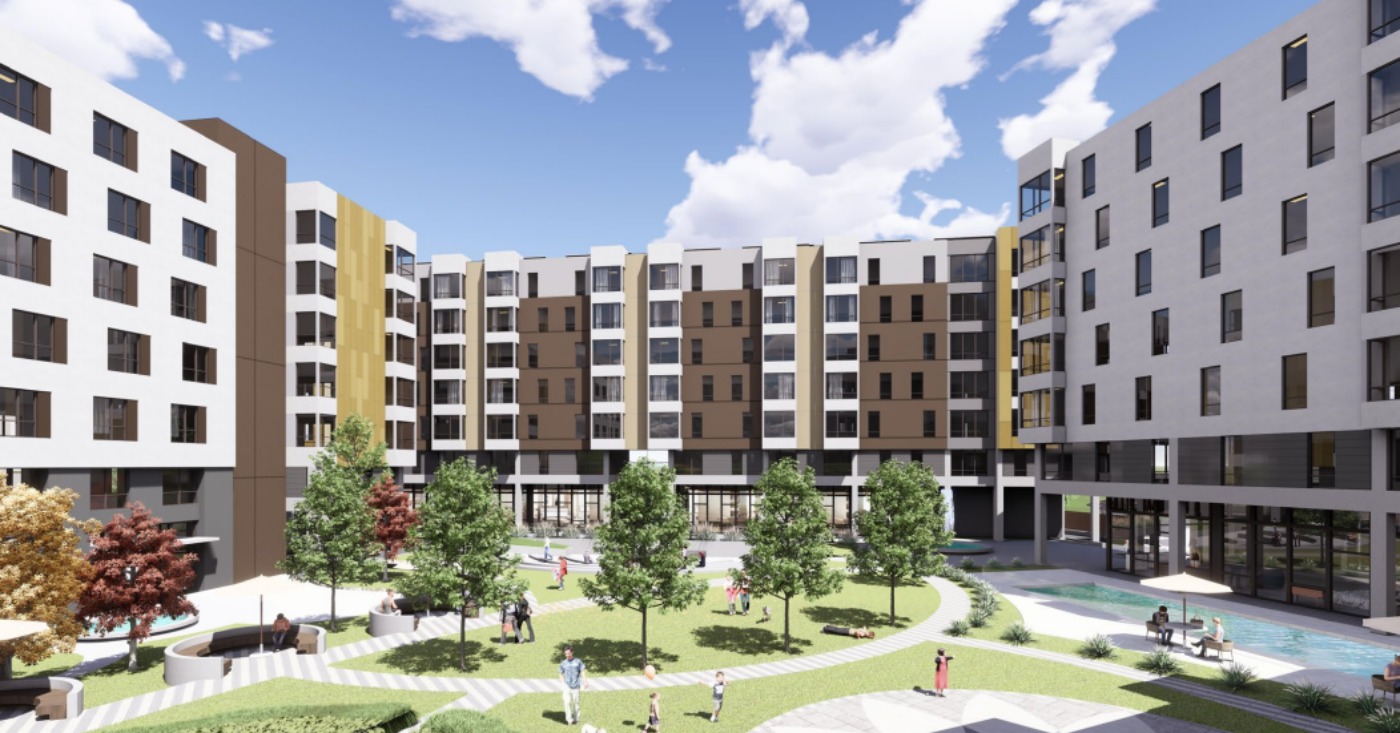
A proposed mixed-use development at 338 Carlson Blvd. could bring hundreds of homes and support services for military veterans to South Richmond.
Led by the Richmond-based Veterans Resource Program in partnership with Eagle Environmental Construction & Development, the proposal covers an approximately 2.3-acre property the nonprofit acquired in 2018.
The proposal features a multi-building residential development with various apartment sizes, though city documents and developer materials cite conflicting totals ranging from 226 to 268 units.
The proposal also includes approximately 40,000 square feet of commercial and retail space, about 200 parking spaces, and an entrepreneurial training and job-development component intended to connect veterans with economic and workforce opportunities.
According to the development team’s presentation, the project has an estimated total cost of nearly $158 million. The presentation outlines five phases encompassing entitlement and construction documents, community outreach, soil remediation and utility work, podium and building construction, solar technology integration, and interior buildouts.
Founded in 2011, the Veterans Resource Program provides housing assistance and other services to veterans, including those experiencing homelessness or transitioning from incarceration.

The proposal aims to advance Richmond’s affordable housing goals while connecting veterans with housing and supportive services. Details of affordability and veteran eligibility remain to be clarified.
The Richmond City Council was scheduled to receive an informational presentation on the project at its Oct. 6 meeting, following a continuance from Sept. 22. The item does not seek project approval or city funding. Any future request for city financial assistance or other public resources would require separate consideration and approval.


WCCUSD Joins Statewide Organic School Food Purchasing Cooperative

Democrats, Community Groups Back Measure EE to Change How Oakland Is Governed

Four Tips to Help You Plan a Holiday “Staycation”

Veterans Housing Project Proposed for South Richmond
PRESS ROOM: Transformative Justice Coalition 2026 Voting Rights Champion Awards Reception ‘Yesterday Is Today: The Battle For Voting Rights

Mayor Lee Delivers 2026 State of the City Address: ‘Oakland Continues to Be on the Move’

Oakland Awarded More than $14 Million in State Funding

Jendayi Arrest Raises Community Concerns Regarding Sheriff’s Chain of Command

Marin County Supes Expand Small Business Options with Home Kitchen Pilot Program

Allen Temple Baptist Church Hosts Free Prostate Cancer Screenings on Oct. 17

AC Transit Labor Unions Back Director Joel Young

Locals Can Get Locally Grown Produce Delivered Through Urban Tilth

‘ICE-Free Marin’ Supporters Press Supervisors as County Drafts Enforcement Restrictions

Oakland Post: Week of October 7 – 13, 2026

Ghana’s Ministry of Foreign Affairs Publishes Global Circle’s Vatican Reparations Call in Special Edition Alongside Heads of State

Misnamed ‘Parent’ PAC Seeks to Influence Oakland School Board Elections

Oakland Post: Week of September 2 – 8, 2026

Oakland Post: Week of September 9 – 15, 2026

Richmond Tiny House Village Farm & Garden Set to Open Gates on Sept. 26

Latest Massacre in Haiti Reveals Cruelty U.S. Deportations

Poll: Becerra Widens His Lead Over Hilton; Californians Split on Wealth Tax

County Office of Education Says OUSD Finances Are Getting Healthier, Materially Stronger

OPINION: Nolan Wells’ Death One of Several Signifying Racial Terror Lives on in U.S. South

Mayor Lee Announces $1 Million Kaiser Permanente Grant for Pilot Program to Address Homelessness, Clean Up Public Spaces throughout Oakland

Democratic Clubs Interview Candidates for Oakland School Board

BLACspace Cooperative Invites Bay Area to Experience Oakland’s Black Cultural Ecosystem Through a BLAC Map Tour + Party

Oakland People’s Arms Embargo Coalition Demands End to Military Shipments Thru Oakland

Oakland Post: Week of September 16 – 22, 2026

Zakiya Jendayi Arrested, Locked Out of Home by Sheriff’s Deputies

Two Looming Threats Every Alameda County Elder Should Know About

The Conversation With Al McFarlane 6/23/26

Media Monday 6/22/26

LIVE! ASK ALMA! — TUES. 6.23.26 7PM EST

Car Buying Secrets: 4 Hidden Checks Before You Sign!

Is This 550 HP Charger Worth YOUR Money? AutoNetwork Review

Celebrating Juneteenth – Frederick Douglass on education and resistance

LIVE! — ASK ALMA! — TUES. 6.19.26 7PM EST

Hyundai Ioniq 5 Parking, Safety, and 360 View #shorts

2025 Ioniq 5 New Wiper & Powerful Performance! #shorts

Electric SUV Range: Is 259 Miles Enough? #shorts

EV Charging: How Fast Can You Charge an Electric Vehicle? #shorts

Biometric Cooling… Messaging Seats…Come on! 2025 Infiniti QX80 Autograph 4WD

Charged Up: Witness the Magic of a Fully Electric Car! #shorts

Range Rover Sport PHEV Included…: See What’s Inside This Luxury SUV! #shorts

Invisible Hood View: Perfect Parking with X-Ray Vision! #shorts
-
 Economy3 weeks ago
Poll: Becerra Widens His Lead Over Hilton; Californians Split on Wealth Tax
-
 Business3 weeks ago
County Office of Education Says OUSD Finances Are Getting Healthier, Materially Stronger
-
 Business4 weeks ago
Mayor Lee Announces $1 Million Kaiser Permanente Grant for Pilot Program to Address Homelessness, Clean Up Public Spaces throughout Oakland
-
 Art3 weeks ago
BLACspace Cooperative Invites Bay Area to Experience Oakland’s Black Cultural Ecosystem Through a BLAC Map Tour + Party
-
 Uncategorized4 weeks ago
Oakland People’s Arms Embargo Coalition Demands End to Military Shipments Thru Oakland
-
 Activism4 weeks ago
Oakland Post: Week of September 16 – 22, 2026
-
 Lead Story2 weeks ago
Zakiya Jendayi Arrested, Locked Out of Home by Sheriff’s Deputies
-
 Community4 weeks ago
Two Looming Threats Every Alameda County Elder Should Know About
