
Business
Waters Outlines Agenda in First Policy Speech as Committee Chairwoman
NNPA NEWSWIRE — “…Millions of families that rely on HUD rental assistance programs are perilously close to losing their homes due to projected lapses in funding. What’s more, it was recently reported that HUD, under Secretary Carson’s leadership, has failed to follow its own contingency plan, and as a result 1,150 project-based rental assistance contracts have expired, with hundreds more hanging in the balance if this shutdown does not end.”

WASHINGTON — Congresswoman Maxine Waters (D-CA), Chairwoman of the House Committee on Financial Services, delivered the following remarks during her first policy speech in the 116th Congress:
As Prepared for Delivery
Thank you for the very warm welcome, and to the Center for American Progress for holding this event. CAP’s research and policy work are highly respected and a valued resource for Members of Congress and our staffs. I am very pleased to be here with you today to discuss the new Congress and my priorities as Chairwoman of the House Financial Services Committee.
I am deeply honored to have been selected by my colleagues to become the first woman and the first African American to serve as Chair of the Financial Services Committee. I have served on the Committee since 1991, and since 1995, I have served as Ranking Member or Chairwoman of every Subcommittee under the Committee’s jurisdiction, and have taken on important issues on behalf of consumers, investors, and vulnerable families.
So, I consider it a privilege to hold the gavel, and I am looking forward to working with my colleagues on the Committee on the many critical issues we are responsible for.

Trump Shutdown
Now, given the current circumstances in Washington, I would first like to address the shutdown and its impact on the important programs under the Financial Services Committee’s jurisdiction. We are now in the midst of the longest government shutdown in history – all because this President is throwing a tantrum about a senseless border wall.
The Trump shutdown is harming hardworking Americans and our financial markets. The shutdown has all but closed the doors of the Securities and Exchange Commission (SEC), which is Wall Street’s cop on the block. As a result of the shutdown, the SEC is unable to carry out most enforcement actions against bad actors. Businesses planning to enter the stock market for the first time through an Initial Public Offering (IPO) may also be delayed because the SEC cannot approve their documents, harming American entrepreneurs and job creation.
The shutdown also has a serious impact on critical housing programs. 95% of the Department of Housing and Urban Development’s staff has been furloughed. Millions of families that rely on HUD rental assistance programs are perilously close to losing their homes due to projected lapses in funding. What’s more, it was recently reported that HUD, under Secretary Carson’s leadership, has failed to follow its own contingency plan, and as a result 1,150 project-based rental assistance contracts have expired, with hundreds more hanging in the balance if this shutdown does not end.
Families aspiring to the American dream of homeownership may have their Federal Housing Administration (FHA) or rural housing loans delayed or be unable to close on their loans during the shutdown.
And in rural communities, very low-income, elderly homeowners who rely on HUD grants and loans to address health and safety hazards may not receive disbursements and as a result, may be forced to live in dangerous conditions.
These are just a few examples of the serious ways that this shutdown is harming American families and businesses. This shutdown must end immediately. I call on Republicans in Congress to join with us and put a stop to it and open the government so that we can put an end to all of the harm that this shutdown is causing.
The Consumer Financial Protection Bureau and Financial Regulation
An ongoing priority for me is ensuring that we have a strong Consumer Financial Protection Bureau and strong financial regulation that protects consumers, investors and our economy.
Let’s talk about why the Consumer Bureau is so important. We all remember how devastating the financial crisis was: 11 million Americans lost their homes, $13 trillion in wealth was lost, nearly 9 million Americans lost their jobs, and the unemployment rate hit 10 percent. It was catastrophic for communities across the country. The crisis was a result of Wall Street running amok, with abusive institutions peddling toxic products like no-doc loans, interest-only mortgages, and other predatory products, with no agency responsible for prioritizing consumer protection. Ultimately, the economy was sent tumbling into the abyss.
In response, Democrats crafted the Dodd-Frank Wall Street Reform and Consumer Protection Act, to improve accountability in the financial system and protect consumers, investors, and the economy from abusive Wall Street practices. As the centerpiece of that law, we created the Consumer Financial Protection Bureau, which is the only federal agency solely dedicated to protecting consumers from being ripped off by financial firms.
Under former Director Richard Cordray, the Consumer Bureau returned $12 billion to more than 30 million harmed consumers; handled over 1.3 million consumer complaints about financial institutions; implemented much needed rules on mortgages, prepaid cards, payday loans, and auto title loans; required clear disclosures from financial institutions; and, provided consumers with easy-to-understand materials to empower them to make the best decisions.
But Congressional Republicans and the Trump Administration have been determined to undermine and destroy the Consumer Bureau. Trump installed Mick Mulvaney, his budget director, to serve as Acting Director of the Consumer Bureau, and during his tenure, Mulvaney made it a priority to dismantle the Consumer Bureau from within. To name just a few of his actions, Mulvaney fired all members of the Consumer Advisory Board and requested zero dollars in operating funds for the Consumer Bureau from the Federal Reserve. He also created an Office of Cost Benefit Analysis as a way to internally block important regulations under the guise of cost benefit analysis.
He also moved to strip the Consumer Bureau’s Office of Fair Lending and Equal Opportunity of its enforcement and supervisory authority. But that’s not all. Mulvaney closed the Office of Students and Young Consumers at a time when 44 million student borrowers collectively carry over $1.5 trillion in student loan debt. He also helped out payday lenders. For example, he withdrew a lawsuit against a group of deceptive payday lenders who allegedly failed to disclose the true cost of loans, which carried interest rates as high as 950 percent a year.
Now, Kathy Kraninger was confirmed as the new Director in December, and we will see what she does. Mulvaney has since moved on to become this President’s Acting Chief of Staff. But I’ve written to Mr. Mulvaney to inform him that while his time running the Consumer Bureau may be over, the time for accountability for his actions is about to begin.
This Congress, I am going to be working diligently to undo the damage that Mulvaney has wrought during his time at the Consumer Bureau. I have a bill, the Consumers First Act, that reverses many of his known harmful actions, which I will soon be reintroducing.
But it’s not just Mick Mulvaney who I will be paying attention to. I will be keeping a watchful eye on all of the financial regulators to make sure that they are carrying out their statutory duties, including holding bad actors accountable, and promoting financial stability.
As we saw during the 2008 financial crisis, large Wall Street banks that aren’t subject to strong oversight and safeguards to protect our economy can do a lot of damage, and so in Dodd-Frank we put in place robust reforms for our largest and most complex financial institutions, including increased capital, reduced leverage, improved liquidity, vigorous stress testing, and thorough living wills, all designed to improve financial stability. Dodd-Frank established the Financial Stability Oversight Council to eliminate regulatory gaps and improve oversight of the entire financial system, including shadow banking. Dodd-Frank also established the Volcker Rule to ensure that big banks don’t gamble away their customers’ deposits. All of these reforms were designed to help prevent a future financial crisis. The Committee will be paying close attention to whether financial regulators try to weaken these important reforms, and keeping an eye on the big banks and their activities, including by holding many hearings.
Regulators also need to address the evolving financial marketplace appropriately. One emerging area the Financial Services Committee will be paying very close attention to is the growth of financial technology, or so-called “fintech” firms. As Americans are banking and accessing credit in new ways, it is important that we encourage responsible innovation with the appropriate safeguards in place to protect consumers and without displacing community banks and credit unions. I have great hopes that fintech firms can open up opportunities for those who have been excluded from access to responsible credit, but I strongly believe that there must be strong protections for consumers of these financial products, and that abusive payday lending practices must not be allowed. As the fintech sector grows, there are opportunities for unmet credit needs to be addressed, as well as risks that minority communities may be preyed upon or discriminated against by some of these companies. So we will be closely examining these issues in Committee to make sure that our regulators eliminate the risks, and meet the opportunities.
Credit reporting is another issue I will be scrutinizing. In the wake of the Equifax data breach, it’s absolutely critical for Congress to reform the nation’s credit reporting system. We need to shift the burden of removing mistakes from credit reports onto the credit bureaus and furnishers, and away from consumers. We also need to place limits on credit checks for employment purposes, reduce the time period that negative items stay on credit reports, and make other reforms to fix the serious problems with the credit reporting sector. For the sake of consumers across the country, credit reporting needs a comprehensive overhaul.
Housing
A very important issue we will be bringing renewed attention to in the Financial Services Committee is housing.
This country is experiencing a housing affordability and homelessness crisis. Today, there are over half a million people experiencing homelessness here in the richest country in the world, over one-fifth of whom are children. This includes veterans who we failed to support when they returned home after serving our country, women fleeing domestic violence, people who have left prison after serving their debt to society, and people who have simply fallen on hard times. It is simply shameful, and Congress has a responsibility to act.
To tackle the homelessness crisis, Congress needs to provide a surge of funding and resources. Just as Congress puts billions of dollars into defense spending, we must provide the funding necessary to ensure that all Americans have access to safe, decent and affordable housing.
So I will soon be reintroducing my bill, the Ending Homelessness Act, which would help to ensure that every American has a safe, decent, and affordable place to call home. The bill provides $13.27 billion in new funding over five years to federal programs and initiatives to prevent homelessness.
In addition, we will be holding Committee hearings on homelessness and important housing issues that have gone ignored during the last Congress, in order to elevate housing issues into a national discussion and present proactive solutions and remedies.
The Committee also has a responsibility to look at our housing finance system and address the fates of Fannie Mae and Freddie Mac, the government sponsored enterprises. The GSEs have been in government conservatorship for more than a decade.
Contrary to Republican claims, Fannie Mae and Freddie Mac did not cause the financial crisis. The Financial Crisis Inquiry Commission and others have made that clear. The financial crisis was driven by predatory lending, the private market packaging those toxic, risky loans into securities and then selling those securities to unsuspecting investors. Fannie and Freddie did not drive those actions, but the events that transpired during the crisis made clear the need for their reform. When it comes to housing finance reform, I have advocated for core principles that I believe should be part of legislative efforts to address the future of housing finance reform. The principles include:
- maintaining access to the 30-year fixed rate mortgage;
- ensuring sufficient private capital is in place to protect taxpayers;
- providing stability and liquidity so that we can withstand any future financial crisis;
- ensuring a smooth transition to a new finance system;
- requiring transparency and standardization in a way that ensures a level playing field for all financial institutions, especially credit unions and community banks;
- maintaining access for all qualified borrowers that can sustain homeownership and serving homeowners of the future; and
- ensuring access to affordable rental housing.
It is particularly important to ensure that underserved borrowers and communities are not overlooked. This means housing finance reform will need to include a comprehensive strategy around access to affordable mortgage credit, as well as access to affordable rental housing.
Also important for housing access is the rigorous enforcement of our fair housing laws. Unfortunately, our fight to make progress on fair housing has become much more challenging under the Trump Administration. Let’s not forget that President Trump himself was sued by the government for serious violations of the Fair Housing Act. Under Trump’s leadership, the affirmatively furthering fair housing mandate under the Fair Housing Act was badly undercut when Secretary Carson halted implementation of the Obama administration’s affirmatively furthering fair housing rule. In fact, Secretary Carson once likened the rule to a “failed social experiment.” Secretary Carson has also reportedly proposed taking the words “free from discrimination” out of HUD’s mission statement. He also reportedly halted several fair housing investigations, and sidelined top advisors in HUD’s Office of Fair Housing Enforcement. These are unprecedented attacks on fair housing that we will not stand for.
To that end, in addition to conducting robust oversight of the Trump Administration’s activities at HUD, I will be reintroducing the Restoring Fair Housing Protections Act, my bill to reverse the harmful steps taken by Secretary Carson and the Trump Administration to undermine fair housing. I promise to continue to stand up for fair housing opportunities for all people.
Diversity and Inclusion
Another very important issue that I am going to continue to work on as Chairwoman is diversity and inclusion. As a nation, we are becoming increasingly diverse, racially and ethnically. The U.S. Census Bureau estimates that more than half of all Americans will belong to a minority group by the year 2044. At the same time, there is a growing body of research showing a connection between the level of diversity at a company and the strength of its financial performance. Despite these facts, the Government Accountability Office (GAO) has found a continued trend of low representation of minorities and women in the financial services industry.
Minorities and women have particularly low representation at the senior management levels within the financial services industry. This needs to change. Diverse representation in these institutions, and particularly at the management level, is essential to ensure that all consumers have fair access to credit, capital and banking and financial services.
Now, as many of you know, I believe that it is essential to promote better workforce and supplier diversity. I am one of the proud authors of Section 1116 of the Housing and Economic Recovery Act and Section 342 of the Dodd-Frank Act. Together, these provisions direct most of the federal financial services agencies to create Offices of Minority and Women Inclusion, which we refer to as “OMWIs.” OMWIs have the important responsibility of overseeing all diversity matters in management, employment, and business activities at their agencies. The creation of these offices was a major step forward. But, we all know that laws that promote racial, ethnic, and gender equality are only as strong as the implementation and enforcement of those laws. And congressional oversight is essential to ensure that implementation and enforcement are strong.
So I am very pleased and very proud to announce that I will be creating a Subcommittee on Diversity and Inclusion. The Subcommittee will be the first in its kind in Congress, dedicated to looking at diversity and inclusion issues under the Committee’s jurisdiction.
International Affairs
Turning to the international jurisdiction of the Committee, I plan to focus on the important work of the World Bank and the regional development banks in ending global poverty. We have in the past worked in a bipartisan fashion to support the International Monetary Fund or IMF in times of crisis, at the same time that we pressed the Fund to pay more attention to the social dimension of problems when decisions about economic assistance are made. While the spirit of cooperation on issues related to global economic governance in Congress has been lacking, I am optimistic that this Congress will see renewed bipartisan attention.
Under my leadership, the Financial Services Committee will ensure that accountability and effectiveness at the international financial institutions remain strong, that broad public debate about the IMF’s and the multilateral development banks’ policies remains active, and that the international interests of poverty alleviation, growth, and economic stability continue to be advanced.
Sanctions
Another area that I hope will be bipartisan is the issue of protecting American interests and democratic institutions from assault both internally and from abroad. This brings me to the issue of U.S. sanctions against Russia for its hostile actions and its efforts to undermine the U.S. presidential election.
I believe the Administration’s approach to Russia sanctions has been haphazard and weak, as well as inconsistent with its approach to sanctions imposed on other countries, such as Iran.
I am very concerned about the Treasury Department’s recent actions to lift sanctions on businesses connected to Oleg Deripaska. Deripaska is a Russian oligarch with close ties to Vladimir Putin, who also has a history with Paul Manafort, former Trump campaign chairman who has been convicted of serious financial crimes uncovered as a result of Special Counsel Mueller’s investigation into Russian interference in the last presidential election.
What’s more, Deripaska has faced numerous allegations of criminal activity and was cited by the Treasury Department in April as saying he does not separate himself from the Russian state.
I believe the delisting agreement for Deripaska’s companies is too favorable to Deripaska, including by allowing him to benefit from potentially tens of millions of dollars in debt forgiveness by transferring some of his shares to a Russian bank to satisfy debts that Deripaska owes that bank. I also don’t believe Deripaska should be allowed to retain any influence or level of control over these companies.
I look forward to working with my colleagues in both chambers and across the aisle to closely monitor all further developments on Russia sanctions, to hold the Administration accountable for its actions in this area, and to ensure that the strongest possible sanctions against Russia are implemented and remain in place.
Bipartisanship
I would like to take a few minutes to address how I will approach working with my colleagues on the other side of the aisle as Chairwoman. Throughout my career, I have looked for opportunities to build consensus and work across the aisle on commonsense solutions to benefit hardworking Americans.
As Chairwoman I will continue to find areas where we can all work together. Ranking Member McHenry and I have a relationship, and just last Congress we worked together on several bills: the Fix Crowdfunding Act, to boost crowdfunding and enhance investor protections, and the Supporting America’s Innovators Act, to make it easier for more angel investors to finance startup companies and small businesses. The Supporting America’s Innovators Act became law.
Previously, we also worked together on the Promoting Transparent Standards for Corporate Insiders Act, a bill to limit the ability of corporate insiders to illegally trade on non-public information. I am very pleased to announce that Ranking Member McHenry and I are reintroducing the Promoting Transparent Standards for Corporate Insiders Act together.
So I am very hopeful that we will be able to get some good bipartisan work done in Committee. Some of the big issues we are going to try to work on a bipartisan basis include long-term reauthorization and reform of the National Flood Insurance Program (NFIP), Terrorism Risk Insurance (TRIA), and the reauthorization of the job-creating Export-Import Bank.
And so, it is a new day in Congress and for the Financial Services Committee.
As Chairwoman, I will continue to work every day to create opportunities for hardworking Americans, ensure fairness, and protect the economic wellbeing of all Americans. I will also continue to hold this Administration and its appointees accountable.
Thank you again to the Center for American Progress for having me today!

Business
Trader Vic’s Returns to Its Oakland Roots
Trader Vic’s, the internationally recognized brand and birthplace of the original Mai Tai, has officially returned to its roots in Oakland. Originally founded in 1934 on San Pablo Avenue before moving to Emeryville, the hospitality giant has launched Trader Vic’s Outpost at Oakland International Airport’s Terminal 2. The new full-service location offers travelers breakfast, lunch, dinner, and cocktails in a 108-seat space designed to celebrate the city’s status as a top national food destination. Visit the website to read more.

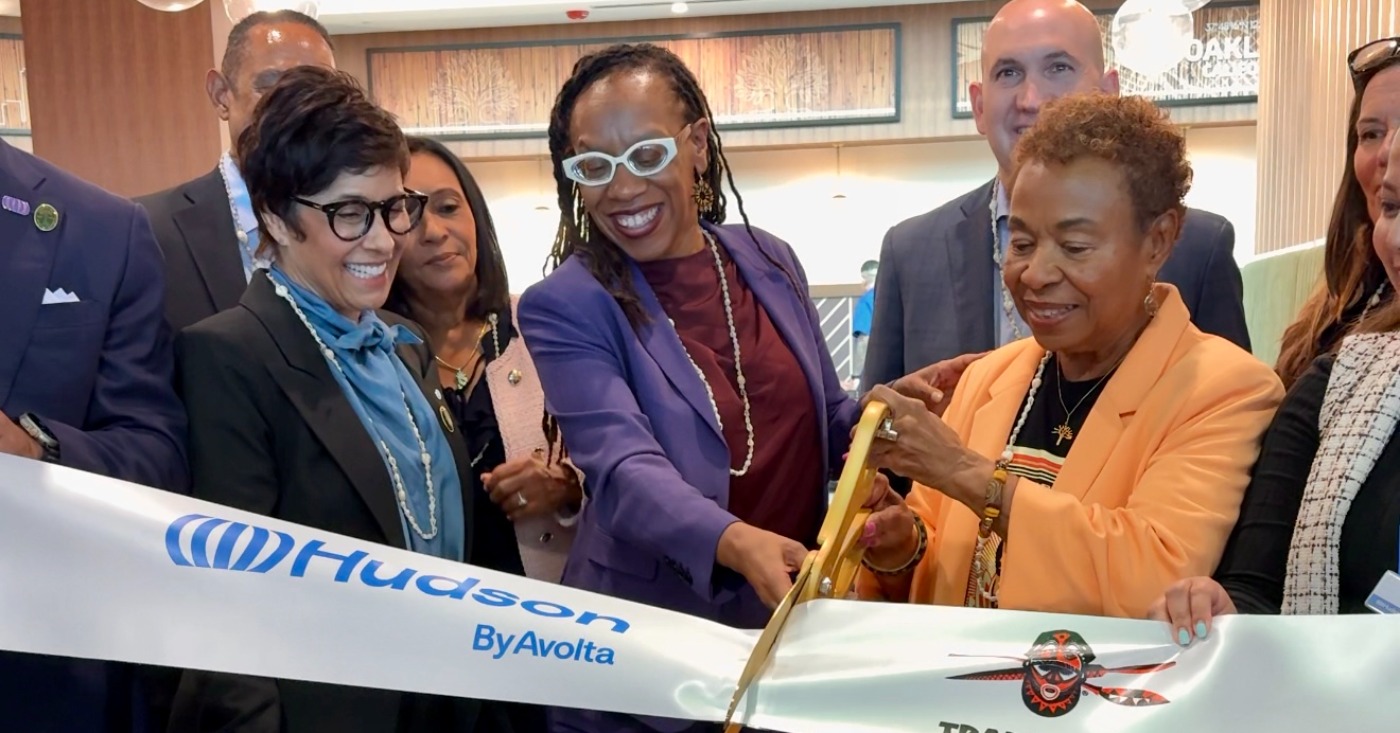
Oakland has always been a city of innovators, entrepreneurs, visionaries, and world-class hospitality. Trader Vic’s—the birthplace of the original Mai Tai – first opened in Oakland back in 1934 on San Pablo Avenue, long before becoming an internationally recognized global brand.
More than 50 years after it moved to Emeryville, Trader Vic’s is returning to its roots. Oakland Mayor Barbara Lee touts the return as another victory for Oakland.
“My administration is deeply committed to backing businesses like Trader Vic’s and Plum Market—partners who invest in our city, uplift our local workforce, and support thousands of local jobs,” Lee said.
The latest Trader Vic’s – called Trader Vic’s Outpost – is located at the Oakland International Airport in Terminal 2 near Gate 25 and had a soft opening in August.
With 108 dining seats, 28 bar seats and a counter for standing-room customers, travelers from around the world can have a full-service restaurant and bar experience or take-out for those with planes to catch.
Open from 6 a.m. to 10 p.m., breakfast, lunch, dinner, cocktails will be served.
Trader Vic’s returning to its roots confirms Condé Nast’s decision to name Oakland the #1 Food City in America two years in a row, and just earlier this month, ranked Oakland #6 on their list of Best Cities in the U.S.!
“The opening at OAK is incredibly meaningful for us,” said Rhett Rosen, CEO of Trader Vic’s Hospitality Group, according to the company website. “Trader Vic’s was born in the Bay Area, and this new location gives us the chance to welcome travelers with a taste of that original spirit before they take off. It brings together everything people love about Trader Vic’s — great cocktails, flavorful food, warm hospitality and a little sense of escape — in a place that connects Oakland to the world.”
Trader Vic’s is an Oakland institution and one of the region’s most recognizable hospitality brands, said Port of Oakland Director of Aviation Craig Simon on the web site.
“Travelers are increasingly seeking dining options that are memorable, locally rooted, and uniquely representative of the communities they are visiting. Trader Vic’s delivers all of that while providing a high-quality food and beverage experience for our guests. We are proud to welcome this hometown favorite to Terminal 2,”
The original Trader Vic’s in Oakland:
In 1934, with an investment of $500, Bergeron opened his initially small restaurant at 65th Avenue and San Pablo, serving comfort foods for lunch and dinner and beers and whiskeys. As his clientele grew, so did his restaurant, expanding space and menu options. After visiting this establishment, famed San Francisco Chronicle columnist Herb Caen proclaimed that the “best restaurant in San Francisco is in Oakland.”
There were as many as 25 franchises worldwide, including the U.S. Trader Vic’s is now headquartered in Martinez.

Business
Oakland Coal Terminal Backed by Trump Would Be Bigger, Dirtier Than Promised, Says Report
A recent feasibility study commissioned by potential investors says an Oakland coal terminal backed by President Donald Trump could export 13 million tons a year — three times the amount estimated in an earlier environmental review. Surprisingly, the report also contradicts devel
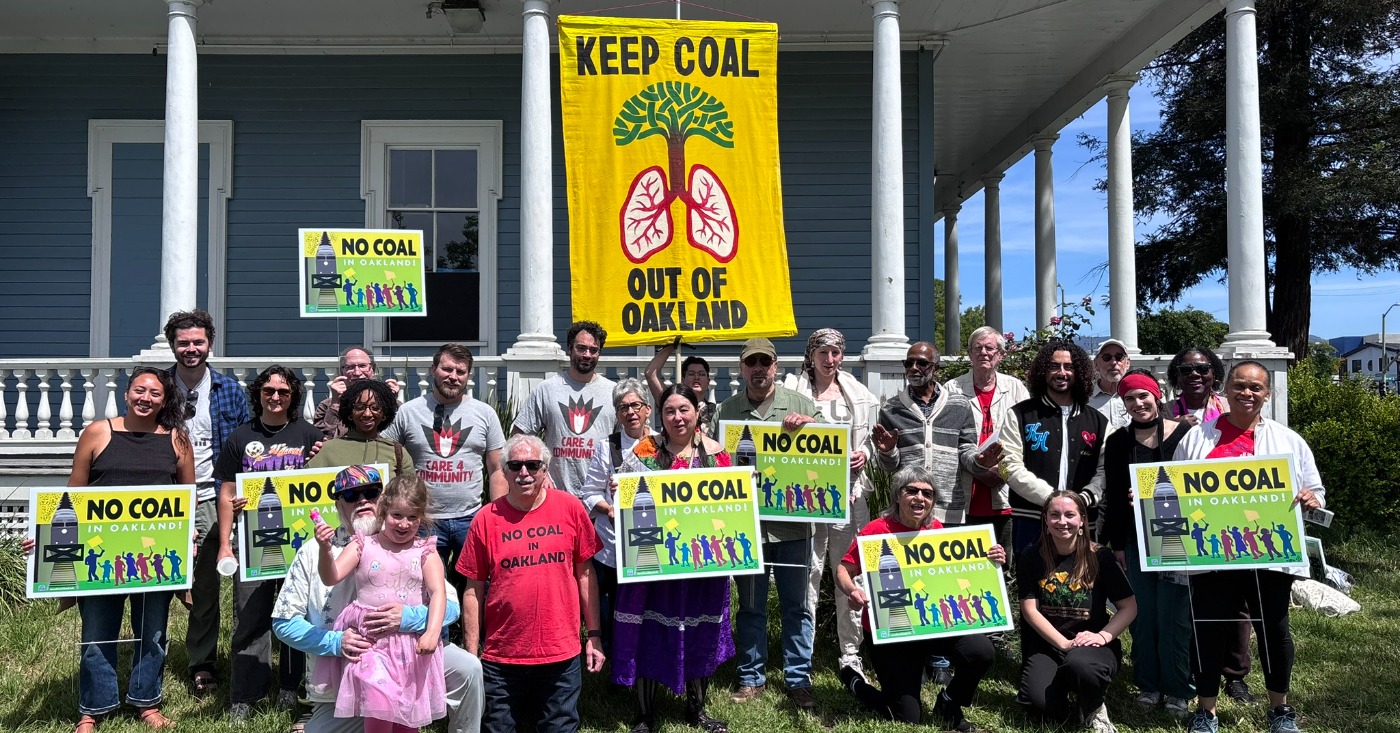
A recent feasibility study commissioned by potential investors says an Oakland coal terminal backed by President Donald Trump could export 13 million tons a year — three times the amount estimated in an earlier environmental review.
Surprisingly, the report also contradicts developers’ and project advocates’ repeated pledges that the coal would be stored in a covered terminal. Instead, the millions of tons of coal shipped annually from inland states to the West Gateway terminal in Oakland would be stored in “two open-air bunkers,” with about 150,000 tons of coal per stockpile, before being sent overseas, according to the recent report cited by the L.A. Times. (https://ruic.utah.gov/wp-content/uploads/2026/09/Port-Study-RUIC-Bulk-Commodity-Ocean-Terminals-Study.pdf)
Residents and clean air advocates have long expressed concerns that coal dust would worsen pollution in West Oakland and throughout the East Bay.
The proposed site of the Oakland Bulk and Oversized Terminal (OBOT) is located at the former Army base near the Port of Oakland, which developer Phil Tagami has been trying for years to turn into a shipping terminal despite determined community opposition.
Trump announced a $75-million investment in the project in June, about a third of its estimated cost. The new terminal would be the largest coal export site on the West Coast, transporting coal to Japan, South Korea, Taiwan, Vietnam and Malaysia, according to the Trump administration.

Opponents say a new terminal would undermine years of progress cleaning up the air in West Oakland, which has a history of disproportionate pollution and high asthma rates due to its proximity to the port and other industry.
According to No Coal in Oakland organizer Ted Franklin, who has been active for 11 years in the fight to stop the coal terminal, the report indicates that investors may be looking for a cheaper way to build the terminal.
“We were shocked but not surprised” by the report, Franklin said. “Basically, it seems that the plan now is to store open piles of coal, which is a less expensive project than creating a completely enclosed facility.”
The threats that the project poses are real, but it faces a lot of economic and legal hurdles, he said.
Coal production is in permanent decline worldwide, he said, wondering who was going to “invest money in an industry that has no future.”
Further, the project has not yet attracted big investors. “There’s no bank, no financing, no financial institution backing this,” he continued.
A major legal hurdle facing the project is the passage of Assemblymember Mia Bonta’s bill, AB 40, the Community-First Coal Review Act, signed into law by Gov. Gavin Newsom on Sept. 30.
The law requires developers of large-volume bulk coal facilities to complete a full Environmental Impact Report (EIR) under the California Environmental Quality Act (CEQA) before they can operate.
The law was specifically designed to block or delay the coal terminal project.
The report to potential developers was produced by consulting groups Norda Stelo and Wood Mackenzie in July and released this month. It was commissioned by the Rural Utah Infrastructure Coalition, made up of eight Utah counties that are considering investing about $43 million into the terminal to receive Utah coal.
The consultants produced their findings after visiting Oakland, examining engineering documents and holding discussions with Savage Cos., a Utah-based transport and logistics company selected to operate the facility
Research has shown that coal terminal operations can be dangerous to public health. The ports of Los Angeles and Long Beach moved away from open-air coal and petroleum coke storage three decades ago.
The report says that the site could process 12 million metric tons, or 13.2 million tons, of coal each year, three times more than the terminal’s approved environmental impact report from 2002 and its 2012 addendum. Neither document mentions coal specifically, but rather bulk commodities.
The coal arriving in Oakland could also be dirtier then had been previously stated, according to the report. Project officials previously said the terminal would handle only high-grade western bituminous coal from Utah, but the recent report says it will also handle Powder River Basin coal from Wyoming and Montana, known to be much dustier.
Nor does the report mention plans to cover the rail cars to prevent pollution, though project officials previously promised they would only utilize coal transported in covered rail cars.
“It appears the developers want to build something much bigger and more polluting than anything they previously revealed, either in court or to the West Oakland community,” said Colin O’Brien, deputy managing attorney at the nonprofit Earthjustice, speaking to the L.A. Times.
The report indicates that the project may be much more expensive and take longer to complete than anticipated. The Energy Department estimates the terminal will cost about $231 million, but the report places the price at between $430 million and $625 million.
The terminal will take 53 months to complete according to the report, significantly longer than Trump’s promise of exports beginning in 2028.
Ted Franklin’s column, “Utah Study Blesses Investment in Oakland Coal Terminal but Leaves Key Questions Unanswered” is available at https://nocoalinoakland.info/utah-study-blesses-investment-in-oakland/

To enlarge your view of this issue, use the slider, magnifying glass icon or full page icon in the lower right corner of the browser window.



Mayor Barbara Lee Holds Special State of the City Address in Deep East Oakland

Practitioners of African Traditional Spirituality Offer Ancestral Reverence Ritual Oct. 31

It’s Time to Lose Weight Before the Holidays

Trader Vic’s Returns to Its Oakland Roots

Oakland Coal Terminal Backed by Trump Would Be Bigger, Dirtier Than Promised, Says Report

Opponents Smear Effective African American Transit Director as Election Nears

Oakland Post: Week of October 14 – 20, 2026

OP-ED: The Black Church Writes AI’s Next Chapter

OP-ED: The Black Church Writes AI’s Next Chapter

WCCUSD Joins Statewide Organic School Food Purchasing Cooperative

Democrats, Community Groups Back Measure EE to Change How Oakland Is Governed

Four Tips to Help You Plan a Holiday “Staycation”

Veterans Housing Project Proposed for South Richmond
PRESS ROOM: Transformative Justice Coalition 2026 Voting Rights Champion Awards Reception ‘Yesterday Is Today: The Battle For Voting Rights

Mayor Lee Delivers 2026 State of the City Address: ‘Oakland Continues to Be on the Move’

Misnamed ‘Parent’ PAC Seeks to Influence Oakland School Board Elections

Listening as a Lifeline: A Doula’s Witness to Black Maternal Health

Poll: Becerra Widens His Lead Over Hilton; Californians Split on Wealth Tax

County Office of Education Says OUSD Finances Are Getting Healthier, Materially Stronger

Oakland Post: Week of September 9 – 15, 2026

Doulas Are Helping Black California Moms Navigate Pregnancy–Even as High Mortality Rates Persist

Mayor Lee Announces $1 Million Kaiser Permanente Grant for Pilot Program to Address Homelessness, Clean Up Public Spaces throughout Oakland

Richmond Tiny House Village Farm & Garden Set to Open Gates on Sept. 26

Zakiya Jendayi Arrested, Locked Out of Home by Sheriff’s Deputies

OPINION: Nolan Wells’ Death One of Several Signifying Racial Terror Lives on in U.S. South

Latest Massacre in Haiti Reveals Cruelty U.S. Deportations

BLACspace Cooperative Invites Bay Area to Experience Oakland’s Black Cultural Ecosystem Through a BLAC Map Tour + Party

Oakland Post: Week of September 16 – 22, 2026

Democratic Clubs Interview Candidates for Oakland School Board

Oakland People’s Arms Embargo Coalition Demands End to Military Shipments Thru Oakland

The Conversation With Al McFarlane 6/23/26

Media Monday 6/22/26

LIVE! ASK ALMA! — TUES. 6.23.26 7PM EST

Car Buying Secrets: 4 Hidden Checks Before You Sign!

Is This 550 HP Charger Worth YOUR Money? AutoNetwork Review

Celebrating Juneteenth – Frederick Douglass on education and resistance

LIVE! — ASK ALMA! — TUES. 6.19.26 7PM EST

Hyundai Ioniq 5 Parking, Safety, and 360 View #shorts

2025 Ioniq 5 New Wiper & Powerful Performance! #shorts

Electric SUV Range: Is 259 Miles Enough? #shorts

EV Charging: How Fast Can You Charge an Electric Vehicle? #shorts

Biometric Cooling… Messaging Seats…Come on! 2025 Infiniti QX80 Autograph 4WD

Charged Up: Witness the Magic of a Fully Electric Car! #shorts

Range Rover Sport PHEV Included…: See What’s Inside This Luxury SUV! #shorts

Invisible Hood View: Perfect Parking with X-Ray Vision! #shorts
-
 Black History3 weeks ago
Listening as a Lifeline: A Doula’s Witness to Black Maternal Health
-
 Economy4 weeks ago
Poll: Becerra Widens His Lead Over Hilton; Californians Split on Wealth Tax
-
 Business4 weeks ago
County Office of Education Says OUSD Finances Are Getting Healthier, Materially Stronger
-
 Lead Story3 weeks ago
Zakiya Jendayi Arrested, Locked Out of Home by Sheriff’s Deputies
-
 Art4 weeks ago
BLACspace Cooperative Invites Bay Area to Experience Oakland’s Black Cultural Ecosystem Through a BLAC Map Tour + Party
-

 Business4 weeks ago
From Historic Memories to New Possibilities: Oakland Celebrates Coliseum 60
-
 Community4 weeks ago
Asm. Corey Jackson Announces Launch of 24-Hour Childcare in His District
-

 Black History4 weeks ago
IN MEMORIAM: The Rev. Leon “Sonny” Clark, Longtime Orange County Pastor and Community Leader, Dies at 72

3 Comments