
Activism
OCCUR Hosts “Faith Forward” Conference in Oakland
The conference featured Congresswoman-elect Lateefah Simon, who will begin her term representing California’s 12th Congressional District in the U.S. House of Representatives in January.
Simon was honored with a special recognition from OCCUR for her civic and nonprofit leadership.


By Carla Thomas
The Oakland Citizens Committee for Urban Renewal (OCCUR) hosted its Faith Forward 2024 Conference on Nov. 8 at Resurrection Church in Oakland.
The conference featured Congresswoman-elect Lateefah Simon, who will begin her term representing California’s 12th Congressional District in the U.S. House of Representatives in January.
Simon was honored with a special recognition from OCCUR for her civic and nonprofit leadership. During her remarks, She commended nonprofits making a difference, and shared how she looked forward to representing Oakland and surrounding areas.
Simon also encouraged attendees to continue fighting despite their concerns about the presidential election results. She also cautioned that there may be resources that are discontinued as a result.
“We know the assignment. We have many of the resources right within our own community, and we will be ok,” Simon assured the audience.
The conference led by OCCUR president, Dr. David B. Franklin, also featured panels on funding opportunities, case studies, economic development, sustainable housing solutions, and organizing for action.
“In order for organizations serving the community to thrive, everyone must collaborate, share resources, and not operate in silos,” said Franklin.
Speakers included San Francisco Foundation CEO, Fred Blackwell, San Francisco Foundation FAITHS Program Director Dr. Michelle Chambers, and Kingmakers of Oakland Founder, Chris Chatmon. Guests were briefed on how Kingmakers of Oakland has gone from a budget of zero to several million and is set to acquire 200 acres of property to expand their programs serving young boys. The leadership at the San Francisco Foundation encouraged nonprofits, churches, and community leaders to work together, especially when donations and funding numbers are lower.
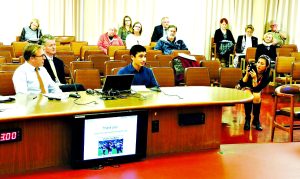
Ben Bartlett of Berkeley City Council; Trevor Parham, CEO of Oakstop; and CEO of the Lao Family Community Development, Inc., Kathy Chao Rothberg, inspired attendees with stories about their journeys in the nonprofit sector.
Additional speakers included Deka Dike, CEO of Omatachi; Landis Green, CEO of DGS Strategies; Sasha Werblin, Director of Economic Development, LISC Bay Area; Oakland City Councilmember Treva Reid; Faith and Justice Organizer of East Bay Housing Organizations, Ronnie Boyd; and Todd Bendon, Executive Director of Faith in Action East Bay; among others.
The event allowed community leaders, faith-based leaders, and nonprofits to gain Insight on how to strengthen their profits financially, and communally.
OCCUR has served the community for over 70 years supporting the wellbeing of historically marginalized communities with collaborative strategies. For more information visit occurnow.org







Activism
Oakland Post: Week of March 18 – 24, 2026
The printed Weekly Edition of the Oakland Post: Week of March 18 – 24, 2026

To enlarge your view of this issue, use the slider, magnifying glass icon or full page icon in the lower right corner of the browser window.
Activism
Oakland Post: Week of March 11 -17, 2026
The printed Weekly Edition of the Oakland Post: Week of March 11 – 17, 2026
To enlarge your view of this issue, use the slider, magnifying glass icon or full page icon in the lower right corner of the browser window.
Activism
Oakland Post: Week of March 4 – 10, 2026
The printed Weekly Edition of the Oakland Post: Week of March 4 – 10, 2026

To enlarge your view of this issue, use the slider, magnifying glass icon or full page icon in the lower right corner of the browser window.


WORK FROM HOME
Home-based business with potential monthly income of $10K+ per month. A proven training system and website provided to maximize business effectiveness. Perfect job to earn side and primary income. Contact Lynne for more details: Lynne4npusa@gmail.com 800-334-0540


Black Artists in America, Installation Three Wraps at the Dixon Gallery and Gardens

Grief, Advocacy, and Education: A Counselor Reflects on Black Maternal Health

Future of Florida’s Black History Museum in Limbo

New Research Shows the Many Benefits of Early Learning

South Hampton K-8 Students Among Top 10 Finalists for Samsung’s ‘Solve for Tomorrow’ Competition

Cuba: No Negotiation with US on the President or Political System

Brooklyn Academy of Music Names Jamaican-Born Tamara McCaw as President

Trinidad & Tobego – U.S. Launches WhatsApp Channel for American Citizens in the Country

Oakland Post: Week of March 18 – 24, 2026

AI Innovation vs. Ethics and Environmental Impact

AI, Web3, and Digital Reparations

What If You Owned Your AI Agent?

Season 7, Episode 3 – January Reporter’s Roundtable 📱

Season 7, Episode 3 – January Reporter’s Roundtable

AI, Media, and Power | Part 2, Real-World Impacts and Tradeoffs

Reflecting on Black History Milestones in Birmingham AL

CITY OF SAN LEANDRO STATE OF CALIFORNIA PUBLIC WORKS DEPARTMENT ENGINEERING DIVISION NOTICE TO BIDDERS FOR ANNUAL STREET OVERLAY/REHABILITATION 2019-21 – PHASE III

Oakland Post: Week of February 18 – 24, 2026

Oakland Post: Week of February 25 – March 3, 2026

PRESS ROOM: NBA Hall of Fame Nominee Terry Cummings Joins 100 Black Men of DeKalb County to Launch Victory & Values Initiative

Trump’s MAGA Allies are Creating Executive Order Plan to Steal the 2026 Midterms

Oakland Post: Week of March 4 – 10, 2026

U.S. manufacturing rebounds – how foundry services are adapting to rising demand

Chase Oakland Community Center Hosts Alley-Oop Accelerator Building Community and Opportunity for Bay Area Entrepreneurs

Poll Shows Support for Policies That Help Families Afford Child Care

OP-ED: One Hundred Years of Black Workers Telling the Truth

Advancements in solar technology that are changing the way we power the world

Woman’s Search for Family’s Roots Leads to Ancestor John T. Ward – A Successful Entrepreneur and Conductor on the Underground Railroad

PRESS ROOM: Civil Rights TV Launches in Selma as the World’s First 24/7 Civil Rights Television Network

COMMENTARY: Women of Color Shape Our Past and Future

Hyundai Ioniq 5 Parking, Safety, and 360 View #shorts

2025 Ioniq 5 New Wiper & Powerful Performance! #shorts

Electric SUV Range: Is 259 Miles Enough? #shorts

EV Charging: How Fast Can You Charge an Electric Vehicle? #shorts

Biometric Cooling… Messaging Seats…Come on! 2025 Infiniti QX80 Autograph 4WD

Charged Up: Witness the Magic of a Fully Electric Car! #shorts

Range Rover Sport PHEV Included…: See What’s Inside This Luxury SUV! #shorts

Invisible Hood View: Perfect Parking with X-Ray Vision! #shorts

AI Is Reshaping Black Healthcare: Promise, Peril, and the Push for Improved Results in California

ESSAY: Technology and Medicine, a Primary Care Point of View

Sanctuary Cities

The RESISTANCE – FREEDOM NOW

STATE OF THE PEOPLE: Freddie

ECONOMIC BOYCOTT DAY!!!!!

I told You So
-
 Activism4 weeks ago
Oakland Post: Week of March 4 – 10, 2026
-
 #NNPA BlackPress4 weeks ago
Woman’s Search for Family’s Roots Leads to Ancestor John T. Ward – A Successful Entrepreneur and Conductor on the Underground Railroad
-
 #NNPA BlackPress4 weeks ago
COMMENTARY: Women of Color Shape Our Past and Future
-
 Activism3 weeks ago
Oakland Post: Week of March 11 -17, 2026
-

 #NNPA BlackPress4 weeks ago
OP-ED: NNPA Launches 2026 “Leadership Matters” Video Series
-

 #NNPA BlackPress4 weeks ago
Advocates Raise Alarm Over ICE Operation, MOU and Detention Risks in Baltimore County
-

 #NNPA BlackPress4 weeks ago
Pete Buttigieg to Join Mayor Randall Woodfin for Community Town Hall in Birmingham
-

 Advice3 weeks ago
Financial Wellness and Mental Health: Managing Money Stress in College
