
Lifestyle
2019 French Quarter Festival Announces Music Lineup
NEW ORLEANS DATA NEWS WEEKLY — French Quarter Festivals, Inc. proudly announces the music lineup for the French Quarter Festival presented by Chevron.

By Kichea S. Burt
French Quarter Festivals, Inc. proudly announces the music lineup for the French Quarter Festival presented by Chevron, which takes place April 11-14, 2019. A full schedule will be revealed in March.
French Quarter Festival is consistently voted ‘local favorite’ while attracting a tremendous out-of-town audience. The appeal is the authenticity: attendees experience a broad range of Louisiana artists from a variety of genres. In 2019 the free festival will feature music from more than 250 acts on 23 stages throughout the historic French Quarter. The Chevron Stage, a longtime Cajun/Zydeco destination, will expand its Evening Concert Series programming to showcase more genres with headliners George Porter, Jr. & The Runnin’ Pardners, Jon Cleary, Flow Tribe, and Rockin’ Dopsie.
Other headliners include 2019 fest debut Galactic, Bill Summers & Jazalsa, Brass-A-Holics, Big Chief Bo Dollis, Jr. & the Wild Magnolias, Grammy-winner Irma Thomas, Cyril Neville, Jon Cleary, Erica Falls, Little Freddie King, and Grammy-nominated and Billboard Top 20 Recording Group Water Seed, and more.
In addition to showcasing Louisiana legends, French Quarter Festival embraces emerging talent and is proud of the countless musicians who have achieved international fame since their fest debut. In that spirit, dozens of new artists are included in the lineup. In addition to Galactic, 2019 brings 43 debuts including Big 6 Brass Band, Keith Burnstein’s Kettle Black, Lil’ Glenn & Backatown, The Royal Teeth, and Magnolia Sisters. The lineup also includes many musicians and debuts whose performances were cancelled due to inclement weather during the 2018 event; these artists were rebooked if possible.

Visit www.frenchquarterfest.org for more information about music, food, and special events.
This article originally appeared in the New Orleans Data News Weekly.














Art
Event Preview: ‘Fashion v. Fascism’ – A Runway Revolution Is Coming to the Bay Area
“Every piece on this runway translates what is happening under fascism into a feeling,” explains Erica Furlong, the FVF creative director. “One designer’s trench coat is covered in pockets stamped ‘TRUTH,’ ‘MEMORY,’ ‘HOPE,’ ‘VOTE,’ ‘FUTURE,’ because that’s literally what gets seized first, pocket by pocket, under fascist decline. Fashion can hold grief and hope in the same silhouette, and that tension is exactly what this moment needs.”


“Fashion vs. Fascism” (FVF) is a visually immersive evening of fashion, music and political theater exposing the rise of fascism in the U.S. and the need to resist. Democracy is under siege, and culture is one of our most potent defenses, organizers say.
Called a live “runway revolution,” FvF premieres Oct. 3 at The Rotunda, 300 Frank Ogawa Plaza in downtown Oakland.
A play that is part fashion show, part protest, part performance art, FvF stages five runway collections spotlighting the pillars of contemporary fascist politics and the urgent need to resist: the myth of a “glorious past,” the manufactured emergencies used to justify surveillance and crackdowns, and the oligarchs and grifters profiting from it all. Runway fashion shares the stage with political theater and live music, with a closing call to action.
“We need lawsuits, ballots and mass protests, but none of it lands if we’re not also fighting for people’s imagination,” says Linda Burnham, co-producer of the show. “People are exhausted and scared. FvF will expose the absurdities of fascist mythology and ideology in ways a news headline cannot and spark new ideas about how to resist.”
“Fascism doesn’t win by policy alone. It wins by telling a story. A myth about a ‘Golden Age.’ A permanent emergency that makes cruelty seem necessary. That’s not an accident, it’s a strategy, and it works on the same terrain as culture: image, spectacle, emotion,” says Aya De León, the show’s playwright.
“Every piece on this runway translates what is happening under fascism into a feeling,” explains Erica Furlong, the FVF creative director. “One designer’s trench coat is covered in pockets stamped ‘TRUTH,’ ‘MEMORY,’ ‘HOPE,’ ‘VOTE,’ ‘FUTURE,’ because that’s literally what gets seized first, pocket by pocket, under fascist decline. Fashion can hold grief and hope in the same silhouette, and that tension is exactly what this moment needs.”
At its best, fashion is about creativity, diversity, innovation, experimentation and the free exchange of ideas. Fascism, by contrast, demands conformity and control, while suppressing dissent.
FVF was created, organizers say, because democracy should always be in style.
Featured designers include Erica Varize, Rickie Lee, Tianna Charity, Julie Wong, and Maria Flores. The evening features a script by lead playwright Aya De León, musical performances by Mindeullae Project and DJ Emancipation, and other special guests.
FvF is designed to travel. Following the Oakland premiere, FvF will extend its reach through a documentary short, a curriculum on contemporary fascism in the U.S., and a full replication playbook — design templates, script, and curriculum — so organizers in other cities can stage their own version of the show.
Get more details at www.fashionvfascism.org.

Community
Two Looming Threats Every Alameda County Elder Should Know About
Federal changes enacted under H.R. 1 are bringing new eligibility, reporting, and coverage rules beginning in 2027. Although Californians age 65 and older and people with disabilities are exempt from the new 80-hour-per-month work requirement and will continue with annual rather than six-month renewals, that does not mean elders can ignore the coming changes.

Alameda County elders are urged to attend the Elder Justice Symposium at Oakland City Hall on Sept. 25, from 9 a.m. to 5 p.m., for information that could profoundly affect both their health care and the legacy they hope to leave their families.
For many older adults, a lifetime of hard work has produced two things they understandably want to protect: access to health care while they are living and the home, savings, and other assets they hope to pass to loved ones when they die.
Changes already underway in California make understanding how to protect both increasingly urgent.
The first threat involves Medi-Cal.
Federal changes enacted under H.R. 1 are bringing new eligibility, reporting, and coverage rules beginning in 2027. Although Californians age 65 and older and people with disabilities are exempt from the new 80-hour-per-month work requirement and will continue with annual rather than six-month renewals, that does not mean elders can ignore the coming changes.
California has already reinstated an asset test for certain Medi-Cal recipients age 65 and older, people with disabilities and those needing long-term care. Assets must be reported when applying or renewing coverage.
And another significant change is coming.
Beginning July 1, 2027, California says the Medi-Cal asset limit for affected beneficiaries will fall from $130,000 for one person to just $21,000, and to $31,000 for two people, with certain assets excluded and special rules applying in some circumstances.
There is more. Beginning Jan. 1, 2027, Medi-Cal’s retroactive coverage period will also shrink. For most beneficiaries outside the ACA expansion adult group, coverage of qualifying medical expenses incurred before application will be reduced from three months to two.
For an elder facing hospitalization, long-term care or an unexpected medical crisis, misunderstanding these rules could have enormous financial consequences.
The second threat concerns what happens to everything you worked so hard to acquire.
Many people believe, “I have a will and a living trust, so my family is protected.”
It may not be that simple.
An estate plan is only as effective as the way it has been structured, maintained and implemented. How assets are titled, whether a trust has actually been funded, beneficiary designations, Medi-Cal eligibility and long-term-care planning can all affect whether a person’s wishes are ultimately carried out.
A will by itself does not automatically avoid probate, and simply possessing trust documents does not mean every asset has been properly protected or positioned to pass as intended.
That is why elders should learn the rules before a medical crisis, incapacity or death makes planning far more difficult.
At the Elder Justice Symposium, experts will explain these changes in understandable language and discuss steps that elders and their families should consider now.
Attendees will have an opportunity to learn what questions to ask about Medi-Cal eligibility and renewals, asset limits, estate planning and protecting the legacy they intend for their families.
Do not assume the rules you learned years ago are still the rules governing you today.
Come to Oakland City Hall on Sept. 25, from 9 a.m. to 5 p.m.
Bring your questions. Bring your family. Most importantly, bring a willingness to prepare.
The decisions you make before these changes take full effect could profoundly affect your health care, your financial security, and what remains for the people you love.
Books
Oakland Mayor Reads to Children at Bookout Block Party at Marcus Books Store
Booths lined the street with arts and crafts, and children participated in hands-on art projects. A large display of books was on display and each child chose his/her free book to take home. Food and snacks were available, and free water was encouraged to keep all hydrated.
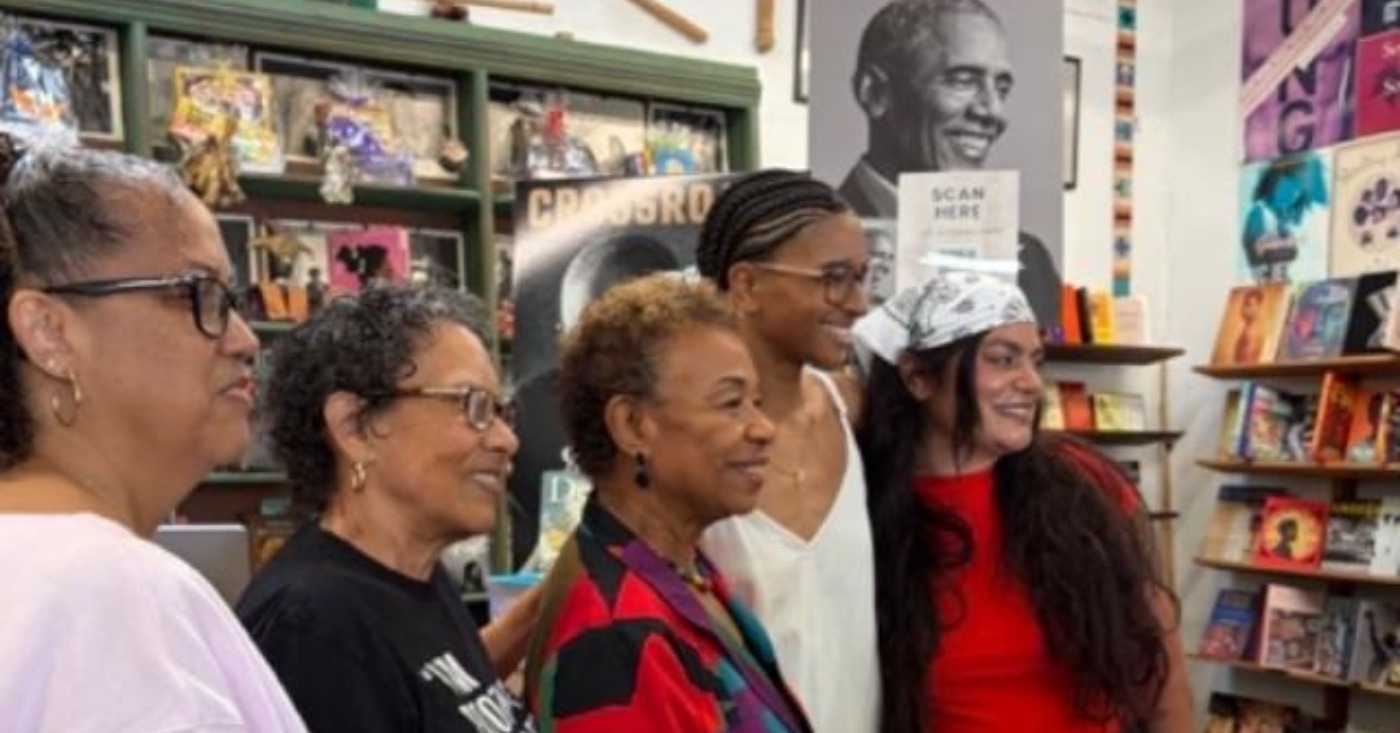
Floating bubbles greeted families on arrival at the Bookout Block Party held on Sat. Sept. 12 at 39th and MLK Blvd. in Oakland.
Sponsored by Marcus Books and Storyland Collective, a wonderland of activity for children stretched to Longfellow School while live music filled the air, courtesy of KWC Complex Jazz Group.
Booths lined the street with arts and crafts, and children participated in hands-on art projects. A large display of books was on display and each child chose his/her free book to take home. Food and snacks were available, and free water was encouraged to keep all hydrated.
A large area of turf was filled with huge bean bags for jumping, rolling, and sitting to listen as families crowded close to listen to Oakland Mayor Barbara Mayor Barbara Lee read a book out loud.
Of the numerous booths present were, “Claim Your Scholarship,” a program for Oakland Public School students and “VOLUNTEER NOW,” a program encouraging volunteers to help boost reading proficiency. Individuals sold their art and products. Free gifts were at many tables and a raffle was held.
The event with Marcus books culminated a summer-long program organized by Storyland Collective, a literacy arts organization bringing children’s ‘storytime,’ local authors, and art activities to Bay Area neighborhoods. Marcus Books is the oldest, independent Black-owned book store in the U.S., featuring books by and about Black people here and abroad.


Doulas Are Helping Black California Moms Navigate Pregnancy–Even as High Mortality Rates Persist

Newsom Signs Addictive Social Media Law to Protect Kids

On Your November Ballot: Prop 38 Would Allocate $8.4 Billion to Immunology and Immunotherapy Funding

Ask California: Golden State Releases New AI Chatbot

Asm. Isaac Bryan’s Bill Banning California Police From ICE Side Jobs Reaches Newsom’s Desk

Assemblymember LaShae Sharp-Collins’s Bill Would Pause Law Enforcement’s Use of Shock Gloves Pending Study

BOOK REVIEW: ‘Laws of Solomon’ Reveals Tender Heart of Former Child Soldier

OPINION: The New American Fear – From 9-11 to AI

Passing for White, Fighting for Black America: The Courage of Walter White

Oakland People’s Arms Embargo Coalition Demands End to Military Shipments Thru Oakland

Barbara Lee Mourns Gloria Steinem, Remembers a Friendship Rooted in Equality

Event Preview: ‘Fashion v. Fascism’ – A Runway Revolution Is Coming to the Bay Area

Two Looming Threats Every Alameda County Elder Should Know About

Oakland Mayor Reads to Children at Bookout Block Party at Marcus Books Store

Tradition Comes to the Streets in 11th Annual Black-Eyed Pea Festival at the Freedom Farmers Market

Less Affluent School Districts, Including Sacramento City, Face Threat of State Takeover

ESSAY: California Can Close Its Colorectal Cancer Gap

California Hispanic Chambers of Commerce Unveils: ‘Powering the Future’ Theme for 47th Annual Statewide Convention

Four Candidates, Including Incumbent Barbara Lee, Qualify for Oakland Mayor’s Race

Oakland Post: Week of August 12 – 18, 2026

From Blueprint to Breakthrough: Tackling Affordable Housing in Oakland

Oakland Observes Black August with Block Parties, Film Showings, Workshops

COMMENTARY: Why Local School Tax Measure G1 Will Not Be on the November Ballot

Standoff for Justice: Our Homes Are Worth Fighting For

Returning to Its Roots, the Oakland Black-Eyed Pea Festival Partners with the Freedom Farmers Market Sept. 12

Oakland Post: Week of August 26 – September 1, 2026

NPRC Scores First Advocacy Victory: David Shaw Finally Gets His Wish to ‘Go Home’

Frontier Airlines’ Return to Oakland Airport Brings Flights, Jobs and Opportunity

Gubernatorial Candidate Steve Hilton Blasts California New Tire Rules; Newsom Hits Back

Chef Sharon Lee Blends Culinary Excellence, Education and Empowerment

The Conversation With Al McFarlane 6/23/26

Media Monday 6/22/26

LIVE! ASK ALMA! — TUES. 6.23.26 7PM EST

Car Buying Secrets: 4 Hidden Checks Before You Sign!

Is This 550 HP Charger Worth YOUR Money? AutoNetwork Review

Celebrating Juneteenth – Frederick Douglass on education and resistance

LIVE! — ASK ALMA! — TUES. 6.19.26 7PM EST

Hyundai Ioniq 5 Parking, Safety, and 360 View #shorts

2025 Ioniq 5 New Wiper & Powerful Performance! #shorts

Electric SUV Range: Is 259 Miles Enough? #shorts

EV Charging: How Fast Can You Charge an Electric Vehicle? #shorts

Biometric Cooling… Messaging Seats…Come on! 2025 Infiniti QX80 Autograph 4WD

Charged Up: Witness the Magic of a Fully Electric Car! #shorts

Range Rover Sport PHEV Included…: See What’s Inside This Luxury SUV! #shorts

Invisible Hood View: Perfect Parking with X-Ray Vision! #shorts
-
 Commentary4 weeks ago
Standoff for Justice: Our Homes Are Worth Fighting For
-
 Activism4 weeks ago
Oakland Post: Week of August 26 – September 1, 2026
-
 Business4 weeks ago
Frontier Airlines’ Return to Oakland Airport Brings Flights, Jobs and Opportunity
-
 Business4 weeks ago
Gubernatorial Candidate Steve Hilton Blasts California New Tire Rules; Newsom Hits Back
-
 Business4 weeks ago
Chef Sharon Lee Blends Culinary Excellence, Education and Empowerment
-

 Community4 weeks ago
Big City Mayors Ask for “Yes” Vote on Housing Bond Measure; Conservatives Say “No”
-
 Black History4 weeks ago
Jackie Wright Champions Bay Area Stories, Filmmakers and Cultural Institutions
-

 Education4 weeks ago
Gov. Newsom’s Latest Appointees Include Sacramento Advocate for Formerly Incarcerated Students; State’s New Tech Chief
