
Activism
Worldwide Protests of Police Brutality Lead to Concrete Change

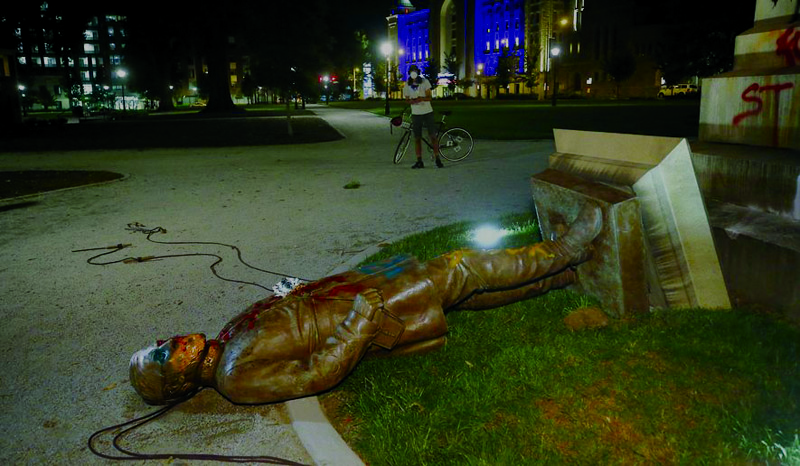
The protests of the death of George Floyd while in police custody n Minneapolis, Minn,, has sparked protests worldwide and resulted in change – both theoretical and concrete — as the movement enters its third week. Leaders nationwide quickly moved to change policing tactics and protesters took on racial inequities by defacing and/or removing statues and symbols celebrating the heroes of the slave-holding Confederacy.
Police accountability, use of force
• In California, where some chokeholds are already banned, Gov. Gavin Newsom directed police officers in the state to halt training on and use of the carotid hold, a type of chokehold designed to cut off blood flow to the brain. He will sign legislation banning carotid holds.
• The three largest police unions in California proposed significant changes in policing methods. The San Jose Police Officers Association, the San Francisco Police Officers Association and the Los Angeles Police Protective League “suggest national standards on use-of-force that ‘emphasizes reverence for life, de-escalation, a duty to intercede, proportional responses to dangerous incidents and strong accountability,’ according to the Mercury News.
• In Minneapolis, Minn., a majority of City Council members have pledged to dismantle its police department and, pending approval by a judge, officials reached a tentative agreement with the state to ban chokeholds and insist that police to intervene if they see another officer ‘engaging in misconduct.’

• The “Say Their Name’ agenda for police reform put forward by New York Gov. Andrew “would make police disciplinary records transparent, ban chokeholds, make false race-based 911 reports a hate crime.” Further, the New York Attorney General, instead of the local district attorney, will act as an independent prosecutor for police officers accused of murder.
Cuomo has also indicated he would sign bills in development by the New York State Legislature that include a ban on chokeholds and new rules to make police officers’ disciplinary records transparent, both opposed by police unions.
• In Denver, SWAT teams must turn on their body cameras during tactical events, transparency on incidents where police point their guns at someone and chokeholds have been banned.
Tear gas bans
• City Council members in Wash., D.C. and New Orleans proposed banning the use of tear gas against protesters in their cities.
Defunding the police and reducing police presence
• San Francisco Mayor London N. Breed announced her vision to fundamentally change the nature of policing and that police would no longer respond to 911 calls that are not criminal in nature.
• Oakland Mayor Libby Schaaf announced with Chief Susan Manheimer a proposal to ban the use of chokeholds in Oakland.
• Los Angeles City Council intends to reduce the $1.8 billion budget of LAPD by up to $150 million for the upcoming fiscal year. Those funds will be allocated to “disadvantaged communities and communities of color.”
• New York City Mayor Bill de Blasio announced a plan to redirect funds from the police force to youth and social services.
Tearing down Confederate statues and racist symbols
• Displays of the Confederate battle flag in public and workspaces on Marine Corps military bases have been banned and the U.S, Navy will soon follow suit.
• The statue of Confederate Gen. Williams Carter Wickham in Richmond’s Monroe Park was torn down by protesters.
• Protesters at the University of Mississippi campus spray-painted the words “spiritual genocide” on a Confederate monument.
• A five-story monument to Confederate troops in Birmingham, Ala., will come down if the mayor has anything to do with it, even though the Alabama Attorney General is threatening legal action.
• Virginia Gov. Ralph Northam announced that he would take down another prominent statue of Lee on Richmond’s Monument Avenue.
• NASCAR prohibited the display of the confederate flag from all NASCAR events and properties.

Activism
Oakland Post: Week of August 12 – 18, 2026
The printed Weekly Edition of the Oakland Post: Week of August 12 – 18, 2026

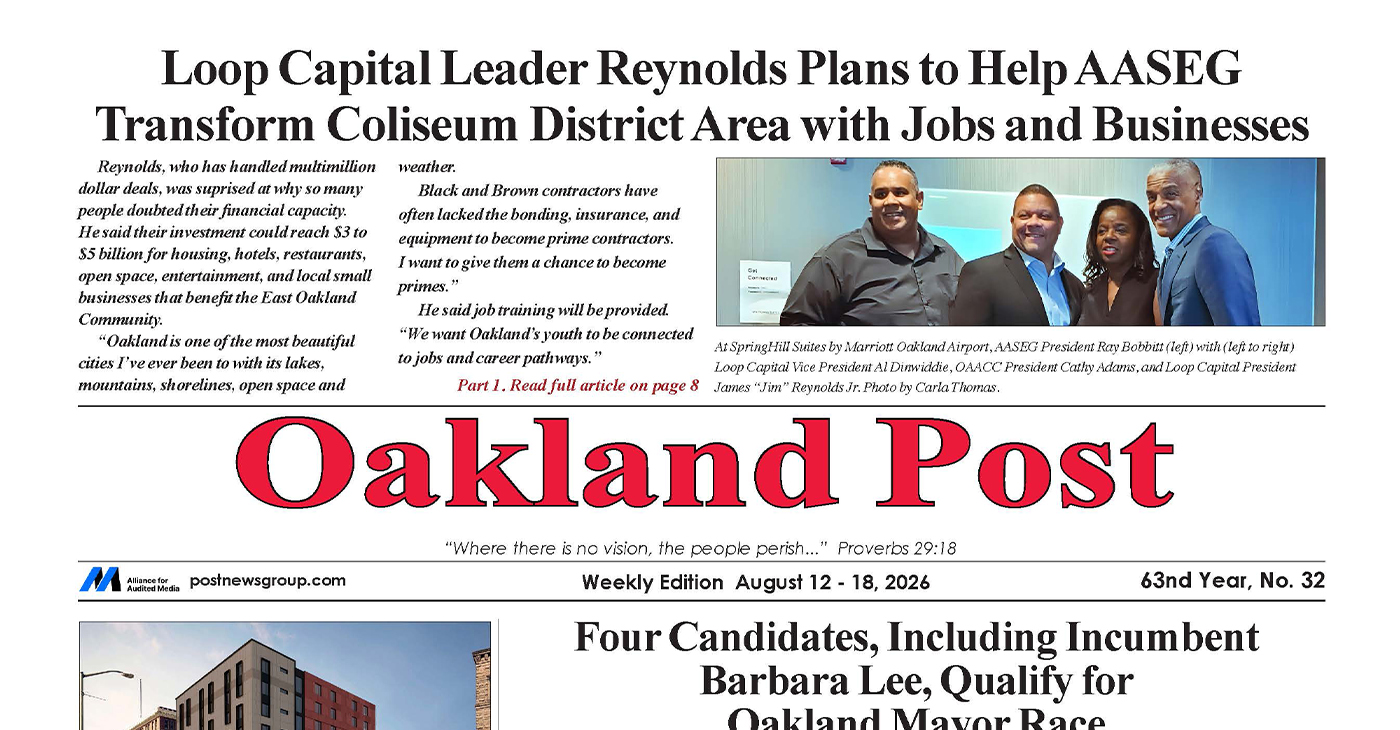
To enlarge your view of this issue, use the slider, magnifying glass icon or full page icon in the lower right corner of the browser window.

Activism
Oakland Post: Week of August 5 – 11, 2026
The printed Weekly Edition of the Oakland Post: Week of August 5 – 11, 2026
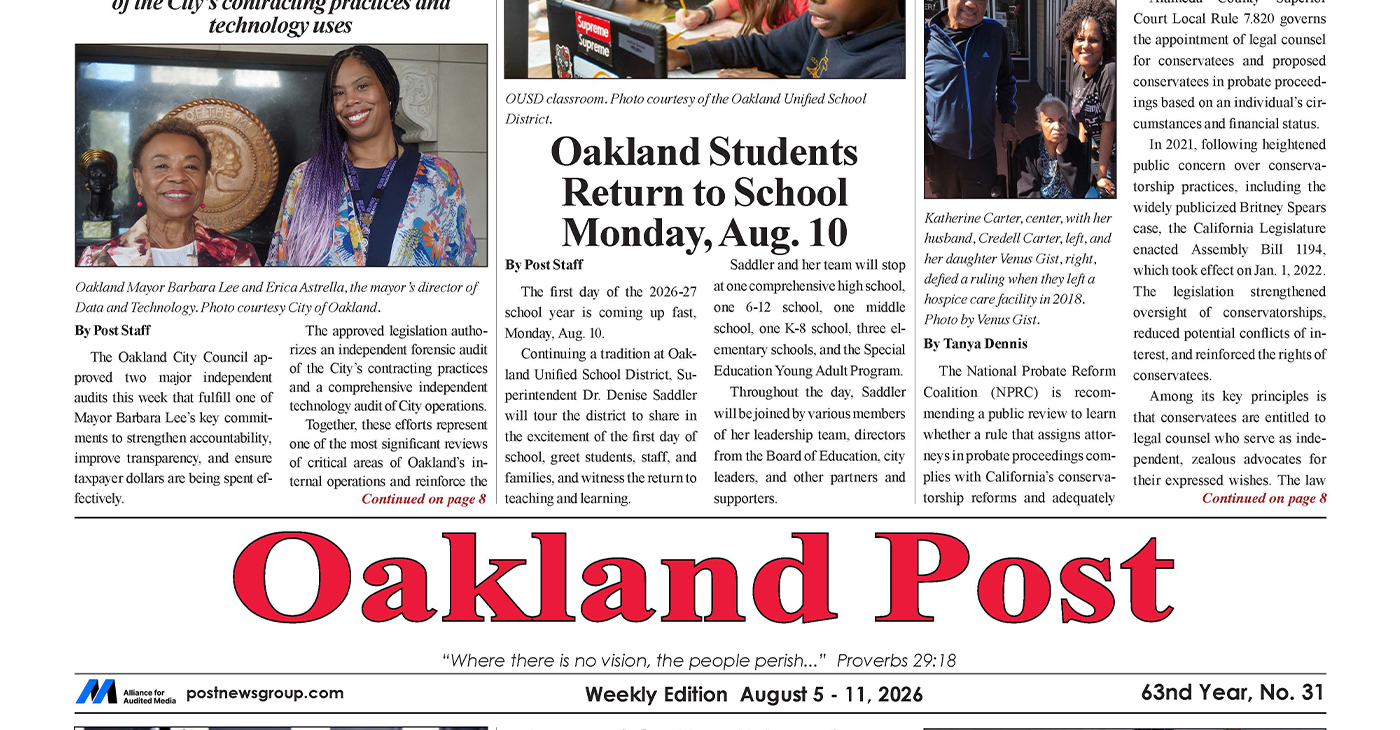
To enlarge your view of this issue, use the slider, magnifying glass icon or full page icon in the lower right corner of the browser window.
Activism
Oakland Post: Week of July 29 – August 4, 2026
The printed Weekly Edition of the Oakland Post: Week of July 29 – August 4, 2026
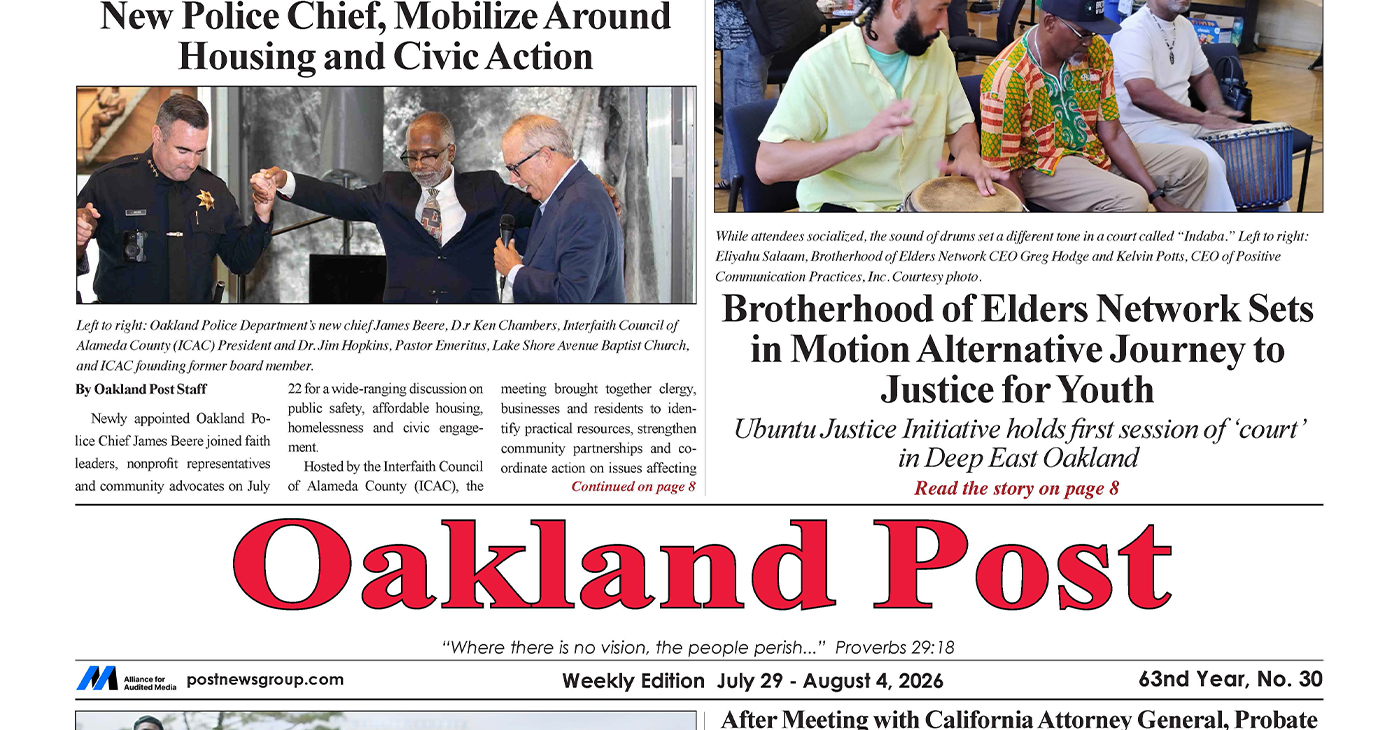
To enlarge your view of this issue, use the slider, magnifying glass icon or full page icon in the lower right corner of the browser window.

WORK FROM HOME
Home-based business with potential monthly income of $10K+ per month. A proven training system and website provided to maximize business effectiveness. Perfect job to earn side and primary income. Contact Lynne for more details: Lynne4npusa@gmail.com 800-334-0540


Four Candidates, Including Incumbent Barbara Lee, Qualify for Oakland Mayor’s Race

Oakland Observes Black August with Block Parties, Film Showings, Workshops

Oakland Post: Week of August 12 – 18, 2026

COMMENTARY: Why Local School Tax Measure G1 Will Not Be on the November Ballot

California Hispanic Chambers of Commerce Unveils: ‘Powering the Future’ Theme for 47th Annual Statewide Convention

Returning to Its Roots, the Oakland Black-Eyed Pea Festival Partners with the Freedom Farmers Market Sept. 12

Less Affluent School Districts, Including Sacramento City, Face Threat of State Takeover

From Blueprint to Breakthrough: Tackling Affordable Housing in Oakland

NPRC Scores First Advocacy Victory: David Shaw Finally Gets His Wish to ‘Go Home’

ESSAY: California Can Close Its Colorectal Cancer Gap

Car Wash Workers Cope with Lingering Impacts of ICE Raids

Misty Copeland Shapes Ballet’s Tomorrow

As Part of Your Back-to- School Checklist, Vaccinate

As Part of Your Back-to- School Checklist, Vaccinate

Congresswoman Simon Demands Investigation into Trump’s Abuse of Emergency Powers for Coal Export Terminal in West Oakland

Department of Homeland Security Demands California Secretary of State Shirley N. Weber Scrub Voter Rolls

Oakland Children’s Hospital Workers and Patients Rally for Pediatric Medical Care

New Judge Could Decide if Karmelo Anthony Gets a New Trial

“The Power to See Threats Sooner”: Gov. Newsom, Safety Officials Showcase California’s Investments in Hi-Tech Wildfire Prevention

Alpha Kappa Alpha Sorority, Inc. Celebrates New North Atlantic Regional Director

Surveillance Pricing Fight: State Senate Debates Bill Banning Retailers from Using AI to Set Prices Based on a Buyer’s Profile

Mount Zion MBC, Church of Jesus Christ of Latter-day Saints Partner to Bring 29,000 Meals to Alameda County

California Sen. Padilla Joins Colleagues to Introduce Bill Imposing Term Limits on Supreme Court Justices

Starting This Summer, California Car Buyers Can Get an Instant $3500 Off the Cost of Electric Vehicles

COMMENTARY: You Are Already Paying for the AI Boom

California Bill Would Let Abuse Victims Use Trauma as Legal Defense for Violent Crime
Less Affluent School Districts, Including Sacramento City, Face Threat of State Takeover
Car Wash Workers Cope with Lingering Impacts of ICE Raids

Fed Court to Decide Landmark First Amendment Case

Gov. Gavin Newsom Signs Law Streamlining Affordable Housing Rules

The Conversation With Al McFarlane 6/23/26

Media Monday 6/22/26

LIVE! ASK ALMA! — TUES. 6.23.26 7PM EST

Car Buying Secrets: 4 Hidden Checks Before You Sign!

Is This 550 HP Charger Worth YOUR Money? AutoNetwork Review

Celebrating Juneteenth – Frederick Douglass on education and resistance

LIVE! — ASK ALMA! — TUES. 6.19.26 7PM EST

Hyundai Ioniq 5 Parking, Safety, and 360 View #shorts

2025 Ioniq 5 New Wiper & Powerful Performance! #shorts

Electric SUV Range: Is 259 Miles Enough? #shorts

EV Charging: How Fast Can You Charge an Electric Vehicle? #shorts

Biometric Cooling… Messaging Seats…Come on! 2025 Infiniti QX80 Autograph 4WD

Charged Up: Witness the Magic of a Fully Electric Car! #shorts

Range Rover Sport PHEV Included…: See What’s Inside This Luxury SUV! #shorts

Invisible Hood View: Perfect Parking with X-Ray Vision! #shorts
-
 Featured1 week ago
Department of Homeland Security Demands California Secretary of State Shirley N. Weber Scrub Voter Rolls
-
 Business3 weeks ago
Oakland Children’s Hospital Workers and Patients Rally for Pediatric Medical Care
-
 #NNPA BlackPress2 weeks ago
New Judge Could Decide if Karmelo Anthony Gets a New Trial
-
 Environment1 week ago
“The Power to See Threats Sooner”: Gov. Newsom, Safety Officials Showcase California’s Investments in Hi-Tech Wildfire Prevention
-
 Black History2 weeks ago
Alpha Kappa Alpha Sorority, Inc. Celebrates New North Atlantic Regional Director
-
 Business3 weeks ago
Surveillance Pricing Fight: State Senate Debates Bill Banning Retailers from Using AI to Set Prices Based on a Buyer’s Profile
-
 Business3 weeks ago
Mount Zion MBC, Church of Jesus Christ of Latter-day Saints Partner to Bring 29,000 Meals to Alameda County
-
 Featured1 week ago
California Sen. Padilla Joins Colleagues to Introduce Bill Imposing Term Limits on Supreme Court Justices
