
Education
Without Sex Education, Youth Face HIV Threat

Sixty three percent of young people will have sex before they graduate high school, and 95 percent will have sex before they are married. For young people to make healthy discussions about sex, we need to provide them with the information they need.
April 10 was recognized as the first annual National Youth HIV/AIDS Awareness Day (NYHAAD). This year’s theme is “Engaging Youth Voices in the Response to HIV/AIDS.”
The day is set aside to recognize the impact of the HIV/AIDS epidemic specifically on young people and to educate the public, as well as highlight the exceptional work young people are doing across the country to strengthen the fight against HIV/AIDS.
Young people are disproportionately impacted by Sexually Transmitted Infections (STIs), including HIV and unexpected pregnancy. Comprehensive sexual health education helps to reduce rates by providing complete and accurate information.
Education enables young people to make more informed decisions about sex and healthy relationships. Research shows that effective sex educational programs have positive outcomes, such as delaying the initiation of sex, decreasing the number of sexual partners, and increasing the use of contraceptives and condoms.
Research has shown that young people in abstinence-only programs still engage in sexual activity before marriage and are less likely to protect themselves when they do have sex.

The awareness day “is an important way to increase awareness about HIV and its impact on young people in this country,” said Congresswoman Barbara Lee, co-chair of the Congressional HIV/AIDS Caucus, who introduced the Real Education for Healthy Youth Act (H.R. 1706).
“Our youth deserve comprehensive and evidence-based sex education so they can make healthy decisions and have healthy relationships,” said Congresswoman Lee.
Youth of color are disproportionately affected by the HIV/AIDS epidemic. The HIV diagnosis among African American young people, ages 13 to 24, who have sex with men, accounted for nearly 63 percent of all new infections in 2009.

Jakeem Jordan, 25, will sing “Impossible”, a gospel song, on Bobby Jones Gospel show in May. Jordan wrote “Get Tested”, encouraging youth to get tested without shame.
Jakeem Jordan of West Palm Beach, Florida, created “Get tested,” a rap song that encourages youth to get tested and know their status. Jordan says that God put it in his spirit a few years ago after he graduated as a medical assistant.
“A lot of my friends and I were having sex, but no one wanted to talk about their results,” he said. “So I thought, we need to start talking, knowing our statistics.”
Porchia Dees was born HIV-positive in 1986 in San Bernardino. “I always knew I was sick and knew it was called HIV/AIDS,” Dees said about growing up with the disease.
During seventh grade sex education in school, she first realized how stigmatized her disease was. “I could tell from the other children’s reactions how bad they thought HIV and AIDS were. So I didn’t share my status until high school,” she said.
There she dated a guy who knew about her status and after their breakup, he started spreading her business around the high school.
During those years, she had a rough patch of depression, started drinking and partying. In 2011, her kidneys failed and she was put on dialysis.
Dees says after the second dialysis treatment, her kidneys started functioning. “I felt like God keeps saving my life, and I’m here for a reason.”
She went back to school and started speaking out to combat stigma.
The CDC estimates that nearly 10,000 young people ages 13 to 24 were diagnosed with HIV in 2013, representing more than 20 percent of newly diagnosed cases that year.
Today youth believe their risk is low, which means that protection is not a priority. It is predicted that 50 percent of youth infected with HIV have no clue that they are positive and are likely to continue to infect others.





Commentary
COMMENTARY: Why Local School Tax Measure G1 Will Not Be on the November Ballot
POST NEWS GROUP — Measure G1 is the local tax measure that supports middle school teacher retention and the expansion of arts, music, and world language programs at both OUSD middle schools and charter middle schools. The current measure expires in 2029.


There has been considerable speculation recently about why Measure G1 will not appear on the November ballot and what that means for the Oakland Unified School District’s current budget.
I want to provide some clarity about what happened and, importantly, what did not happen.
Measure G1 is the local tax measure that supports middle school teacher retention and the expansion of arts, music, and world language programs at both OUSD middle schools and charter middle schools. The current measure expires in 2029.
Because these funds are important to our schools and to the continuity of these programs, the district initially intended to place a renewal initiative on the November ballot to provide greater early certainty about funding beyond the expiration of the current measure.
As part of that process, the Board scheduled a special meeting for the required public hearing on the ballot initiative. There has been some suggestion that this meeting was noticed only one day in advance. That is not accurate.
Public hearings of this nature are subject to specific notice requirements, and the meeting must be noticed at least two weeks before the hearing. In practice, the notice may appear even earlier depending on publication schedules. The notice for the Measure G1 public hearing was published in the Tribune on 7/24/2026 and 7/31/2026.

So, why wasn’t the Measure G1 paperwork ultimately filed?
After the Board approved placing the measure on the ballot, the next step required the Alameda County Superintendent of Schools to sign the necessary paperwork before it could be submitted to the Oakland City Clerk.
During that process, Alameda County Superintendent Alysse Castro raised concerns about potential litigation stemming from another court case unrelated to OUSD and about whether proceeding with the measure could expose the district or County to legal challenges. Superintendent Castro’s action is unprecedented and concerning.
It is important to distinguish between the Board’s decision to pursue Measure G1 and the subsequent procedural and legal issues that arose. The Board did approve moving forward with the measure. The measure did not fail because the Board chose not to support it, nor was the public hearing improperly noticed.
The decision not to proceed with the November ballot was made in light of the County’s concerns about potential litigation and the County’s required approval process.
We also need to be clear about what this does, and does not, mean for OUSD’s current budget. The existing Measure G1 funds remain available through the expiration of the current measure in 2029. The immediate issue is the longer-term continuity of funding beyond that date, not the elimination of these resources from the current year’s budget.
Our responsibility as a Board is to protect the educational programs and services our students depend on while ensuring that our decisions comply with the law and protect the district from unnecessary legal and financial risk.
We will continue working to understand the County’s concerns, explore our options, and advocate for the resources our students deserve. Our middle school students, teachers, and school communities deserve stability, and continued investment in arts, music, world languages, and teacher retention—and that work remains a priority for Oakland Unified.
Jennifer Brouhard is a retired OUSD educator and is the current OUSD School Board President representing District 2.


Community
Less Affluent School Districts, Including Sacramento City, Face Threat of State Takeover
POST NEWS GROUP — Speaking on the July 15 show, “Education Today,” hosted by education professor Kitty Kelly Epstein, Taylor Kayatta, a certificated public accountant (CPA) who serves as the first vice president of SCUSD, spoke about the ongoing struggle of their board and community to keep SCUSD from being taken over.
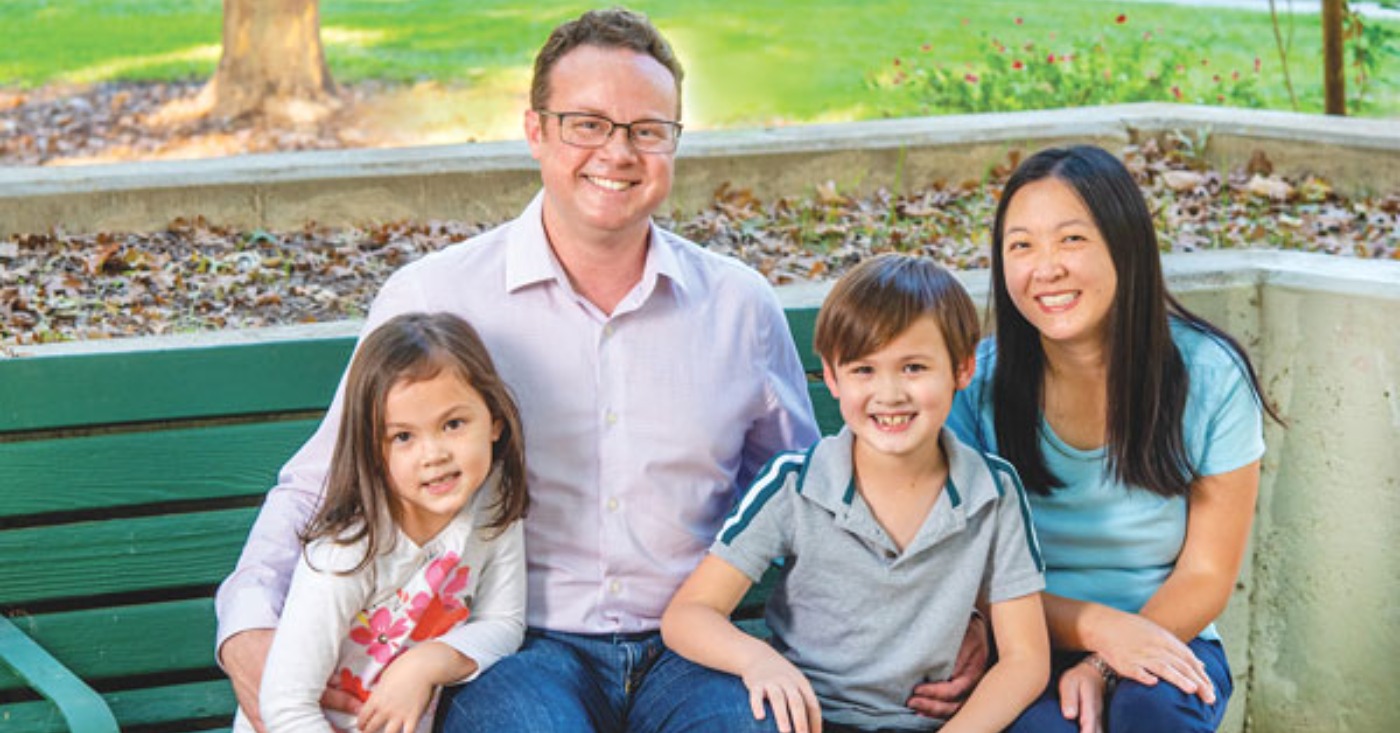
A recent show on radio station KPFA 94.1 featured a discussion about the racialized threats to less affluent urban public school districts as state authorities pressure school leaders to take out bailout loans to resolve budget shortfalls. These loans come with draconian terms that eliminate the authority of voter-selected school boards and impose extreme austerity measures, including the closure of many schools in poorer neighborhoods.
A dozen mostly minority school districts have been forced under state control in the past 20 years, including the Oakland Unified School District. At present, Sacramento City Unified School District (SCUSD), an ethnically and racially diverse district of about 42,000 students, is the target, but the district’s school board and the community are fighting back.
Speaking on the July 15 show, “Education Today,” hosted by education professor Kitty Kelly Epstein, Taylor Kayatta, a certificated public accountant (CPA) who serves as the first vice president of SCUSD, spoke about the ongoing struggle of their board and community to keep SCUSD from being taken over.
“There’s been pressure on my school district for over a decade now; there’s a feeling (from the state) that we’re intrinsically broken, that we cannot manage our finances,” said Kayatta, who has two elementary students in SCUSD.
“It reached a fever pitch a couple of years ago before COVID; I really felt it as a parent in the community that they were coming for us,” he said.
“Within the past year, they’re back at it again,” he said. “The pressure right now to accept a state loan is something I am not sure I could even describe.”
He said that the outside authorities would not even allow the board to hire its own financial adviser to help find solutions; the state takeover is the only option they want.
“We have a county superintendent in Sacramento County (who) has been on the job for decades. It’s been his mission, in my opinion, that something is wrong with Sac City Unified, that we are the problem child; we need outside control, (and) we shouldn’t be running ourselves,” said Kayatta.
In a district where enrollment is slightly declining, and many students have complex educational needs, SCUSD does face financial difficulties, he continued.
“There’s going to be challenges with the budget in the long term, but I think we need to address that in a way that is community-driven, with the community understanding what it means rather than accepting some blanket (imposed) ‘best practice’ that often involves making dramatic, harsh cuts, things like closing schools without plans.
“If you need to make cuts, make them in a way that makes sense rather than just trying to save a dollar this school year,” he said.
For example, closing a school may save a little money in the short run but almost always means loss of student enrollment as families move out of the district, which ends up costing a district more than it saves and can lead to a cycle of decline and demoralization.
Closely allied with the County Superintendent is the Fiscal Crisis and Management Assistance Team (FCMAT), “which has been at the heels of this district as long as I’ve lived in the district,” he said.
FCMAT is a state-funded nonprofit based in Bakersfield that has been granted sweeping authority under state law to pressure school districts to adopt fiscal austerity.
In theory, something like FCMAT would be a good thing, an agency that would help districts that face some financial difficulties, he said. “But my experience and the experience of people in Sacramento is that they’re an outside agency that has its own motivations.”
“They are not about helping you save your budget and helping you get through temporary (issues). They’re more about taking control over a district that they think shouldn’t be running itself.”
A school board is democratically elected and exists as “the people’s voice,” Kayatta said. Local schools need leadership that understands the problems and issues the community faces, “not an outside appointed group of people from Bakerfield who don’t really understand what Sacramento needs,” he said.
Show host Kitty Kelly Epstein, who actively opposed the state takeover of Oakland schools two decades ago, discussed its impact, which formally lasted until OUSD’s bailout loan was repaid in June 2025.
“When a district is taken over by the state, that means the school board loses all their power, which means that the electors, that’s the residents, lose all their power because they don’t get to elect anybody. There’s somebody put in charge, and they make all the decisions.”
“In the case of Oakland, Oakland’s debt could have been solved internally. That was not allowed by the state senator at the time, Don Perata,” she said.
“The actual amount that the district needed was about $37 million, and they were not allowed to use their own money to cover the debt. The loan that was imposed without the will of the people of Oakland was a $100 million. They fired the superintendent, brought in a state receiver, and spent the $100 million on whatever they wanted because there was no participation by people in Oakland,” she said.
“I know it sounds shocking. It was shocking, and Oakland was not the only district. There were others: Inglewood, Vallejo, Compton, said Kelly Epstein.
“The people who often have the least amount of input anyway, because of inequalities and racism in our system, get the little bit of participation that they have in schools, which is to elect a school board, taken away from them.”
Black History
Alpha Kappa Alpha Sorority, Inc. Celebrates New North Atlantic Regional Director
WASHINGTON INFORMER — As the 36th Regional Director, Dr. Ringgold will serve on the Alpha Kappa Alpha 18-member Board of Directors and will assist in the implementation of policies and programs under the leadership of International President and Chief Executive Officer Charletta Wilson Jacks.

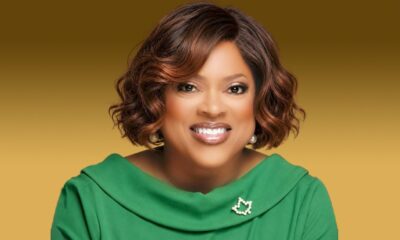
Dr. Tonja L. Ringgold, an educator and Life Member of Alpha Kappa Alpha Sorority, Incorporated® (AKA), was installed as North Atlantic Regional Director during the organization’s 72nd Biennial International Convention on July 23 in Las Vegas.
Dr. Ringgold will serve a two-year term overseeing one of the Sorority’s largest and most historic regions. With more than 17,000 members, the Notable North Atlantic is the birthplace of the sorority, which was established on Jan. 15, 1908, at Howard University in Washington, D.C.
“I am excited and humbled by the faith placed in me to lead,” said Dr. Ringgold. “I welcome the opportunity to give back to this illustrious Sisterhood that has poured so much into me.”
The North Atlantic Region, one of the sorority’s 10 regions in the United States and abroad, comprises undergraduate and graduate chapters in Connecticut, Delaware, the District of Columbia, Maine, Maryland, Massachusetts, New Hampshire, New Jersey, eastern New York, Pennsylvania, Rhode Island, and Vermont.
As the 36th Regional Director, Dr. Ringgold will serve on the Alpha Kappa Alpha 18-member Board of Directors and will assist in the implementation of policies and programs under the leadership of International President and Chief Executive Officer Charletta Wilson Jacks.
Her previous sorority leadership includes serving as the North Atlantic Regional Representative to the International Program Committee and as North Atlantic Region Program Chairman. She also served as president of Epsilon Omega Chapter in Baltimore, Maryland.
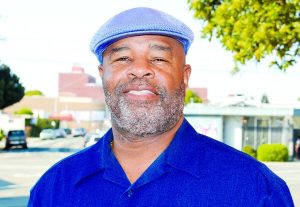
Dr. Ringgold represents four generations of Alpha Kappa Alpha women, all initiated into the Alpha Delta Chapter at Morgan State University. She was initiated in 1982, following in the footsteps of her cousin and Alpha Delta Charter member, Mary Anita Short Wheatley, and her mother, Mary Jane Briscoe Short, a life member of the Sorority with 67 years of service. Her daughter Ashley R. Davy was initiated into the Alpha Delta Chapter in 2011.
A nationally recognized educator, Dr. Ringgold has spent more than three decades in higher education. She is a retired Vice President of Academic Affairs within the Community College system and is a faculty member in the Morgan State University’s Community College Leadership Doctoral Program. She also serves as president and CEO of En-Sight Educational and Management Consultants.
She holds a doctorate degree in education, master’s degrees in Applied Psychology, Management, Business Administration, and a bachelor’s degree in Psychology.
In addition to her Alpha Kappa Alpha service, Dr. Ringgold is president of the Baltimore County Chapter of The Pierians, Incorporated; a member of the National Council on Black American Affairs; and a member of the Coalition of 100 Black Women.
She resides in Parkville, Maryland.

WORK FROM HOME
Home-based business with potential monthly income of $10K+ per month. A proven training system and website provided to maximize business effectiveness. Perfect job to earn side and primary income. Contact Lynne for more details: Lynne4npusa@gmail.com 800-334-0540


Four Candidates, Including Incumbent Barbara Lee, Qualify for Oakland Mayor’s Race

Oakland Observes Black August with Block Parties, Film Showings, Workshops

Oakland Post: Week of August 12 – 18, 2026

COMMENTARY: Why Local School Tax Measure G1 Will Not Be on the November Ballot

California Hispanic Chambers of Commerce Unveils: ‘Powering the Future’ Theme for 47th Annual Statewide Convention

Returning to Its Roots, the Oakland Black-Eyed Pea Festival Partners with the Freedom Farmers Market Sept. 12

Less Affluent School Districts, Including Sacramento City, Face Threat of State Takeover

From Blueprint to Breakthrough: Tackling Affordable Housing in Oakland

NPRC Scores First Advocacy Victory: David Shaw Finally Gets His Wish to ‘Go Home’

ESSAY: California Can Close Its Colorectal Cancer Gap

Car Wash Workers Cope with Lingering Impacts of ICE Raids

Misty Copeland Shapes Ballet’s Tomorrow

As Part of Your Back-to- School Checklist, Vaccinate

As Part of Your Back-to- School Checklist, Vaccinate

Congresswoman Simon Demands Investigation into Trump’s Abuse of Emergency Powers for Coal Export Terminal in West Oakland

Department of Homeland Security Demands California Secretary of State Shirley N. Weber Scrub Voter Rolls

Oakland Children’s Hospital Workers and Patients Rally for Pediatric Medical Care

New Judge Could Decide if Karmelo Anthony Gets a New Trial

“The Power to See Threats Sooner”: Gov. Newsom, Safety Officials Showcase California’s Investments in Hi-Tech Wildfire Prevention

Alpha Kappa Alpha Sorority, Inc. Celebrates New North Atlantic Regional Director

Surveillance Pricing Fight: State Senate Debates Bill Banning Retailers from Using AI to Set Prices Based on a Buyer’s Profile

Mount Zion MBC, Church of Jesus Christ of Latter-day Saints Partner to Bring 29,000 Meals to Alameda County

California Sen. Padilla Joins Colleagues to Introduce Bill Imposing Term Limits on Supreme Court Justices

Starting This Summer, California Car Buyers Can Get an Instant $3500 Off the Cost of Electric Vehicles

COMMENTARY: You Are Already Paying for the AI Boom
Less Affluent School Districts, Including Sacramento City, Face Threat of State Takeover

California Bill Would Let Abuse Victims Use Trauma as Legal Defense for Violent Crime
Car Wash Workers Cope with Lingering Impacts of ICE Raids

Fed Court to Decide Landmark First Amendment Case

Gov. Gavin Newsom Signs Law Streamlining Affordable Housing Rules

The Conversation With Al McFarlane 6/23/26

Media Monday 6/22/26

LIVE! ASK ALMA! — TUES. 6.23.26 7PM EST

Car Buying Secrets: 4 Hidden Checks Before You Sign!

Is This 550 HP Charger Worth YOUR Money? AutoNetwork Review

Celebrating Juneteenth – Frederick Douglass on education and resistance

LIVE! — ASK ALMA! — TUES. 6.19.26 7PM EST

Hyundai Ioniq 5 Parking, Safety, and 360 View #shorts

2025 Ioniq 5 New Wiper & Powerful Performance! #shorts

Electric SUV Range: Is 259 Miles Enough? #shorts

EV Charging: How Fast Can You Charge an Electric Vehicle? #shorts

Biometric Cooling… Messaging Seats…Come on! 2025 Infiniti QX80 Autograph 4WD

Charged Up: Witness the Magic of a Fully Electric Car! #shorts

Range Rover Sport PHEV Included…: See What’s Inside This Luxury SUV! #shorts

Invisible Hood View: Perfect Parking with X-Ray Vision! #shorts
-
 Featured1 week ago
Department of Homeland Security Demands California Secretary of State Shirley N. Weber Scrub Voter Rolls
-
 Business3 weeks ago
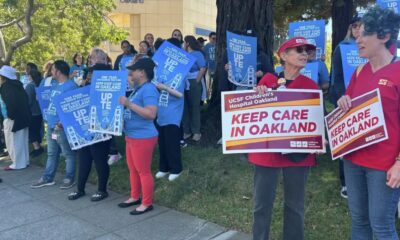
Oakland Children’s Hospital Workers and Patients Rally for Pediatric Medical Care
-
 #NNPA BlackPress2 weeks ago
New Judge Could Decide if Karmelo Anthony Gets a New Trial
-
 Environment1 week ago
“The Power to See Threats Sooner”: Gov. Newsom, Safety Officials Showcase California’s Investments in Hi-Tech Wildfire Prevention
-
 Black History2 weeks ago
Alpha Kappa Alpha Sorority, Inc. Celebrates New North Atlantic Regional Director
-
 Business3 weeks ago
Surveillance Pricing Fight: State Senate Debates Bill Banning Retailers from Using AI to Set Prices Based on a Buyer’s Profile
-
 Business3 weeks ago
Mount Zion MBC, Church of Jesus Christ of Latter-day Saints Partner to Bring 29,000 Meals to Alameda County
-
 Featured1 week ago
California Sen. Padilla Joins Colleagues to Introduce Bill Imposing Term Limits on Supreme Court Justices
