
#NNPA BlackPress
With Carolyn Bryant’s Death, Where is Justice for Emmett Till?
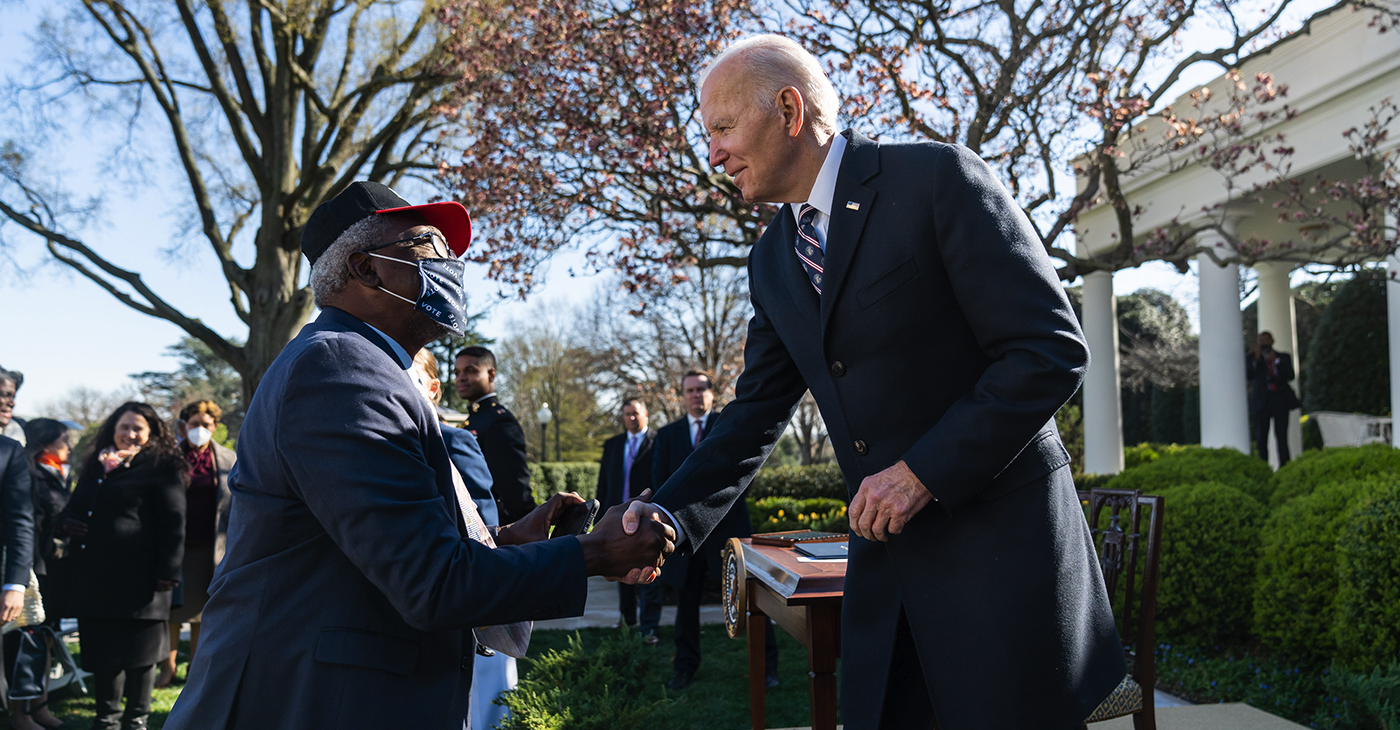
NNPA NEWSWIRE — Last year President Joe Biden signed the Emmett Till Antilynching Act into law — legislation that had previously been killed more than 200 times. The passage was a hard-fought win, but the activist William Barber III reminded us that no law, “verdict or election can bring about the racial reckoning America needs after 400 years of building systems that have rested upon White supremacy.”
The post With Carolyn Bryant’s Death, Where is Justice for Emmett Till? first appeared on BlackPressUSA.

By Liz Courquet-Lesaulnier | Word in Black
Emmet Till deserved to grow old.
If he hadn’t been murdered in Money, Mississippi, on August 28, 1955 — if he had lived long enough to develop wrinkles and gray hair, and bounce his children, grandchildren, and possibly his great-grandchildren on his knees — he might have celebrated his 82nd birthday this July.
His mother, Mamie Till-Mobely, who died in 2003, might have had many happy years with her beloved son. She wouldn’t have gone to her grave with horrifying memories of his brutalized body. She wouldn’t have had to make the courageous decision to leave his casket open. There would have been no reason for her to say these heartbreaking words: “I wanted the world to see what they did to my baby.”
But thanks to the need of White men in the Jim Crow South to preserve the purity and honor of 21-year-old Carolyn Bryant — the White woman who falsely accused Till of making sexual advances at her — Emmet Till never made it past 14.
Carolyn Bryant — known later in life as Carolyn Bryant Donham — lived to the ripe old age of 88 without ever being held accountable for her part in Till’s murder.
As reporter Ed Pilkington wrote in the Guardian in 2020 about the people involved in Till’s murder, “Not a day has been spent in jail nor a penny paid in compensation.”
That was still true on April 25, the day Carolyn Bryant died.
A Last Chance for Justice
On the morning of April 27, before most people knew about Bryant’s death, the social media accounts of the Emmett Till Legacy Foundation — the nonprofit founded in 2005 by Till’s family posted black squares to their various pages.
The squares were, perhaps, an acknowledgment that with Bryant’s death, the family’s last chance for justice for Emmett Till — for anyone involved in his murder to be held accountable — was now gone.
“This is not a celebratory moment,” Keith A. Beauchamp, the filmmaker who co-wrote and produced the 2022 feature film “Till,” explained on his Facebook page.
“Since 1955, law enforcement and local officials have allowed Bryant – Donham to evade justice. It’s infuriating to come to the realization that the American judicial system has failed us yet again.”
In his post, Beauchamp also acknowledged, “The question that everyone should be asking is how and who allowed this predator to get away?
Like Till’s family, Beauchamp has long pursued truth and justice for the murdered teen.
Beauchamp spent 10 years making the 2005 documentary, “The Untold Story of Emmett Louis Till.”
The evidence he uncovered was instrumental to the U.S. government reopening its investigation of the case in 2004 — before the film was released. However, no charges ended up being brought, and the investigation closed in 2007.
The FBI reopened the case after the January 2017 publication of the book “The Blood of Emmett Till,” by historian and author Timothy B. Tyson.
Tyson spent an unprecedented amount of time with Bryant, and he detailed in the book that she admitted to him that she had lied.
Tyson wrote that Bryant said: “Nothing that boy did could ever justify what happened to him.” However, he was unable to produce an audio recording of that specific conversation — he only had a handwritten note of Bryant’s remarks. The Till case was closed again in 2021.
An Unserved Arrest Warrant
Bryant’s death came just two weeks after the April 13 announcement that Ricky Banks, the sheriff in Leflore County, Mississippi, had declined to serve a recently discovered 1955 arrest warrant for Carolyn Bryant.
Why wasn’t the warrant served in 1955? The then-sheriff decided he didn’t want to “bother” Bryant because she was a mother.
This unserved warrant was found in June 2022 at the Leflore County Courthouse by five members of the Emmett Till Legacy Foundation.
Despite the discovery of the warrant, in August 2022, a Leflore County grand jury refused to indict Bryant.
“It is evident that the outstanding warrant was not ever intended to be served in 1955 and obviously not intended to be served in 2022,” Deborah Watts, another cousin of Till and a co-founder of the Emmett Till Legacy Foundation, wrote in a statement at the time.
“This is a missed opportunity to break the cycle of protection that has been afforded to White women, specifically to Carolyn Holloway Bryant Donham, Mrs. Roy Bryant, the last living known accomplice, who has been allowed to escape full accountability and judicial judgment in this case. No family should ever have to endure this pain and injustice for this long,” Watts wrote.
In February 2023, another of Till’s cousins, Patricia Sterling, filed a federal lawsuit seeking to compel Banks to serve the warrant.
“But for Carolyn Bryant falsely claiming to her husband that Emmett Till assaulted her, Emmett would not have been murdered,” the lawsuit stated.
Bryant is widely believed to have identified Till to her husband, Roy Bryant, and J.W. Milam, Roy Bryant’s half-brother. It’s also believed that Carolyn Bryant helped the two men locate Till so that they could abduct him from his bed in his great-uncle’s home.
“It was Carolyn Bryant’s lie that sent Roy Bryant and JW Milam into a rage, which resulted in the mutilation of Emmett Till’s body into unrecognizable condition,” Sterling’s lawsuit stated.
However, on April 13, Banks’ attorney, Charles J. Swayze III, filed court papers stating, “Since the Grand Jury found no probable cause to indict Donham on the charges of kidnapping and manslaughter, there is no probable cause to support the 1955 Arrest Warrant.” Swayze also asked for Sterling’s federal lawsuit to be dismissed.
Despite this setback, the Till family didn’t give up.
In an April 26 Facebook post, Watts clarified that far from the discovery of the warrant being a surprise — as some news outlets had reported — she and the other foundation members were “intentionally Searching for the Unserved Warrant.”
Watts wrote that they found the warrant “within an hour and a half” of looking for it — raising the question of why it had not previously been discovered in the decades before.
Watts subsequently demanded “that Mississippi authorities that are responsible, do their jobs and #ServeTheWarrant now!”
Little did Watts know when she uploaded her post that Carolyn Bryant had died the day before.
We Can Never Forget
In 2003, one week before she died, Mamie Till Mobeley told Beauchamp to “tell Emmett’s story until man’s consciousness is risen, only then there will be justice for Emmett Till!”
Till’s “case is so relevant today because he is the Anne Frank for Black America,” Beauchamp wrote me in an email in 2015.
“Just like our Jewish brothers and sisters, we must continue to tell Emmett’s story over and over again.”
The details of what followed after Till’s abduction are horrific, but given the persistent attacks on teaching the truth about Black history — about American history — they bear repeating.
We know that Roy Bryant and J.W. Milam drove Till to a barn, stripped him naked, and tortured and beat him beyond recognition. A passerby reported hearing the boy crying out, “Mama, please save me.”
As the historian Tyson wrote, “Affronted White supremacy drove every blow.”
The men went on to gouge out one of Till’s eyes, shoot him in the head, and use barbed wire to tie his body to a 75-pound cotton gin. They then threw his body into the Tallahatchie River and took Till’s clothes and shoes home to burn them.
Despite the weight of the cotton gin, Till floated eight miles downstream. Once discovered, his body was only identifiable because of a silver ring on his pinky finger.
During Roy Bryant and J.W. Milam’s trial, Carolyn Bryant sat coolly beside her husband.
When called to testify, she claimed that Till had grabbed her hand and waist, asking her, “How about a date, baby?” She claimed he’d made sexually explicit comments and said he’d been with other White women.
Both men were acquitted in Sept. 1956 by an all-White jury.
We only know the details of Till’s murder because in 1956, Look magazine paid Roy Bryant and J.W. Milam $4,000 to spill the gruesome circumstances.
The article describes 5′ 4″ tall Till as looking “like a man” — a reminder of how from Emmett Till to Trayvon Martin to Tamir Rice, the combination of adultification and racism gets Black children killed.
Milam told the magazine that when a Black man “gets close to mentioning sex with a White woman, he’s tired o’ livin’. I’m likely to kill him. Me and my folks fought for this country, and we got some rights.”
He went on to say he told Till, “I’m going to make an example of you—just so everybody can know how me and my folks stand.”
Double jeopardy laws protected both men from being tried again for Till’s murder.
A Steep Price for Civil Rights
Surely, the actions of Mamie Till-Mobley weren’t what either man expected. The widely circulated photograph of Till’s mutilated body in the open casket requested by Till-Mobley shocked the world and galvanized the civil rights movement.
Her description of her son’s body is what no mother should ever have to see:
“I saw his tongue had been choked out and it was lying down on his chin. I saw that this eye was out, and it was lying about midway to cheek. I looked at this eye, and it was gone. I looked at the bridge of his nose, and it looked like someone had taken a meat chopper and chopped it. I looked at his teeth, because I took so much pride in his teeth. His teeth were the prettiest things I’d ever seen in my life, I thought. And I only saw two. Where are the rest of them? They had just been knocked out. And I was looking at his ears. His ears were like mine. They curled. They’re not attached, and they curled up the same way mine are. And I didn’t see the ear. Where’s the ear? And that’s when I discovered a hole about here, and I could see daylight on the other side. I said, now was it necessary to shoot him? If that’s a bullet hole, was that necessary? And I also discovered that they had taken an axe, and they had gone straight down across his head, and the face and the back of the head were separate.”
When you read Till-Mobley’s words, you understand why on Dec. 1, 1955, Rosa Parks had Emmett Till on her mind when she refused to go to the back of the bus — which led to her arrest and sparked the Montgomery Bus Boycott.
That, in turn, led to Martin Luther King Jr. becoming the president of the Montgomery Improvement Association — activism that catapulted him onto a national stage.
In 2005, the Rev. Al Sharpton told Democracy Now that because of Till-Mobley’s choice to open her son’s casket, “because she put the picture of this young man’s body on the conscience of America, she might have saved thousands of young Black men and young Black women’s lives.”
Last year President Joe Biden signed the Emmett Till Antilynching Act into law — legislation that had previously been killed more than 200 times. The passage was a hard-fought win, but the activist William Barber III reminded us that no law, “verdict or election can bring about the racial reckoning America needs after 400 years of building systems that have rested upon White supremacy.”
And what a steep price has been paid for our freedoms by Till and his family.
Another of his cousins, Thelma Wright Edwards, told the Guardian in 2020 that she didn’t actually want Bryant in jail due to the woman’s age.
However, “I do want Miss Bryant to admit she lied,” she said. “Stand up and tell the truth. We can’t move on until we hear it from her mouth.”
With Bryant’s death, that longed-for moment of accountability — of truth — will never come.
This piece was originally published by Word in Black.
The post With Carolyn Bryant’s death, where is justice for Emmett Till? appeared first on AFRO American Newspapers .
The post With Carolyn Bryant’s Death, Where is Justice for Emmett Till? first appeared on BlackPressUSA.













#NNPA BlackPress
Smooth Ride! Car Suspension & Comfort Tested #shorts
Smooth suspension meets surprisingly spacious legroom. Experience true comfort on any road!


 Watch the full video: https://youtu.be/l9Z571za5Gc
#NNPA BlackPress
61 years since Selma, Houston leaders say the bridge remains to be crossed
61 years after Selma, Houston leaders say the fight for equality continues. The issues that sparked the marches still impact Black Americans today.

It has been 61 years since the Selma marches. But political leaders in Houston say that the issues protesters were marching for still plague the lives of Black Americans.
Visit Our Website
Read more stories by our team
https://defendernetwork.com/category/news/opinion/
Sign-up for the Top 5 newsletter
Donate/ Support Our Work

#NNPA BlackPress
Here is what you need to know about finding unique white elephant gift ideas that everyone wants to steal
The best white elephant gift ideas are funny enough to get a reaction but useful enough that people actually want to steal them. Look for gifts with a surprise factor, broad appeal, an inside joke, and just enough personality to spark some friendly competition. The wrapping paper comes off, the room goes quiet for half […]

The best white elephant gift ideas are funny enough to get a reaction but useful enough that people actually want to steal them. Look for gifts with a surprise factor, broad appeal, an inside joke, and just enough personality to spark some friendly competition.
The wrapping paper comes off, the room goes quiet for half a second, and suddenly everyone wants the same gift. That is the sweet spot. A great white elephant pick should make people laugh, lean in, and start plotting their next steal before the turn is even over.
Should a White Elephant Gift Be Funny or Useful?
A white elephant gift can be funny or useful, but the strongest choices usually give people a reason to laugh and a reason to keep the item. A practical gift with an odd design, unexpected feature, or playful theme can get a reaction without becoming something the recipient immediately wants to give away.
The right balance depends on the group. Close friends and family members may enjoy a ridiculous gag gift because they already understand one another’s sense of humor.
A workplace exchange, neighborhood party, or mixed-age gathering usually calls for something with broader appeal. In those settings, humor works better when it is built into an item people could still use afterward.
It also helps to think about how quickly the gift will make sense once it is opened. A strangely shaped kitchen tool, oversized mug, quirky desk accessory, or unexpectedly fancy everyday item can create an immediate reaction. Guests understand the joke right away, while the item still has enough practical value to attract a steal.
Pure gag gifts can be harder to pull off. Something that exists only for the punchline may get a big laugh during the reveal and then sit untouched for the rest of the game. If the goal is to bring one of the gifts everyone keeps fighting over, usefulness gives the joke staying power.
Memorable Present Ideas: Creating Inside Joke Gifts
Inside joke gifts can make a white elephant exchange feel much more personal, especially when most of the group shares the same stories. The trick is choosing a reference that people will recognize quickly instead of building the entire joke around something only two guests understand.
You can turn a memorable vacation mishap, office catchphrase, family story, or long-running group joke into the theme of the gift. A personalized comic book can work especially well when it turns familiar people or a ridiculous shared moment into part of the story.
Think carefully about who the joke involves before ordering anything permanent. The gift should make the person feel included in the fun, not singled out for the wrong reason.
Can You Bring Something You Already Own?
Holiday gift exchanges can be a good place to re-gift something you never used, especially if it is unopened and clean.
The following can all work if they still look presentable:
- A duplicate kitchen gadget
- An untouched game
- A decorative item
- A sealed gift set
- An unopened candle
- A new travel accessory
The goal is to give the item a second chance, not use the exchange as an excuse to clear out damaged or unwanted clutter.
Take a close look at the packaging before wrapping it. Faded boxes, missing pieces, visible wear, or anything that looks obviously used can make the gift feel careless.
Wrapping Budget-Friendly Gifts
Wrapping can make gifts more entertaining before anyone even knows what’s inside.
Misdirection works especially well for fun party games. Put a small gift inside a much larger box. Use packaging from an unrelated household item.
Add harmless weight so guests cannot guess what they are holding. The reveal becomes part of the joke without changing the gift itself.
You can also lean into the theme of the exchange. Bright paper, oversized bows, reusable bags, or deliberately over-the-top wrapping can make an ordinary item feel more memorable. If the gift itself is already funny, simple wrapping may work better so the surprise stays hidden until the last second.
Frequently Asked Questions
Is Picking Last an Advantage in White Elephant?
Picking last can be an advantage because you get to see almost every gift before making your move. Instead of choosing blindly from the remaining wrapped presents, you can steal something that has already caught your attention if the rules still allow it.
That advantage depends on the house rules. Some games limit how many times a gift can be stolen.
Others lock an item once it reaches a certain number of steals. If the most popular gifts are already unavailable, the final player may have fewer strong options than expected.
The first player can also get another turn at the end in some versions of the game. That rule can balance things out, since the person who started with the least information may get one final chance to steal.
How Do You Plan White Elephant for a Large Group?
For a large white elephant exchange, set a firm spending limit and establish the stealing rules in advance.
Create a clear turn order before the game begins. Drawing numbers as guests arrive can save time once everyone is ready to start.
Keep the number of steals per gift limited so the game does not drag on. It also helps to have one person track which creative holiday presents have been stolen and when they are locked, especially if dozens of people are participating.
Can You Play White Elephant Virtually?
A virtual white elephant exchange can work over a video call, with one person keeping track of the turn order and each steal. Guests can either mail physical gifts ahead of time or use digital gifts that can be delivered once the game ends.
Set the spending limit and stealing rules before everyone joins. It also helps to decide how gifts will be revealed and who is responsible for sending each one afterward so the exchange does not become confusing.
Choose a Perfect White Elephant Gift in a Snap
Look for a white elephant gift that fits some of these criteria, and everyone will be trying to grab it at your next celebration.
Do you need more gift-giving tips and tricks? Make sure you read some of our other posts.



Mayor Barbara Lee Holds Special State of the City Address in Deep East Oakland

Practitioners of African Traditional Spirituality Offer Ancestral Reverence Ritual Oct. 31

It’s Time to Lose Weight Before the Holidays

Trader Vic’s Returns to Its Oakland Roots

Oakland Coal Terminal Backed by Trump Would Be Bigger, Dirtier Than Promised, Says Report

Opponents Smear Effective African American Transit Director as Election Nears

Oakland Post: Week of October 14 – 20, 2026

OP-ED: The Black Church Writes AI’s Next Chapter

OP-ED: The Black Church Writes AI’s Next Chapter

WCCUSD Joins Statewide Organic School Food Purchasing Cooperative

Democrats, Community Groups Back Measure EE to Change How Oakland Is Governed

Four Tips to Help You Plan a Holiday “Staycation”

Veterans Housing Project Proposed for South Richmond
PRESS ROOM: Transformative Justice Coalition 2026 Voting Rights Champion Awards Reception ‘Yesterday Is Today: The Battle For Voting Rights

Mayor Lee Delivers 2026 State of the City Address: ‘Oakland Continues to Be on the Move’

Misnamed ‘Parent’ PAC Seeks to Influence Oakland School Board Elections

Listening as a Lifeline: A Doula’s Witness to Black Maternal Health

Poll: Becerra Widens His Lead Over Hilton; Californians Split on Wealth Tax

Oakland Post: Week of September 9 – 15, 2026

County Office of Education Says OUSD Finances Are Getting Healthier, Materially Stronger

Richmond Tiny House Village Farm & Garden Set to Open Gates on Sept. 26

Mayor Lee Announces $1 Million Kaiser Permanente Grant for Pilot Program to Address Homelessness, Clean Up Public Spaces throughout Oakland

Latest Massacre in Haiti Reveals Cruelty U.S. Deportations

Zakiya Jendayi Arrested, Locked Out of Home by Sheriff’s Deputies

OPINION: Nolan Wells’ Death One of Several Signifying Racial Terror Lives on in U.S. South

Doulas Are Helping Black California Moms Navigate Pregnancy–Even as High Mortality Rates Persist

BLACspace Cooperative Invites Bay Area to Experience Oakland’s Black Cultural Ecosystem Through a BLAC Map Tour + Party

Oakland Post: Week of September 16 – 22, 2026

Oakland People’s Arms Embargo Coalition Demands End to Military Shipments Thru Oakland

Democratic Clubs Interview Candidates for Oakland School Board

The Conversation With Al McFarlane 6/23/26

Media Monday 6/22/26

LIVE! ASK ALMA! — TUES. 6.23.26 7PM EST

Car Buying Secrets: 4 Hidden Checks Before You Sign!

Is This 550 HP Charger Worth YOUR Money? AutoNetwork Review

Celebrating Juneteenth – Frederick Douglass on education and resistance

LIVE! — ASK ALMA! — TUES. 6.19.26 7PM EST

Hyundai Ioniq 5 Parking, Safety, and 360 View #shorts

2025 Ioniq 5 New Wiper & Powerful Performance! #shorts

Electric SUV Range: Is 259 Miles Enough? #shorts

EV Charging: How Fast Can You Charge an Electric Vehicle? #shorts

Biometric Cooling… Messaging Seats…Come on! 2025 Infiniti QX80 Autograph 4WD

Charged Up: Witness the Magic of a Fully Electric Car! #shorts

Range Rover Sport PHEV Included…: See What’s Inside This Luxury SUV! #shorts

Invisible Hood View: Perfect Parking with X-Ray Vision! #shorts
-
 Black History3 weeks ago
Listening as a Lifeline: A Doula’s Witness to Black Maternal Health
-
 Economy4 weeks ago
Poll: Becerra Widens His Lead Over Hilton; Californians Split on Wealth Tax
-
 Business4 weeks ago
County Office of Education Says OUSD Finances Are Getting Healthier, Materially Stronger
-
 Lead Story3 weeks ago
Zakiya Jendayi Arrested, Locked Out of Home by Sheriff’s Deputies
-
 Black History4 weeks ago
Doulas Are Helping Black California Moms Navigate Pregnancy–Even as High Mortality Rates Persist
-
 Art4 weeks ago
BLACspace Cooperative Invites Bay Area to Experience Oakland’s Black Cultural Ecosystem Through a BLAC Map Tour + Party
-

 Business4 weeks ago
From Historic Memories to New Possibilities: Oakland Celebrates Coliseum 60
-

 Community4 weeks ago
Asm. Corey Jackson Announces Launch of 24-Hour Childcare in His District
