
Activism
William Wells Brown, Personifying the American Dream
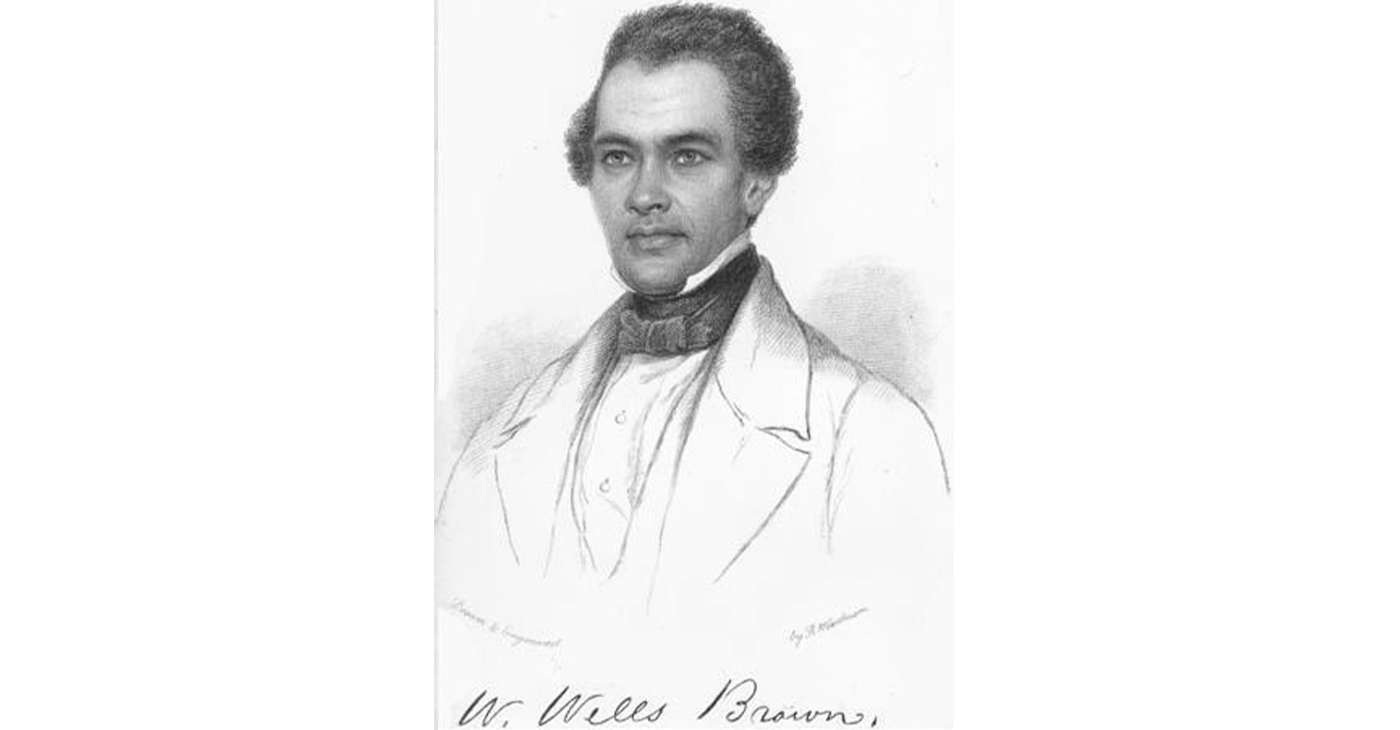
William Wells Brown personified the American dream. He’d become an internationally renowned antislavery activist and writer who resided in and traveled widely across the northern United States and the British Isles. He penned a series of remarkable books including the first Black novel, the first printed Black play, the first Black travelogue, and the first Black panorama displayed in Britain.

By Tamara Shiloh
The minstrel shows of the early 19th century are believed by some to be the roots of Black theatre. However, they were written, acted, and performed by whites for white audiences. The first known play by a Black American was James Brown’s “King Shotaway” (1823), but the first Black play published was William Wells Brown’s (ca. 1814–1884) “The Escape; or, A Leap for Freedom.”
While “Escape” was published in 1858, it was not officially produced until 1971 at Emerson College. It was one of the earliest extant pieces of African American dramatic literature.
Brown, whose mother was a slave, was born on a plantation outside Lexington, Ky. He would become a Black antislavery lecturer, a groundbreaking novelist, playwright, and historian.
According to the New Bedford Historical Society (NBHS), he is “widely considered to have been the first African American to publish works in several major literary genres, and widely acclaimed for the effectiveness of many of his writings.”

Bought and sold several times before age 20, Brown spent his childhood and much of his young adult life as a slave in St. Louis, Mo. There he was hired out to work on the Missouri River which, at that time, served as a major thoroughfare for the slave trade. This location allowed him several chances to escape. It was New Year’s Day in 1834 that he slipped away from a steamboat and finally became successful.
Brown landed in Cleveland, Ohio, where he began educating himself and reading antislavery newspapers. He later worked as a steam boatsman on Lake Erie and conductor for the Underground Railroad. On arrival at Cleveland, he’d taken shelter with Mr. and Mrs. Wells Brown, a white Quaker family and later adopted their names.
By 1843, Brown had become a regular on the Western New York Anti-Slavery Society lecturing circuit. He was also deeply committed to speaking out on women’s rights and temperance laws (laws banning the sale of spirits in less than 15-gallon quantities). It was Brown’s speaking that led many historians and scholars to provide the trajectory for his later career as a writer. By 1845, he’d published “Narrative of William W. Brown, a Fugitive Slave, Written by Himself.”
Brown personified the American dream. He’d become an internationally renowned antislavery activist and writer who resided in and traveled widely across the northern United States and the British Isles. He penned a series of remarkable books including the first Black novel, the first printed Black play, the first Black travelogue, and the first Black panorama displayed in Britain.
Focusing on his own historical works, Brown penned two histories of the Black race, a history on Blacks and whites in the South, and a rare military history of Blacks in the Civil War. He eventually settled in Boston, where he practiced medicine until his death from cancer in 1884.
Learn more about Brown’s compelling story through his classic American slave narrative: “The Narrative of William W. Brown a Fugitive Slave.”









Activism
Oakland Post: Week of September 30 – October 6, 2026
The printed Weekly Edition of the Oakland Post: Week of September 30 – October 6, 2026
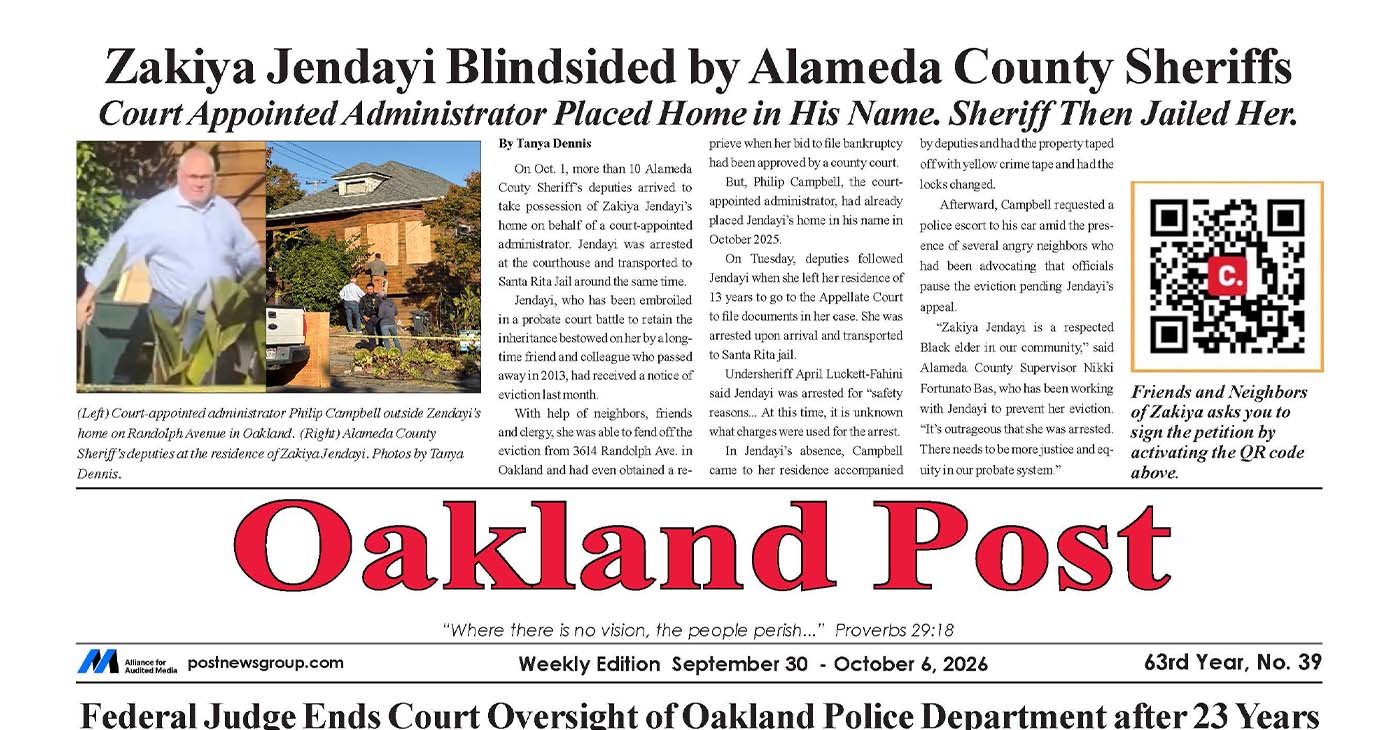
To enlarge your view of this issue, use the slider, magnifying glass icon or full page icon in the lower right corner of the browser window.
Activism
Oakland Post: Week of September 23 – 29, 2026
The printed Weekly Edition of the Oakland Post: Week of September 23 – 29, 2026
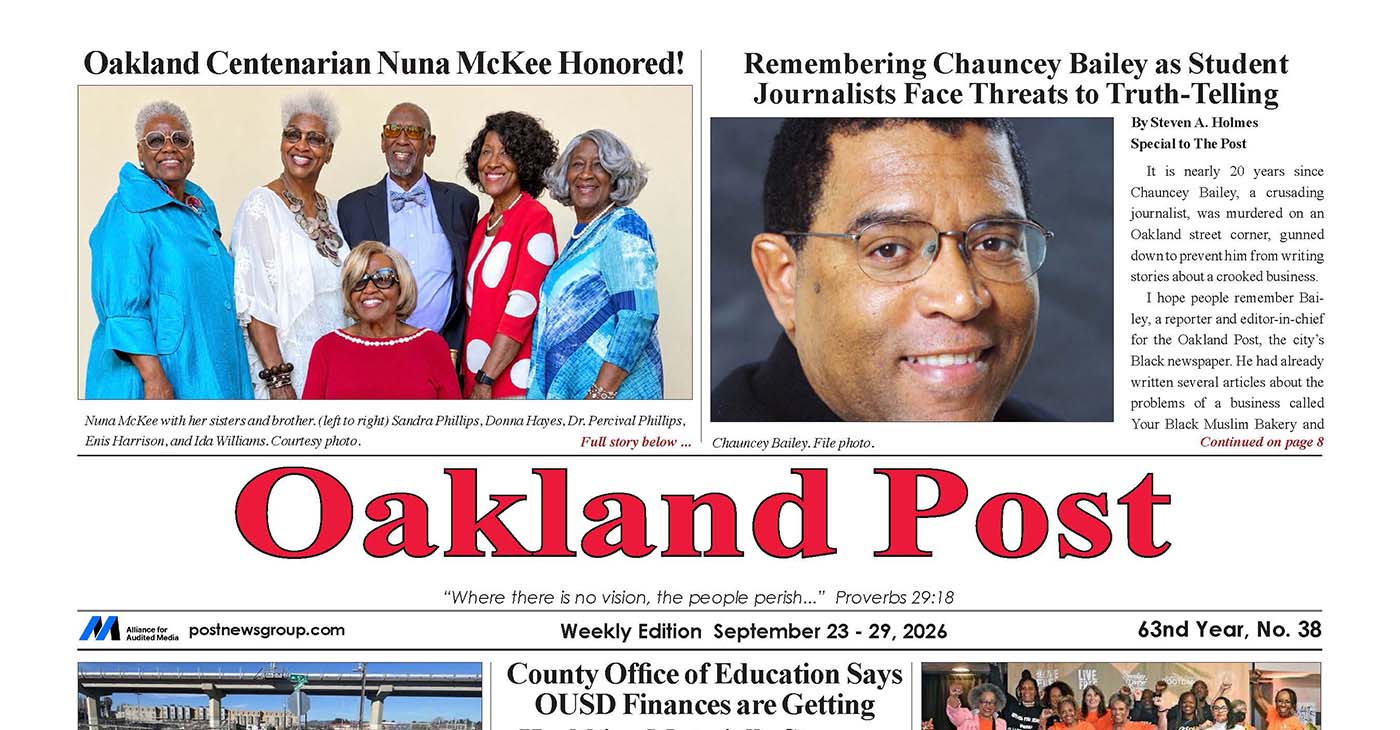
To enlarge your view of this issue, use the slider, magnifying glass icon or full page icon in the lower right corner of the browser window.
Activism
Oakland Post: Week of September 16 – 22, 2026
The printed Weekly Edition of the Oakland Post: Week of September 16 – 22, 2026
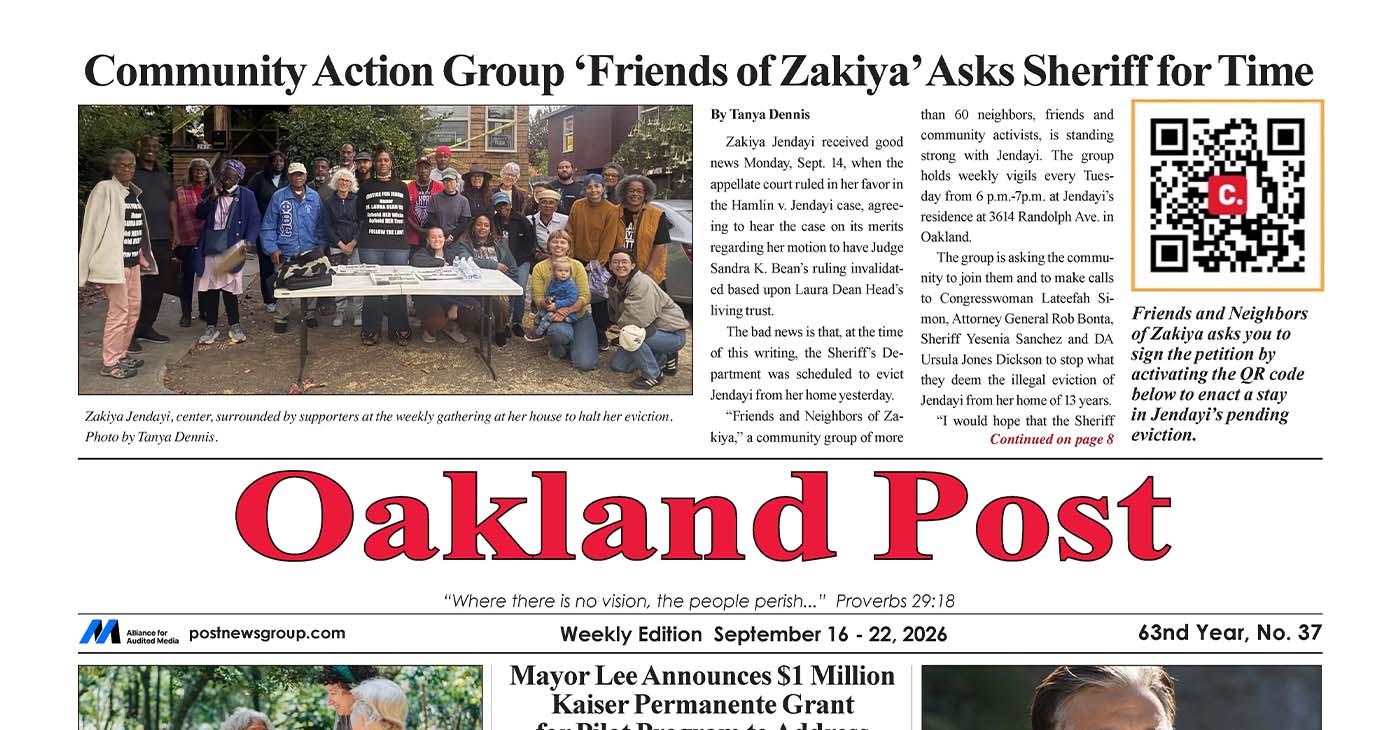
To enlarge your view of this issue, use the slider, magnifying glass icon or full page icon in the lower right corner of the browser window.



OP-ED: Proposition 44 Would Put a Price on Trust

OP-ED: Proposition 40: It’s Time to Play Chess, Not Checkers

Listening as a Lifeline: A Doula’s Witness to Black Maternal Health

New Protections for Ticket Buyers: Gov. Newsom Signs Assemblymember Isaac Bryan’s Bill

‘We Don’t Talk Trash — We Pick Up Trash!’

Zakiya Jendayi Arrested, Locked Out of Home by Sheriff’s Deputies

Oakland Post: Week of September 30 – October 6, 2026

Asm. Corey Jackson Announces Launch of 24-Hour Childcare in His District

IN MEMORIAM: The Rev. Leon “Sonny” Clark, Longtime Orange County Pastor and Community Leader, Dies at 72

Poll: Becerra Widens His Lead Over Hilton; Californians Split on Wealth Tax

From Historic Memories to New Possibilities: Oakland Celebrates Coliseum 60

County Office of Education Says OUSD Finances Are Getting Healthier, Materially Stronger

LIVE FREE Sunday Dinner Brings Faith, Fellowship and Civic Conversation to Oakland

Remembering Chauncey Bailey as Student Journalists Face Threats to Truth-Telling

BLACspace Cooperative Invites Bay Area to Experience Oakland’s Black Cultural Ecosystem Through a BLAC Map Tour + Party

Standoff for Justice: Our Homes Are Worth Fighting For

Oakland Post: Week of August 26 – September 1, 2026

Frontier Airlines’ Return to Oakland Airport Brings Flights, Jobs and Opportunity

Jackie Wright Champions Bay Area Stories, Filmmakers and Cultural Institutions

Gubernatorial Candidate Steve Hilton Blasts California New Tire Rules; Newsom Hits Back

Chef Sharon Lee Blends Culinary Excellence, Education and Empowerment

Misnamed ‘Parent’ PAC Seeks to Influence Oakland School Board Elections

Oakland Coliseum Project Opens Door for Small Businesses to Build Bigger

Big City Mayors Ask for “Yes” Vote on Housing Bond Measure; Conservatives Say “No”

Gov. Newsom’s Latest Appointees Include Sacramento Advocate for Formerly Incarcerated Students; State’s New Tech Chief

Oakland Post: Week of September 2 – 8, 2026

Longtime BWOPA Member Brendalyn Goodall Appointed to California Workforce Development Board

Gov. Newsom Signs Law Shielding Immigration Aid Workers From Doxing Threats

Secretary of State Shirley N. Weber Urges Californians to Vote Early as Voter ID Battle Intensifies

Oakland Post: Week of September 9 – 15, 2026

The Conversation With Al McFarlane 6/23/26

Media Monday 6/22/26

LIVE! ASK ALMA! — TUES. 6.23.26 7PM EST

Car Buying Secrets: 4 Hidden Checks Before You Sign!

Is This 550 HP Charger Worth YOUR Money? AutoNetwork Review

Celebrating Juneteenth – Frederick Douglass on education and resistance

LIVE! — ASK ALMA! — TUES. 6.19.26 7PM EST

Hyundai Ioniq 5 Parking, Safety, and 360 View #shorts

2025 Ioniq 5 New Wiper & Powerful Performance! #shorts

Electric SUV Range: Is 259 Miles Enough? #shorts

EV Charging: How Fast Can You Charge an Electric Vehicle? #shorts

Biometric Cooling… Messaging Seats…Come on! 2025 Infiniti QX80 Autograph 4WD

Charged Up: Witness the Magic of a Fully Electric Car! #shorts

Range Rover Sport PHEV Included…: See What’s Inside This Luxury SUV! #shorts

Invisible Hood View: Perfect Parking with X-Ray Vision! #shorts
-
 Community4 weeks ago
Misnamed ‘Parent’ PAC Seeks to Influence Oakland School Board Elections
-
 Activism4 weeks ago
Oakland Post: Week of September 9 – 15, 2026
-

 Community4 weeks ago
Richmond Tiny House Village Farm & Garden Set to Open Gates on Sept. 26
-

 Black History4 weeks ago
Latest Massacre in Haiti Reveals Cruelty U.S. Deportations
-

 Black History4 weeks ago
OPINION: Nolan Wells’ Death One of Several Signifying Racial Terror Lives on in U.S. South
-

 Business3 weeks ago
Mayor Lee Announces $1 Million Kaiser Permanente Grant for Pilot Program to Address Homelessness, Clean Up Public Spaces throughout Oakland
-
 Economy2 weeks ago
Poll: Becerra Widens His Lead Over Hilton; Californians Split on Wealth Tax
-

 Community4 weeks ago
Democratic Clubs Interview Candidates for Oakland School Board
