
Bay Area
Westside Residents and Business Owners Rally to Support of Mayor Breed’s Public Safety Budget
Westside residents and small business owners rallied Tuesday in support of Mayor London Breed’s public safety budget proposal that is currently before the Board of Supervisors, which is in final budget deliberations over the next few days. The Mayor’s Budget focuses on key areas of public safety, including building back police staffing, expanding alternatives to policing, and shutting down open-air drug markets.

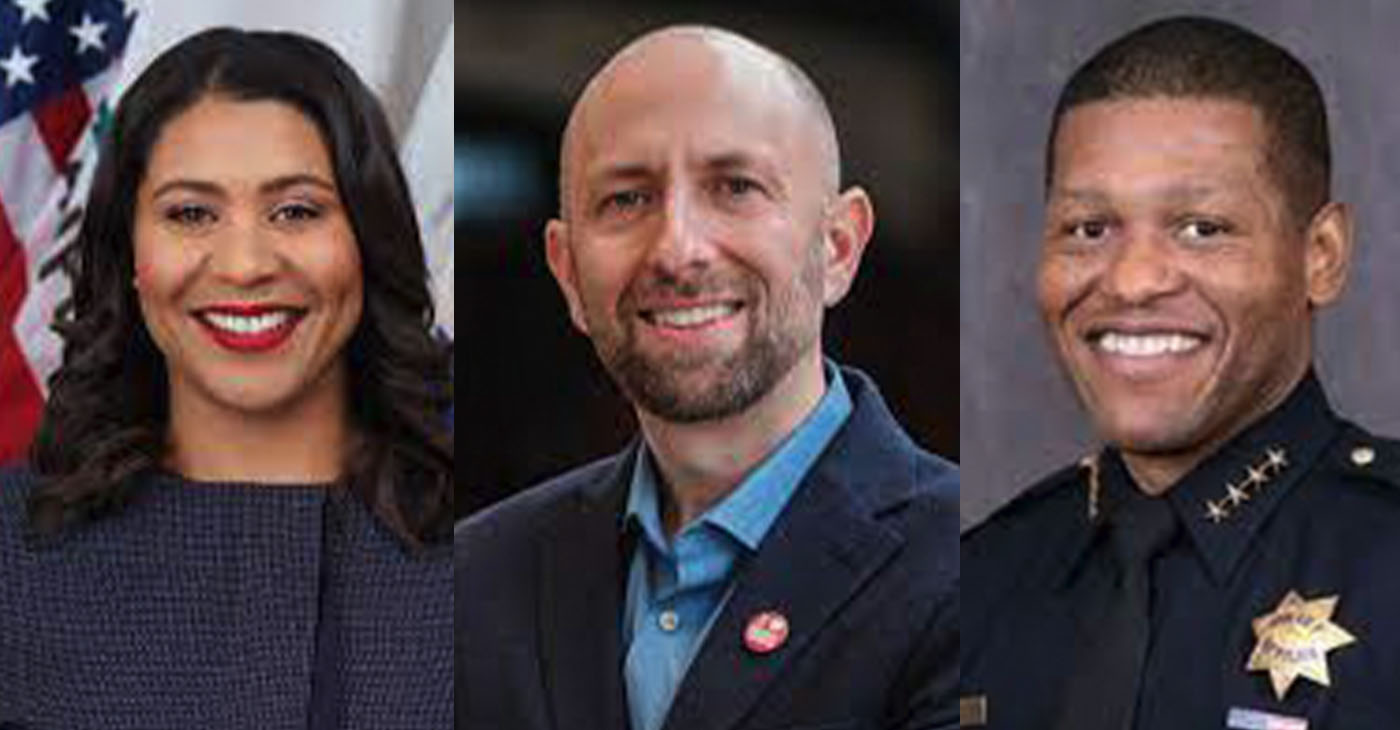
Westside community members called for the approval of funding focused on rebuilding police staffing and tackling the City’s public safety challenge
Mayor’s Office of Communications
Westside residents and small business owners rallied Tuesday in support of Mayor London Breed’s public safety budget proposal that is currently before the Board of Supervisors, which is in final budget deliberations over the next few days. The Mayor’s Budget focuses on key areas of public safety, including building back police staffing, expanding alternatives to policing, and shutting down open-air drug markets.
Public safety investments are part of the City’s recovery efforts, including in westside neighborhoods where residents face safety challenges around residential, commercial, and vehicular break-ins. The Sunset District also has seen the most catalytic converter thefts in the City.
“Our residents and small businesses and neighborhoods across the City, including the Westside, are calling for more support for public safety which is why is critical for my public safety proposal to pass,” said Breed. “We must invest in public safety initiatives, including building back our police department staffing, expanding police alternatives, and holding people accountable by disrupting open-air drug sales in the City.”
“Sunset residents experience the most catalytic converter thefts in the city and our police station has one of the greatest shortage of officers. We need to invest in enough police officers for a city our size, so every neighborhood has the protection it deserves. We should also invest in policing alternatives that can let officers focus on serious crimes,” said Supervisor Joel Engardio, who represents the Sunset neighborhoods of District 4.
“A healthy and functioning city cannot allow an open drug market. No resident should have to pass through misery and mayhem on their way to work or school,” Engardio continued. “That’s why it’s important to fund the coordination of local, state, and federal public safety agencies to end the dealing of deadly fentanyl and provide users with life-saving treatment.”
At the rally, residents and small businesses, in addition to calling out the need for public safety citywide, focused on neighborhood issues like residential, commercial and vehicular break-ins.
The Mayor’s Budget was introduced to the Board of Supervisors on June 1. Currently, the Board is holding hearings in the Budget and Finance Committee which is set to pass a final budget this week.
Building Back Our Police Force
San Francisco has seen an increase in applications for the Police Department over the last six months, with levels reaching interest not seen since 2018. This is welcomed news after recent struggles to fill Academy classes. To take advantage of this growing interest in SFPD, the Mayor’s Budget:
- Funds 220 new officers over the next two years, with a goal of reaching 1,800 sworn officers this year. This is part of a multi-year strategy to reach full staffing in the next five years.
- Supports the recently approved contract to make San Francisco the highest paid starting salary for officers in the Bay Area.
- Sets dynamic Academy class goals so that the Department is ready to start classes as they fill.
- Supports SFPD recruitment efforts to conduct various outreach strategies, improve the application process, and continue to add resources dedicated to recruiting.
“San Francisco is at a turning point. We cannot afford to lose the valuable progress we’ve made in increasing public safety and holding people who commit harm accountable,” said Police Chief Bill Scott. “We’re working hard to build on the success we’ve had in hiring more officers, expanding our civilian ambassadors, and taking deadly drugs off the streets.”
Expanding Alternatives to Policing
San Francisco continues to be a leader in moving non-law enforcement work away from police officers to provide a more appropriate response, and to free up our officers to focus on crime and safety issues.
- Expanding civilianization staffing by funding 22 new Police Service Aides, who assist with administrative duties and write and file reports on low-priority incidents.
- Continuing call diversion efforts, including funding for the Street Response Teams.
- Maintaining the current level of ambassadors in the City, including recent expansions. This includes SFPD Community Ambassadors (retired police officers), Urban Alchemy in the Tenderloin and Mid-Market; Welcome Ambassadors in Downtown and tourist areas; BART attendants in Downtown transit stations, and the Mission Ambassadors.
Closing Down Open-Air Drug Markets
San Francisco has prioritized shutting down open-air drug markets to remove the harm it causes in our neighborhoods and for those struggling with addiction. This has been paired with expanded treatment and services through our Department of Public Health and other outreach programs.
The budget funds the recent expansion of prosecutors in the District Attorney’s Office dedicated to targeting drug dealing and contains funding for a coordinated city effort led by the Department of Emergency Management to shut down the City’s open-air drug markets.
This effort will focus on three key areas: open drug sales, public drug use, and illegal fencing of stolen goods in the drug market areas.
“The mayor’s proposed budget provides much needed resources that will improve our ability to close open-air drug markets, and hold suspected drug dealers accountable,” said District Attorney Brooke Jenkins. “I am grateful to the mayor for prioritizing public safety and addressing the most urgent needs facing our communities.”
“We need accountability with compassion if we are going to solve San Francisco’s drug crisis,” said Sheriff Paul Miyamoto. “Between SFPD’s arrests on the street and the SFDA’s prosecutions in the courtroom, the Sheriff’s Office stands right in the middle; whether a person is in jail or supervised out of custody, we have to lead those suffering from addiction into sobriety and rehabilitation. Some people volunteer to get better –others need to be compelled. Our deputies are here to facilitate both.”
As part of this effort:
- SFPD, the Sheriff, and the District Attorney will coordinate with state and federal law enforcement partners to identify and arrest drug dealers and traffickers, disrupt the supply chain, and reduce the profitability of this criminal operation;
- SFPD and the Sheriff are coordinating to arrest and detain those who pose a danger to themselves and to others. Anyone detained in our jails is supported by Jail Health Services and offered access to voluntary services upon release. At the same time, city health and homelessness outreach workers will continue the proactive outreach in targeted neighborhoods, offering a wide range of public health and homelessness services to those on our streets;
- SFPD will enforce against illegal sales of stolen goods and support Public Works’ inspection efforts, confiscation, and other enforcement against vending in violation of our existing lawful street vending program.
- “As a longtime volunteer community activist, I applaud Mayor Breed’s upcoming budget to focus on public safety,” said Marlene Tran, Visitation Valley community leader. “Her planned investments in long-term police hiring and maintaining ambassador programs are very sound priorities. Closing down open drug markets will save many lives and increase public safety. In addition, for justice to prevail, more resources for the important work of the District Attorney’s Office to prosecute the wide range of crimes is welcome news.”
- “Our organization fully supports these public safety efforts put forth by Mayor Breed,” said Frank Noto and Eric Chang, president and vice president of Stop Crime SF. “We need to address safety issues from all angles, and this includes making sure our police department is adequately staffed, supporting and expanding alternatives to policing, and disrupting the open-air sales of dangerous drugs.”
- “The ambassadors who are retired police officers have been so great with engaging our merchants and residents, making sure they feel safe and are connected with resources,” said Bill Barnikel, president of Outer Sunset Merchant Professional Association. “I want to thank Mayor Breed and Supervisor Engardio for making sure that their public safety efforts are consistent with the west side of the City.”
“Safety is a vital priority for the Chinese community. The Sunset Chinese Cultural District and Wah Mei School have been proud to work with Supervisor Engardio on community engagement through a Night Market and other events to bring community together. Events offer an alternative to policing and is one of many solutions to bring joy and foster a sense of community,” said Lily Wong, director of Community Engagement at Wah Mei School and Sunset Chinese Cultural District director.












Activism
Oakland Post: Week of September 30 – October 6, 2026
The printed Weekly Edition of the Oakland Post: Week of September 30 – October 6, 2026

To enlarge your view of this issue, use the slider, magnifying glass icon or full page icon in the lower right corner of the browser window.

Activism
Oakland Post: Week of September 23 – 29, 2026
The printed Weekly Edition of the Oakland Post: Week of September 23 – 29, 2026

To enlarge your view of this issue, use the slider, magnifying glass icon or full page icon in the lower right corner of the browser window.
Activism
Oakland Post: Week of September 16 – 22, 2026
The printed Weekly Edition of the Oakland Post: Week of September 16 – 22, 2026

To enlarge your view of this issue, use the slider, magnifying glass icon or full page icon in the lower right corner of the browser window.



Listening as a Lifeline: A Doula’s Witness to Black Maternal Health

New Protections for Ticket Buyers: Gov. Newsom Signs Assemblymember Isaac Bryan’s Bill

‘We Don’t Talk Trash — We Pick Up Trash!’

Zakiya Jendayi Arrested, Locked Out of Home by Sheriff’s Deputies

Oakland Post: Week of September 30 – October 6, 2026

Asm. Corey Jackson Announces Launch of 24-Hour Childcare in His District

IN MEMORIAM: The Rev. Leon “Sonny” Clark, Longtime Orange County Pastor and Community Leader, Dies at 72

Poll: Becerra Widens His Lead Over Hilton; Californians Split on Wealth Tax

From Historic Memories to New Possibilities: Oakland Celebrates Coliseum 60

County Office of Education Says OUSD Finances Are Getting Healthier, Materially Stronger

LIVE FREE Sunday Dinner Brings Faith, Fellowship and Civic Conversation to Oakland

Remembering Chauncey Bailey as Student Journalists Face Threats to Truth-Telling

BLACspace Cooperative Invites Bay Area to Experience Oakland’s Black Cultural Ecosystem Through a BLAC Map Tour + Party

In Wake of Death on Doorstep, Williams Chapel Baptist Church Calls for Better Care, Funding for Unhoused

Oakland Centenarian Nuna McKee Honored!

Standoff for Justice: Our Homes Are Worth Fighting For

Oakland Post: Week of August 26 – September 1, 2026

Frontier Airlines’ Return to Oakland Airport Brings Flights, Jobs and Opportunity

Gubernatorial Candidate Steve Hilton Blasts California New Tire Rules; Newsom Hits Back

Chef Sharon Lee Blends Culinary Excellence, Education and Empowerment

Jackie Wright Champions Bay Area Stories, Filmmakers and Cultural Institutions

Misnamed ‘Parent’ PAC Seeks to Influence Oakland School Board Elections

Oakland Coliseum Project Opens Door for Small Businesses to Build Bigger

Big City Mayors Ask for “Yes” Vote on Housing Bond Measure; Conservatives Say “No”

Gov. Newsom’s Latest Appointees Include Sacramento Advocate for Formerly Incarcerated Students; State’s New Tech Chief

Longtime BWOPA Member Brendalyn Goodall Appointed to California Workforce Development Board

Gov. Newsom Signs Law Shielding Immigration Aid Workers From Doxing Threats

Secretary of State Shirley N. Weber Urges Californians to Vote Early as Voter ID Battle Intensifies

Oakland Post: Week of September 2 – 8, 2026

IN MEMORIAM: Dolly Parton Dead at 80 — How She Built a Legacy of Love and Earned Her Place in Black Culture

The Conversation With Al McFarlane 6/23/26

Media Monday 6/22/26

LIVE! ASK ALMA! — TUES. 6.23.26 7PM EST

Car Buying Secrets: 4 Hidden Checks Before You Sign!

Is This 550 HP Charger Worth YOUR Money? AutoNetwork Review

Celebrating Juneteenth – Frederick Douglass on education and resistance

LIVE! — ASK ALMA! — TUES. 6.19.26 7PM EST

Hyundai Ioniq 5 Parking, Safety, and 360 View #shorts

2025 Ioniq 5 New Wiper & Powerful Performance! #shorts

Electric SUV Range: Is 259 Miles Enough? #shorts

EV Charging: How Fast Can You Charge an Electric Vehicle? #shorts

Biometric Cooling… Messaging Seats…Come on! 2025 Infiniti QX80 Autograph 4WD

Charged Up: Witness the Magic of a Fully Electric Car! #shorts

Range Rover Sport PHEV Included…: See What’s Inside This Luxury SUV! #shorts

Invisible Hood View: Perfect Parking with X-Ray Vision! #shorts
-
 Community3 weeks ago
Misnamed ‘Parent’ PAC Seeks to Influence Oakland School Board Elections
-
 Activism4 weeks ago
Oakland Post: Week of September 2 – 8, 2026
-

 Activism3 weeks ago
Oakland Post: Week of September 9 – 15, 2026
-

 Community3 weeks ago
Richmond Tiny House Village Farm & Garden Set to Open Gates on Sept. 26
-

 Black History3 weeks ago
Latest Massacre in Haiti Reveals Cruelty U.S. Deportations
-

 Black History3 weeks ago
OPINION: Nolan Wells’ Death One of Several Signifying Racial Terror Lives on in U.S. South
-

 Business2 weeks ago
Mayor Lee Announces $1 Million Kaiser Permanente Grant for Pilot Program to Address Homelessness, Clean Up Public Spaces throughout Oakland
-

 Community3 weeks ago
Democratic Clubs Interview Candidates for Oakland School Board
