
Entertainment
Viola Davis: I Used to Think There Was Only One Way to Be Sexy


Viola Davis accepts the award for outstanding performance by a female actor in a drama series for How to Get Away with Murder on stage at the 21st annual Screen Actors Guild Awards at the Shrine Auditorium on Sunday, Jan. 25, 2015, in Los Angeles. (Photo by Vince Bucci/Invision/AP)
(People) – From her captivating colorful red carpet moments to her all-natural beauty remedies, Viola Davis is one of the most relatable actresses on our small screens every week. And now, the How To Get Away With Murder star is opening up about her sexuality in a recent interview, and we can’t help like her even more.
Years before landing the lead role as sexy, intense Annalise Keating in How To Get Away With Murder, Davis attended Julliard, where she felt she had to be something she wasn’t in order to land roles. “I always tried to be the 90-lb. white girl. Only because we did a lot of classical training and all of the ingénues in Shakespeare were very small women,” she told Essence. “So I tried to make myself small. Literally. I don’t know how I did that. I was like thinking, ‘Small. Light.’ I would try to have a higher voice, which sounds ridiculous, right? But I felt like there’s only one way to be sexy. It’s almost like I felt like I had to disappear.”
But now, the Screen Actors Guild award winner is thrilled to have the opportunity to embrace her sexuality on screen each week. “It feels really good to embrace exactly who I am and be my sexy or be my sexualized. To be my woman, you know?,” she said. “And it’s been the joy of my life. It really has and I think it found me at the right time of my life.”










Activism
Oakland Post: Week of March 18 – 24, 2026
The printed Weekly Edition of the Oakland Post: Week of March 18 – 24, 2026
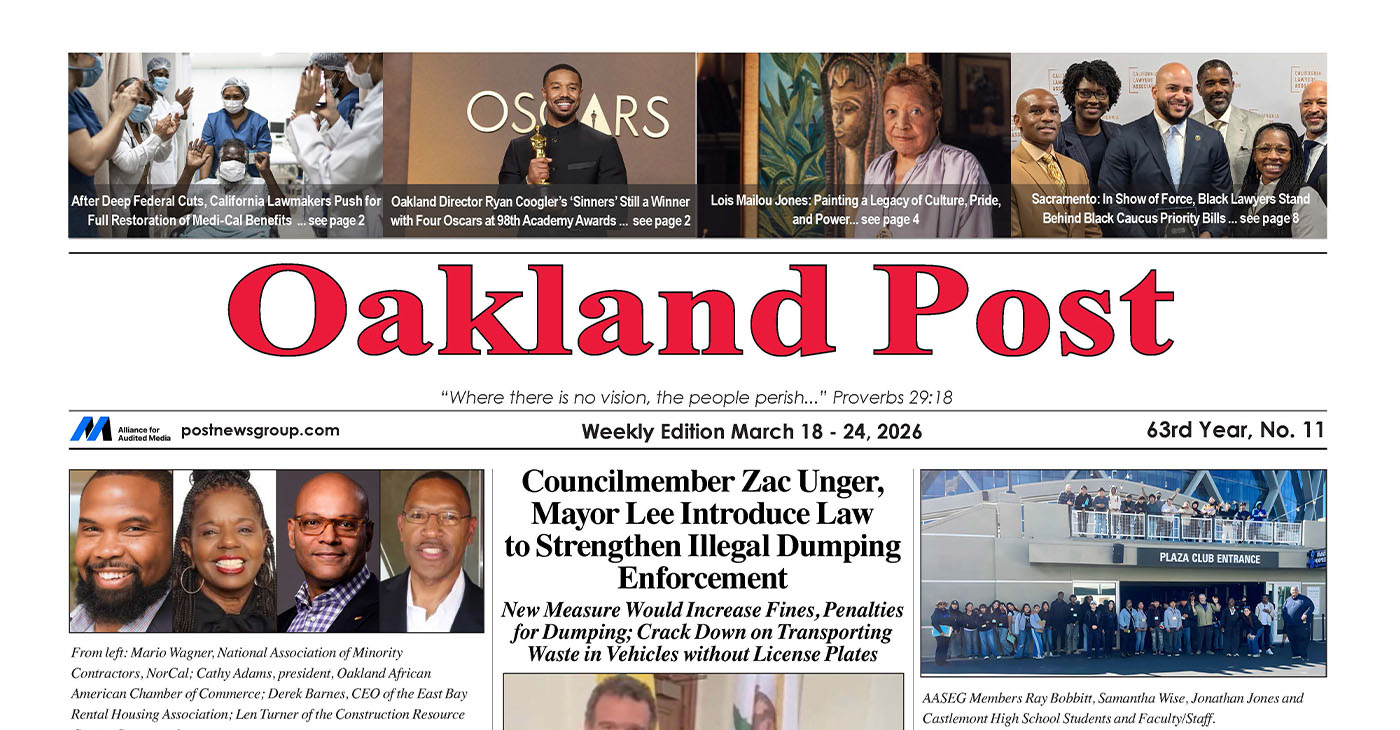
To enlarge your view of this issue, use the slider, magnifying glass icon or full page icon in the lower right corner of the browser window.
Activism
Oakland Post: Week of March 11 -17, 2026
The printed Weekly Edition of the Oakland Post: Week of March 11 – 17, 2026
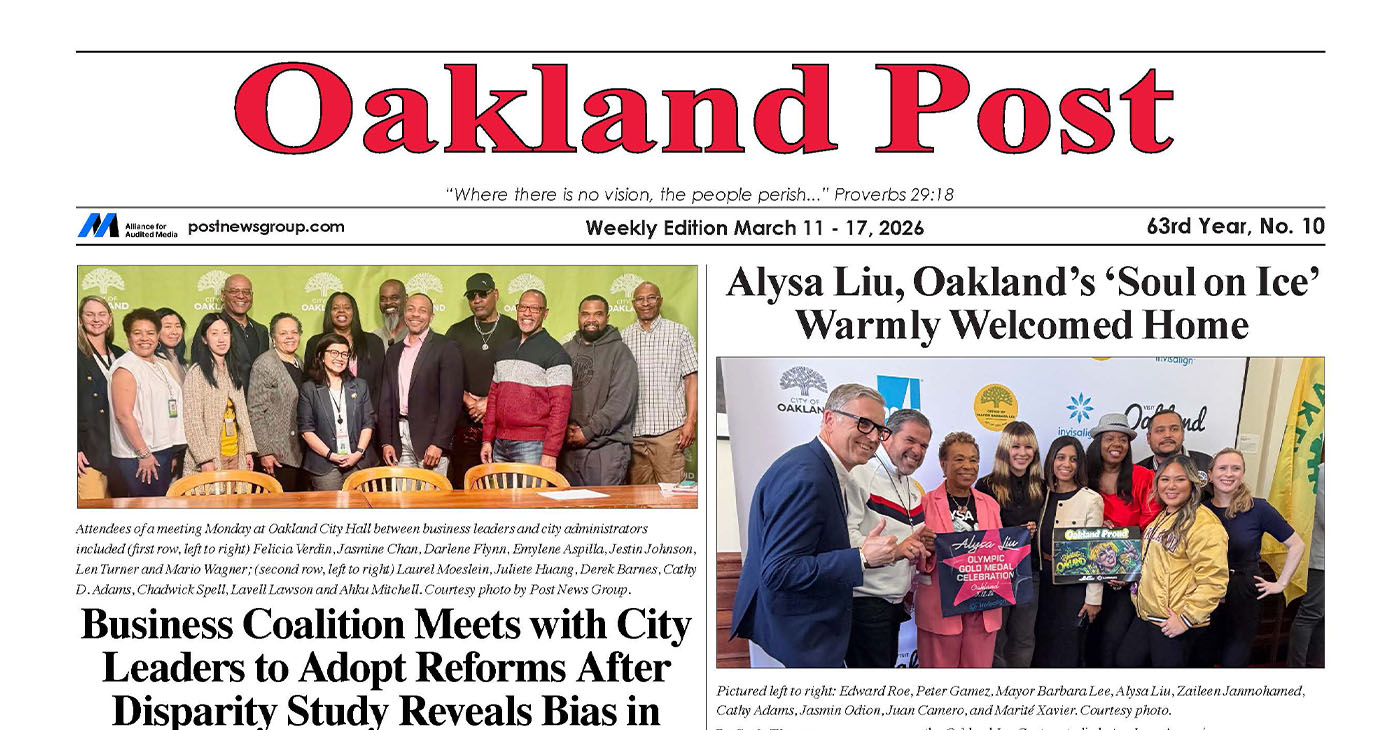
To enlarge your view of this issue, use the slider, magnifying glass icon or full page icon in the lower right corner of the browser window.
Activism
Oakland Post: Week of March 4 – 10, 2026
The printed Weekly Edition of the Oakland Post: Week of March 4 – 10, 2026
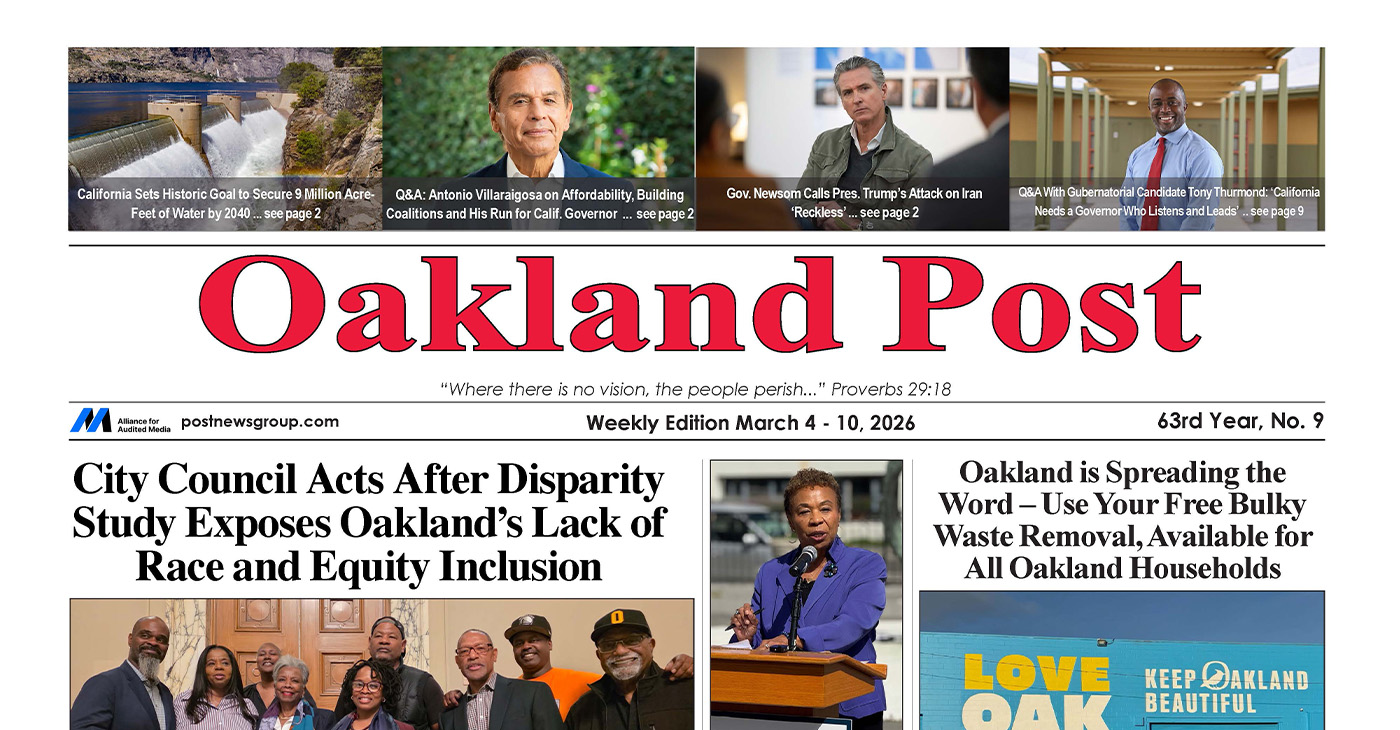
To enlarge your view of this issue, use the slider, magnifying glass icon or full page icon in the lower right corner of the browser window.

WORK FROM HOME
Home-based business with potential monthly income of $10K+ per month. A proven training system and website provided to maximize business effectiveness. Perfect job to earn side and primary income. Contact Lynne for more details: Lynne4npusa@gmail.com 800-334-0540


Black Artists in America, Installation Three Wraps at the Dixon Gallery and Gardens

Grief, Advocacy, and Education: A Counselor Reflects on Black Maternal Health

Future of Florida’s Black History Museum in Limbo

New Research Shows the Many Benefits of Early Learning

South Hampton K-8 Students Among Top 10 Finalists for Samsung’s ‘Solve for Tomorrow’ Competition

Cuba: No Negotiation with US on the President or Political System

Brooklyn Academy of Music Names Jamaican-Born Tamara McCaw as President

Trinidad & Tobego – U.S. Launches WhatsApp Channel for American Citizens in the Country

Oakland Post: Week of March 18 – 24, 2026

AI Innovation vs. Ethics and Environmental Impact

AI, Web3, and Digital Reparations

What If You Owned Your AI Agent?

Season 7, Episode 3 – January Reporter’s Roundtable 📱

Season 7, Episode 3 – January Reporter’s Roundtable

AI, Media, and Power | Part 2, Real-World Impacts and Tradeoffs

Book Review: Books on Black History and Black Life for Kids

California Launches Study on Mileage Tax to Potentially Replace Gas Tax as Republicans Push Back

Community Celebrates Turner Group Construction Company as Collins Drive Becomes Turner Group Drive

Discrimination in City Contracts

COMMENTARY: The Biases We Don’t See — Preventing AI-Driven Inequality in Health Care

Black History Events in the East Bay

Post Newspaper Invites NNPA to Join Nationwide Probate Reform Initiative

Art of the African Diaspora Celebrates Legacy and Community at Richmond Art Center

New Bill, the RIDER Safety Act, Would Support Transit Ambassadors and Safety on Public Transit

COMMENTARY: The National Protest Must Be Accompanied with Our Votes

Oakland Post: Week of February 4 – 10, 2026

Oakland Post: Week of February 11 – 17, 2026

Dorothy Lee Bolden: Uniting Domestic Workers

After Don Lemon’s Arrest, Black Officials Raise Concerns About Independent Black Media

Reflecting on Black History Milestones in Birmingham AL

Hyundai Ioniq 5 Parking, Safety, and 360 View #shorts

2025 Ioniq 5 New Wiper & Powerful Performance! #shorts

Electric SUV Range: Is 259 Miles Enough? #shorts

EV Charging: How Fast Can You Charge an Electric Vehicle? #shorts

Biometric Cooling… Messaging Seats…Come on! 2025 Infiniti QX80 Autograph 4WD

Charged Up: Witness the Magic of a Fully Electric Car! #shorts

Range Rover Sport PHEV Included…: See What’s Inside This Luxury SUV! #shorts

Invisible Hood View: Perfect Parking with X-Ray Vision! #shorts

AI Is Reshaping Black Healthcare: Promise, Peril, and the Push for Improved Results in California

ESSAY: Technology and Medicine, a Primary Care Point of View

Sanctuary Cities

The RESISTANCE – FREEDOM NOW

STATE OF THE PEOPLE: Freddie

ECONOMIC BOYCOTT DAY!!!!!

I told You So
-
 #NNPA BlackPress4 weeks ago
Reflecting on Black History Milestones in Birmingham AL
-

 #NNPA BlackPress4 weeks ago
PRESS ROOM: NBA Hall of Fame Nominee Terry Cummings Joins 100 Black Men of DeKalb County to Launch Victory & Values Initiative
-

 #NNPA BlackPress4 weeks ago
U.S. manufacturing rebounds – how foundry services are adapting to rising demand
-
 Activism3 weeks ago
Oakland Post: Week of February 25 – March 3, 2026
-

 #NNPA BlackPress4 weeks ago
Trump’s MAGA Allies are Creating Executive Order Plan to Steal the 2026 Midterms
-

 #NNPA BlackPress4 weeks ago
OP-ED: One Hundred Years of Black Workers Telling the Truth
-

 #NNPA BlackPress4 weeks ago
Advancements in solar technology that are changing the way we power the world
-

 #NNPA BlackPress4 weeks ago
PRESS ROOM: Civil Rights TV Launches in Selma as the World’s First 24/7 Civil Rights Television Network
Entertainment
Viola Davis: I Used to Think There Was Only One Way to Be Sexy
Viola Davis accepts the award for outstanding performance by a female actor in a drama series for How to Get Away with Murder on stage at the 21st annual Screen Actors Guild Awards at the Shrine Auditorium on Sunday, Jan. 25, 2015, in Los Angeles. (Photo by Vince Bucci/Invision/AP)
(People) – From her captivating colorful red carpet moments to her all-natural beauty remedies, Viola Davis is one of the most relatable actresses on our small screens every week. And now, the How To Get Away With Murder star is opening up about her sexuality in a recent interview, and we can’t help like her even more.
Years before landing the lead role as sexy, intense Annalise Keating in How To Get Away With Murder, Davis attended Julliard, where she felt she had to be something she wasn’t in order to land roles. “I always tried to be the 90-lb. white girl. Only because we did a lot of classical training and all of the ingénues in Shakespeare were very small women,” she told Essence. “So I tried to make myself small. Literally. I don’t know how I did that. I was like thinking, ‘Small. Light.’ I would try to have a higher voice, which sounds ridiculous, right? But I felt like there’s only one way to be sexy. It’s almost like I felt like I had to disappear.”

But now, the Screen Actors Guild award winner is thrilled to have the opportunity to embrace her sexuality on screen each week. “It feels really good to embrace exactly who I am and be my sexy or be my sexualized. To be my woman, you know?,” she said. “And it’s been the joy of my life. It really has and I think it found me at the right time of my life.”
Activism
Oakland Post: Week of March 18 – 24, 2026
The printed Weekly Edition of the Oakland Post: Week of March 18 – 24, 2026
To enlarge your view of this issue, use the slider, magnifying glass icon or full page icon in the lower right corner of the browser window.
Activism
Oakland Post: Week of March 11 -17, 2026
The printed Weekly Edition of the Oakland Post: Week of March 11 – 17, 2026
To enlarge your view of this issue, use the slider, magnifying glass icon or full page icon in the lower right corner of the browser window.
Activism
Oakland Post: Week of March 4 – 10, 2026
The printed Weekly Edition of the Oakland Post: Week of March 4 – 10, 2026
To enlarge your view of this issue, use the slider, magnifying glass icon or full page icon in the lower right corner of the browser window.
-
#NNPA BlackPress4 weeks ago
Reflecting on Black History Milestones in Birmingham AL
-
#NNPA BlackPress4 weeks ago
PRESS ROOM: NBA Hall of Fame Nominee Terry Cummings Joins 100 Black Men of DeKalb County to Launch Victory & Values Initiative
-
#NNPA BlackPress4 weeks ago
U.S. manufacturing rebounds – how foundry services are adapting to rising demand
-
Activism3 weeks ago
Oakland Post: Week of February 25 – March 3, 2026
-
#NNPA BlackPress4 weeks ago
Trump’s MAGA Allies are Creating Executive Order Plan to Steal the 2026 Midterms
-
#NNPA BlackPress4 weeks ago
OP-ED: One Hundred Years of Black Workers Telling the Truth
-
#NNPA BlackPress4 weeks ago
Advancements in solar technology that are changing the way we power the world
-
#NNPA BlackPress4 weeks ago
PRESS ROOM: Civil Rights TV Launches in Selma as the World’s First 24/7 Civil Rights Television Network

Leave a Reply