
News
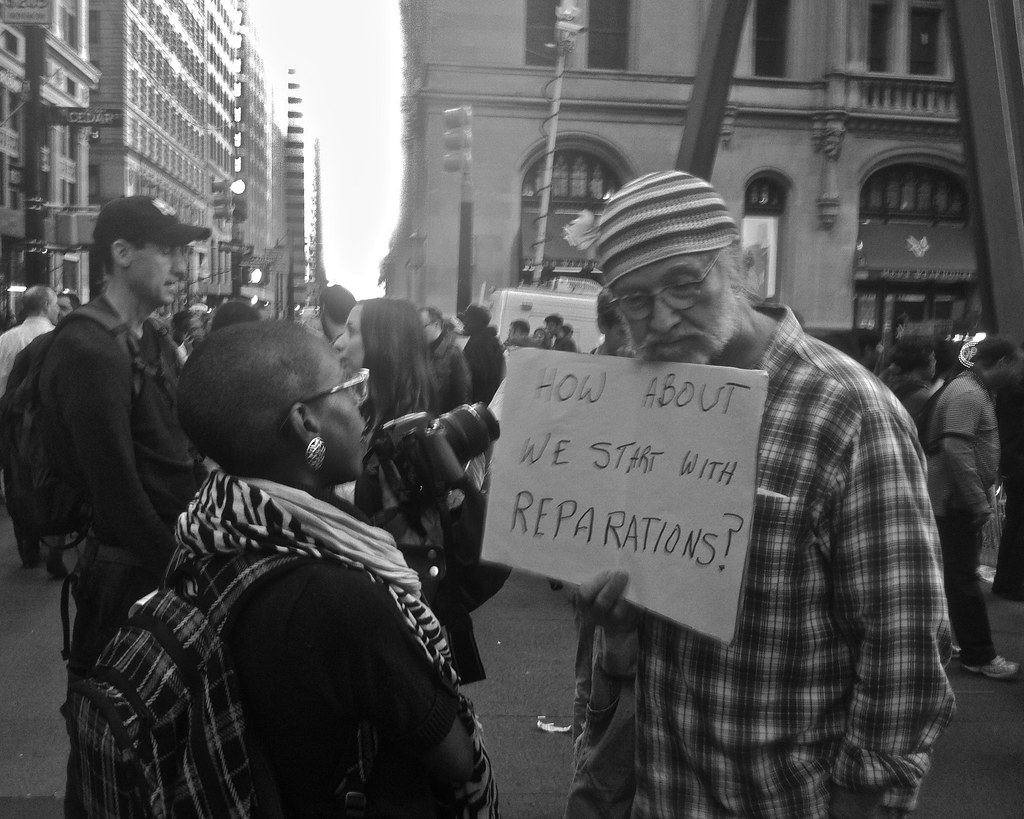
Time Is Up! Reparations Now, Maybe, Or Never!

Rev. Curtis O. Robinson, Sr.
Bluffton is a village in Allen and Hancock counties in the U.S. state of Ohio. The population was 4,125 at the 2010 census. Bluffton is home to Bluffton University, a four-year educational institution affiliated with Mennonite Church USA.
Bluffton University boasts a student population of 865 students, of which 50.2% are male and 49.8% are female. The student body is 83.5% white, 6% African American, and 10.5%; Hispanic/Latino, and Ethnicity Unknown. The faculty is 94.7% white, which means, there is no diversity when it comes to the didactic structure of teaching.
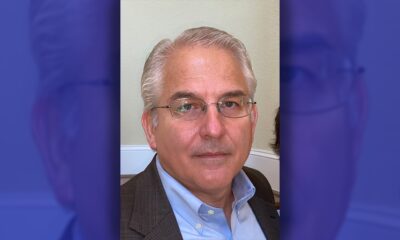
So, when I came across an article entitled, “Reparations for Slavery: They Have Already Been Paid,” by Dan Berger, a chemistry professor from Bluffton University, I had to at least do some research into his claims against African Americans receiving reparations.
In his paper, Berger asserts that the white lives lost in the American Civil War more than make up for anything that would allow consideration of reparations.
He claims that the deaths of about 550,000 soldiers and civilians who were, according to him, 90% to 93% white coupled with lost pensions and damaged infrastructure, amount to an entire bill that could be as low as $200 billion to $500 billion, and maybe even as much as $2 trillion.
I read where Berger also questions who and how qualifications for reparations would be established. “Remember that there are many Americans who have thought of themselves as ‘White’ for generations, who have African slaves among their ancestors. And there are a good number of ‘Black’ Americans who have no ancestors who were slaves within the territory of the United States.
“Let’s not forget that, if we go back far enough, almost everyone has at least one enslaved ancestor somewhere. Slavery was a worldwide institution and not usually race-based.)”
And he’s right; slavery on a global scale was not raced-based, except for the original 13 colonies. It was in America where slavery became a race-based institution.
We need to know that Berger is not the only isolated Mennonite professor who believes that reparations are irrelevant. There’s a whole lot of predominantly little white towns like this, that believe that the death of soldiers who fought for the Union, represent reparations enough. Mr. Berger, “Time Is Up!” This nation needs a healing that money cannot buy. And no matter what you say, until America wakes up and acknowledges that it is a conspirator to murder, no one will rest….no one! Now, where is my check?!









Activism
Oakland Post: Week of July 22 – 28, 2026
The printed Weekly Edition of the Oakland Post: Week of July 22 – 28, 2026

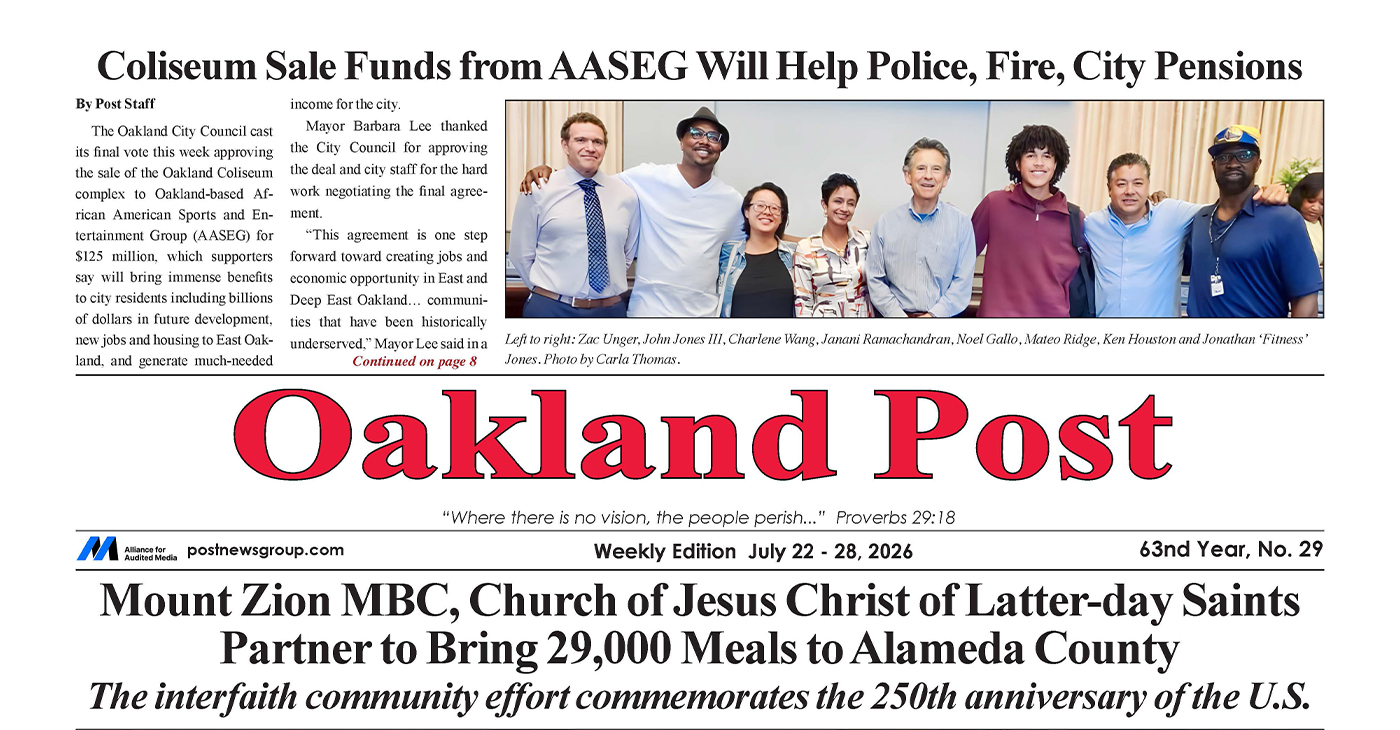
To enlarge your view of this issue, use the slider, magnifying glass icon or full page icon in the lower right corner of the browser window.

Black History
Fed Court to Decide Landmark First Amendment Case
CHICAGO DEFENDER — Three federal judges in Atlanta heard oral arguments in July regarding the appeal of the 2024 conspiracy conviction of the Uhuru 3. This appeal challenges the conviction of Chairman Omali Yeshitela, Penny Hess, and Jesse Nevel, who were found guilty of conspiracy to be secret agents of Russia. This verdict followed their acquittal on charges of serving as secret Russian agents.

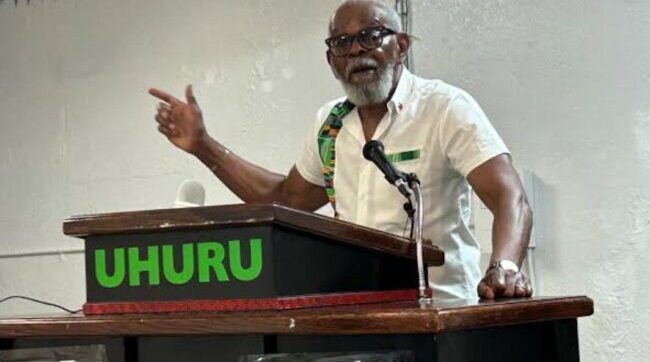
On July 22, 2026 three federal judges in the 11th Circuit Court of Appeals in Atlanta – Chief Judge William Pryor, Judge Jill Pryor and Judge Andrew Brasher – heard oral arguments in the appeal of the 2024 unconstitutional conspiracy conviction of the Uhuru 3.
A Tampa jury had acquitted 84-year-old veteran African liberation fighter Chairman Omali Yeshitela and two white reparations organizers Penny Hess and Jesse Nevel of serving as secret agents of Russia, but contradictorily convicted them on the secondary false charge of conspiracy to be secret agents of Russia – all because they had expressed opinions opposing the U.S. support for Ukraine along with advocating for reparations to African people and charging the U.S. with genocide in its treatment of Black people.
This precedent-setting anti-colonial free speech fightback has won international and national support from First Amendment defenders and social justice activists from across the political spectrum, including the National Lawyers Guild, the Civil Liberties Defense Center, the National Conference of Black Lawyers, the Center for Political Innovation, the U.S. Peace Council, U.S. Hands Off Cuba Committee, former NYC Councilman Charles Barron, Dr. Cornel West, Jimmy Dore, Max Blumenthal, Dr. Gerald Horne and Tucker Carlson.

During the 2024 trial, the Uhuru 3’s legal team convinced the jury that the opinions expressed by Yeshitela were his own and not directed by the Russian government by showing print and video evidence of Yeshitela’s activism spanning decades.
Chairman Omali’s published writings, showing a consistent worldview of African Internationalism and anti-colonialism, can be read in 58 years of The Burning Spear newspaper, freely available in the University of Florida’s digital newspaper collection.
In the past five decades he has traveled to seventeen countries to speak to audiences, including in 2019 as the winning presenter at the Oxford Union’s “Africa Debate”. He has been interviewed and featured on platforms such as CNN, Democracy Now, Al Mayadeen, Press TV and countless national and international radio stations, podcasts and newspapers.
The DOJ had argued that the Uhuru 3 are engaged in spreading disinformation “even if the information is true but it makes the government look bad.”
In their earlier Motion to Dismiss, attorneys for the Uhuru 3 argued, “The government here is using a federal criminal statute to prosecute members of an activist group for political speech and activism in opposition to U.S. foreign policy. In so doing, this prosecution strikes at the heart of the First Amendment.”
“This is the first case in which the government has used the statute that criminalizes unregistered foreign agents (18 USC §951) to target political or dissenting speech. In short, if this case is allowed to go forward, it will reverse more than eight decades of Supreme Court precedent that prohibits the government from targeting dissenting political speech and dissent.”
The appeal of the Uhuru 3’s false conviction on the lesser charge of conspiracy was filed a year ago on June 16, 2025. It argues three points, that:
- The lower court’s finding that lawful political speech loses its First Amendment protections when the speaker is alleged to be a Russian agent, should be reversed.
- The government presented insufficient evidence of a conspiracy as it presented no evidence, as conceded by the government’s own case agents, that the APSP defendants 1) acted or agreed to act under the direction or control of Ioniv or the AGMR, or 2) knew of the registration requirement, essential elements of a conspiracy.
- The jury was misled to believe that it could convict the defendants on the conspiracy charge despite the absence of evidence as to the underlying crime.
More than 80 Uhuru 3 supporters packed the Atlanta courtroom again on July 22, spilling into an overflow room where attendees watched the proceedings on closed circuit TV.
Notable figures attending the hearing included Attorney Mawuli Davis, National Co-Chair of the National Coalition of Black Lawyers; Belinda Parker Brown of Louisiana United International; Efia Nwangaza, veteran of the Student Nonviolent Coordinating Committee (SNCC) and Malcolm X Center for Self-Determination; John McCarthy of the Center for Political Innovation; Mark Friedman of the U.S. Hands off Cuba Committee and Paulette Dauteuil of the Jericho Movement and Leonard Peltier Ad Hoc Defense Committee.
Not a “content neutral” prosecution
The oral argument hearing took less than thirty minutes. Uhuru 3 Attorney Leonard Goodman began: “This is a novel case. It’s the first time that Section 951 has been used to directly target speech. The indictment does not allege that any of these defendants conspired to commit espionage or destroy property. Rather the indictment charges a conspiracy to disseminate pro-Russian political speech, which is described in the indictment as Russian “propaganda and disinformation”.
Chief Judge Pryor interjected, “This indictment seems to be necessarily to implicate speech, but the real question is whether the offense, that is, the failure to register for acting as an agent of a foreign government, is content neutral? It seems to me that it is. It may be that the speech activities on behalf of that foreign state would be evidence that you are an agent that hasn’t registered.
He went on to ask, “imagine for me a hypothetical where the individual was acting as an agent on behalf of the state of Israel and was advocating the attack on Iran, which the United States government was involved in as well and was supportive of the United States activities as well. It seems to me that would be an offense under this statute in that situation just as much as in this situation.”
Attorney Goodman tried to expose the fallacy of “content neutrality” by citing the think tanks in Washington D.C. that receive millions of dollars from U.S. allies who are not indicted as unregistered foreign agents, but he was cut off by the judges.
Some court observers were concerned that the judges’ comments appeared to favor the prosecution. But speaking to reporters as the Uhuru 3 and supporters emerged from the Atlanta Federal Courthouse, Chairman Omali said, “The court recognized there are some issues that need resolution. Attorney Leonard Goodman did an extraordinary job. The prosecution did not have a reasonable explanation about why we were facing conspiracy charges when the jury had found us not guilty on the foundational charge.”
He went on to say, “Nobody in this country has a connection to the struggle for free speech more than Black people. When the Bill of Rights was adopted in 1791, African people were property. We had no rights. There was no assumption it was for us. This is what I’m hoping that, particularly white people, would come to understand. When they came for us around free speech issues that we never had, it’s not us they’re coming for, they’re coming for you. They’re coming for everyone.”
Chairman Yeshitela’s lawyer, Attorney Ade Griffin declared, “We’re here today to change the law for generations to come. And that’s an extremely hard thing to do.”
At the Debrief
Uhuru 3 supporters then walked to the nearby Georgia State University College of Law for a debrief discussion forum and lunch co-sponsored by the Black Law Students Association and the Davis Bozeman Johnson Law group.
Attorney Leonard Goodman shared his reflections on the hearing. “When federal prosecutors want to prosecute some poor old lady for a drug conspiracy because her son was selling drugs in the house and she was ignoring the signs, they ask for what’s called an ‘ostrich instruction’ which is you can’t put your head in the sand and not see what’s going on around you.
“Well, it should have been applied to the judges as well because it was a little shocking to hear them suggest that we are going to find that this was a content-neutral prosecution. ‘We weren’t going after these people because they are pro-Russia and it just so happens that we raided their home three months after Russia invaded Ukraine and Omali started giving speeches saying we shouldn’t be fueling this war by sending bombs to Ukraine. It’s just a coincidence.’”
“President Trump took how many millions from Miriam Adelson, a dual citizen, who was born in Israel and a direct quid pro quo. And I say this as an American Jew, bar mitzvah’d in Chicago. If the decision goes against us, we’ll be filing a petition for rehearing and if that’s denied we will go to the Supreme Court.”
Angela Reaney agreed, “If we lose today, it just means that we have an opportunity to make a bigger impact in the Supreme Court.”
Attorney Mutaqee Akbar, legal counsel for Uhuru 3 member Jesse Nevel, is the son of legendary African psychologist Na’im Akbar. He agreed that, “It’s clear that you all were targeted because of what you were saying. But the same doesn’t apply when people advocate on behalf of Israel. Think about AIPAC. They don’t say the same thing when people advocate for other European nations that go along with what the United States says, that go along with colonialism. It’s only when you speak against what this government says you shouldn’t speak against. The fact that it’s not right just means we need to keep fighting. The struggle continues.”
Chairman Omali discussed the vanguard role of the African anti-colonial struggle in keeping democratic space open for everyone. “It was not the struggle against facism that destroyed McCarthyism or kept society open. It was the struggle of Black people against colonialism that kept the society open.”
Some supporters who attended the court hearing expressed frustration and asked why the judges were allowed to interrupt and take up the time that was supposed to be allotted to the defense lawyers.
Attorney Goodman replied, “They have the power. We don’t.”
Chairman Yeshitela added, “Yet.”
More info at www.handsoffuhuru.org
The post Fed court to decide landmark First Amendment case appeared first on Chicago Defender.
Based on reporting by Chicago Defender.

Black History
Jordan Walker Leads Call for More Black Youth in Baseball
ST. LOUIS AMERICAN — St. Louis Cardinals right fielder Jordan Walker recently won the Home Run Derby final. Following his win, Walker emphasized his desire to be a role model for Black youth and to encourage more Black participation in baseball, noting that many currently play basketball or football.
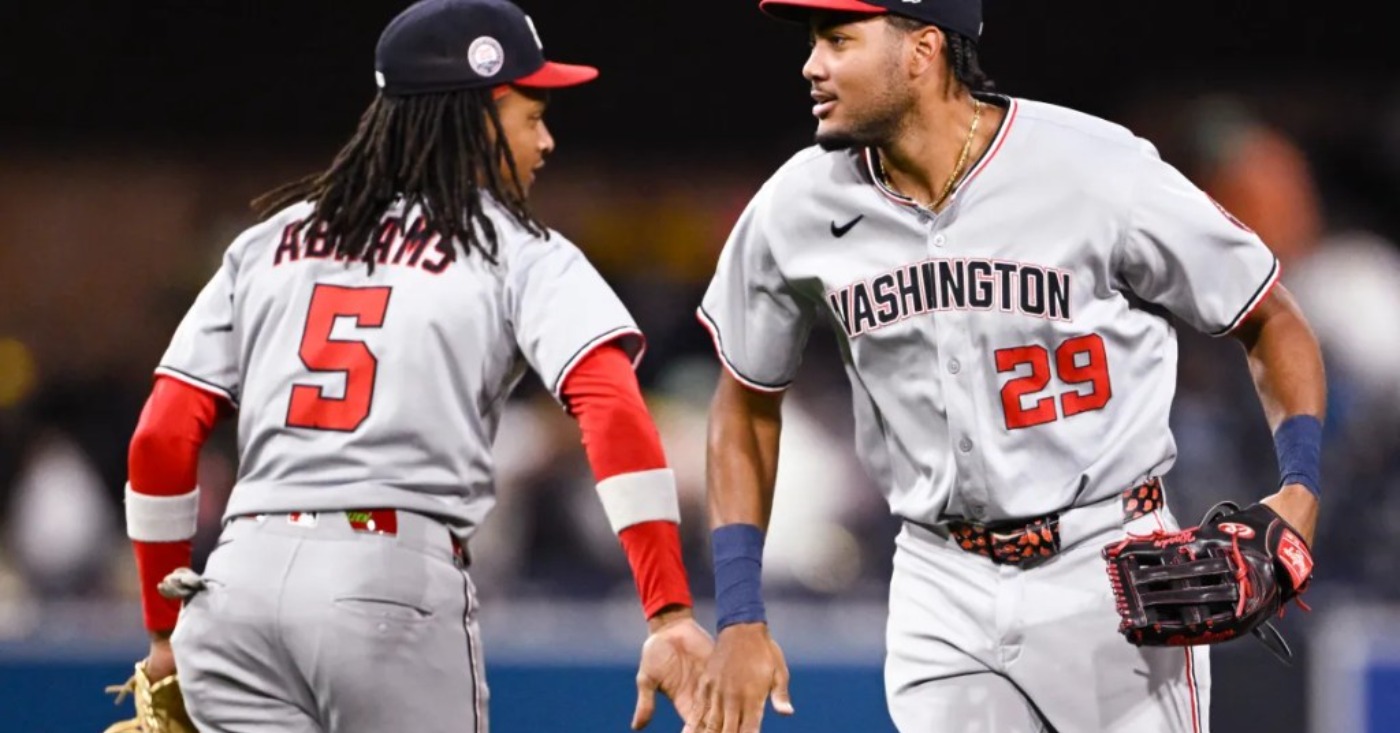
Shortly after Jordan Walker’s 12th and clinching blast of the Home Run Derby final against hometown hero Kyle Schwarber had landed among bitter fans at Citizens Bank Park in Philadelphia, the St. Louis Cardinals right fielder spoke of the importance of his achievement.
“I hope it means a lot to [Black kids],” Walker told reporters. “I want to be a role model for the Black kids, and I want more Black kids in baseball. Hopefully this raises some awareness. I know a lot of them are playing basketball [and] football.
“I want them to know the baseball route is open to them, too. There are a lot of kids that are athletic enough and mentally strong enough — Black kids that can play this game — and I want to see them do it.”
As for Walker, he has become a rarity — a Black star in baseball. They have been few and far between at Busch Stadium since the days of Bob Gibson, Curt Flood and Lou Brock.
Walker, who grew up in suburban Atlanta, said Braves third baseman “Chipper” Jones was his favorite player until Jason Heyward made his debut with the team.
“For Black kids, I want to kind of be a role model for them,” Walker said, “like [Heyward] was for me.”
The 2026 All-Star Game rosters featured several Black players, who shared their hopes on inspiring more Black participation in baseball.
“I think once kids see more people to look up to, the more kids will get back into baseball,” said Washington Nationals outfielder James Wood.
Modest gains
New York Yankees right fielder Aaron Judge and Minnesota Twins center fielder Byron Buxton missed the game because of injuries, but were voted in as American League All-Star starters. Nationals shortstop CJ Abrams joined teammate Wood on the NL squad. And, of course, there was Walker, who stole the show in the Home Run Derby.
“I feel like there’s been like a little surge in getting more Black players in the game,” Wood said.
“We’ve got four [Black players] on our team right now. Last year at one point, we had five..”
The Cardinals’ opening day roster featured three Black players: outfielder Victor Scott II, shortstop Masyn Winn and Walker. After struggling offensively the first months of the season, Scott was sent down to Triple-A Memphis.
When the St. Louis trio took the field on opening day, Major League Baseball reported that 6.8% of players on rosters, injured lists and the restricted list were Black.
That was up slightly from 6.2% at the start of the 2025 season. It marked a two-year increase from a 6% rate at the beginning of 2024. It was the largest increase in a season since a 0.7% rise from 2017 to 2018.
MLB Commissioner Robert Manfred, who to his credit has ignored criticism of baseball diversity programs, sees progress and hopes for more.
“[Y]ou have to continue to invest, grind it out, do that grassroots work to attract more people to the game and then nurture them in a way that gets them into this elite pipeline,” Manfred said.
Cincinnati Reds pitcher Chase Burns, who was named to the NL All-Star team and just signed a seven-year, $105 million contract extension, said he is perplexed by the low number of Black baseball participants.
“You don’t see a lot of Black athletes in baseball. I don’t know why that is,” Burns said. “I think it’s great for guys like me and [Walker] to strive to get Black athletes into the game of baseball, whether it’s talking about it or doing stuff in the community. I think it’s great he pointed it out.”
As for Walker, he has become a rarity — a Black star in baseball. They have been few and far between at Busch Stadium since the days of Bob Gibson, Curt Flood and Lou Brock.
Hopefully Cardinal Nation will appreciate Walker’s stardom, and the team will reward him with a lucrative contract extension soon.
The post Jordan Walker leads call for more Black youth in baseball appeared first on St. Louis American.
Based on reporting by St. Louis American.
WORK FROM HOME
Home-based business with potential monthly income of $10K+ per month. A proven training system and website provided to maximize business effectiveness. Perfect job to earn side and primary income. Contact Lynne for more details: Lynne4npusa@gmail.com 800-334-0540


Oakland Post: Week of July 22 – 28, 2026

Fed Court to Decide Landmark First Amendment Case

Jordan Walker Leads Call for More Black Youth in Baseball

How Black WNBA Players Became Collateral Damage in the Caitlin Clark Culture War

NAACP Announces $20m Voter Registration Drive at National Convention in Chicago

Starting This Summer, California Car Buyers Can Get an Instant $3500 Off the Cost of Electric Vehicles

Surveillance Pricing Fight: State Senate Debates Bill Banning Retailers from Using AI to Set Prices Based on a Buyer’s Profile

Oakland Children’s Hospital Workers and Patients Rally for Pediatric Medical Care

Opinion: When Politicians Start Sanitizing One Chapter of History, They’re Coming After The Whole Book

Beyond Politics: California Legislators Across Party Lines Celebrate Lori Wilson at 50

NPRC to Meet with California Attorney General’s Office on to Urge Guardianship Reform

Mount Zion MBC, Church of Jesus Christ of Latter-day Saints Partner to Bring 29,000 Meals to Alameda County

Councilmember Houston Helps Deter Trend to Award Contracts to Suburban Companies

Rep. Garamendi, House Democrats Demand Trump Administration Abandon Illegal Plans to Dismantle Civil Rights, Special Ed Offices

Council Gives Approval for $125 Million Oakland Coliseum Sale to AASEG
Oakland Children’s Hospital Workers and Patients Rally for Pediatric Medical Care
Mount Zion MBC, Church of Jesus Christ of Latter-day Saints Partner to Bring 29,000 Meals to Alameda County
Surveillance Pricing Fight: State Senate Debates Bill Banning Retailers from Using AI to Set Prices Based on a Buyer’s Profile

IN MEMORIAM: Oakland Dance Legend Reginald Ray-Savage, 67

Saving Black Mothers Starts Outside the Hospital

Gov. Gavin Newsom Signs Law Streamlining Affordable Housing Rules

Oakland Celebrates $125 Million Coliseum Sale

NPRC Heads to Washington to Elevate Adult Guardianship Reform at National Whistleblower Summit
Starting This Summer, California Car Buyers Can Get an Instant $3500 Off the Cost of Electric Vehicles


Agricultural Engineer Effie Gant Plans Bay Area Farmers Market Initiative

The Part of Buying a Home That No Real Estate Show Ever Prepares You For

Oakland Post: Week of June 17 – 23, 2026

Oakland Post: Week of July 1 – 7, 2026

NCBW-OBAC Champions Black Women Entrepreneurs at Business en Blaque Expo

The Conversation With Al McFarlane 6/23/26

Media Monday 6/22/26

LIVE! ASK ALMA! — TUES. 6.23.26 7PM EST

Car Buying Secrets: 4 Hidden Checks Before You Sign!

Is This 550 HP Charger Worth YOUR Money? AutoNetwork Review

Celebrating Juneteenth – Frederick Douglass on education and resistance

LIVE! — ASK ALMA! — TUES. 6.19.26 7PM EST

Hyundai Ioniq 5 Parking, Safety, and 360 View #shorts

2025 Ioniq 5 New Wiper & Powerful Performance! #shorts

Electric SUV Range: Is 259 Miles Enough? #shorts

EV Charging: How Fast Can You Charge an Electric Vehicle? #shorts

Biometric Cooling… Messaging Seats…Come on! 2025 Infiniti QX80 Autograph 4WD

Charged Up: Witness the Magic of a Fully Electric Car! #shorts

Range Rover Sport PHEV Included…: See What’s Inside This Luxury SUV! #shorts

Invisible Hood View: Perfect Parking with X-Ray Vision! #shorts
-
 Business2 days ago
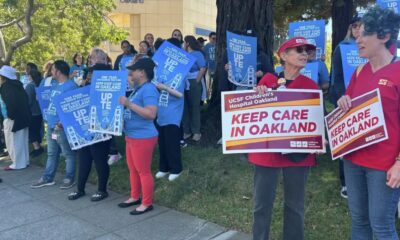
Oakland Children’s Hospital Workers and Patients Rally for Pediatric Medical Care
-
 Business2 days ago
Mount Zion MBC, Church of Jesus Christ of Latter-day Saints Partner to Bring 29,000 Meals to Alameda County
-
 Business2 days ago
Surveillance Pricing Fight: State Senate Debates Bill Banning Retailers from Using AI to Set Prices Based on a Buyer’s Profile
-
 Black History6 days ago
Saving Black Mothers Starts Outside the Hospital
-
 Business4 days ago
Gov. Gavin Newsom Signs Law Streamlining Affordable Housing Rules
-
 Black History1 week ago
Oakland Celebrates $125 Million Coliseum Sale
-
 Community1 week ago
NPRC Heads to Washington to Elevate Adult Guardianship Reform at National Whistleblower Summit
-
 Business2 days ago
Starting This Summer, California Car Buyers Can Get an Instant $3500 Off the Cost of Electric Vehicles
