
Activism
Thousands of California Students to Earn Cash for Community Service
College Corps represents the first and largest state-level investment in a college service program in the country, with $146 million earmarked for up to 6,500 students over the next two years. About 80% of fellows are students of color, 58% are first-generation college students, 68% are Pell-Grant eligible, and 500 fellows are AB 540 Dream Act.

By Antonio Ray Harvey | California Black Media
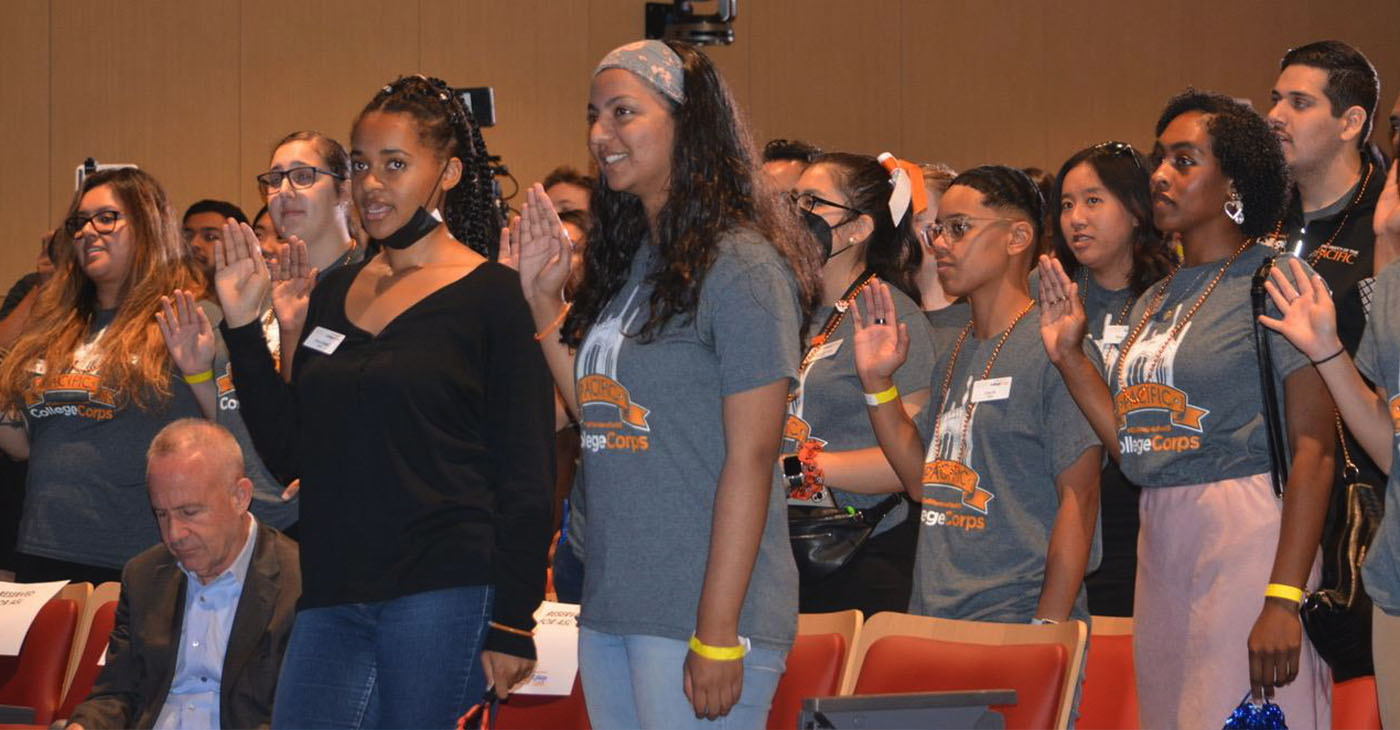
On October 7, Gov. Gavin Newsom, California Chief Service Officer Josh Fryday, educational leaders, community organizations, and the California Volunteers Commission administered the service oath to the first #CaliforniansForAll College Corps Fellows.
During the 2022-2023 academic year, more than 3,200 student fellows will receive up to $10,000 for completing a year of community service. College Corps is a statewide paid service program that provides meaningful work to college students that helps them graduate on time with less debt while benefiting the local community.
The oath is a solemn promise to perform voluntary work with the intention of helping people and improving communities.
“Part of the California way is giving back to help uplift others, and that is a core principle of the #CaliforniansForAll College Corps,” Newsom stated. “College Corps is about restoring the social contract between the government and its citizens. This public investment builds upon California Volunteers’ army of service members, which is larger than the Peace Corps and exemplifies the spirit and idealism I see in young people across California.”
The oath was taken in front of Newsom at the California Natural Resources Agency Building in downtown Sacramento, a few blocks from the State Capitol.
Tony Thurmond, California State Superintendent of Public Instruction, was in attendance.
Over the next four years, College Corps will engage 13,000 California undergraduates to make a positive difference in their communities. This service and career development program will help build a diverse class of leaders set to transform California for the better.
Funding was made possible by the efforts of Newsom and the Legislature. The program is the first opportunity for Assembly Bill (AB) 540 CA Dream Act students to earn support for college in a state service program.
“I decided to apply because I am pursuing a career in education, and #CaliforniansForAll College Corps is a way for me to earn as I learn,” said Tia Rowe, a College Corps Fellow from Sacramento State University. “I’m looking forward to working in my community and playing an active role in bringing people together.”
Rowe, along with other College Corps fellows, will take part in community service projects across the state. Fryday said College Corps is an opportunity to “begin a life of service” to benefit the masses. The program is a collaboration of over 600 community organizations, including 46 partnering colleges and universities across the state.
The objective is to address issues pertaining to climate change, tutoring and mentoring, low-income students, and distributing meals to those facing food insecurity. Once the fellows finish their assignments, they stand to receive $7,000 for 450 hours of community service. An additional $3,000 is provided as an education award.
“You and I are going to be part of a movement toward change,” Rowe said before the oath was administered in the auditorium of the California Natural Resources Agency Building. “We’re going into our own communities and playing an active role in building them up.”
College Corps represents the first and largest state-level investment in a college service program in the country, with $146 million earmarked for up to 6,500 students over the next two years. About 80% of fellows are students of color, 58% are first-generation college students, 68% are Pell-Grant eligible, and 500 fellows are AB 540 Dream Act.
A virtual briefing hosted by Ethnic Media Services and California Black Media was held on October 11 featuring Fryday, President and CEO of FIND Food Bank Debbie S. Espinosa, and student fellows. The discussion centered around the vision that inspired the program, how it works, who is eligible, how to apply, and where students will do their community service.
“This is a win-win-win: Helping to pay for college, gaining valuable work experience, and having a meaningful impact on your community,” Fryday said.










Activism
Oakland Post: Week of April 1 – 7, 2026
The printed Weekly Edition of the Oakland Post: Week of April 1 – 7, 2026

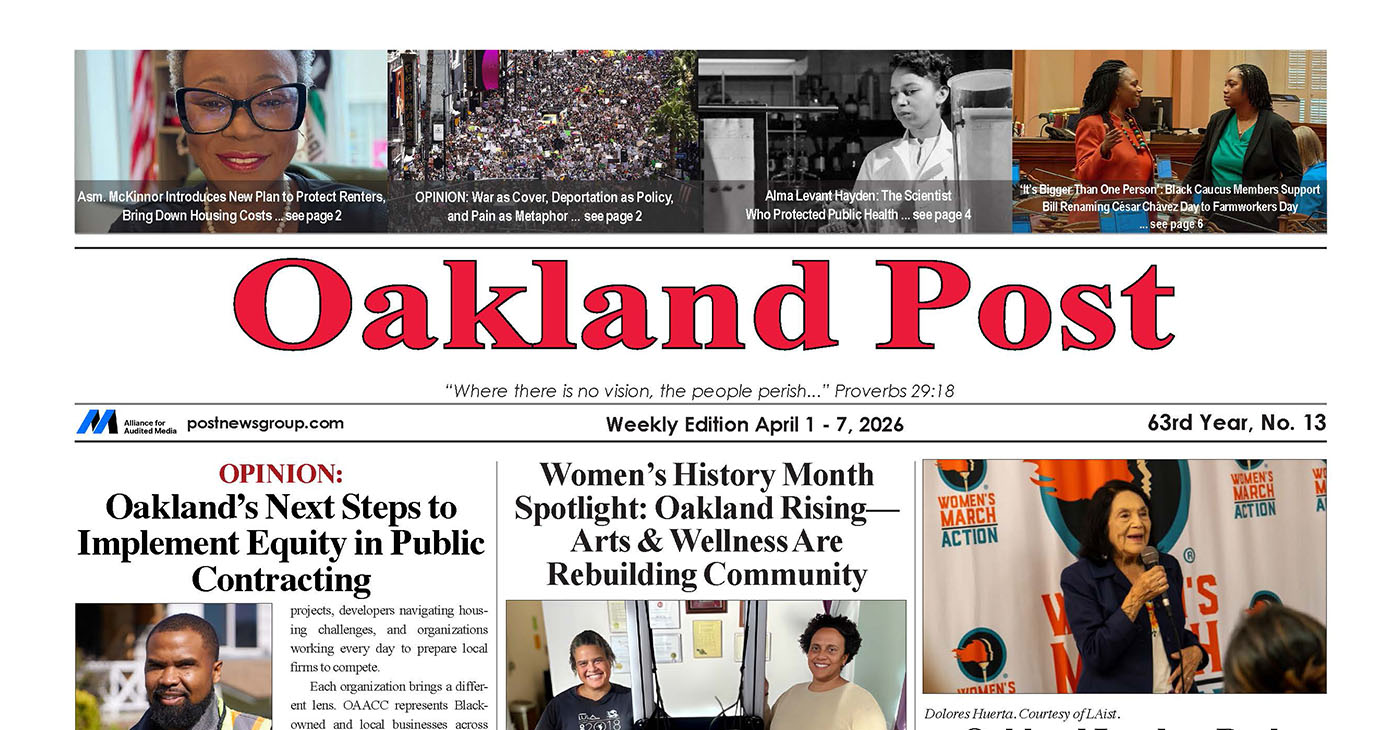
To enlarge your view of this issue, use the slider, magnifying glass icon or full page icon in the lower right corner of the browser window.

Activism
Oakland Post: Week of March 18 – 24, 2026
The printed Weekly Edition of the Oakland Post: Week of March 18 – 24, 2026

To enlarge your view of this issue, use the slider, magnifying glass icon or full page icon in the lower right corner of the browser window.
Activism
Oakland Post: Week of March 11 -17, 2026
The printed Weekly Edition of the Oakland Post: Week of March 11 – 17, 2026
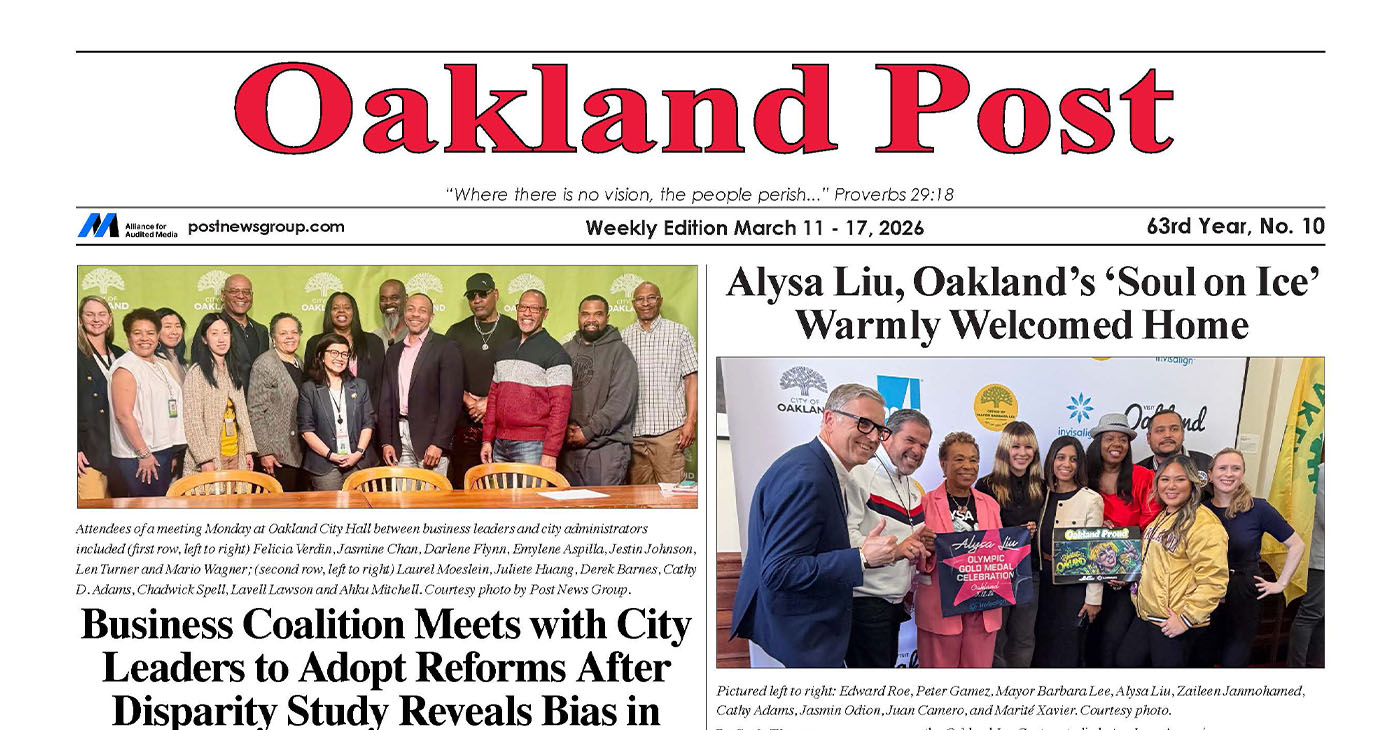
To enlarge your view of this issue, use the slider, magnifying glass icon or full page icon in the lower right corner of the browser window.

WORK FROM HOME
Home-based business with potential monthly income of $10K+ per month. A proven training system and website provided to maximize business effectiveness. Perfect job to earn side and primary income. Contact Lynne for more details: Lynne4npusa@gmail.com 800-334-0540


Oakland Post: Week of April 1 – 7, 2026

Black Artists in America, Installation Three Wraps at the Dixon Gallery and Gardens

Grief, Advocacy, and Education: A Counselor Reflects on Black Maternal Health

Future of Florida’s Black History Museum in Limbo

New Research Shows the Many Benefits of Early Learning

South Hampton K-8 Students Among Top 10 Finalists for Samsung’s ‘Solve for Tomorrow’ Competition

Cuba: No Negotiation with US on the President or Political System

Brooklyn Academy of Music Names Jamaican-Born Tamara McCaw as President

Trinidad & Tobego – U.S. Launches WhatsApp Channel for American Citizens in the Country

Oakland Post: Week of March 18 – 24, 2026

AI Innovation vs. Ethics and Environmental Impact

AI, Web3, and Digital Reparations

What If You Owned Your AI Agent?

Season 7, Episode 3 – January Reporter’s Roundtable 📱

Season 7, Episode 3 – January Reporter’s Roundtable

Reflecting on Black History Milestones in Birmingham AL

Oakland Post: Week of February 25 – March 3, 2026

Oakland Post: Week of March 4 – 10, 2026

PRESS ROOM: NBA Hall of Fame Nominee Terry Cummings Joins 100 Black Men of DeKalb County to Launch Victory & Values Initiative

Trump’s MAGA Allies are Creating Executive Order Plan to Steal the 2026 Midterms

U.S. manufacturing rebounds – how foundry services are adapting to rising demand

Poll Shows Support for Policies That Help Families Afford Child Care

Oakland Post: Week of March 11 -17, 2026
Oakland Post: Week of March 18 – 24, 2026

OP-ED: One Hundred Years of Black Workers Telling the Truth

Advancements in solar technology that are changing the way we power the world

Financial Wellness and Mental Health: Managing Money Stress in College

Woman’s Search for Family’s Roots Leads to Ancestor John T. Ward – A Successful Entrepreneur and Conductor on the Underground Railroad

COMMENTARY: Women of Color Shape Our Past and Future

PRESS ROOM: Civil Rights TV Launches in Selma as the World’s First 24/7 Civil Rights Television Network

Hyundai Ioniq 5 Parking, Safety, and 360 View #shorts

2025 Ioniq 5 New Wiper & Powerful Performance! #shorts

Electric SUV Range: Is 259 Miles Enough? #shorts

EV Charging: How Fast Can You Charge an Electric Vehicle? #shorts

Biometric Cooling… Messaging Seats…Come on! 2025 Infiniti QX80 Autograph 4WD

Charged Up: Witness the Magic of a Fully Electric Car! #shorts

Range Rover Sport PHEV Included…: See What’s Inside This Luxury SUV! #shorts

Invisible Hood View: Perfect Parking with X-Ray Vision! #shorts

AI Is Reshaping Black Healthcare: Promise, Peril, and the Push for Improved Results in California

ESSAY: Technology and Medicine, a Primary Care Point of View

Sanctuary Cities

The RESISTANCE – FREEDOM NOW

STATE OF THE PEOPLE: Freddie

ECONOMIC BOYCOTT DAY!!!!!

I told You So
-
 Activism3 weeks ago
Oakland Post: Week of March 11 -17, 2026
-
 Activism3 weeks ago
Oakland Post: Week of March 18 – 24, 2026
-
 Advice3 weeks ago
Financial Wellness and Mental Health: Managing Money Stress in College
-
 #NNPA BlackPress2 weeks ago
Brooklyn Academy of Music Names Jamaican-Born Tamara McCaw as President
-
 #NNPA BlackPress2 weeks ago
Grief, Advocacy, and Education: A Counselor Reflects on Black Maternal Health
-

 Advice4 weeks ago
Women & Wealth: Tips for Navigating Your Lifelong Financial Journey
-
 #NNPA BlackPress2 weeks ago
New Research Shows the Many Benefits of Early Learning
-
 #NNPA BlackPress2 weeks ago
Black Artists in America, Installation Three Wraps at the Dixon Gallery and Gardens
