
Entertainment
The Colorism of Race: Bill Duke


Bill Duke
by Mary L. Datcher
Special to the NNPA from The Chicago Defender
Bill Duke is one of America’s most prolific actors and directors as he continues to capture the topics that challenge people to think consciously on social issues. His latest project, Light Girls, is a documentary film and book as a follow-up to his Dark Girls film based on the serious problem of skin color discrimination within certain ethnic cultures — specifically the African American community.
Having a distinguished and long career that has brought him from his hometown of Poughkeepsie, New York to studying drama at Boston University and continuing further instruction at New York University’s Tisch School of the Arts and the American Film Institute, Duke launched his professional career on Broadway. Among some of his more notable roles were the imposing, conscious character Abdullah Mohammed Akbar in the movie Car Wash, as well prominent roles in Menace II Society, Exit Wounds, X Men: The Last Stand and Get Rich or Die Tryin‘. But it is his talents as a director that continue to keep him on speed dial with many production companies and film studios.
Duke is considered one of the most sought-after directors to capture and bring stories to life regardless of race, gender or cultural definitions; he is the actor’s director and the director’s director. His directorial work has spanned from the critically acclaimed television series Hill Street Blues and Miami Vice to feature films such as A Rage in Harlem, Hoodlum, Deep Cover, and Sister Act 2: Back in the Habit along with the PBS broadcast documentary Prince Among Slaves.
Duke was in Chicago to showcase his films Light Girls and Dark Girls along with participating in very in-depth panel discussions about the topics during the Black Women’s Expo last month.
CD: What was the motivation behind doing the films Light Girls and Dark Girls? It has been something that has been a taboo topic in the African American community. What made you feel it was necessary to tell this story?
BD: Based on my own experience as a young man coming up in Poughkeepsie, NY being dark complexioned and being tall, it was difficult. Luckily I had parents that re-enforced my worth to me. Early on, it was not easy for my sister, my mother and my niece. Some of the things they and other young girls went through from the community. Also, seeing the ‘colorism’ in our community today, it said to me, ‘This needs to be given a voice.’ As a result, I put together the two films and a book.
CD: Are you looking to do a third film as a follow up to Light Girls and Dark Girls?
BD: I’ve exhausted this territory. The next film is going to be called What is a Man? Is there a distinction between being born male and becoming a man? Many people feel there isn’t a distinction; you’re born male so you’re a man. In African tradition, that was not true. At 12 or 16 years old, you were given a spear and sent into the jungle. If you came back, there was a male ceremony with all other men who accepted you into the tribe. There’s a distinction between having a child, fathering a child and providing for that child. We want to examine that phenomenon. Is there such a thing called ‘manhood’? Are there manhood responsibilities? What are those responsibilities? Have they changed? Have they evolved? Also, what is the impact on those children of men that have several women who have borne their children?
CD: What motivates you to give back and mentor young people?
BD: It’s not our obligation, it’s our responsibility as Black men. The suffering of our young men due to lack of exposure to values and opportunities. The solution to that problem can’t be placed upon the shoulders of a system that has ignored them for many years.
We’re playing checkers in a chess game. Society is chess. We’re waiting for the chess players to come and teach us how to play chess. Those of us who learn how to play chess have to teach other people how to play chess. You can’t compete if you don’t have the information, knowledge and techniques for competition. So, it turns into complaints, violence and frustration. It’s a little frustrating and disturbing.
CD: Do young actors and filmmakers of color need to know how to play chess in order to compete and survive in Hollywood?
If you come to Hollywood and you are dreaming of having aspirations without understanding what is called ‘show business,’ you may get very, very lucky. That’s not what I see; I see the majority Black, Hispanic and Asians coming to Hollywood end up in positions that never lead them to their career. It’s an extremely competitive, rejection business. People hide the pain of rejection by dealing with the symptom which is usually through drugs, alcohol, partying or other activities that don’t deal with the root of the problem. Right now, the kids I see coming to Hollywood have no clue. They think we’re in the film and television business. We’re in the ‘media business.’
Duke immediately returns to the Windy City to begin filming, “Blaxicans” from mid-April to the end of May.
“It’s about a Mexican family and Black family where the young Black man falls in love with the Mexican girl. They get married and have a baby and she’s a “Blaxican.” The problem is that the father of the Black family hates Mexicans and the father of the Mexican family hates Black people. It’s a conflict between those two cultures while the wife, child and husband love each other and love their families. It’s how they resolve these issues; it’s a dramedy.”
It was just recently announced that Duke would be working on the biopic of the gospel legend Mahalia Jackson and filming in Chicago. Currently, the director is in discussions with potential investors to bring the gospel singer’s celebrated life to the big screen.
Duke reveals his admiration, “Not only was she close friends with Dr. Martin Luther King, Jr., but she encouraged him to do the “I Have a Dream” speech at the march. She was one of the first brilliant Black business women in this country. Although, it was a male dominated culture and society, she let no man tell her what to do. She stood up for women’s rights and her rights. Her story should be celebrated. It’s not a Black story. It’s a story of a woman — a human being — that grew up in the rural South with nothing. She believed in God enough that her faith brought her through circumstances that the average person could not survive. You can feel through her music.”










Activism
Oakland Post: Week of August 12 – 18, 2026
The printed Weekly Edition of the Oakland Post: Week of August 12 – 18, 2026

To enlarge your view of this issue, use the slider, magnifying glass icon or full page icon in the lower right corner of the browser window.
Art
Misty Copeland Shapes Ballet’s Tomorrow
THE POSITIVE COMMUNITY — Misty Copeland will curate the 2026 Joyce Ballet Festival, a two-week event in New York City from August 4-16. This role allows her to influence the future of ballet by showcasing a wide range of dancers, choreographers, and companies. The festival will present both established and contemporary works, blending classical traditions with new artistic expressions.


This summer, Misty Copeland will step into a different kind of spotlight. Instead of taking center stage as a dancer, she will help determine what audiences see onstage as curator of the 2026 Joyce Ballet Festival. Taking place August 4 through August 16 at The Joyce Theater in New York City, the two-week celebration will bring together dancers, choreographers and companies representing a broad spectrum of ballet. The festival gives Copeland an opportunity to share not only her appreciation for ballet’s traditions, but also her vision for its future.
Copeland understands better than most how powerful a ballet stage can be. Her historic career with American Ballet Theatre changed the conversation about representation in one of the world’s most traditional performing arts. When she became the company’s first Black woman to reach the rank of principal dancer, her achievement carried significance far beyond a personal milestone. It gave young dancers of color a new image of what was possible and challenged the industry to reconsider who belonged at the center of ballet.
That history informs the perspective she brings to the festival. Copeland has spent much of her career moving between performance, mentorship, advocacy and storytelling. Her curatorial role allows her to bring those interests together by creating a program that does not treat ballet as a museum piece. Instead, the festival presents dance as an evolving language capable of carrying classical traditions into new cultural and artistic territory.
Audiences will encounter a mixture of established works and contemporary creations during the festival. Classical ballet vocabulary will share space with choreography that pushes dancers toward different physical, emotional and theatrical possibilities. The result is intended to give audiences a broader understanding of the art form while demonstrating that tradition and innovation do not have to be competing forces.
The lineup also provides an opportunity to see dancers from different artistic environments. Performers connected to organizations including American Ballet Theatre, New York City Ballet, Paris Opera Ballet, Houston Ballet, Dance Theatre of Harlem and Complexions Contemporary Ballet are among those represented in the festival. Each company carries its own history and artistic identity, making their participation part of a larger conversation about the many ways ballet can be performed and interpreted.
The presence of Dance Theatre of Harlem is particularly meaningful within the larger story of Copeland’s career and the evolution of Black representation in ballet. Founded during a period when opportunities for Black dancers were severely limited, the company helped demonstrate that excellence and classical training could flourish in a Black cultural environment. Its legacy continues to influence dancers and audiences, making its connection to a festival curated by Copeland especially resonant.
The program also reaches beyond a single definition of contemporary ballet. Choreographers with different backgrounds and artistic philosophies contribute to an evening that can move from recognizable classical structures to works shaped by modern dance, theater, popular culture and new approaches to movement. That diversity reflects a generation of artists who increasingly see ballet not as a rigid vocabulary but as a foundation from which they can explore.
For New York audiences, the festival offers something that is increasingly valuable: the opportunity to experience outstanding dancers in an intimate setting. The Joyce is known for presenting dance in a theater where audiences can see movement and artistry up close. That environment can make a familiar ballet work feel newly personal while allowing experimental pieces to communicate with unusual immediacy.
Copeland’s role as curator also sends a message about the importance of artistic leadership. The people who select performers and choreography help determine which stories receive attention and which artists receive opportunities. By bringing a range of voices into the festival, Copeland is using that responsibility to broaden the conversation around ballet. Her choices can introduce audiences to artists they may not otherwise encounter while encouraging longtime ballet followers to look at the form from a different perspective.
The 2026 Joyce Ballet Festival ultimately arrives at an important moment for the art form. Ballet is carrying centuries of tradition into an era defined by changing audiences, broader representation and increasingly adventurous choreography. Copeland’s festival reflects that transition. For two weeks in August, The Joyce will become a meeting place for the familiar and the unexpected—a celebration of where ballet came from and a preview of where it may be going. And with Misty Copeland helping shape the conversation, the future of ballet promises to be as expansive as the dancers who are defining it.
Based on reporting by The Positive Community.

Activism
Oakland Post: Week of August 5 – 11, 2026
The printed Weekly Edition of the Oakland Post: Week of August 5 – 11, 2026
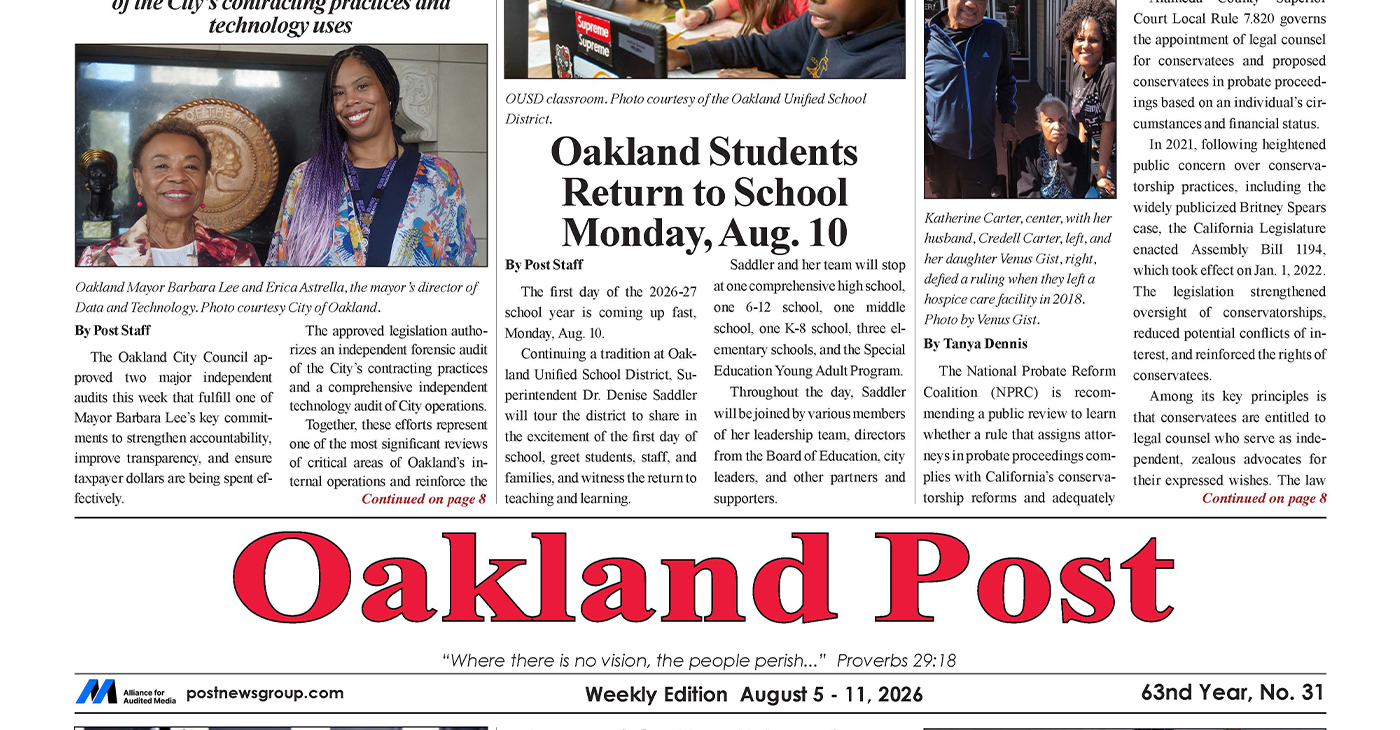
To enlarge your view of this issue, use the slider, magnifying glass icon or full page icon in the lower right corner of the browser window.

WORK FROM HOME
Home-based business with potential monthly income of $10K+ per month. A proven training system and website provided to maximize business effectiveness. Perfect job to earn side and primary income. Contact Lynne for more details: Lynne4npusa@gmail.com 800-334-0540


Four Candidates, Including Incumbent Barbara Lee, Qualify for Oakland Mayor’s Race

Oakland Observes Black August with Block Parties, Film Showings, Workshops

Oakland Post: Week of August 12 – 18, 2026

COMMENTARY: Why Local School Tax Measure G1 Will Not Be on the November Ballot

California Hispanic Chambers of Commerce Unveils: ‘Powering the Future’ Theme for 47th Annual Statewide Convention

Returning to Its Roots, the Oakland Black-Eyed Pea Festival Partners with the Freedom Farmers Market Sept. 12

Less Affluent School Districts, Including Sacramento City, Face Threat of State Takeover

From Blueprint to Breakthrough: Tackling Affordable Housing in Oakland

NPRC Scores First Advocacy Victory: David Shaw Finally Gets His Wish to ‘Go Home’

ESSAY: California Can Close Its Colorectal Cancer Gap

Car Wash Workers Cope with Lingering Impacts of ICE Raids

Misty Copeland Shapes Ballet’s Tomorrow

As Part of Your Back-to- School Checklist, Vaccinate

As Part of Your Back-to- School Checklist, Vaccinate

Congresswoman Simon Demands Investigation into Trump’s Abuse of Emergency Powers for Coal Export Terminal in West Oakland

Department of Homeland Security Demands California Secretary of State Shirley N. Weber Scrub Voter Rolls

New Judge Could Decide if Karmelo Anthony Gets a New Trial

Oakland Children’s Hospital Workers and Patients Rally for Pediatric Medical Care

“The Power to See Threats Sooner”: Gov. Newsom, Safety Officials Showcase California’s Investments in Hi-Tech Wildfire Prevention

Alpha Kappa Alpha Sorority, Inc. Celebrates New North Atlantic Regional Director

Surveillance Pricing Fight: State Senate Debates Bill Banning Retailers from Using AI to Set Prices Based on a Buyer’s Profile

Mount Zion MBC, Church of Jesus Christ of Latter-day Saints Partner to Bring 29,000 Meals to Alameda County

California Sen. Padilla Joins Colleagues to Introduce Bill Imposing Term Limits on Supreme Court Justices
Less Affluent School Districts, Including Sacramento City, Face Threat of State Takeover

Starting This Summer, California Car Buyers Can Get an Instant $3500 Off the Cost of Electric Vehicles

COMMENTARY: You Are Already Paying for the AI Boom
Car Wash Workers Cope with Lingering Impacts of ICE Raids

California Bill Would Let Abuse Victims Use Trauma as Legal Defense for Violent Crime

Fed Court to Decide Landmark First Amendment Case

Gov. Gavin Newsom Signs Law Streamlining Affordable Housing Rules

The Conversation With Al McFarlane 6/23/26

Media Monday 6/22/26

LIVE! ASK ALMA! — TUES. 6.23.26 7PM EST

Car Buying Secrets: 4 Hidden Checks Before You Sign!

Is This 550 HP Charger Worth YOUR Money? AutoNetwork Review

Celebrating Juneteenth – Frederick Douglass on education and resistance

LIVE! — ASK ALMA! — TUES. 6.19.26 7PM EST

Hyundai Ioniq 5 Parking, Safety, and 360 View #shorts

2025 Ioniq 5 New Wiper & Powerful Performance! #shorts

Electric SUV Range: Is 259 Miles Enough? #shorts

EV Charging: How Fast Can You Charge an Electric Vehicle? #shorts

Biometric Cooling… Messaging Seats…Come on! 2025 Infiniti QX80 Autograph 4WD

Charged Up: Witness the Magic of a Fully Electric Car! #shorts

Range Rover Sport PHEV Included…: See What’s Inside This Luxury SUV! #shorts

Invisible Hood View: Perfect Parking with X-Ray Vision! #shorts
-
 Featured1 week ago
Department of Homeland Security Demands California Secretary of State Shirley N. Weber Scrub Voter Rolls
-
 #NNPA BlackPress3 weeks ago
New Judge Could Decide if Karmelo Anthony Gets a New Trial
-
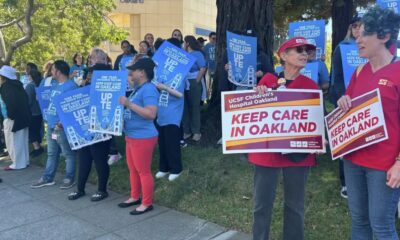 Business3 weeks ago
Oakland Children’s Hospital Workers and Patients Rally for Pediatric Medical Care
-
 Environment1 week ago
“The Power to See Threats Sooner”: Gov. Newsom, Safety Officials Showcase California’s Investments in Hi-Tech Wildfire Prevention
-
 Black History2 weeks ago
Alpha Kappa Alpha Sorority, Inc. Celebrates New North Atlantic Regional Director
-
 Business3 weeks ago
Surveillance Pricing Fight: State Senate Debates Bill Banning Retailers from Using AI to Set Prices Based on a Buyer’s Profile
-
 Business3 weeks ago
Mount Zion MBC, Church of Jesus Christ of Latter-day Saints Partner to Bring 29,000 Meals to Alameda County
-
 Featured1 week ago
California Sen. Padilla Joins Colleagues to Introduce Bill Imposing Term Limits on Supreme Court Justices

Pingback: Blue Coaster33
Pingback: Blue Coaster33