
Bay Area
The Church Community Responds to COVID-19

“God is our refuge and strength…therefore we will not fear.” Psalm 46: 1-2
Much has been discussed about the coronavirus and how it has impacted grocery outlets, schools, businesses, gyms, salons and recreational facilities. Yet minimal attention has been given to how COVID-19 has affected the church community.
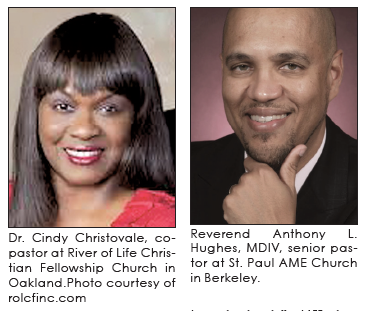
Dr. Cindy Christovale, co-pastor at River of Life Christian Fellowship Church in Oakland, noted that COVID-19 has dramatically changed the way church services are held and how using technology is now the new norm to reach parishioners.
“With social distancing and amid health and safety concerns, congregations have creatively reached out to church members through the internet, social media and sites such as steaming live on Facebook, Periscope, YouTube, and Twitch to conduct services for smaller churches,” said Christovale.
“Additionally ZOOM, the site for meetings and video conferences, has become a very useful tool to effectively reach church-goers that have sheltered in place, especially for older generations.
“Everything we talk about at River of Life is based on the biblical foundation of truth,” she said. “We realize that COVID 19 has affected everyone, spiritually, physically and financially. Knowing the hardships people are facing, we have to reach out to our congregations via phone, text messaging, and social media to let them know the church is there for them.
“The Body of Christ is responsible to come together and pray about our situation,” she added. “We are now suffering because the Body of Christ has been separated since the last presidential election. The enemy has caused division among the Body of Christ.
“As a result of this, we were not prepared for this pandemic and we were lacking our armor. We should continue to read our Bible and pray every day, and not just when we have a present need.”
Rev. Anthony L. Hughes, MDIV, senior pastor at St. Paul AME Church in Berkeley, said parishioners are missing the face-to-face contact, but it’s necessary because of the pandemic. “We no longer have that opportunity to have close contact,” said Hughes. “Reaching out by phone and video streaming is now commonplace.”
“This also applies with giving to the church,” said Hughes. “People have adapted to paying their tithes and offerings electronically. This can be done using the app Givelify on your smart phone by simply identifying your church and the ministry you want to give to.
“Alternatively, if you bank online, parishioners can use Zelle which is a giving program that all banks have. Monies can be transferred to your church by simply entering the church’s email address or phone number, and select the ministry you want to provide funding.”
Hughes stated that during these difficult times, it is important to consider prayer. “One of the main things prayer does is that it keeps us in touch with the spirit of God,” said Hughes. “That’s where we get our direction, our assurance and that’s how we keep our faith strong.”
“Those things come through prayer, so it’s very important that we pray to reach the church community. When this pandemic is over, people will be more appreciative of each other and we will strengthen our ministries with a new enrichment that was not present before.”
Both Christovale and Hughes believe the churches that have ignored orders to shelter-in-place have not used wisdom, and those pastors have been holding services to their peril.
“God has never allowed us to put ourselves in danger,” said Hughes. “What those churches are doing is problematic. They should be prioritizing the health, safety and well-being of their members, especially those congregations that have seniors and people with compromised medical conditions.”
Christovale said that the actions performed by defiant churches are unlawful. “The Bible says to abide by the laws of the land, and those churches are unwise for encouraging activities that put their congregations in danger,” she said.
“Churches in the future will be of a new order,” she added. “Places of worship will need to be cleaned and sanitized, and in many instances, people will still have to remain six feet apart. The technology now in use will most likely continue even more so in the future. It will be a new way of life.”












Activism
Oakland Post: Week of April 1 – 7, 2026
The printed Weekly Edition of the Oakland Post: Week of April 1 – 7, 2026

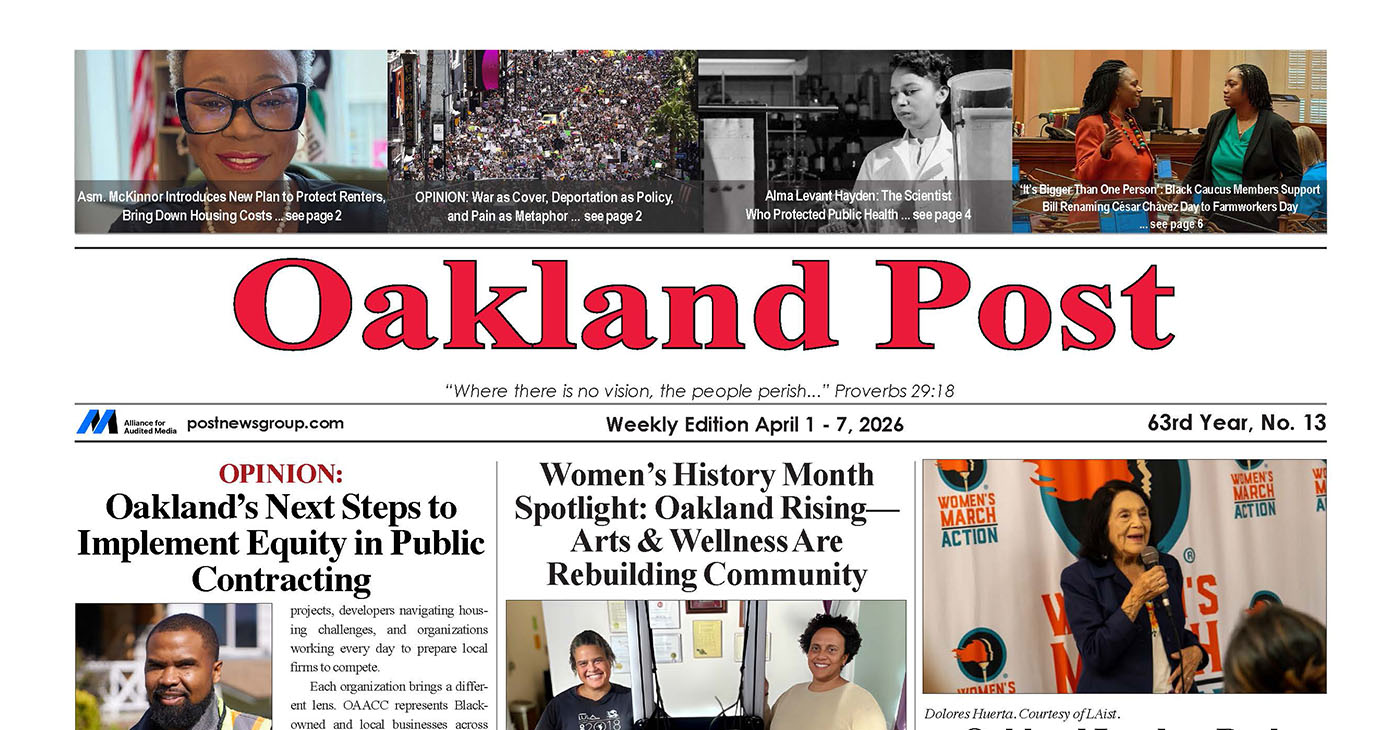
To enlarge your view of this issue, use the slider, magnifying glass icon or full page icon in the lower right corner of the browser window.

Activism
Oakland Post: Week of March 18 – 24, 2026
The printed Weekly Edition of the Oakland Post: Week of March 18 – 24, 2026
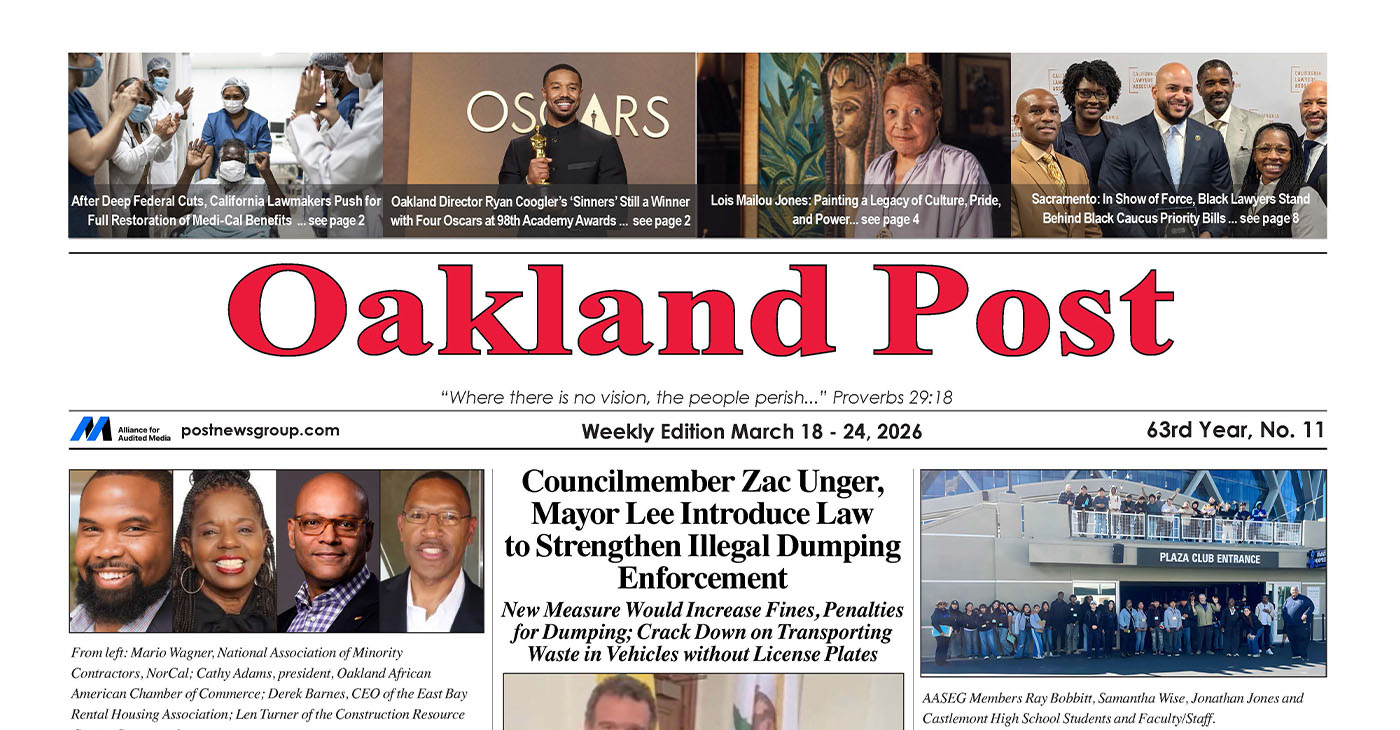
To enlarge your view of this issue, use the slider, magnifying glass icon or full page icon in the lower right corner of the browser window.
Activism
Oakland Post: Week of March 11 -17, 2026
The printed Weekly Edition of the Oakland Post: Week of March 11 – 17, 2026
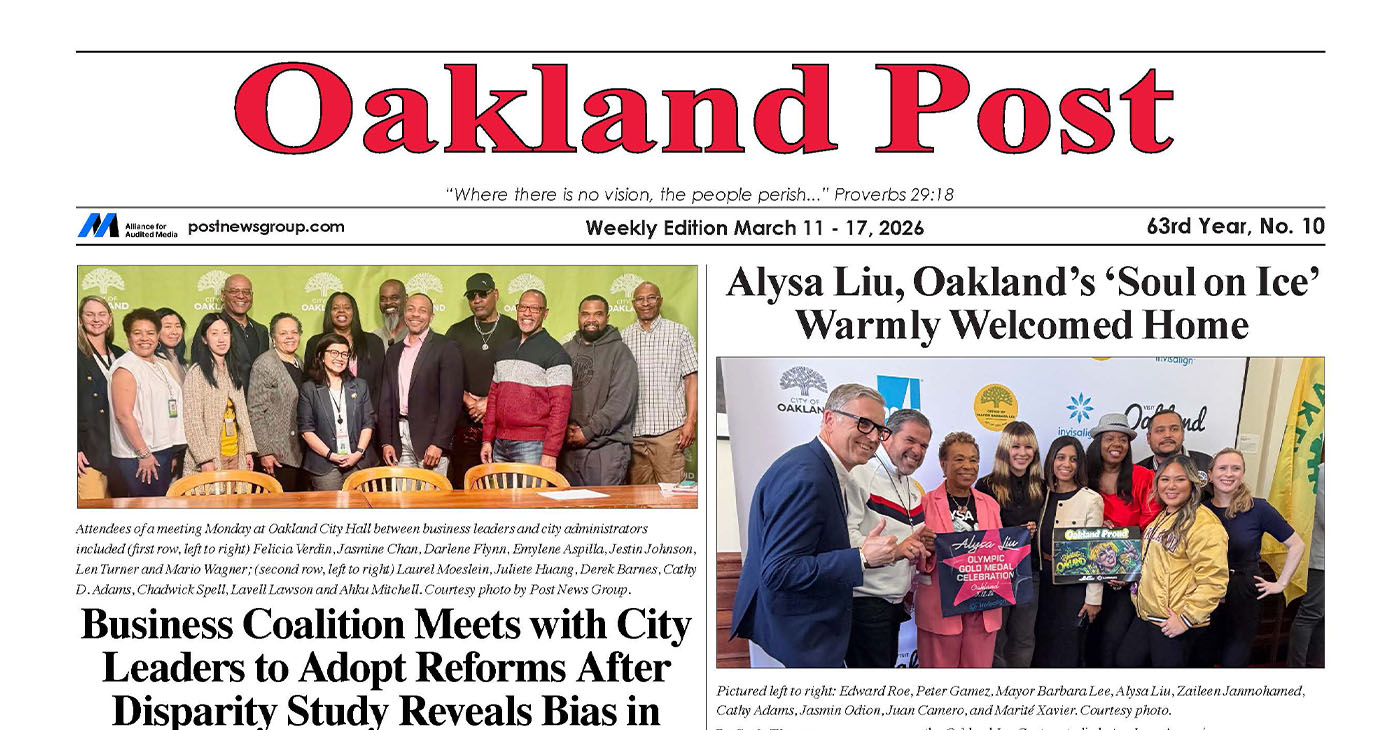
To enlarge your view of this issue, use the slider, magnifying glass icon or full page icon in the lower right corner of the browser window.

WORK FROM HOME
Home-based business with potential monthly income of $10K+ per month. A proven training system and website provided to maximize business effectiveness. Perfect job to earn side and primary income. Contact Lynne for more details: Lynne4npusa@gmail.com 800-334-0540


Oakland Post: Week of April 1 – 7, 2026

Black Artists in America, Installation Three Wraps at the Dixon Gallery and Gardens

Grief, Advocacy, and Education: A Counselor Reflects on Black Maternal Health

Future of Florida’s Black History Museum in Limbo

New Research Shows the Many Benefits of Early Learning

South Hampton K-8 Students Among Top 10 Finalists for Samsung’s ‘Solve for Tomorrow’ Competition

Cuba: No Negotiation with US on the President or Political System

Brooklyn Academy of Music Names Jamaican-Born Tamara McCaw as President

Trinidad & Tobego – U.S. Launches WhatsApp Channel for American Citizens in the Country

Oakland Post: Week of March 18 – 24, 2026

AI Innovation vs. Ethics and Environmental Impact

AI, Web3, and Digital Reparations

What If You Owned Your AI Agent?

Season 7, Episode 3 – January Reporter’s Roundtable 📱

Season 7, Episode 3 – January Reporter’s Roundtable

Reflecting on Black History Milestones in Birmingham AL

Oakland Post: Week of February 25 – March 3, 2026

PRESS ROOM: NBA Hall of Fame Nominee Terry Cummings Joins 100 Black Men of DeKalb County to Launch Victory & Values Initiative

Oakland Post: Week of March 4 – 10, 2026

Trump’s MAGA Allies are Creating Executive Order Plan to Steal the 2026 Midterms

U.S. manufacturing rebounds – how foundry services are adapting to rising demand

Poll Shows Support for Policies That Help Families Afford Child Care

OP-ED: One Hundred Years of Black Workers Telling the Truth

Oakland Post: Week of March 11 -17, 2026

Advancements in solar technology that are changing the way we power the world
Oakland Post: Week of March 18 – 24, 2026

Woman’s Search for Family’s Roots Leads to Ancestor John T. Ward – A Successful Entrepreneur and Conductor on the Underground Railroad

COMMENTARY: Women of Color Shape Our Past and Future

PRESS ROOM: Civil Rights TV Launches in Selma as the World’s First 24/7 Civil Rights Television Network

Financial Wellness and Mental Health: Managing Money Stress in College

Hyundai Ioniq 5 Parking, Safety, and 360 View #shorts

2025 Ioniq 5 New Wiper & Powerful Performance! #shorts

Electric SUV Range: Is 259 Miles Enough? #shorts

EV Charging: How Fast Can You Charge an Electric Vehicle? #shorts

Biometric Cooling… Messaging Seats…Come on! 2025 Infiniti QX80 Autograph 4WD

Charged Up: Witness the Magic of a Fully Electric Car! #shorts

Range Rover Sport PHEV Included…: See What’s Inside This Luxury SUV! #shorts

Invisible Hood View: Perfect Parking with X-Ray Vision! #shorts

AI Is Reshaping Black Healthcare: Promise, Peril, and the Push for Improved Results in California

ESSAY: Technology and Medicine, a Primary Care Point of View

Sanctuary Cities

The RESISTANCE – FREEDOM NOW

STATE OF THE PEOPLE: Freddie

ECONOMIC BOYCOTT DAY!!!!!

I told You So

-
 Activism3 weeks ago
Oakland Post: Week of March 11 -17, 2026
-
 Activism2 weeks ago
Oakland Post: Week of March 18 – 24, 2026
-
 #NNPA BlackPress4 weeks ago
Woman’s Search for Family’s Roots Leads to Ancestor John T. Ward – A Successful Entrepreneur and Conductor on the Underground Railroad
-
 #NNPA BlackPress4 weeks ago
COMMENTARY: Women of Color Shape Our Past and Future
-
 Advice3 weeks ago
Financial Wellness and Mental Health: Managing Money Stress in College
-

 #NNPA BlackPress4 weeks ago
Advocates Raise Alarm Over ICE Operation, MOU and Detention Risks in Baltimore County
-

 #NNPA BlackPress4 weeks ago
Pete Buttigieg to Join Mayor Randall Woodfin for Community Town Hall in Birmingham
-
 #NNPA BlackPress2 weeks ago
Brooklyn Academy of Music Names Jamaican-Born Tamara McCaw as President

1 Comment