
Op-Ed
The Chicago Reckoning

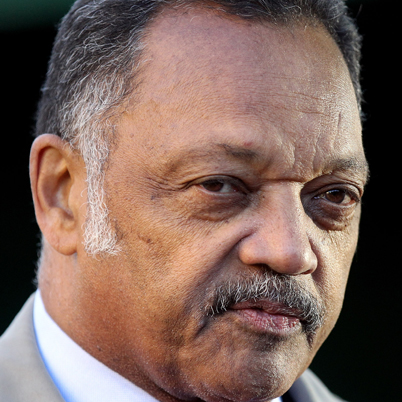
By Jesse L. Jackson, Sr.
NNPA Columnist
Why is Chicago Mayor Rahm Emanuel in a neck and neck run-off for re-election? He enjoys national press attention, advertises the endorsement of hometown favorite, President Obama, brandishes a $30 million-plus campaign war chest, largely funded by 100 or so major donors, and mobilizes wall-to-wall advertising and a professional campaign team. Yet he has not only been forced into a run-off, but polls show him still unable to win majority support.
Like any Chicago mayor, Emanuel gets his share of brickbats and insults. He’s said to be insulting and profane, but Chicago prides itself on its feisty politicians. He’s tied to downtown interests, but that has never been a problem.
The reason Emanuel is in trouble is a widespread loss of faith across the city’s Black and Latino neighborhoods. Faith, the Bible tells us, is the “substance of things hoped for, the evidence of things not seen.” Faith is what sustains hope in political leaders even when times are bad. Faith is what makes voters believe that a leader feels their pain, even if he or she does not live in their neighborhoods.
And in large numbers, working families in Chicago, particularly those struggling with low wage jobs that provide no benefits and little security, have lost faith in the man now dubbed the Mayor of the 1 Percent.
What is hoped for and unseen is any plan for neighborhood redevelopment. What is hoped for and unseen is any indication of a strategy for building the economy from the bottom up.
As mayor, Emanuel has focused resources downtown, not on neighborhoods in need. The lights are bright downtown, but the poor neighborhoods live in the shadows. Emanuel shut down 50 neighborhood schools with no community consultation. He waged war on teachers, privatized janitorial services, and too often scorned public employees. Public housing has been shuttered even as private homes are foreclosed. When the schools close, neighborhoods lose resources and hope. Drug stores close; grocery stores close.
The downtown thrives while the neighborhoods continue to decline. As a 2013 study by the Grassroots Collaborative showed, the only one out of four of the jobs created downtown go to Chicagoans. And those few go primarily to residents in majority white neighborhoods, not black or Latino neighborhoods. Massive subsidies don’t begin to touch the people most in need of them.
And as a Chicago Sun Times report revealed, Whites continue to hold a disproportionate number of the highest paying jobs in the administration, particularly those that the mayor controls himself. When the highest paid aides closest to the mayor are White, no matter how dedicated, the concerns of impoverished Black and Latino neighborhoods are not likely to get priority.
Like any good politician, the mayor has reacted as his polls plummeted and his re-election stopped being a sure thing, pushing through an increase in the minimum wage. He’s also worked to extend pre-k and make two years of community college affordable. He’s now touting his Neighborhoods Now program as a development program for seven neighborhoods, but as WBEZ, Chicago Public Radio exposed, the fund is a hodgepodge of private and public projects. In fact, one-fourth of the public money is focused on projects around McCormick Park Convention Center, including two hotels and a big stadium for DePaul – hardly a program for neighborhood reconstruction.
Rahm’s challenger, Jesus “Chuy” Garcia has an underfunded campaign, but a rich message. He has the experience to deal with Chicago’s budget challenges, but he has the commitment to focus on urban reconstruction, on rebuilding neighborhoods, on putting the young to work. Against the odds, he has run a campaign that will take this race down to the wire.
When people lose faith, they lose hope. Sadly, they too often give up on politics. They see no difference between candidates, no reason to vote. The struggle to survive is hard enough. Usually, an incumbent can win re-election with the confidence that many of those who have been abandoned won’t even show up. What is stunning about the rise of challenger Jesus “Chuy” Garcia is the movement behind him – citizens, teachers, organizers, union members, church goers unwilling to succumb to despair, unwilling to assume that nothing can change. That is the real story of the Chicago race. Whatever happens in the April run-off, that movement has given people a reason to believe once more.
Jesse L. Jackson, Sr. is founder and president of the Chicago-based Rainbow PUSH Coalition. You can keep up with his work at www.rainbowpush.org










Activism
Alameda County Makes History: Board of Supervisors Unanimously Adopts Reparations Action Plan
The Final Action Plan addresses disparities in housing, economic opportunity, education, health, environmental justice, public safety, arts and culture, land use, and other areas where historical government policies have contributed to inequitable outcomes for Black residents.
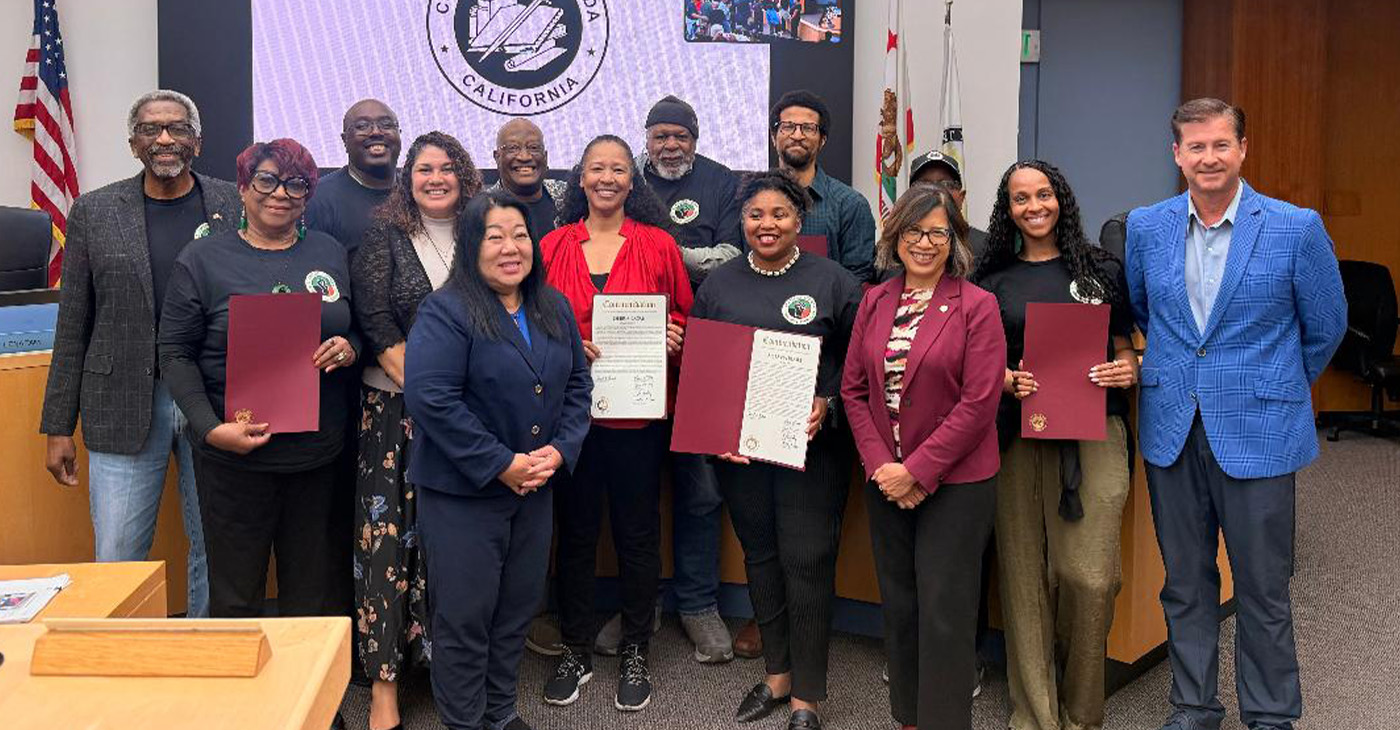
Landmark 5–0 Vote Advances One of the Nation’s Most Comprehensive County-Led Reparative Justice Efforts
Special to The Post
The Alameda County Board of Supervisors unanimously voted 5–0 on Tuesday to adopt the Final Action Plan of the Alameda County Reparations Commission, marking a historic milestone in the County’s commitment to advancing reparative justice for Black residents.
The vote follows nearly three years of work by the Alameda County Reparations Commission, which was seated in July 2023. Through extensive historical research, analysis of County data, public listening sessions, expert testimony, and community engagement, the Commission developed a comprehensive roadmap for addressing documented harms and expanding opportunity for future generations.
The Final Action Plan addresses disparities in housing, economic opportunity, education, health, environmental justice, public safety, arts and culture, land use, and other areas where historical government policies have contributed to inequitable outcomes for Black residents.
“This vote represents more than the adoption of a report,” said Debra Gore, Chair of the Alameda County Reparations Commission. “It is a commitment to truth, accountability, and action. Reparations are not about guilt or charity. They are about government’s responsibility to address documented harms created by its own policies and to build a more just future.”
During the Board meeting, Gore delivered a keynote address entitled “Redress as Constitutional First Principle,” presenting reparations as a constitutional principle rooted in the First Amendment’s guarantee of the right “to petition the Government for a redress of grievances.” Her remarks connected the nation’s founding ideals with Alameda County’s own data documenting continuing racial disparities.

At the conclusion of her address, Gore received a standing ovation from all five members of the Alameda County Board of Supervisors, recognizing both the Commission’s work and the significance of the Board’s action.
Grounded in County data and community testimony, the Commission’s recommendations reflect nearly three years of research and engagement with residents, historians, policy experts, advocates, and County staff. Together, they offer a roadmap for repairing documented harms while strengthening opportunity, accountability, and equity for future generations.
The Board’s action also includes a commitment to establish a standing committee to oversee implementation of the Action Plan, signaling that reparative justice will remain an ongoing County priority.
“History will remember this moment not because Alameda County acknowledged injustice,” Gore said. “History will remember that our County chose action. This vote demonstrates that government can confront difficult truths, listen to its residents, and take meaningful steps toward repair.”
Reached in an interview on July 1, Gore said she felt a sense of “joyfulness and reverence” for the ancestors and survivors of the harms of slavery through Jim Crow. “We might be the first in the country to pass an action plan with the commitment to ‘operationalize’ reparations.”
Gore is grateful to former Alameda County Supervisor Keith Carson, who asked her to serve on the commission, and current Supervisor Nate Miley, who asked her to be the chairperson.
Among the many who helped create and inspire the report, Gore pointed to former Oakland City Councilmember Leo Bazile, who has been calling for reparations since the 1960s, and the late Reparations Committee member Jesse Clyde Burleson, who provided insight on incarceration as an ongoing harm to the Black community. The report was dedicated to the memory of Burleson, who passed away on March 6 and who had been imprisoned from 1987-2018.
Gore also pointed to their avenue of approach on reparations, which was as much about the impact of slavery as it was about constitutional rights that had been systematically denied to Black people.
Members of the committee were: Cathy Adams, president and CEO of the Oakland African American Chamber of Commerce (OAAOCC) issued a statement supporting the reparations milestone.
OAACC “is grateful to former Supervisor Keith Carson, Supervisor Nate Miley, and the entire Alameda County Reparations Commission for their tireless efforts to develop a comprehensive action plan to address and repair the documented harms experienced by our local Black community,” Adams said.
“As an organization deeply committed to advancing workforce development, expanding access to capital, and creating opportunities for Black-owned businesses in Oakland and throughout Alameda County, we look forward to working alongside the steering committee to help deliver meaningful economic justice to those impacted by generations of systemic inequities.”
The Alameda County Reparations Commission extends its gratitude to the hundreds of residents who shared their experiences, the Commissioners who dedicated nearly three years of service, County staff, researchers, historians, and community partners whose work made this milestone possible.
With adoption of the Final Action Plan, Alameda County now begins the next phase of implementation in partnership with County leadership, community organizations, and residents. The commission will be dissolved, Gore says, and she looks forward to the next steps, one of which is the appointment of committee members.
Besides, Burleson, Gore and Bazile, members of the commission included: Natasha Triplett, Shenita Hurskin, Brandon T. Sass, Artavia Berry, Tiega N. Varlack, James Knowles, Vickie Stephens, Dr. Philip S. Gardiner, Dee Johnson, Larry McClendon (vice chair) , Carolyn (CJ) Johnson, Alan E. Dones, Jennifer A. Gayden, Lori Cox (vice chair), and Shadrick A. Small.
About the Alameda County Reparations Commission
Established by the Alameda County Board of Supervisors in July 2023, the Alameda County Reparations Commission was charged with examining the historical and ongoing harms experienced by Black residents resulting from government policies and practices and developing recommendations for repair. The Commission’s Final Action Plan provides a comprehensive framework for advancing equity, accountability, and opportunity throughout Alameda County.
Activism
OPINION: Unfair Media Attacks on OUSD Leadership for Not Closing Schools
Dr. Denise Saddler is a respected educator who leads with integrity, honesty, and decades of experience in service to OUSD. Since stepping into the role of interim superintendent, she has worked tirelessly alongside the Senior Leadership Team and fiscal consultants to address one of the most difficult financial situations our district has faced.
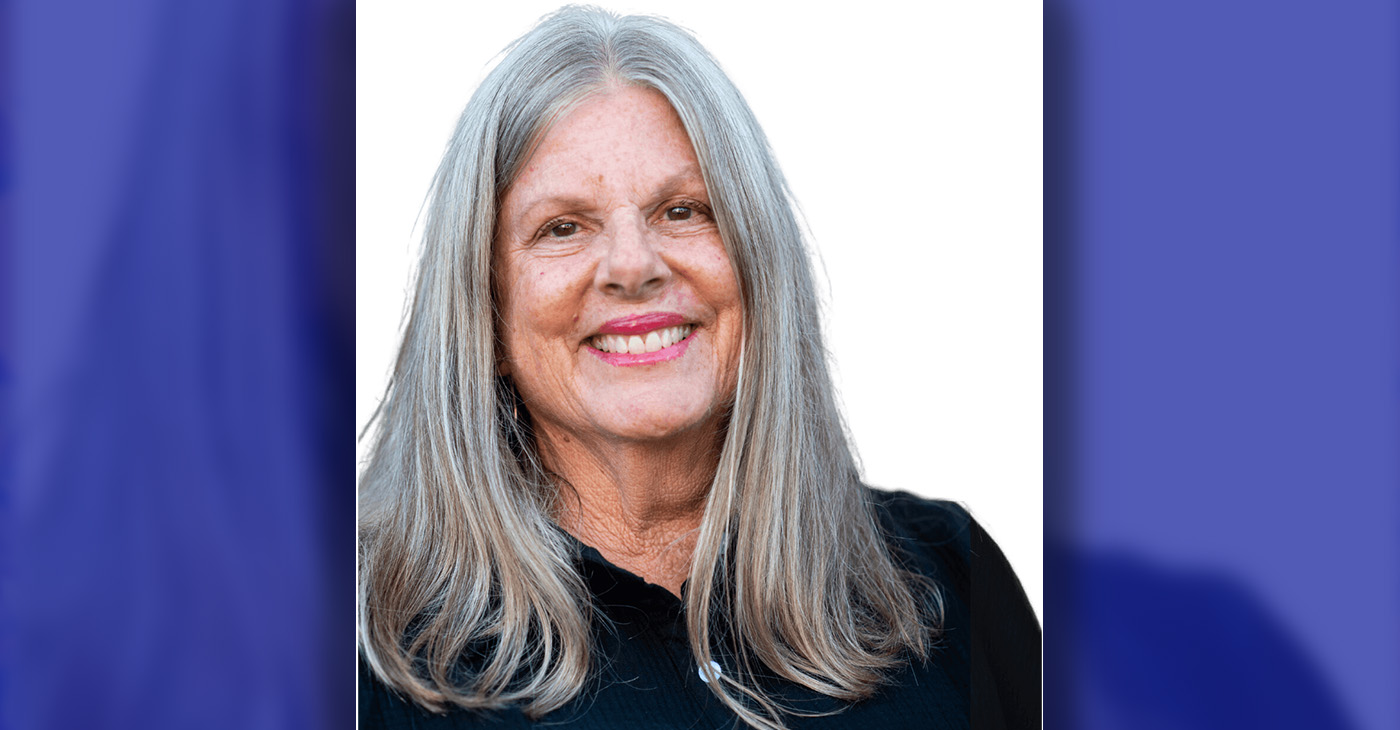
The school district has achieved ‘significant milestones that reflect disciplined leadership and a renewed commitment to fiscal responsibility,’ said Board President Jennifer Brouhard
By Jennifer Brouhard, Special to The Post
I am not going to directly respond to or amplify the personal attacks on the Oakland Unified School District’s dedicated leaders who are working every day on behalf of Oakland’s students.
Dr. Denise Saddler is a respected educator who leads with integrity, honesty, and decades of experience in service to OUSD. Since stepping into the role of interim superintendent, she has worked tirelessly alongside the Senior Leadership Team and fiscal consultants to address one of the most difficult financial situations our district has faced.
In December, the Board gave clear direction: bring forward a budget proposal that did not include a state loan and did not include school closures. Saddler and her team did exactly what the Board asked them to do.
There were differing opinions about how to address the district’s fiscal challenges. The two former employees referenced in a news article supported a different approach that included pursuing a state loan and exploring school closures. Those proposals were presented to the Board alongside Saddler’s proposal.
The Board adopted Saddler’s recommendation because it reflected the direction we had established. Since I joined the Board in 2023, the majority of the Board has consistently opposed school closures and has worked to preserve local control by avoiding a state loan whenever possible.
The public records cited in the article demonstrate the countless hours Saddler, the Senior Leadership Team, and our consultants devoted to developing a responsible financial plan. Difficult decisions were made, ideas were debated, and ultimately the Board selected the proposal that best aligned with our priorities.
As a result of that collaborative work, OUSD has adopted its first balanced budget in 22 years, achieved a qualified Second Interim Certification, and submitted a positive Third Interim Report.
These are significant milestones that reflect disciplined leadership and a renewed commitment to fiscal responsibility.
While there is still important work ahead, I believe the relationship between the Board, Dr. Saddler, and the Senior Leadership Team has become stronger and more collaborative throughout this process. We are moving in the right direction—with honesty, integrity, and a focus on the needs of OUSD’s 34,000 students.
Jennifer Brouhard, a retired OUSD teacher was elected in 2023 to represent District 2 and has been Board president since 2025.
Activism
COMMENTARY: Wong Kim Ark Kept Dred Scott Dead
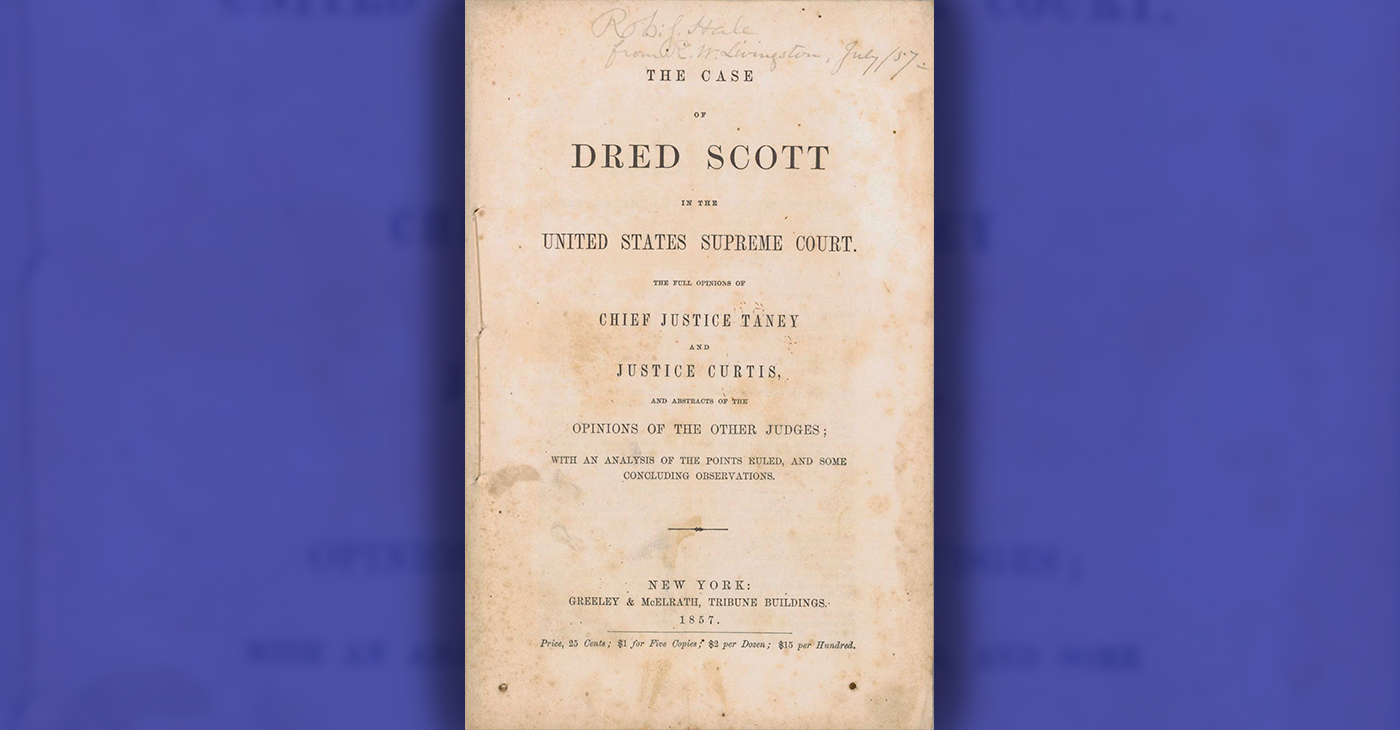
In 1857, the Supreme Court’s infamous Dred Scott decision declared that Black people — enslaved or free — could never be citizens of the United States.
By Emil Amok Guillermo
Donald Trump tried to deport Wong Kim Ark.
But the President was 128 years too late.
On the final day of its term, days before America marks its 250th anniversary, the Supreme Court reminded us who gets to call themselves an American.
It’s not determined by blood.
It’s determined by birth on American soil.
The Supreme Court rejected Trump’s attempt to end birthright citizenship by executive order. In doing so, he reaffirmed what the Supreme Court had already settled in 1898 in United States v. Wong Kim Ark.
The Court didn’t invent a constitutional right.
It refused to erase one.
If your mother’s feet were on American soil when you were born, you’re an American citizen.
You can’t defeat the feet.
That’s my story as a Filipino American.
THE HISTORY WE KEEP FORGETTING
America has a habit of forgetting the people who save it.
We remember the Gold Rush.
We forget the Chinese who built the railroads.
We remember César Chávez.
We forget Larry Itliong.
And now, when politicians tried to rewrite the Constitution, they forgot the Chinese American born in San Francisco who had already answered their question more than a century ago.
His name was Wong Kim Ark.
If you’ve never heard of him, don’t feel bad.
Asian Americans have spent generations as America’s footnotes.

Unless we’re nurses.
Then we’re indispensable.
Unless we’re applying to elite colleges.
Then we’re the problem.
Let’s also be fair.
Not everyone who opposes birthright citizenship is motivated by prejudice. Many sincerely argue the Fourteenth Amendment was written only to guarantee citizenship to formerly enslaved Black Americans and not to the children of immigrants.
That’s a constitutional argument.
It just happens to be the one that lost.
In 1898.
And again this week.
DRED SCOTT IS WHY THIS MATTERS
Here’s the history too many Americans skip.
Why was the Fourteenth Amendment written?
In 1857, the Supreme Court’s infamous Dred Scott decision declared that Black people — enslaved or free — could never be citizens of the United States.
Never.
The Civil War ended slavery.
But it took the Fourteenth Amendment to bury Dred Scott.
The Citizenship Clause wasn’t a loophole.
It wasn’t an accident.
That’s the history the Supreme Court relied on.
The Fourteenth Amendment first secured the citizenship of formerly enslaved Black Americans.
Then Wong Kim Ark established that the same constitutional promise belongs to every child born on American soil, regardless of race or ancestry.
Black freedom and Asian American citizenship are joined by the same sentence in the Constitution.
Different communities.
One constitutional promise.
OUR HERO
Wong Kim Ark was born in San Francisco in 1873.
Not born pending ICE approval.
Born.
His parents were Chinese immigrants legally living in California but barred by racist laws from becoming citizens themselves.
As a Filipino American, this debate isn’t abstract.
My mother was still legally an alien when I was born.
Her immigration status didn’t matter.
Where her feet stood did.
America.
That’s what made me a citizen.
Not ancestry.
Not bloodline.
Not race.
The Constitution.
Emil Guillermo is an award-winning journalist, news analyst, and comic monologist. He appears at the Winnipeg Fringe Festival, July 16–26, at Ace Art Gallery. Subscribe to his micro-talk show at YouTube.com/@emilamok1.

WORK FROM HOME
Home-based business with potential monthly income of $10K+ per month. A proven training system and website provided to maximize business effectiveness. Perfect job to earn side and primary income. Contact Lynne for more details: Lynne4npusa@gmail.com 800-334-0540


Oakland Post: Week of July 22 – 28, 2026

Fed Court to Decide Landmark First Amendment Case

Jordan Walker Leads Call for More Black Youth in Baseball

How Black WNBA Players Became Collateral Damage in the Caitlin Clark Culture War

NAACP Announces $20m Voter Registration Drive at National Convention in Chicago

Starting This Summer, California Car Buyers Can Get an Instant $3500 Off the Cost of Electric Vehicles

Surveillance Pricing Fight: State Senate Debates Bill Banning Retailers from Using AI to Set Prices Based on a Buyer’s Profile

Oakland Children’s Hospital Workers and Patients Rally for Pediatric Medical Care

Opinion: When Politicians Start Sanitizing One Chapter of History, They’re Coming After The Whole Book

Beyond Politics: California Legislators Across Party Lines Celebrate Lori Wilson at 50

NPRC to Meet with California Attorney General’s Office on to Urge Guardianship Reform

Mount Zion MBC, Church of Jesus Christ of Latter-day Saints Partner to Bring 29,000 Meals to Alameda County

Councilmember Houston Helps Deter Trend to Award Contracts to Suburban Companies

Rep. Garamendi, House Democrats Demand Trump Administration Abandon Illegal Plans to Dismantle Civil Rights, Special Ed Offices

Council Gives Approval for $125 Million Oakland Coliseum Sale to AASEG
Oakland Children’s Hospital Workers and Patients Rally for Pediatric Medical Care
Mount Zion MBC, Church of Jesus Christ of Latter-day Saints Partner to Bring 29,000 Meals to Alameda County
Surveillance Pricing Fight: State Senate Debates Bill Banning Retailers from Using AI to Set Prices Based on a Buyer’s Profile

IN MEMORIAM: Oakland Dance Legend Reginald Ray-Savage, 67

Saving Black Mothers Starts Outside the Hospital

Gov. Gavin Newsom Signs Law Streamlining Affordable Housing Rules

Oakland Celebrates $125 Million Coliseum Sale


NPRC Heads to Washington to Elevate Adult Guardianship Reform at National Whistleblower Summit
Starting This Summer, California Car Buyers Can Get an Instant $3500 Off the Cost of Electric Vehicles

The Part of Buying a Home That No Real Estate Show Ever Prepares You For

Agricultural Engineer Effie Gant Plans Bay Area Farmers Market Initiative

Oakland Post: Week of June 17 – 23, 2026

Oakland Post: Week of July 1 – 7, 2026

Ferry Fares to Increase July 1 as Ridership Hits Record Highs

The Conversation With Al McFarlane 6/23/26

Media Monday 6/22/26

LIVE! ASK ALMA! — TUES. 6.23.26 7PM EST

Car Buying Secrets: 4 Hidden Checks Before You Sign!

Is This 550 HP Charger Worth YOUR Money? AutoNetwork Review

Celebrating Juneteenth – Frederick Douglass on education and resistance

LIVE! — ASK ALMA! — TUES. 6.19.26 7PM EST

Hyundai Ioniq 5 Parking, Safety, and 360 View #shorts

2025 Ioniq 5 New Wiper & Powerful Performance! #shorts

Electric SUV Range: Is 259 Miles Enough? #shorts

EV Charging: How Fast Can You Charge an Electric Vehicle? #shorts

Biometric Cooling… Messaging Seats…Come on! 2025 Infiniti QX80 Autograph 4WD

Charged Up: Witness the Magic of a Fully Electric Car! #shorts

Range Rover Sport PHEV Included…: See What’s Inside This Luxury SUV! #shorts

Invisible Hood View: Perfect Parking with X-Ray Vision! #shorts
-
 Business1 day ago
Oakland Children’s Hospital Workers and Patients Rally for Pediatric Medical Care
-
 Business1 day ago
Mount Zion MBC, Church of Jesus Christ of Latter-day Saints Partner to Bring 29,000 Meals to Alameda County
-
 Business1 day ago
Surveillance Pricing Fight: State Senate Debates Bill Banning Retailers from Using AI to Set Prices Based on a Buyer’s Profile
-
 Black History5 days ago
Saving Black Mothers Starts Outside the Hospital
-
 Business3 days ago
Gov. Gavin Newsom Signs Law Streamlining Affordable Housing Rules
-
 Black History1 week ago
Oakland Celebrates $125 Million Coliseum Sale
-
 Community1 week ago
NPRC Heads to Washington to Elevate Adult Guardianship Reform at National Whistleblower Summit
-
 Business1 day ago
Starting This Summer, California Car Buyers Can Get an Instant $3500 Off the Cost of Electric Vehicles
