
News
Thad Spencer, former No. 1 heavyweight boxer, dies at 70

A former No. 1 contender for the heavyweight championship, Thad Spencer’s boxing career became a cautionary tale that he frequently opened up about to keep others from following a similar path.
Spencer died in his sleep on Dec. 13 in Vallejo, Calif., where he lived with his son for more than six years since beginning to suffer from dementia. He was 70.
Thad Spencer Jr. was born on March 28, 1943, in Tuscaloosa, Ala., the third of 12 children born to Thad Sr. and Marie Spencer. He was 3 months old when his father’s job brought the family to Portland.
Growing up with meager means in the Woodlawn neighborhood of Northeast Portland, Spencer began boxing at the Knott Street Gym, now known as the Matt Dishman Community Center and Pool.
He spent one year at Roosevelt High School and one year at Jefferson High School before dropping out and focusing on his fighting career. At 16, Spencer captured the Pacific Northwest Golden Gloves championship in Seattle and seemed to be on a straight path to compete for the United States at the 1960 Summer Olympics in Rome.
But at only 17, Spencer had two children on the way with two women. His amateur career and Olympic aspirations took a backseat to monetary needs and he made the decision to turn pro.
“In the Olympics, you have the head-gear. You have better trainers and better coaches,” said Kenny Spencer, his younger brother. “He took a lot of hard knocks that he probably would not have taken (otherwise).”
Although Spencer’s professional career began sooner than intended, his talent soon took him to the top of the sport. He amassed a record of 30-5 by the time Muhammad Ali was stripped of his heavyweight championship for his refusal to join the U.S. military after being drafted to serve in Vietnam.
Spencer, ranked as a top contender by the World Boxing Association, was then entered into an elimination tournament to determine the WBA heavyweight champion. In the tournament’s first bout, Spencer defeated former champion Ernie Terrell by unanimous decision at the Houston Astrodome.
Three months later, in November 1967, Spencer graced the cover of Ring Magazine, with the headline above asking, “Can Spencer match Frazier’s KO punch?” in reference to then-top contender and eventual heavyweight champion “Smokin'” Joe Frazier.
But the Terrell victory was to be Spencer’s last. In the lead up to the fight against his next tournament opponent, Jerry Quarry, Spencer was charged with a DUI in Oakland. It was a dire sign that he was not taking his training seriously.
“Thad used to joke about how he’d leave (training) and say he was going for a run,” said Kevin Spencer, his other living brother. “He’d go party, then throw water on himself (before coming back).
“He just thought that his talents would overcome not training, drinking and doing drugs.”
Spencer lost to Quarry via 12th round TKO in Oakland on March 2, 1968, and never won another professional fight. Spencer lost eight of his final nine bouts, with the other result draw.
By 1971, at 28, his career was over. The life of the man who once seemed destined for a title shot with the legendary Ali, took a dark turn. Alcohol and drugs, specifically cocaine, soon consumed him.
“I became a coke head because I thought that was what rich people did,” Spencer said in a 1994 profile in The Oregonian.
In 1975, Spencer was shot five times by an associate and the associate’s girlfriend while at a bar in Portland. He was then passed a gun, which he used to shoot and kill his attacker in self-defense. A month later in Oakland, Spencer was shot in the leg during a shooting in a bar. And later that year, back in Portland with a cast on his leg, he was run over by a car after another altercation. thadspencer-ali.jpgView full sizeThad Spencer, left, never got to fight Muhammad Ali, right, since Ali was stripped of his heavyweight title for his refusal to serve in the U.S. military. Ali attended an event in 1993 for Spencer’s 50th birthday.Photo courtesy of Global Sports Entertainment & Development
But despite Spencer’s miraculous survival through three near-death experiences, it was not until he saw Todd, his oldest son, on television playing fullback at USC in 1982 that he made the decision to get clean.
When a bartender asked if Todd Spencer was his son, Thad denied it. Not long after, commentator O.J. Simpson said of Todd, “You might remember his father, Thad Spencer, who back in the ’60s was a top heavyweight contender,” according to the 1994 piece in The Oregonian.
The embarrassment of that moment persuaded Spencer to quit cocaine and rekindle his relationship with his children. Lance Spencer, Todd’s younger brother, soon came to live his father in Northeast Portland, often going on one- to three-hour walks with him to help him kick his addiction.
“That was how we formed our relationship,” Lance Spencer said. “(My mother) always planted a good seed (about him).
“It was an open flower. It just needed to be watered.”
Although his boxing career ended in addiction, Spencer stayed close to the sport late in life. He started multiple promotion companies, splitting his time between Portland northern California and following big fights wherever they took place. He was an annual guest of honor at Golden Gloves events hosted by the Grand Avenue Boxing Club in Portland.

Thad Spencer, left, never got to fight Muhammad Ali, right, since Ali was stripped of his heavyweight title for his refusal to serve in the U.S. military. Ali attended an event in 1993 for Spencer’s 50th birthday.Photo courtesy of Global Sports Entertainment & Development.
“He enjoyed sharing his knowledge of boxing with young people and trying to help them … not take the same path that he did,” Kevin Spencer said. “Spiritually, he was always in a great place because he always had this dream that something great was going to materialize.”
By the mid-2000s, dementia began to set in and Spencer moved to Vallejo with his son Lance.
“He enjoyed his life and his experiences that he had,” Kenny Spencer said. “I think the only regrets that he probably had were that he got mixed up in some things that were detrimental to him and the people that he loved.”
Thad Spencer is survived by his mother, Marie Spencer; brothers, Kenny and Kevin; sisters Loretta Ganter, Cynthia Lovell, Maudine Smith and Gerry Orr; children Tamara, Todd, Lance, Mister, Taron, Joseph, Carmen Andria Jones; step-children Duran Beasley and Lisa Beasley; 16 grandchildren and one great-grandson.
Funeral services will be held at 11 a.m. Saturday at Word Assembly Church, 9507 MacArthur Blvd., Oakland, Calif. Remembrances and well wishes can be sent to McNary-Morgan-Greene & Jackson Mortuary, 3630 Telegraph Ave., Oakland, Calif.










Activism
Oakland Post: Week of September 9 – 15, 2026
The printed Weekly Edition of the Oakland Post: Week of September 9 – 15, 2026
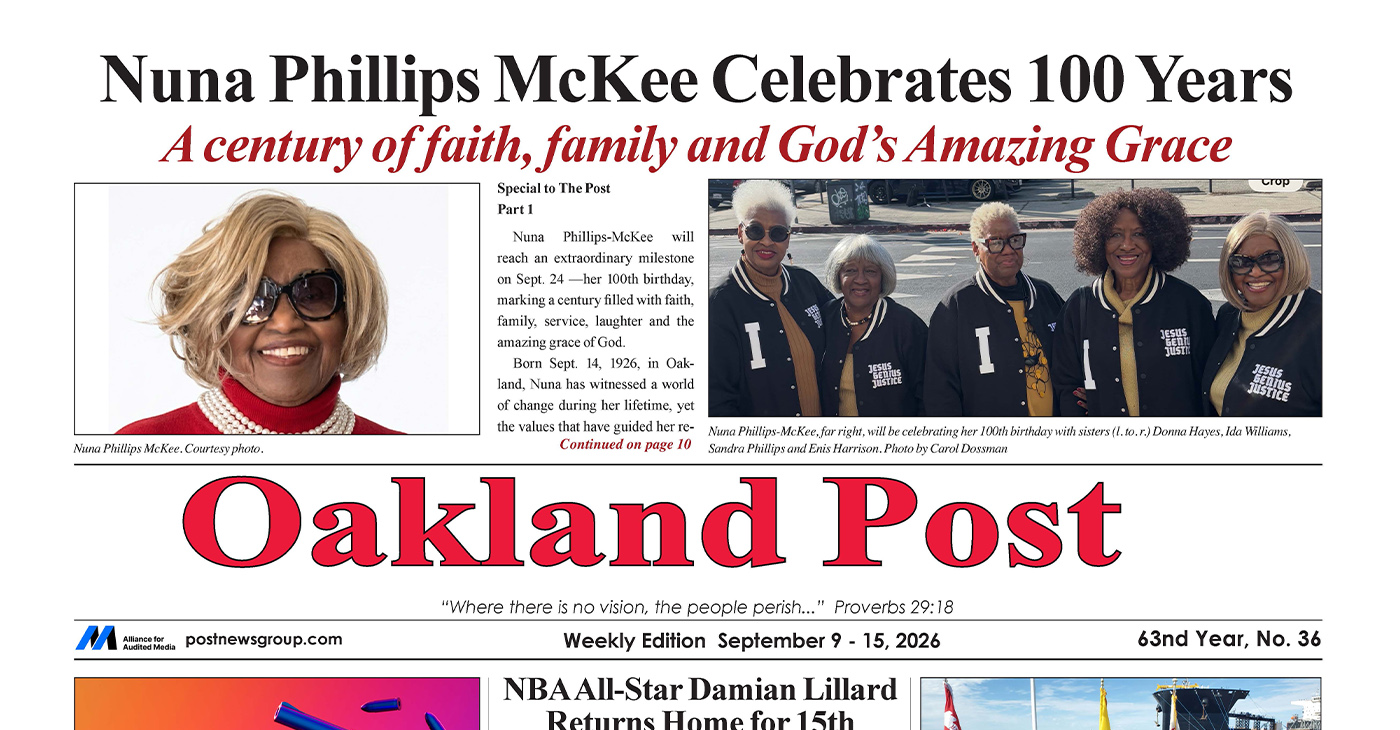
To enlarge your view of this issue, use the slider, magnifying glass icon or full page icon in the lower right corner of the browser window.
Activism
Oakland Post: Week of September 2 – 8, 2026
The printed Weekly Edition of the Oakland Post: Week of September 2 – 8, 2026
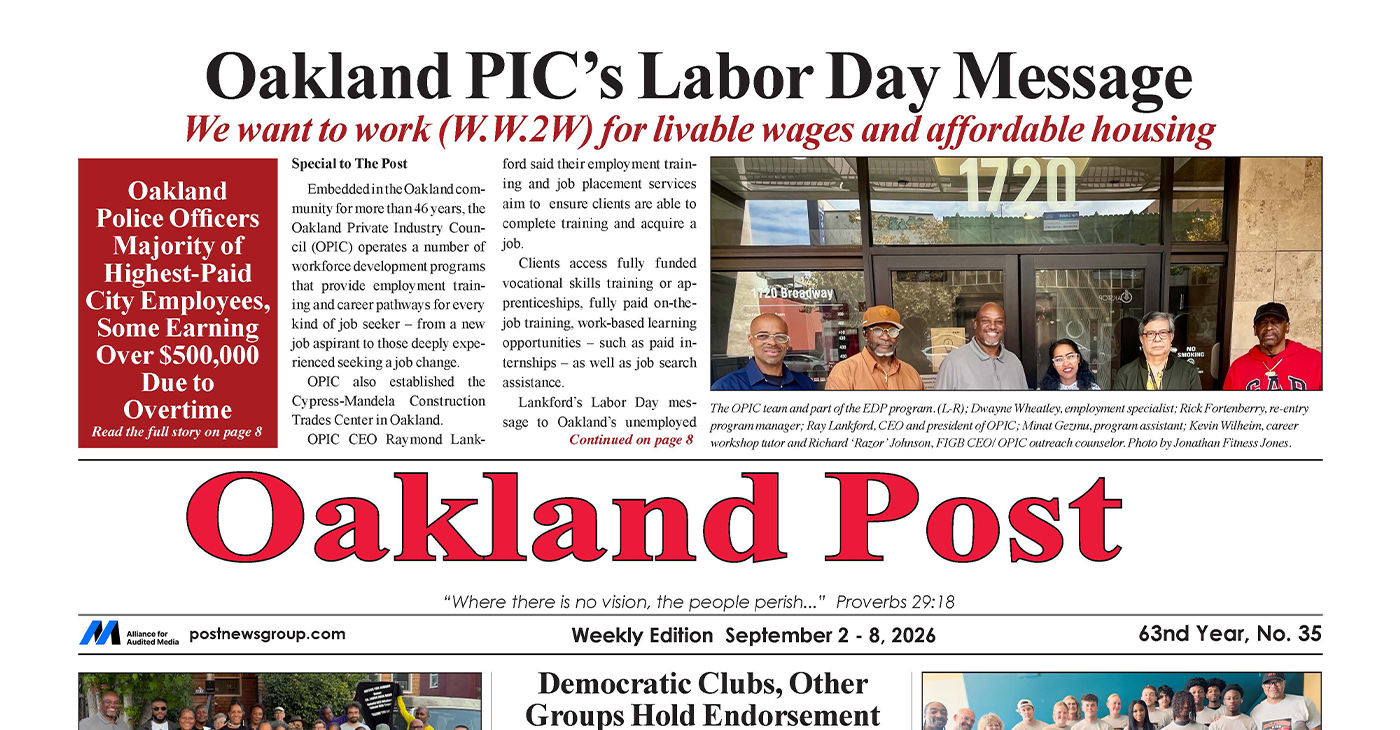
To enlarge your view of this issue, use the slider, magnifying glass icon or full page icon in the lower right corner of the browser window.
#NNPA BlackPress
Youth-Led Black August Event Brings Past to Present at East Oakland Boxing Association
The mission of Youth Alive! Is to “break the cycle of violence, heal trauma, and uplift a thriving community of leaders, to save lives in Oakland and beyond” by serving “as mentors, youth leaders, counselors, case managers, intervention specialists and violence interrupters,” working “to help violently wounded people heal themselves and their community.”
The post The mission of Youth Alive! Is to “break the cycle of violence, heal trauma, and uplift a thriving community of leaders, to save lives in Oakland and beyond” by serving “as mentors, youth leaders, counselors, case managers, intervention specialists and violence interrupters,” working “to help violently wounded people heal themselves and their community.” appeared first on BlackPressUSA.
Youth-Led Black August Event Brings Past to Present at East Oakland Boxing Association
The East Oakland Boxing Association (EOBA) and Youth Alive! came together on Aug. 21 to share with their community all that Black August means to them.
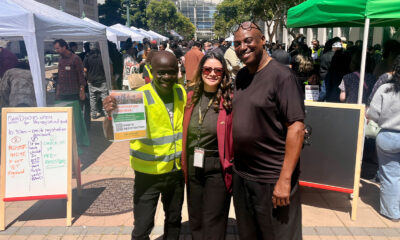
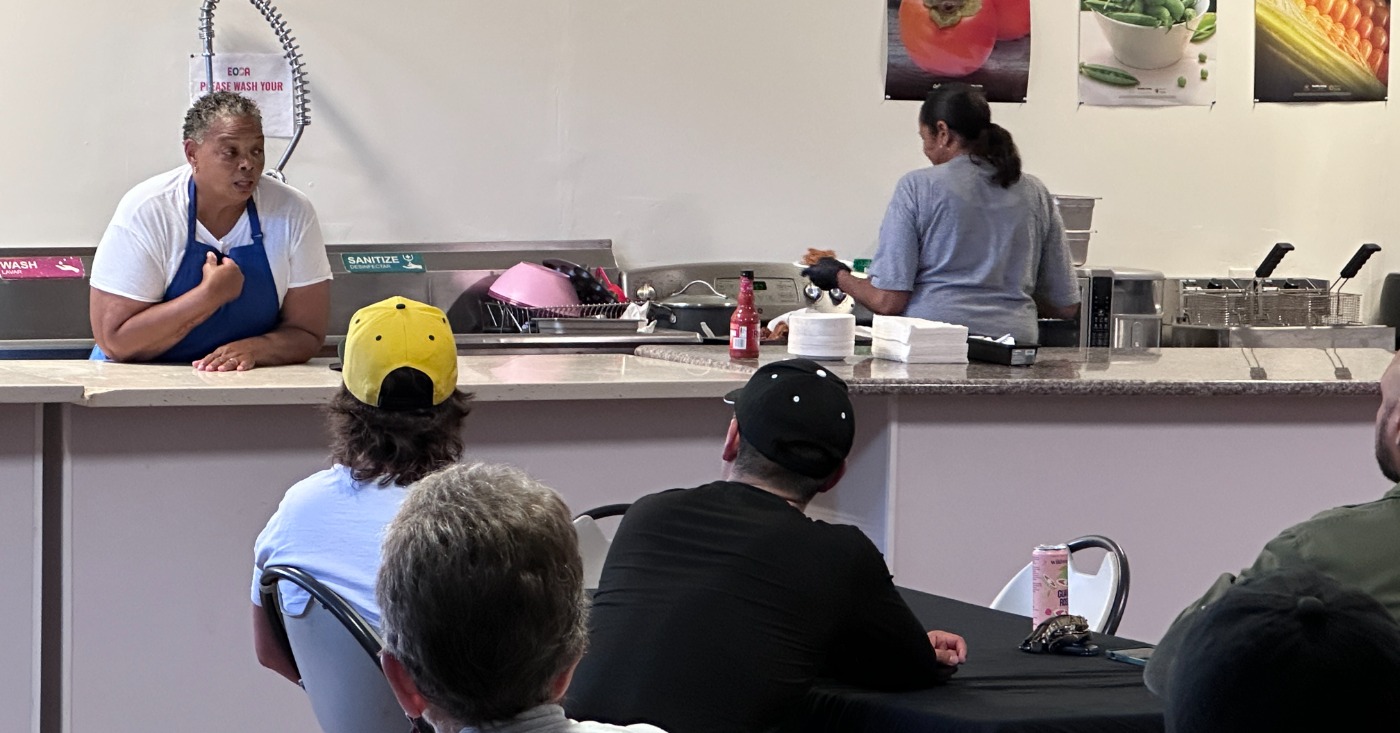
Held on EOBA’s patio at 816 98th Ave. in Deep East Oakland, the two organizations hosted their second annual Black August Experience, featuring a food tasting, financial literacy and mindfulness workshops, and voter registration with the League of Women Voters Oakland (LWV).
Black August is known as a time to uphold the legacy of prisoners who protested their conditions by fasting, fighting, and educating themselves on the economic and political circumstances that contributed to their incarceration.
According to its website, “EOBA is a multi-service youth and community development hub that goes far beyond the ring. While rooted in the discipline of boxing, for nearly 40 years EOBA has also integrated robust programs in workforce development, food justice, afterschool enrichment, financial literacy, mentorship, and wellness.”.

The mission of Youth Alive! Is to “break the cycle of violence, heal trauma, and uplift a thriving community of leaders, to save lives in Oakland and beyond” by serving “as mentors, youth leaders, counselors, case managers, intervention specialists and violence interrupters,” working “to help violently wounded people heal themselves and their community.”
Through Coro California, another leadership organization serving young people across the state for 80 years, they gained a broader understanding of Black August.
EOBA Executive Director Dawna Williams spoke about how much she learned about Black August from the youth who created it. “I let them educate me,” she said. Instead of talking about prison reform and mass incarceration, Williams and youth interns found that Black August meant so much more. “We would have done a disservice if we had just focused on who the people were and what their situation was…We tried to take their message from back in the day and make it relevant to the young people today. What do they need to know?”
Youth interns created and placed posters around the patio to help participants understand how traditional Black foodways, civic engagement, financial literacy, and the power of education are relevant to Black resistance today.
An EOBA member described Black August with Youth ALIVE! as “a whole vibe. “This year we added the Fun Zone for the kids, because you really cannot go wrong with a Fun Zone. I also loved seeing everyone chillin’ in the outdoor lounge, catching some Vitamin D and just enjoying a Friday evening together.”
The food tasting, a popular event from last year, featured traditional Black foods such as black-eyed peas, johnny cakes, and fried chicken. Led by Williams, the tasting included a talk about how these traditional foods were made and why they are forms of Black resilience.
The “‘Plate of History’ was a favorite of the online writers. “Fun, educational, and did I mention delicious? Our Taste of History cook, Angela Southall, served up some good eats while connecting food to history and culture.”
The writer also commended the “League of Women Voters Oakland for their civic leadership and for getting our young people informed, ready, and registered to vote.”
Overall, it was a “good Friday event in East Oakland,” the writer said.
Upcoming Black August events: Building Opportunities for Self-Sufficiency (BOSS), will host “Black August: The Arc of Liberation” at Oakland City Hall on Sat. Aug. 29, from 11 a.m. to 3 p.m.
The websites for East Oakland Boxing Association, Youth Alive! and CORO are sources for this report.
Jana Lang is an Oakland resident, teacher, gardener and poet participating in the Propel News Initiative.
The post The mission of Youth Alive! Is to “break the cycle of violence, heal trauma, and uplift a thriving community of leaders, to save lives in Oakland and beyond” by serving “as mentors, youth leaders, counselors, case managers, intervention specialists and violence interrupters,” working “to help violently wounded people heal themselves and their community.” appeared first on BlackPressUSA.


Port of Oakland, Army Corps Sign Historic Harbor Design Agreement

Democratic Clubs Interview Candidates for Oakland School Board

Nuna Phillips-McKee Celebrates 100 Years: ‘A Century of Faith, Family and God’s Amazing Grace!’

D.A. Ursula Jones Dickson: Terminix to Pay $3.15 Million Over Illegal Disposal of Pesticides, Customer Records

REPORT: Community Level Policy Is Impacting Homelessness and Drug Abuse in California

OPINION: AI Needs to Know Who Is the Boss
Goldi-Locs and Two (or Three) Bears in the Forest in California Hills

Election Watch 2026: 85% of Eligible Voters in California Are Registered

Don’t Let scammers Crash Your School Year

BOOK REVIEW — Curved Air: A Biography of Sickle Cell Anemia and the Quest to Cure the First Molecular Disease

California’s Legal Cannabis Market Hits $8 Billion as State Touts Progress on Fighting Drugs, Crime

Blacks and Latinos Clash Over LA’s Barrio Run; Mayor Karen Bass Calls for Dialogue Across Racial, Neighborhood Lines

Asm. Smallwood-Cuevas’s Bill Repealing ‘Racist’ CalWORKs ‘Man-in-the-House’ Rule Clears Legislature

Asm. Smallwood-Cuevas’s Bill Repealing ‘Racist’ CalWORKs ‘Man-in-the-House’ Rule Clears Legislature

‘Ready to See These Bills Become Law’: Sen. Weber’s Package of 15 Bills Advance to Gov. Newsom’s Desk

Department of Homeland Security Demands California Secretary of State Shirley N. Weber Scrub Voter Rolls

“The Power to See Threats Sooner”: Gov. Newsom, Safety Officials Showcase California’s Investments in Hi-Tech Wildfire Prevention

California Sen. Padilla Joins Colleagues to Introduce Bill Imposing Term Limits on Supreme Court Justices

Less Affluent School Districts, Including Sacramento City, Face Threat of State Takeover

Car Wash Workers Cope with Lingering Impacts of ICE Raids

ESSAY: California Can Close Its Colorectal Cancer Gap

Oakland Post: Week of August 5 – 11, 2026

As Part of Your Back-to- School Checklist, Vaccinate

Oakland ‘Port Serves as a Powerful Engine for Good Jobs and Economic Development

Gov. Newsom Announces $109.6 Million in Funding for 278 Supportive Homes in Bakersfield, Contra Costa, Sacramento and Fresno

California Hispanic Chambers of Commerce Unveils: ‘Powering the Future’ Theme for 47th Annual Statewide Convention

Closing the Gap: What the Data and Frontline Experiences Reveal About Cancer in Black California

Congresswoman Simon Demands Investigation into Trump’s Abuse of Emergency Powers for Coal Export Terminal in West Oakland

Four Candidates, Including Incumbent Barbara Lee, Qualify for Oakland Mayor’s Race

Oakland Post: Week of August 12 – 18, 2026

The Conversation With Al McFarlane 6/23/26

Media Monday 6/22/26

LIVE! ASK ALMA! — TUES. 6.23.26 7PM EST

Car Buying Secrets: 4 Hidden Checks Before You Sign!

Is This 550 HP Charger Worth YOUR Money? AutoNetwork Review

Celebrating Juneteenth – Frederick Douglass on education and resistance

LIVE! — ASK ALMA! — TUES. 6.19.26 7PM EST

Hyundai Ioniq 5 Parking, Safety, and 360 View #shorts

2025 Ioniq 5 New Wiper & Powerful Performance! #shorts

Electric SUV Range: Is 259 Miles Enough? #shorts

EV Charging: How Fast Can You Charge an Electric Vehicle? #shorts

Biometric Cooling… Messaging Seats…Come on! 2025 Infiniti QX80 Autograph 4WD

Charged Up: Witness the Magic of a Fully Electric Car! #shorts

Range Rover Sport PHEV Included…: See What’s Inside This Luxury SUV! #shorts

Invisible Hood View: Perfect Parking with X-Ray Vision! #shorts
-

 Commentary3 weeks ago
Standoff for Justice: Our Homes Are Worth Fighting For
-

 Activism3 weeks ago
Oakland Post: Week of August 26 – September 1, 2026
-

 Business3 weeks ago
Gubernatorial Candidate Steve Hilton Blasts California New Tire Rules; Newsom Hits Back
-

 Business3 weeks ago
Frontier Airlines’ Return to Oakland Airport Brings Flights, Jobs and Opportunity
-

 Business3 weeks ago
Chef Sharon Lee Blends Culinary Excellence, Education and Empowerment
-

 Education3 weeks ago
Gov. Newsom’s Latest Appointees Include Sacramento Advocate for Formerly Incarcerated Students; State’s New Tech Chief
-

 Business3 weeks ago
Oakland Coliseum Project Opens Door for Small Businesses to Build Bigger
-

 Community3 weeks ago
Big City Mayors Ask for “Yes” Vote on Housing Bond Measure; Conservatives Say “No”
