
Activism
Supporters of “Involuntary Servitude” Bill Calif. Senate Rejected Vow to Bring It Back
Three states have voted to abolish slavery and involuntary servitude — Colorado, Utah, and Nebraska — and in all three cases, the initiative was bipartisan and placed on the ballot by a unanimous vote of legislators, according to Max Parthas, the co-director of the Abolish Slavery National Network (ASNN).

By Antonio Ray Harvey, California Black Media
Activists supporting legislation that would have ended involuntary servitude in California prisons and eliminate the word “slavery” from California’s Constitution say they may have lost a battle, but they will not back down until their goals are achieved.
Late last month, the State Senate failed to pass Assembly Constitutional Amendment (ACA) 3, the California Abolition Act. If the Legislature had approved the measure, it would have been placed on the November General Election ballot for voter approval.
For now, California will remain one of nine states in the country that permit involuntary servitude as a criminal punishment.
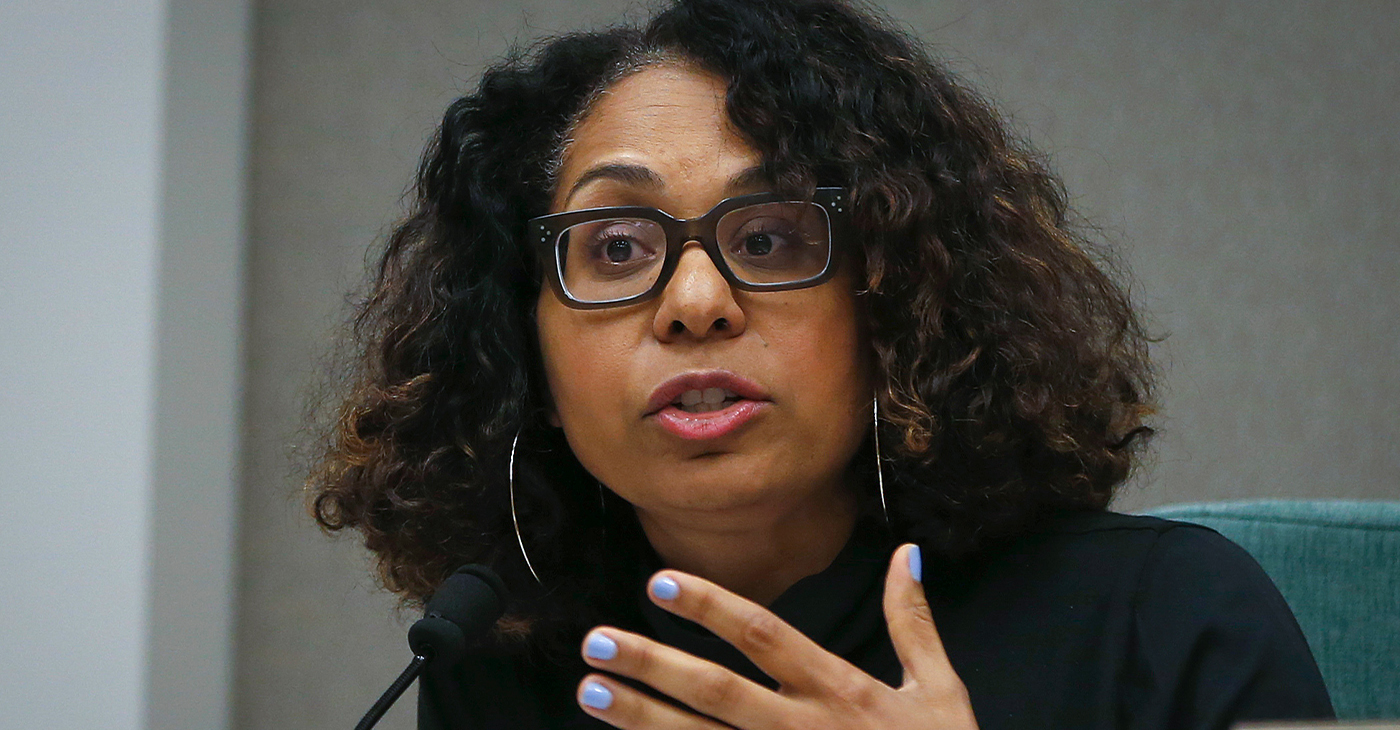
ACA 3 needed two-thirds of the Senate vote by June 30,2022. Sen. Sydney Kamlager (D-Los Angeles), who authored ACA 3 in 2021 while serving in the Assembly, stated that the removal of the word slavery from the California constitution would have been a “substantive step toward safeguarding” the future from “the worst practice of our past.”
“Yesterday, ACA 3 failed to be heard. It did not have the 27 (votes) needed to pass off the floor,” Kamlager said in a July 1 statement. “States across the country are embarking on this journey to remove hateful and historically painful language and practices from their constitution. Until yesterday, so was California.”
The 13th Amendment of the United States Constitution, ratified in 1865, prohibits slavery and involuntary servitude with one exception: if involuntary servitude was imposed as punishment for a crime.
Article I, section 6, of the California Constitution, describes the exact prohibitions on slavery and involuntary servitude and the same exception for involuntary servitude as punishment for crime.
Three states have voted to abolish slavery and involuntary servitude — Colorado, Utah, and Nebraska — and in all three cases, the initiative was bipartisan and placed on the ballot by a unanimous vote of legislators, according to Max Parthas, the co-director of the Abolish Slavery National Network (ASNN).
Kamlager said involuntary servitude “is a euphemism for forced labor” and the language should be removed entirely from the state’s constitution. On June 23, the state Senate rejected the amendment to ban the language with a 21-6 vote. Without the input of 13 Senators that did not cast a vote, ACA 3 was seven ballots shy of passage.
“The CA State Senate just reaffirmed its commitment to keeping slavery and involuntary servitude in the state’s constitution,” Kamlager tweeted after the measure failed to pass.
The Legislature is now on summer recess until the first week of August.
Steve Glazer (D-Orinda), the lone Democrat that voted against the amendment on June 23, inferred that ACA 3 raises the question of “whether or not California should require felons in state or local jails prisons to work.” He brought forth the notion based on information he received from the state’s Department of Finance (DOF).
The DOF estimated that the amendment would burden California taxpayers with $1.5 billion annually in wages to prisoners, DOF analyst Aaron Edwards told the Senate Appropriations Committee on June 16.
Samuel Nathaniel Brown, a member of the Anti-Violence Safety and Accountability Project (ASAP), an organization that advocates for prisoners’ rights, said the Senate “messed up” when it failed to remove the language from California’s Constitution.
Brown helped author ACA 3 while he was in prison. He was released in December 2021 after serving a 24-year sentence.
“The people in California want to end slavery now. Two Senators took it upon themselves to deny the people an opportunity to vote on ACA3 and many people are disappointed and upset,” Brown said. “We will now return more educated, agitated, concentrated, and dedicated. We will eradicate the overt vestiges of white supremacy that taint our constitution, weaken our system of rehabilitation, and undermine public safety.”
ACA 3 is connected to the Task Force to Study and Develop Reparation Proposals for African Americans’ Interim Report that was submitted to the California Legislature on June 1.
The report examines the ongoing and compounding harms experienced by African Americans as a result of slavery and its lingering effects on American society today. It also provides a remedy to those harms, including its support for ACA 3.
“This effort was uniquely personal to me,” Kamlager stated. “I will continue to fight to speak the truth about our history so that we can learn from it and be better. That is democracy.”













Activism
Oakland Post: Week of September 23 – 29, 2026
The printed Weekly Edition of the Oakland Post: Week of September 23 – 29, 2026

To enlarge your view of this issue, use the slider, magnifying glass icon or full page icon in the lower right corner of the browser window.
Activism
Oakland Post: Week of September 16 – 22, 2026
The printed Weekly Edition of the Oakland Post: Week of September 16 – 22, 2026

To enlarge your view of this issue, use the slider, magnifying glass icon or full page icon in the lower right corner of the browser window.
Activism
Oakland Post: Week of September 9 – 15, 2026
The printed Weekly Edition of the Oakland Post: Week of September 9 – 15, 2026

To enlarge your view of this issue, use the slider, magnifying glass icon or full page icon in the lower right corner of the browser window.


Asm. Corey Jackson Announces Launch of 24-Hour Childcare in His District

IN MEMORIAM: The Rev. Leon “Sonny” Clark, Longtime Orange County Pastor and Community Leader, Dies at 72

Poll: Becerra Widens His Lead Over Hilton; Californians Split on Wealth Tax

From Historic Memories to New Possibilities: Oakland Celebrates Coliseum 60

County Office of Education Says OUSD Finances Are Getting Healthier, Materially Stronger

LIVE FREE Sunday Dinner Brings Faith, Fellowship and Civic Conversation to Oakland

Remembering Chauncey Bailey as Student Journalists Face Threats to Truth-Telling

BLACspace Cooperative Invites Bay Area to Experience Oakland’s Black Cultural Ecosystem Through a BLAC Map Tour + Party

In Wake of Death on Doorstep, Williams Chapel Baptist Church Calls for Better Care, Funding for Unhoused

Oakland Centenarian Nuna McKee Honored!

Caribbean Nations Produce Action Plan Calling for UK Reparations Over Slavery

Oakland Post: Week of September 23 – 29, 2026

Doulas Are Helping Black California Moms Navigate Pregnancy–Even as High Mortality Rates Persist

Newsom Signs Addictive Social Media Law to Protect Kids

On Your November Ballot: Prop 38 Would Allocate $8.4 Billion to Immunology and Immunotherapy Funding

Less Affluent School Districts, Including Sacramento City, Face Threat of State Takeover

ESSAY: California Can Close Its Colorectal Cancer Gap

California Hispanic Chambers of Commerce Unveils: ‘Powering the Future’ Theme for 47th Annual Statewide Convention

Four Candidates, Including Incumbent Barbara Lee, Qualify for Oakland Mayor’s Race

Oakland Post: Week of August 12 – 18, 2026

From Blueprint to Breakthrough: Tackling Affordable Housing in Oakland

Oakland Observes Black August with Block Parties, Film Showings, Workshops

COMMENTARY: Why Local School Tax Measure G1 Will Not Be on the November Ballot

Standoff for Justice: Our Homes Are Worth Fighting For

Returning to Its Roots, the Oakland Black-Eyed Pea Festival Partners with the Freedom Farmers Market Sept. 12

Oakland Post: Week of August 26 – September 1, 2026

NPRC Scores First Advocacy Victory: David Shaw Finally Gets His Wish to ‘Go Home’

Frontier Airlines’ Return to Oakland Airport Brings Flights, Jobs and Opportunity

Gubernatorial Candidate Steve Hilton Blasts California New Tire Rules; Newsom Hits Back

Chef Sharon Lee Blends Culinary Excellence, Education and Empowerment

The Conversation With Al McFarlane 6/23/26

Media Monday 6/22/26

LIVE! ASK ALMA! — TUES. 6.23.26 7PM EST

Car Buying Secrets: 4 Hidden Checks Before You Sign!

Is This 550 HP Charger Worth YOUR Money? AutoNetwork Review

Celebrating Juneteenth – Frederick Douglass on education and resistance

LIVE! — ASK ALMA! — TUES. 6.19.26 7PM EST

Hyundai Ioniq 5 Parking, Safety, and 360 View #shorts

2025 Ioniq 5 New Wiper & Powerful Performance! #shorts

Electric SUV Range: Is 259 Miles Enough? #shorts

EV Charging: How Fast Can You Charge an Electric Vehicle? #shorts

Biometric Cooling… Messaging Seats…Come on! 2025 Infiniti QX80 Autograph 4WD

Charged Up: Witness the Magic of a Fully Electric Car! #shorts

Range Rover Sport PHEV Included…: See What’s Inside This Luxury SUV! #shorts

Invisible Hood View: Perfect Parking with X-Ray Vision! #shorts
-
 Commentary4 weeks ago
Standoff for Justice: Our Homes Are Worth Fighting For
-
 Activism4 weeks ago
Oakland Post: Week of August 26 – September 1, 2026
-
 Business4 weeks ago
Frontier Airlines’ Return to Oakland Airport Brings Flights, Jobs and Opportunity
-
 Business4 weeks ago
Gubernatorial Candidate Steve Hilton Blasts California New Tire Rules; Newsom Hits Back
-
 Business4 weeks ago
Chef Sharon Lee Blends Culinary Excellence, Education and Empowerment
-

 Community4 weeks ago
Big City Mayors Ask for “Yes” Vote on Housing Bond Measure; Conservatives Say “No”
-

 Black History4 weeks ago
Jackie Wright Champions Bay Area Stories, Filmmakers and Cultural Institutions
-

 Education4 weeks ago
Gov. Newsom’s Latest Appointees Include Sacramento Advocate for Formerly Incarcerated Students; State’s New Tech Chief
