
Advice
Support Your Child’s Mental Health: Medi-Cal Covers Therapy, Medication, and More


Advertorial
When children struggle emotionally, it can affect every part of their lives — at home, in school, with friends, and even their physical health. In many Black families, we’re taught to be strong and push through. But our kids don’t have to struggle alone. Medi-Cal provides mental health care for children and youth, with no referral or diagnosis required.
Through California Advancing and Innovating Medi-Cal (CalAIM), the state is transforming how care is delivered. Services are now easier to access and better connected across mental health, physical health, and family support systems. CalAIM brings care into schools, homes, and communities, removing barriers and helping children get support early, before challenges escalate.
Help is Available, and it’s Covered
Under Medi-Cal, every child and teen under age 19 has the right to mental health care. This includes screenings, therapy, medication support, crisis stabilization, and help coordinating services. Parents, caregivers, and children age 12 or older can request a screening at any time, with no diagnosis or referral required.
Medi-Cal’s Mental Health and Substance Use Disorder Program
For children and youth with more serious mental health needs, including those in foster care or involved in the justice system, Medi-Cal offers expanded support, including:
- Family-centered and community-based therapy to address trauma, behavior challenges, or system involvement.
- Wraparound care teams that help keep children safely at home or with relatives.
- Activity funds that support healing through sports, art, music, and therapeutic camps.
- Initial joint behavioral health visits, where a mental health provider and child welfare worker meet with the family early in a case.
- Child welfare liaisons in Medi-Cal health plans who help caregivers and social workers get services for children faster
Keeping Kids Safe from Opioids and Harmful Drugs
DHCS is also working to keep young people safe as California faces rising risks from opioids and counterfeit pills. Programs like Elevate Youth California and Friday Night Live give teens mentorship, leadership opportunities, and positive outlets that strengthen mental well-being.
Through the California Youth Opioid Response, families can learn how to avoid dangerous substances and get treatment when needed. Song for Charlie provides parents and teens with facts and tools to talk honestly about mental health and counterfeit pills.
DHCS also supports groups like Young People in Recovery, which helps youth build skills for long-term healing, and the Youth Peer Mentor Program, which trains teens with lived experience to support others. These efforts are part of California’s strategy to protect young people, prevent overdoses, and help them make healthier choices.
Support for Parents and Caregivers
Children thrive when their caregivers are supported. Through CalAIM’s vision of whole-person care, Medi-Cal now covers dyadic services, visits where a child and caregiver meet together with a provider to strengthen bonding, manage stress, and address behavior challenges.
These visits may include screening the caregiver for depression or anxiety and connecting them to food, housing, or other health-related social needs, aligning with CalAIM’s Community Supports framework. Notably, only the child must be enrolled in Medi-Cal to receive dyadic care.
Family therapy is also covered and can take place in clinics, schools, homes, or via telehealth, reflecting CalAIM’s commitment to flexible, community-based care delivery.
Additionally, BrightLife Kids offers free tools, resources, and virtual coaching for caregivers and children ages 0–12. Families can sign up online or through the BrightLife Kids app. No insurance, diagnosis, or referral is required.
For teens and young adults ages 13–25, California offers Soluna, a free mental health app where young people can chat with coaches, learn coping skills, journal, or join supportive community circles. Soluna is free, confidential, available in app stores, and does not require insurance.
CalHOPE also provides free emotional support to all Californians through a 24/7 support line at (833) 317-HOPE (4673), online chat, and culturally responsive resources.
Support at School — Where Kids Already Are
Schools are often the first place where emotional stress is noticed. Through the Children and Youth Behavioral Health Initiative (CYBHI), public schools, community colleges, and universities can offer therapy, counseling, crisis support, and referrals at no cost to families.
Services are available during school breaks and delivered on campus, by phone or video, or at community sites. There are no copayments, deductibles, or bills.
Medi-Cal Still Covers Everyday Care
Medi-Cal continues to cover everyday mental health care, including therapy for stress, anxiety, depression, or trauma; medication support; crisis stabilization; hospital care when needed; and referrals to community programs through county mental health plans and Medi-Cal health plans.
How to Get Help
- Talk to your child’s teacher, school counselor, or doctor.
- In Alameda County call 510-272-3663 or the toll-free number 1-800-698-1118 and in San Francisco call 855-355-5757 to contact your county mental health plan to request an assessment or services.
- If your child is not enrolled in Medi-Cal, you can apply at com or my.medi-cal.ca.gov.
- In a mental health emergency, call or text 988, the Suicide and Crisis Lifeline.
Every child deserves to grow up healthy and supported. Medi-Cal is working to transform care so it’s accessible, equitable, and responsive to the needs of every family.


Activism
Six Months in, Probate Reform Coalition Marks Progress in Protecting Elders From Financial Abuse
Despite the cited obstacles, NPRC has made some promising inroads towards their mission. NPRC has identified that nationwide the Attorneys General must be engaged and encouraged to implement oversight, protection and enforcement of the law; members find support from each other as they advocate for redress via “letters of compassion” sent to judges, nursing facilities and law enforcement agencies and members are instructed on their rights, how to take constructive action to protect those rights through access to resources that allow them to intelligently represent themselves in court.

By Tanya Dennis
The National Probate Reform Coalition, a loose-knit national coalition of advocates, victims, and families dedicated to protecting elder rights, especially within the probate court system, was formed by the Post Newspaper Group (PNG) after more than a decade of reporting on the mistreatment of elders and the plunder of their estates.
In response, PNG Publisher Paul Cobb set in motion a series of monthly town halls to address the problem and propose workable solutions, designating it a “year of action.”
At six months, the coalition has attracted families, advocates, and experts across the nation whose strategies have proven effective in their respective states, and who are moving forward collectively with the mission of engaging judicial, legislative, and enforcement agencies to ensure elders are not exploited or abused.
“The issue of elder abuse is multi-layered”, says NPRC planning committee member Venus Gist. “Elders are our most vulnerable population, next to children, and they are easily exploited by strangers, their own family members, and the judicial system designed to protect them.”
Since January, NPRC has, via monthly virtual meetings held on the first Thursday of each month, clearly defined the issues and formulated workable solutions that can be implemented nationwide.

“There are amazing laws on the books that protect elders and their assets,” said NPRC member Zakiya Jendayi. “The problem is they are ignored, and that lack of oversight has led to systemic abuse in the Probate Court system, not just in Alameda County, but nationwide.
“The scary part is the collusion and wall of silence NPRC has encountered when reaching out to the Judicial Council, legislators, and the State Bar for assistance. It’s so obvious that one hand is washing the other, that they’re protecting each other, that it’s difficult to initiate any type of meaningful reform much less dialogue.”
Despite the cited obstacles, NPRC has made some promising inroads towards their mission. NPRC has identified that nationwide the Attorneys General must be engaged and encouraged to implement oversight, protection and enforcement of the law; members find support from each other as they advocate for redress via “letters of compassion” sent to judges, nursing facilities and law enforcement agencies and members are instructed on their rights, how to take constructive action to protect those rights through access to resources that allow them to intelligently represent themselves in court.
Stacy Drake, a Texas member, says, “I’ve been looking for help for over 10 years with my situation, and I finally found it within the NPRC coalition. God answered my prayers.”
Broadening its reach within Alameda County, NPRC has invited Oakland Mayor Barbara Lee to assist with outreach, education, and resolution.
“We hope to host an elder abuse/elder protection symposium annually, if not twice a year, to let our elders know that Alameda County and the City of Oakland are a safe place, a place where in their golden years they have no worries regarding exploitation and abuse,” said Cobb. “Society is defined by how the care for its children and elders.”
Advice
Book Review: Books for College-Bound Students
The kind of workday your Grandpa had is probably over, and you can’t count on toiling at the same place for 40 years for a pension and a gold watch. You already know that, and these books will help you decide your next step. You’ll learn what kind of worker you are, what’s stopping you from finding a job or occupation you’ll love, how to determine the purpose you envision for your future, and how to get where you need to be.

By Terri Schlichenmeyer
Authors: Various, Copyright: c.2026, Publishers: Various, SRP: $21.00 – $29.00, Page Counts: Various
The videos and news reports were inspiring.
In them, a hesitant prospective college student became a happy, new college-bound student with the click of a key. They were accepted into the college of their dreams – so how can you get the same feeling next spring, when you’re the one with the highest of hopes?
You can start by reading these great books and sharing them with your family…
You probably already know that getting into the college of your choice is not something you do last-minute. In “The People’s Guide to College Applications: A Week-by-Week Approach to Writing, Connecting, and Getting in” (Prometheus Books, $ 21.95), Jill Constantino takes you through each step, but not in a frantic way. There’s no pressure here, just easy-to-grasp, makes-sense methods to apply for the college you want. There are reminders here, things you can’t forget and things you can, hints on asking for referrals and writing essays, and plenty of reminders to take a deep breath. Bonus: it’s also a book for parents, who may feel just as much pressure as their child does.

Okay, but let’s say that you’re an adult, a parent who’s sweating those college applications, classes, and the FAFSA for yourself, ugh! Then you’ll want to read “Student Parent: The Fight for Families, the Cost of Poverty, and the Power of College” by Nicole Lynn Lewis (Beacon Press, $26.97). an urgent call meant for nontraditional students who are also Black, Latinx, gay, Moms, or Dads.
Inside this book, you’ll find stats and stories that may already sound familiar, tales of not enough money, not enough support, not enough arms or sleep or resources. If you’re looking for a book of advice, this isn’t it, though. It’s more of a resource that you’ll want to take to your guidance counselor or any local politician.
Alright, but what if you’ve decided that college can wait? Is that okay? Look for “The Mission Generation: Reclaim Your Purpose, Rewrite Success, Rebuild Our Future” by Arun Gupta and Thomas J. Fewer (Wiley, $29.00) because – guess what? – you have many options for your future.
The kind of workday your Grandpa had is probably over, and you can’t count on toiling at the same place for 40 years for a pension and a gold watch. You already know that, and this book will help you decide your next step. You’ll learn what kind of worker you are, what’s stopping you from finding a job or occupation you’ll love, how to determine the purpose you envision for your future, and how to get where you need to be. This book isn’t just for high schoolers, but for anyone ages 16 and beyond who’s feeling restless, ready for change, or who’s thinking about some kind of purposeful retirement.
And if these aren’t the college-based or not-college-bound books you need, then be sure to ask your favorite bookseller or librarian for help on ideas, how-to’s, test prep books, or study guides. They’ll have books for you, and maybe a little inspiration, too.
Activism
‘Hire Oakland’ Job Fair Draws 2,000, Connecting Residents to Immediate Job Opportunities
Oakland’s Hire Oakland job fair, hosted by Mayor Barbara Lee’s office, connected over 2,000 job seekers with employers, highlighting a strong demand for quality jobs and career pathways in the city.
By Post Staff
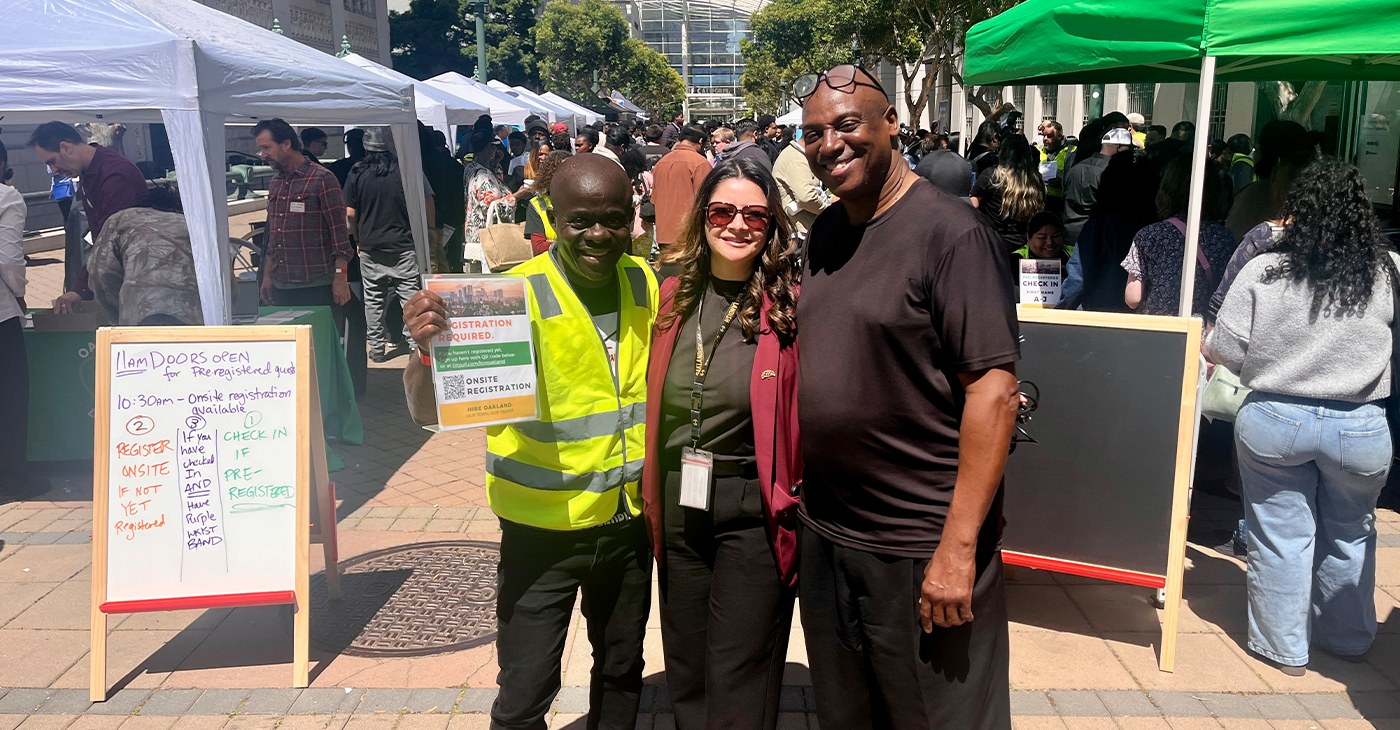
The Office of Mayor Barbara Lee, in partnership with the City of Oakland and regional employers, hosted a successful Hire Oakland job fair this week at Frank H. Ogawa Plaza, bringing together job seekers and employers for a day focused on opportunity, connection, and economic mobility.
With more than 2,000 RSVPs, the event on Wednesday reflected strong demand across Oakland for access to quality jobs and career pathways. Attendees participated in on-site recruitment, application support, and hands-on workshops designed to help job seekers navigate hiring processes and prepare for interviews.
Over the course of the day, employers and community partners engaged directly with residents in a welcoming, high-energy environment centered on opportunity and hope. Participating employers included EBMUD, Samuel Merritt University, the City of Oakland, BART, PG&E, AC Transit, East Bay Regional Parks District, Southwest Airlines, FedEx, and many others offering immediate openings and career pathways across sectors.
Workforce development partners Oakland Private Industry Council (OPIC) and Lao Family Community Development provided connections to résumé support, interview coaching, and individualized job search assistance throughout the event.
The strong turnout underscores a clear reality: Oakland residents are eager for pathways into meaningful work, and sustained investment in youth and workforce programs is essential.

That is why Mayor Lee has prioritized relaunching the Oakland Police Cadet Program and the Mayor’s Youth Employment and Education Program (MYEEP)—ensuring young people have early access to paid work experience, mentorship, and long-term career pathways, according to a City press statement.
“The turnout shows what we already know—Oaklanders are ready to work, ready to grow, and ready to build their futures here at home,” said Lee. “When we connect people directly to employers and invest in young people early, we are not just filling jobs—we are changing lives and strengthening our city’s future.”
The Hire Oakland job fair is part of the City’s broader effort to strengthen workforce pipelines, expand access to good-paying jobs, and ensure Oakland residents are first in line for local opportunity.
About Hire OaklandHire Oakland is a citywide workforce initiative led by the Office of Mayor Barbara Lee in partnership with City departments, workforce development organizations, and regional employers. The program connects Oakland job seekers to real-time hiring opportunities, training resources, and career pathways.



Asm. Corey Jackson Announces Launch of 24-Hour Childcare in His District

IN MEMORIAM: The Rev. Leon “Sonny” Clark, Longtime Orange County Pastor and Community Leader, Dies at 72

Poll: Becerra Widens His Lead Over Hilton; Californians Split on Wealth Tax

From Historic Memories to New Possibilities: Oakland Celebrates Coliseum 60

County Office of Education Says OUSD Finances Are Getting Healthier, Materially Stronger

LIVE FREE Sunday Dinner Brings Faith, Fellowship and Civic Conversation to Oakland

Remembering Chauncey Bailey as Student Journalists Face Threats to Truth-Telling

BLACspace Cooperative Invites Bay Area to Experience Oakland’s Black Cultural Ecosystem Through a BLAC Map Tour + Party

In Wake of Death on Doorstep, Williams Chapel Baptist Church Calls for Better Care, Funding for Unhoused

Oakland Centenarian Nuna McKee Honored!

Caribbean Nations Produce Action Plan Calling for UK Reparations Over Slavery

Oakland Post: Week of September 23 – 29, 2026

Doulas Are Helping Black California Moms Navigate Pregnancy–Even as High Mortality Rates Persist

Newsom Signs Addictive Social Media Law to Protect Kids

On Your November Ballot: Prop 38 Would Allocate $8.4 Billion to Immunology and Immunotherapy Funding

Standoff for Justice: Our Homes Are Worth Fighting For

Oakland Post: Week of August 26 – September 1, 2026

Frontier Airlines’ Return to Oakland Airport Brings Flights, Jobs and Opportunity

Gubernatorial Candidate Steve Hilton Blasts California New Tire Rules; Newsom Hits Back

Chef Sharon Lee Blends Culinary Excellence, Education and Empowerment

Jackie Wright Champions Bay Area Stories, Filmmakers and Cultural Institutions

Big City Mayors Ask for “Yes” Vote on Housing Bond Measure; Conservatives Say “No”

Oakland Coliseum Project Opens Door for Small Businesses to Build Bigger

Gov. Newsom’s Latest Appointees Include Sacramento Advocate for Formerly Incarcerated Students; State’s New Tech Chief

Misnamed ‘Parent’ PAC Seeks to Influence Oakland School Board Elections

Longtime BWOPA Member Brendalyn Goodall Appointed to California Workforce Development Board

Gov. Newsom Signs Law Shielding Immigration Aid Workers From Doxing Threats

Secretary of State Shirley N. Weber Urges Californians to Vote Early as Voter ID Battle Intensifies

From Palestine to Oakland: Seeds for Liberation Examines Shared Struggles for Freedom

IN MEMORIAM: Dolly Parton Dead at 80 — How She Built a Legacy of Love and Earned Her Place in Black Culture

The Conversation With Al McFarlane 6/23/26

Media Monday 6/22/26

LIVE! ASK ALMA! — TUES. 6.23.26 7PM EST

Car Buying Secrets: 4 Hidden Checks Before You Sign!

Is This 550 HP Charger Worth YOUR Money? AutoNetwork Review

Celebrating Juneteenth – Frederick Douglass on education and resistance

LIVE! — ASK ALMA! — TUES. 6.19.26 7PM EST

Hyundai Ioniq 5 Parking, Safety, and 360 View #shorts

2025 Ioniq 5 New Wiper & Powerful Performance! #shorts

Electric SUV Range: Is 259 Miles Enough? #shorts

EV Charging: How Fast Can You Charge an Electric Vehicle? #shorts

Biometric Cooling… Messaging Seats…Come on! 2025 Infiniti QX80 Autograph 4WD

Charged Up: Witness the Magic of a Fully Electric Car! #shorts

Range Rover Sport PHEV Included…: See What’s Inside This Luxury SUV! #shorts

Invisible Hood View: Perfect Parking with X-Ray Vision! #shorts
-
 Community3 weeks ago
Misnamed ‘Parent’ PAC Seeks to Influence Oakland School Board Elections
-

 Activism4 weeks ago
Oakland Post: Week of September 2 – 8, 2026
-

 Community3 weeks ago
Richmond Tiny House Village Farm & Garden Set to Open Gates on Sept. 26
-

 Activism3 weeks ago
Oakland Post: Week of September 9 – 15, 2026
-

 Black History3 weeks ago
Latest Massacre in Haiti Reveals Cruelty U.S. Deportations
-

 Black History3 weeks ago
OPINION: Nolan Wells’ Death One of Several Signifying Racial Terror Lives on in U.S. South
-

 Community3 weeks ago
Democratic Clubs Interview Candidates for Oakland School Board
-

 Featured3 weeks ago
‘Ready to See These Bills Become Law’: Sen. Weber’s Package of 15 Bills Advance to Gov. Newsom’s Desk
