
Food
Supervisors oppose federal efforts to limit food stamps
WAVE NEWSPAPERS — The county Board of Supervisors voted July 30 to oppose federal efforts to limit food stamp eligibility, which would affect an estimated 40,000 Los Angeles County residents. Supervisor Hilda Solis recommended sending a letter to U.S. Secretary of Agriculture Sonny Perdue and the county’s congressional delegates.

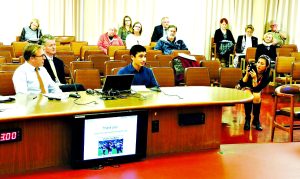
LOS ANGELES — The county Board of Supervisors voted July 30 to oppose federal efforts to limit food stamp eligibility, which would affect an estimated 40,000 Los Angeles County residents.
Supervisor Hilda Solis recommended sending a letter to U.S. Secretary of Agriculture Sonny Perdue and the county’s congressional delegates.
“The Trump administration is proposing callous rules that would limit Americans’ access to the federal Supplemental Nutrition Assistance Program, referred to as CalFresh in California,” Solis said. “Such action would affect 3 million Americans who rely on the nation’s most successful anti-poverty program to access healthy food. L.A. County recognizes that food insecurity is a matter of public health, and these heartless proposed rule changes would have a pronounced effect on county residents.”
The proposed rule would take away states’ ability to extend eligibility to households with incomes up to 200% of the federal poverty line or roughly $50,000 a year for a family with two children. That flexibility was granted by Congress in 1996.
Federal officials estimate that nearly 8% of beneficiaries qualify under expanded eligibility, which the Department of Agriculture calls a “loophole.” The department pointed to the case of a Minnesota millionaire who qualified for food stamps after applying to highlight what he viewed as taxpayer waste.
“Too often, states have misused this flexibility without restraint,” U.S. Secretary of Agriculture Sonny Perdue said in a statement issued last week. “The American people expect their government to be fair, efficient and to have integrity — just as they do in their own homes, businesses and communities. That is why we are changing the rules, preventing abuse of a critical safety net system, so those who need food assistance the most are the only ones who receive it.”
The Agriculture Department also wants to exclude beneficiaries with more than $2,250 in eligible assets from receiving food stamps. The department estimates an overall savings of more than $2 billion annually from the proposed changes.
The county’s Department of Public Social Services estimates that more than 120,000 California households — including 40,000 in Los Angeles County — would be affected.
Members of the board and education advocates said children would be the biggest losers.
An estimated 500,000 children nationwide could lose their automatic eligibility for free school meals under the proposal, according to Los Angeles County Office of Education Superintendent Debra Duardo.
“Research has shown that access to free and reduced-price school meals allows low-income students to stay engaged and learn,” Duardo said in a statement issued after the board vote. “Removing this access would have a detrimental impact on student academic performance and success in school.
Supervisor Mark Ridley-Thomas said that children represented 60% of CalFresh beneficiaries in 2016, the last year for which data is available.
“Those who stand to lose … are those who are the most vulnerable among us,” Ridley-Thomas said, which includes seniors on fixed incomes and community college students, many of whom experience “food insecurity.”
Food insecurity is defined as a lack of reliable access to enough affordable, nutritious food.
Supervisor Sheila Kuehl said the proposed change is part of a larger pattern.
“It feels like the current president has announced a program called the War on the Impoverished,” Kuehl said, drawing a contrast with President Lyndon B. Johnson’s declaration of a War on Poverty in 1964.
The proposed rule change is subject to a 60-day public comment period.
“Those who stand to lose … are those who are the most vulnerable among us.”
This article appeared in the Wave Newspapers.








Activism
First 5 Alameda County Distributes Over $8 Million in First Wave of Critical Relief Funds for Historically Underpaid Caregivers
“Family, Friend, and Neighbor caregivers are lifelines for so many children and families in Alameda County,” said Kristin Spanos, CEO, First 5 Alameda County. “Yet, they often go unrecognized and undercompensated for their labor and ability to give individualized, culturally connected care. At First 5, we support the conditions that allow families to thrive, and getting this money into the hands of these caregivers and families at a time of heightened financial stress for parents is part of that commitment.”

Family, Friend, and Neighbor Caregivers Can Now Opt Into $4,000 Grants to Help Bolster Economic Stability and Strengthen Early Learning Experiences
By Post Staff
Today, First 5 Alameda County announced the distribution of $4,000 relief grants to more than 2,000 Family, Friend, and Neighbor (FFN) caregivers, totaling over $8 million in the first round of funding. Over the full course of the funding initiative, First 5 Alameda County anticipates supporting over 3,000 FFN caregivers, who collectively care for an estimated 5,200 children across Alameda County. These grants are only a portion of the estimated $190 million being invested into expanding our early childcare system through direct caregiver relief to upcoming facilities, shelter, and long-term sustainability investments for providers fromMeasure C in its first year. This investment builds on the early rollout of Measure C and reflects a comprehensive, system-wide strategy to strengthen Alameda County’s early childhood ecosystem so families can rely on sustainable, accessible care,
These important caregivers provide child care in Alameda County to their relatives, friends, and neighbors. While public benefits continue to decrease for families, and inflation and the cost of living continue to rise, these grants provide direct economic support for FFN caregivers, whose wages have historically been very low or nonexistent, and very few of whom receive benefits. As families continue to face growing financial pressures, especially during the winter and holiday season, these grants will help these caregivers with living expenses such as rent, utilities, supplies, and food.

“Family, Friend, and Neighbor caregivers are lifelines for so many children and families in Alameda County,” said Kristin Spanos, CEO, First 5 Alameda County. “Yet, they often go unrecognized and undercompensated for their labor and ability to give individualized, culturally connected care. At First 5, we support the conditions that allow families to thrive, and getting this money into the hands of these caregivers and families at a time of heightened financial stress for parents is part of that commitment.”
The funding for these relief grants comes from Measure C, a local voter-approved sales tax in Alameda County that invests in young children, their families, communities, providers, and caregivers. Within the first year of First 5’s 5-Year Plan for Measure C, in addition to the relief grants to informal FFN caregivers, other significant investments will benefit licensed child care providers. These investments include over $40 million in Early Care and Education (ECE) Emergency Grants, which have already flowed to nearly 800 center-based and family child care providers. As part of First 5’s 5-Year Plan, preparations are also underway to distribute facilities grants early next year for child care providers who need to make urgent repairs or improvements, and to launch the Emergency Revolving Fund in Spring 2026 to support licensed child care providers in Alameda County who are at risk of closure.
The FFN Relief Grants recognize and support the essential work that an estimated 3,000 FFN caregivers provide to 5,200 children in Alameda County. There is still an opportunity to receive funds for FFN caregivers who have not yet received them.
In partnership with First 5 Alameda County, Child Care Payment Agencies play a critical role in identifying eligible caregivers and leading coordinated outreach efforts to ensure FFN caregivers are informed of and able to access these relief funds.FFN caregivers are eligible for the grant if they receive a child care payment from an Alameda County Child Care Payment Agency, 4Cs of Alameda County, BANANAS, Hively, and Davis Street, and are currently caring for a child 12 years old or younger in Alameda County. Additionally, FFN caregivers who provided care for a child 12 years or younger at any time since April 1, 2025, but are no longer doing so, are also eligible for the funds. Eligible caregivers are being contacted by their Child Care Payment Agency on a rolling basis, beginning with those who provided care between April and July 2025.
“This money is coming to me at a critical time of heightened economic strain,” said Jill Morton, a caregiver in Oakland, California. “Since I am a non-licensed childcare provider, I didn’t think I was eligible for this financial support. I was relieved that this money can help pay my rent, purchase learning materials for the children as well as enhance childcare, buy groceries and take care of grandchildren.”
Eligible FFN caregivers who provided care at any time between April 1, 2025 and July 31, 2025, who haven’t yet opted into the process, are encouraged to check their mail and email for an eligibility letter. Those who have cared for a child after this period should expect to receive communications from their child care payment agency in the coming months. FFN caregivers with questions may also contact the agency they work with to receive child care payments, or the First 5 Alameda help desk, Monday through Friday, from 9 a.m. to 5:00 p.m. PST, at 510-227-6964. The help desk will be closed 12/25/25 – 1/1/26. Additional grant payments will be made on a rolling basis as opt-ins are received by the four child care payment agencies in Alameda County.
Beginning in the second year of Measure C implementation, FFN caregivers who care for a child from birth to age five and receive an Alameda County subsidized voucher will get an additional $500 per month. This amounts to an annual increase of about $6,000 per child receiving a subsidy. Together with more Measure C funding expected to flow back into the community as part of First 5’s 5-Year Plan, investments will continue to become available in the coming year for addressing the needs of childcare providers in Alameda County.
About First 5 Alameda County
First 5 Alameda County builds the local childhood systems and supports needed to ensure our county’s youngest children are safe, healthy, and ready to succeed in school and life.
Our Mission
In partnership with the community, we support a county-wide continuous prevention and early intervention system that promotes optimal health and development, narrows disparities, and improves the lives of children from birth to age five and their families.
Our Vision
Every child in Alameda County will have optimal health, development, and well-being to reach their greatest potential.
Learn more at www.first5alameda.org.
Black History
Alfred Cralle: Inventor of the Ice Cream Scoop
Cralle learned carpentry, mechanics, and blacksmithing at a young age. These skills would later become essential in his innovative work. As a young man, he moved to Washington, D.C., where he worked as a porter in hotels and at an ice cream shop. It was there that he first noticed a common problem: scooping ice cream was messy and inefficient. Servers struggled because the ice cream stuck to spoons and ladles, and getting the right shape and portion was difficult. Many needed two hands — one to scoop and one to scrape the ice cream off the spoon.

By Tamara Shiloh
Alfred L. Cralle, an African American inventor and entrepreneur, forever changed the way the world enjoys ice cream. Born on Sept. 4, 1866, in Kenbridge, Virginia, Cralle grew up during Reconstruction — a time when opportunities for African Americans were still extremely limited. Despite the challenges of the era, he demonstrated curiosity, creativity, and a natural ability to understand how tools and machinery worked.
Cralle learned carpentry, mechanics, and blacksmithing at a young age. These skills would later become essential in his innovative work. As a young man, he moved to Washington, D.C., where he worked as a porter in hotels and at an ice cream shop. It was there that he first noticed a common problem: scooping ice cream was messy and inefficient. Servers struggled because the ice cream stuck to spoons and ladles, and getting the right shape and portion was difficult. Many needed two hands — one to scoop and one to scrape the ice cream off the spoon.
Cralle believed there had to be a better way.
Using his mechanical training, he began sketching and experimenting with ideas for a tool that could scoop ice cream easily using one hand. After refining his design, he developed what would become a simple yet brilliant invention: the Ice Cream Mold and Disher. On Feb. 2, 1897, Cralle received U.S. Patent No. 576,395 for the device.

His invention — what we now call the ice cream scoop — was groundbreaking. It featured a built-in scraper that automatically released the ice cream with a single squeeze of the handle. Durable, easy to use, and requiring only one hand, the scoop made serving faster and more consistent. His design was so effective that the basic mechanism is still used today in homes, restaurants, and ice cream shops around the world.
Although his invention became widely used, like many African American inventors of his time, he did not receive the compensation or widespread recognition he deserved. Racial barriers prevented him from fully benefiting from his own creation, even as businesses embraced the tool and the popularity of ice cream continued to grow.
After patenting the scoop, Cralle moved to Pittsburgh. There, he worked as a porter for the luxurious Sterling Hotel and later became a successful businessman. He remained active in his community and continued to create opportunities for himself despite the limitations faced by African Americans at the turn of the 20th century.
Tragically, Cralle died in 1920 at age 54, leaving behind a legacy that would only be fully appreciated long after his passing. Today, he is remembered as the brilliant mind behind one of the most widely used and universally loved kitchen tools.
Activism
Families Across the U.S. Are Facing an ‘Affordability Crisis,’ Says United Way Bay Area
United Way’s Real Cost Measure data reveals that 27% of Bay Area households – more than 1 in 4 families – cannot afford essentials such as food, housing, childcare, transportation, and healthcare. A family of four needs $136,872 annually to cover these basic necessities, while two adults working full time at minimum wage earn only $69,326.

By Post Staff
A national poll released this week by Marist shows that 61% of Americans say the economy is not working well for them, while 70% report that their local area is not affordable. This marks the highest share of respondents expressing concern since the question was first asked in 2011.
According to United Way Bay Area (UWBA), the data underscores a growing reality in the region: more than 600,000 Bay Area households are working hard yet still cannot afford their basic needs.
Nationally, the Marist Poll found that rising prices are the top economic concern for 45% of Americans, followed by housing costs at 18%. In the Bay Area, however, that equation is reversed. Housing costs are the dominant driver of the affordability crisis.
United Way’s Real Cost Measure data reveals that 27% of Bay Area households – more than 1 in 4 families – cannot afford essentials such as food, housing, childcare, transportation, and healthcare. A family of four needs $136,872 annually to cover these basic necessities, while two adults working full time at minimum wage earn only $69,326.
“The national numbers confirm what we’re seeing every day through our 211 helpline and in communities across the region,” said Keisha Browder, CEO of United Way Bay Area. “People are working hard, but their paychecks simply aren’t keeping pace with the cost of living. This isn’t about individual failure; it’s about policy choices that leave too many of our neighbors one missed paycheck away from crisis.”

The Bay Area’s affordability crisis is particularly defined by extreme housing costs:
- Housing remains the No. 1 reason residents call UWBA’s 211 helpline, accounting for 49% of calls this year.
- Nearly 4 in 10 Bay Area households (35%) spend at least 30% of their income on housing, a level widely considered financially dangerous.
- Forty percent of households with children under age 6 fall below the Real Cost Measure.
- The impact is disproportionate: 49% of Latino households and 41% of Black households struggle to meet basic needs, compared to 15% of white households.
At the national level, the issue of affordability has also become a political flashpoint. In late 2025, President Donald Trump has increasingly referred to “affordability” as a “Democrat hoax” or “con job.” While he previously described himself as the “affordability president,” his recent messaging frames the term as a political tactic used by Democrats to assign blame for high prices.
The president has defended his administration by pointing to predecessors and asserting that prices are declining. However, many Americans remain unconvinced. The Marist Poll shows that 57% of respondents disapprove of Trump’s handling of the economy, while just 36% approve – his lowest approval rating on the issue across both terms in office.


WORK FROM HOME
Home-based business with potential monthly income of $10K+ per month. A proven training system and website provided to maximize business effectiveness. Perfect job to earn side and primary income. Contact Lynne for more details: Lynne4npusa@gmail.com 800-334-0540


Black Artists in America, Installation Three Wraps at the Dixon Gallery and Gardens

Grief, Advocacy, and Education: A Counselor Reflects on Black Maternal Health

Future of Florida’s Black History Museum in Limbo

New Research Shows the Many Benefits of Early Learning

South Hampton K-8 Students Among Top 10 Finalists for Samsung’s ‘Solve for Tomorrow’ Competition

Cuba: No Negotiation with US on the President or Political System

Brooklyn Academy of Music Names Jamaican-Born Tamara McCaw as President

Trinidad & Tobego – U.S. Launches WhatsApp Channel for American Citizens in the Country

Oakland Post: Week of March 18 – 24, 2026

AI Innovation vs. Ethics and Environmental Impact

AI, Web3, and Digital Reparations

What If You Owned Your AI Agent?

Season 7, Episode 3 – January Reporter’s Roundtable 📱

Season 7, Episode 3 – January Reporter’s Roundtable

AI, Media, and Power | Part 2, Real-World Impacts and Tradeoffs

Oakland Post: Week of February 11 – 17, 2026

Reflecting on Black History Milestones in Birmingham AL

CITY OF SAN LEANDRO STATE OF CALIFORNIA PUBLIC WORKS DEPARTMENT ENGINEERING DIVISION NOTICE TO BIDDERS FOR ANNUAL STREET OVERLAY/REHABILITATION 2019-21 – PHASE III

Oakland Post: Week of February 18 – 24, 2026

PRESS ROOM: NBA Hall of Fame Nominee Terry Cummings Joins 100 Black Men of DeKalb County to Launch Victory & Values Initiative

Oakland Post: Week of February 25 – March 3, 2026

Trump’s MAGA Allies are Creating Executive Order Plan to Steal the 2026 Midterms

U.S. manufacturing rebounds – how foundry services are adapting to rising demand

OP-ED: One Hundred Years of Black Workers Telling the Truth

Advancements in solar technology that are changing the way we power the world

Chase Oakland Community Center Hosts Alley-Oop Accelerator Building Community and Opportunity for Bay Area Entrepreneurs

Poll Shows Support for Policies That Help Families Afford Child Care

Oakland Post: Week of March 4 – 10, 2026

PRESS ROOM: Civil Rights TV Launches in Selma as the World’s First 24/7 Civil Rights Television Network

Woman’s Search for Family’s Roots Leads to Ancestor John T. Ward – A Successful Entrepreneur and Conductor on the Underground Railroad

Hyundai Ioniq 5 Parking, Safety, and 360 View #shorts

2025 Ioniq 5 New Wiper & Powerful Performance! #shorts

Electric SUV Range: Is 259 Miles Enough? #shorts

EV Charging: How Fast Can You Charge an Electric Vehicle? #shorts

Biometric Cooling… Messaging Seats…Come on! 2025 Infiniti QX80 Autograph 4WD

Charged Up: Witness the Magic of a Fully Electric Car! #shorts

Range Rover Sport PHEV Included…: See What’s Inside This Luxury SUV! #shorts

Invisible Hood View: Perfect Parking with X-Ray Vision! #shorts

AI Is Reshaping Black Healthcare: Promise, Peril, and the Push for Improved Results in California

ESSAY: Technology and Medicine, a Primary Care Point of View

Sanctuary Cities

The RESISTANCE – FREEDOM NOW

STATE OF THE PEOPLE: Freddie

ECONOMIC BOYCOTT DAY!!!!!

I told You So
-
 #NNPA BlackPress4 weeks ago
Poll Shows Support for Policies That Help Families Afford Child Care
-
 Activism4 weeks ago
Oakland Post: Week of March 4 – 10, 2026
-
 #NNPA BlackPress3 weeks ago
Woman’s Search for Family’s Roots Leads to Ancestor John T. Ward – A Successful Entrepreneur and Conductor on the Underground Railroad
-

 #NNPA BlackPress4 weeks ago
OP-ED: NNPA Launches 2026 “Leadership Matters” Video Series
-

 #NNPA BlackPress3 weeks ago
Advocates Raise Alarm Over ICE Operation, MOU and Detention Risks in Baltimore County
-

 #NNPA BlackPress3 weeks ago
COMMENTARY: Women of Color Shape Our Past and Future
-

 #NNPA BlackPress3 weeks ago
Pete Buttigieg to Join Mayor Randall Woodfin for Community Town Hall in Birmingham
-

 Activism2 weeks ago
Oakland Post: Week of March 11 -17, 2026
