
Books
Stacy Abrams Speaks To A Sold Out Crowd In Tulsa
OKLAHOMA EAGLE — Former Georgia democratic gubernatorial candidate Stacy Abrams spoke to a packed crowd in the gymnasium of Booker T. Washington High School last Friday evening during her recent visit to Tulsa, Oklahoma.

By CJ Webber-Neal
Former Georgia democratic gubernatorial candidate Stacy Abrams spoke to a packed crowd in the gymnasium of Booker T. Washington High School last Friday evening during her recent visit to Tulsa, Oklahoma.
Abrams, part of the 2nd Annual Tulsa LitFest, was at the event on Friday following the release of her most recent book, “Lead from the Outside: How to Build Your Future and Make Real Change.”
Stacy Abrams has become a rising national star in the months after being defeated in the Georgia governor’s race last year. She is being heavily recruited to run for the U.S. Senate, is contemplating another campaign for governor and is even considering making a presidential bid, although people close to her say she is more likely to pursue a Senate campaign.
Abrams’ part in LitFest, “An Evening with Stacey Abrams,” sold out quickly. Literaries, politicos, and fans of all backgrounds filed the basketball arena at Booker T. Washington High School to hear her words.
Abrams told the crowd that she knew very well of Tulsa’s history and knew of the destruction that happened in 1921, commonly referred to as the Tulsa race riot. She was astonished when the emcee referred to the event as a massacre while they spoke backstage.

Abrams, who was a state representative in Georgia for 11 years, earned national attention when she presented the Democrat Party’s response to President Donald Trump’s State of the Union speech this year.
She has published several novels under the pseudonym Selena Montgomery. Her most recent book, the nonfiction “Lead from the Outside,” has recently been released in paperback with a new preface that deals with her recent gubernatorial campaign.
Speaking with Ms. Abrams back stage after the event, she was asked to expound a bit more on her views towards true reconciliation, as the centennial of the 1921 Tulsa Race Massacre approaches.
Ms. Abrams states, “Reconciliation requires first and foremost that you acknowledge the truth about what happened here in Tulsa. I think the language being used (referring to it as a Massacre and not a riot) is incredibly important. One version puts the blame on the victims’ while the other recognizes the deep needed harm and pain that still remains because of the event”. She went on to say, “Have a clear articulation of what atonement looks like, but most importantly you must create space for people to be able to reconcile. If reconciliation requires everyone to respond in the same way, at the same moment, then it will not be real. It has to be a process, even if its 100 years in the making the true evolution of change takes time”.
Her advise to young African-American women in Tulsa who may be going through some struggles, but aspire to follow and be like her, she says this: “Understand it will get better, but it’s not going to happen on it’s own. Figure out who you are, and be clear about it, don’t let people tell you that you are less than because you are different than.” Abrams went on to say, “Write down not just your dreams, but also provide a path on how to get there, and have a clear articulation of your goals. Often our ability (as African American women) is muted by a lack of a clear path of how to achieve our dream. The reason why we often miss our mark is because there has not been someone there to tell us how to get to that point where we desire to be. Finally, look for people who can help you in that path, seek like minded people who desire to help you ascend to the life you are seeking, and the future you desire.”
This article originally appeared in the Oklahoma Eagle.










Black History
Michael Shiner: The Enslaved Man Who Wrote His Way into American History
Born into slavery in 1805, Michael G. Shiner became an essential eyewitness to 19th-century America by documenting over five decades of history in a private journal. Working at the Washington Navy Yard, Shiner recorded monumental events ranging from the British invasion during the War of 1812 to the complexities of labor and racial discrimination. His writings offer a rare, first-person perspective on the nation’s transformation from the eyes of a man who navigated both bondage and liberty. Read more to learn how Shiner secured his legacy.

Long before African Americans could freely tell their stories, Michael G. Shiner was quietly documenting history.
Born into slavery in 1805 in Piscataway, Maryland, Shiner became one of the most remarkable eyewitness chroniclers of nineteenth-century America. His writings preserved more than five decades of Washington, D.C., history, providing an extraordinary perspective on slavery, freedom, labor, and the nation’s transformation.
He was born to William Pumphrey Jr., whose family owned property in Maryland and Washington, D.C. Around 1812, Shiner was brought to the nation’s capital, where he eventually worked at the Washington Navy Yard. Although denied the educational opportunities available to White Americans, he learned to read and write, likely through religious instruction at Washington’s First Presbyterian Church.
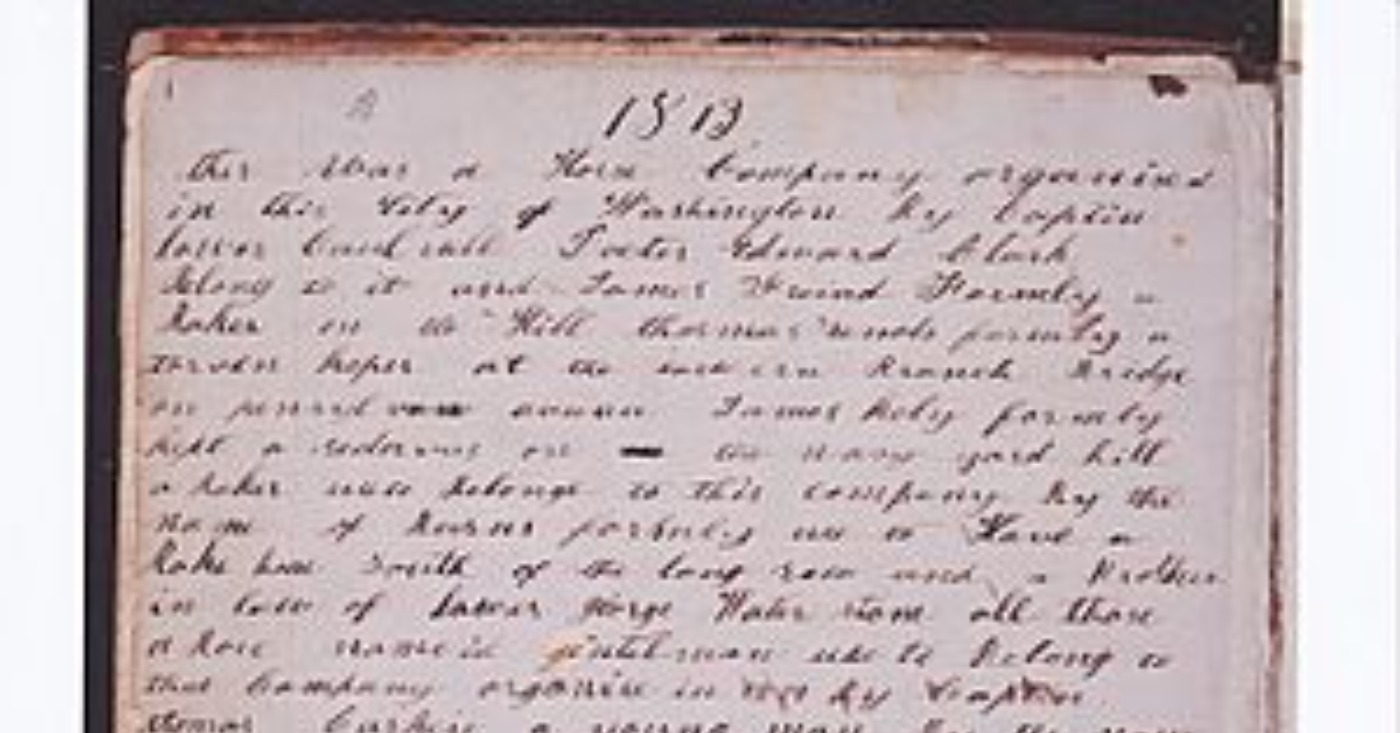
His literacy became a powerful instrument of historical preservation. Beginning with recollections of events in 1813, Shiner recorded significant happenings in a handwritten journal he called his “book.” His observations included the British invasion of Washington during the War of 1812, particularly the burning of the Capitol and other government buildings in August 1814. His descriptions captured the fear, destruction, and confusion surrounding one of America’s most devastating wartime attacks.
However, his writings extended far beyond military events.
In 1828, Thomas Howard, chief clerk of the Washington Navy Yard, acquired Shiner and hired out his labor. He worked in the Navy Yard’s paint shop, observing the everyday experiences of enslaved and free workers. His diary documented ship launches, workplace accidents, labor disputes, racial discrimination, and political developments.
One of his most heartbreaking experiences occurred in 1833 when slave traders threatened to separate his family. His wife, Phillis, and their children faced the possibility of being sold away. Through determined intervention and assistance from influential individuals, Shiner obtained their release from enslavement.
He petitioned for his own freedom in 1836 and subsequently lived as a free man. By 1850, census records identified him as free, living with his second wife, Jane, and their children.
His writings continued through the Civil War, documenting the changing political landscape and the struggle for African American freedom. His manuscript also revered the Emancipation Proclamation, demonstrating the importance of this historic declaration to someone who had personally experienced enslavement.
Following the Civil War, he became active in Republican politics and advocated for African American rights. His remarkable memory and detailed observations made him a respected figure throughout Washington.
Shiner died of smallpox on January 16, 1880, at approximately seventy-five years old.
Today, his 186-page manuscript, The Diary of Michael Shiner Relating to the History of the Washington Navy Yard, 1813–1869, is preserved at the Library of Congress.
What makes his achievement extraordinary is that an African American laborer, once considered property under American law, became an invaluable recorder of the nation’s history.
Shiner never achieved fame during his lifetime as a writer. Yet his determination to document the world around him ensured that future generations could understand American history through the eyes of someone who experienced both slavery and freedom.

Activism
Oakland Post: Week of October 28 – November 3, 2026
Oakland Post: Week of October 28 – November 3, 2026

To enlarge your view of this issue, use the slider, magnifying glass icon or full page icon in the lower right corner of the browser window.
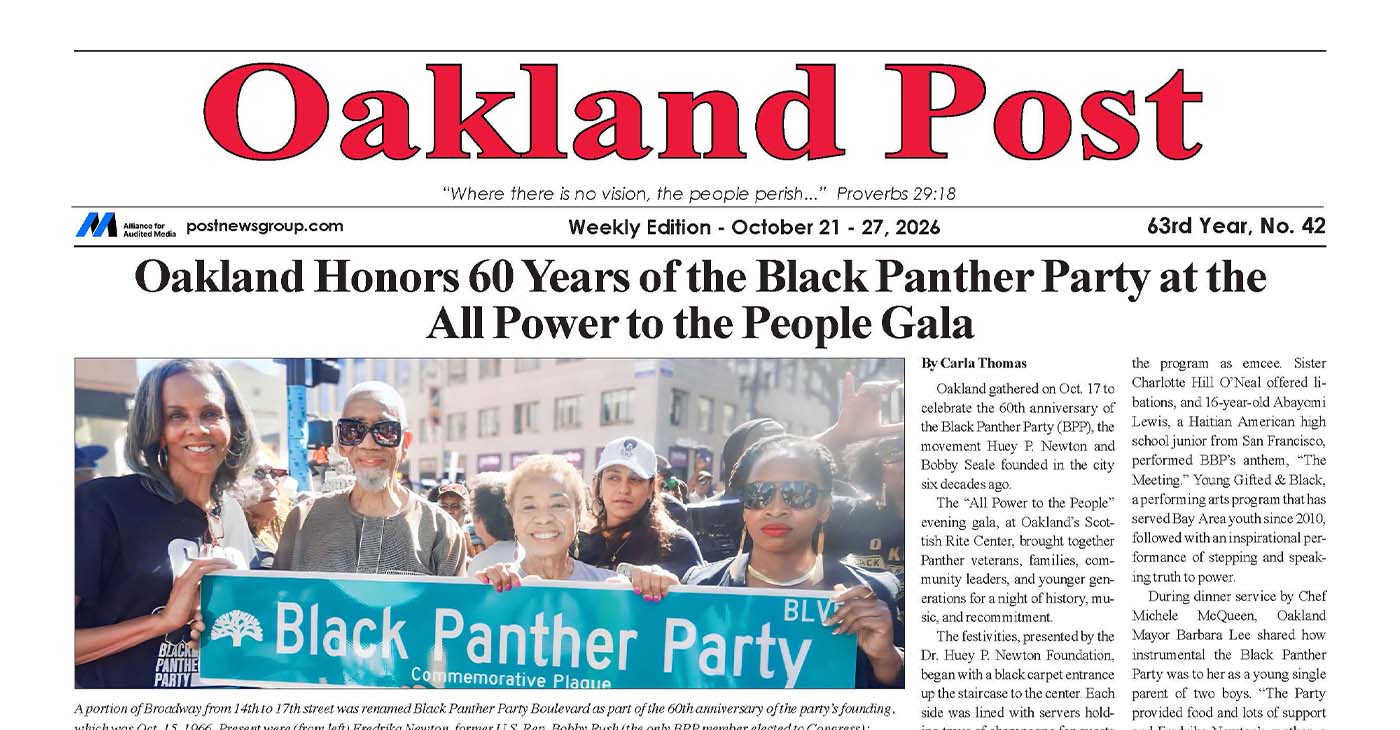
To enlarge your view of this issue, use the slider, magnifying glass icon or full page icon in the lower right corner of the browser window.



How the Sandwich Generation Can Help Protect Aging Parents’ Finances

As Progressive Democrats Celebrate ‘Blue Tsunami,’ Oakland Counts Victories

Golden State Valkyries Become Bay Area Legends Winning WNBA Championship on Halloween Night

IN MEMORIAM: Marcia Ann Gillespie, Editor of Essence and Ms. Magazines, Dies at 82

U.S. Rep. John Garamendi Honors local ‘Women of the Year’ at Annual Awards Ceremony

Richmond Neighbors Put Pantry Power on the Map

Oakland Latino Chamber of Commerce Hosts Statewide Convention, Generating $3 Million in Economic Impact

HISTORY MADE: Keisha Lance Bottoms Becomes First Black Woman Elected Governor in American History

HISTORY MADE: Keisha Lance Bottoms Becomes First Black Woman Elected Governor in American History

Five Hospitals Said No! Who Will Help Annette Henry Recover?

Oakland NAACP, BWOPA Speak Out Against Alleged Harassment of Black Women Political Leaders

COMMENTARY: Oakland’s Black Students Have Gained Ground: We Shouldn’t Stop Now

From Backyard Grilling to Jack London Square: Jamale Carlyle’s Chicken Wing Success Story

SEIU Local 1000 and State of California Will Continue to Negotiate New Labor Contract

OPINION: We Can Restore Checks and Balances on Trump

COMMENTARY: Valarie Bachelor and Jennifer Brouhard are Excellent School Board Members and Deserve to Be Reelected

Listening as a Lifeline: A Doula’s Witness to Black Maternal Health
HISTORY MADE: Keisha Lance Bottoms Becomes First Black Woman Elected Governor in American History

OUSD Receives State Review of District Finances; Outlines Progress Since January

Zakiya Jendayi Arrested, Locked Out of Home by Sheriff’s Deputies
SEIU Local 1000 and State of California Will Continue to Negotiate New Labor Contract
Golden State Valkyries Become Bay Area Legends Winning WNBA Championship on Halloween Night

COMMENTARY: Your California Living Trust Could Be Next: When Evidence Isn’t Enough

It’s Time to Lose Weight Before the Holidays

Oakland Post: Week of September 30 – October 6, 2026

Mayor Barbara Lee Holds Special State of the City Address in Deep East Oakland

Democrats, Community Groups Back Measure EE to Change How Oakland Is Governed

Fate of Bay Area Public Transit Hinges on Regional Transit Measure

Oakland Awarded More than $14 Million in State Funding

OP-ED: Proposition 44 Would Put a Price on Trust

The Conversation With Al McFarlane 6/23/26

Media Monday 6/22/26

LIVE! ASK ALMA! — TUES. 6.23.26 7PM EST

Car Buying Secrets: 4 Hidden Checks Before You Sign!

Is This 550 HP Charger Worth YOUR Money? AutoNetwork Review

Celebrating Juneteenth – Frederick Douglass on education and resistance

LIVE! — ASK ALMA! — TUES. 6.19.26 7PM EST

Hyundai Ioniq 5 Parking, Safety, and 360 View #shorts

2025 Ioniq 5 New Wiper & Powerful Performance! #shorts

Electric SUV Range: Is 259 Miles Enough? #shorts

EV Charging: How Fast Can You Charge an Electric Vehicle? #shorts

Biometric Cooling… Messaging Seats…Come on! 2025 Infiniti QX80 Autograph 4WD

Charged Up: Witness the Magic of a Fully Electric Car! #shorts

Range Rover Sport PHEV Included…: See What’s Inside This Luxury SUV! #shorts

Invisible Hood View: Perfect Parking with X-Ray Vision! #shorts
-
 Commentary1 week ago
COMMENTARY: Valarie Bachelor and Jennifer Brouhard are Excellent School Board Members and Deserve to Be Reelected
-
 Black History1 week ago
HISTORY MADE: Keisha Lance Bottoms Becomes First Black Woman Elected Governor in American History
-
 Education1 week ago
OUSD Receives State Review of District Finances; Outlines Progress Since January
-
 Business1 week ago
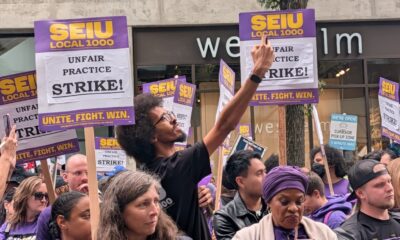
SEIU Local 1000 and State of California Will Continue to Negotiate New Labor Contract
-
 Community6 days ago
Golden State Valkyries Become Bay Area Legends Winning WNBA Championship on Halloween Night
-
 Business1 week ago
COMMENTARY: Your California Living Trust Could Be Next: When Evidence Isn’t Enough
-
 Community4 weeks ago
It’s Time to Lose Weight Before the Holidays
-
 Community4 weeks ago
Mayor Barbara Lee Holds Special State of the City Address in Deep East Oakland
