
Politics
Stacey Abrams Talks Candidly on Race, Political Power in U.S.
WASHINGTON INFORMER — Stacey Abrams, 45, made history last November in her effort to become the nation’s first African-American female governor.

By D. Kevin McNeir
Stacey Abrams, 45, made history last November in her effort to become the nation’s first African-American female governor — a race that she lost by the slimmest of margins and whose results — that is the validity of the outcome — remain “questionable” to many Americans — Black and white. Her campaign initiated a new national conversation about the importance of voting rights by shining a light on voter suppression efforts in Georgia. As a result, there is a new focus on ending what Abrams calls “systematic disenfranchisement” of African-American voters and other voters of color in America.
As she indicated during a provocative conversation held on Feb. 15 at the Brookings Institution in Northwest, a public policy think tank founded in 1916, her defeat and scurrilous conditions and circumstances behind her loss, have only served as an impetus for her to become even more involved in leading the charge against voter suppression. Joined by Jelani Cobb, she discussed the increasing political power of African Americans after the 2018 elections and the tensions that may arise as the African-American electorate and candidates claim more political space.
“I was raised to understand that the process of voting is directly tied to the kinds of policies we want to see, so voter suppression is more than saying ‘you can’t vote,’” she said. “Voter suppression is physical activity and psychic events that tell you not to use it — done in three ways — the Georgia ‘trifecta.’”

“First, there’s registration and impediments like it being hard to get on rolls, making it difficult for you to use a third party, the requirement that your name has to exactly match (ID and the voter’s registration card/data base) — something that impacted 53,000 voters in Georgia who were denied their right to vote by the employ of this law, 93 percent of whom were people of color and the requirement in Georgia that immigrants had to use their alien number — a violation of federal law,” she said.
“Also, some states still have ‘use it or lose it’ laws, something that was addressed in a recent lawsuit in Ohio, that allows states to remove voters from the rolls if they haven’t voted in a certain amount of time.”
“Second, ballot access, if voters did not request an absentee ballot in Georgia. Of 300 precincts in the state, 214 were shut down, making it more difficult, if not impossible for those with transportation to get to their closest polling location.”
Third, counting the ballots. Voters could not be sure that their vote was counted as some counties in the state threw away ballots due to “discrepancies” with their signature or for simple things like voters putting the date in the wrong place. Collectively, these are the ways that voter suppression works.
Cobb: How can these anti-democratic, racist practices continue to persist?
Abrams: They were never removed. They have just been perfected. It wasn’t until the 20th century that Native Americans were allowed to vote. One way to deny certain people the right to vote, specifically millennials, people of color and immigrants, and to therefore maintain control over public policy, is voter suppression. The insidiousness of voter suppression is that the laws allowed things to proceed in the GA election — what was done was perfectly legal — but could not be considered ethical or moral. Remedies remain limited you have people to change the policies — so, it’s a vicious cycle.
“The crisis of our day is we live in a nation where those in power use the law to undermine the very lawmaking process we both desire and deserve,” she said.
Abrams’ ‘Fair Fight’ Initiative
Abrams recalls that while on Nov. 6, the race remained too close to call, she began receiving a host of cries and calls for her concede. She says she couldn’t.
“We kept getting calls and calls about those who’d had difficulty exercising their right to vote,” she said. “In places where the majority of voters were Black, many reported being forced to stand in line for up to four hours. Some could not afford to stay in line that long because they had to return to work. Students at the AU Center were denied provisional ballots because polling places ran out of paper.”
“The night of the election, I demanded that every vote be counted because I understood that my campaign was premised on being a vote for people who had not been seen or heard. It wasn’t about the outcome. Still, we filed lawsuits and made incremental progress vs. the other side that had allegedly been destroying ballots. By Nov. 16, we were able to show that voter suppression was real. We got 50,000 calls. But imagine how many did not call or didn’t know they could call.”
“My campaign wasn’t the only one to face this — I was just the one getting the most attention. I chose not to respond with anger or sorrow but rather with action. I was raised not to just identify problems but to look for ways to solve them. ‘Fair fight’ has become something I’ve chosen to address — this should not happen to anyone else.
Cobb: Are there really 500,000 unregistered Black voters in Georgia? Are they really there? They didn’t come out for Obama so I’ve been skeptical about that number. What goes into mobilizing these electorates? Is this applicable to progressives and people of color running in the South?
Abrams: I am partisan so my advice probably isn’t applicable for those who aren’t Democrats. That said, you have to start early. I had been laying the groundwork for seven years while a member of the Georgia Assembly. You have to send people out to community with cultural competence. You have to train people to do the work so that later they can be hired to work on other campaigns. and then be able to be hired by campaigns.
We were aware of and met with those representing multi-racial, multi-ethnic, religious or sexual orientations differences. We met with Black-owned newspapers and inquired how to get into their media. We held roundtables with LGBTQ communities, with African Americans and with Asians. Pundits criticized us for investing in reaching out to voters rather than spending our money with the mainstream media. But I’ve never believed in turnout models so I refused to spend time or money only with those historically proven as more likely to vote.
Abrams said, when asked about Donald Trump and his decision to declare a national emergency in order to secure funding for the building of his wall, “He hopes to gain political clout after having failed in the actual process but the judicial system will deal with that. But we cannot turn this into a 24-hour circus over why or why or how doesn’t understand how American politics work. We have to ignore him.”
As for her plans to run for U.S. Senate, she replied, “I do not know.”
“But I can say that being the first Black female candidate for governor in the U.S. was an eye-opener,” she said. “We tend to take for granted those things or people that have proven most reliable. Black women are among the highest demographic of consistent voters. And like our car, which we assume will always start, it’s been assumed that Black women will always vote and will vote in certain ways. But we need to really understand more acutely the consequences of our actions. A car needs consistent care — Black women require care as well, particularly given our long history of reliability when voting.”
“Running a campaign is hard, expensive and mean. In fact, those who were meanest to me said things like ‘I really believe you’re the best candidate.’ Then they whispered to me, ‘but you’re a Black woman,’” she said.
“We can ill-afford to hold pity parties by saying that voter suppression remains alive and well in the U.S. and that it negatively impacted the results of my run for governor. We have to talk about voter suppression every day, with every political pundit, with every reporter — every day.”
“As for the Democratic Party, they need to decide what issues are most important. They need to be authentic and tell the truth all the time. They need to be clear about what their vision is for America. As for those who say they don’t see color or decry identity of their constituency, they don’t deserve to be president.”
Abrams’ newest book, “Lead from the Outside,” is slated for release March 2019.
This article originally appeared in the Washington Informer.









Activism
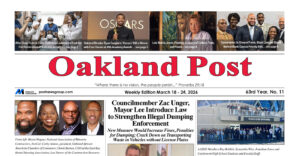
Oakland Post: Week of March 18 – 24, 2026
The printed Weekly Edition of the Oakland Post: Week of March 18 – 24, 2026
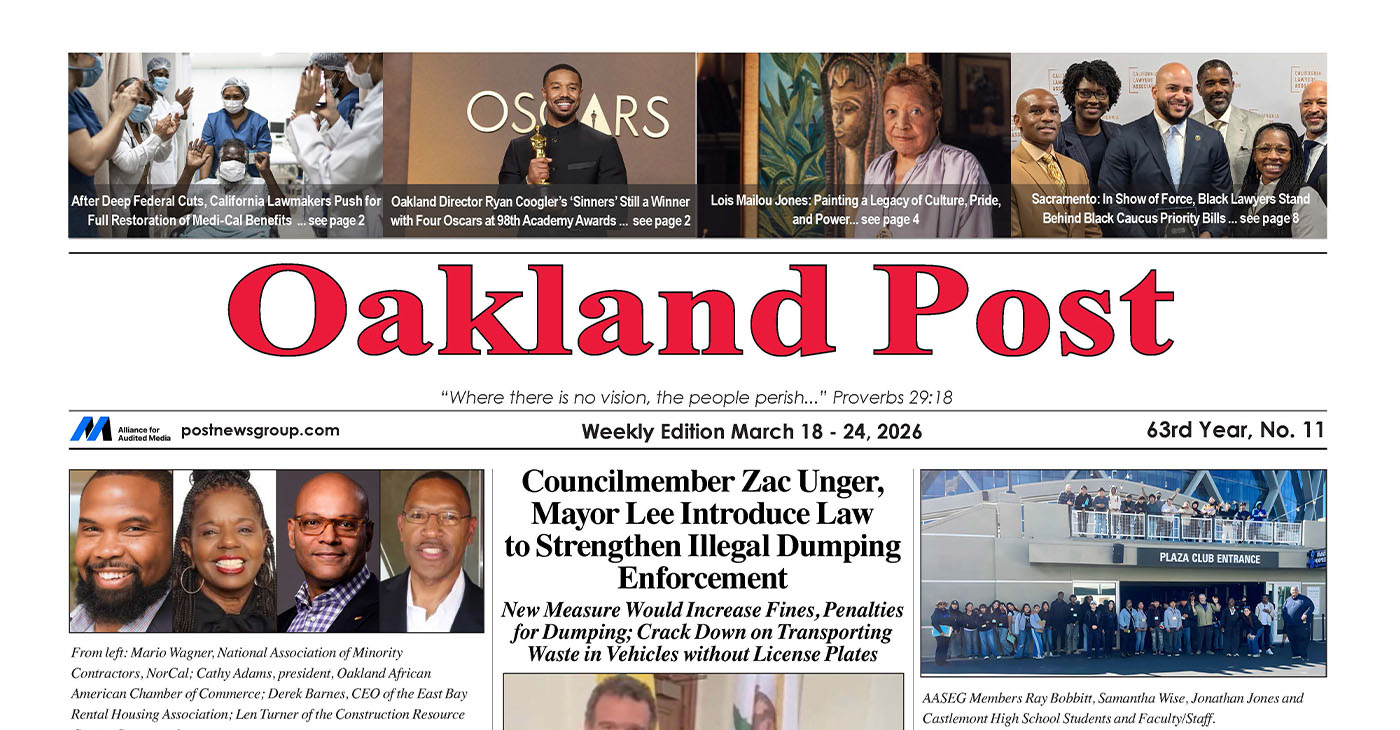
To enlarge your view of this issue, use the slider, magnifying glass icon or full page icon in the lower right corner of the browser window.
Activism
Oakland Post: Week of March 11 -17, 2026
The printed Weekly Edition of the Oakland Post: Week of March 11 – 17, 2026
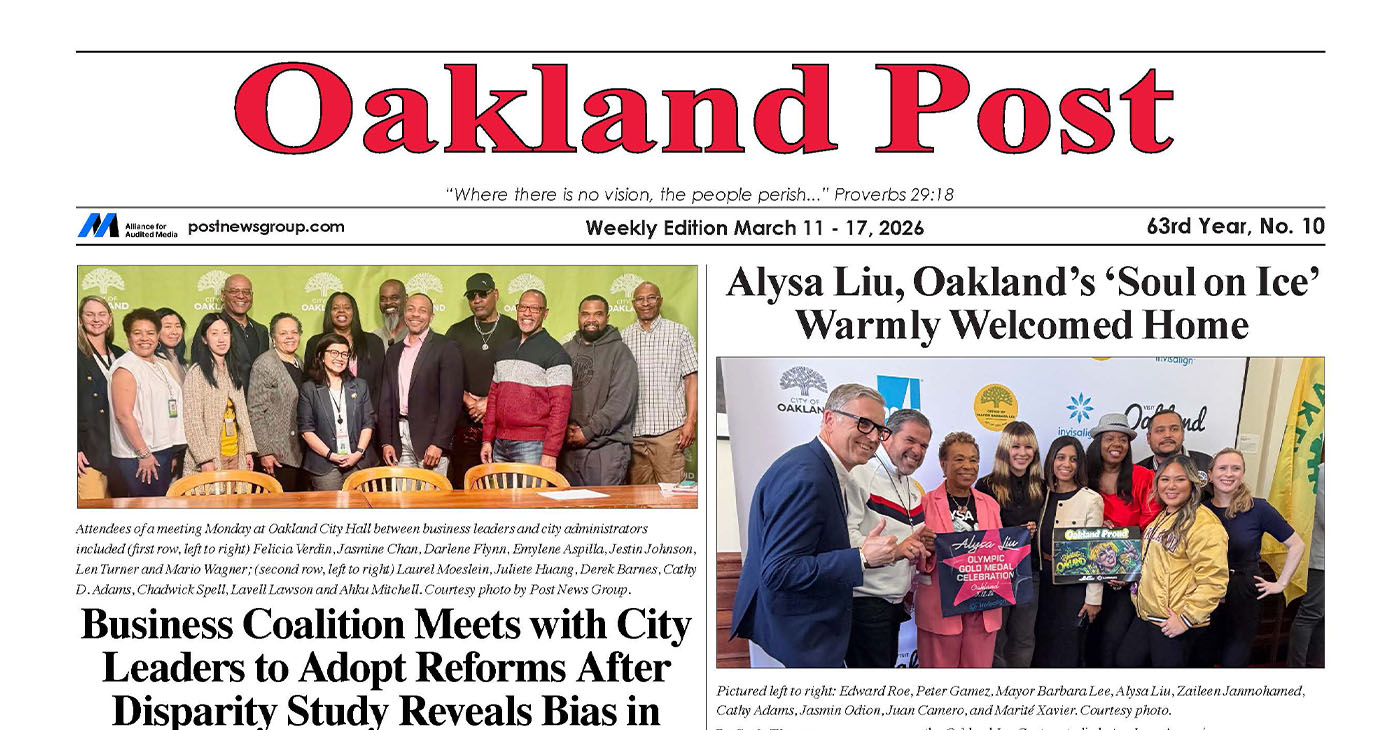
To enlarge your view of this issue, use the slider, magnifying glass icon or full page icon in the lower right corner of the browser window.
Activism
Oakland Post: Week of March 4 – 10, 2026
The printed Weekly Edition of the Oakland Post: Week of March 4 – 10, 2026
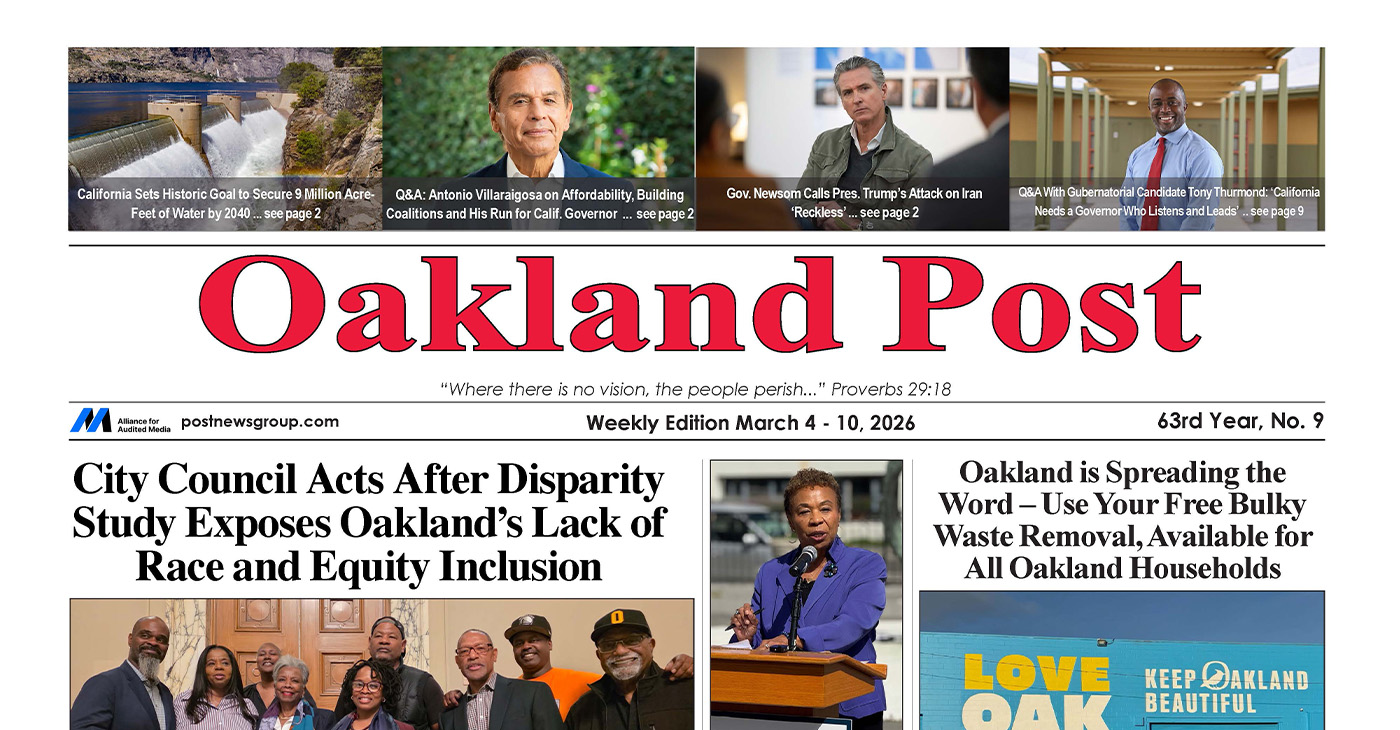
To enlarge your view of this issue, use the slider, magnifying glass icon or full page icon in the lower right corner of the browser window.
WORK FROM HOME
Home-based business with potential monthly income of $10K+ per month. A proven training system and website provided to maximize business effectiveness. Perfect job to earn side and primary income. Contact Lynne for more details: Lynne4npusa@gmail.com 800-334-0540


Black Artists in America, Installation Three Wraps at the Dixon Gallery and Gardens

Grief, Advocacy, and Education: A Counselor Reflects on Black Maternal Health

Future of Florida’s Black History Museum in Limbo

New Research Shows the Many Benefits of Early Learning

South Hampton K-8 Students Among Top 10 Finalists for Samsung’s ‘Solve for Tomorrow’ Competition

Cuba: No Negotiation with US on the President or Political System

Brooklyn Academy of Music Names Jamaican-Born Tamara McCaw as President

Trinidad & Tobego – U.S. Launches WhatsApp Channel for American Citizens in the Country

Oakland Post: Week of March 18 – 24, 2026

AI Innovation vs. Ethics and Environmental Impact

AI, Web3, and Digital Reparations

What If You Owned Your AI Agent?

Season 7, Episode 3 – January Reporter’s Roundtable 📱

Season 7, Episode 3 – January Reporter’s Roundtable

AI, Media, and Power | Part 2, Real-World Impacts and Tradeoffs

Oakland Post: Week of February 11 – 17, 2026

Reflecting on Black History Milestones in Birmingham AL

Rising Optimism Among Small And Middle Market Business Leaders Suggests Growth for California

CITY OF SAN LEANDRO STATE OF CALIFORNIA PUBLIC WORKS DEPARTMENT ENGINEERING DIVISION NOTICE TO BIDDERS FOR ANNUAL STREET OVERLAY/REHABILITATION 2019-21 – PHASE III

Oakland Post: Week of February 18 – 24, 2026

PRESS ROOM: NBA Hall of Fame Nominee Terry Cummings Joins 100 Black Men of DeKalb County to Launch Victory & Values Initiative

Oakland Post: Week of February 25 – March 3, 2026

Trump’s MAGA Allies are Creating Executive Order Plan to Steal the 2026 Midterms

U.S. manufacturing rebounds – how foundry services are adapting to rising demand

OP-ED: One Hundred Years of Black Workers Telling the Truth

Advancements in solar technology that are changing the way we power the world

Chase Oakland Community Center Hosts Alley-Oop Accelerator Building Community and Opportunity for Bay Area Entrepreneurs

Poll Shows Support for Policies That Help Families Afford Child Care

Oakland Post: Week of March 4 – 10, 2026

PRESS ROOM: Civil Rights TV Launches in Selma as the World’s First 24/7 Civil Rights Television Network

Hyundai Ioniq 5 Parking, Safety, and 360 View #shorts

2025 Ioniq 5 New Wiper & Powerful Performance! #shorts

Electric SUV Range: Is 259 Miles Enough? #shorts

EV Charging: How Fast Can You Charge an Electric Vehicle? #shorts

Biometric Cooling… Messaging Seats…Come on! 2025 Infiniti QX80 Autograph 4WD

Charged Up: Witness the Magic of a Fully Electric Car! #shorts

Range Rover Sport PHEV Included…: See What’s Inside This Luxury SUV! #shorts

Invisible Hood View: Perfect Parking with X-Ray Vision! #shorts

AI Is Reshaping Black Healthcare: Promise, Peril, and the Push for Improved Results in California

ESSAY: Technology and Medicine, a Primary Care Point of View

Sanctuary Cities

The RESISTANCE – FREEDOM NOW

STATE OF THE PEOPLE: Freddie

ECONOMIC BOYCOTT DAY!!!!!

I told You So

-
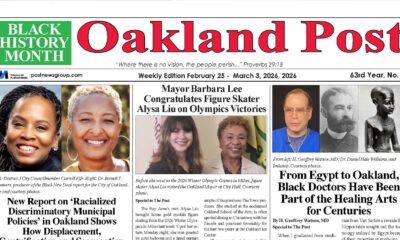 Activism4 weeks ago
Oakland Post: Week of February 25 – March 3, 2026
-
 #NNPA BlackPress4 weeks ago
Poll Shows Support for Policies That Help Families Afford Child Care
-
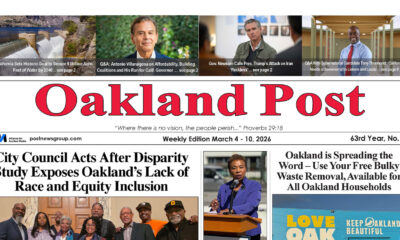 Activism3 weeks ago
Oakland Post: Week of March 4 – 10, 2026
-

 #NNPA BlackPress3 weeks ago
Woman’s Search for Family’s Roots Leads to Ancestor John T. Ward – A Successful Entrepreneur and Conductor on the Underground Railroad
-

 #NNPA BlackPress4 weeks ago
OP-ED: NNPA Launches 2026 “Leadership Matters” Video Series
-

 #NNPA BlackPress3 weeks ago
Advocates Raise Alarm Over ICE Operation, MOU and Detention Risks in Baltimore County
-

 #NNPA BlackPress3 weeks ago
COMMENTARY: Women of Color Shape Our Past and Future
-

 #NNPA BlackPress3 weeks ago
Pete Buttigieg to Join Mayor Randall Woodfin for Community Town Hall in Birmingham
