
Crime
OP-ED: Justin Fairfax Deserves a Fair Hearing: When African American men are accused of rape, a sordid history is evoked
HOUSTON FORWARD TIMES — Justin Fairfax, the lieutenant governor of Virginia, has asked the FBI to investigate allegations by two women that he sexually assaulted them.

By Frederick H. Lowe
Justin Fairfax, the lieutenant governor of Virginia, has asked the FBI to investigate allegations by two women that he sexually assaulted them. The alleged assaults, which occurred years earlier, were never reported to police or to physicians but were reported to the women’s friends.
Dr. Vanessa Tyson and Meredith Watson, the two women, indicated they are willing to testify at a hearing to impeach Fairfax. Virginia delegate Patrick Hope recently said he soon would introduce articles of impeachment against Fairfax.
Tyson said that Fairfax forced her to perform oral sex on him after they kissed consensually while they were attending the 2004 Democratic National Convention in Boston. Meredith Watson says she was raped by Fairfax in 2000 while the two were students at Duke University.
Fairfax has denied the allegations of both women, but that hasn’t stopped almost everyone, including Senators Tim Kaine (D-Virginia), Mark Warner (D-Virginia), Kamala Harris (D-California) and Virginia’s Legislative Black Caucus from demanding that he resign.
The sexual assault allegations against him also have taken attention away from Virginia Gov. Ralph Northam who admitted wearing Black face at a Michael Jackson dance contest and Virginia Attorney General Mark Herring wearing Black face at parties. Both men said they will not resign from office and they may survive.

Appearing on CBS’s Face the Nation, Gayle King interviewed Northam who said it was 400 years ago when Black indentured servants were brought to the Commonwealth. That comment seemed to go right over King’s head because blacks brought to Virginia were slaves. Indentured servants paid for their passage and worked for their employer a set number of years until they paid off their debt and were free. King claims she corrected the governor, but I didn’t hear it.
Margaret Brennan, Face the Nation’s host, asked King about the allegations against Fairfax.
She said Tyson’s and Watson’s allegations were very credible. King is a Black woman, but no Black men or someone who could add a historical context to rape allegations against Black men appeared on the show.
U.S. history has plenty of tragic examples.
On June 15, 1920, a white mob in Duluth, Minnesota, lynched three Black circus workers —- Elias Clayton, Elmer Jackson, and Isaac McGhie —- after Irene Tusker, a 19-year-old White woman charged that the three men had raped her, although a physical examination by a physician established she had not been raped, according to the book “The Lynchings in Duluth.”
Recently, Rick DeSantis, Florida’s governor, pardoned four black men for the 1949 rape of a white woman that never occurred.
U.S. Rep. Rodney Davis (D., Illinois) and U.S. Sen. Tammy Duckworth (D., Illinois) said they will introduce legislation that would designate the site of the 1908 Springfield Race Riots a National Historic Monument after whites and immigrants burned down an entire black neighborhood after a White woman claimed a Black man raped her. The woman later admitted she made up the story.
Black women are not unbiased observers of the way society treats Black men. Some are sympathetic, while others know they have cachet with Whites, especially White men, because they are women and women who are expected to be especially deferential.
I have had this happen to me. I was a member of the Art Institute of Chicago. I was waiting in the gift area of the modern wing for my wife and son who were shopping nearby to join me.
A Black woman security guard, dressed in plainclothes, said to her White partner, ‘I am going to see what he’s up to.’ With an angry look, she pressed her face close to mine and said nothing. When my wife and son ran up, she told her partner, “Let’s go,” and they left.
Another abhorrent incident of this ilk took place while I was a fellow at Northwestern University. The fellows were waiting to visit Cook County Sheriff Tom Dart after twice clearing jail security. I was the only Black man among the fellows who were all younger White women except for one older Black woman and an older White man.
A Black woman deputy sheriff walked up to me and wanted to know why I was there. I explained to her that I was a fellow, which she didn’t believe. My answer angered her. She moved her watch hat with one hand in a threatening manner. Her other hand rested on the butt of her gun, leading me to fear that she was going to shoot me. I was waiting with the others to go inside the jail. I wasn’t breaking out. I wasn’t an inmate. I was an invited, registered guest.
At some point, I must have dissociated because I can’t remember what happened next. I was subsequently aware the deputy sheriff had left without explanation. None of the other fellows came to my defense to say I was with them. A few just stared at me. The Black woman fellow said something which I don’t remember.
I wonder who will come to Fairfax’s defense. People are already building gallows to lynch him over the Internet. He deserves a fair hearing.
This article originally appeared in the Houston Forward Times.








Community
Assemblymember LaShae Sharp-Collins’s Bill Would Pause Law Enforcement’s Use of Shock Gloves Pending Study
The device at the center of the debate is known as the G.L.O.V.E., an acronym for Generated Low Output Voltage Emitter. U.S. Immigration and Customs Enforcement awarded a $16.7 million contract for 6,000 pairs of the gloves, which are designed to deliver an electric shock through an officer’s hand.

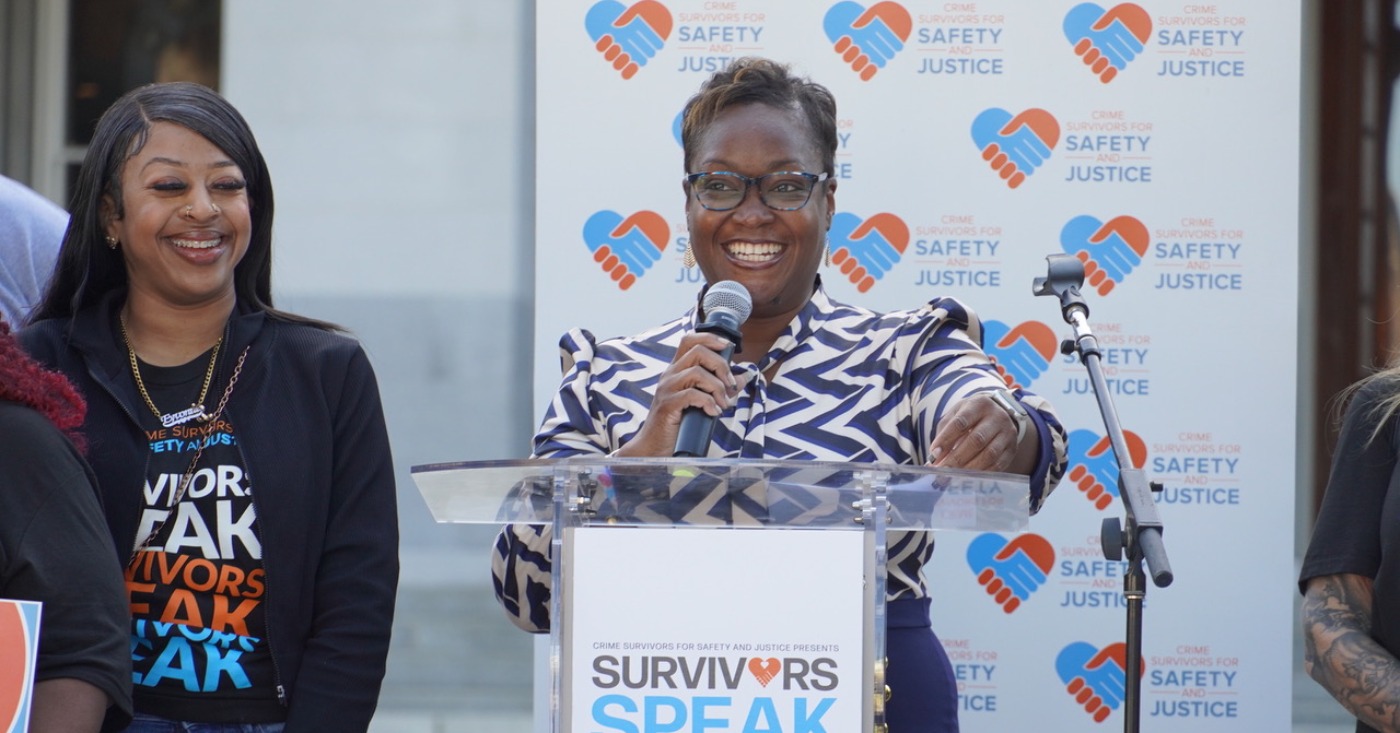
A bill temporarily prohibiting law enforcement agencies from using electric shock gloves in California is awaiting action by Gov. Gavin Newsom.
Assembly Bill (AB) 2760, authored by Assemblymember LaShae Sharp-Collins (D-San Diego), passed the Senate 29-9 on Aug. 31. The Assembly concurred in Senate amendments the same day on a 55-16 vote.
The bill would prohibit state, local and federal law enforcement agencies from using wearable electroshock devices in California until Jan. 1, 2030. It would also bar agencies from using state funds to purchase the devices and require them to update their use-of-force policies accordingly.
Traditional handheld devices, including tasers and stun guns, are exempt.
Newsom has until Sept. 30 to sign or veto the bill. If he takes no action, it will become law without his signature.
Sharp-Collins introduced the measure after reviewing information indicating that the devices could cause serious injury or death if used without adequate safeguards and training.
“AB 2760 draws a line that public safety technology must be proven safe and accountable before it is employed. Not after someone is killed or injured,” said Sharp-Collins, a member of the California Legislative Black Caucus (CLBC).
“Our commitment is to protect our communities, especially the most vulnerable. That is what AB 2760 is about and that is what AB 2760 will do,” Sharp-Collins told her colleagues.
The device at the center of the debate is known as the G.L.O.V.E., an acronym for Generated Low Output Voltage Emitter. U.S. Immigration and Customs Enforcement awarded a $16.7 million contract for 6,000 pairs of the gloves, which are designed to deliver an electric shock through an officer’s hand.
During the Assembly debate, Assemblymember Rhodesia Ransom (D-Stockton), also a CLBC member, thanked law enforcement representatives for helping negotiate amendments to the bill.
“This is something new to us (and) it’s something that absolutely should be studied,” Ransom said. “I appreciate law enforcement for agreeing to work with the legislature to figure out if this is an appropriate tool to be used.”
Neither the Los Angeles County Sheriff’s Department nor the Los Angeles Police Department has reported using electric shock gloves. However, the Santa Monica and El Monte police departments have obtained devices for testing.
The Sacramento County Sheriff’s Office purchased 10 shock gloves as part of a $35,000 acquisition that also included 10 remotely activated shock bands. Sheriff’s officials had been developing training and policies for the devices before AB 2760 advanced.
State Sen. Tony Strickland (R-Huntington Beach) opposed the legislation, arguing that it would unnecessarily force agencies to change their use-of-force policies and could compromise public safety.
“I don’t disagree with the author that the electric shocks are not a great option, but at the end of the day, I think it’s important to understand that we need to give law enforcement the tools they need to keep themselves safe and the community safe,” Strickland said.
Supporters countered that wearable electroshock devices have not been sufficiently studied and could pose particular risks to immigrants, children, older adults and other vulnerable groups.
“People who are Black or Brown could be test subjects for these gloves of torment,” Mark González (D-Los Angeles) said. “I appreciate law enforcement for agreeing to work with the legislature.”

Community
Alameda County DA Ursula Jones Dickson Says Key to Optimal Use of DA’s Office Is Knowledge
Jones Dickson emphasized that each situation is “case-specific,” particularly when determining whether a matter is criminal or civil. She explained that significant documentation of criminal activity is generally necessary before the DA’s Office can intervene.
Part 3
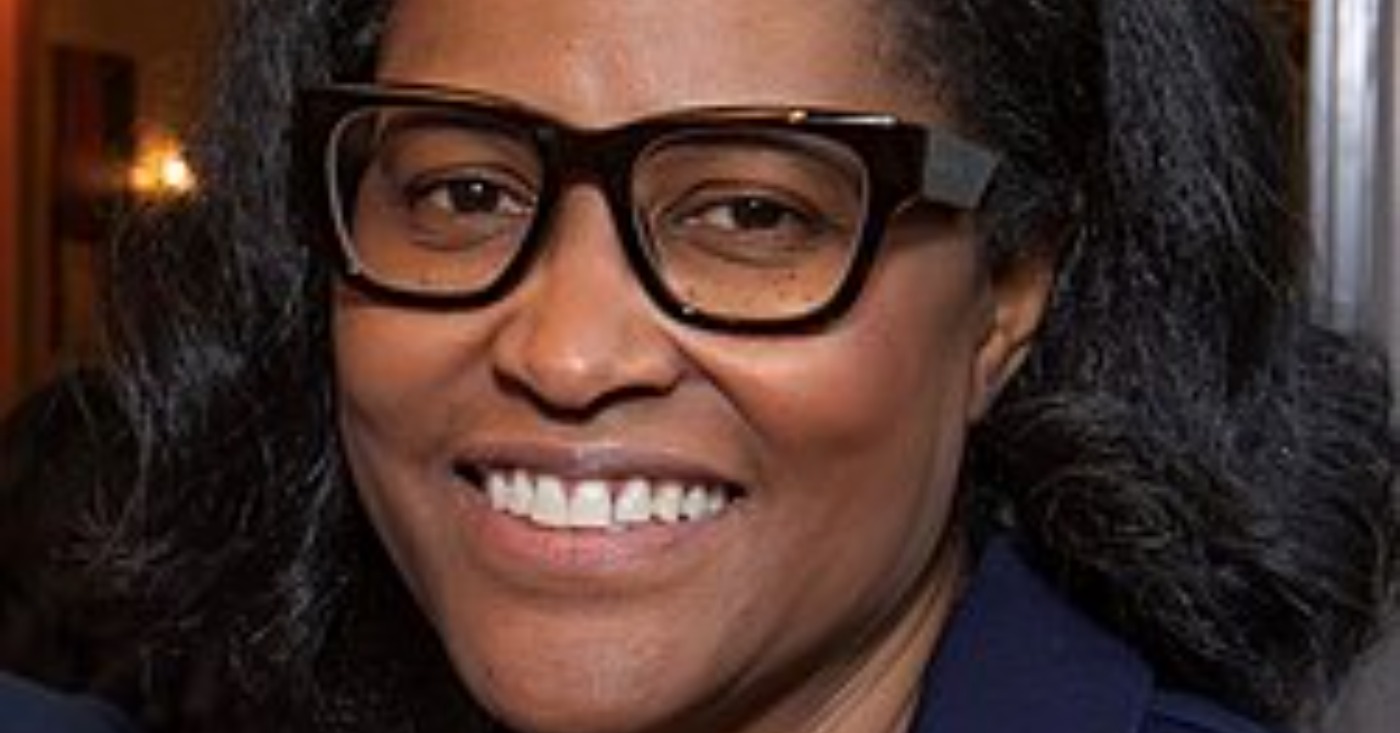
Alameda County District Attorney Ursula Jones Dickson wants the public she serves to know more about what office really does.
The key, she said, is education, helping residents understand how the office operates, what it can and cannot do, and how the public can work with the office to achieve the results they seek.
The DA’s powers and duties regarding the court system are limited, Jones Dickson explained, and that there is a process for determining when the office can become involved.
“When there’s a complaint of criminal abuse or exploitation, the DA’s office will investigate, but to trigger that investigation, a person must file a complaint first with the Police Department,” she said.
Most issues, however, remain within the court system. Within the Probate Court system, for instance, if fraud or neglect occurs, the matter will generally be referred to the appropriate agency.
Jones Dickson emphasized that each situation is “case-specific,” particularly when determining whether a matter is criminal or civil. She explained that significant documentation of criminal activity is generally necessary before the DA’s Office can intervene.
“That is where the jurisdiction starts,” Jones Dickson said. “If it’s exploitation, it begins with a police report. We only proceed when the evidence leans beyond reasonable doubt.”
The District Attorney’s Office has a Real Estate Fraud Unit as well as an Elder Abuse Unit. Jones Dickson acknowledged that the office has been addressing multiple real estate fraud cases since she took office in June.
“Cases receive priority and witness a lot more success when there’s documentation,” she said. “This is the message the DA’s Office is utilizing in their police training and consumer division. When we have the cooperation of the community, that makes us even more effective.”
When asked how the DA’s Office can assist people in probate who feel they have not received justice, Jones Dickson acknowledged that the office’s powers are limited because most conflicts must be resolved through the court system.
She noted that many probate-related referrals involving children come through Child Protective Services (CPS) or Dependency Court. When it comes to adults involved in the probate system, however, Jones Dickson emphasized the need for the public to take greater responsibility through advance planning and family communication.
“The truth is, especially in the Black community, we don’t like to think about death, much less talk about it,” she said. “I can’t stress enough how important that discussion is.
“Get that will and trust, then have that conversation with the family, exactly what your wishes are, and back it up with documentation. Hopefully that will help avoid the Probate Court altogether.”
If an issue involves an attorney, for example, a complaint may be made to the California State Bar. If it involves a judge, the matter may fall under the jurisdiction of the Commission on Judicial Performance.
Petitioning the appellate court is another option in certain circumstances, as the Court of Appeals provides a means of challenging a decision made by a lower court.
Jones Dickson said she wants the community to have a clear understanding of the DA’s role and the importance of communication between the office and the people it serves.
“I need the community to know what our job is,” she said. “Education is what we do, and when we’re supported through civil conversation, it makes communication more effective. We don’t get anywhere with mud-slinging. The DA’s Office focuses on what we are required to do, and that is to protect the community while we do the work.”
Jones Dickson also stressed the importance of recognizing the communities most affected by victimization and approaching those communities with understanding and sensitivity.
“That’s why it is so important that we acknowledge that most victimization occurs in the Black and Brown community and that we have to be especially sensitive as to how we address that community that is so deserving of our protection,” Jones Dickson said.
Activism
Oakland Post: Week of September 16 – 22, 2026
The printed Weekly Edition of the Oakland Post: Week of September 16 – 22, 2026

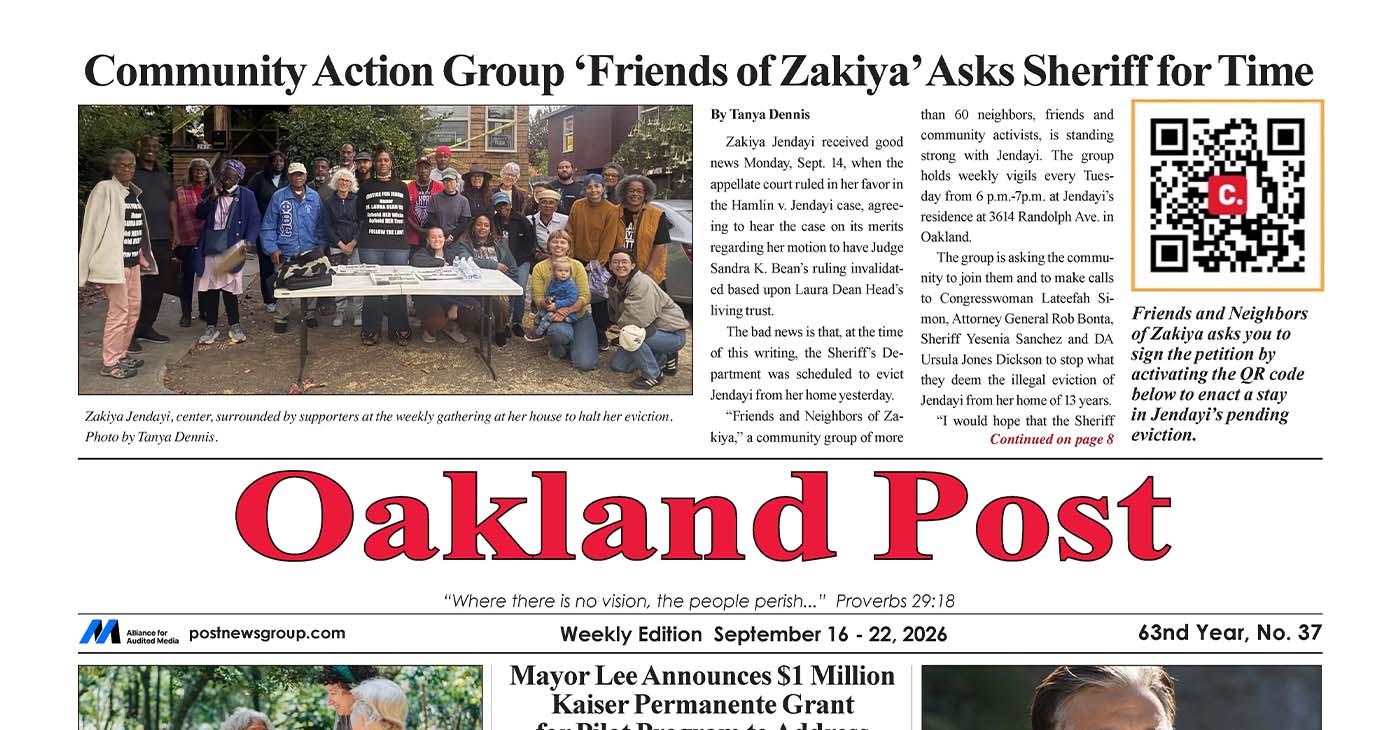
To enlarge your view of this issue, use the slider, magnifying glass icon or full page icon in the lower right corner of the browser window.




Doulas Are Helping Black California Moms Navigate Pregnancy–Even as High Mortality Rates Persist

Newsom Signs Addictive Social Media Law to Protect Kids

On Your November Ballot: Prop 38 Would Allocate $8.4 Billion to Immunology and Immunotherapy Funding

Ask California: Golden State Releases New AI Chatbot

Asm. Isaac Bryan’s Bill Banning California Police From ICE Side Jobs Reaches Newsom’s Desk

Assemblymember LaShae Sharp-Collins’s Bill Would Pause Law Enforcement’s Use of Shock Gloves Pending Study

BOOK REVIEW: ‘Laws of Solomon’ Reveals Tender Heart of Former Child Soldier

OPINION: The New American Fear – From 9-11 to AI

Passing for White, Fighting for Black America: The Courage of Walter White

Oakland People’s Arms Embargo Coalition Demands End to Military Shipments Thru Oakland

Barbara Lee Mourns Gloria Steinem, Remembers a Friendship Rooted in Equality

Event Preview: ‘Fashion v. Fascism’ – A Runway Revolution Is Coming to the Bay Area

Two Looming Threats Every Alameda County Elder Should Know About

Oakland Mayor Reads to Children at Bookout Block Party at Marcus Books Store

Tradition Comes to the Streets in 11th Annual Black-Eyed Pea Festival at the Freedom Farmers Market

Less Affluent School Districts, Including Sacramento City, Face Threat of State Takeover

ESSAY: California Can Close Its Colorectal Cancer Gap

California Hispanic Chambers of Commerce Unveils: ‘Powering the Future’ Theme for 47th Annual Statewide Convention

Four Candidates, Including Incumbent Barbara Lee, Qualify for Oakland Mayor’s Race

Oakland Post: Week of August 12 – 18, 2026

From Blueprint to Breakthrough: Tackling Affordable Housing in Oakland

Oakland Observes Black August with Block Parties, Film Showings, Workshops

COMMENTARY: Why Local School Tax Measure G1 Will Not Be on the November Ballot

Standoff for Justice: Our Homes Are Worth Fighting For

Returning to Its Roots, the Oakland Black-Eyed Pea Festival Partners with the Freedom Farmers Market Sept. 12

NPRC Scores First Advocacy Victory: David Shaw Finally Gets His Wish to ‘Go Home’

Oakland Post: Week of August 26 – September 1, 2026

Frontier Airlines’ Return to Oakland Airport Brings Flights, Jobs and Opportunity

Gubernatorial Candidate Steve Hilton Blasts California New Tire Rules; Newsom Hits Back

Chef Sharon Lee Blends Culinary Excellence, Education and Empowerment

The Conversation With Al McFarlane 6/23/26

Media Monday 6/22/26

LIVE! ASK ALMA! — TUES. 6.23.26 7PM EST

Car Buying Secrets: 4 Hidden Checks Before You Sign!

Is This 550 HP Charger Worth YOUR Money? AutoNetwork Review

Celebrating Juneteenth – Frederick Douglass on education and resistance

LIVE! — ASK ALMA! — TUES. 6.19.26 7PM EST

Hyundai Ioniq 5 Parking, Safety, and 360 View #shorts

2025 Ioniq 5 New Wiper & Powerful Performance! #shorts

Electric SUV Range: Is 259 Miles Enough? #shorts

EV Charging: How Fast Can You Charge an Electric Vehicle? #shorts

Biometric Cooling… Messaging Seats…Come on! 2025 Infiniti QX80 Autograph 4WD

Charged Up: Witness the Magic of a Fully Electric Car! #shorts

Range Rover Sport PHEV Included…: See What’s Inside This Luxury SUV! #shorts

Invisible Hood View: Perfect Parking with X-Ray Vision! #shorts
-
 Commentary4 weeks ago
Standoff for Justice: Our Homes Are Worth Fighting For
-
 Activism4 weeks ago
Oakland Post: Week of August 26 – September 1, 2026
-
 Business4 weeks ago
Frontier Airlines’ Return to Oakland Airport Brings Flights, Jobs and Opportunity
-
 Business4 weeks ago
Gubernatorial Candidate Steve Hilton Blasts California New Tire Rules; Newsom Hits Back
-
 Business4 weeks ago
Chef Sharon Lee Blends Culinary Excellence, Education and Empowerment
-

 Education4 weeks ago
Gov. Newsom’s Latest Appointees Include Sacramento Advocate for Formerly Incarcerated Students; State’s New Tech Chief
-

 Community4 weeks ago
Big City Mayors Ask for “Yes” Vote on Housing Bond Measure; Conservatives Say “No”
-

 Business4 weeks ago
Oakland Coliseum Project Opens Door for Small Businesses to Build Bigger

1 Comment