
National
Some Faith Leaders Victimize Rape Survivors Again


By Jazelle Hunt
NNPA Washington Correspondent
THIRD IN A SERIES
WASHINGTON (NNPA) – Simone Oliver had always been called, as they say in the religious community. She was active in the Baptist church throughout her youth, playing piano for the youth choir and even ghostwriting sermons for several pastors as a teen. She loved Scripture, loved preaching, and loved God. For her, church was heaven-on-earth.
But it was also hell. At 15 years old, Oliver’s then-pastor called her into his church office, grabbed her, put his tongue in her mouth, and fondled her until she broke away. It was the third time in her life she had been sexually assaulted, already a rape survivor at 12 years old at the hands of her sister’s first husband, and again at 13 by a family friend staying in her home.
Still, her faith did not waver. In fact, it grew stronger as Oliver transitioned from being a public school teacher to a minister.
In the mid-2000s, she took on an associate pastor’s role at a non-denominational church in New Jersey. The founding pastor tried to court her for years until she finally acquiesced and the two began a secret relationship. However, a year later, he decided to marry someone else. Still, the affair continued.

“I couldn’t get out. It was almost like sinking into an abyss,” she remembered. “I had gone to someone in the church to let them know this was going on. And they pretty much turned on me.”
And no group leans on the church more than Blacks.
“While the U.S. is generally considered a highly religious nation, African-Americans are markedly more religious on a variety of measures than the U.S. population as a whole, including level of affiliation with religion, attendance at religious services, frequency of prayer and religion’s importance in life,” according to a report titled, “A Religious Portrait of African-Americans” by the Pew Forum on Religion & Public Life.
Black Women are the Most Religious
And among the most religiously committed, no segment is more committed than African-American women. The report found that 84 percent of Black women say religion is very important to them and 59 percent say they attend religious services at least once a week.
As committed as she was, Oliver eventually left that church, broke off the affair with the pastor, began dating the man who would become her husband, and was accepted into Princeton Theological Seminary. As her life got better, her former co-pastor’s behavior grew worse. He sent threats to her regularly, and began stalking her and her then-fiancé.
She recalled, “He said to me – not of himself – but he said, ‘A man can commit murder, do his time, put on a suit, and still be a man. But when a woman’s reputation is ruined, she is ruined.’ Those were his threats to me.”
In 2011, five days before her wedding, the pastor’s behavior moved beyond idle threats.
“It’s a miracle story I’m here and alive, because this man stabbed me 30 times. I was paralyzed from the waist down,” Oliver recounted. Years later, she still remembers his final threat, prior to the day of the attack: “‘When I’m finished with you, you will not get married, you will not have a ministry, and Princeton will never have you.’ That was the last thing he said to me.”
Oliver was stabbed mostly in her abdomen and back, damaging her spinal cord and liver. Her former co-pastor was arrested walking down the street covered in her blood, still holding his hunting knife.
Survivors Need More than Prayer
Sharon Ellis Davis, a former criminalist in the Chicago Police Department and retired pastor, knows a bit about crime from more than one perspective.
She said, “I was married to a police officer, and there was a domestic abuse issue and sexual abuse. It was dismissed all the time. It was a matter of, ‘You all stop,’ or ‘Don’t be so bad,’ or ‘It’ll be okay.’ But never ‘I hear you, I understand you, I believe you.’ Even if [the department] knew the abuser was guilty, there was that code where you don’t rat on other police officers.”
So Davis channeled her frustration into something useful. She successfully lobbied for an internal domestic violence advocate, a civilian who would support and speak for domestic violence victims in police officers’ homes and became a full-time police chaplain.
But in Davis’ own church experience – first in the Pentecostal church as a child, then in the United Church of Christ as an adult – she saw parallels to the way she was treated by the police department.
“The church was nice to me, but they didn’t know what to do with me,” she said. “I need more than prayer, I need more than a hug. In fact, sometimes [survivors] don’t even want to be touched. I need more than a deliverance service, I need more than a Band-Aid on what forgiveness might look like.
“The two very important institutions that I was involved with – the church and the criminal justice system – both in the time that I needed them, failed me. Now they didn’t know they did, because they were not conscious of it.”
Davis feels that lack of consciousness grew from the problematic messages about women coming from the pulpit. For example she points out the Biblical stories that are emphasized, such as the false rape accusation of Joseph, and the ones that are largely ignored, such as the actual rapes of Dinah and Tamar as well as David’s coercion of Bathsheba.
To her, they all sent the message that the burden of sexual trauma is not welcome in the sanctuary.
“The church has not become the safe place it needs to be that would give some women in church permission to disclose,” Davis said. “The consequences of not having church as a safe place…you can kill the souls of the people that are there. People can lose their faith.”
Sex and sexuality remain taboo in many faith communities.
“How is it that the church is going to really be advocates for victims of rape in the Black church when even having normal conversations of sexuality can’t happen? How can we talk about patho-sexuality if we haven’t talked about normal sexuality?” she asked. “We’re still stuck in many way on the thou-shalt-nots. We spend more time judging the behavior than helping someone understand this was not their fault.”
Even worse than a lack of knowledge among leadership is that perpetrators often exist within the church, their violence and damage unchecked and even covered up.
Oliver said, “I had a woman call me – I thought she was calling to check on me and see how I was – but she called to tell me her own story, about a pastor. Someone [else] told me a story. She was invited out to another church to preach, and was raped by the pastor who had invited her. When the third person, and fourth person, and the fifth time you hear these stories…. I’m like okay. Something is going on here.”
After more than three months of physical rehab, Oliver overcame her paralysis and learned to walk again. She testified in court against her attacker, who was sentenced to 21 years in prison.
For all their silences and inadequacies, many Black faith centers are adept at serving their communities and fostering communal solutions and cooperation. Both Davis and Oliver assert that Black faith centers have also made great strides toward addressing domestic violence, with permanent ministries and pastor trainings becoming more common.
“We’re better in the Black church at caring for people,” Davis explained. “But we’re not as good at having a model of pastoral care for people who have been sexually abused. We’re not having clergy exposed to the education that they need to understand these dynamics.”
Some outside the faith community recognize this as well, including Sherelle Hessell-Gordon, executive director of the D.C. Rape Crisis Center.
“The Word says faith without works is dead,” she says. “There has to be fruit, there has to be action, there has to be community…there has to be active justice,” she said. “The rhetoric of ‘It’ll get better by and by’ – nah. That’s just spirituals to move our souls. When you leave that room, you’re still carrying that cross.”
Oliver, now a full-time seminary student, said, “I’m a rape survivor, but I’m also a gender-based violence survivor, and it took the violence for me to really reckon with the rape,” she acknowledged. “In telling my story…I started to realize how many horror stories are in church.”
NEXT WEEK: Breaking the silence
Part I: Rape and the Myth of ‘The Strong Black Woman’
Part II: Rape’s Other Victims
(The project was made possible by a grant from the National Health Journalism Fellowship, a program of the University of Southern California Annenberg School for Communication and Journalism.)
###


Activism
Oakland Post: Week of April 8 – 14, 2026
The printed Weekly Edition of the Oakland Post: Week of April 8 – 14, 2026
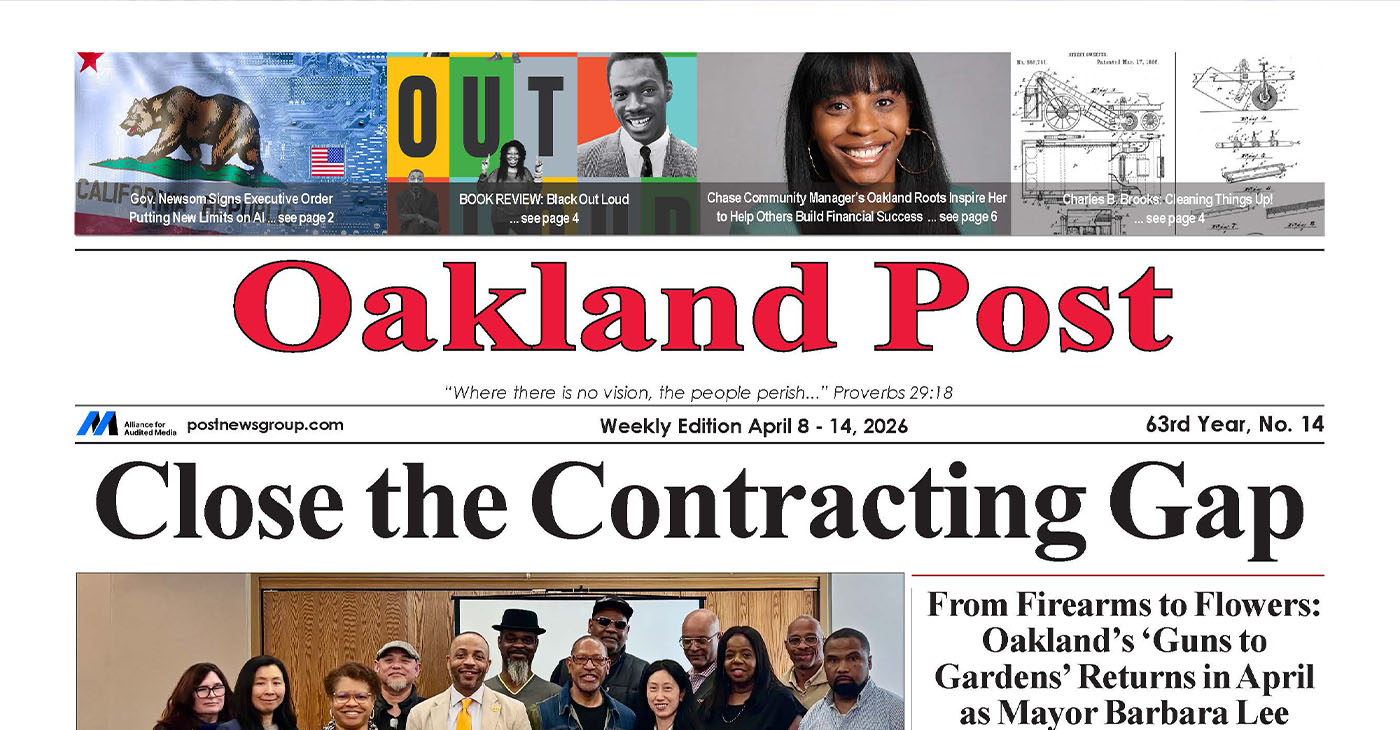
To enlarge your view of this issue, use the slider, magnifying glass icon or full page icon in the lower right corner of the browser window.
Activism
Oakland Post: Week of April 1 – 7, 2026
The printed Weekly Edition of the Oakland Post: Week of April 1 – 7, 2026
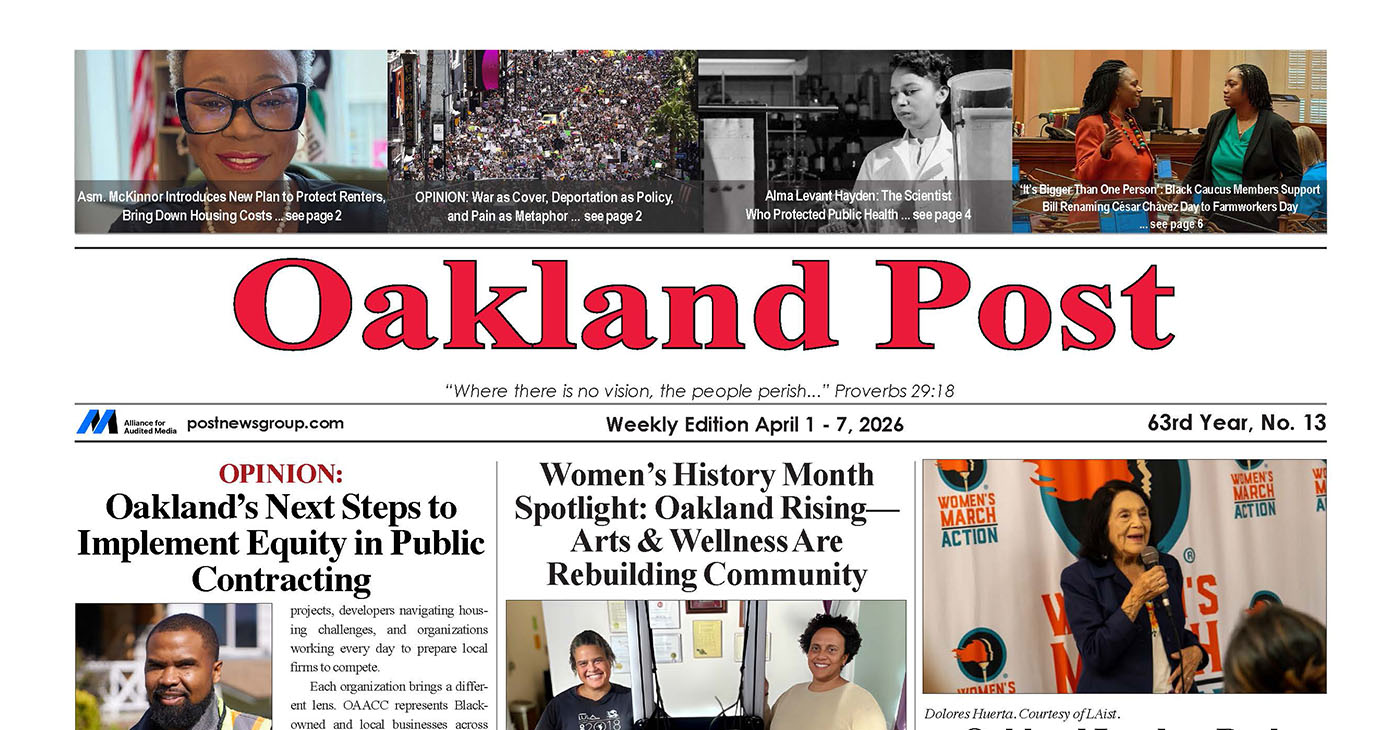
To enlarge your view of this issue, use the slider, magnifying glass icon or full page icon in the lower right corner of the browser window.
#NNPA BlackPress
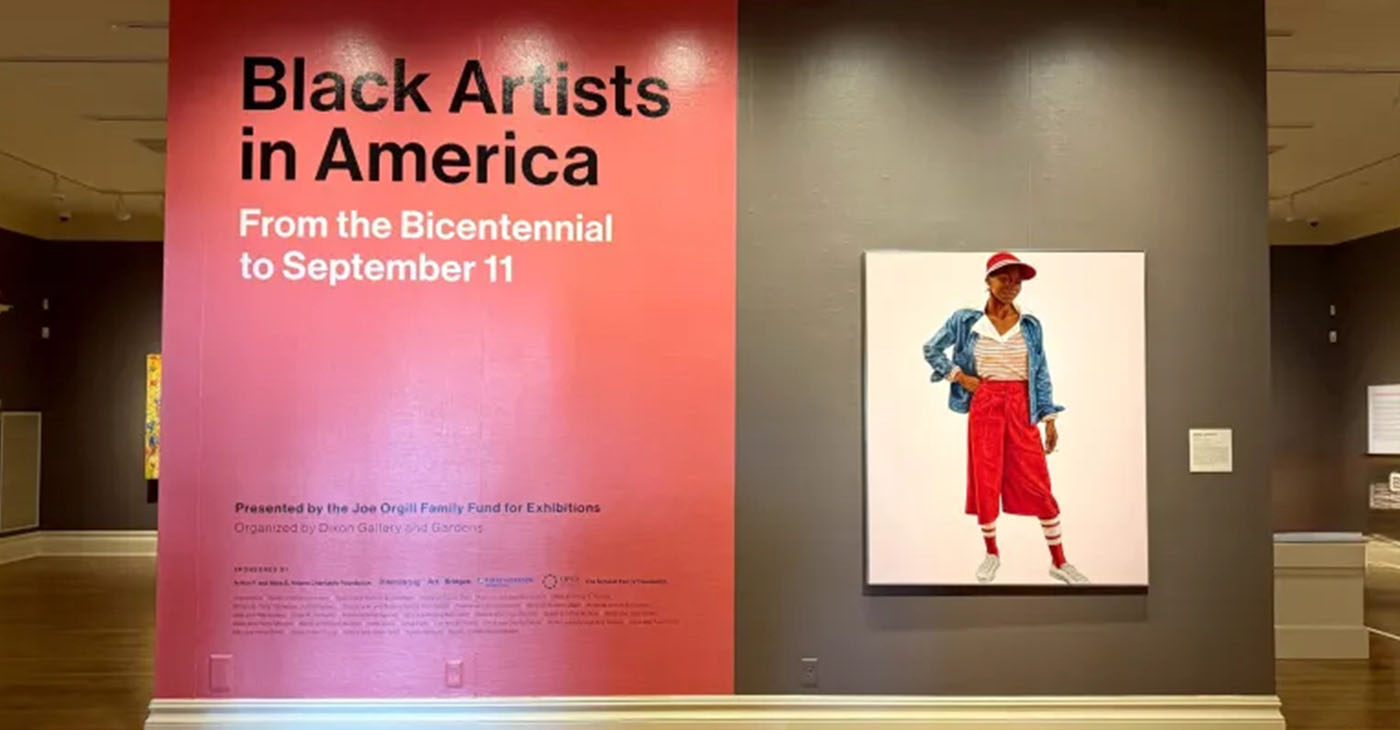
Black Artists in America, Installation Three Wraps at the Dixon Gallery and Gardens
TRI-STATE DEFENDER — With 50+ paintings, sculptures and assemblages, the exhibit features artists like Varnette Honeywood from Los Angeles, whose pieces appeared in Bill Coby’s private collection (before they were auctioned off) and on “The Cosby Show.” Also included are works by Alonzo Davis, another Los Angeles artist who opened one of the first galleries there where Black Artists could exhibit.

By Candace A. Gray | Tri-State Defender
The tulips gleefully greet those who enter the gates at the Dixon Gallery & Gardens on an almost spring day. More than 650,000 bulbs of various hues are currently on display. And they are truly breathtaking.
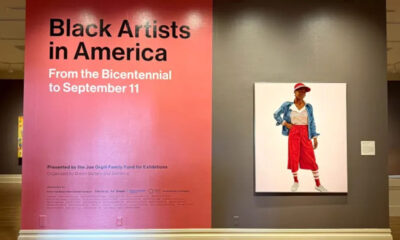
Inside the gallery, and equally as breathtaking, is the “Black Artists in America, From the Bicentennial to September 11” exhibit, which runs through Sunday, March 29. This is the third installment of a three-part series that started years ago and illustrates part of the Black experience through visual arts in the 20th century.
“This story picks up where part two left off,’’ said Kevin Sharp, the Linda W. and S. Herbert Rhea director for the Dixon. “This era is when we really start to see the emergence of these important Black artists’ agency and freedom shine through. They start to say and express what they want to, and it was a really beautiful time.”
With 50+ paintings, sculptures and assemblages, the exhibit features artists like Varnette Honeywood from Los Angeles, whose pieces appeared in Bill Coby’s private collection (before they were auctioned off) and on “The Cosby Show.” Also included are works by Alonzo Davis, another Los Angeles artist who opened one of the first galleries there where Black Artists could exhibit.
“Though [Davis] was from LA, he actually lived in Memphis for a decade,” said Sharp. “He was a dean at Memphis College of Art, and later opened the first gallery in New York owned and operated by black curators.”
Another featured artist is former NFL player, Ernie Barnes. His work is distinctive. Where have you seen one of his most popular paintings, Sugar Shack? On the end scene and credits of the hit show “Good Times.” His piece Saturday Night, Durham, North Carolina, 1974 is in this collection.
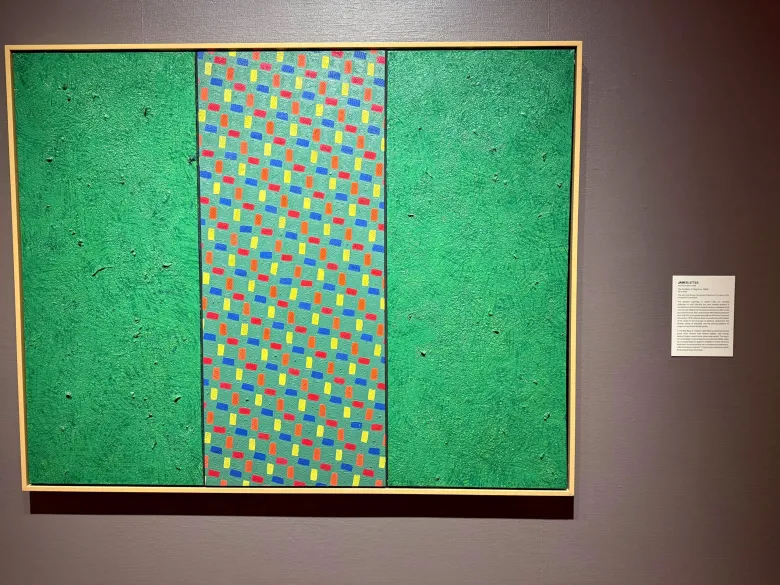
Memphis native James Little’s “The War Baby: The Triptych” is among more than 50 works featured in “Black Artists in America, From the Bicentennial to September 11” at the Dixon Gallery & Gardens, the final installment of a three-part series highlighting the impact and evolution of Black artists through 2011.
The exhibit features other artists with Memphis ties, including abstract painter James Little, who was raised in a segregated Memphis and attended Memphis Academy of Art (before it was Memphis College of Art). He later moved to New York, became a teacher and an internationally acclaimed fixture in the art world in 2022 when he was named a Whitney Biennial selected artist at the Whitney Museum of American Art in New York.
Other artists like Romare Bearden, who had a Southern experience but lived up North, were featured in all three installments.
“During this period of time, he was a major figure,” said Sharp. “He wrote one of the first books on the history of African American art during a time when there were more Black academics, art teachers, more Black everything!”
Speaking of Black educators, Sharp said the head curator behind this tri-part series and Dixon’s partner in the arts is Earnestine Jenkins, Ph.D., an art history professor at the University of Memphis, who also earned a Master of Arts degree from Memphis State University (now UofM). “We began working with Dr. Jenkins in 2018,” he said.
Sharp explained that it takes a team of curators, registrars, counterparts at other museums, and more, about three years to assemble an exhibit like this. It came together quite seamlessly, he added. Each room conjured up more jaw-dropping “wows” than the one before it. Each piece worked with the others to tell the story of Black people and their collective experience during this time period.
One of the last artists about whom Sharp shared information was Bettye Saar, who will turn 100 years old this year. She’s been working in Los Angeles for 80 years and is finally getting her due. Her medium is collages or assemblages, and an incredible work of hers is on display. She’s married to an artist and has two daughters, also artists.
The exhibit catalogue bears some of these artists’ stories, among other scholarly information.
The exhibit, presented by the Joe Orgill Family Fund for Exhibitions, is culturally and colorfully rich. It is a must see and admission to the Dixon is free.
Visit https://www.dixon.org/ to learn more.
Fun Facts: An original James Little design lives in the flooring of the basketball court at Tom Lee Park, and he makes and mixes his own paint colors.

WORK FROM HOME
Home-based business with potential monthly income of $10K+ per month. A proven training system and website provided to maximize business effectiveness. Perfect job to earn side and primary income. Contact Lynne for more details: Lynne4npusa@gmail.com 800-334-0540


Oakland Post: Week of April 8 – 14, 2026

Oakland Post: Week of April 1 – 7, 2026

Black Artists in America, Installation Three Wraps at the Dixon Gallery and Gardens

Grief, Advocacy, and Education: A Counselor Reflects on Black Maternal Health

Future of Florida’s Black History Museum in Limbo

New Research Shows the Many Benefits of Early Learning

South Hampton K-8 Students Among Top 10 Finalists for Samsung’s ‘Solve for Tomorrow’ Competition

Cuba: No Negotiation with US on the President or Political System

Brooklyn Academy of Music Names Jamaican-Born Tamara McCaw as President

Trinidad & Tobego – U.S. Launches WhatsApp Channel for American Citizens in the Country

Oakland Post: Week of March 18 – 24, 2026

AI Innovation vs. Ethics and Environmental Impact

AI, Web3, and Digital Reparations

What If You Owned Your AI Agent?

Season 7, Episode 3 – January Reporter’s Roundtable 📱

Oakland Post: Week of February 25 – March 3, 2026

Oakland Post: Week of March 4 – 10, 2026
Oakland Post: Week of March 18 – 24, 2026

Trump’s MAGA Allies are Creating Executive Order Plan to Steal the 2026 Midterms

Oakland Post: Week of March 11 -17, 2026

Poll Shows Support for Policies That Help Families Afford Child Care

Financial Wellness and Mental Health: Managing Money Stress in College
New Research Shows the Many Benefits of Early Learning
Brooklyn Academy of Music Names Jamaican-Born Tamara McCaw as President

Woman’s Search for Family’s Roots Leads to Ancestor John T. Ward – A Successful Entrepreneur and Conductor on the Underground Railroad
Grief, Advocacy, and Education: A Counselor Reflects on Black Maternal Health
Black Artists in America, Installation Three Wraps at the Dixon Gallery and Gardens
Future of Florida’s Black History Museum in Limbo
Trinidad & Tobego – U.S. Launches WhatsApp Channel for American Citizens in the Country

COMMENTARY: Women of Color Shape Our Past and Future

Hyundai Ioniq 5 Parking, Safety, and 360 View #shorts

2025 Ioniq 5 New Wiper & Powerful Performance! #shorts

Electric SUV Range: Is 259 Miles Enough? #shorts

EV Charging: How Fast Can You Charge an Electric Vehicle? #shorts

Biometric Cooling… Messaging Seats…Come on! 2025 Infiniti QX80 Autograph 4WD

Charged Up: Witness the Magic of a Fully Electric Car! #shorts

Range Rover Sport PHEV Included…: See What’s Inside This Luxury SUV! #shorts

Invisible Hood View: Perfect Parking with X-Ray Vision! #shorts

AI Is Reshaping Black Healthcare: Promise, Peril, and the Push for Improved Results in California

ESSAY: Technology and Medicine, a Primary Care Point of View

Sanctuary Cities

The RESISTANCE – FREEDOM NOW

STATE OF THE PEOPLE: Freddie

ECONOMIC BOYCOTT DAY!!!!!

I told You So

-
 Activism3 weeks ago
Oakland Post: Week of March 18 – 24, 2026
-
 Activism4 weeks ago
Oakland Post: Week of March 11 -17, 2026
-
 Advice4 weeks ago
Financial Wellness and Mental Health: Managing Money Stress in College
-
 #NNPA BlackPress3 weeks ago
New Research Shows the Many Benefits of Early Learning
-
 #NNPA BlackPress3 weeks ago
Brooklyn Academy of Music Names Jamaican-Born Tamara McCaw as President
-
 #NNPA BlackPress3 weeks ago
Grief, Advocacy, and Education: A Counselor Reflects on Black Maternal Health
-
 #NNPA BlackPress3 weeks ago
Black Artists in America, Installation Three Wraps at the Dixon Gallery and Gardens
-
 #NNPA BlackPress3 weeks ago
Future of Florida’s Black History Museum in Limbo

Pingback: Rape’s Other Victims | BlackPressUSA
Pingback: The Loud Silence of Rape Survivors | BlackPressUSA
Pingback: The Loud Silence of Rape Survivors | SD Voice