
Activism
Scrubbing California Landmarks of Racist Symbols — and the Word ‘Negro’

This past weekend, the Mississippi Legislature approved the removal of the Confederate battle emblem from the state flag. It’s a sign of the times, historians say, that speaks to the turning spirit of the nation – even happening in a state that has remained a proud stronghold, clinging to enduring customs that nod to a romanticized version of the “Old South.”
Gov. Tate Reeves said he will sign the bill into law.
The deep south state was the lone holdout flying a flag that flaunts the Confederate “Stars and Bars,” which has long stood as a symbol of White supremacy, racism, and slavery. Now, Magnolia State lawmakers say they will create a commission that will design a new flag.
Worldwide protests against injustice and racism have led to a revolt in the United States against monuments that honor public institutions or figures who stood for — or upheld — racism. The death of George Floyd, an unarmed Black man police officers killed in Minneapolis has brought police brutality, racism, and economic inequality in America into sharp focus. That has prompted the nation to look inward and soul search, which has now expanded to questioning the country’s tradition of celebrating controversial figures that honor its racist past.
Across the United States, protesters have defaced, torn down or petitioned the removal of enshrinements honoring confederate soldiers, segregationists, slave traders, white supremacists and others identified as racist.
“There is no room in the hallowed halls of Congress or in any place of honor for memorializing men who embody the violent bigotry and grotesque racism of the Confederacy,” said Nancy Pelosi (D-CA-12), Speaker of the U.S. House of Representatives. On June 18, Pelosi ordered the removal of four portraits depicting confederate leaders from the nation’s Capitol.
In California, after 137 years, legislators announced the removal of statues depicting Christopher Columbus and Queen Isabella of Spain from the Capitol Rotunda. They had been on display under the building’s dome since 1883.

“As the first California Native American elected to the Legislature, I welcome removal of the statue. It is a symbol of genocide and atrocities toward Indigenous people throughout the world, including the United States,” said Assembly member James C. Ramos (D-Highland), reflecting on the removal of the Columbus monument. “We need to harness this opportunity to portray factual history from the view of those who suffered. Yet, we must also focus on the present in order to change the future.”
These acts around the country have sparked a debate about whether or not history — and public memorialization of our past — should be sanitized.
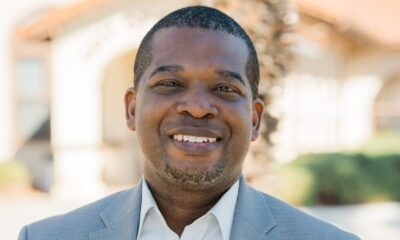
Dr. Daniel Walker, an African American historian and professor, says not creating, funding or publicly displaying these symbols do not equate to “sanitizing” history.
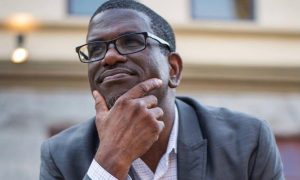
Dr. Daniel Walker. (Facebook profile photo).
“It is removing what are, in many cases, false history. It is correcting what are misinterpreted histories and, at some times, removing what is fully oppressive history,” Walker told California Black Media.
Renaming CA State Park Negro Bar, Formerly “Ni**er Bar”
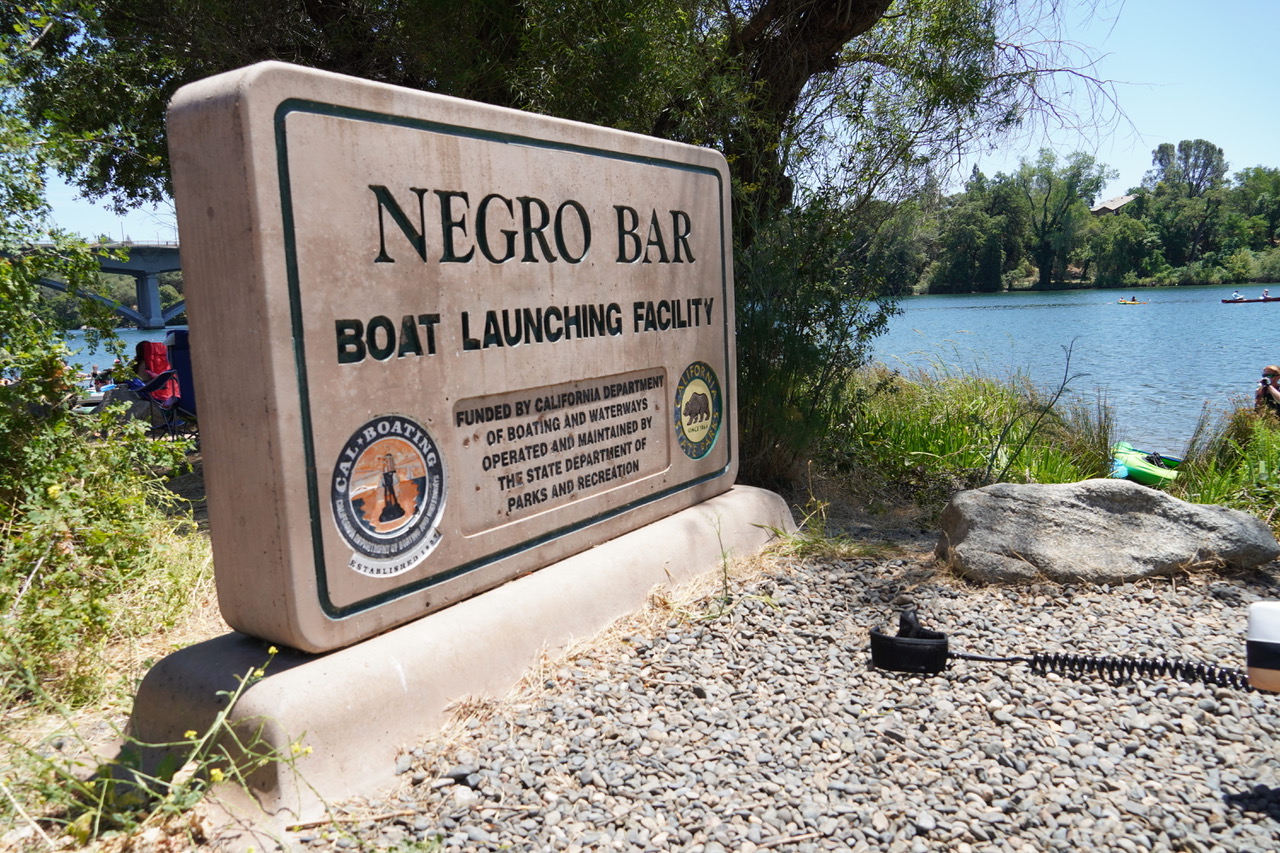
In northern California, a movement to study and correct local symbols deemed racist is brewing around one of the state’s African American-themed landmarks. Negro Bar is an area located within the Folsom Lake State Recreation Area near Sacramento.
Located in the city of Folsom, Negro Bar sits on the west bank of the American River, which flows south into the adjoining Sacramento River.
The picturesque park was named after an area where Black miners once worked during the Gold Rush of the mid-1800s. The miners were isolated because of their color.
At Negro Bar, the Black miners struck gold in 1850, one to 2 ounces for each man on the average per day, according to an article published in the now-defunct Sacramento Placer Times.
Clarence Caesar, a Black historian at California State Library’s California Historical and Cultural Endowment said Negro Bar is the state’s “first Black gold mining site.”
The park’s name has gone through several changes. It was initially identified as the racial epithet, “(N-word) Bar,” as described in the book “Riches for All: The California Gold Rush and the World.”
Before recent anti-racism protests, local Black community leaders and historians had agreed to continue using the current name, which doesn’t seem to bother the many kayakers, fishers and hikers of all races that flock to that park during the hottest days.
The Sacramento Chapter of Buffalo Soldiers, a history group that pays homage to the U.S. Army’s Black 10th Cavalry of Company G, staged events at Negro Bar for many years, beginning in the 1990s up until the mid-2000s.
The California Department of Parks and Recreation (CDPR) has stated that it recognizes the seriousness of offensive public symbols and that their interpretations can change over time. The department welcomes feedback from the public.
“In response to comments received in 2018, the department has undertaken a review to better understand the public’s perspective about the name and its continued use,” CDPR stated on its website.
People who are not happy with the current name say Negro is an archaic term for Black people. A petition to rename Negro Bar currently has more than 60,000 signatures.
But some Black people are in favor of staying with the current name. One of them is Jonathan Burgess, a native of Sacramento. His great-grandfather was an enslaved Black man whose owner brought him to California during the Gold Rush.
He says the current name is “part of history.”
He said changing the name would be a “miscarriage of justice” and he doesn’t consider Negro Bar offensive.
He added that some activists don’t have a great understanding of history, and that’s why they want to tear down all monuments.
However, Burgess is firmly against statues that honor Confederate officers. He said those statues lionize people who fought against their own country to maintain slavery.
“These were people who fought against our government,” he said. “Pull them down.”
The city of Folsom and the California State Parks’ Office of Historic Preservation have procured another African American landmark called Negro Hill.
-
- Photo’s by Antonio Ray Harvey
-
- Photo’s by Antonio Ray Harvey
-
- Dr. Daniel Walker. (Facebook profile photo).
Negro Hill, listed No. 570 in California Historical Landmarks Program, was an established community for African American, White, Asian, Spanish and Portuguese miners founded by a Black man named “Kelsey.”
Negro Hill, comprising of “Little Negro Hill” and “Big Negro Hill” camps, was located across the South Fork of the American River from Mormon Island, according to Sierra Nevada Geotourism. It was first mined in 1848, 4 miles from Negro Bar.
Negro Hill had a population of 1,200 by 1853. When laws were enacted to limit the rights of Black people in the 1850s, disenfranchisement forced the African Americans to leave Negro Hill.
What’s left of Negro Hill is now at the bottom of Folsom Lake, swallowed by an expanding lake basin. But the departed buried at the landmark town have been reinterred at the nearby Mormon Island Memorial Cemetery.
Michael Harris, a Sacramento activist who studies both Negro Bar and Negro Hill, ensured that the 36 gravesites received new headstones to keep the Gold Rush era community’s legacy alive.
More Monument Removals Around California
The Statewide Coalition Against Racist Statues (SCARS) and numerous social justice partners celebrated the removal of the Capt. John Sutter statue from Sutter Park in Sacramento.
Sutter, an early settler of California’s capital city, is memorialized as a Gold Rush icon and Sacramento founding father, but, SCARS has stated that he “was actually a cruel and depraved slave master.” The removal of the statue, which was issued by the administration of Sutter Hospital, ends “the glorification of Indigenous genocides and ‘De-Sutters’ Sacramento,” SCARS said in a written statement.
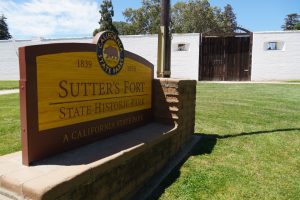
“Being a Native American in Sacramento and seeing the idealization of a person who brought a reign of terror to our local Native tribes — and beyond — is triggering. I grew up here, learned about Sutter in my primary school education, participated in the field trips to the fort that left me shocked,” wrote Vanessa Esquivido (Nor Rel Muk Wintu, Hupa, Xicana), an expert on Native American Studies, in a letter to CBM.
In Antelope Valley, an inland area north of Los Angeles, Quartz Valley High School has ditched its Rebel mascot. And Fort Bragg, a small North Coast town with less than 8,000 residents, is considering changing its name. The Confederate general Braxton Bragg, for whom the scenic seaside town is named, enslaved over 100 Black people.
On June 26, President Donald Trump signed an Executive Order to protect monuments, memorials and statues.
Walker says the solution to preserving history without lifting up racist historical symbols is simple.
“Take all the monuments that have been removed and confiscated, put them in one place,” he said. “Put them in a museum and say, ‘this is the Confederacy.’ This is how bad we’ve been in America. This is the real story.


Activism
Oakland Post: Week of September 23 – 29, 2026
The printed Weekly Edition of the Oakland Post: Week of September 23 – 29, 2026

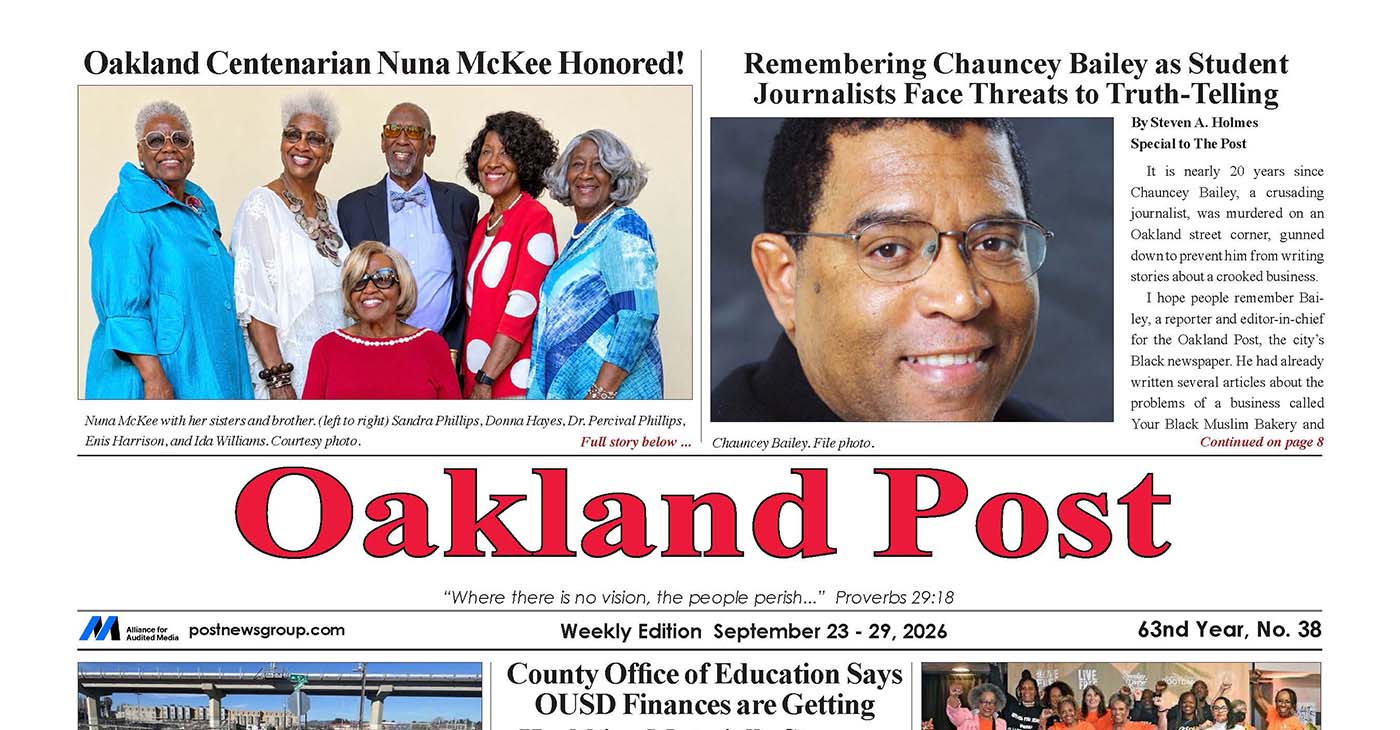
To enlarge your view of this issue, use the slider, magnifying glass icon or full page icon in the lower right corner of the browser window.

Activism
Oakland Post: Week of September 16 – 22, 2026
The printed Weekly Edition of the Oakland Post: Week of September 16 – 22, 2026
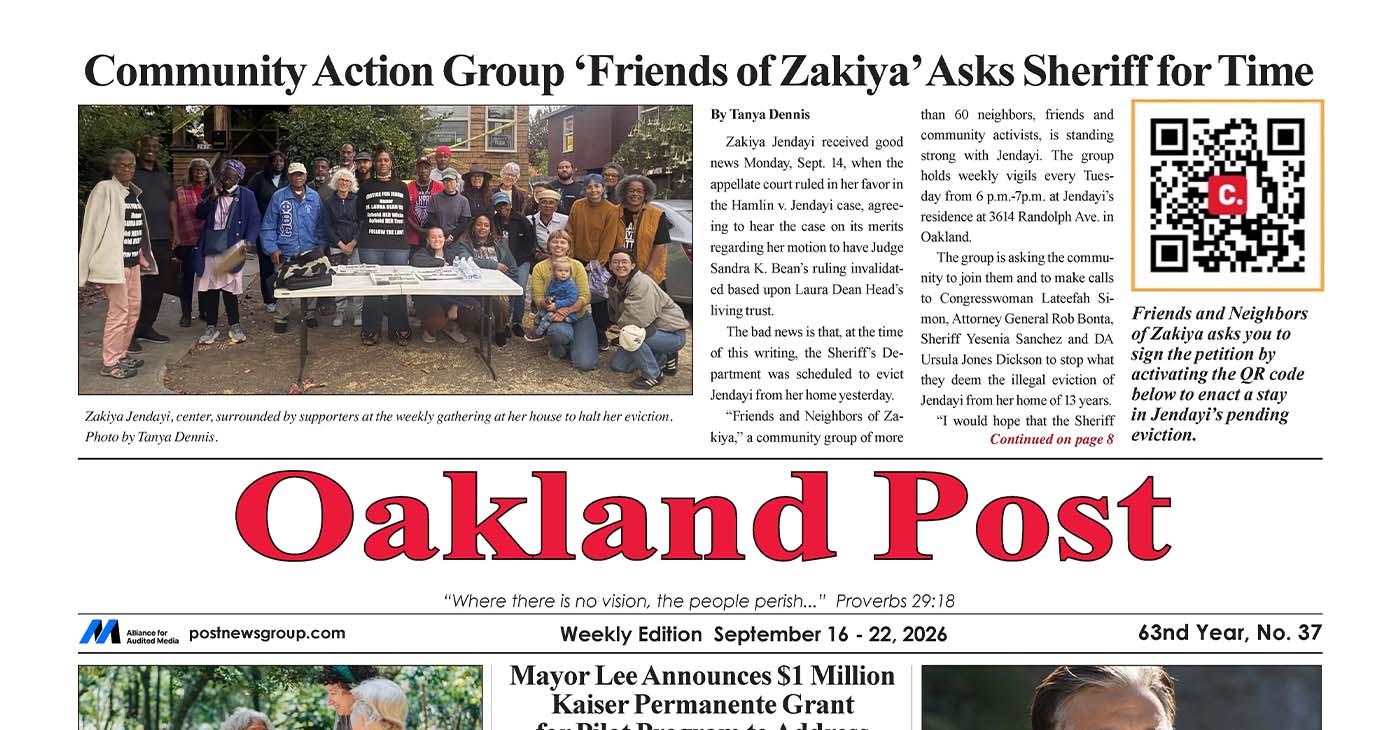
To enlarge your view of this issue, use the slider, magnifying glass icon or full page icon in the lower right corner of the browser window.
Activism
Oakland Post: Week of September 9 – 15, 2026
The printed Weekly Edition of the Oakland Post: Week of September 9 – 15, 2026
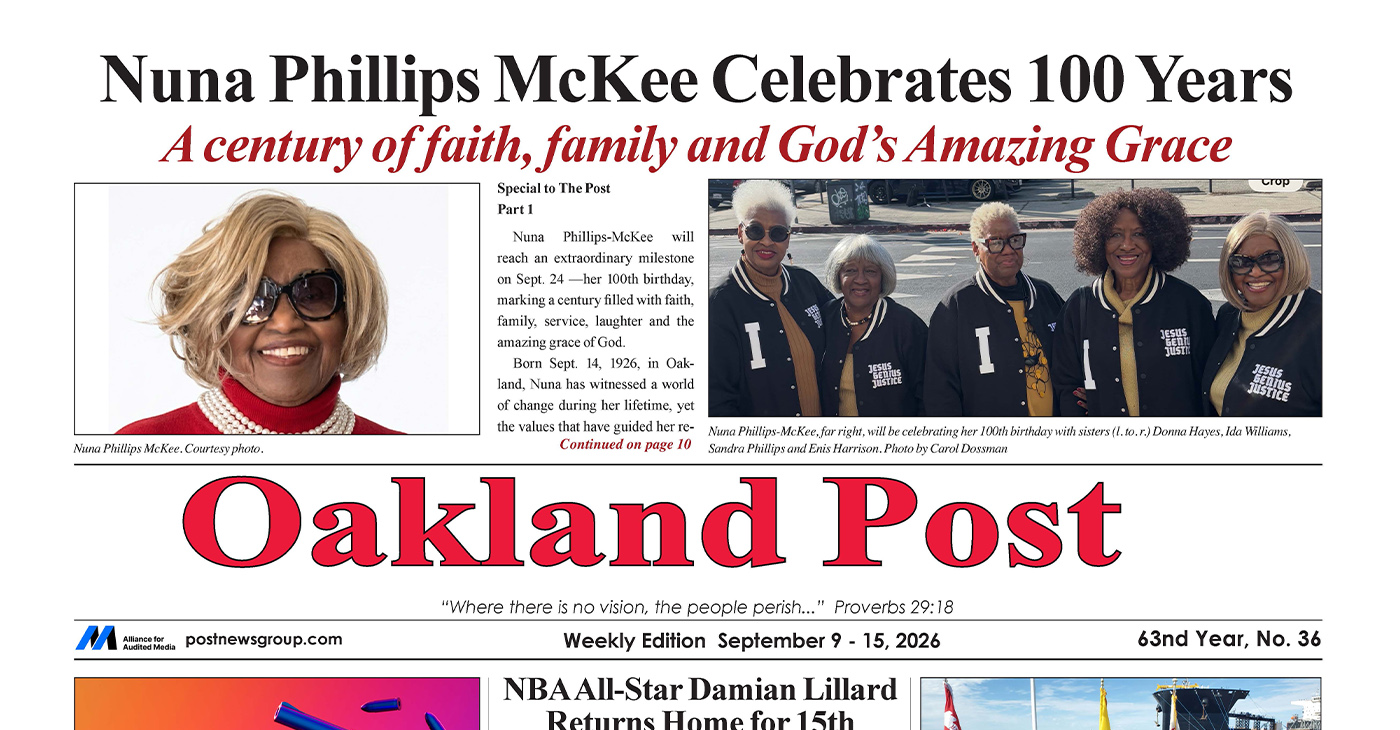
To enlarge your view of this issue, use the slider, magnifying glass icon or full page icon in the lower right corner of the browser window.



Asm. Corey Jackson Announces Launch of 24-Hour Childcare in His District

IN MEMORIAM: The Rev. Leon “Sonny” Clark, Longtime Orange County Pastor and Community Leader, Dies at 72

Poll: Becerra Widens His Lead Over Hilton; Californians Split on Wealth Tax

From Historic Memories to New Possibilities: Oakland Celebrates Coliseum 60

County Office of Education Says OUSD Finances Are Getting Healthier, Materially Stronger

LIVE FREE Sunday Dinner Brings Faith, Fellowship and Civic Conversation to Oakland

Remembering Chauncey Bailey as Student Journalists Face Threats to Truth-Telling

BLACspace Cooperative Invites Bay Area to Experience Oakland’s Black Cultural Ecosystem Through a BLAC Map Tour + Party

In Wake of Death on Doorstep, Williams Chapel Baptist Church Calls for Better Care, Funding for Unhoused

Oakland Centenarian Nuna McKee Honored!

Caribbean Nations Produce Action Plan Calling for UK Reparations Over Slavery

Oakland Post: Week of September 23 – 29, 2026

Doulas Are Helping Black California Moms Navigate Pregnancy–Even as High Mortality Rates Persist

Newsom Signs Addictive Social Media Law to Protect Kids

On Your November Ballot: Prop 38 Would Allocate $8.4 Billion to Immunology and Immunotherapy Funding

Four Candidates, Including Incumbent Barbara Lee, Qualify for Oakland Mayor’s Race

Oakland Post: Week of August 12 – 18, 2026

Oakland Observes Black August with Block Parties, Film Showings, Workshops

Standoff for Justice: Our Homes Are Worth Fighting For

Oakland Post: Week of August 26 – September 1, 2026

Frontier Airlines’ Return to Oakland Airport Brings Flights, Jobs and Opportunity

Gubernatorial Candidate Steve Hilton Blasts California New Tire Rules; Newsom Hits Back

Chef Sharon Lee Blends Culinary Excellence, Education and Empowerment

Jackie Wright Champions Bay Area Stories, Filmmakers and Cultural Institutions

Big City Mayors Ask for “Yes” Vote on Housing Bond Measure; Conservatives Say “No”

Gov. Newsom’s Latest Appointees Include Sacramento Advocate for Formerly Incarcerated Students; State’s New Tech Chief

Oakland Coliseum Project Opens Door for Small Businesses to Build Bigger

Misnamed ‘Parent’ PAC Seeks to Influence Oakland School Board Elections

Longtime BWOPA Member Brendalyn Goodall Appointed to California Workforce Development Board

Gov. Newsom Signs Law Shielding Immigration Aid Workers From Doxing Threats

The Conversation With Al McFarlane 6/23/26

Media Monday 6/22/26

LIVE! ASK ALMA! — TUES. 6.23.26 7PM EST

Car Buying Secrets: 4 Hidden Checks Before You Sign!

Is This 550 HP Charger Worth YOUR Money? AutoNetwork Review

Celebrating Juneteenth – Frederick Douglass on education and resistance

LIVE! — ASK ALMA! — TUES. 6.19.26 7PM EST

Hyundai Ioniq 5 Parking, Safety, and 360 View #shorts

2025 Ioniq 5 New Wiper & Powerful Performance! #shorts

Electric SUV Range: Is 259 Miles Enough? #shorts

EV Charging: How Fast Can You Charge an Electric Vehicle? #shorts

Biometric Cooling… Messaging Seats…Come on! 2025 Infiniti QX80 Autograph 4WD

Charged Up: Witness the Magic of a Fully Electric Car! #shorts

Range Rover Sport PHEV Included…: See What’s Inside This Luxury SUV! #shorts

Invisible Hood View: Perfect Parking with X-Ray Vision! #shorts
-
 Business4 weeks ago
Frontier Airlines’ Return to Oakland Airport Brings Flights, Jobs and Opportunity
-
 Business4 weeks ago
Gubernatorial Candidate Steve Hilton Blasts California New Tire Rules; Newsom Hits Back
-
 Business4 weeks ago
Chef Sharon Lee Blends Culinary Excellence, Education and Empowerment
-
 Black History4 weeks ago
Jackie Wright Champions Bay Area Stories, Filmmakers and Cultural Institutions
-
 Community4 weeks ago
Big City Mayors Ask for “Yes” Vote on Housing Bond Measure; Conservatives Say “No”
-
 Education4 weeks ago
Gov. Newsom’s Latest Appointees Include Sacramento Advocate for Formerly Incarcerated Students; State’s New Tech Chief
-
 Business4 weeks ago
Oakland Coliseum Project Opens Door for Small Businesses to Build Bigger
-
 Community2 weeks ago
Misnamed ‘Parent’ PAC Seeks to Influence Oakland School Board Elections
