
Activism
School District Security Violently Clashes with Parents, Community at Parker Elementary School
According to a press release issued by the Parker protesters, “The security officers physically ejected several people and unlawfully detained one parent in the building in handcuffs, injuring the parent in the process. Within two hours, nearly 60 people from the public education community and neighborhood had amassed outside with a single demand: let go of this parent. After an hour, OPD arrived with four officers. As they opened the building, the group of people who were amassed outside entered the building and were met with excessive force by the OUSD security forces. More than 10 people sustained minor to moderate injuries, and two people went to hospital for treatment.”

By Ken Epstein
Oakland Unified School District security officers arrived at Parker Elementary School in East Oakland on Thursday, Aug. 4 to change the locks and clear people from the school.
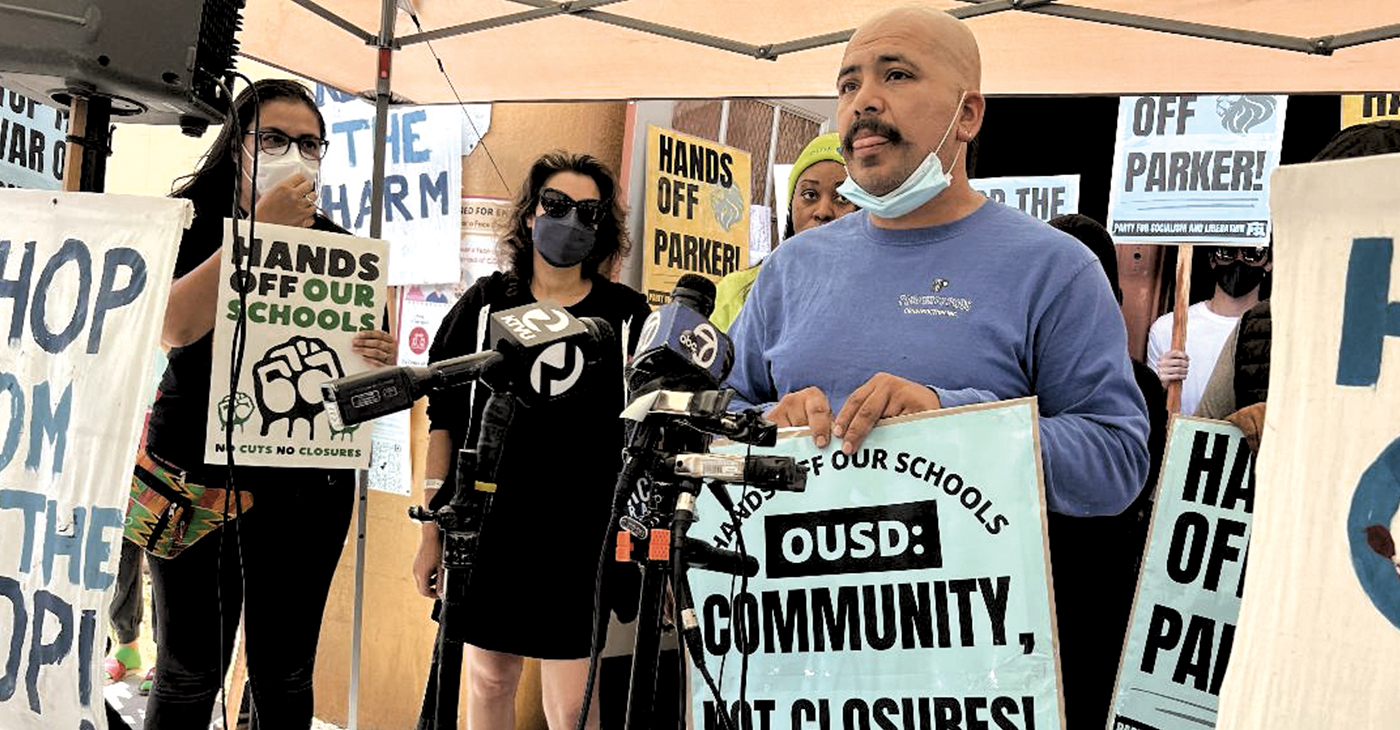
Parker, located at 7929 Ney Ave. in East Oakland, has been occupied and kept open operating community programs for the last two months by community protesters, who are resisting the school board decision to permanently close the school at the end of May.
According to a press release issued by the Parker protesters, “The security officers physically ejected several people and unlawfully detained one parent in the building in handcuffs, injuring the parent in the process.
“Within two hours, nearly 60 people from the public education community and neighborhood had amassed outside with a single demand: let go of this parent. After an hour, OPD arrived with four officers. As they opened the building, the group of people who were amassed outside entered the building and were met with excessive force by the OUSD security forces. More than 10 people sustained minor to moderate injuries, and two people went to hospital for treatment.”
In a response to Oakland Post questions, OUSD spokesperson John Sasaki wrote: “OUSD staff went to Parker on Thursday and found all the people who had been inside the building had left the premises. So, staff changed the locks and set the alarm.

“Someone picked, cut, or otherwise broke through a lock to get back inside the building. They were removed. But unfortunately, individuals forced their way back into the building.”
Sasaki continued, “Parker K-8 School is now closed. The individuals at Parker have been and continue to trespass. We have directed them to leave from day one and have continued to do so on many other occasions. Of great concern is that the children that were onsite were sleeping in unsafe conditions and that the adults were running an unsafe and unlicensed childcare program. We continue to demand that they find other ways to safely and peaceably express their concerns.”
Parker protesters condemned the actions. “It was unthinkable that the district would send a group of poorly trained security —consultants — to injure, aggress, and antagonize a peaceful community where children were receiving services, located in a predominantly Black neighborhood of East Oakland, which already experiences disproportionate police violence,” the release said.
Parker activists say they are not leaving and will continue their fight to keep the school from being permanently closed and privatized.
Civil rights attorney Walter Riley, who represents the protesters, says that his investigation told the Oakland Post that description of the incident on Aug. 4 “were concerning in a number of ways.”
“The people had been there all summer, and the district had allowed them to continue. No notice of eviction had ever occurred. After locks were placed on the door, a protester made entry, not by breaking in but through a door with a key, as has been the case all summer,” said Riley.
The security agency employed by the district does not have the authority to use “self-help” (that is to physically evict people from the building). They are untrained, and the district is liable for their injuries.
Riley continued: “OPD officers, when they arrived, stood by, and watched unlawful physical attacks. One person was thrown headfirst into a wall by security causing significant injury. Another person, a candidate for school board and an active parent, was taken to the ground, a knee placed on his neck by security. He was brutalized, handcuffed, and held for up to two hours without medical aid for injuries to his wrist, neck, and face.”
Since May 25, the final day of classes of the 2021-22 school year, protesters have occupied Parker 24 hours a day, utilizing the space for a summer program for school-age children, youth empowerment initiatives, free food distribution, voter registration drives, and hosting community town halls and other events, according to protesters’ press statement.
This Wednesday, protesters held a press conference, accusing the district of political repression and retaliation by firing two educators who have been active in the fight against school closures and in defense of Parker school.
One of the two teachers who was fired was Craig Gordon, a 32-year veteran Oakland teacher and union activist. The other teacher who was fired was not named.
District spokesman Sasaki declined to comment on the firing of the two teachers. “We don’t comment on personnel matters,” he said.











Activism
Oakland Post: Week of September 16 – 22, 2026
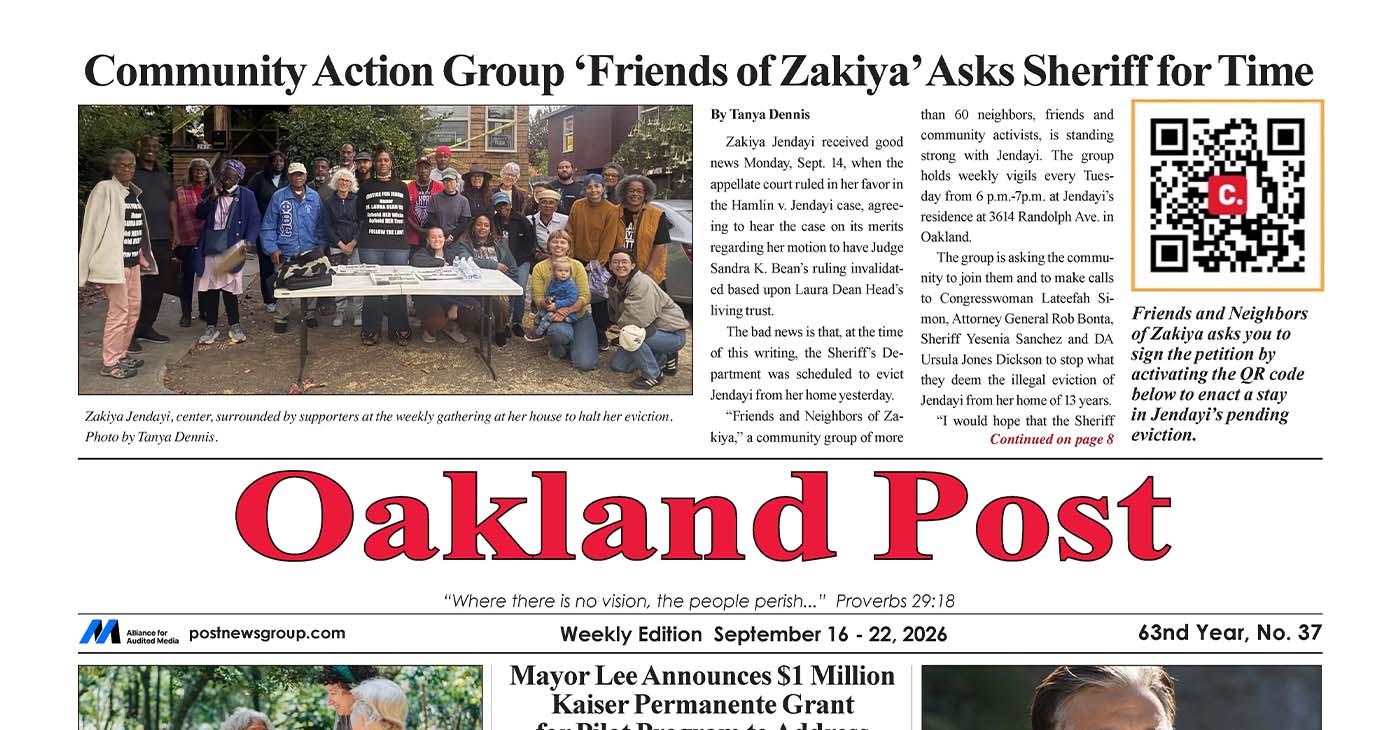
The printed Weekly Edition of the Oakland Post: Week of September 16 – 22, 2026
To enlarge your view of this issue, use the slider, magnifying glass icon or full page icon in the lower right corner of the browser window.
Activism
Oakland Post: Week of September 9 – 15, 2026
The printed Weekly Edition of the Oakland Post: Week of September 9 – 15, 2026

To enlarge your view of this issue, use the slider, magnifying glass icon or full page icon in the lower right corner of the browser window.
Activism
Oakland Post: Week of September 2 – 8, 2026
The printed Weekly Edition of the Oakland Post: Week of September 2 – 8, 2026

To enlarge your view of this issue, use the slider, magnifying glass icon or full page icon in the lower right corner of the browser window.



Doulas Are Helping Black California Moms Navigate Pregnancy–Even as High Mortality Rates Persist

Newsom Signs Addictive Social Media Law to Protect Kids

On Your November Ballot: Prop 38 Would Allocate $8.4 Billion to Immunology and Immunotherapy Funding

Ask California: Golden State Releases New AI Chatbot

Asm. Isaac Bryan’s Bill Banning California Police From ICE Side Jobs Reaches Newsom’s Desk

Assemblymember LaShae Sharp-Collins’s Bill Would Pause Law Enforcement’s Use of Shock Gloves Pending Study

BOOK REVIEW: ‘Laws of Solomon’ Reveals Tender Heart of Former Child Soldier

OPINION: The New American Fear – From 9-11 to AI

Passing for White, Fighting for Black America: The Courage of Walter White

Oakland People’s Arms Embargo Coalition Demands End to Military Shipments Thru Oakland

Barbara Lee Mourns Gloria Steinem, Remembers a Friendship Rooted in Equality

Event Preview: ‘Fashion v. Fascism’ – A Runway Revolution Is Coming to the Bay Area

Two Looming Threats Every Alameda County Elder Should Know About

Oakland Mayor Reads to Children at Bookout Block Party at Marcus Books Store

Tradition Comes to the Streets in 11th Annual Black-Eyed Pea Festival at the Freedom Farmers Market

Less Affluent School Districts, Including Sacramento City, Face Threat of State Takeover

ESSAY: California Can Close Its Colorectal Cancer Gap

California Hispanic Chambers of Commerce Unveils: ‘Powering the Future’ Theme for 47th Annual Statewide Convention

Four Candidates, Including Incumbent Barbara Lee, Qualify for Oakland Mayor’s Race

Oakland Post: Week of August 12 – 18, 2026

From Blueprint to Breakthrough: Tackling Affordable Housing in Oakland

Oakland Observes Black August with Block Parties, Film Showings, Workshops

COMMENTARY: Why Local School Tax Measure G1 Will Not Be on the November Ballot

Standoff for Justice: Our Homes Are Worth Fighting For

Returning to Its Roots, the Oakland Black-Eyed Pea Festival Partners with the Freedom Farmers Market Sept. 12

Oakland Post: Week of August 26 – September 1, 2026

NPRC Scores First Advocacy Victory: David Shaw Finally Gets His Wish to ‘Go Home’

Frontier Airlines’ Return to Oakland Airport Brings Flights, Jobs and Opportunity

Gubernatorial Candidate Steve Hilton Blasts California New Tire Rules; Newsom Hits Back

Chef Sharon Lee Blends Culinary Excellence, Education and Empowerment

The Conversation With Al McFarlane 6/23/26

Media Monday 6/22/26

LIVE! ASK ALMA! — TUES. 6.23.26 7PM EST

Car Buying Secrets: 4 Hidden Checks Before You Sign!

Is This 550 HP Charger Worth YOUR Money? AutoNetwork Review

Celebrating Juneteenth – Frederick Douglass on education and resistance

LIVE! — ASK ALMA! — TUES. 6.19.26 7PM EST

Hyundai Ioniq 5 Parking, Safety, and 360 View #shorts

2025 Ioniq 5 New Wiper & Powerful Performance! #shorts

Electric SUV Range: Is 259 Miles Enough? #shorts

EV Charging: How Fast Can You Charge an Electric Vehicle? #shorts

Biometric Cooling… Messaging Seats…Come on! 2025 Infiniti QX80 Autograph 4WD

Charged Up: Witness the Magic of a Fully Electric Car! #shorts

Range Rover Sport PHEV Included…: See What’s Inside This Luxury SUV! #shorts

Invisible Hood View: Perfect Parking with X-Ray Vision! #shorts
-
 Commentary4 weeks ago
Standoff for Justice: Our Homes Are Worth Fighting For
-
 Activism4 weeks ago
Oakland Post: Week of August 26 – September 1, 2026
-
 Business4 weeks ago
Frontier Airlines’ Return to Oakland Airport Brings Flights, Jobs and Opportunity
-
 Business4 weeks ago
Gubernatorial Candidate Steve Hilton Blasts California New Tire Rules; Newsom Hits Back
-
 Business4 weeks ago
Chef Sharon Lee Blends Culinary Excellence, Education and Empowerment
-

 Community4 weeks ago
Big City Mayors Ask for “Yes” Vote on Housing Bond Measure; Conservatives Say “No”
-

 Black History4 weeks ago
Jackie Wright Champions Bay Area Stories, Filmmakers and Cultural Institutions
-

 Education4 weeks ago
Gov. Newsom’s Latest Appointees Include Sacramento Advocate for Formerly Incarcerated Students; State’s New Tech Chief
