
Environment
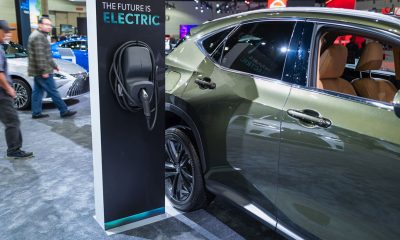
San Leandro Opens Three Electric Vehicle Charging Stations for Public Use

The City of San Leandro announced that it has installed three new electric vehicle (EV) charging stations that are now available for public use.
Two of the stations are located at the City’s Downtown Garage, located at 122 Estudillo Av., and the third station is located at the City’s Wastewater Treatment Plant at 3000 Davis St.
“Electric vehicles ultimately save money for those who drive them and are good for the environment because these vehicles don’t directly generate any carbon emissions,” said Mayor Pauline Russo Cutter. “But one of the biggest impediments to more people being able to own these types of vehicles is finding a place to charge them.”
The stations have been installed as part of a wider effort known as the Bay Area Charge Ahead Project, a grant program funded by the California Energy Commission that is facilitating the installation of 152 EV charge ports throughout the Bay Area in high-priority areas.
In order to use the stations, members of the public need only to drive up and plug in (a Charge Point account is required). Users will be charged $1.50 per hour for the first four hours of charging, and $5.00 per hour thereafter. The Charge Point Level 2 stations provide power between 208 to 220 volts, which typically provide a full vehicle charge within four hours.
The Bay Area Charge Ahead Project is part of a regional collaboration being led by the California EV Alliance and its partners, including the Bay Area Climate Collaborative, a program of Prospect Silicon Valley.
“The Bay Area is the nation’s leading regional electric vehicle market on a per capita basis,” added Richard Schorske, executive director of the California EV Alliance. “Reaching our regional goal of 100,000 electric vehicles on the road by 2020 will result in over $100 million going into the local economy that would otherwise be spent on petroleum products coming from outside our region.”
There are nearly 40,000 plug-in vehicles and 2,500 charging spots in the Bay Area. Electric vehicle sales have grown steadily in California, exceeding the rate of adoption compared to conventional hybrids when first introduced.
In 2014, electric vehicles accounted for over five percent of auto sales, and are expected to grow according to state and independent projections. Battery costs, which are the most significant component of electric vehicle costs, are also estimated to decrease by up to 50% or more by 2020.
The increased use of electric vehicles will also help San Leandro achieve its Climate Action goals because these cars serve to reduce greenhouse gas emissions and produce less noise pollution. Electric vehicles also emit only 20 percent of the heat that is generated by conventional automobiles, which can help to cool down Bay Area cities during warm summer months.
For more information, contact Judy Walker of the San Leandro Department of Public Works at (510) 577-3437.













Commentary
Neighborhood Empowerment Day in Deep East Oakland Brings Community Together After Recent Tragedy
Hosted by the 40×40 Council, the free, family-friendly resource fair featured health and wellness services, workshops, children’s activities, food, giveaways and local Black-owned businesses. Residents also connected with community organizations working to strengthen East Oakland.

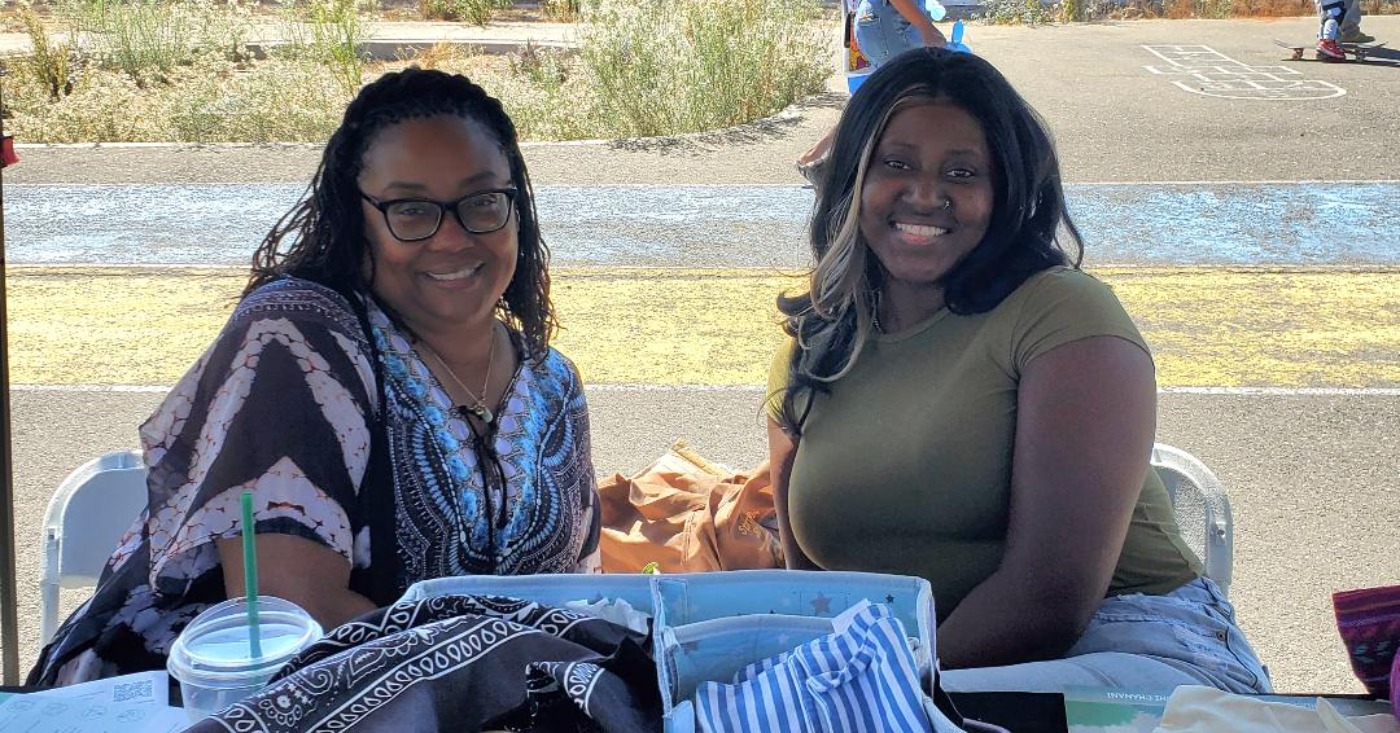
Families, residents and community organizations gathered at the Parker Community Resource Center on Saturday, Sept. 12, for the 40×40 Neighborhood Empowerment Day, transforming the site of a recent tragedy into a space for healing, resources, connection and joy.
Hosted by the 40×40 Council, the free, family-friendly resource fair featured health and wellness services, workshops, children’s activities, food, giveaways and local Black-owned businesses. Residents also connected with community organizations working to strengthen East Oakland.
The gathering came six weeks after a fatal shooting occurred at the Ney Avenue center on July 31. The violence happened shortly before 9 a.m. on the campus of the adult education center and claimed the life of 25-year-old Kimarii McLemore. A second person was injured.
McLemore was attending what was supposed to be her final day in an adult education carpentry class. The shooting deeply affected her family and traumatized students, staff members and residents who had viewed the center as a safe place where community members could pursue education, career training and a better future.
Neighborhood Empowerment Day offered residents an opportunity to return to the center in a spirit of unity and reclaim the space as an important neighborhood resource.
“Reclaiming the space after a tragedy means creating opportunities for people to gather, connect, experience joy and feel a sense of community once again,” said Tim Zenor-Davis, program manager at Roots Community Health. “After a trauma occurs, we see what happened, we acknowledge its impact, and we are continuing to show up.”
Throughout the afternoon, children and families participated in activities while residents received information about health, wellness and other community services. The event also gave local entrepreneurs and service providers an opportunity to connect with the community.
Complimentary meals included grilled burgers and tacos while a DJ played popular music.
Guests received blood pressure and eye-sight checks. A space to exercise on yoga mats was provided while headphones with guided meditation offered a moment to slow down and reflect.
The 40×40 Council includes the Black Cultural Zone, Brotherhood of Elders Network, East Oakland Youth Development Center and Roots Community Health. Together, the organizations have worked to address community violence and the deeper systemic conditions that have affected generations of East Oakland residents.
The council’s work has extended beyond responding to individual tragedies. As part of the broader Rise East initiative, the collaborative has focused on reversing decades of economic disinvestment, systemic poverty, health disparities and the displacement of Black legacy residents.
The 40×40 area stretches from Seminary Avenue to the San Leandro border and from MacArthur Boulevard to the Bay. More than 30,000 Black residents live within the area, which contains Oakland’s largest concentration of Black residents.
Organizers said the area has continued to demonstrate resilience despite experiencing community violence, declining investment and a significant life-expectancy gap compared with wealthier parts of the region.
The council seeks to help reshape East Oakland into a vibrant, multigenerational community where Black residents can remain, return, heal, prosper and build power.

Business
Oakland Launches Aerbits Program to Identify, Report Abandoned Trash
“Aerbits, which was approved by the Privacy Advisory Commission, uses modern technology and best practices to help our crews clear trash faster and more efficiently, while our targeted outreach and enforcement strategies address the root causes of dumping. Together, we are going to get the job done.”
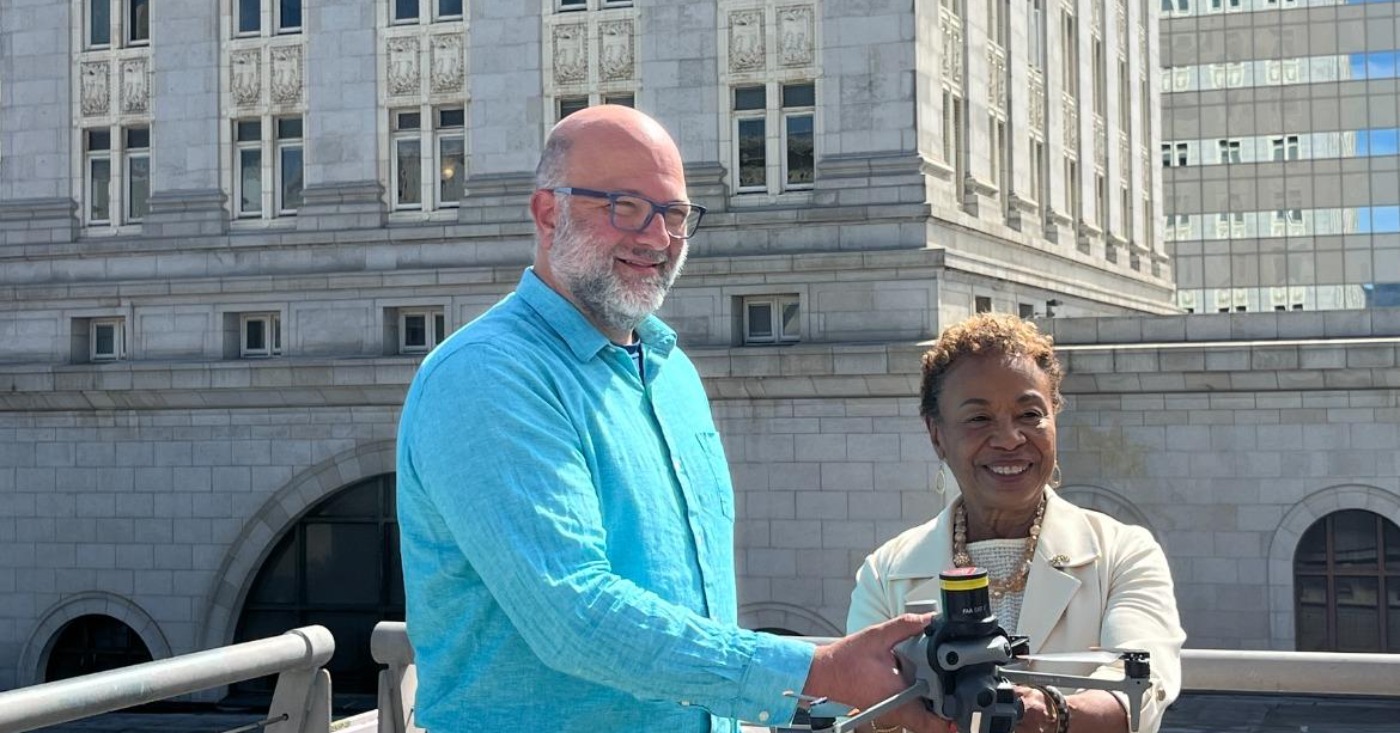
On Tuesday, the City of Oakland launched Aerbits, an innovative new program that deploys AI-assisted aerial imaging technology to proactively detect and report abandoned trash on streets and sidewalks – to support timely and effective removal of illegal dumping.
By shifting from a reactive, complaint-based system to data-driven proactive detection, the City can deploy cleanup resources faster, more efficiently, and more equitably to the areas in greatest need.
Approved by both the Privacy Advisory Commission and the Oakland City Council, Aerbits is the latest addition to Oakland’s comprehensive strategy to eliminate illegal dumping from the Town.
“Oakland residents and businesses deserve clean streets and today we are one step closer to a safer, cleaner, and greener Oakland,” said Mayor Barbara Lee. “Our strategy strengthens eradication, education, and enforcement efforts across every neighborhood.
“Aerbits, which was approved by the Privacy Advisory Commission, uses modern technology and best practices to help our crews clear trash faster and more efficiently, while our targeted outreach and enforcement strategies address the root causes of dumping. Together, we are going to get the job done.”
The impacts of illegal dumping on Oakland are profound, disproportionately burdening historically disinvested communities while threatening public health, safety, and economic vitality.
The City is united in taking action to remedy it – with the mayor, Council, administration, Public Works Department, community groups and more coming together to make change.
In May, the City Council approved the Illegal Dumping Expenditures Action Plan, which approves and funds multiple actions – including Aerbits – to help remedy illegal dumping.
This past June, Oakland secured $9.2 million from the Crankstart Foundation to scale up operations like Aerbits and break the cycle of illegal dumping across Oakland.
The Aerbits aerial imaging system photographs public rights-of-way to pinpoint exact locations, estimate waste volumes, and classify types of debris. This enables City dispatchers to understand the problem and efficiently deploy the appropriate crew and equipment to each site.
Built with privacy at its core, the technology contains no facial recognition, no license plate readers, and uses no personally identifying information. Aerbits takes pictures of trash – not of people.
“I founded Aerbits because I saw a major gap in the data that was available to City crews on the streets, and I wanted our children to have a cleaner environment” said Aerbits Founder Brian Johnson.
“Aerbits enables cleanups to be timelier, more effective, and more equitable. By providing real-time comprehensive data, automating the creation of work orders, and improving closure of cleared tickets, we are removing the problems that occur when relying primarily on a complaint-based system,” he said.
Aerbits is the latest milestone in the series of actions the City is taking to implement the City Council-approved Illegal Dumping Expenditures Action Plan. Recent actions taken by the City include:
- Stricter Enforcement: Enacted a new Illegal Dumping Enforcement Ordinance increasing penalties and holding vehicle owners responsible; hired additional Environmental Enforcement Officers equipped with updated citation technology; and worked alongside State Senator Jesse Arreguin on legislation that allows the City to boot vehicles tied to repeat dumping offences.
- Community Resources: Reinstated the popular “Bulky Block Parties” offering residents free, convenient ways to get rid of bulky waste, alongside expanded public education campaigns.
- Expanded Fleet Equipment: Obtained new heavy-duty Lightning Loader trucks that allow us to clean up more volumes of debris faster than ever before.
Rebecca Kaplan is a former City Councilmember-at-large for the City of Oakland.
Business
Goldi-Locs and Two (or Three) Bears in the Forest in California Hills
OAKLAND POST — My husband has anticipated 99% of our needs – tents, saws, canopies, batteries, shovels, rakes, axes, picks, etc., and Goldi-Locs instructs and reminds us how to get from step A to B, but there is nothing like the experience you gain on your own. Meaning: you don’t how to do it until you do it. No matter what you read, what somebody says, until you do it, you don’t know.
It is my belief that the mice set us up. That’s how the bear(s) knew where to go.
On a mountain in Butte County, a wide-ranging crew of Black people have embarked on a mission of land stewardship.
That means if you want that country cottage, you have to build it yourself.
When we first saw the land after our veteran land steward – let’s call her Goldi-Locs for her long locs that are the gold of California hills – asked for help putting up a fence to ward off potential trespassers. What had been lavish green hills of Douglas fir were now covered with dark spires like burnt matches pushing into the sky.
Up close, moss and ferns edged out from the bases of blackened tree stumps. A lizard skittered by, the only sign of life. No birds. No squirrels. No mice.
And no bears.
Fast forward five years, and FEMA has done all it will do to clear burned trees. The remaining trees are dead and have to be logged and milled.

The most urgent work is to clear the dirt access roads clogged with dead trees. For shelter while we, I mean, they do that, we bought an old trailer that has seen better days but suits our needs.
My husband has anticipated 99% of our needs – tents, saws, canopies, batteries, shovels, rakes, axes, picks, etc., and Goldi-Locs instructs and reminds us how to get from step A to B, but there is nothing like the experience you gain on your own. Meaning: you don’t how to do it until you do it. No matter what you read, what somebody says, until you do it, you don’t know.
So, I thought I knew what I was doing. It was my job to assist with the cooking and set-up. And the break-down. There are cupboards in the trailer and a refrigerator, so I stored a couple of unopened boxes of spaghetti and an unopened bottle of olive oil, salt (Lawry’s of course), pepper, garlic powder and dried Italian herbs in the cupboard. In the refrigerator, which seals closed like any normal refrigerator I (accidently) left a box of butter.
Two weeks later, we get a call in Oakland from Goldi-Locs that the door of the trailer was hanging off its hinge, visible from her trailer uphill and 150 yards west of ours.
She said she would enlist the help of another (male) neighbor, to investigate.
An hour later, we got the report: No one was in the cabin, but a bear – or bears – had been. Outside, a torn box of spaghetti with just one or two remaining stiff strands lay in the dirt. Inside, the salt, pepper, herbs and garlic oil were an aromatic mess on the floor, while coffee grounds were scattered over the counter (After-dinner coffee?).
Paw prints led to the bathroom and beyond a single, muddy paw print marked the duvet on our bed.
Besides claw marks in the cupboard, and a swipe of dirt on the front and side of the refrigerator, there was no major damage.
Goldi-Locs and G. cleaned up the worst of it and were able to get the door up on the hinge and lock it. The trailer remained unmolested until our return.
In the meantime, some sleuthing – as Nancy Drew would put it – had been done. Visitors to the mountain confessed that they had previously prepared a vegetarian meal of – that’s right– pasta in a red sauce with sautéed garlic, onions, and Lawry’s and Italian herbs.
They ate outdoors. The scent filled the air. Mice have returned to the forest. They know how to get under, over and into trailers. Easy-peasy. They managed to get a little of the Italian meal. The bears wanted some. The mice shrugged their little shoulders and said, “we got everything but the crumbs, but over in the next yard, they have everything you need to MAKE IT YOURSELVES.”
So, it was Yogi, ‘smarter than the average bear, according to himself – and no doubt accompanied by Boo-Boo (the Fool), lumbered over to our unoccupied trailer and gently opened the door. The spaghetti in one cupboard, seasonings in the other, olive oil and look out- butter for bread in the refrigerator.
Yes, everything they needed. The whole recipe, or so the trifling mice said, having omitted fresh onion and bell pepper. The mice had left out the most important part – how to get the job done. Yogi had been given no information on pots, turning on the stove, boiling water, etc.
Disappointed, it was time for a nap, but the bed was neither hard, nor soft, but too small and as their cave was more comfortable, Yogi was of the mind to head home, maybe go fishing on the way in that nice stream up the hill.
Boo-Boo (the Fool), however, was of the mind to spitefully take do what bears do in the woods, but Yogi reminded him that, as it is their forest it is wise not to do that where you eat.
But when Yogi is not around, evidence shows that Boo-Boo routinely returns to the scene of the crime and leaves a little something in the middle of the path to the outhouse. Just because.
The mischievous mice have yet to be apprehended.



Doulas Are Helping Black California Moms Navigate Pregnancy–Even as High Mortality Rates Persist

Newsom Signs Addictive Social Media Law to Protect Kids

On Your November Ballot: Prop 38 Would Allocate $8.4 Billion to Immunology and Immunotherapy Funding

Ask California: Golden State Releases New AI Chatbot

Asm. Isaac Bryan’s Bill Banning California Police From ICE Side Jobs Reaches Newsom’s Desk

Assemblymember LaShae Sharp-Collins’s Bill Would Pause Law Enforcement’s Use of Shock Gloves Pending Study

BOOK REVIEW: ‘Laws of Solomon’ Reveals Tender Heart of Former Child Soldier

OPINION: The New American Fear – From 9-11 to AI

Passing for White, Fighting for Black America: The Courage of Walter White

Oakland People’s Arms Embargo Coalition Demands End to Military Shipments Thru Oakland

Barbara Lee Mourns Gloria Steinem, Remembers a Friendship Rooted in Equality

Event Preview: ‘Fashion v. Fascism’ – A Runway Revolution Is Coming to the Bay Area

Two Looming Threats Every Alameda County Elder Should Know About

Oakland Mayor Reads to Children at Bookout Block Party at Marcus Books Store

Tradition Comes to the Streets in 11th Annual Black-Eyed Pea Festival at the Freedom Farmers Market

Less Affluent School Districts, Including Sacramento City, Face Threat of State Takeover

ESSAY: California Can Close Its Colorectal Cancer Gap

California Hispanic Chambers of Commerce Unveils: ‘Powering the Future’ Theme for 47th Annual Statewide Convention

Four Candidates, Including Incumbent Barbara Lee, Qualify for Oakland Mayor’s Race

Oakland Post: Week of August 12 – 18, 2026

From Blueprint to Breakthrough: Tackling Affordable Housing in Oakland

Oakland Observes Black August with Block Parties, Film Showings, Workshops

COMMENTARY: Why Local School Tax Measure G1 Will Not Be on the November Ballot

Standoff for Justice: Our Homes Are Worth Fighting For

Returning to Its Roots, the Oakland Black-Eyed Pea Festival Partners with the Freedom Farmers Market Sept. 12

Oakland Post: Week of August 26 – September 1, 2026

NPRC Scores First Advocacy Victory: David Shaw Finally Gets His Wish to ‘Go Home’

Frontier Airlines’ Return to Oakland Airport Brings Flights, Jobs and Opportunity

Gubernatorial Candidate Steve Hilton Blasts California New Tire Rules; Newsom Hits Back

Chef Sharon Lee Blends Culinary Excellence, Education and Empowerment

The Conversation With Al McFarlane 6/23/26

Media Monday 6/22/26

LIVE! ASK ALMA! — TUES. 6.23.26 7PM EST

Car Buying Secrets: 4 Hidden Checks Before You Sign!

Is This 550 HP Charger Worth YOUR Money? AutoNetwork Review

Celebrating Juneteenth – Frederick Douglass on education and resistance

LIVE! — ASK ALMA! — TUES. 6.19.26 7PM EST

Hyundai Ioniq 5 Parking, Safety, and 360 View #shorts

2025 Ioniq 5 New Wiper & Powerful Performance! #shorts

Electric SUV Range: Is 259 Miles Enough? #shorts

EV Charging: How Fast Can You Charge an Electric Vehicle? #shorts

Biometric Cooling… Messaging Seats…Come on! 2025 Infiniti QX80 Autograph 4WD

Charged Up: Witness the Magic of a Fully Electric Car! #shorts

Range Rover Sport PHEV Included…: See What’s Inside This Luxury SUV! #shorts

Invisible Hood View: Perfect Parking with X-Ray Vision! #shorts
-
 Commentary4 weeks ago
Standoff for Justice: Our Homes Are Worth Fighting For
-
 Activism4 weeks ago
Oakland Post: Week of August 26 – September 1, 2026
-
 Business4 weeks ago
Frontier Airlines’ Return to Oakland Airport Brings Flights, Jobs and Opportunity
-
 Business4 weeks ago
Gubernatorial Candidate Steve Hilton Blasts California New Tire Rules; Newsom Hits Back
-
 Business4 weeks ago
Chef Sharon Lee Blends Culinary Excellence, Education and Empowerment
-

 Community4 weeks ago
Big City Mayors Ask for “Yes” Vote on Housing Bond Measure; Conservatives Say “No”
-

 Black History4 weeks ago
Jackie Wright Champions Bay Area Stories, Filmmakers and Cultural Institutions
-

 Education4 weeks ago
Gov. Newsom’s Latest Appointees Include Sacramento Advocate for Formerly Incarcerated Students; State’s New Tech Chief
