
Politics
Sacramento City Documents Detail Kevin Johnson’s Involvement in Black Mayors’ Group


In this Jan. 23, 2014 file photo, Housing and Urban Development Secretary Shaun Donovan, left, talks with Sacramento Mayor Kevin Johnson, before President Barack Obama arrives to speak at a reception for the U.S. Conference of Mayors in the East Room of the White House in Washington. (Carolyn Kaster/AP)
(Sacramento Bee) – Sacramento Mayor Kevin Johnson’s takeover of an embattled black mayors group in 2013 succeeded largely on the backs of city staff and volunteers who lobbied mayors around the country, organized board meetings and acted as intermediaries between the White House and federal agencies, according to thousands of emails and documents released Tuesday by the city.
More than 6,100 pages of emails and 16 documents obtained by The Sacramento Bee through the Public Records Act outline years of involvement by Johnson’s staff of paid employees and volunteers to cement Johnson’s leadership of the National Conference of Black Mayors and gain clout in Washington, D.C., in one of the most vivid examples of the mayor’s ambitions.

NCBM, a historic group born of the civil rights movement, had lost much of its credibility and clout due to years of financial mismanagement, as detailed by court documents and a federal criminal investigation of the group’s former president.
David Pittinsky, a private attorney working with Johnson on NCBM litigation and the mayor’s request to block the city’s release of some emails, said Tuesday on Capital Public Radio that “whatever Mayor Johnson did as president of the NCBM was not Sacramento mayor business.”








Business
AC Transit Labor Unions Back Director Joel Young
ATU Local 192 Vice President Nathaniel Arnold stated “our support reflects confidence in Young’s leadership and experience as the longest-serving member of AC Transit’s current Board of Directors. His experience is particularly important as AC Transit confronts serious fiscal challenges while working to preserve and strengthen service.


In the AC Transit Ward 3 election, AC Transit’s labor organizations have recently expressed their endorsement for Director Joel Young, recognizing his longstanding commitment to public transportation, workforce investment, and the employees who keep AC Transit moving every day.
Those unions include the Amalgamated Transit Union Local 192, the International Brotherhood of Electrical Workers Local 1245, and the American Federation of State, County and Municipal Employees Local 3916.
ATU Local 192 Vice President Nathaniel Arnold stated “our support reflects confidence in Young’s leadership and experience as the longest-serving member of AC Transit’s current Board of Directors. His experience is particularly important as AC Transit confronts serious fiscal challenges while working to preserve and strengthen service.
“At a time when difficult decisions lie ahead, Young brings institutional knowledge, longstanding relationships, and a demonstrated commitment to public transportation.

“Since joining the board in 2009, Young has served in key leadership roles, including president and vice president, helping guide AC Transit through periods of growth, innovation, and change.
During his tenure, he helped AC Transit secure more than $600 million in funding to support critical transportation investments. Young has also helped advance workforce development initiatives, support transit technology improvements, expand AC Transit’s zero-emission bus fleet, and strengthen the District’s national presence on transportation policy issues.

His leadership has extended beyond the Bay Area.
Young has represented AC Transit on the national stage, including participation in the White House Roundtable on Clean Bus Manufacturing, where transit leaders and policymakers discussed the future of clean transportation and domestic manufacturing.

Community
‘ICE-Free Marin’ Supporters Press Supervisors as County Drafts Enforcement Restrictions
“County resources are to never be used in the furtherance of federal immigration enforcement,” Johnson said, of the policy which is still in development. “The policy will require all county employees to notify the county executive within 24 hours of any immigration enforcement activity in which they become aware on county property.”
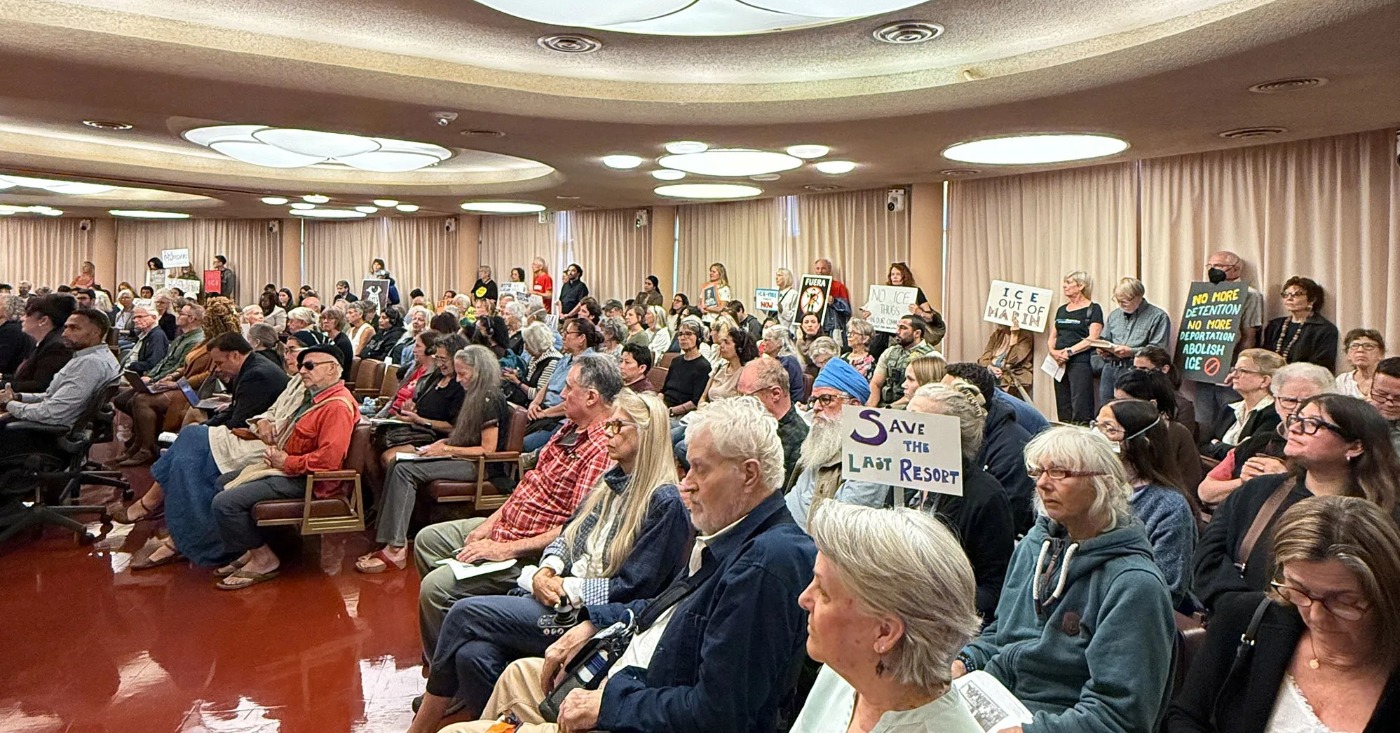
More than 100 protesters packed the Marin County Board of Supervisors chamber Sept. 29, urging supervisors to consider an ordinance restricting the actions of U.S. Immigration and Customs Enforcement officers.
County and state officials are already advancing some measures that overlap with demands the protesters have made for the past year.
“I want to share that the immigration subcommittee has been hard at work drafting important board policy as directed by the Board of Supervisors,” said Marin County Executive Derek Johnson, referring to policy that will prevent the use of county property for federal immigration enforcement activities.
“County resources are to never be used in the furtherance of federal immigration enforcement,” Johnson said, of the policy which is still in development. “The policy will require all county employees to notify the county executive within 24 hours of any immigration enforcement activity in which they become aware on county property.”
Those policy goals align with the two central provisions proposed by the No ICE in Marin Coalition, which filled the room at Tuesday’s meeting.
Their policy proposal, called ICE-Free Marin, prohibits ICE from using county property, resources or personnel without a judicial warrant and establishes clear reporting requirements whenever county department staff observe or communicate with federal immigration authorities. Those interactions may include the service of subpoenas and warrants, as well as attempts to access county facilities.
The ICE-Free Marin ordinance would require the county to post signs and barriers restricting ICE from entering county property, with county staff denying ICE officials entry and refusing to provide information and assistance. If ICE disregards directives, the county counsel would seek a court order to stop them, and if ICE unlawfully detains someone, they can be challenged in court, according to the ordinance.
Last year, the group protested the county’s participation in the State Criminal Alien Assistance Program, administered by the U.S. Department of Justice in conjunction with ICE and the U.S. Department of Homeland Security.
SCAAP funds are used to reimburse costs incurred for jailing immigrants lacking permanent legal status who have at least one felony or two misdemeanor convictions and are incarcerated for a minimum of four consecutive days.
In February, the county announced its 2026-28 budget does not include SCAAP funding.
State Takes Action on Immigrant Protections
Also on Sep.t 29, California Gov. Gavin Newsom signed a package of more than 20 bills aimed at increasing state oversight of federal immigration enforcement and protecting immigrant communities, according to a news release from the governor’s office.
The state legislation creates a 25% tax on private detention centers, expands health and safety oversight in those centers, requires additional public input and planning approvals for new facilities, and strengthens the role of state Attorney General Rob Bonta in inspecting them.
The measures also ban law enforcement from using wearable electroshock “shock gloves,” restrict flash-bang grenades and explosive breaching charges, limit the use of state-owned property for federal immigration operations, and require temporary identification decals on rental vehicles used by law enforcement.
The legislation expands access to public records involving private detention facilities and restricts former federal immigration officers who committed serious misconduct from becoming California peace officers or public employees.
Other measures allow people to sue federal officials for alleged violations of their constitutional rights and protect people traveling to and from courthouses from civil immigration arrests.
“We may not be able to dictate federal immigration enforcement policy, but we can make clear that activities taking place in California will be subject to California law,” the governor said in a video message announcing the bills.
The group leading the local campaign for the ICE-Free Marin ordinance is the Democratic Socialists of America. DSA spokesperson Courtney Sadowski said in an email that the group has spoken with supervisors Eric Lucan, Mary Sackett, Dennis Rodoni and Stephanie Moulton-Peters.
“But none have committed to introducing the ICE-Free Marin ordinance,” Sadowski said.
The group has attended numerous meetings of the Civilian Oversight Commission of the Sheriff’s Office asking for their support, she said.
“We cannot afford to wait the months or years it would take them to review and consider this item,” she said. “Even if they moved more quickly, all they can do is issue a recommendation.”
Speakers Weigh In
Hector Garcia, a community library specialist with the Marin County Free Library, spoke to the supervisors. He said that he recently completed an intense Department of Justice certification that will allow him to provide immigration services at the library.
The Recognition and Accreditation program allows qualified non-attorney staff working for eligible nonprofit organizations to legally provide immigration services for low-income and indigent individuals who cannot afford private attorneys.
“It would be impossible for me to fulfill this job with the presence of ICE,” Garcia said. “A fascist police force, they disregard the law, terrorize, assassinate and separate Black indigenous people of color and their families.”
Lisa Bennett with the Marin Rapid Response Network, a nonprofit that helps families locate detained relatives and provides other support services, said families go into shock when the major breadwinner is detained.
“Basic things like money for food, utilities, even driving are no longer a given,” she said. “They worry about their parent’s medical needs. They worry about themselves being next. They worry about what happens if the remaining parent is taken. This is what our government is doing to its own people. Silence is complicity.”
To enlarge your view of this issue, use the slider, magnifying glass icon or full page icon in the lower right corner of the browser window.



Jendayi Arrest Raises Community Concerns Regarding Sheriff’s Chain of Command

Marin County Supes Expand Small Business Options with Home Kitchen Pilot Program

Allen Temple Baptist Church Hosts Free Prostate Cancer Screenings on Oct. 17

AC Transit Labor Unions Back Director Joel Young

Locals Can Get Locally Grown Produce Delivered Through Urban Tilth

‘ICE-Free Marin’ Supporters Press Supervisors as County Drafts Enforcement Restrictions

Oakland Post: Week of October 7 – 13, 2026

OP-ED: Proposition 44 Would Put a Price on Trust

OP-ED: Proposition 40: It’s Time to Play Chess, Not Checkers

Listening as a Lifeline: A Doula’s Witness to Black Maternal Health

New Protections for Ticket Buyers: Gov. Newsom Signs Assemblymember Isaac Bryan’s Bill

‘We Don’t Talk Trash — We Pick Up Trash!’

Zakiya Jendayi Arrested, Locked Out of Home by Sheriff’s Deputies

Oakland Post: Week of September 30 – October 6, 2026

Asm. Corey Jackson Announces Launch of 24-Hour Childcare in His District

Standoff for Justice: Our Homes Are Worth Fighting For

Oakland Post: Week of August 26 – September 1, 2026

Frontier Airlines’ Return to Oakland Airport Brings Flights, Jobs and Opportunity

Jackie Wright Champions Bay Area Stories, Filmmakers and Cultural Institutions

Gubernatorial Candidate Steve Hilton Blasts California New Tire Rules; Newsom Hits Back

Chef Sharon Lee Blends Culinary Excellence, Education and Empowerment

Misnamed ‘Parent’ PAC Seeks to Influence Oakland School Board Elections

Oakland Coliseum Project Opens Door for Small Businesses to Build Bigger

Big City Mayors Ask for “Yes” Vote on Housing Bond Measure; Conservatives Say “No”

Gov. Newsom’s Latest Appointees Include Sacramento Advocate for Formerly Incarcerated Students; State’s New Tech Chief

Oakland Post: Week of September 2 – 8, 2026

Longtime BWOPA Member Brendalyn Goodall Appointed to California Workforce Development Board

Gov. Newsom Signs Law Shielding Immigration Aid Workers From Doxing Threats

Secretary of State Shirley N. Weber Urges Californians to Vote Early as Voter ID Battle Intensifies

Oakland Post: Week of September 9 – 15, 2026

The Conversation With Al McFarlane 6/23/26

Media Monday 6/22/26

LIVE! ASK ALMA! — TUES. 6.23.26 7PM EST

Car Buying Secrets: 4 Hidden Checks Before You Sign!

Is This 550 HP Charger Worth YOUR Money? AutoNetwork Review

Celebrating Juneteenth – Frederick Douglass on education and resistance

LIVE! — ASK ALMA! — TUES. 6.19.26 7PM EST

Hyundai Ioniq 5 Parking, Safety, and 360 View #shorts

2025 Ioniq 5 New Wiper & Powerful Performance! #shorts

Electric SUV Range: Is 259 Miles Enough? #shorts

EV Charging: How Fast Can You Charge an Electric Vehicle? #shorts

Biometric Cooling… Messaging Seats…Come on! 2025 Infiniti QX80 Autograph 4WD

Charged Up: Witness the Magic of a Fully Electric Car! #shorts

Range Rover Sport PHEV Included…: See What’s Inside This Luxury SUV! #shorts

Invisible Hood View: Perfect Parking with X-Ray Vision! #shorts
-
 Community4 weeks ago
Misnamed ‘Parent’ PAC Seeks to Influence Oakland School Board Elections
-
 Activism4 weeks ago
Oakland Post: Week of September 9 – 15, 2026
-

 Community4 weeks ago
Richmond Tiny House Village Farm & Garden Set to Open Gates on Sept. 26
-

 Black History4 weeks ago
Latest Massacre in Haiti Reveals Cruelty U.S. Deportations
-

 Black History4 weeks ago
OPINION: Nolan Wells’ Death One of Several Signifying Racial Terror Lives on in U.S. South
-

 Business3 weeks ago
Mayor Lee Announces $1 Million Kaiser Permanente Grant for Pilot Program to Address Homelessness, Clean Up Public Spaces throughout Oakland
-

 Economy2 weeks ago
Poll: Becerra Widens His Lead Over Hilton; Californians Split on Wealth Tax
-

 Business2 weeks ago
County Office of Education Says OUSD Finances Are Getting Healthier, Materially Stronger

Pingback: wyroby szklane piotrków trybunalski