
Politics
Republican Budget Would Shred Safety Net


House Budget Committee Chairman Tom Price (R-Ga.)
By Jazelle Hunt
NNPA Washington Correspondent
WASHINGTON (NNPA) – The Republican House budget will shred the social safety net designed to protect the most vulnerable citizens, severely cutting programs ranging from student loans to food stamps, according to a nonpartisan think thank.
“The budget would cause tens of millions of people to become uninsured or underinsured, make it harder for low-income students to afford college, shrink nutrition assistance, and squeeze many other such programs,” writes Robert Greenstein, president of the Center on Budget and Policy Priorities (CBPP). “Consequently, it’s sure to significantly increase poverty, hardship, and inequality.”
In an effort to balance the federal budget without raising taxes or restoring them to pre-recession levels, House Republicans plan to shrink spending in a variety of areas—especially health care and anti-poverty, food assistance, and housing assistance programs. The cuts will total $5.5 trillion over the next 10 years.
The House of Representatives Budget Committee’s proposal would drastically reduce or end federal funding to such programs, or reform them into state-run or meager versions of themselves.
Under this plan, the Affordable Care Act would be completely defunded, sacrificing the $1 trillion in federal income it generates through taxes, and also eliminating states’ expanded Medicaid. The CBPP finds that 14 million Americans would be left uninsured. The uninsured rate for Black people in particular has dropped from 24 percent to 16 percent, in the two years since ACA implementation.

Medicaid, the Children’s Health Insurance Program (CHIP), and other health programs would also lose $1 trillion in funding by 2025. Greenstein, who has served three presidential administrations before creating CBPP, points out that this cut comes on top of the losses from repealing health care reform.
The Supplemental Nutrition Assistance Program (SNAP) is slated to lose $125 billion. In 2013, Black people were 25.7 percent of all SNAP recipients; the same year, a national-representative Pew Research Center survey conducted the same year found that Black people were twice as likely as Whites to have used the food stamp program at some point in life.
The proposed budget would retain these and other mandatory safety net programs through federal block grants. Full responsibility for managing the grants and running the programs would be left to state governments. The CBPP asserts that block grants would not be enough on their own for most states to adequately administer these programs, and low- to moderate-income families would suffer most for it.
Medicare would lose $148 billion over the next decade, and would become a “premium support model” voucher system, in which seniors can choose their own insurance plan via marketplaces (similar to the current Affordable Care Act). Medicare would apply each recipient’s benefits directly to the insurance company he or she has chosen.
Black seniors with Medicare tend to have significantly lower-than-average incomes and savings as well as more chronic health conditions than others, making Medicare much more critical to their survival. As wealth gaps widen and health disparities persist, the need for effective Medicare will likely continue or deepen for Black retirees in the future.
In addition to weakening social programs, the proposed House budget also caps the maximum Pell Grant award limit for outstanding low-income college students, on the grounds that the recent expansion of what constitutes “need” shortchanges the most needy students.
There would be $759 billion less for discretionary funding. This money supports non-mandatory, but important provisions, such as job training opportunities, early childhood programs, climate change and renewable energy research, scientific and medical study, transportation, and more.
The only increased spending would go toward the War on Terror, which would see an additional $20 billion over the next 10 years.
In addition to spending less, the budget plans to revamp the tax code to secure new federal revenue. The proposal provides scant details on how this will be done.
The CBPP points out that the government already misses out on $1 trillion per year through waivers, credits, and tax breaks that disproportionately benefit the upper class; this is more than double the cost of the non-defense discretionary programs previously mentioned.
“Cutting only spending entitlements while shielding tax entitlements would be highly regressive,” Greenstein writes in a separate analysis of the budget. “It also would constitute a highly selective approach to so-called ‘entitlement reform’— cutting entitlement programs whose benefits go principally to poor and middle-class families, while asking for no deficit-reduction contribution from the entitlements that are heavily skewed to people at the top of the income scale and include some particularly wasteful and special-interest-oriented programs.”
Budget resolutions are only a blueprint for a future detailed appropriations bill that will allocate every penny and eventually reach the White House for signature.
Families USA, a national health care consumers group, said the repeal of the Affordable Health Care Act would be devastating.
“The Affordable Care Act is the most significant health care reform since the enactment of Medicare and Medicaid half a century ago,” it said in a statement. “In just five years, it has reduced by one-third the portion of the population that is uninsured. Approximately 16.4 million uninsured Americans have gained health coverage.”
President Barack Obama has long asserted that he would veto any bill that spells an end to the Affordable Care Act. He also told a White House audience of educators last week that there would be “a major debate” on any attempts to divest in education. The stalemate will likely result in another partial or full shutdown this fall.
Greenstein warns: “If [the Committee’s] policies were to become law, ours would be a coarser, more mean-spirited nation with higher levels of poverty and inequality, less opportunity, and a future workforce that’s less able to compete with its counterparts overseas.”
###






Activism
Oakland Post: Week of March 18 – 24, 2026
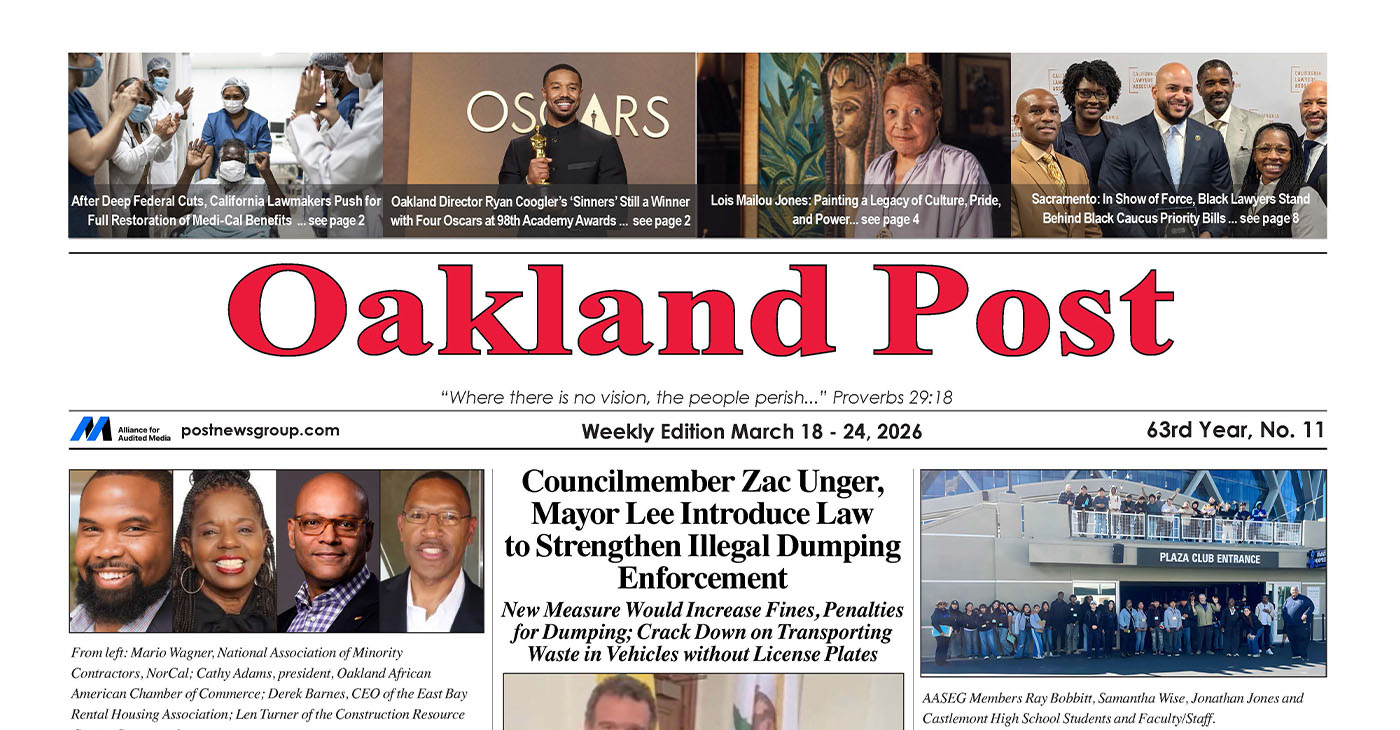
The printed Weekly Edition of the Oakland Post: Week of March 18 – 24, 2026
To enlarge your view of this issue, use the slider, magnifying glass icon or full page icon in the lower right corner of the browser window.
Activism
Oakland Post: Week of March 11 -17, 2026
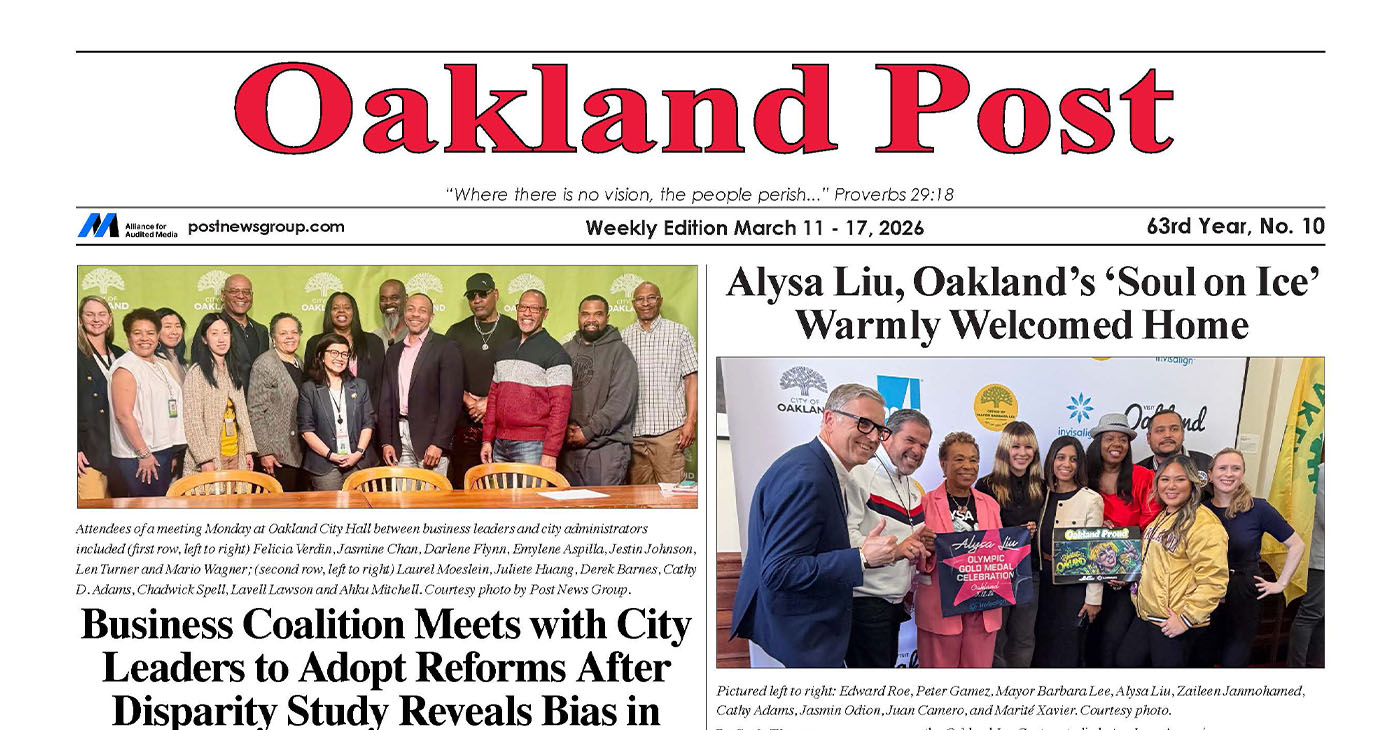
The printed Weekly Edition of the Oakland Post: Week of March 11 – 17, 2026
To enlarge your view of this issue, use the slider, magnifying glass icon or full page icon in the lower right corner of the browser window.
Activism
Oakland Post: Week of March 4 – 10, 2026
The printed Weekly Edition of the Oakland Post: Week of March 4 – 10, 2026

To enlarge your view of this issue, use the slider, magnifying glass icon or full page icon in the lower right corner of the browser window.


WORK FROM HOME
Home-based business with potential monthly income of $10K+ per month. A proven training system and website provided to maximize business effectiveness. Perfect job to earn side and primary income. Contact Lynne for more details: Lynne4npusa@gmail.com 800-334-0540


Black Artists in America, Installation Three Wraps at the Dixon Gallery and Gardens

Grief, Advocacy, and Education: A Counselor Reflects on Black Maternal Health

Future of Florida’s Black History Museum in Limbo

New Research Shows the Many Benefits of Early Learning

South Hampton K-8 Students Among Top 10 Finalists for Samsung’s ‘Solve for Tomorrow’ Competition

Cuba: No Negotiation with US on the President or Political System

Brooklyn Academy of Music Names Jamaican-Born Tamara McCaw as President

Trinidad & Tobego – U.S. Launches WhatsApp Channel for American Citizens in the Country

Oakland Post: Week of March 18 – 24, 2026

AI Innovation vs. Ethics and Environmental Impact

AI, Web3, and Digital Reparations

What If You Owned Your AI Agent?

Season 7, Episode 3 – January Reporter’s Roundtable 📱

Season 7, Episode 3 – January Reporter’s Roundtable

AI, Media, and Power | Part 2, Real-World Impacts and Tradeoffs

Reflecting on Black History Milestones in Birmingham AL

CITY OF SAN LEANDRO STATE OF CALIFORNIA PUBLIC WORKS DEPARTMENT ENGINEERING DIVISION NOTICE TO BIDDERS FOR ANNUAL STREET OVERLAY/REHABILITATION 2019-21 – PHASE III

Oakland Post: Week of February 18 – 24, 2026

Oakland Post: Week of February 25 – March 3, 2026

PRESS ROOM: NBA Hall of Fame Nominee Terry Cummings Joins 100 Black Men of DeKalb County to Launch Victory & Values Initiative

Trump’s MAGA Allies are Creating Executive Order Plan to Steal the 2026 Midterms

U.S. manufacturing rebounds – how foundry services are adapting to rising demand

Oakland Post: Week of March 4 – 10, 2026

Chase Oakland Community Center Hosts Alley-Oop Accelerator Building Community and Opportunity for Bay Area Entrepreneurs

Poll Shows Support for Policies That Help Families Afford Child Care

OP-ED: One Hundred Years of Black Workers Telling the Truth

Advancements in solar technology that are changing the way we power the world

Woman’s Search for Family’s Roots Leads to Ancestor John T. Ward – A Successful Entrepreneur and Conductor on the Underground Railroad

PRESS ROOM: Civil Rights TV Launches in Selma as the World’s First 24/7 Civil Rights Television Network

COMMENTARY: Women of Color Shape Our Past and Future

Hyundai Ioniq 5 Parking, Safety, and 360 View #shorts

2025 Ioniq 5 New Wiper & Powerful Performance! #shorts

Electric SUV Range: Is 259 Miles Enough? #shorts

EV Charging: How Fast Can You Charge an Electric Vehicle? #shorts

Biometric Cooling… Messaging Seats…Come on! 2025 Infiniti QX80 Autograph 4WD

Charged Up: Witness the Magic of a Fully Electric Car! #shorts

Range Rover Sport PHEV Included…: See What’s Inside This Luxury SUV! #shorts

Invisible Hood View: Perfect Parking with X-Ray Vision! #shorts

AI Is Reshaping Black Healthcare: Promise, Peril, and the Push for Improved Results in California

ESSAY: Technology and Medicine, a Primary Care Point of View

Sanctuary Cities

The RESISTANCE – FREEDOM NOW

STATE OF THE PEOPLE: Freddie

ECONOMIC BOYCOTT DAY!!!!!

I told You So
-
 Activism4 weeks ago
Oakland Post: Week of March 4 – 10, 2026
-
 #NNPA BlackPress4 weeks ago
Woman’s Search for Family’s Roots Leads to Ancestor John T. Ward – A Successful Entrepreneur and Conductor on the Underground Railroad
-
 #NNPA BlackPress4 weeks ago
COMMENTARY: Women of Color Shape Our Past and Future
-

 #NNPA BlackPress4 weeks ago
OP-ED: NNPA Launches 2026 “Leadership Matters” Video Series
-

 Activism3 weeks ago
Oakland Post: Week of March 11 -17, 2026
-

 #NNPA BlackPress4 weeks ago
Advocates Raise Alarm Over ICE Operation, MOU and Detention Risks in Baltimore County
-

 #NNPA BlackPress4 weeks ago
Pete Buttigieg to Join Mayor Randall Woodfin for Community Town Hall in Birmingham
-

 Advice3 weeks ago
Financial Wellness and Mental Health: Managing Money Stress in College
