
Black History
Reparations Task Force: Freedmen’s Bureau Essential for Compensating Slave Descendants
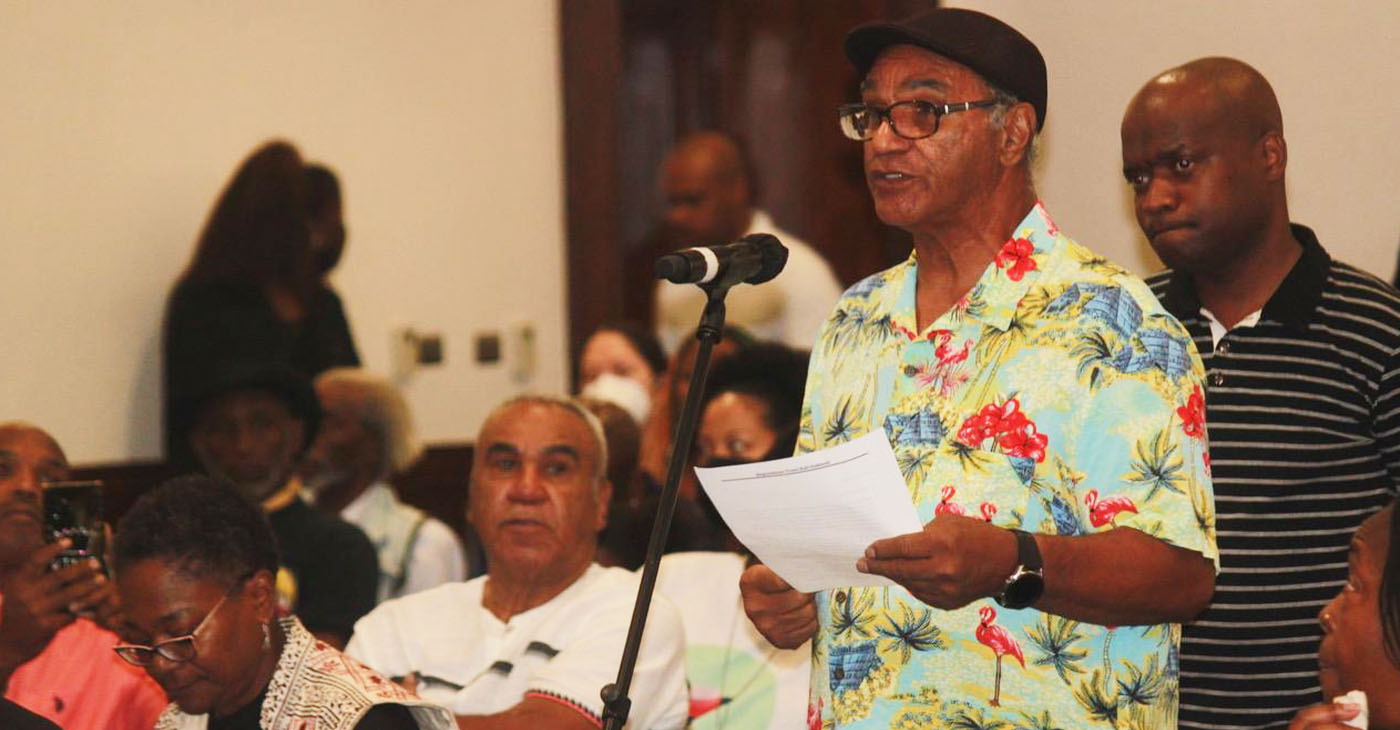
The members of the California Task Force to Study and Develop Reparations Proposals for African Americans are preparing the pretext for recommending a modern-day Freedmen’s Bureau that will be critical for compensating descendants of enslaved Blacks for the injustices of slavery and Jim Crow discrimination they suffered.

By Antonio Ray Harvey
California Black Media
The members of the California Task Force to Study and Develop Reparations Proposals for African Americans are preparing the pretext for recommending a modern-day Freedmen’s Bureau that will be critical for compensating descendants of enslaved Blacks for the injustices of slavery and Jim Crow discrimination they suffered.
Task Force Chairperson Kamilah V. Moore explained during the group’s two-day meeting at San Diego State University (SDSU) that the proposed California American Freedmen Affairs Agency (CAFAA) would identify past harms and prevent future occurrences.
Moore said that the agency would be “a main office or headquarters,” with “specialized offices and branches” dedicated to addressing specific atrocities that have “snowballed over generations.”
“The purpose of this new agency would be to identify how past state-sanctioned atrocities have perpetuated and created new iterations of these badges and incidences of chattel slavery,” Moore said.
“And how (the agency can) eradicate and prevent future … incidences from forming and prospering against the American freedman or descendant community,” she added.
The CAFAA would facilitate claims for restitution and would set up a branch to process claims with the state and assist claimants in proving eligibility through a “genealogy” department.
In addition, the CAFAA would implement the recommendations made by a reparations tribunal to settle claims for past harms and set up an office of immediate relief to expedite claims.

Task force member and civil rights lawyer Lisa Holder said the proposed agency bears a resemblance to the federal agency set up on March 3, 1865, two months before the official end of the Civil War.
The Freedmen’s Bureau, as it was named under a series of post bellum legislations, was originally designed to settle the formerly enslaved on land confiscated or abandoned during the war.
The Freedmen’s Bureau, officially known as the Bureau of Refugees, Freedmen and Abandoned Lands, assisted formerly enslaved people in acquiring relief, housing, employment, education, medical aid, and equality under the U.S. Constitution.
Holder said that the “original Freedmen’s Bureau” was “interrupted and disrupted” when it could have been a “powerful” institution 100 years later if it “had been allowed to survive and thrive,” she said. According to the Freedmen’s Bureau National Archives at www.archives.gov, the bureau ceased operations in 1872 due to the lack of funding and “deeply held racist attitudes.”
Holder added that the CAFAA should be the “guiding light” behind reparations efforts in the state of California.
“One of the things I like about this notion of a Freedmen’s Bureau is that it’s in keeping with this concept that reparations and damages for human rights abuses have to create systems that end the harm that causes the harm,” Holder said. “It is also supposed to create institutions that make the community whole in a sense that they get you up to a place where you were before the harm happened.”
Elmer Fonza of Las Vegas and his elder brother Medford Fonza, who lives in the Los Angeles area, have attended task force meetings and activities around the state. Their great-great-great- grandfather Nelson Bell was brought to California as an enslaved person around 1850 to mine for gold. He was later freed.
Bell purchased land in Coloma, 48 miles east of Sacramento, but the family lost it all after he died in the 1870s, the brothers told the task force at the September meeting in Los Angeles. Elmer Fonza believes that the property was confiscated through unscrupulous means.
The Fonza family, who visited and toured Gold Country last summer for the first time in their lives, wants to know how they can benefit from an agency such as CAFAA.
“Now, as we gather more evidence, we want to file a claim through reparations to see if we lost anything or could gain anything,” Fonza said. “We want to know if such an agency (CAFAA) could help us facilitate the process. Right now, we don’t know how that would be done.”
How the CAFAA can be used to determine reparations eligibility for Black Californians has been a topic of public discussion by Black grassroot organizations started before the task force was formed in May 2021. Now it can be addressed. Thanks to new laws that can help reparations eligibility, supporters say.
For the first time in California and American history, a specific category of data collection will be required for African Americans who are descendants of persons enslaved in the United States and living in California, starting with the state’s 2.5 million employees.
California is the first state to require its agencies to present a separate demographic category for descendants of enslaved people when collecting state employee data. Gov. Gavin Newsom’s 2022-2023 budget trailer bill — Senate Bill (SB)189 — includes language directing state agencies to disaggregate or use separate data collection categories for different Black or African American subgroups.
The State Controller’s Office administered by Malia Cohen and the Department of Human Resources can start collecting this information as soon as Jan. 1, 2024.
The Task Force affirmed lineage-based eligibility for California Reparations in March 2022. The 5-4 majority decision by the task force determined that descendants of enslaved people or free Black people in the United States as of the 19th century are the only group of people eligible for any future cash payments.
“There was great care and intentionality around the creation of this proposal, our proposal in the Interim Report that we released almost a year ago,” Moore said of CAAFA. “It just flushed out more to make all the proposed agencies fully reflect the totality of what we discussed in our 500-page report.”
The reparations task force’s next meetings are on March 3 and March 4. Times and location have yet to be announced








Activism
Oakland Post: Week of March 18 – 24, 2026
The printed Weekly Edition of the Oakland Post: Week of March 18 – 24, 2026
To enlarge your view of this issue, use the slider, magnifying glass icon or full page icon in the lower right corner of the browser window.
Activism
Oakland Post: Week of March 11 -17, 2026
The printed Weekly Edition of the Oakland Post: Week of March 11 – 17, 2026

To enlarge your view of this issue, use the slider, magnifying glass icon or full page icon in the lower right corner of the browser window.
Activism
Oakland Post: Week of March 4 – 10, 2026
The printed Weekly Edition of the Oakland Post: Week of March 4 – 10, 2026

To enlarge your view of this issue, use the slider, magnifying glass icon or full page icon in the lower right corner of the browser window.

WORK FROM HOME
Home-based business with potential monthly income of $10K+ per month. A proven training system and website provided to maximize business effectiveness. Perfect job to earn side and primary income. Contact Lynne for more details: Lynne4npusa@gmail.com 800-334-0540


Black Artists in America, Installation Three Wraps at the Dixon Gallery and Gardens

Grief, Advocacy, and Education: A Counselor Reflects on Black Maternal Health

Future of Florida’s Black History Museum in Limbo

New Research Shows the Many Benefits of Early Learning

South Hampton K-8 Students Among Top 10 Finalists for Samsung’s ‘Solve for Tomorrow’ Competition

Cuba: No Negotiation with US on the President or Political System

Brooklyn Academy of Music Names Jamaican-Born Tamara McCaw as President

Trinidad & Tobego – U.S. Launches WhatsApp Channel for American Citizens in the Country

Oakland Post: Week of March 18 – 24, 2026

AI Innovation vs. Ethics and Environmental Impact

AI, Web3, and Digital Reparations

What If You Owned Your AI Agent?

Season 7, Episode 3 – January Reporter’s Roundtable 📱

Season 7, Episode 3 – January Reporter’s Roundtable

AI, Media, and Power | Part 2, Real-World Impacts and Tradeoffs

Oakland Post: Week of February 11 – 17, 2026

Reflecting on Black History Milestones in Birmingham AL

Rising Optimism Among Small And Middle Market Business Leaders Suggests Growth for California

CITY OF SAN LEANDRO STATE OF CALIFORNIA PUBLIC WORKS DEPARTMENT ENGINEERING DIVISION NOTICE TO BIDDERS FOR ANNUAL STREET OVERLAY/REHABILITATION 2019-21 – PHASE III

Oakland Post: Week of February 18 – 24, 2026

PRESS ROOM: NBA Hall of Fame Nominee Terry Cummings Joins 100 Black Men of DeKalb County to Launch Victory & Values Initiative

Oakland Post: Week of February 25 – March 3, 2026

Trump’s MAGA Allies are Creating Executive Order Plan to Steal the 2026 Midterms

U.S. manufacturing rebounds – how foundry services are adapting to rising demand

OP-ED: One Hundred Years of Black Workers Telling the Truth

Advancements in solar technology that are changing the way we power the world

Chase Oakland Community Center Hosts Alley-Oop Accelerator Building Community and Opportunity for Bay Area Entrepreneurs

Poll Shows Support for Policies That Help Families Afford Child Care

PRESS ROOM: Civil Rights TV Launches in Selma as the World’s First 24/7 Civil Rights Television Network

Oakland Post: Week of March 4 – 10, 2026

Hyundai Ioniq 5 Parking, Safety, and 360 View #shorts

2025 Ioniq 5 New Wiper & Powerful Performance! #shorts

Electric SUV Range: Is 259 Miles Enough? #shorts

EV Charging: How Fast Can You Charge an Electric Vehicle? #shorts

Biometric Cooling… Messaging Seats…Come on! 2025 Infiniti QX80 Autograph 4WD

Charged Up: Witness the Magic of a Fully Electric Car! #shorts

Range Rover Sport PHEV Included…: See What’s Inside This Luxury SUV! #shorts

Invisible Hood View: Perfect Parking with X-Ray Vision! #shorts

AI Is Reshaping Black Healthcare: Promise, Peril, and the Push for Improved Results in California

ESSAY: Technology and Medicine, a Primary Care Point of View

Sanctuary Cities

The RESISTANCE – FREEDOM NOW

STATE OF THE PEOPLE: Freddie

ECONOMIC BOYCOTT DAY!!!!!

I told You So
-
 Activism4 weeks ago
Oakland Post: Week of February 25 – March 3, 2026
-
 #NNPA BlackPress4 weeks ago
Poll Shows Support for Policies That Help Families Afford Child Care
-
 Activism3 weeks ago
Oakland Post: Week of March 4 – 10, 2026
-

 #NNPA BlackPress3 weeks ago
Woman’s Search for Family’s Roots Leads to Ancestor John T. Ward – A Successful Entrepreneur and Conductor on the Underground Railroad
-

 #NNPA BlackPress3 weeks ago
OP-ED: NNPA Launches 2026 “Leadership Matters” Video Series
-

 #NNPA BlackPress3 weeks ago
Advocates Raise Alarm Over ICE Operation, MOU and Detention Risks in Baltimore County
-

 #NNPA BlackPress3 weeks ago
COMMENTARY: Women of Color Shape Our Past and Future
-

 #NNPA BlackPress3 weeks ago
Pete Buttigieg to Join Mayor Randall Woodfin for Community Town Hall in Birmingham
