
Sports
Refs Cheer New High-Def Replay System for NCAA Tournaments


In this March 12, 2015, file photo, referees Mark Whitehead, right, and Terry Oglesby look at a replay during the second half of an NCAA college basketball game between West Virginia and Baylor in the quarterfinal round of the Big 12 Conference tournament in Kansas City, Mo. For the mens and womens basketball tournaments that begin this week, the NCAA for the first time will use a replay system that captures live high-definition video from multiple angles for immediate review. (AP Photo/Orlin Wagner, File)
STEPHEN HAWKINS, AP Basketball Writer
The NCAA is going all in on high-def video reviews during March Madness.
For the men’s and women’s basketball tournaments that begin this week, the NCAA for the first time will use a replay system that captures live high-definition video from multiple angles for immediate review. That means officials will be able to see much more quickly some of the same replays everyone is seeing on TV — and just maybe some of those delays to get a call right won’t be so excruciatingly long.
“The last thing you want at the end of the game is a four-minute delay that takes the energy out of the building and cools the players down and all that,” said Kim Jackson, director of basketball operations for DVSport, the system’s developer. “No. 1, you’ve got to get the call right, but No. 2, we need to be hopefully as efficient as possible. … Delaying a game can change momentum and impact the game.”
No longer will there be extended delays in the tournament because an official has to go to a monitor with only a network feed, put on a headset and try to explain to a producer in the TV truck outside exactly what he or she wants to see — a familiar scene in many smaller conferences lucky enough to have a TV feed to rely on.
That process usually led to the officials seeing the back of their heads on the monitor while the video was being cued, and cameras showed them waiting to see the replay the TV audience had already seen multiple times and was already tweeting or posting Vines about.
With the DVSport system already used by several leagues during the season, game officials generally have instant access to the main TV feed and three other angles.
They have a pad with a shuttle control that allows them to watch from different angles at different speeds. They can zoom in on individual frames and, if necessary, can then request views additional cameras might have captured.
“The most important thing is that we can get all the angles and make sure we see what people see at home on TV. … We utilize replay to make sure we got it right,” veteran official Joe DeRosa said. “It’s really a valuable tool.”
DeRosa, one of only two officials who has worked both the NCAA Final Four and the NBA Finals, did Big 12 Tournament games last week. His regular-season schedule included games in the Big 12, SEC, American and Conference USA, which also use DVSport. The ACC also uses the system, and the Big East men had it available during their tournament last week.
“Our officials have the same passion as our coaches — they want to make their team play better and make minimum mistakes and continue to improve,” said John Underwood, the Big 12 associate commissioner for men’s basketball and game management. “They want to get the plays right.”
DVSport is already well-known to many pro and college sports teams for its custom software packages that allow coaches and players to use iPads or laptops to break down film of themselves or opposing teams. The Pittsburgh-based company got into football replay after the Big Ten had a pilot program, and then got NCAA approval on a proposal to allow conferences and independent institutions to experiment with the use of video replay during the 2005 season.
Now common in football, a replay system specific to basketball was introduced five years later and is now going to be used in the Big Dance for the first time.
Jackson said basketball officials they consulted during development asked for control of the video and standard-sized monitors showing HD video.
“Sometimes they would go to one school and they would have a 7-inch monitor that’s black and white,” he said. “And they’re expected to make a decision that affects the outcome of the game, and then you have got everybody at home watching it on 50-inch HD TVs.”
The NCAA will also use DVSport for replays in all Football Championship Subdivision (FCS) playoff games, and the semifinal and championship games in Division II and Division III football.
Division I basketball tournaments will also debut Precision Timing Systems technology already used by most Division I conferences in which officials stop the clock simply by blowing the whistle. The clock restarts when a switch is flipped on the ref’s belt pack.
Dan Gavitt, the NCAA’s vice president of men’s basketball, said the new replay and timing systems “will allow us to use the best available technology to be as accurate as possible with regards to timing and reviewable plays.”
Copyright 2015 The Associated Press. All rights reserved. This material may not be published, broadcast, rewritten or redistributed.








Business
100 Black Wings’ Team Oakland Youth Athletes Heading to Taiwan for 2026 International Children’s Games
By Post Staff The Bay Area Chapter of 100 Black Men is sending nine youth athletes from its 100 Black Wings’ Team Oakland Delegation to Taiwan on Thursday, July 30, to represent the City of Oakland at the 58th International Children’s

By Post Staff
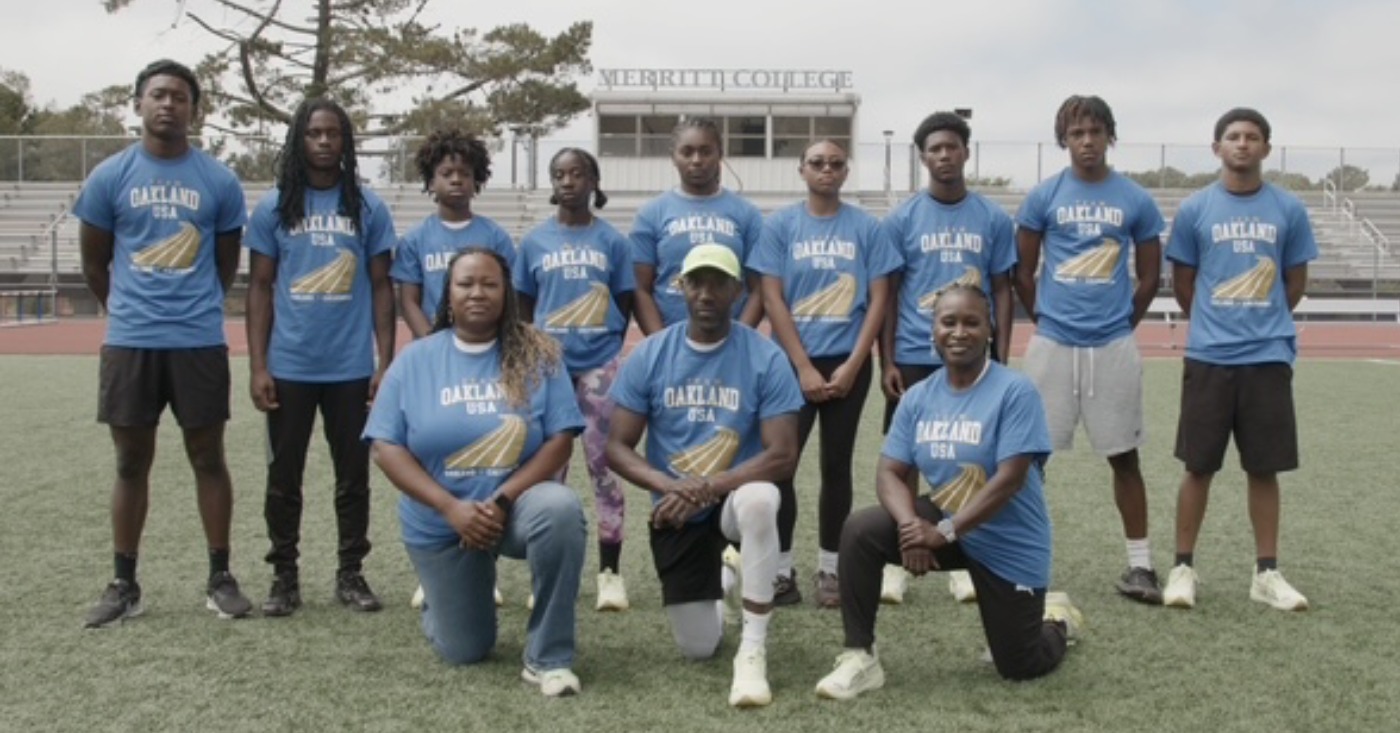
The Bay Area Chapter of 100 Black Men is sending nine youth athletes from its 100 Black Wings’ Team Oakland Delegation to Taiwan on Thursday, July 30, to represent the City of Oakland at the 58th International Children’s Games (IGC) in Hualien County, Taiwan.
The Games will bring together young athletes ages 12 to 15 from 76 city delegations around the world. The opening ceremony is scheduled for Aug. 2, and athletic competitions take place Aug. 3-5.
While many international competitions center around national teams, the ICG brings young people together as representatives of their respective cities. This year’s theme – “Shining Hualien, Shining Together!” – reflects the host city’s vision of using sports, education, culture, and tourism to promote friendship, peace, inclusion, and sustainable development.
“Team Oakland’s participation demonstrates what can happen when young people are given opportunity, preparation, and a community that believes in them,” said Danny L. Williams, chairman of 100 Black Men of the Bay Area, Inc.
“These athletes will carry Oakland’s talent, strength, and spirit onto an international stage while building relationships that can extend far beyond the competition,” he said.

Team Oakland will compete in track and field events including the 100-meter and 400-meter races, hurdles, long jump, shot put, javelin, and traditional and mixed 4×100-meter relays.
The athletes representing Oakland are: DeWayne Littlepage, Gia Goodlow, Abisewolu Redmond, Mahari Moore, Marvin Thomas, Najae Ellison, Royal Moore, Sir Kamryn Lloyd, and Jasani Highsmith.
The delegation’s coaching leadership includes Head Coach Dr. Tommie Smith, the
1968 Olympic gold medalist in the 200-meter sprint; Senior Coach Margaret Dixon;
Girls Coach Evangela Dixon; Strength and Conditioning Coach Nola Turnage;
and Boys Coach Michael Flood, Jr.
Delegation leadership also includes Williams, Head of Delegation Juanita Metters-Upshur, and city representative Dr. Mark Alexander.
“Our athletes have trained with tremendous discipline, but this journey represents much more than competition,” said Metters-Upshur, head of delegation. “They will have the opportunity to travel internationally, proudly represent Oakland, experience another culture, and form friendships with young people from communities across the world. We are incredibly proud of them and grateful to the families, coaches, partners, and supporters who have helped make this experience possible.”
In addition to track and field, the games will feature swimming, tennis, table tennis, Taekwondo, archery, football, and 3×3 basketball. Hualien County is located between Taiwan’s Central Mountain Range and the Pacific Ocean and hosts the International Children’s Games for the first time this year.
The International Children’s Games were founded in 1968 by Slovenian coach Metod Klemenc, based on the belief that sports can bridge differences in culture, religion, and race.
The ICG is approved by the International Olympic Committee and emphasizes friendship, fair play, teamwork, perseverance, and cultural understanding among young people.
The Oakland delegation’s participation reflects the 100 Black Wings’ programmatic commitment to developing young people through athletic achievement, discipline, leadership, cultural exposure, and global citizenship.
Team Oakland is supported by a network of families, coaches, community partners, and advocates who believe that international experiences can expand how young people view themselves and their possibilities.

Black History
Jordan Walker Leads Call for More Black Youth in Baseball
ST. LOUIS AMERICAN — St. Louis Cardinals right fielder Jordan Walker recently won the Home Run Derby final. Following his win, Walker emphasized his desire to be a role model for Black youth and to encourage more Black participation in baseball, noting that many currently play basketball or football.
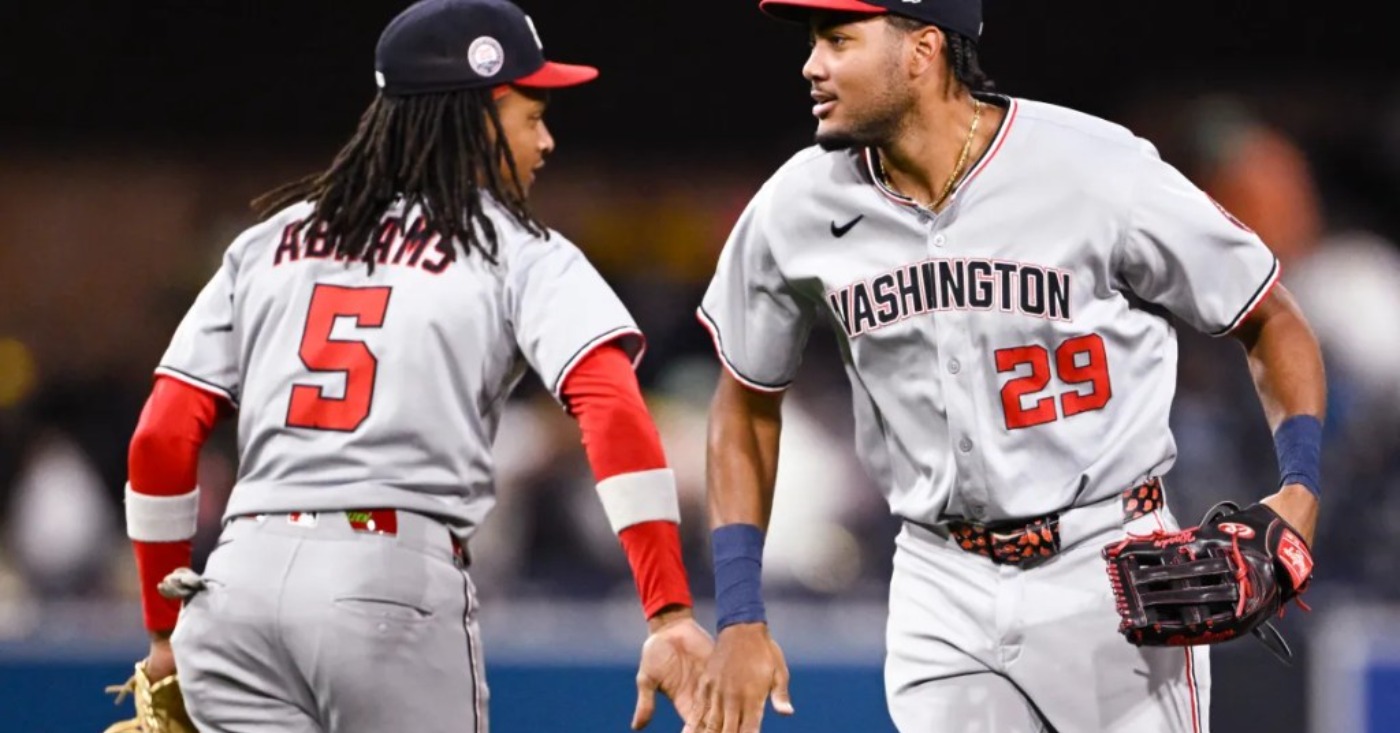
Shortly after Jordan Walker’s 12th and clinching blast of the Home Run Derby final against hometown hero Kyle Schwarber had landed among bitter fans at Citizens Bank Park in Philadelphia, the St. Louis Cardinals right fielder spoke of the importance of his achievement.
“I hope it means a lot to [Black kids],” Walker told reporters. “I want to be a role model for the Black kids, and I want more Black kids in baseball. Hopefully this raises some awareness. I know a lot of them are playing basketball [and] football.
“I want them to know the baseball route is open to them, too. There are a lot of kids that are athletic enough and mentally strong enough — Black kids that can play this game — and I want to see them do it.”
As for Walker, he has become a rarity — a Black star in baseball. They have been few and far between at Busch Stadium since the days of Bob Gibson, Curt Flood and Lou Brock.
Walker, who grew up in suburban Atlanta, said Braves third baseman “Chipper” Jones was his favorite player until Jason Heyward made his debut with the team.
“For Black kids, I want to kind of be a role model for them,” Walker said, “like [Heyward] was for me.”
The 2026 All-Star Game rosters featured several Black players, who shared their hopes on inspiring more Black participation in baseball.
“I think once kids see more people to look up to, the more kids will get back into baseball,” said Washington Nationals outfielder James Wood.
Modest gains
New York Yankees right fielder Aaron Judge and Minnesota Twins center fielder Byron Buxton missed the game because of injuries, but were voted in as American League All-Star starters. Nationals shortstop CJ Abrams joined teammate Wood on the NL squad. And, of course, there was Walker, who stole the show in the Home Run Derby.
“I feel like there’s been like a little surge in getting more Black players in the game,” Wood said.
“We’ve got four [Black players] on our team right now. Last year at one point, we had five..”
The Cardinals’ opening day roster featured three Black players: outfielder Victor Scott II, shortstop Masyn Winn and Walker. After struggling offensively the first months of the season, Scott was sent down to Triple-A Memphis.
When the St. Louis trio took the field on opening day, Major League Baseball reported that 6.8% of players on rosters, injured lists and the restricted list were Black.
That was up slightly from 6.2% at the start of the 2025 season. It marked a two-year increase from a 6% rate at the beginning of 2024. It was the largest increase in a season since a 0.7% rise from 2017 to 2018.
MLB Commissioner Robert Manfred, who to his credit has ignored criticism of baseball diversity programs, sees progress and hopes for more.
“[Y]ou have to continue to invest, grind it out, do that grassroots work to attract more people to the game and then nurture them in a way that gets them into this elite pipeline,” Manfred said.
Cincinnati Reds pitcher Chase Burns, who was named to the NL All-Star team and just signed a seven-year, $105 million contract extension, said he is perplexed by the low number of Black baseball participants.
“You don’t see a lot of Black athletes in baseball. I don’t know why that is,” Burns said. “I think it’s great for guys like me and [Walker] to strive to get Black athletes into the game of baseball, whether it’s talking about it or doing stuff in the community. I think it’s great he pointed it out.”
As for Walker, he has become a rarity — a Black star in baseball. They have been few and far between at Busch Stadium since the days of Bob Gibson, Curt Flood and Lou Brock.
Hopefully Cardinal Nation will appreciate Walker’s stardom, and the team will reward him with a lucrative contract extension soon.
The post Jordan Walker leads call for more Black youth in baseball appeared first on St. Louis American.
Based on reporting by St. Louis American.
Black History
How Black WNBA Players Became Collateral Damage in the Caitlin Clark Culture War
AFRO-AMERICAN – WASHINGTON — Caitlin Clark, a WNBA player, has been weaponized against Black women, leading to federal government involvement. A letter signed by 11 Republican lawmakers, led by Texas Rep. August Pfluger, was sent to WNBA Commissioner Cathy Engelbert, threatening a Department of Justice investigation into the league due to concerns that fouls against Clark “may be racially motivated.
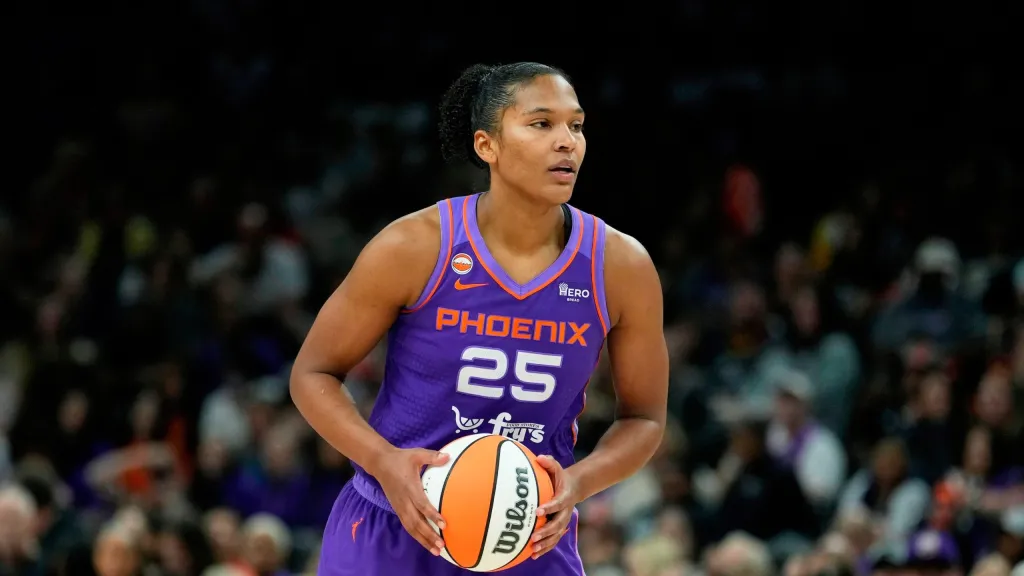
(Black Press USA Newswire) – Caitlin Clark is more than a WNBA player; she has become a tool of weaponization against Black women. And now the federal government is involved.
Led by Texas Rep. August Pfluger, 11 Republican lawmakers signed a letter to WNBA Commissioner Cathy Engelbert, threatening to have the Department of Justice investigate the league because fouls against Clark “may be racially motivated.”
“As Commissioner, you have an obligation to ensure that every player competes in a safe and professional environment, both on and off the court, free from violence, discrimination, or retaliation. If discrimination or retaliation is occurring and creating a hostile work environment, we support any appropriate investigation by the Department of Justice, the Department of Labor, or the Equal Employment Opportunity Commission. If true, such conduct could constitute violations of federal civil rights laws,” the letter stated.
The letter creates a false narrative and is irresponsible and dangerous.
Stephanie Christmas, a former women’s basketball player at Georgia Southern University, has remained a WNBA fan since its inaugural season in 1997. Christmas has never seen politicians use their platforms to sway the league’s direction.
“If you want only one player to play the game, that’s not basketball anymore,” Christmas shared. “I don’t think that they should be putting any legislation in place. They are making it worse for the players and the WNBA game.”
The people who are using Clark as a tool couldn’t care less about what occurs in between the lines of a basketball court. Statistically, Clark is a decent shooter and above-average passer, but she lacks offensive efficiency and is a liability on defense. Her most staunch defenders are not basketball enthusiasts; instead, they view Clark as a symbol to further their hatred for Black women.
Every moment of discomfort Clark appears to face on the court becomes an opportunity for her supporters to unleash vile and racist language against the alleged perpetrator. If Clark is fouled hard, engages in trash talk with an opponent, or receives what she views as an unfair call by a referee, her defenders are incited to unleash their wrath.
During a tightly contested match between Clark’s Indiana Fever and Phoenix Mercury in June, the Mercury’s Alyssa Thomas and Clark were on the court battling for a loose ball. Thomas’ arm briefly pressed against Clark’s neck during the scramble, but no foul was called. Following the game, Thomas was issued a flagrant one and suspended for one game by WNBA officials. The play triggered Clark’s supporters, and they aimed racial slurs and death threats at Thomas. Thomas responded by calling out WNBA commissioner Engelbert for not protecting athletes in the league.
“We still have yet to hear anything from Cathy. It’s no surprise,” Thomas shared in a press conference after her suspension. “You can see what’s being said on social media. It’s unfortunate, but as usual, she remains silent. That’s unfortunate when our lives are being threatened.”
It was only after Thomas’ statement that Engelbert responded to the threats sparked by Clark’s supporters.
“The WNBA vehemently condemns any and all forms of hate,” Engelbert said in a statement. “The safety and well-being of everyone in our community is always the league’s top priority. We are aware of Alyssa Thomas’ comments, and what she and her teammates have experienced is completely unacceptable and not representative of the WNBA community.”
Weeks later, Chelsea Gray of the Las Vegas Aces faced racial animus following a simple foul call that went against Clark. While driving to the basket, Gray was fouled on the arm by Clark, who collapsed to the ground and held her stomach as if she was in pain. Clark yelled at the referee, claiming that Gray had hit her, but video replay proved that Gray never initiated contact with Clark.
But an otherwise normal basketball play led to Gray enduring racial slurs and harassment. Following the game, Gray reposted a screenshot on Instagram of a man using a racial slur against her, and she wrote, “People act like we make this s— up.”
The post went viral, and the man, who worked for Hilton Grand Vacations, was fired within days.
Gray responded to the ordeal in a press conference, revealing that she and other WNBA players have faced ongoing harassment.
“Enough is kind of enough,” Gray said. “These messages are not the first time. It’s not. There was other stuff, too. I just decided to share that one. This time I got fed up with it, and I just decided to share it. And maybe I don’t share the other ones, but I know people will think twice.”
Clark never asked to become a symbol for those who aim hatred at Black women, but is she doing enough to distance herself from the position?
She issued a statement after hearing of the harassment Thomas experienced. “The harassment, the hate. None of that is OK,” Clark said. “There should never be a question of character, as I’ve always stood up here and said that, and that’s truly what I believe; that’s how I was raised. So, none of that is okay, and I don’t want anyone to experience that.”
It’s similar to another statement Clark made in 2025 after Angel Reese faced racial slurs while playing against the Fever in Indianapolis. “There’s no place for that in our game, there’s no place for that in society,” Clark said. “Certainly, we want every person who comes into our arena, whether player or fan, to have a great experience. I appreciate the league doing that. I appreciate that the Fever organization has been at the forefront of that.”
A competitive moment between Clark and Reese during the 2023 NCAA Championship game sparked a cultural division that followed both players to the WNBA. Their star power has coincided with the league’s recent emergence, but the overall success continues to be marred by the divisiveness initiated by Clark’s supporters.
“I would like for to have addressed her fans,” Christmas said. “Her fans are making threats, and they’re making racist comments. And it’s only racial coming from her fans. They don’t even really love the game. They just love her and then try to make it about race. At some point. I would like to see her stand against her fans when she sees them attacking some people that are on the court.”
Beyond her polarizing fanbase, Clark has also been accused of presenting herself as a victim and throwing tantrums on the court when things don’t go her way. During a recent game against the Golden State Valkyries, Clark used her hand to create distance while driving for a layup against the Valkyries’ Kiah Stokes. Clark fell to the ground after the layup and began berating referee Gerda Gatling while yelling, “Give me a f—-g call! I got fouled five times!” Replay video revealed that Stokes initiated no contact, and Gatling showed restraint by not giving Clark a technical foul.
The clip of Clark’s tantrum went viral, and she faced backlash online for her negative attitude.
“Caitlin Clark is a liar and the most dangerous type of white woman,” @mama4obama wrote on X. “One whose lies get Black women death threats. She wasn’t even touched and should have been thrown out of the game for the way she behaved toward the ref.”
“The Caitlin Clark experience serves as a microcosm of America’s divided socio-political atmosphere.”
The Caitlin Clark experience serves as a microcosm of America’s divided socio-political atmosphere. She has been chosen as a figurehead for hatred and division while her Black colleagues on the court remain prime targets.
It’s become an inescapable stain for a league that fought for years to garner interest and respect.
The opinions expressed in this commentary are those of the writer and not necessarily those of the AFRO.
The post How Black WNBA players became collateral damage in the Caitlin Clark culture war appeared first on AFRO American Newspapers.
Based on reporting by Afro-American – Washington.


Port of Oakland, Army Corps Sign Historic Harbor Design Agreement

Democratic Clubs Interview Candidates for Oakland School Board

Nuna Phillips-McKee Celebrates 100 Years: ‘A Century of Faith, Family and God’s Amazing Grace!’

D.A. Ursula Jones Dickson: Terminix to Pay $3.15 Million Over Illegal Disposal of Pesticides, Customer Records

REPORT: Community Level Policy Is Impacting Homelessness and Drug Abuse in California

OPINION: AI Needs to Know Who Is the Boss
Goldi-Locs and Two (or Three) Bears in the Forest in California Hills

Election Watch 2026: 85% of Eligible Voters in California Are Registered

Don’t Let scammers Crash Your School Year

BOOK REVIEW — Curved Air: A Biography of Sickle Cell Anemia and the Quest to Cure the First Molecular Disease

California’s Legal Cannabis Market Hits $8 Billion as State Touts Progress on Fighting Drugs, Crime

Blacks and Latinos Clash Over LA’s Barrio Run; Mayor Karen Bass Calls for Dialogue Across Racial, Neighborhood Lines

Asm. Smallwood-Cuevas’s Bill Repealing ‘Racist’ CalWORKs ‘Man-in-the-House’ Rule Clears Legislature

Asm. Smallwood-Cuevas’s Bill Repealing ‘Racist’ CalWORKs ‘Man-in-the-House’ Rule Clears Legislature

‘Ready to See These Bills Become Law’: Sen. Weber’s Package of 15 Bills Advance to Gov. Newsom’s Desk

Department of Homeland Security Demands California Secretary of State Shirley N. Weber Scrub Voter Rolls

“The Power to See Threats Sooner”: Gov. Newsom, Safety Officials Showcase California’s Investments in Hi-Tech Wildfire Prevention

Alpha Kappa Alpha Sorority, Inc. Celebrates New North Atlantic Regional Director

California Sen. Padilla Joins Colleagues to Introduce Bill Imposing Term Limits on Supreme Court Justices

Less Affluent School Districts, Including Sacramento City, Face Threat of State Takeover

Car Wash Workers Cope with Lingering Impacts of ICE Raids

ESSAY: California Can Close Its Colorectal Cancer Gap

Oakland Post: Week of August 5 – 11, 2026

As Part of Your Back-to- School Checklist, Vaccinate

Oakland ‘Port Serves as a Powerful Engine for Good Jobs and Economic Development

Gov. Newsom Signs New Affordable Housing Legislation

Gov. Newsom Announces $109.6 Million in Funding for 278 Supportive Homes in Bakersfield, Contra Costa, Sacramento and Fresno

California Hispanic Chambers of Commerce Unveils: ‘Powering the Future’ Theme for 47th Annual Statewide Convention

Closing the Gap: What the Data and Frontline Experiences Reveal About Cancer in Black California

Congresswoman Simon Demands Investigation into Trump’s Abuse of Emergency Powers for Coal Export Terminal in West Oakland

The Conversation With Al McFarlane 6/23/26

Media Monday 6/22/26

LIVE! ASK ALMA! — TUES. 6.23.26 7PM EST

Car Buying Secrets: 4 Hidden Checks Before You Sign!

Is This 550 HP Charger Worth YOUR Money? AutoNetwork Review

Celebrating Juneteenth – Frederick Douglass on education and resistance

LIVE! — ASK ALMA! — TUES. 6.19.26 7PM EST

Hyundai Ioniq 5 Parking, Safety, and 360 View #shorts

2025 Ioniq 5 New Wiper & Powerful Performance! #shorts

Electric SUV Range: Is 259 Miles Enough? #shorts

EV Charging: How Fast Can You Charge an Electric Vehicle? #shorts

Biometric Cooling… Messaging Seats…Come on! 2025 Infiniti QX80 Autograph 4WD

Charged Up: Witness the Magic of a Fully Electric Car! #shorts

Range Rover Sport PHEV Included…: See What’s Inside This Luxury SUV! #shorts

Invisible Hood View: Perfect Parking with X-Ray Vision! #shorts
-

 Commentary2 weeks ago
Standoff for Justice: Our Homes Are Worth Fighting For
-

 Business2 weeks ago
Gubernatorial Candidate Steve Hilton Blasts California New Tire Rules; Newsom Hits Back
-

 Activism2 weeks ago
Oakland Post: Week of August 26 – September 1, 2026
-

 Education2 weeks ago
Gov. Newsom’s Latest Appointees Include Sacramento Advocate for Formerly Incarcerated Students; State’s New Tech Chief
-

 Business2 weeks ago
Frontier Airlines’ Return to Oakland Airport Brings Flights, Jobs and Opportunity
-

 Business2 weeks ago
Oakland Coliseum Project Opens Door for Small Businesses to Build Bigger
-

 Business2 weeks ago
Chef Sharon Lee Blends Culinary Excellence, Education and Empowerment
-

 Community2 weeks ago
Big City Mayors Ask for “Yes” Vote on Housing Bond Measure; Conservatives Say “No”
