
Activism
Probationers Share Tales of Reconciliation
Once a year, an emotional celebration is held for those who come to a similar realization and make it on the Wall of Change, selected by a committee for providing the department’s most inspirational success stories of the year. The Wall of Change stories and photos include a first-person account from the honoree and words from their assigned probation coach. The annual ceremony also shows appreciation for the Probation officers and other supporters who sometimes find themselves as the only people who believe in their ability to succeed.

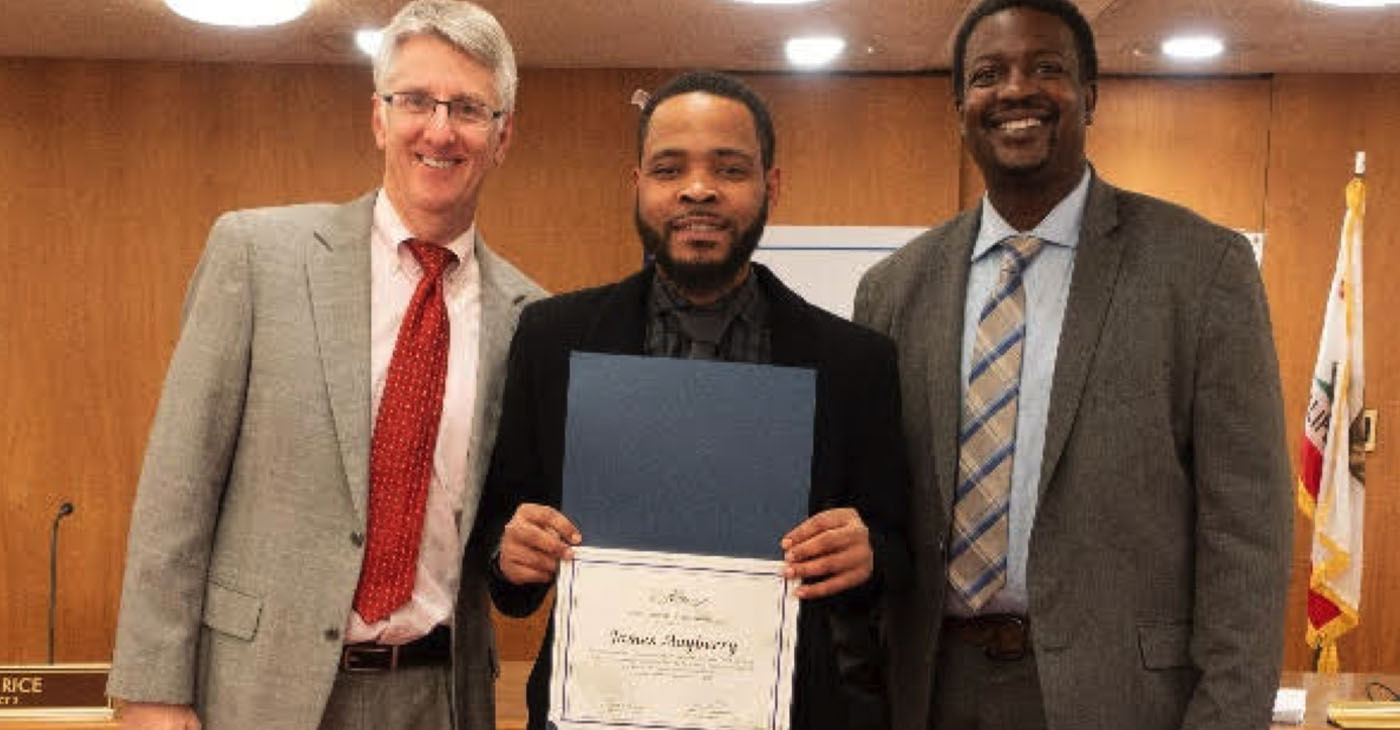
Marin Probation’s inspiring ‘Wall of Change’ newcomers honored at special event
San Rafael, CA – James Mayberry’s painful childhood and young adult years were the start of a long path toward healing and his second chance at life.
He was a young boy when he witnessed his mother’s death at the hands of his father. James was quickly separated from his siblings — they settled with relatives, and he entered the foster care system. Depressed and traumatized, his teen years became overpowered by his alcoholism, and soon after began his period of lawbreaking. By his late 20s, Mayberry was separated from his job, his house, his car, and most importantly, his kids and “everyone I loved.”
A domestic violence charge in Marin County forced him to a relationship with the Marin County Probation Department, where for almost three years he struggled to commit to get sober and turn his life around.
Mayberry, now 31, did commit. He was one of 14 people honored Jan. 18 at the Marin County Civic Center’s Board of Supervisors chamber for accepting renewed responsibilities and becoming a positive role model for others. The group are among the newest probationers honored on the Wall of Change, where personal stories of their transformation are documented in the department’s lobby for all probationers to see. The event opened with a short documentary film about the honorees created by Vincent Cortez of Mitchell Street Pictures.
In addition to Mayberry, the 2022 honorees were Deann Ashley, Hannah Cahoon, Kimberly Clayton, Abdalla “Jimmy” Khaled Sayed, Samuel Lawrence, Cody Lewis, Matthew McCarthy, Gabino Mendoza, Hengly Osiel-Calderon, Fletcher Pinkham, Justin Sheets, Tino Wilson Jr., and Nordia Valdivia-Rodriguez. All of them have powerful stories to tell.
In a statement to the Wall of Change committee, Mayberry wrote that his struggles were rooted in the death of his mother.
“At such a young age I was left to navigate my grief and pain alone, then eventually I became numb to my own emotions,” he wrote. “All I knew was pain, and the thought of happiness was far from my reach. I felt like I had no one to go to even though I knew I had people who knew my situation and loved me, but I didn’t want to be a burden to them.”
Heather Donoho, a senior deputy probation officer assigned to Mayberry’s case, said Mayberry once blew one of the highest blood-alcohol measurements she had ever seen during a compliance check. She said he was testing positive for alcohol use — a violation of probation terms — twice a week on a regular basis.
“We had a serious conversation,” Donoho said. “I was prepared to recommend that he go to jail for a year. Then I found that James had never been offered an addiction treatment program, a recovery coach, or medication and counseling to help him with his trauma. He deserved a shot.”
As those recovery tools became available, Mayberry stopped testing positive for alcohol and stopped missing scheduled appointments. Today, he is sober and no longer homeless. He has a good job walking distance from his home, he helps others in the recovery community, he has reconnected with his childhood church family, and his four kids are back in his life.
“His willingness to work with me changed drastically for the better,” Donoho said. “It sounds cliché, but he’s a good reminder of why I went into this field. Unfortunately, there are so many negative situations we deal with as probation officers, but when you get a chance to work with somebody like James, it’s incredibly rewarding.”
“One day,” Mayberry wrote, “I just decided to be honest with myself and tell the truth because I could not continue living the way I was living.”
Once a year, an emotional celebration is held for those who come to a similar realization and make it on the Wall of Change, selected by a committee for providing the department’s most inspirational success stories of the year. The Wall of Change stories and photos include a first-person account from the honoree and words from their assigned probation coach. The annual ceremony also shows appreciation for the Probation officers and other supporters who sometimes find themselves as the only people who believe in their ability to succeed.
The in-person ceremony was hosted by Marin County Probation Chief Marlon Washington and his staff. Terry Wright, the Probation Department’s Adult Division Director, served as the emcee. Dr. Todd Schirmer, the County’s Director of Behavioral Health and Recovery Services, delivered the keynote speech.
For Mayberry and many other Wall of Change honorees, it’s not just the Probation staff that proves vital to their transformation but also trusted workers from law enforcement agencies, the judges of Marin County Superior Court, the Public Defender’s Office, detoxification centers, supportive nonprofits, social workers, and others. Several recovery coaches and counselors who played critical roles in supporting the honorees attended the Wall of Change ceremony.
Mayberry is finally getting used to hearing that friends and family are proud of him.
“I’m truly blessed to have a second chance at life with all the help and support system that has been given to me,” he wrote. “I also want to help someone else who may be going through the same thing that I have experienced. There is hope in every situation, good or bad, but you have to believe within yourself and have faith that all things will work out for the good once you start making changes for yourself.”
Learn more about Marin County Probation online.








Activism
Oakland Post: Week of September 23 – 29, 2026
The printed Weekly Edition of the Oakland Post: Week of September 23 – 29, 2026

To enlarge your view of this issue, use the slider, magnifying glass icon or full page icon in the lower right corner of the browser window.
Activism
Oakland Post: Week of September 16 – 22, 2026
The printed Weekly Edition of the Oakland Post: Week of September 16 – 22, 2026

To enlarge your view of this issue, use the slider, magnifying glass icon or full page icon in the lower right corner of the browser window.
Activism
Oakland Post: Week of September 9 – 15, 2026
The printed Weekly Edition of the Oakland Post: Week of September 9 – 15, 2026

To enlarge your view of this issue, use the slider, magnifying glass icon or full page icon in the lower right corner of the browser window.



Asm. Corey Jackson Announces Launch of 24-Hour Childcare in His District

IN MEMORIAM: The Rev. Leon “Sonny” Clark, Longtime Orange County Pastor and Community Leader, Dies at 72

Poll: Becerra Widens His Lead Over Hilton; Californians Split on Wealth Tax

From Historic Memories to New Possibilities: Oakland Celebrates Coliseum 60

County Office of Education Says OUSD Finances Are Getting Healthier, Materially Stronger

LIVE FREE Sunday Dinner Brings Faith, Fellowship and Civic Conversation to Oakland

Remembering Chauncey Bailey as Student Journalists Face Threats to Truth-Telling

BLACspace Cooperative Invites Bay Area to Experience Oakland’s Black Cultural Ecosystem Through a BLAC Map Tour + Party

In Wake of Death on Doorstep, Williams Chapel Baptist Church Calls for Better Care, Funding for Unhoused

Oakland Centenarian Nuna McKee Honored!

Caribbean Nations Produce Action Plan Calling for UK Reparations Over Slavery

Oakland Post: Week of September 23 – 29, 2026

Doulas Are Helping Black California Moms Navigate Pregnancy–Even as High Mortality Rates Persist

Newsom Signs Addictive Social Media Law to Protect Kids

On Your November Ballot: Prop 38 Would Allocate $8.4 Billion to Immunology and Immunotherapy Funding

Standoff for Justice: Our Homes Are Worth Fighting For

Oakland Post: Week of August 26 – September 1, 2026

Frontier Airlines’ Return to Oakland Airport Brings Flights, Jobs and Opportunity

Gubernatorial Candidate Steve Hilton Blasts California New Tire Rules; Newsom Hits Back

Chef Sharon Lee Blends Culinary Excellence, Education and Empowerment

Jackie Wright Champions Bay Area Stories, Filmmakers and Cultural Institutions

Big City Mayors Ask for “Yes” Vote on Housing Bond Measure; Conservatives Say “No”

Oakland Coliseum Project Opens Door for Small Businesses to Build Bigger

Gov. Newsom’s Latest Appointees Include Sacramento Advocate for Formerly Incarcerated Students; State’s New Tech Chief

Misnamed ‘Parent’ PAC Seeks to Influence Oakland School Board Elections

Longtime BWOPA Member Brendalyn Goodall Appointed to California Workforce Development Board

Gov. Newsom Signs Law Shielding Immigration Aid Workers From Doxing Threats

Secretary of State Shirley N. Weber Urges Californians to Vote Early as Voter ID Battle Intensifies

Oakland Post: Week of September 2 – 8, 2026

IN MEMORIAM: Dolly Parton Dead at 80 — How She Built a Legacy of Love and Earned Her Place in Black Culture

The Conversation With Al McFarlane 6/23/26

Media Monday 6/22/26

LIVE! ASK ALMA! — TUES. 6.23.26 7PM EST

Car Buying Secrets: 4 Hidden Checks Before You Sign!

Is This 550 HP Charger Worth YOUR Money? AutoNetwork Review

Celebrating Juneteenth – Frederick Douglass on education and resistance

LIVE! — ASK ALMA! — TUES. 6.19.26 7PM EST

Hyundai Ioniq 5 Parking, Safety, and 360 View #shorts

2025 Ioniq 5 New Wiper & Powerful Performance! #shorts

Electric SUV Range: Is 259 Miles Enough? #shorts

EV Charging: How Fast Can You Charge an Electric Vehicle? #shorts

Biometric Cooling… Messaging Seats…Come on! 2025 Infiniti QX80 Autograph 4WD

Charged Up: Witness the Magic of a Fully Electric Car! #shorts

Range Rover Sport PHEV Included…: See What’s Inside This Luxury SUV! #shorts

Invisible Hood View: Perfect Parking with X-Ray Vision! #shorts
-
 Community3 weeks ago
Misnamed ‘Parent’ PAC Seeks to Influence Oakland School Board Elections
-
 Activism4 weeks ago
Oakland Post: Week of September 2 – 8, 2026
-

 Community3 weeks ago
Richmond Tiny House Village Farm & Garden Set to Open Gates on Sept. 26
-

 Activism3 weeks ago
Oakland Post: Week of September 9 – 15, 2026
-

 Black History3 weeks ago
Latest Massacre in Haiti Reveals Cruelty U.S. Deportations
-

 Black History3 weeks ago
OPINION: Nolan Wells’ Death One of Several Signifying Racial Terror Lives on in U.S. South
-

 Community3 weeks ago
Democratic Clubs Interview Candidates for Oakland School Board
-

 Business2 weeks ago
Mayor Lee Announces $1 Million Kaiser Permanente Grant for Pilot Program to Address Homelessness, Clean Up Public Spaces throughout Oakland
