
Education
Press Room: UAB student selected for prestigious national fellowship
The Birmingham Times — andra Cutts, a University of Alabama at Birmingham School of Engineering doctoral candidate, has been selected as one of 60 students to be a 2019 John A. Knauss Marine Policy fellow.

By Yvonne Taunton
After a week of interviews in legislative offices on Capitol Hill, Sandra Cutts, a University of Alabama at Birmingham School of Engineering doctoral candidate, has been selected as one of 60 students to be a 2019 John A. Knauss Marine Policy fellow.
Cutts is also one of only 14 of those students selected for a post in a legislative office for a one-year period. Cutts’ one-year fellowship in the highly competitive program begins this month in Mississippi’s U.S. Sen. Cindy Hyde-Smith’s office in Washington, D.C. There, Cutts will gain a unique educational and professional experience in ocean, coastal and Great Lakes resources, and in the national policy decisions affecting those valuable water resources.
“Initially, I was funding my own graduate education here at UAB; but my adviser, Dr. Robert Peters, frequently notified his graduate students concerning funding, educational and personal growth opportunities,” Cutts said. “I received this fellowship opportunity from Dr. Peters, applied for the competitive NOAA Sea Grant and was selected to receive a one-year position as a Legislative Knauss fellow. I am excited to be part of the program and work in Sen. Cindy Hyde-Smith’s office to address issues in the Southern region and problems impacting the nation.”

The nationally recognized fellowship requires candidates to provide credentials and address questions related to the interest and desires to mitigate the damage to the Earth, particularly the environment and oceans.
“Sandra has had a keen interest and awareness in environmental public policy, so the Sea Grant Knauss fellowship provides her with an excellent opportunity to be involved with congressional policies and activities, which should be an asset to her professional growth and development,” said Robert Peters, Ph.D., professor of environmental engineering for UAB’s Department of Civil, Construction and Environmental Engineering.
As a doctoral student in environmental engineering, Cutts has studied properties that face redevelopment or reuse issues because they contain — or are perceived to contain — pollutants or contaminants. She is looking at redeveloped sites for trends and characteristics that could ultimately encourage stakeholder investment in cleaning up these sites, known as brownfields.
In addition to her coursework, she has been an intern with the U.S. Environmental Protection Agency, General Services Administration, U.S. Army Corps of Engineers and the Department of Energy’s Savannah River site. Cutts also performed environmental research in Africa, where she investigated the use of solar panels in Saharan areas.
Cutts says she has taken full advantage of graduate programs available at UAB, some of which she says helped her during the Knauss Grant application and interview process.
Lori McMahon, Ph.D., dean of the UAB Graduate School, encouraged Cutts to participate in UAB’s Three Minute Thesis competition. It gave Cutts an opportunity to refine her research topic — redeveloping former contaminated or perceived contaminated properties known as brownfields — and articulate scientific concepts concisely so they could be understandable to the general public and relatable to municipalities across the United States.
The relevance and importance of Cutts, environmental and human health research — and its potential societal impact — made her interviewers excited and, ultimately, solidified her selection.
Gaining policy insight
Working as a legislative fellow will provide Cutts with policy insight. Involvement in this process will give her the opportunity to shape the direction and type of research that would ultimately assist national policy and address and resolve constituent concerns.
“Her involvement will benefit both Mississippi and Alabama, under the coordination of the Mississippi-Alabama Sea Grant Consortium, which selected Sandra as its Knauss Marine Policy fellow,” Peters said.
“She will also benefit from this experience on her dissertation activities. The primary objective of her dissertation research is to investigate the likelihood of brownfield redevelopments in the United States and the factors influencing successful redevelopment, such as previous land use, current land use, type of contaminant and remediation activity. Then she will determine the likelihood of a successful brownfield redevelopment using statistical analyses.”
Hyde-Smith says she is excited to have Cutts on her staff.
“Sandra will have an opportunity to provide input in legislative and policy matters related to preserving Mississippi’s abundant natural resources,” Hyde-Smith said.
Cutts hopes to learn how policy and science intersect, the procedures and implementation of environmental legislation, and how scientific research can have an impact on policy.
The Mississippi-Alabama Sea Grant Consortium endorsed Cutts’ application, and she was the only applicant in Alabama or Mississippi to be selected as a fellow.
The Fellowship is named after John A. Knauss, one of the National Sea Grant’s founders and former NOAA administrator. The fellowship matches highly qualified graduate students with hosts in the legislative and executive branch of government in Washington, D.C. The National Sea Grant College Program has administered the fellowship program since 1979 and has since placed more than 1,200 early-career professionals in government offices and agencies in Washington, D.C., to work as science advisers.
This article originally appeared in The Birmingham Times.









Bay Area
How Is AI Affecting California? The State Wants You to Share Your Story
The program marks the first time the state has opened the platform to all Californians. State officials said the effort is designed to give residents a direct role in discussions about how AI should be regulated and used as the technology rapidly expands across industries.

By Bo Tefu, California Black Media
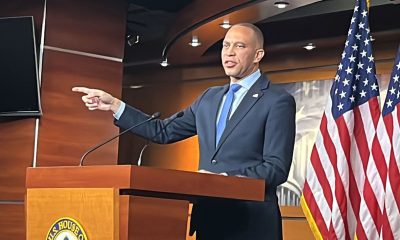
Gov. Gavin Newsom announced May 7 that California is expanding its Engaged California digital democracy initiative statewide, inviting residents to help shape future state policies on artificial intelligence (AI) and its impact on jobs and the economy.
The program marks the first time the state has opened the platform to all Californians. State officials said the effort is designed to give residents a direct role in discussions about how AI should be regulated and used as the technology rapidly expands across industries.
“We’ve got to be clear-eyed about this moment: AI is moving fast, bringing enormous opportunity, but also real risks,” Newsom said in a statement. “Californians deserve a seat at the table as we shape what’s to come.”
The initiative will roll out in two phases. Beginning immediately, Californians can sign up online to share how AI is affecting their work and communities and provide ideas for possible government action. Later this summer, a smaller group reflecting the state’s workforce demographics will participate in live discussions focused on developing policy recommendations.
State officials said the goal is to identify areas of agreement among Californians and provide policymakers with public feedback as the state develops future AI regulations and workforce strategies.

Engaged California is modeled after digital democracy programs used in Taiwan and is intended to encourage structured public discussion rather than social media-style debate. Officials described the effort as a form of “deliberative democracy” aimed at helping residents engage directly in state decision-making.
“The more Californians are engaged in the democratic process, the better able we’ll be to confront the challenges we face together,” said Nick Maduros, California Secretary of Government Operations, in a statement.
The statewide launch builds on two earlier pilot programs. One pilot gathered public input following the Los Angeles firestorms to help guide recovery efforts, while another collected ideas from state employees about improving government operations.
California has positioned itself as a national leader in AI policy and development. Since 2023, the Newsom administration has introduced initiatives focused on responsible AI use in government, cybersecurity protections, workforce training and regulations targeting risks such as deepfakes and AI-generated robocalls.
The state has also partnered with companies in Silicon Valley — including NVIDIA, Google, Adobe, IBM and Microsoft — to expand AI education and workforce training programs across California schools and universities.
Advice
Book Review: Books for College-Bound Students
The kind of workday your Grandpa had is probably over, and you can’t count on toiling at the same place for 40 years for a pension and a gold watch. You already know that, and these books will help you decide your next step. You’ll learn what kind of worker you are, what’s stopping you from finding a job or occupation you’ll love, how to determine the purpose you envision for your future, and how to get where you need to be.
By Terri Schlichenmeyer
Authors: Various, Copyright: c.2026, Publishers: Various, SRP: $21.00 – $29.00, Page Counts: Various
The videos and news reports were inspiring.
In them, a hesitant prospective college student became a happy, new college-bound student with the click of a key. They were accepted into the college of their dreams – so how can you get the same feeling next spring, when you’re the one with the highest of hopes?
You can start by reading these great books and sharing them with your family…
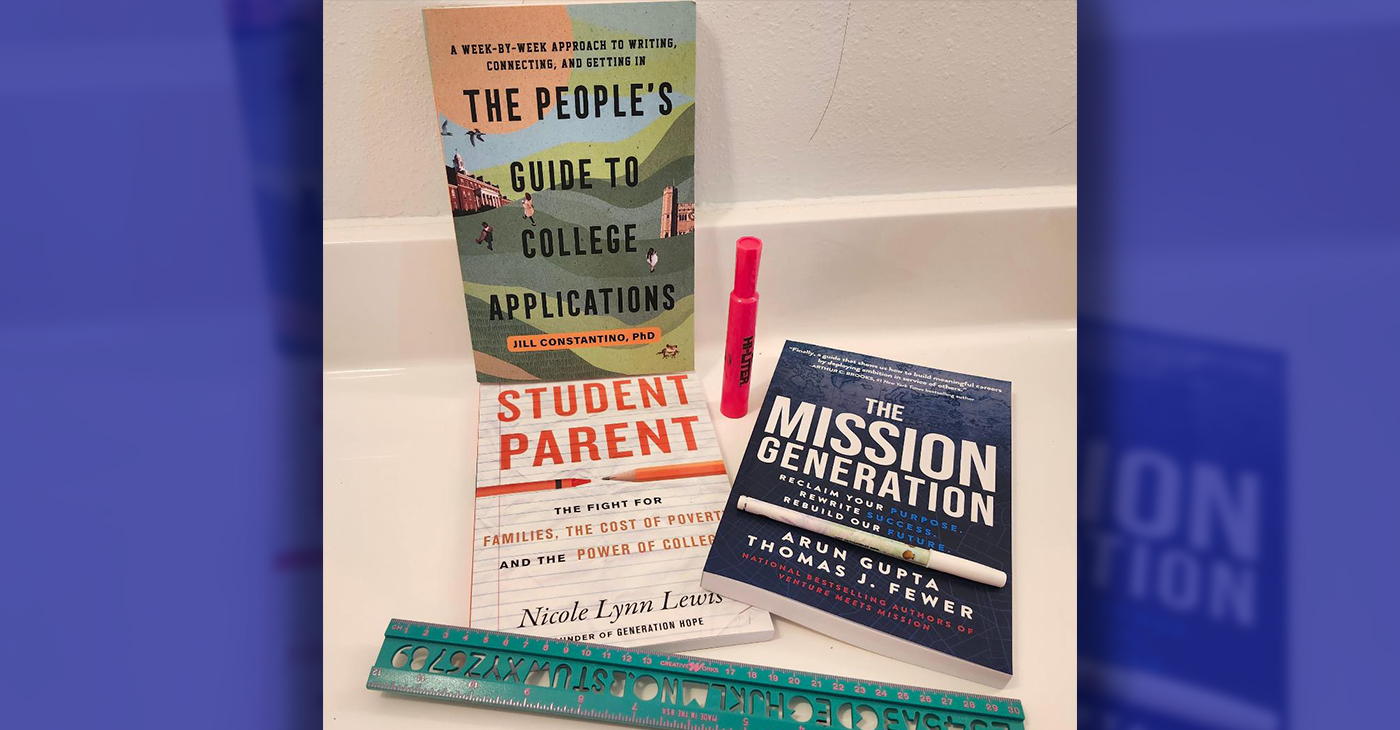
You probably already know that getting into the college of your choice is not something you do last-minute. In “The People’s Guide to College Applications: A Week-by-Week Approach to Writing, Connecting, and Getting in” (Prometheus Books, $ 21.95), Jill Constantino takes you through each step, but not in a frantic way. There’s no pressure here, just easy-to-grasp, makes-sense methods to apply for the college you want. There are reminders here, things you can’t forget and things you can, hints on asking for referrals and writing essays, and plenty of reminders to take a deep breath. Bonus: it’s also a book for parents, who may feel just as much pressure as their child does.
Okay, but let’s say that you’re an adult, a parent who’s sweating those college applications, classes, and the FAFSA for yourself, ugh! Then you’ll want to read “Student Parent: The Fight for Families, the Cost of Poverty, and the Power of College” by Nicole Lynn Lewis (Beacon Press, $26.97). an urgent call meant for nontraditional students who are also Black, Latinx, gay, Moms, or Dads.
Inside this book, you’ll find stats and stories that may already sound familiar, tales of not enough money, not enough support, not enough arms or sleep or resources. If you’re looking for a book of advice, this isn’t it, though. It’s more of a resource that you’ll want to take to your guidance counselor or any local politician.
Alright, but what if you’ve decided that college can wait? Is that okay? Look for “The Mission Generation: Reclaim Your Purpose, Rewrite Success, Rebuild Our Future” by Arun Gupta and Thomas J. Fewer (Wiley, $29.00) because – guess what? – you have many options for your future.
The kind of workday your Grandpa had is probably over, and you can’t count on toiling at the same place for 40 years for a pension and a gold watch. You already know that, and this book will help you decide your next step. You’ll learn what kind of worker you are, what’s stopping you from finding a job or occupation you’ll love, how to determine the purpose you envision for your future, and how to get where you need to be. This book isn’t just for high schoolers, but for anyone ages 16 and beyond who’s feeling restless, ready for change, or who’s thinking about some kind of purposeful retirement.
And if these aren’t the college-based or not-college-bound books you need, then be sure to ask your favorite bookseller or librarian for help on ideas, how-to’s, test prep books, or study guides. They’ll have books for you, and maybe a little inspiration, too.
Arts and Culture
Against All Odds: Mary Jackson’s Journey to NASA Engineer
Jackson’s life took a significant turn when she was offered the opportunity to work in a wind tunnel, a facility used to test the effects of air moving over aircraft structures. It was here that her passion for engineering truly took flight. However, there was a challenge: to become an engineer, she needed to take advanced courses that were only offered at a segregated high school.

By Tamara Shiloh
When we talk about breaking barriers in science, technology, engineering, and mathematics, the name Mary Jackson deserves a place at the top of the list.
Jackson was born in 1921 in Hampton, Virginia, a place that would later become central to her groundbreaking work. From an early age, she showed a strong aptitude for math and science—subjects that, at the time, were not widely encouraged for African American women. But Jackson was not one to be limited by expectations. She earned degrees in mathematics and physical science from Hampton Institute (now Hampton University), setting the foundation for a career that would change history.
Before joining NASA, Jackson worked as a teacher and later as a research mathematician at the National Advisory Committee for Aeronautics (NACA), the agency that eventually became NASA. Like many African American women of her time, she began her career as a “human computer,” performing complex calculations by hand. It was in this environment that she worked alongside brilliant minds like Katherine Johnson, forming part of a powerful group of African American women whose calculations helped launch America into space.
Jackson’s life took a significant turn when she was offered the opportunity to work in a wind tunnel, a facility used to test the effects of air moving over aircraft structures. It was here that her passion for engineering truly took flight. However, there was a challenge: to become an engineer, she needed to take advanced courses that were only offered at a segregated high school.
Jackson did something truly remarkable. She petitioned the city of Hampton for permission to attend those classes. She didn’t accept “no” as an answer. And she won.
In 1958, Jackson became NASA’s first African American female engineer.
But Jackson’s impact didn’t stop there.
Later in her career, she chose to step away from her engineering position—not because she couldn’t continue, but because she wanted to make a difference. She moved into roles focused on equal opportunity, working to ensure that women and minorities had access to the same opportunities she fought so hard to get.
Jackson’s story gained wider recognition through the book and film Hidden Figures, which highlighted the contributions of African American women at NASA. But long before the spotlight found her, Jackson was doing the work—quietly, persistently, and brilliantly.
Jackson retired from Langley in 1985. Among her many honors were an Apollo Group Achievement Award and being named Langley’s Volunteer of the Year in 1976. She served as the chair of one of the center’s annual United Way campaigns and a member of the National Technical Association (the oldest African American technical organization in the United States).
She and her husband Levi had an open-door policy for young Langley recruits trying to gain their footing in a new town and a new career. A 1976 Langley Researcher profile might have done the best job capturing Mary’s spirit and character, calling her a “gentlelady, wife and mother, humanitarian and scientist.”
For Jackson, science and service went hand in hand.
She died on Feb. 11, 2005, at age 83, at a convalescent home in Hampton, Virginia.


WORK FROM HOME
Home-based business with potential monthly income of $10K+ per month. A proven training system and website provided to maximize business effectiveness. Perfect job to earn side and primary income. Contact Lynne for more details: Lynne4npusa@gmail.com 800-334-0540


Oakland Mayor Pushes Charter Overhaul to Clarify Roles in City Government, Increase Accountability and Improve Service Delivery

The Ladies of Delta Sigma Theta Hold Day of Advocacy at the Capitol in Sacramento

Rep. Kamlager-Dove Introduces Bill to Protect Women in Custody After Reports Detailing Miscarriages and Neglect

Q&A with Steven Bradford: Why He Wants Your Vote for California Insurance Commissioner

OPINION: The Fire of Oakland’s Justin Jones

How Is AI Affecting California? The State Wants You to Share Your Story

California Launches Free Diaper Program for Newborns Statewide

Book Review: Books for College-Bound Students

Asm. Jackson Bill Requiring Anti-Hate Speech Training for Calif. Public Officials Sent to “Suspense File”

More and More, Black Californians Are Worried About Rising Costs of Housing, Energy, Food and Gas

Advocates Rally at State Capitol to Demand Heat Protections for Incarcerated People; More Funding for DV Survivors

Coming to Orinda: A Lecture on Finding the Strength to Heal and Move Past Fear With Divine Love

EBMUD Enshrines the Legacy of its First Black Board Member William ‘Bill’ Patterson

Against All Odds: Mary Jackson’s Journey to NASA Engineer

Supreme Court Voting Rights Ruling Reverberates From the South to California

Oakland Post: Week of April 8 – 14, 2026

Oakland Post: Week of April 1 – 7, 2026

Stanford Health Care Collaborates with Alameda Health System Affiliate, Expanding Access to Care in East Bay

Mayor Barbara Lee Proclaims April 9 as ‘100 Black Men of the Bay Area Day’

Oakland Post: Week of April 15 – 21, 2026

Up to the Job: How San Francisco’s PRC Is Providing Work Opportunities That Turn Into Lasting Stability

Building Bridges of Support: How AAPI Equity Alliance Is Strengthening California’s Anti-Hate Network

IN MEMORIAM: Rest in Power — Minnesota Loses a True Warrior in Yusef Mgeni

Oakland Post: Week of April 22 – 28, 2026

Mamdani Plans City Grocery Store in East Harlem

Revolve Fund to Provide $20,000 to Support Food Access Efforts in Alabama Black Belt

Up to the Job: How San Francisco’s PRC Is Providing Work Opportunities That Turn Into Lasting Stability

Cuban President Vows to Defend the Country Against US Invasion

2026 Mazda CX‑90 PHEV Premium Plus — Luxury SUV or Overpriced Plug‑In? | Walkaround Review

The hidden risks of poor water management in residential properties

Hyundai Ioniq 5 Parking, Safety, and 360 View #shorts

2025 Ioniq 5 New Wiper & Powerful Performance! #shorts

Electric SUV Range: Is 259 Miles Enough? #shorts

EV Charging: How Fast Can You Charge an Electric Vehicle? #shorts

Biometric Cooling… Messaging Seats…Come on! 2025 Infiniti QX80 Autograph 4WD

Charged Up: Witness the Magic of a Fully Electric Car! #shorts

Range Rover Sport PHEV Included…: See What’s Inside This Luxury SUV! #shorts

Invisible Hood View: Perfect Parking with X-Ray Vision! #shorts

AI Is Reshaping Black Healthcare: Promise, Peril, and the Push for Improved Results in California

ESSAY: Technology and Medicine, a Primary Care Point of View

Sanctuary Cities

The RESISTANCE – FREEDOM NOW

STATE OF THE PEOPLE: Freddie

ECONOMIC BOYCOTT DAY!!!!!

I told You So
-
 Alameda County4 weeks ago
Stanford Health Care Collaborates with Alameda Health System Affiliate, Expanding Access to Care in East Bay
-
 Activism4 weeks ago
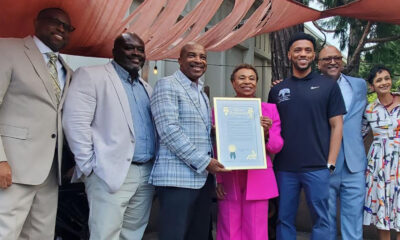
Mayor Barbara Lee Proclaims April 9 as ‘100 Black Men of the Bay Area Day’
-
 Activism4 weeks ago
Oakland Post: Week of April 15 – 21, 2026
-
 Activism4 weeks ago
Up to the Job: How San Francisco’s PRC Is Providing Work Opportunities That Turn Into Lasting Stability
-
 Activism4 weeks ago
Building Bridges of Support: How AAPI Equity Alliance Is Strengthening California’s Anti-Hate Network
-
 Activism3 weeks ago
Oakland Post: Week of April 22 – 28, 2026
-
 Activism3 weeks ago
Up to the Job: How San Francisco’s PRC Is Providing Work Opportunities That Turn Into Lasting Stability
-
#NNPA BlackPress3 weeks ago
2026 Mazda CX‑90 PHEV Premium Plus — Luxury SUV or Overpriced Plug‑In? | Walkaround Review
