
Crime
Police often use broad exemption to keep videos from public
DEFENDER NEWS NETWORK — The video is brief but disturbing: An officer is seen hitting an unarmed suspect with his pistol as the man falls into the grass. An autopsy would later show that he died from a gunshot to the back of the head.

By Defender News Service
The video is brief but disturbing: An officer is seen hitting an unarmed suspect with his pistol as the man falls into the grass. An autopsy would later show that he died from a gunshot to the back of the head.
After the death last July of 26-year-old Daniel Fuller in Devils Lake, North Dakota, investigators described the video to his grieving relatives. But for days, weeks and then months, they refused to release it to the family or the public. They did so only after a prosecutor announced in November that the officer did not intend to fire his gun and would not face criminal charges.
“It took forever for them to release the video because they kept saying it was an ongoing investigation,” said Fuller’s older sister, Allyson Bartlett. “I don’t think they wanted pressure from the community.”
Her experience is typical. An investigation by The Associated Press has found that police departments routinely withhold video taken by body-worn and dashboard-mounted cameras that show officer-involved shootings and other uses of force. They often do so by citing a broad exemption to state open-records laws — by claiming that releasing the video would undermine an ongoing investigation.
During the last five years, taxpayers have spent hundreds of millions of dollars to outfit officers’ uniforms and vehicles with cameras and to store the footage they record as evidence. Body cameras, in particular, have been touted as a way to increase police transparency by allowing for a neutral view of whether an officer’s actions were justified. In reality, the videos can be withheld for months, years or even indefinitely, the AP review found.
To be sure, some departments voluntarily release videos of high-profile incidents, sometimes within days or weeks. They also are forced to share them during civil rights lawsuits or air them when suspects face trial. Many also routinely release videos that show officers in a positive light, such as when they rescue people from accidents, fires and other dangers. But how requests are handled when they are requested by citizens, reporters and government watchdogs varies widely.
The AP tested the public’s ability to access police video for Sunshine Week, an annual celebration of open government, by filing open records requests related to roughly 20 recent use-of-force incidents in a dozen states.
They were met with a series of denials and failed to unearth video of a single incident that had not already been released publicly. Some videos could be released in coming months or years once criminal and disciplinary investigations are concluded. By then, the public interest in knowing what happened may have waned significantly.
In rejecting or delaying the requests, most law enforcement agencies and prosecutors cited exemptions that allow them to keep records of pending investigations secret. One county claimed the exemption would allow it to keep the video of a motorist’s fatal shooting secret forever — even though the investigation has concluded and cleared the deputy involved.
Critics say the exemption is often misapplied to keep from public view video that might shine an unfavorable light on the actions of officers. The exemption is intended to protect sensitive details about investigations that might tip off suspects that they are under scrutiny or alert them to what evidence police have obtained. But when officers shoot or otherwise use force on suspects, they know their actions are the focus of the investigation and often have access to the videos of the incidents.
“It is for that reason that the investigative records exemption literally makes no sense and should have no place when it comes to police body camera footage. It is a square peg in a round hole,” said Chad Marlow, an expert on laws governing body cameras at the American Civil Liberties Union. “We didn’t know that would end up being the get-out-of-FOIA free card for police departments, but it has certainly turned into that.”
Authorities say they have good reason for withholding video during investigations, such as preventing the memories of witnesses from being tainted or sparking protests with an out-of-context snippet of a deadly encounter. But the problem, said former federal prosecutor Val Van Brocklin, is that “there is no national standard of when and how this stuff gets released.”
“It’s such a mish-mash, and that creates a problem with expectations,” she said.
___
In West Virginia, a prosecutor withheld a video that led to the firing of two state troopers for allegedly beating a 16-year-old suspect. In Georgia, a county sheriff’s office refused to release video of a 22-year-old man who allegedly shot himself to death while struggling with police, an explanation that has been questioned and sparked protests.
In Atlanta, where officers were recently criticized in an audit for failing to use their body cameras as intended, the department would not release video of an officer-involved shooting that happened last summer, saying the officer could potentially still face disciplinary action.
“I see it all over the nation that police departments use this catch-all of ‘ongoing investigation’ to basically throw up a stone wall in front of those that might like to find out the truth,” said attorney Jonny Hibbert, who is representing the family of an 18-year-old Atlanta man who was shot and killed by an off-duty officer after allegedly stealing his car. His request for any video of that incident was recently denied.
The department in Sugar Land, Texas, which recently released dramatic video of officers rescuing a woman from a lake, refused to divulge footage of a 2016 struggle in which a man alleges he was beaten and severely injured by officers. In Seagoville, Texas, the department would not release video showing an officer using a stun gun to subdue a teenager brandishing a toy gun, even though it had publicized the incident as a textbook example of officers showing restraint. The department denied access because AP didn’t know the name of the teen involved in the Oct. 4 incident. It said that piece of information must be provided to request police videos under Texas law.
In North Liberty, Iowa, a city lawyer responded to a request for video of a traffic stop by calling it a confidential investigative record — then demanded the AP not publish footage of the incident it had already obtained.
The city had fired a patrol supervisor for mishandling the stop, claiming he violated the rights of suspects in a road rage incident, failed to draw his weapon and made other procedural errors. The supervisor has filed a lawsuit contesting his firing, and his attorney provided the AP with footage that he says shows his client acted appropriately. The city released a redacted version of the video only after AP declined the city’s request.
In the aftermath of the 2014 shooting of Michael Brown in Ferguson, Missouri, and similar deaths of unarmed black men, police departments around the country faced public pressure to begin using body cameras. Rather than resist, said Marlow, the ACLU expert, they embraced cameras — but often only released videos that showed police in a positive light.
“The decisions about whether footage is being released or not is being dominated by the group that is supposed to be watched,” he said. “When that happens, police body cameras go from being a tool for transparency and accountability into a propaganda tool.”
It’s not that way everywhere.
California’s state capital, Sacramento, has been roiled by protests over police shootings of unarmed black men — most recently, after the district attorney and state attorney general declined to bring charges against two officers in the fatal shooting of Stephon Clark, who was found to be holding a cellphone after he was killed. Police video of that shooting helped fuel the protests.
The department is among the most transparent in releasing officer videos; city policy that predates the Clark shooting requires the police department to release footage within 30 days of a major incident or justify why it won’t. In some cases, the department has released footage within days.
“We hope to say that we’re leading the way in releasing it and being transparent,” said a department spokesman, Marcus Basquez. “That’s a big priority for us, to build that trust with our community, and we feel releasing body-worn camera footage is one way.”
A state law taking effect in July requires all state and local law enforcement agencies in California to make audio and video recordings of critical incidents publicly available after 45 days, unless it would hinder an investigation. If it withheld recordings longer than a year, a department would have to show “clear and convincing evidence” of that assertion.
___
Police videos are considered public records in nearly every state, but vague laws and exemptions often give police chiefs and prosecutors wide discretion to determine when to release them.
A few states have limited the release of footage by exempting police videos from open records laws or requiring court orders to obtain their release. Others have carved out privacy exemptions for videos that show private homes, hospitals or juveniles.
The New York City Police Department, the nation’s largest, stopped releasing body camera videos entirely last year after a police union successfully argued in court that they were confidential personnel records. But the department vowed last month to continue releasing video of officer-involved shootings after an appeals court ruled that the union’s argument “would defeat the purpose of the body-worn-camera program.”
Adam Marshall, a lawyer for the Reporters Committee for Freedom of the Press, in 2015 called police body camera videos the “Wild West of open records requests” because of the uncertainty surrounding how they would be handled. Today, he says a growing number of court cases and state laws have made for more certainty — that many requests will be denied or delayed.
“It’s disappointing,” he said. “Unfortunately, it does not reflect the type of transparency and openness that the public hoped would result from body cameras.”
This article is originally appeared Defender News Network.









Black History
Oakland Observes Black August with Block Parties, Film Showings, Workshops
On Aug. 7, 1970, Jonathan Jackson burst into a Marin County courtroom armed with a shotgun to demand the freedom of the Soledad Brothers. He, along with the inmates he freed, was shot and killed while driving away. This involved one of the Black Panther Party’s most notable associates, Angela Davis, because the shotgun was registered in her name. She was later acquitted for charges of conspiracy, kidnapping, and murder in 1972.


Study. Train. Fast. Fight.
These are the four tenets of Black August, a month dedicated to commemorating the sacrifices of political prisoners and Black revolutionaries in the struggle for Black liberation.
Observers are urged to study the history of the Black struggle for freedom, train their bodies for health and self-defense, fast to cleanse the mind, body, and spirit, and fight ongoing oppression alongside their communities and local political organizations.
In Oakland, Black August celebrations are being held all month long. It has particular significance here because of the links between the Black Panthers’ organizing activities that highlighted both the social conditions and over-policing of the Black community, leading to the high incarceration rates and disproportionately long prison sentences.
Beginning in 1979 in San Quentin State Prison, the Black Guerrilla Family called for the remembrance of political prisoner George Jackson and his brother Jonathan Jackson, who were assassinated in the early 1970s. George Jackson was considered a political prisoner in that it was the anti-Black justice system that led to his incarceration for armed robbery with a sentence of one year-to-life in 1960.
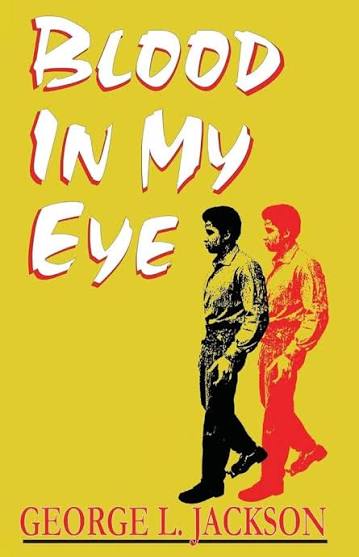
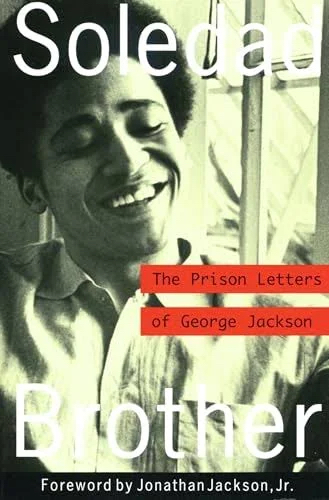
While in prison, George befriended fellow prisoner W.L. Nolen, who introduced him to the works of Karl Marx, Vladimir Lenin, Mao Zedong, and Frantz Fanon. This radicalization coupled with his experiences of violence while imprisoned led to him writing and publishing two books, “Soledad Brother” (1970), and “Blood in my Eye” (1972). In January of 1970, George and two other prisoners were charged with murdering a corrections officer at Soledad State Prison in Monterey County.
On Aug. 7, 1970, Jonathan Jackson burst into a Marin County courtroom armed with a shotgun to demand the freedom of the Soledad Brothers. He, along with the inmates he freed, was shot and killed while driving away. This involved one of the Black Panther Party’s most notable associates, Angela Davis, because the shotgun was registered in her name. She was later acquitted for charges of conspiracy, kidnapping, and murder in 1972.
On Aug. 21, 1971, George Jackson was assassinated by a corrections officer after attempting to escape and free other inmates. As a result, there were uprisings and protests within prisons all over the country that year, calling forth resistance against racial oppression and mass incarceration.
Since its outset, Black August has evolved across the country, taking many forms to honor this history and embody the four tenets.
In Oakland, the upcoming Black August Experience, hosted by Youth Alive! and the East Oakland Boxing Association (EOBA), is a free, family-friendly event celebrating the legacy of Black August. Activities include free food and drinks, a kids’ activity zone, interactive workshops, live cooking and boxing demonstrations, and more.
Happening on Aug. 21 from 4-8 p.m. at the EOBA Patio, Carolyn Flynn, director of administration at EOBA, said the event, in its second year, will be an opportunity to engage with people in person through food, shared space, and education.
“We do regular classes in education, and those are ongoing programs that we offer, but we wanted to have [an opportunity] for our neighbors to utilize this space.” Combined with Youth Alive’s work in community violence prevention and youth leadership, this event surely aims to bring the Oakland community together to capture what Black August means today.
Here are additional Black August events happening in Oakland:
Forum and Community Discussion hosted by the Oakland Liberation Center, 1499 Fruitvale Ave., Aug. 14, 7 p.m.
“George Jackson/San Quentin” Screening hosted by Nostalgic for Nothing Cinema at Moments Co-Op, 410 13th St., Aug. 16, doors at 6 p.m., show at 6:30 p.m. (Masks required and scent-free)
Commemorating the Struggle, Building the Altar for Liberation: Black August at Bandung Books, 2269 International Blvd., Aug. 23, 1-5 p.m.
Building Opportunities for Self-Sufficiency (BOSS), will host “Black August: The Arc of Liberation” at Oakland City Hall on Sat. Aug. 29, from 11 a.m. to 3 p.m.

Black History
Oakland Observes Black August with Block Parties, Film Showings, Workshops
POST NEWS GROUP — Beginning in 1979 in San Quentin State Prison, the Black Guerrilla Family called for the remembrance of political prisoner George Jackson and his brother Jonathan Jackson who were assassinated in the early 1970s. George Jackson was considered a political prisoner in that it was the anti-Black justice system that led to his incarceration for armed robbery with a sentence of one year-to-life in 1960.

Study. Train. Fast. Fight.
These are the four tenets of Black August, a month dedicated to commemorating the sacrifices of political prisoners and Black revolutionaries in the struggle for Black liberation.
Observers are urged to study the history of the Black struggle for freedom, train their bodies for health and self-defense, fast to cleanse the mind, body, and spirit, and fight ongoing oppression alongside their communities and local political organizations.
Beginning in 1979 in San Quentin State Prison, the Black Guerrilla Family called for the remembrance of political prisoner George Jackson and his brother Jonathan Jackson who were assassinated in the early 1970s. George Jackson was considered a political prisoner in that it was the anti-Black justice system that led to his incarceration for armed robbery with a sentence of one year-to-life in 1960.
While in prison, George befriended fellow prisoner W.L. Nolen, who introduced him to the works of Karl Marx, Vladimir Lenin, Mao Zedong, and Frantz Fanon. This radicalization coupled with his experiences of violence while imprisoned led to him writing and publishing two books, “Soledad Brother” (1970), and “Blood in my Eye” (1972). In January of 1970, George and two other prisoners were charged with murdering a corrections officer at Soledad State Prison in Monterey County.
On Aug. 7, 1970, Jonathan Jackson burst into a Marin County courtroom armed with a shotgun to demand the freedom of the Soledad Brothers. He, along with the inmates he freed, was shot and killed while driving away. This involved one of the Black Panther Party’s most notable associates, Angela Davis, because the shotgun was registered in her name. She was later acquitted of charges of conspiracy, kidnapping, and murder in 1972.
On Aug. 21, 1971, George Jackson was assassinated by a corrections officer after attempting to escape and free other inmates. As a result, there were uprisings and protests within prisons all over the country that year, calling forth resistance against racial oppression and mass incarceration.
Since its outset, Black August has evolved across the country, taking many forms to honor this history and embody the four tenets.
In Oakland, the upcoming Black August Experience, hosted by Youth Alive! and the East Oakland Boxing Association (EOBA), is a free, family-friendly event celebrating the legacy of Black August. Activities include free food and drinks, a kids’ activity zone, interactive workshops, live cooking and boxing demonstrations, and more.
Happening on Aug. 21 from 4-8 p.m. at the EOBA Patio, Carolyn Flynn, director of administration at EOBA, said the event, in its second year, will be an opportunity to engage with people in person through food, shared space, and education.
“We do regular classes in education, and those are ongoing programs that we offer, but we wanted to have [an opportunity] for our neighbors to utilize this space.” Combined with Youth Alive’s work in community violence prevention and youth leadership, this event surely aims to bring the Oakland community together to capture what Black August means today.
Here are additional Black August events happening in Oakland:
Forum and Community Discussion hosted by the Oakland Liberation Center, 1499 Fruitvale Ave., Aug. 14, 7 p.m.
“George Jackson/San Quentin” Screening hosted by Nostalgic for Nothing Cinema at Moments Co-Op, 410 13th St., Aug. 16, doors at 6 p.m., show at 6:30 p.m. (Masks required and scent-free)
Commemorating the Struggle, Building the Altar for Liberation: Black August at Bandung Books, 2269 International Blvd., Aug. 23rd, 1-5 p.m.
Building Opportunities for Self-Sufficiency (BOSS), will host “Black August: The Arc of Liberation” at Oakland City Hall on Sat. Aug. 29, from 11 a.m. to 3 p.m.
Activism
Oakland Post: Week of August 12 – 18, 2026
The printed Weekly Edition of the Oakland Post: Week of August 12 – 18, 2026

To enlarge your view of this issue, use the slider, magnifying glass icon or full page icon in the lower right corner of the browser window.

WORK FROM HOME
Home-based business with potential monthly income of $10K+ per month. A proven training system and website provided to maximize business effectiveness. Perfect job to earn side and primary income. Contact Lynne for more details: Lynne4npusa@gmail.com 800-334-0540


OPINION: 57,000 Empty Apartments and Not a Word of Apology – City Limits

Oakland Protesters Rally to Defend Haitian Immigrants and TPS

First 5 Alameda County Celebrates First Year of Measure C’s Implementation

From Palestine to Oakland: Seeds for Liberation Examines Shared Struggles for Freedom

NABJ Convention Brings Black Journalists, Civic Leaders Together in Atlanta

At Sacramento Summit, Becerra Discusses Policy; Uses “Family” Metaphor to Frame Case for National Political Unity

$5 Billion Coliseum Vision Puts Oakland Jobs, Businesses at Center

Gov. Newsom Nominates 3 Black Women Judges to Serve on State Courts of Appeal

Oakland Observes Black August with Block Parties, Film Showings, Workshops

NPRC Elder Justice Symposium Invites Community to Join Effort to Protect Alameda County Elders
Episode 4: Grow Stronger After 50
Episode 4: Grow Stronger After 50

Four Candidates, Including Incumbent Barbara Lee, Qualify for Oakland Mayor’s Race

Oakland Observes Black August with Block Parties, Film Showings, Workshops

Oakland Post: Week of August 12 – 18, 2026

Department of Homeland Security Demands California Secretary of State Shirley N. Weber Scrub Voter Rolls

New Judge Could Decide if Karmelo Anthony Gets a New Trial

Oakland Children’s Hospital Workers and Patients Rally for Pediatric Medical Care

“The Power to See Threats Sooner”: Gov. Newsom, Safety Officials Showcase California’s Investments in Hi-Tech Wildfire Prevention

Alpha Kappa Alpha Sorority, Inc. Celebrates New North Atlantic Regional Director

Surveillance Pricing Fight: State Senate Debates Bill Banning Retailers from Using AI to Set Prices Based on a Buyer’s Profile

Mount Zion MBC, Church of Jesus Christ of Latter-day Saints Partner to Bring 29,000 Meals to Alameda County

California Sen. Padilla Joins Colleagues to Introduce Bill Imposing Term Limits on Supreme Court Justices

Less Affluent School Districts, Including Sacramento City, Face Threat of State Takeover

Car Wash Workers Cope with Lingering Impacts of ICE Raids

Starting This Summer, California Car Buyers Can Get an Instant $3500 Off the Cost of Electric Vehicles

COMMENTARY: You Are Already Paying for the AI Boom

California Bill Would Let Abuse Victims Use Trauma as Legal Defense for Violent Crime

Fed Court to Decide Landmark First Amendment Case

Gov. Gavin Newsom Signs Law Streamlining Affordable Housing Rules

The Conversation With Al McFarlane 6/23/26

Media Monday 6/22/26

LIVE! ASK ALMA! — TUES. 6.23.26 7PM EST

Car Buying Secrets: 4 Hidden Checks Before You Sign!

Is This 550 HP Charger Worth YOUR Money? AutoNetwork Review

Celebrating Juneteenth – Frederick Douglass on education and resistance

LIVE! — ASK ALMA! — TUES. 6.19.26 7PM EST

Hyundai Ioniq 5 Parking, Safety, and 360 View #shorts

2025 Ioniq 5 New Wiper & Powerful Performance! #shorts

Electric SUV Range: Is 259 Miles Enough? #shorts

EV Charging: How Fast Can You Charge an Electric Vehicle? #shorts

Biometric Cooling… Messaging Seats…Come on! 2025 Infiniti QX80 Autograph 4WD

Charged Up: Witness the Magic of a Fully Electric Car! #shorts

Range Rover Sport PHEV Included…: See What’s Inside This Luxury SUV! #shorts

Invisible Hood View: Perfect Parking with X-Ray Vision! #shorts
-
 Featured2 weeks ago
Department of Homeland Security Demands California Secretary of State Shirley N. Weber Scrub Voter Rolls
-
 #NNPA BlackPress3 weeks ago
New Judge Could Decide if Karmelo Anthony Gets a New Trial
-
 Environment2 weeks ago
“The Power to See Threats Sooner”: Gov. Newsom, Safety Officials Showcase California’s Investments in Hi-Tech Wildfire Prevention
-
 Business4 weeks ago
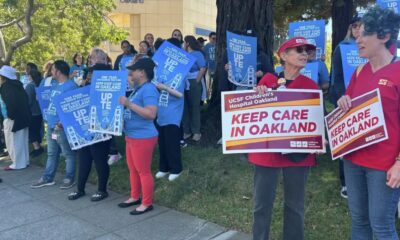
Oakland Children’s Hospital Workers and Patients Rally for Pediatric Medical Care
-
 Black History3 weeks ago
Alpha Kappa Alpha Sorority, Inc. Celebrates New North Atlantic Regional Director
-
 Business4 weeks ago
Surveillance Pricing Fight: State Senate Debates Bill Banning Retailers from Using AI to Set Prices Based on a Buyer’s Profile
-
 Business4 weeks ago
Mount Zion MBC, Church of Jesus Christ of Latter-day Saints Partner to Bring 29,000 Meals to Alameda County
-
 Featured2 weeks ago
California Sen. Padilla Joins Colleagues to Introduce Bill Imposing Term Limits on Supreme Court Justices
