
National
Police Chief Who Pledged Reforms Fired Amid Crime Spike


In this April 30, 2015, file photo, Baltimore Police Department Commissioner Anthony Batts listens as Deputy Commissioner Kevin Davis speaks at a news conference, in Baltimore. Baltimore Mayor Stephanie Rawlings-Blake announced the firing of Batts in a news release Wednesday, July 8. (AP Photo/Patrick Semansky, File)
JULIET LINDERMAN, Associated Press
BALTIMORE (AP) — Less than three years ago, Anthony Batts was hand-picked by Baltimore Mayor Stephanie Rawlings-Blake to combat crime and reform a troubled law enforcement department in one of America’s most violent cities.
On Wednesday, Batts was fired as police commissioner amid the worst crime spike in the city since the 1970s and plummeting morale among officers who complained their boss was failing to provide the support and leadership they needed to do their jobs.
“We cannot continue to debate the leadership of the department,” Rawlings-Blake told a news conference she called to announce her decision. “We cannot continue to have the level of violence we’ve seen in recent weeks in this city.”
Deputy Police Commissioner Kevin Davis, who has only been with the department since January, will serve as interim commissioner, Rawlings-Blake said.
Batts and Rawlings-Blake are African-American, as is the city’s top prosecutor, Baltimore State’s Attorney Marilyn Mosby. Davis is white. Sixty percent of the city’s population is black, while the police department is 48 percent African-American. Mosby said her office has already met with Davis and she looks forward to working with him.
The firing comes less than three months after the city erupted in riots following the death of Freddie Gray, a 25-year-old black man who died in April of injuries he received in police custody. Six police officers have been criminally charged in Gray’s death. Gray died April 19. Most of the unrest took place on April 27.
The U.S. Justice Department is conducting a civil rights review of the department and Batts announced Tuesday that an outside organization would review the police response to the unrest.
But the Baltimore police union released a scathing post-mortem report Wednesday accusing Batts and other top brass of instructing officers not to engage with rioters and to allow looting and destruction to occur.
“The officers repeatedly expressed concern that the passive response of the Baltimore police commanders to the civil unrest allowed the disorder to grow into full-scale rioting,” Gene Ryan, president of the Baltimore Fraternal Order of Police Lodge 3, wrote in the report. “The riots were preventable.”
In the weeks after the riots, homicides and other violent crimes spiked and arrests began to plummet as word spread that police officers were afraid that they, too, would be charged with crimes if something went wrong during the course of their duties.
Baltimore’s homicide total this year is 156, according to police. That’s a 48 percent increase compared with the same time last year. Shootings have increased 86 percent.
In the latest example, gunmen jumped out of two vans and fired at a group of people a few blocks from an urban university campus Tuesday night, killing three people.
The startling spike stands in stark contrast to Batts’ promise to fight violent crime when he arrived in Baltimore in 2012.
At a swearing-in ceremony in November of that year, Batts pledged to “continue our progress at reducing violent crime and holding accountable those that perpetrate violence in our good streets.”
Batts took over from Fred Bealefeld, who resigned after five years as commissioner and 31 in the Baltimore Police Department. Batts too was a veteran officer, though new to the city of Baltimore: He spent three decades in California, two as commissioner of the embattled Oakland Police Department and seven as commissioner of the Long Beach police department, where he’d served as a law enforcement officer for 20 years.
“I worked closely with Commissioner Batts and always found him open to my ideas for reforming the department,” said Baltimore City Council President Bernard C. “Jack” Young. “He was engaging, experienced, and served our city to the best of his ability.”
But Young said that when he talked recently with citizens and police officers, “it became increasingly clear that a growing lack of confidence in the direction of our city’s crime-fighting strategy had the potential to severely damage the long-term health of our city.”
The Rev. Jamal Bryant, who delivered the fiery eulogy at Gray’s funeral, called Batts’ firing a first step toward healing police-community relations.
“It’s no secret there’s been great strain and stress since the uprising,” he said. “It became not just a disconnect between police and the community but between the police and their commissioner.”
In the Sandtown-Winchester neighborhood of West Baltimore, where Gray was arrested, residents praised the mayor’s decision.
Keonna Stokes, 22, said she was glad to see Batts removed from his position, and hopes a new commissioner will have a lower tolerance for police misconduct.
“The police wouldn’t do the things they do if the commissioner didn’t allow it,” she said. “He should have been fired. We call the police when we really need them, when people hurt us. But now we don’t call them, because they hurt us. If they didn’t, Freddie would still be here.”
Batts’ contract with the city paid him $190,000 and was to run through June 2020. It includes a provision for a severance payment equal to his annual salary if he is terminated without cause.
Copyright 2015 The Associated Press. All rights reserved. This material may not be published, broadcast, rewritten or redistributed.




Activism
Oakland Post: Week of April 8 – 14, 2026
The printed Weekly Edition of the Oakland Post: Week of April 8 – 14, 2026

To enlarge your view of this issue, use the slider, magnifying glass icon or full page icon in the lower right corner of the browser window.
Activism
Oakland Post: Week of April 1 – 7, 2026
The printed Weekly Edition of the Oakland Post: Week of April 1 – 7, 2026

To enlarge your view of this issue, use the slider, magnifying glass icon or full page icon in the lower right corner of the browser window.
#NNPA BlackPress
Black Artists in America, Installation Three Wraps at the Dixon Gallery and Gardens
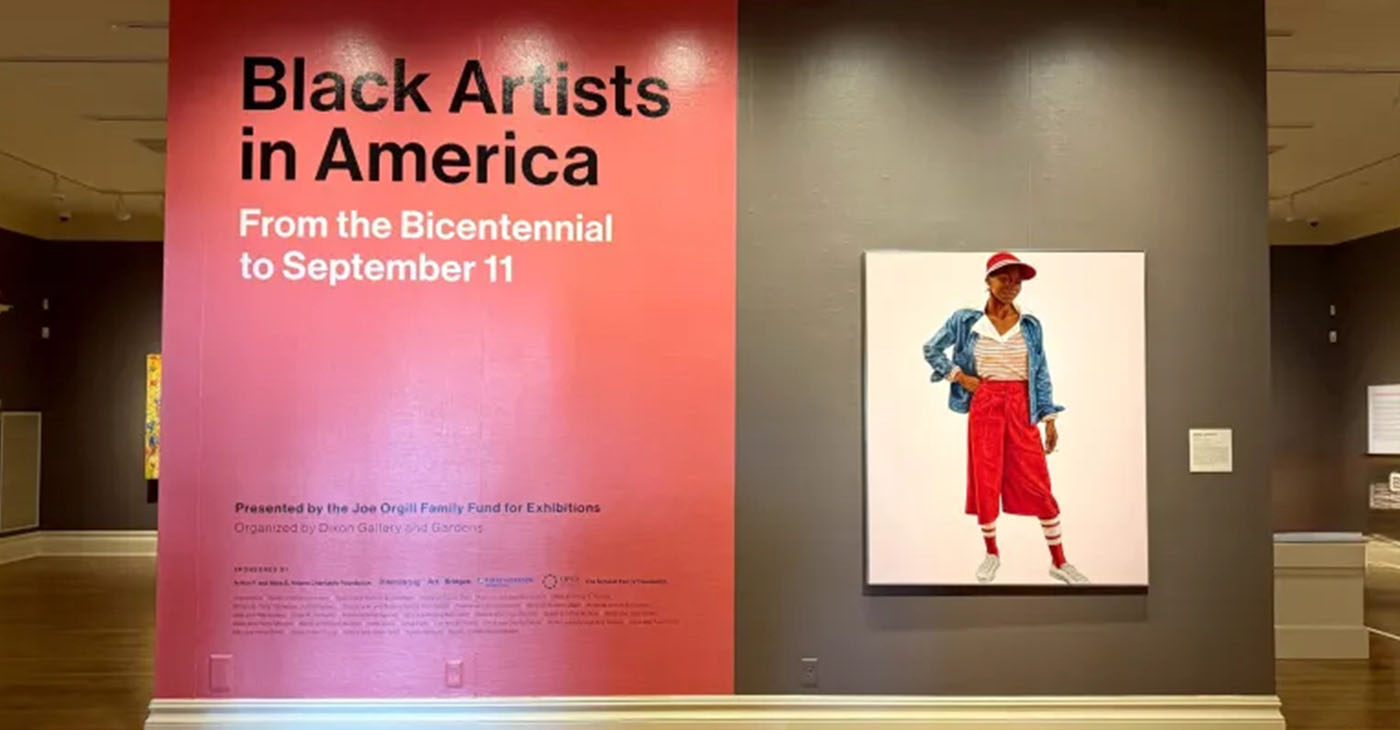
TRI-STATE DEFENDER — With 50+ paintings, sculptures and assemblages, the exhibit features artists like Varnette Honeywood from Los Angeles, whose pieces appeared in Bill Coby’s private collection (before they were auctioned off) and on “The Cosby Show.” Also included are works by Alonzo Davis, another Los Angeles artist who opened one of the first galleries there where Black Artists could exhibit.

By Candace A. Gray | Tri-State Defender
The tulips gleefully greet those who enter the gates at the Dixon Gallery & Gardens on an almost spring day. More than 650,000 bulbs of various hues are currently on display. And they are truly breathtaking.
Inside the gallery, and equally as breathtaking, is the “Black Artists in America, From the Bicentennial to September 11” exhibit, which runs through Sunday, March 29. This is the third installment of a three-part series that started years ago and illustrates part of the Black experience through visual arts in the 20th century.
“This story picks up where part two left off,’’ said Kevin Sharp, the Linda W. and S. Herbert Rhea director for the Dixon. “This era is when we really start to see the emergence of these important Black artists’ agency and freedom shine through. They start to say and express what they want to, and it was a really beautiful time.”
With 50+ paintings, sculptures and assemblages, the exhibit features artists like Varnette Honeywood from Los Angeles, whose pieces appeared in Bill Coby’s private collection (before they were auctioned off) and on “The Cosby Show.” Also included are works by Alonzo Davis, another Los Angeles artist who opened one of the first galleries there where Black Artists could exhibit.
“Though [Davis] was from LA, he actually lived in Memphis for a decade,” said Sharp. “He was a dean at Memphis College of Art, and later opened the first gallery in New York owned and operated by black curators.”
Another featured artist is former NFL player, Ernie Barnes. His work is distinctive. Where have you seen one of his most popular paintings, Sugar Shack? On the end scene and credits of the hit show “Good Times.” His piece Saturday Night, Durham, North Carolina, 1974 is in this collection.
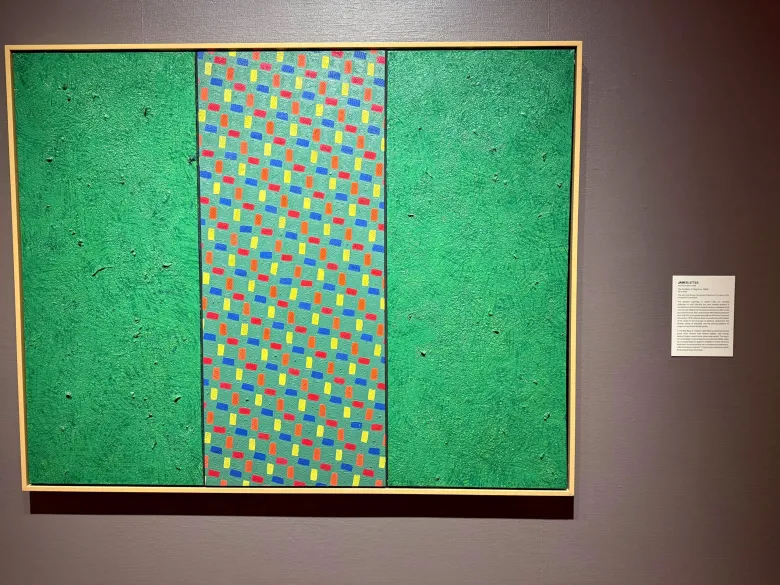
Memphis native James Little’s “The War Baby: The Triptych” is among more than 50 works featured in “Black Artists in America, From the Bicentennial to September 11” at the Dixon Gallery & Gardens, the final installment of a three-part series highlighting the impact and evolution of Black artists through 2011.
The exhibit features other artists with Memphis ties, including abstract painter James Little, who was raised in a segregated Memphis and attended Memphis Academy of Art (before it was Memphis College of Art). He later moved to New York, became a teacher and an internationally acclaimed fixture in the art world in 2022 when he was named a Whitney Biennial selected artist at the Whitney Museum of American Art in New York.
Other artists like Romare Bearden, who had a Southern experience but lived up North, were featured in all three installments.
“During this period of time, he was a major figure,” said Sharp. “He wrote one of the first books on the history of African American art during a time when there were more Black academics, art teachers, more Black everything!”
Speaking of Black educators, Sharp said the head curator behind this tri-part series and Dixon’s partner in the arts is Earnestine Jenkins, Ph.D., an art history professor at the University of Memphis, who also earned a Master of Arts degree from Memphis State University (now UofM). “We began working with Dr. Jenkins in 2018,” he said.
Sharp explained that it takes a team of curators, registrars, counterparts at other museums, and more, about three years to assemble an exhibit like this. It came together quite seamlessly, he added. Each room conjured up more jaw-dropping “wows” than the one before it. Each piece worked with the others to tell the story of Black people and their collective experience during this time period.
One of the last artists about whom Sharp shared information was Bettye Saar, who will turn 100 years old this year. She’s been working in Los Angeles for 80 years and is finally getting her due. Her medium is collages or assemblages, and an incredible work of hers is on display. She’s married to an artist and has two daughters, also artists.
The exhibit catalogue bears some of these artists’ stories, among other scholarly information.
The exhibit, presented by the Joe Orgill Family Fund for Exhibitions, is culturally and colorfully rich. It is a must see and admission to the Dixon is free.
Visit https://www.dixon.org/ to learn more.
Fun Facts: An original James Little design lives in the flooring of the basketball court at Tom Lee Park, and he makes and mixes his own paint colors.



WORK FROM HOME
Home-based business with potential monthly income of $10K+ per month. A proven training system and website provided to maximize business effectiveness. Perfect job to earn side and primary income. Contact Lynne for more details: Lynne4npusa@gmail.com 800-334-0540


Oakland Post: Week of April 8 – 14, 2026

Oakland Post: Week of April 1 – 7, 2026

Black Artists in America, Installation Three Wraps at the Dixon Gallery and Gardens

Grief, Advocacy, and Education: A Counselor Reflects on Black Maternal Health

Future of Florida’s Black History Museum in Limbo

New Research Shows the Many Benefits of Early Learning

South Hampton K-8 Students Among Top 10 Finalists for Samsung’s ‘Solve for Tomorrow’ Competition

Cuba: No Negotiation with US on the President or Political System

Brooklyn Academy of Music Names Jamaican-Born Tamara McCaw as President

Trinidad & Tobego – U.S. Launches WhatsApp Channel for American Citizens in the Country

Oakland Post: Week of March 18 – 24, 2026

AI Innovation vs. Ethics and Environmental Impact

AI, Web3, and Digital Reparations

What If You Owned Your AI Agent?

Season 7, Episode 3 – January Reporter’s Roundtable 📱

Reflecting on Black History Milestones in Birmingham AL

Oakland Post: Week of February 25 – March 3, 2026

Oakland Post: Week of March 4 – 10, 2026

PRESS ROOM: NBA Hall of Fame Nominee Terry Cummings Joins 100 Black Men of DeKalb County to Launch Victory & Values Initiative

Trump’s MAGA Allies are Creating Executive Order Plan to Steal the 2026 Midterms

U.S. manufacturing rebounds – how foundry services are adapting to rising demand

Poll Shows Support for Policies That Help Families Afford Child Care

Oakland Post: Week of March 11 -17, 2026
Oakland Post: Week of March 18 – 24, 2026

OP-ED: One Hundred Years of Black Workers Telling the Truth

Advancements in solar technology that are changing the way we power the world

Financial Wellness and Mental Health: Managing Money Stress in College

Woman’s Search for Family’s Roots Leads to Ancestor John T. Ward – A Successful Entrepreneur and Conductor on the Underground Railroad

COMMENTARY: Women of Color Shape Our Past and Future

PRESS ROOM: Civil Rights TV Launches in Selma as the World’s First 24/7 Civil Rights Television Network

Hyundai Ioniq 5 Parking, Safety, and 360 View #shorts

2025 Ioniq 5 New Wiper & Powerful Performance! #shorts

Electric SUV Range: Is 259 Miles Enough? #shorts

EV Charging: How Fast Can You Charge an Electric Vehicle? #shorts

Biometric Cooling… Messaging Seats…Come on! 2025 Infiniti QX80 Autograph 4WD

Charged Up: Witness the Magic of a Fully Electric Car! #shorts

Range Rover Sport PHEV Included…: See What’s Inside This Luxury SUV! #shorts

Invisible Hood View: Perfect Parking with X-Ray Vision! #shorts

AI Is Reshaping Black Healthcare: Promise, Peril, and the Push for Improved Results in California

ESSAY: Technology and Medicine, a Primary Care Point of View

Sanctuary Cities

The RESISTANCE – FREEDOM NOW

STATE OF THE PEOPLE: Freddie

ECONOMIC BOYCOTT DAY!!!!!

I told You So
-
 Activism3 weeks ago
Oakland Post: Week of March 11 -17, 2026
-
 Activism3 weeks ago
Oakland Post: Week of March 18 – 24, 2026
-
 Advice3 weeks ago
Financial Wellness and Mental Health: Managing Money Stress in College
-
 #NNPA BlackPress3 weeks ago
Brooklyn Academy of Music Names Jamaican-Born Tamara McCaw as President
-
 #NNPA BlackPress2 weeks ago
Grief, Advocacy, and Education: A Counselor Reflects on Black Maternal Health
-
 #NNPA BlackPress2 weeks ago
New Research Shows the Many Benefits of Early Learning
-
 #NNPA BlackPress2 weeks ago
Black Artists in America, Installation Three Wraps at the Dixon Gallery and Gardens
-

 Advice4 weeks ago
Women & Wealth: Tips for Navigating Your Lifelong Financial Journey
