
Education
OUSD Turns Asphalt School Playgrounds into Green Spaces


The demolition work is being donated by DPR Construction through a Melrose Leadership Academy parent. Melrose is a K-8 school located at 4730 Fleming Ave. near Mills College in East Oakland.
With less than two weeks to go before the 2018-19 school year begins, schools across Oakland are getting ready. At Melrose Leadership Academy, work is now underway to make the campus green and, in the process, help children learn.
Oakland Unified School District (OUSD), the Trust for Public Land, and Green Schoolyards America announced a partnership at Melrose, the first of five schools to serve as demonstration sites where asphalt covered schoolyards will be transformed into green spaces or “living schoolyards.”
The partners will also collaborate on a district policy, funding strategy and joint use agreements to ensure more OUSD schoolyards become healthier and more climate resilient.
“Working with the Trust for Public Land, Green Schoolyards America and the community provides OUSD with added resources and technical expertise that we need to improve the learning environment for our students,” said Kyla Johnson-Trammell, OUSD Superintendent. “This effort will also create healthier conditions at our schools and get our students to think more globally and be more environmentally conscious.”

The partnership focuses on increasing equity across OUSD by prioritizing schools that serve low-income neighborhoods.
There are five demonstration schoolyards involved in the project. Emiliano Zapata Street Academy, Markham Elementary School, Melrose Leadership Academy, Ralph J. Bunche High School, and two elementary schools that share a campus, International Community School and Think College Now.
The process will involve receive community engagement, participatory design, asphalt removal and planting. The demonstration schools will also benefit from professional development from Green Schoolyards America’s Principals’ Institute.
Nearly 1,700 students attend these five schools and will directly benefit from the transformation. A total of 30,000 people live within a 10-minute walk of these sites.
“We are excited to begin transforming asphalt-covered schoolyards into park-like outdoor learning environments with trees, gardens and natural material,” said Alejandra Chiesa, Bay Area program director at the Trust for Public Land.
“As a parent, I know schools are where children spend most of their time and everyone deserves a great park within a 10-min walk from home,” she said. “By investing in school ground greening, students and the surrounding community gain daily exposure to nature and all its associated benefits.”
“Our temperature measurements indicate that on a sunny 65-70°F day in Oakland, unshaded asphalt surface temperatures can climb over 115°F and rubber matting is often more than 140°F. These conditions are not conducive to comfort or physical activity and can negatively impact children’s well-being,” said Sharon Danks, executive director of Green Schoolyards America.
“By transforming these asphalt covered schoolyards into park-like environments, we can plant trees to shade and cool hot asphalt and reduce energy costs in adjacent buildings, while also improving the watershed by absorbing rain water. “Living schoolyards” also provide fantastic, engaging, place-based, hands-on learning resources right outside the classroom door, which makes it easier for teachers to immerse children in the natural world every day,” she said.
OUSD’s Deputy Chief of Facilities Tim White said, “OUSD remains committed to providing students with great learning facilities and outdoor spaces. Partnerships like this are essential to overcome some of the funding challenges we face. The need is great and OUSD cannot do it alone. We are extremely grateful for the continued engagement and support of so many non-profit partners and community members that have been working alongside OUSD to improve our schools.”
For more information on the Trust for Public Land, visit www.tpl.org. Information on Green Schoolyards is available at www.greenschoolyards.org






Arts and Culture
Book Review: Books on Black History and Black Life for Kids
For the youngest reader, “As You Are: A Hope for Black Sons” by Kimberly A. Gordon Biddle, illustrated by David Wilkerson (Magination Press, $18.99) is a book for young Black boys and for their mothers. It’s a hope inside a prayer that the world treats a child gently, and it could make a great baby shower gift.

By Terri Schlichenmeyer
Authors: Various, Copyright: c. 2025, 2026, Publishers: Various, SRPs: $17.99-$18.99, Page Counts: Various,
Everybody in your family has stories to share.
Your parents have told you some, no doubt. Your grandparents have offered a few, too, and aunties and uncles have spun some good tales. But there’s so much more to know, so grab one of these great books and learn about Black History and Black life.
For the youngest reader, “As You Are: A Hope for Black Sons” by Kimberly A. Gordon Biddle, illustrated by David Wilkerson (Magination Press, $18.99) is a book for young Black boys and for their mothers. It’s a hope inside a prayer that the world treats a child gently, and it could make a great baby shower gift.
If someone said you couldn’t do something that you were clearly able to do, would you fight to do it anyhow? In the new book, “Remember Her Name! Debbie Allen’s Rise to Fame” by Tami Charles, illustrated by Meredith Lucius (Charlesbridge, $17.99), a young girl in the Jim Crow South is told that she can’t dance because of the color of her skin.
She didn’t listen, though, and neither did her mother, who took her daughter to Mexico, where the girl soared! This is an inspiration for any 5-to-7-year-old; be sure to check out the back-of-the-book information, if you’re an adult fan.
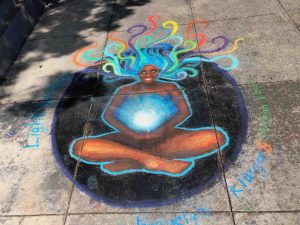
Do you often hear your elders say things that sound like lessons? They might be, so “Where There is Love: A Story of African Proverbs” by Shauntay Grant, illustrated by Leticia Moreno (Penguin Workshop, $18.99) is a book you’ll like. It’s a quick-to-read collection of short proverbs that you can say every day. Kids ages 4-to-6 will easily remember what they find in this book; again, look in the back for more information.
Surely, you love your neighborhood, which is why the tale inside “Main Street: A Community Story about Redlining” by Britt Hawthorne and Tiffany Jewell, illustrated by David Wilkerson (Penguin Kokila, $18.99) is a book for you.
Olivia’s neighborhood is having a block party, but she’s sad when no one shows up. That’s when she learns that “the government” is discriminating against the people and businesses near where she lives. So, what can she and her neighbors do? The answer might inspire 6-to-8-year-old kids to stand up to wrongs they see, and to help make their neighborhoods stronger and safer.
And finally, if a kid wants a book, where can they go to find it? In “I’m So Happy You’re Here: A Celebration of Library Joy” by Mychal Threets, illustrated by Lorraine Nam (Random House, $18.99) is a good introduction to the best of what a library has to offer. The freedom to walk into a library and borrow a book is the theme here, as is the sheer happiness of being welcomed, no matter who you are. This is an easy book for kids as young as two and as old as five to enjoy.
On that note, if you want more, head to that library, or a nearby bookstore. They’ll be glad to see you. They’ve got stories to share.
#NNPA BlackPress
Why Black Parents Should Consider Montessori
BLACKPRESSUSA NEWSWIRE — I have found that there are some educational approaches that consistently provide a safer, more enriching, and more affirmative environment for Black children. The Montessori method, developed by Italian physician Maria Montessori and introduced to the U.S. in the early 20th century, is one such approach.

As a mother of four children, I’ve done A LOT of school shopping. I don’t mean the autumn ritual of purchasing school supplies. I mean shopping for schools – pouring over promotional materials, combing through websites, asking friends and community members for referrals to their favorite schools, attending open houses and orientations, comparing curriculums and educational philosophies, meeting teachers and principals, and students who all claim that their school is the best.
But keep in mind – I’m not just a mom of four children. I’m a mom of four Black children, and I’m also a psychologist who is very interested in protecting my little ones from the traumatic experience that school can too often become.
For Black children in the United States, school can sometimes feel more like a prison than an educational institution. Research shows that Black students experience school as more hostile and demoralizing than other students do, that they are disciplined more frequently and more harshly for typical childhood offenses (such as running in the halls or chewing gum in class), that they are often labeled as deviant or viewed as deficient more quickly than other children, that teachers have lower academic expectations of Black students (which, in turn, lowers those students’ expectations of themselves), and that Black parents feel less respected and less engaged by their children’s teachers and school administrators. Perhaps these are some of the underlying reasons that Black students tend to underperform in most schools across the country.
The truth is that schools are more than academic institutions. They are places where children go to gain a sense of who they are, how they relate to others, and where they fit into the world. The best schools are places that answer these questions positively – ‘you are a valuable human being, you are a person who will grow up to contribute great things to your community, and you belong here, with us, exploring the world and learning how to use your gifts.’ Unfortunately, Black children looking for answers to these universal questions of childhood will often hit a brick wall once they walk into the classroom. If the curriculum does not reflect their cultural experiences, the teachers don’t appear to value them, and they spend most of their time being shamed into compliance rather than guided towards their highest potential, well…what can we really expect? How are they supposed to master basic academic skills if their spirits have been crushed?
Here’s the good news. In my years of school shopping, and in the research of Black education specialists such as Jawanza Kunjufu and Amos Wilson, I have found that there are some educational approaches that consistently provide a safer, more enriching, and more affirmative environment for Black children. The Montessori method, developed by Italian physician Maria Montessori and introduced to the U.S. in the early 20th century, is one such approach.
The key feature of Montessori schooling is that children decide (for the most part) what they want to do each day. Led by their own interests and skill levels, children in a Montessori classroom move around freely and work independently or with others on tasks of their own
choosing. The classroom is intentionally stocked with materials tailored to the developmental needs of children, including the need to learn through different senses (sight, touch/texture, movement, etc.). The teacher in a Montessori classroom is less like a boss and more like a caring guide who works with each child individually, demonstrating various activities and then giving them space to try it on their own. The idea is that over time, students learn to master even the toughest tasks and concepts, and they feel an intense sense of pride and accomplishment because they did it by themselves, without pressure or pushing.
I think that this aspect of the Montessori method is good for all kids. Do you remember the feeling of having your creativity or motivation crushed by being told exactly what to do, when to do it, how to do it, and why? The truth is that when presented with a new challenge and then given space, children actually accomplish a lot! They are born with a natural desire to learn. It is that spirit of curiosity, sense of wonder, and excitement to explore that Montessori helps to keep alive in a child. But that’s not the only reason that I think Black parents need to consider Montessori.
Fostering a love of learning is great. But more importantly, I think that Montessori students excel at learning to love. It begins with Montessori’s acknowledgement that all children are precious because childhood is a precious time. In many school systems, Black children are treated like miniature adults (at best) or miniature criminals (at worst), and are subjected to stressful situations that no kids are equipped to handle – expectations to be still and silent for long periods, competitive and high-stakes testing, and punitive classroom discipline. It’s easy to get the sense that rather than being prepared for college or careers, our children are being prepared to fail. Couple this with the aforementioned bias against Black children that seems to run rampant within the U.S. school system, and you end up with children who feel burned out and bitter about school by the time they hit 3rd grade.
In my experience, Montessori does a better job of protecting the space that is childhood – and all the joy of discovery and learning that should come along with that. Without the requirement that students “sit down and shut up,” behavioral issues in Montessori classrooms tend to be non-existent (or at least, the Montessori method doesn’t harp on them; children are gently redirected rather than shamed in front of the class). Montessori students don’t learn for the sake of tests; they demonstrate what they’ve learned by sharing with their teacher or classmates how they solve real-world problems using the skills they’ve gained through reading, math, or science activities. And by allowing children a choice of what to focus on throughout the day, Montessori teachers demonstrate that they honor and trust children’s natural intelligence. The individualized, careful attention they provide indicates to children that they are each seen, heard, and valued for who they are, and who they might become. Now that’s love (and good education).
As a parent, I’ve come to realize that many schools offer high-quality academics. Montessori is no different. Students in Montessori schools gain exposure to advanced concepts and the materials to work with these concepts hands-on. Across the nation, Montessori schools emphasize early literacy development, an especially important indicator of life success for young Black boys and men. Montessori students are provided with the opportunity to be
successful every day, and the chance to develop a sense of competence and self-worth based on completing tasks at their own pace.
But I have also learned that the important questions to ask when school shopping are often not about academics at all. I now ask, ‘Will my children be treated kindly? Will they be listened to? Protected from bias and bullying? Will they feel safe? Will this precious time in their lives be honored as a space for growth, development, awe, and excitement? Will they get to see people like them included in the curriculum? Will they be seen as valuable even if they don’t always ‘measure up’ to other kids on a task? Will they get extra support if they need it? Will the school include me in major decisions? Will the school leaders help to make sure that my children reach their fullest potential? Will the teacher care about my children almost as much as I do?’
Consistently, it’s been the Montessori schools that have answered with a loud, resounding ‘Yes!’ That is why my children ended up in Montessori schools, and I couldn’t be happier with that decision. If you’re a parent like me, shopping for schools with the same questions in mind, I’d urge you to consider Montessori education as a viable option for your precious little ones. Today more than ever, getting it right for our children is priceless.
Activism
Desmond Gumbs — Visionary Founder, Mentor, and Builder of Opportunity
Gumbs’ coaching and leadership journey spans from Bishop O’Dowd High School, Oakland High School, Stellar Prep High School. Over the decades, hundreds of his students have gone on to college, earning academic and athletic scholarships and developing life skills that extend well beyond sports.

Special to the Post
For more than 25 years, Desmond Gumbs has been a cornerstone of Bay Area education and athletics — not simply as a coach, but as a mentor, founder, and architect of opportunity. While recent media narratives have focused narrowly on challenges, they fail to capture the far more important truth: Gumbs’ life’s work has been dedicated to building pathways to college, character, and long-term success for hundreds of young people.
A Career Defined by Impact
Gumbs’ coaching and leadership journey spans from Bishop O’Dowd High School, Oakland High School, Stellar Prep High School. Over the decades, hundreds of his students have gone on to college, earning academic and athletic scholarships and developing life skills that extend well beyond sports.
One of his most enduring contributions is his role as founder of Stellar Prep High School, a non-traditional, mission-driven institution created to serve students who needed additional structure, belief, and opportunity. Through Stellar Prep numerous students have advanced to college — many with scholarships — demonstrating Gumbs’ deep commitment to education as the foundation for athletic and personal success.

NCAA football history was made this year when Head Coach from
Mississippi Valley State, Terrell Buckley and Head Coach Desmond
Gumbs both had starting kickers that were women. This picture was
taken after the game.
A Personal Testament to the Mission: Addison Gumbs
Perhaps no example better reflects Desmond Gumbs’ philosophy than the journey of his son, Addison Gumbs. Addison became an Army All-American, one of the highest honors in high school football — and notably, the last Army All-Americans produced by the Bay Area, alongside Najee Harris.
Both young men went on to compete at the highest levels of college football — Addison Gumbs at the University of Oklahoma, and Najee Harris at the University of Alabama — representing the Bay Area on a national level.
Building Lincoln University Athletics From the Ground Up
In 2021, Gumbs accepted one of the most difficult challenges in college athletics: launching an entire athletics department at Lincoln University in Oakland from scratch. With no established infrastructure, limited facilities, and eventually the loss of key financial aid resources, he nonetheless built opportunities where none existed.
Under his leadership, Lincoln University introduced:
- Football
- Men’s and Women’s Basketball
- Men’s and Women’s Soccer
Operating as an independent program with no capital and no conference safety net, Gumbs was forced to innovate — finding ways to sustain teams, schedule competition, and keep student-athletes enrolled and progressing toward degrees. The work was never about comfort; it was about access.
Voices That Reflect His Impact
Desmond Gumbs’ philosophy has been consistently reflected in his own published words:
- “if you have an idea, you’re 75% there the remaining 25% is actually doing it.”
- “This generation doesn’t respect the title — they respect the person.”
- “Greatness is a habit, not a moment.”
Former players and community members have echoed similar sentiments in public commentary, crediting Gumbs with teaching them leadership, accountability, confidence, and belief in themselves — lessons that outlast any single season.
Context Matters More Than Headlines
Recent articles critical of Lincoln University athletics focus on logistical and financial hardships while ignoring the reality of building a new program with limited resources in one of the most expensive regions in the country. Such narratives are ultimately harmful and incomplete, failing to recognize the courage it takes to create opportunity instead of walking away when conditions are difficult.
The real story is not about early struggles — it is about vision, resilience, and service.
A Legacy That Endures
From founding Stellar PREP High School, to sending hundreds of students to college, to producing elite athletes like Addison Gumbs, to launching Lincoln University athletics, Desmond Gumbs’ legacy is one of belief in young people and relentless commitment to opportunity.
His work cannot be reduced to headlines or records. It lives on in degrees earned, scholarships secured, leaders developed, and futures changed — across the Bay Area and beyond.

WORK FROM HOME
Home-based business with potential monthly income of $10K+ per month. A proven training system and website provided to maximize business effectiveness. Perfect job to earn side and primary income. Contact Lynne for more details: Lynne4npusa@gmail.com 800-334-0540


Black Artists in America, Installation Three Wraps at the Dixon Gallery and Gardens

Grief, Advocacy, and Education: A Counselor Reflects on Black Maternal Health

Future of Florida’s Black History Museum in Limbo

New Research Shows the Many Benefits of Early Learning

South Hampton K-8 Students Among Top 10 Finalists for Samsung’s ‘Solve for Tomorrow’ Competition

Cuba: No Negotiation with US on the President or Political System

Brooklyn Academy of Music Names Jamaican-Born Tamara McCaw as President

Trinidad & Tobego – U.S. Launches WhatsApp Channel for American Citizens in the Country

Oakland Post: Week of March 18 – 24, 2026

AI Innovation vs. Ethics and Environmental Impact

AI, Web3, and Digital Reparations

What If You Owned Your AI Agent?

Season 7, Episode 3 – January Reporter’s Roundtable 📱

Season 7, Episode 3 – January Reporter’s Roundtable

AI, Media, and Power | Part 2, Real-World Impacts and Tradeoffs

Oakland Post: Week of February 11 – 17, 2026

Reflecting on Black History Milestones in Birmingham AL

CITY OF SAN LEANDRO STATE OF CALIFORNIA PUBLIC WORKS DEPARTMENT ENGINEERING DIVISION NOTICE TO BIDDERS FOR ANNUAL STREET OVERLAY/REHABILITATION 2019-21 – PHASE III

Oakland Post: Week of February 18 – 24, 2026

PRESS ROOM: NBA Hall of Fame Nominee Terry Cummings Joins 100 Black Men of DeKalb County to Launch Victory & Values Initiative

Oakland Post: Week of February 25 – March 3, 2026

Trump’s MAGA Allies are Creating Executive Order Plan to Steal the 2026 Midterms

U.S. manufacturing rebounds – how foundry services are adapting to rising demand

OP-ED: One Hundred Years of Black Workers Telling the Truth

Advancements in solar technology that are changing the way we power the world

Chase Oakland Community Center Hosts Alley-Oop Accelerator Building Community and Opportunity for Bay Area Entrepreneurs

Poll Shows Support for Policies That Help Families Afford Child Care

Oakland Post: Week of March 4 – 10, 2026

PRESS ROOM: Civil Rights TV Launches in Selma as the World’s First 24/7 Civil Rights Television Network

Woman’s Search for Family’s Roots Leads to Ancestor John T. Ward – A Successful Entrepreneur and Conductor on the Underground Railroad

Hyundai Ioniq 5 Parking, Safety, and 360 View #shorts

2025 Ioniq 5 New Wiper & Powerful Performance! #shorts

Electric SUV Range: Is 259 Miles Enough? #shorts

EV Charging: How Fast Can You Charge an Electric Vehicle? #shorts

Biometric Cooling… Messaging Seats…Come on! 2025 Infiniti QX80 Autograph 4WD

Charged Up: Witness the Magic of a Fully Electric Car! #shorts

Range Rover Sport PHEV Included…: See What’s Inside This Luxury SUV! #shorts

Invisible Hood View: Perfect Parking with X-Ray Vision! #shorts

AI Is Reshaping Black Healthcare: Promise, Peril, and the Push for Improved Results in California

ESSAY: Technology and Medicine, a Primary Care Point of View

Sanctuary Cities

The RESISTANCE – FREEDOM NOW

STATE OF THE PEOPLE: Freddie

ECONOMIC BOYCOTT DAY!!!!!

I told You So

-
 #NNPA BlackPress4 weeks ago
Poll Shows Support for Policies That Help Families Afford Child Care
-
 Activism4 weeks ago
Oakland Post: Week of March 4 – 10, 2026
-
 #NNPA BlackPress3 weeks ago
Woman’s Search for Family’s Roots Leads to Ancestor John T. Ward – A Successful Entrepreneur and Conductor on the Underground Railroad
-

 #NNPA BlackPress4 weeks ago
OP-ED: NNPA Launches 2026 “Leadership Matters” Video Series
-

 #NNPA BlackPress3 weeks ago
Advocates Raise Alarm Over ICE Operation, MOU and Detention Risks in Baltimore County
-

 #NNPA BlackPress3 weeks ago
COMMENTARY: Women of Color Shape Our Past and Future
-

 #NNPA BlackPress3 weeks ago
Pete Buttigieg to Join Mayor Randall Woodfin for Community Town Hall in Birmingham
-
 Activism2 weeks ago
Oakland Post: Week of March 11 -17, 2026
