
Activism
OPINION: Why is it So Important to Give Back
I believe something is always better than nothing. Which is why I recruited other volunteers to help gather me gather Food, gift cards, clothing, toys and occasionally money to help meet the cost of living which has sky-rocketed, impacting the most vulnerable. What gave me pause however was the seeming lack of community partnerships.

By Richard Johnson
The Formerly Incarcerated Giving Back organization was my brainchild as I struggled in that dark cold dank cell at Pelican Bay State Prison reflecting on my life, wasting practically all of it, going against the grain so-to- speak. I concluded if given the opportunity to ever get out I would bring changes not only for myself but equally for the community that I so harmed.
At various periods while doing a 33 to life sentence for the possession of drugs, my hopes would flee bringing forth a sense of doom, drenched in gloom in that cesspool of misery and despair. However, what restored my faith, strength, resolve and desire was that I wanted to leave a legacy that my family could appreciate that truly reflected my true self; not the person that most knew as that being a criminal.
Even while being labeled by the penal system as being the worst of the worst, I wanted redemption. I knew that I must give back from my heart. I understood that time was running short and father time was not going to be favorable to me. So, I begin to write about my true self in a ledger that evolved into a life lesson book dedicated to my son and others of his creed. Kids that would undoubtedly be challenged by the same contradictions, hardships and feelings of being lost that I had experienced without the proper examples, mentors and guidance.
Father time eventually turned in a positive way. I was blessed by a turn of fate. I was given an unexpected early release to the community just as COVID emerged on the scene. Governor Newsom gave me a medical reprieve release. Of course, I had to finish out my term but on the streets. This came with a host of restrictions, safeguards, curfews, ankle monitors, UA testing, radius limitations and more. Once out, I had a list of to-dos first such as acquiring my driver’s license, social security card, ID, etc.
Ithen was faced with the necessity of seeking employment. Soon I found a job at the 5 Key’s organization. Immediately, I came home to a different world that I had left. A total culture shock! I could not imagine it being this bad. Homelessness, torn-up streets, violence untold, schools being shut-down, mismanagement run amuck. This is where I saw the opportunity to make a real difference by giving back turning a negative into a positive, giving birth to Formerly Incarcerated Giving Back. I was also giving an opportunity to continue as a columnist with the Oakland Post which had started while I was at San Quentin
I knew that others who also would be released from prison would see the need for change and to be in a position to just serve others by volunteering to make a difference. As I believed in my heart, I began to reach out to other members of the re-entry community by telling them through my Post columns “If you were once part of the problem, you can always be part of the needed solution.”
In short order, I began to do what I could for the community without resources, without any government grants, without foundation grants. At the beginning I only had the love and support of my family and a few coins in my pocket, but i decided to launch the Formerly Incarcerated Giving Back’s effort as a way to observe and celebrate the true spirit and meanings of Christmas, thanksgiving, Father’s & Mother’s Day, Juneteenth by collecting and giving what we had available to needy families and children.
I believe Something is always better than nothing. Which is why I recruited other volunteers to help gather me gather Food, gift cards, clothing, toys and occasionally money to help meet the cost of living which has sky-rocketed, impacting the most vulnerable. What gave me pause however was the seeming lack of community partnerships.
The lack of unity undermines the needed work to shift the pendulum forward. A solid fist is always much stronger than individual fingers. Unity is the key to success; we must not undermine one another or play politics with the lives that so desperately need our help. The resources are here. Proper distribution, cooperation and management has been what is lacking. Mistakes are inevitable; however, repeated mistakes aren’t. Setting the proper course is doable. Let’s man-up and woman-up for a serious change.






Activism
Oakland Post: Week of March 18 – 24, 2026
The printed Weekly Edition of the Oakland Post: Week of March 18 – 24, 2026
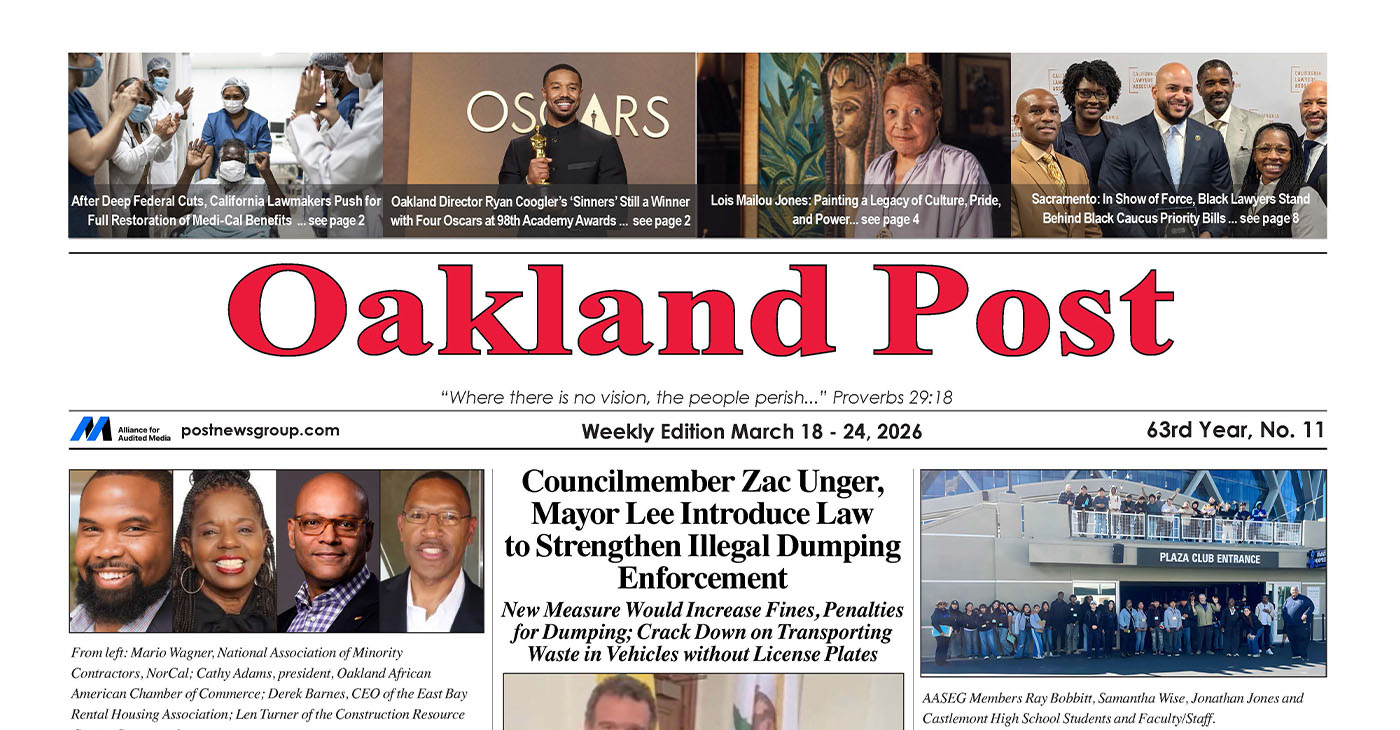
To enlarge your view of this issue, use the slider, magnifying glass icon or full page icon in the lower right corner of the browser window.
Activism
Oakland Post: Week of March 11 -17, 2026
The printed Weekly Edition of the Oakland Post: Week of March 11 – 17, 2026
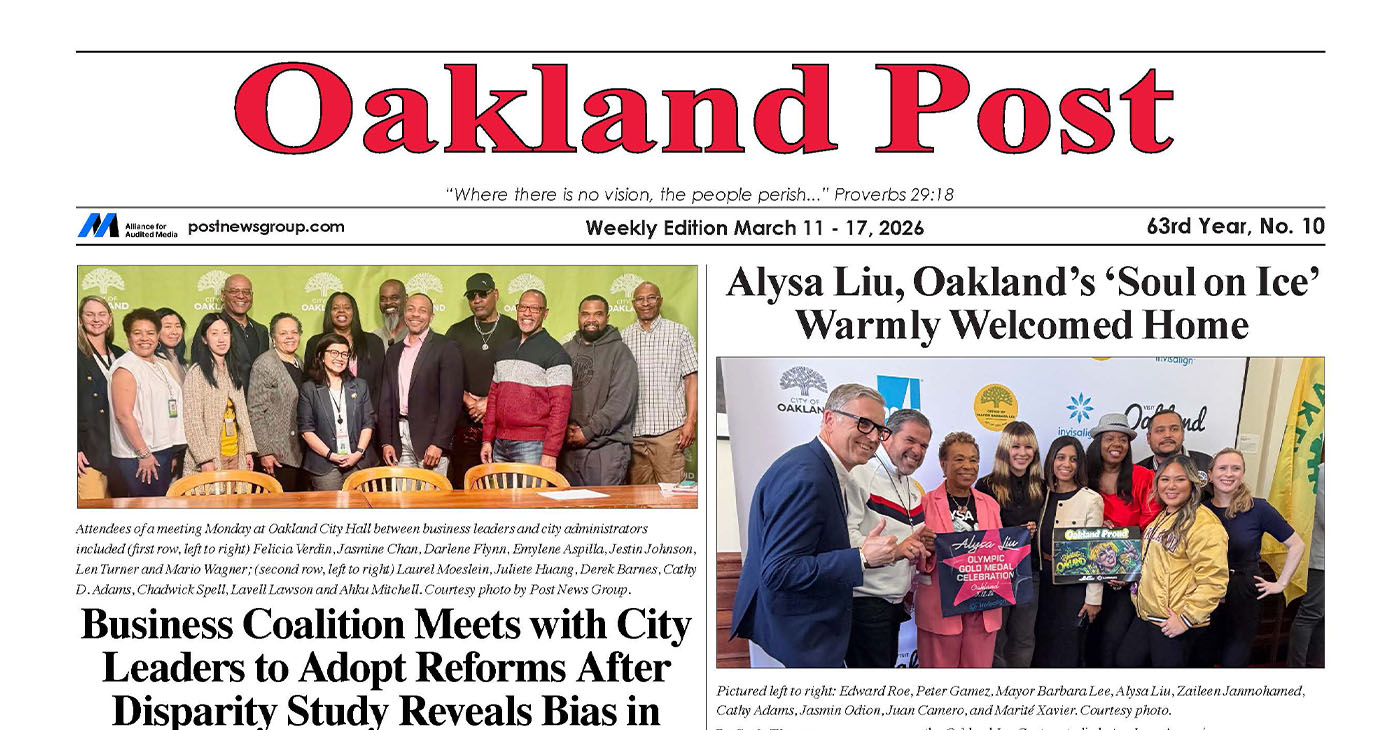
To enlarge your view of this issue, use the slider, magnifying glass icon or full page icon in the lower right corner of the browser window.
Activism
Oakland Post: Week of March 4 – 10, 2026
The printed Weekly Edition of the Oakland Post: Week of March 4 – 10, 2026
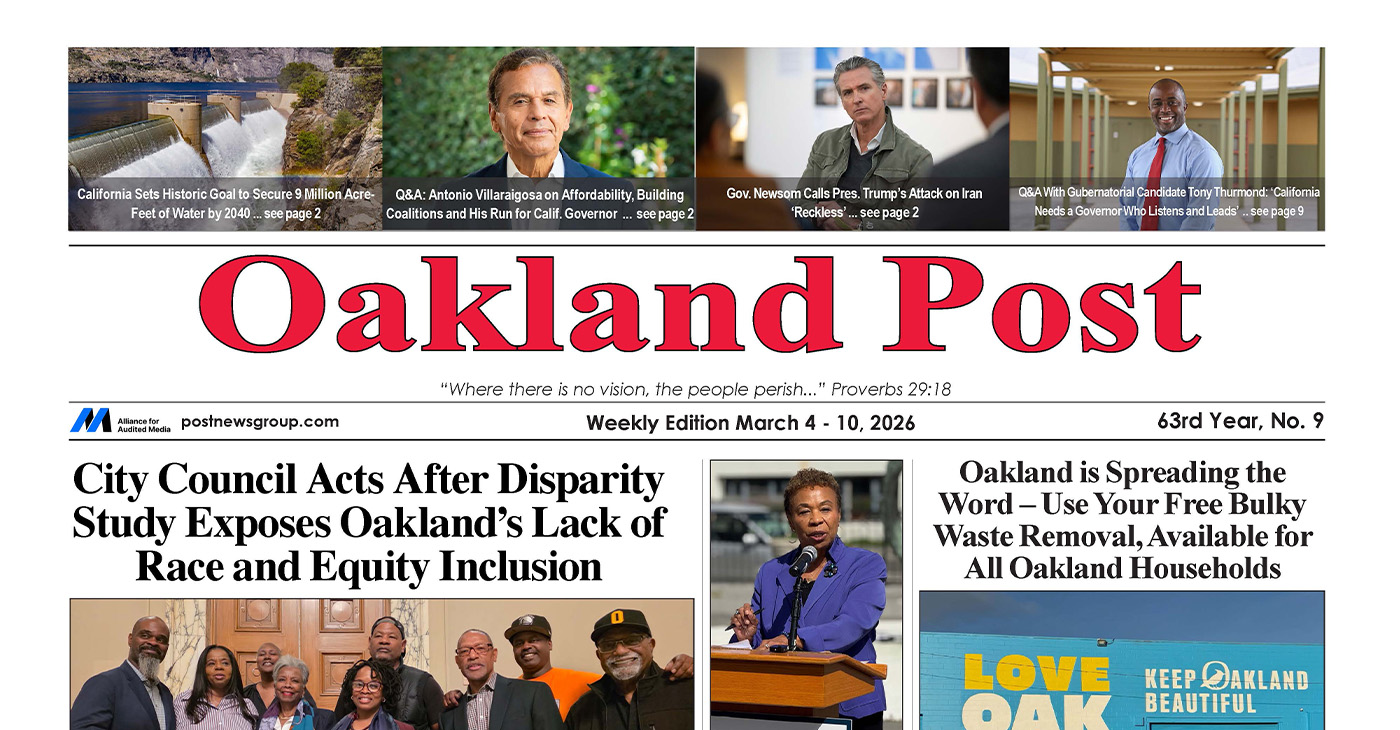
To enlarge your view of this issue, use the slider, magnifying glass icon or full page icon in the lower right corner of the browser window.


WORK FROM HOME
Home-based business with potential monthly income of $10K+ per month. A proven training system and website provided to maximize business effectiveness. Perfect job to earn side and primary income. Contact Lynne for more details: Lynne4npusa@gmail.com 800-334-0540


Black Artists in America, Installation Three Wraps at the Dixon Gallery and Gardens

Grief, Advocacy, and Education: A Counselor Reflects on Black Maternal Health

Future of Florida’s Black History Museum in Limbo

New Research Shows the Many Benefits of Early Learning

South Hampton K-8 Students Among Top 10 Finalists for Samsung’s ‘Solve for Tomorrow’ Competition

Cuba: No Negotiation with US on the President or Political System

Brooklyn Academy of Music Names Jamaican-Born Tamara McCaw as President

Trinidad & Tobego – U.S. Launches WhatsApp Channel for American Citizens in the Country

Oakland Post: Week of March 18 – 24, 2026

AI Innovation vs. Ethics and Environmental Impact

AI, Web3, and Digital Reparations

What If You Owned Your AI Agent?

Season 7, Episode 3 – January Reporter’s Roundtable 📱

Season 7, Episode 3 – January Reporter’s Roundtable

AI, Media, and Power | Part 2, Real-World Impacts and Tradeoffs

Discrimination in City Contracts

Oakland Post: Week of February 11 – 17, 2026

Reflecting on Black History Milestones in Birmingham AL

Rising Optimism Among Small And Middle Market Business Leaders Suggests Growth for California

CITY OF SAN LEANDRO STATE OF CALIFORNIA PUBLIC WORKS DEPARTMENT ENGINEERING DIVISION NOTICE TO BIDDERS FOR ANNUAL STREET OVERLAY/REHABILITATION 2019-21 – PHASE III

Oakland Post: Week of February 18 – 24, 2026

PRESS ROOM: NBA Hall of Fame Nominee Terry Cummings Joins 100 Black Men of DeKalb County to Launch Victory & Values Initiative

Oakland Post: Week of February 25 – March 3, 2026

U.S. manufacturing rebounds – how foundry services are adapting to rising demand

Trump’s MAGA Allies are Creating Executive Order Plan to Steal the 2026 Midterms

OP-ED: One Hundred Years of Black Workers Telling the Truth

Advancements in solar technology that are changing the way we power the world

Chase Oakland Community Center Hosts Alley-Oop Accelerator Building Community and Opportunity for Bay Area Entrepreneurs

PRESS ROOM: Civil Rights TV Launches in Selma as the World’s First 24/7 Civil Rights Television Network

Poll Shows Support for Policies That Help Families Afford Child Care

Hyundai Ioniq 5 Parking, Safety, and 360 View #shorts

2025 Ioniq 5 New Wiper & Powerful Performance! #shorts

Electric SUV Range: Is 259 Miles Enough? #shorts

EV Charging: How Fast Can You Charge an Electric Vehicle? #shorts

Biometric Cooling… Messaging Seats…Come on! 2025 Infiniti QX80 Autograph 4WD

Charged Up: Witness the Magic of a Fully Electric Car! #shorts

Range Rover Sport PHEV Included…: See What’s Inside This Luxury SUV! #shorts

Invisible Hood View: Perfect Parking with X-Ray Vision! #shorts

AI Is Reshaping Black Healthcare: Promise, Peril, and the Push for Improved Results in California

ESSAY: Technology and Medicine, a Primary Care Point of View

Sanctuary Cities

The RESISTANCE – FREEDOM NOW

STATE OF THE PEOPLE: Freddie

ECONOMIC BOYCOTT DAY!!!!!

I told You So
-
 #NNPA BlackPress4 weeks ago
Reflecting on Black History Milestones in Birmingham AL
-
 #NNPA BlackPress4 weeks ago
PRESS ROOM: NBA Hall of Fame Nominee Terry Cummings Joins 100 Black Men of DeKalb County to Launch Victory & Values Initiative
-
 Activism4 weeks ago
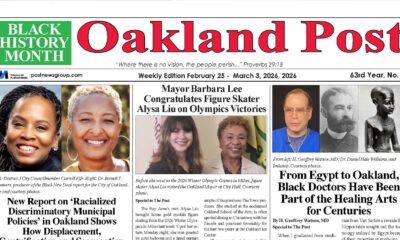
Oakland Post: Week of February 25 – March 3, 2026
-
 #NNPA BlackPress4 weeks ago
Trump’s MAGA Allies are Creating Executive Order Plan to Steal the 2026 Midterms
-
 #NNPA BlackPress4 weeks ago
OP-ED: One Hundred Years of Black Workers Telling the Truth
-
 #NNPA BlackPress4 weeks ago
Poll Shows Support for Policies That Help Families Afford Child Care
-
 Activism3 weeks ago
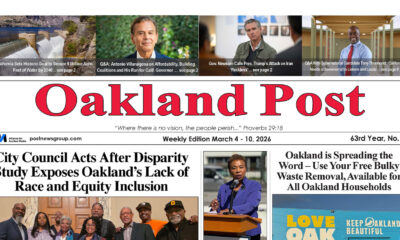
Oakland Post: Week of March 4 – 10, 2026
-

 #NNPA BlackPress3 weeks ago
Woman’s Search for Family’s Roots Leads to Ancestor John T. Ward – A Successful Entrepreneur and Conductor on the Underground Railroad
