
Opinion
Opinion: Reparations Reveals a Sense of “White Fragility”

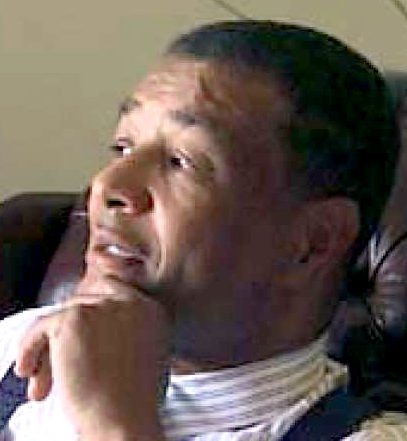
Editor’s Note: Leo Bazile, a former city councilmember and scholar on reparations issues has published articles in the Post and has proposed that Oakland “remain in the vanguard of direct action and advocacy on the issue.” He says, “The leadership shown by Barbara Lee and Lynette McElhaney makes it possible for the community to participate through a commission to present our plans to congress.”
When Katrina Browne testified before the June 19 congressional hearing on the H.R.40 Reparations Legislation introduced by Rep. Sheila Jackson Lee and co-sponsored by Rep. Barbara Lee, she addressed the very important threshold issue of White Fragility.

Katrina Browne
She testified about her discovery that she was a descendant of one of the largest and most powerful slave trading families in the history of this country.
Browne said she, as a 27-year old Seminary student studying theology and ethics, received a family history brochure from her grandmother that pointed out that she is a descendant of the De Wolf family of Rhode Island slave traders that brought more enslaved Africans to the Americas than any other U.S. family. Her calm and sincere testimony revealed their family’s relationship of wealth and political power. When she said:

“Over 12,000 men, women and children were taken across the middle passage in their ships.” The family’s leading slave trader, James De’ Wolf, was reported to have become the second richest man in the nation at the time of his death—and he served in the U.S.Senate.”
Browne’s testimony should be read by all who are concerned about the political and moral questions that the Reparations issue raises for the upcoming 2020 elections.
Since Black Democrats are being told by some leaders that raising the Reparations issue could jeopardize the election, Browne’s White Fragility issue rubs up against the political reality of when and how to address this moral imperative.
So is the moral imperative more important to African Americans than who the next president is going to be?
Browne testified:
“I want to acknowledge rightaway that the very idea of this REPARATIONS FOR SLAVERY AND RACISM is to assault their sense of what this nation has been, of how we achieved our national greatness and perhaps even the role their families and communities played in this history. To weigh a national effort at acknowledgement and repair is to discount what they believed were hard sacrifices of previous generations. And to question the sources of their prosperity is to connect them to the history of slavery.”

In her New York Times bestseller on the subject of “White Fragility,” Robin Diangelo wrote about how whites enjoy benefits from this separate and unequal society “We are insulated from racial stress, at the same time we can come to feel entitled to and deeply deserving of our advantage. Given how we experience racial discrimination in a society we dominate we haven’t had to build our racial stamina. Socialized into a deeply internalized sense of superiority that we either are unaware of or never admit to ourselves, we become “highly fragile” in conversations about race.
We consider a challenge to our racial worldview as a challenge to our very identities as good, moral people. Thus we perceive any attempt to connect us to the system of racism as an unsettling and unfair moral offense.
“ To connect us to the system of racism triggers a range of defensive responses such as anger, fear and guilt And behaviors such as argumentation, silence and withdrawal from the stress-inducing situation.
These responses work to reinstate white equilibrium as they repel the challenge. They return our racial comfort and maintain our dominance within the racial hierarchy. I conceptualize this process as “White Fragility.”
“ Though white fragility is triggered by discomfort and anxiety, it is born of superiority and entitlement. White fragility is not a weakness per se, in fact, it is a powerful means of white racial control and protection of white advantage,” Di Angelo writes.

Activism
Oakland Post: Week of April 8 – 14, 2026
The printed Weekly Edition of the Oakland Post: Week of April 8 – 14, 2026

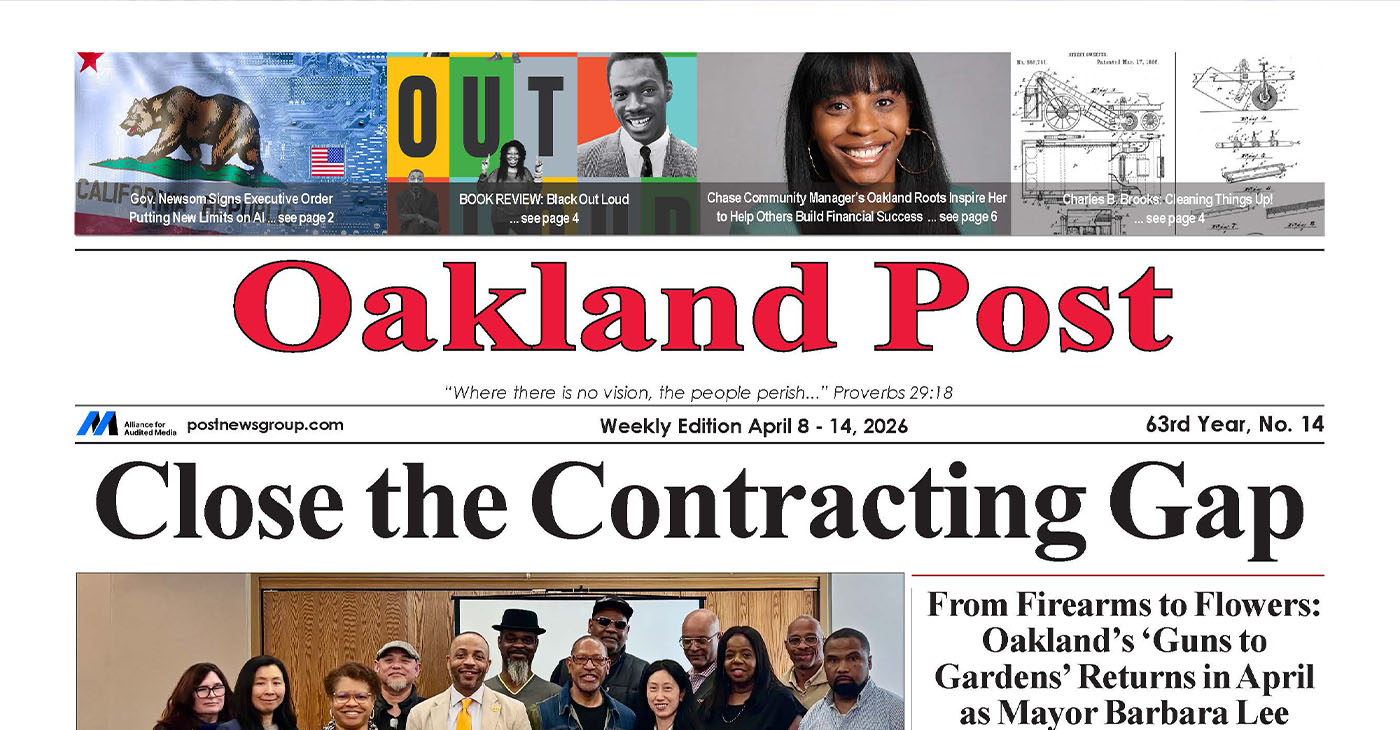
To enlarge your view of this issue, use the slider, magnifying glass icon or full page icon in the lower right corner of the browser window.

Activism
Oakland Post: Week of April 1 – 7, 2026
The printed Weekly Edition of the Oakland Post: Week of April 1 – 7, 2026
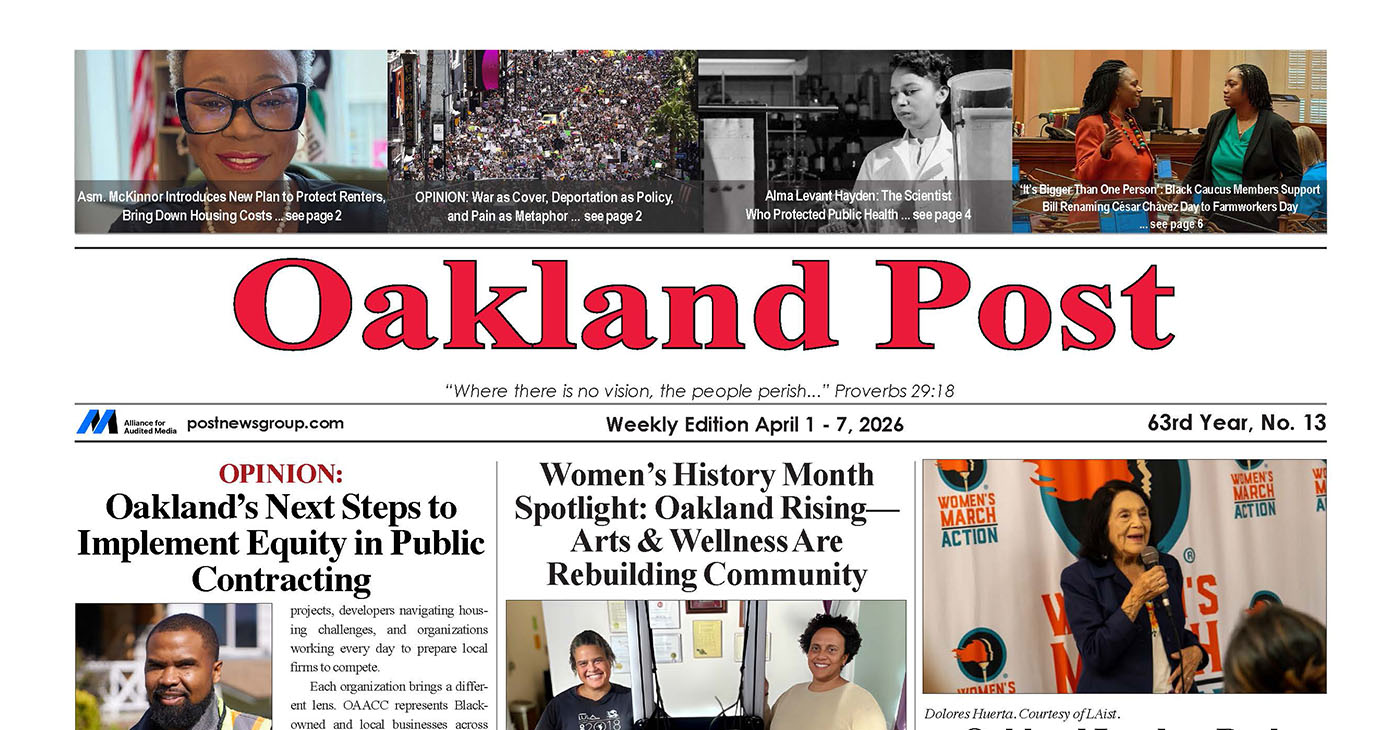
To enlarge your view of this issue, use the slider, magnifying glass icon or full page icon in the lower right corner of the browser window.
Activism
Oakland Post: Week of March 18 – 24, 2026
The printed Weekly Edition of the Oakland Post: Week of March 18 – 24, 2026
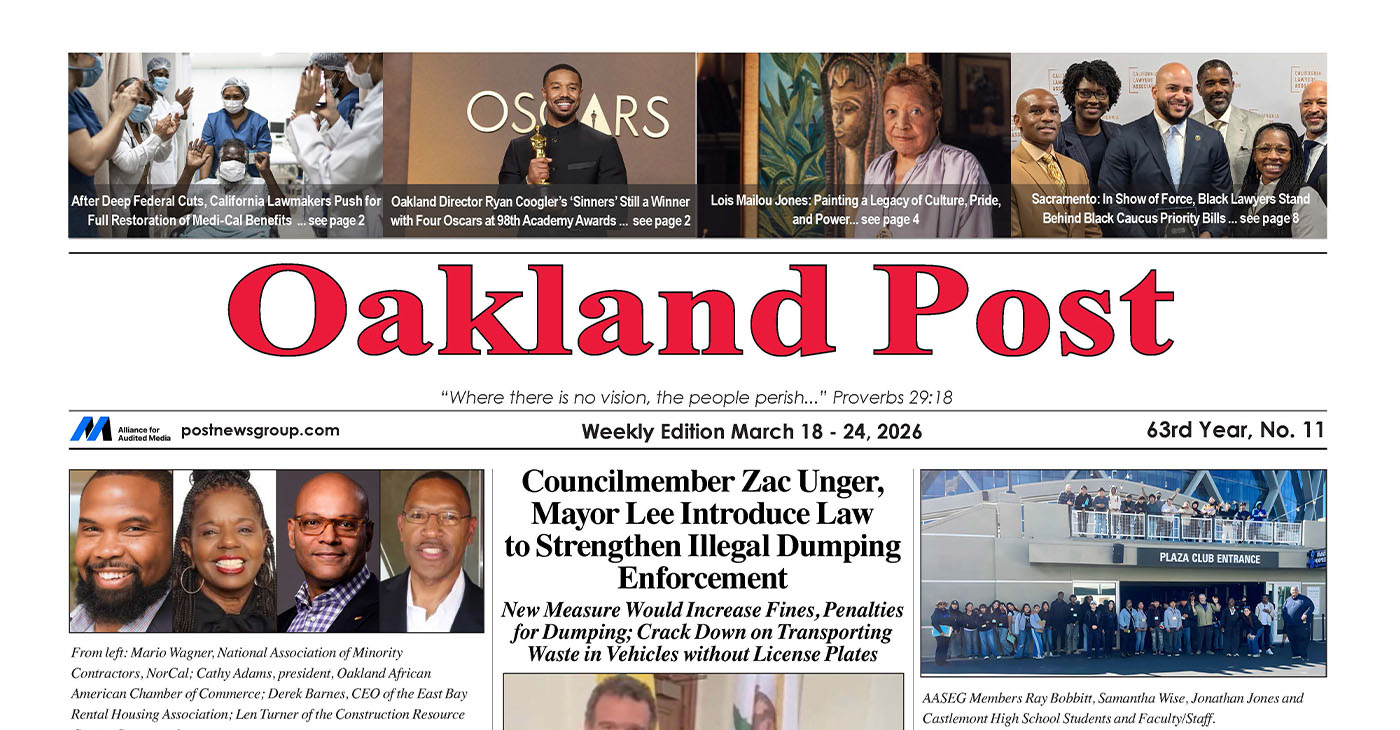
To enlarge your view of this issue, use the slider, magnifying glass icon or full page icon in the lower right corner of the browser window.
WORK FROM HOME
Home-based business with potential monthly income of $10K+ per month. A proven training system and website provided to maximize business effectiveness. Perfect job to earn side and primary income. Contact Lynne for more details: Lynne4npusa@gmail.com 800-334-0540


Oakland Post: Week of April 8 – 14, 2026

Oakland Post: Week of April 1 – 7, 2026

Black Artists in America, Installation Three Wraps at the Dixon Gallery and Gardens

Grief, Advocacy, and Education: A Counselor Reflects on Black Maternal Health

Future of Florida’s Black History Museum in Limbo

New Research Shows the Many Benefits of Early Learning

South Hampton K-8 Students Among Top 10 Finalists for Samsung’s ‘Solve for Tomorrow’ Competition

Cuba: No Negotiation with US on the President or Political System

Brooklyn Academy of Music Names Jamaican-Born Tamara McCaw as President

Trinidad & Tobego – U.S. Launches WhatsApp Channel for American Citizens in the Country

Oakland Post: Week of March 18 – 24, 2026

AI Innovation vs. Ethics and Environmental Impact

AI, Web3, and Digital Reparations

What If You Owned Your AI Agent?

Season 7, Episode 3 – January Reporter’s Roundtable 📱

Reflecting on Black History Milestones in Birmingham AL

Oakland Post: Week of February 25 – March 3, 2026

Oakland Post: Week of March 4 – 10, 2026

PRESS ROOM: NBA Hall of Fame Nominee Terry Cummings Joins 100 Black Men of DeKalb County to Launch Victory & Values Initiative

Trump’s MAGA Allies are Creating Executive Order Plan to Steal the 2026 Midterms
Oakland Post: Week of March 18 – 24, 2026

U.S. manufacturing rebounds – how foundry services are adapting to rising demand

Oakland Post: Week of March 11 -17, 2026

Poll Shows Support for Policies That Help Families Afford Child Care

OP-ED: One Hundred Years of Black Workers Telling the Truth

Advancements in solar technology that are changing the way we power the world

Financial Wellness and Mental Health: Managing Money Stress in College

Woman’s Search for Family’s Roots Leads to Ancestor John T. Ward – A Successful Entrepreneur and Conductor on the Underground Railroad

COMMENTARY: Women of Color Shape Our Past and Future

PRESS ROOM: Civil Rights TV Launches in Selma as the World’s First 24/7 Civil Rights Television Network

Hyundai Ioniq 5 Parking, Safety, and 360 View #shorts

2025 Ioniq 5 New Wiper & Powerful Performance! #shorts

Electric SUV Range: Is 259 Miles Enough? #shorts

EV Charging: How Fast Can You Charge an Electric Vehicle? #shorts

Biometric Cooling… Messaging Seats…Come on! 2025 Infiniti QX80 Autograph 4WD

Charged Up: Witness the Magic of a Fully Electric Car! #shorts

Range Rover Sport PHEV Included…: See What’s Inside This Luxury SUV! #shorts

Invisible Hood View: Perfect Parking with X-Ray Vision! #shorts

AI Is Reshaping Black Healthcare: Promise, Peril, and the Push for Improved Results in California

ESSAY: Technology and Medicine, a Primary Care Point of View

Sanctuary Cities

The RESISTANCE – FREEDOM NOW

STATE OF THE PEOPLE: Freddie

ECONOMIC BOYCOTT DAY!!!!!

I told You So

-
 Activism3 weeks ago
Oakland Post: Week of March 18 – 24, 2026
-
 Activism4 weeks ago
Oakland Post: Week of March 11 -17, 2026
-
 Advice3 weeks ago
Financial Wellness and Mental Health: Managing Money Stress in College
-
 #NNPA BlackPress3 weeks ago
Brooklyn Academy of Music Names Jamaican-Born Tamara McCaw as President
-
 #NNPA BlackPress2 weeks ago
Grief, Advocacy, and Education: A Counselor Reflects on Black Maternal Health
-
 #NNPA BlackPress2 weeks ago
New Research Shows the Many Benefits of Early Learning
-
 #NNPA BlackPress2 weeks ago
Black Artists in America, Installation Three Wraps at the Dixon Gallery and Gardens
-

 Advice4 weeks ago
Women & Wealth: Tips for Navigating Your Lifelong Financial Journey
