
Activism
OPINION: Don’t Let Biden Get Talked Out of Student Loan Forgiveness
A Brookings Institute study in 2018 took a long view on student borrowing going back to 1995-96. It found that for-profit borrowers default at twice the rate of public two-year borrowers (52 versus 26% after 12 years). Overall, it found the for-profit students were more likely to borrow and had a default rate four times that of public two-year entrants. The study also found that student and institutional factors determined default rates. And that debt and default rates among Black college students was at a “crisis level.”


By Emil Guillermo
Don’t be confused about the student loan forgiveness plan President Biden announced recently. Sure, it wasn’t all student debt. But it did address the most egregious debt foisted on students by for-profit predator “educators.” The plan would also definitely help BIPOC borrowers more than not.
And yet, days after the announcement, people are questioning the idea from the Left and the Right.
The Left wants no limits, all debt relieved. The Right wants none of it, and asks “Who’s going to pay for it all?” Of course, they don’t ask that when it was mostly the rich who benefited from Trump tax cuts or COVID PPP payouts.
Bottom-line, we can’t let Joe Biden be talked out of student loan relief up to $10,000 for individuals, with an additional amount for those with Pell Grants.
This plan is focused on regular folks, single people with incomes under $125,000, and married folks with incomes under $250,000.
The plan is also ready-made for BIPOC communities who have suffered specifically from private, for-profit schools. Schools which follow a pattern — preying on peoples’ dreams, getting them to take out expensive student loans, that only result in debt, no degree, and busted dreams.
That was how many private, for-profit schools like Corinthian College and ITT Technical Institute preyed on unwary borrowers, resulting in massive debt forgiveness plans for their students before the general forgiveness plan was announced.

Just this week, the Department of Education announced another $1.5 billion debt relief package for 79,000 borrowers who attended Westwood College. Closed down in 2016, Westwood left students holding the bag until the feds came up with a debt package on Monday.
“Westwood operated a culture of false promises, lies and manipulation in order to profit off student debt that burdened borrowers long after Westwood closed,” said Education Undersecretary James Kvaal in a statement.
With evidence from state attorneys general in Colorado and Illinois, the Dept of Education described how Westwood “routinely misled prospective students by grossly misrepresenting that its credentials would benefit their career prospects and earning potential.”
Specifically, the school promised students jobs in their fields within six months of graduation that would “make them employable the rest of their lives.” Everything was inflated, like a “guarantee of employment pledge” that was never made good.
Sound like any of the for-profit schools that have hooked someone you know to sign up for classes in a business park campus off a highway after taking out a hefty student loan?
Sure, there are schools like the Cal State East Bays and the Laney Colleges, state colleges and junior colleges respectively. They are solid public-non-profit institutions. There are also the expensive traditional private schools like Stanford where people have loans out. The Biden-Harris plan will cover between $10,000-$20,000 of all those loans (including Parent-Plus loans) from those schools.
But for the most part we are talking about predator “private, for-profit” colleges, not the kind of schools that teach you the humanities like history or poetry.
And they sure took many a BIPOC student for a ride.
A Brookings Institute study in 2018 took a long view on student borrowing going back to 1995-96. It found that for-profit borrowers default at twice the rate of public two-year borrowers (52 versus 26% after 12 years). Overall, it found the for-profit students were more likely to borrow and had a default rate four times that of public two-year entrants.
The study also found that student and institutional factors determined default rates. And that debt and default rates among Black college students was at a “crisis level.”
Black BA graduates default at five times the rate of white BA graduates and are more likely to default than white dropouts.
As for the institution, out of 100 students who ever attended a for-profit, 23 defaulted within 12 years of starting college in the 1996 cohort compared to 43 in 2004.
The culprit is clearly predator for-profit schools. If you know someone in debt to those types of schools, let them know the Biden-Harris plan promises some relief.
This isn’t about the moral failings of student borrowers.
This is more about the moral failings of the for-profit predators and holding them accountable. And yet they’re getting a lot more sympathy than any of us BIPOC borrowers they preyed on.
Emil Guillermo is a veteran journalist and commentator. Visit him on www.amok.com










Activism
Oakland Post: Week of August 12 – 18, 2026
The printed Weekly Edition of the Oakland Post: Week of August 12 – 18, 2026
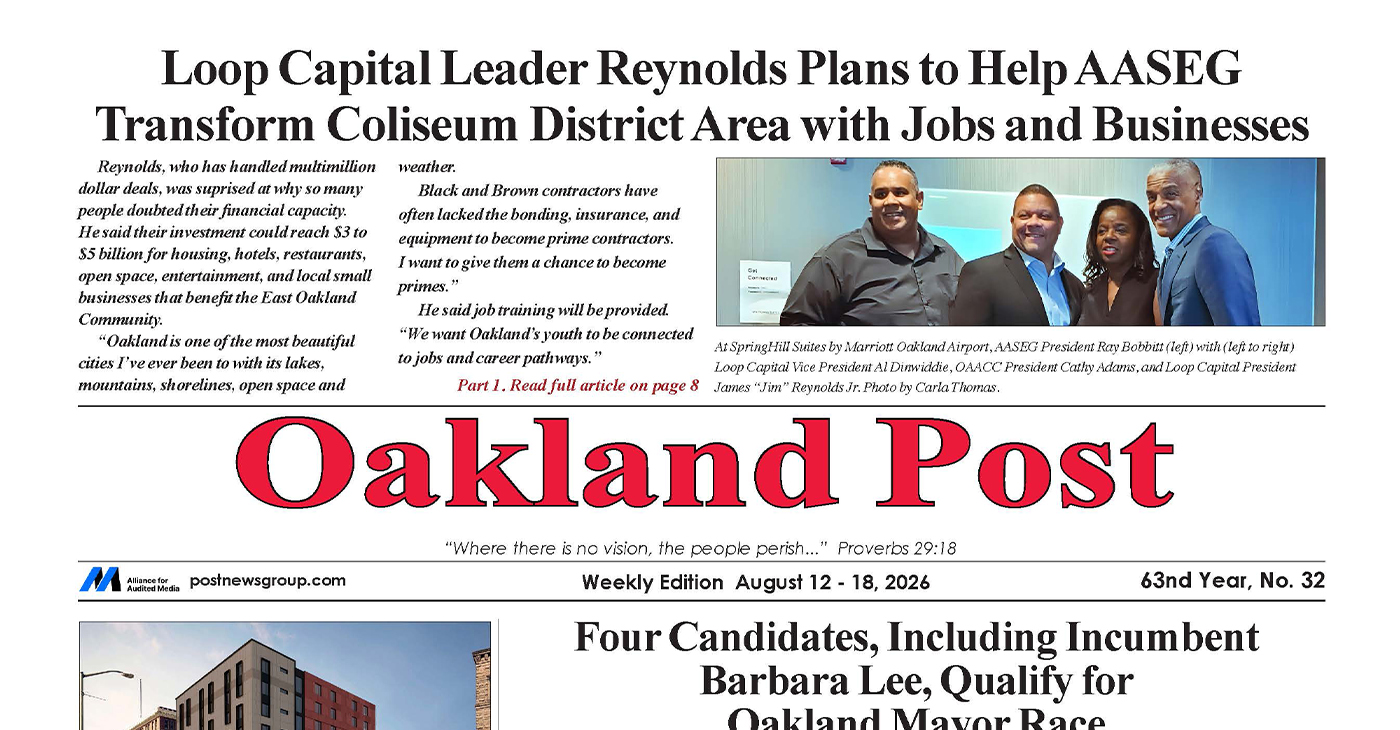
To enlarge your view of this issue, use the slider, magnifying glass icon or full page icon in the lower right corner of the browser window.
Activism
Oakland Post: Week of August 5 – 11, 2026
The printed Weekly Edition of the Oakland Post: Week of August 5 – 11, 2026
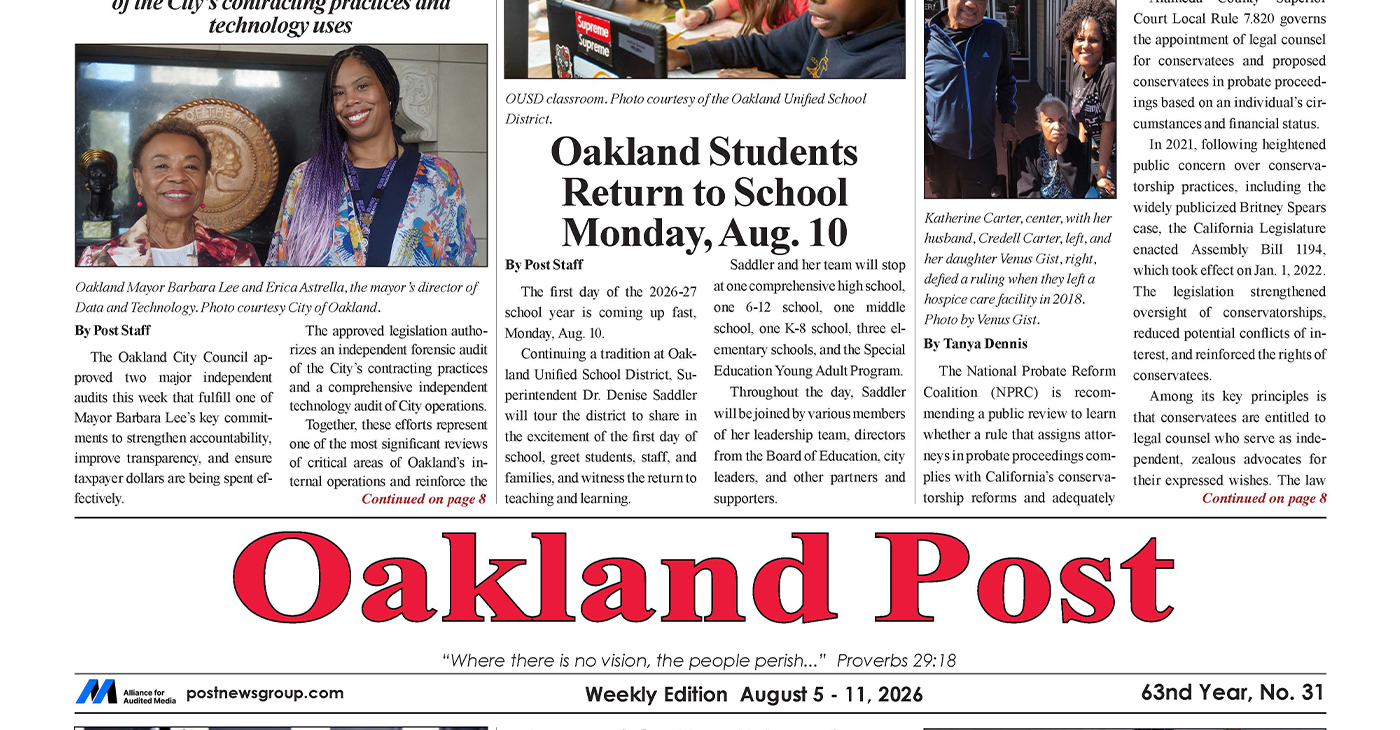
To enlarge your view of this issue, use the slider, magnifying glass icon or full page icon in the lower right corner of the browser window.
Activism
Oakland Post: Week of July 29 – August 4, 2026
The printed Weekly Edition of the Oakland Post: Week of July 29 – August 4, 2026
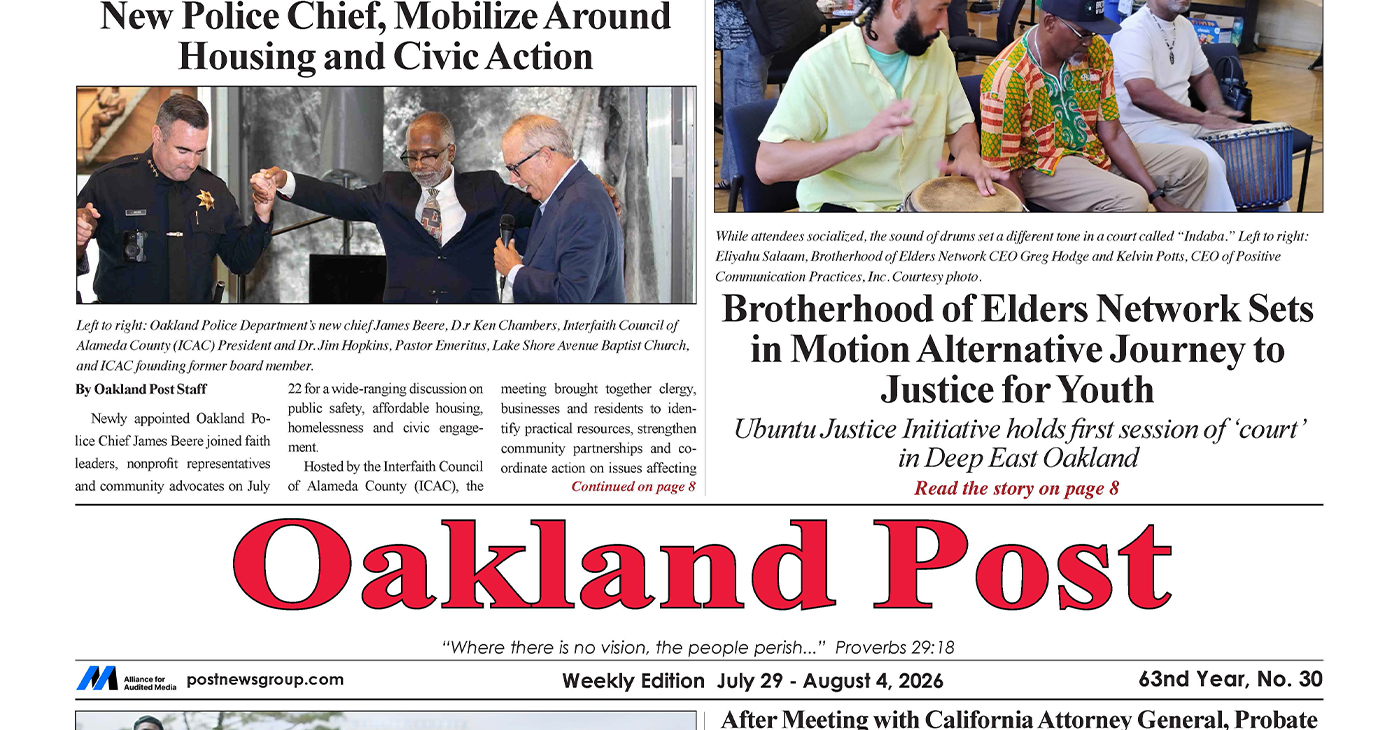
To enlarge your view of this issue, use the slider, magnifying glass icon or full page icon in the lower right corner of the browser window.
WORK FROM HOME
Home-based business with potential monthly income of $10K+ per month. A proven training system and website provided to maximize business effectiveness. Perfect job to earn side and primary income. Contact Lynne for more details: Lynne4npusa@gmail.com 800-334-0540


Four Candidates, Including Incumbent Barbara Lee, Qualify for Oakland Mayor’s Race

Oakland Observes Black August with Block Parties, Film Showings, Workshops

Oakland Post: Week of August 12 – 18, 2026

COMMENTARY: Why Local School Tax Measure G1 Will Not Be on the November Ballot

California Hispanic Chambers of Commerce Unveils: ‘Powering the Future’ Theme for 47th Annual Statewide Convention

Returning to Its Roots, the Oakland Black-Eyed Pea Festival Partners with the Freedom Farmers Market Sept. 12

Less Affluent School Districts, Including Sacramento City, Face Threat of State Takeover

From Blueprint to Breakthrough: Tackling Affordable Housing in Oakland

NPRC Scores First Advocacy Victory: David Shaw Finally Gets His Wish to ‘Go Home’

ESSAY: California Can Close Its Colorectal Cancer Gap

Car Wash Workers Cope with Lingering Impacts of ICE Raids

Misty Copeland Shapes Ballet’s Tomorrow

As Part of Your Back-to- School Checklist, Vaccinate

As Part of Your Back-to- School Checklist, Vaccinate

Congresswoman Simon Demands Investigation into Trump’s Abuse of Emergency Powers for Coal Export Terminal in West Oakland

Department of Homeland Security Demands California Secretary of State Shirley N. Weber Scrub Voter Rolls

Oakland Children’s Hospital Workers and Patients Rally for Pediatric Medical Care

New Judge Could Decide if Karmelo Anthony Gets a New Trial

“The Power to See Threats Sooner”: Gov. Newsom, Safety Officials Showcase California’s Investments in Hi-Tech Wildfire Prevention

Alpha Kappa Alpha Sorority, Inc. Celebrates New North Atlantic Regional Director

Surveillance Pricing Fight: State Senate Debates Bill Banning Retailers from Using AI to Set Prices Based on a Buyer’s Profile

Mount Zion MBC, Church of Jesus Christ of Latter-day Saints Partner to Bring 29,000 Meals to Alameda County

California Sen. Padilla Joins Colleagues to Introduce Bill Imposing Term Limits on Supreme Court Justices

Starting This Summer, California Car Buyers Can Get an Instant $3500 Off the Cost of Electric Vehicles

COMMENTARY: You Are Already Paying for the AI Boom

California Bill Would Let Abuse Victims Use Trauma as Legal Defense for Violent Crime
Less Affluent School Districts, Including Sacramento City, Face Threat of State Takeover
Car Wash Workers Cope with Lingering Impacts of ICE Raids

Fed Court to Decide Landmark First Amendment Case

Gov. Gavin Newsom Signs Law Streamlining Affordable Housing Rules

The Conversation With Al McFarlane 6/23/26

Media Monday 6/22/26

LIVE! ASK ALMA! — TUES. 6.23.26 7PM EST

Car Buying Secrets: 4 Hidden Checks Before You Sign!

Is This 550 HP Charger Worth YOUR Money? AutoNetwork Review

Celebrating Juneteenth – Frederick Douglass on education and resistance

LIVE! — ASK ALMA! — TUES. 6.19.26 7PM EST

Hyundai Ioniq 5 Parking, Safety, and 360 View #shorts

2025 Ioniq 5 New Wiper & Powerful Performance! #shorts

Electric SUV Range: Is 259 Miles Enough? #shorts

EV Charging: How Fast Can You Charge an Electric Vehicle? #shorts

Biometric Cooling… Messaging Seats…Come on! 2025 Infiniti QX80 Autograph 4WD

Charged Up: Witness the Magic of a Fully Electric Car! #shorts

Range Rover Sport PHEV Included…: See What’s Inside This Luxury SUV! #shorts

Invisible Hood View: Perfect Parking with X-Ray Vision! #shorts
-
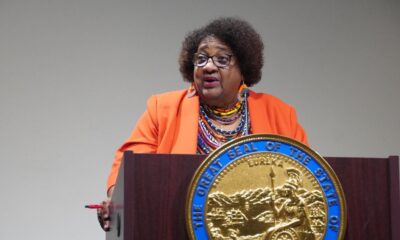 Featured1 week ago
Department of Homeland Security Demands California Secretary of State Shirley N. Weber Scrub Voter Rolls
-
 Business3 weeks ago
Oakland Children’s Hospital Workers and Patients Rally for Pediatric Medical Care
-
 #NNPA BlackPress2 weeks ago
New Judge Could Decide if Karmelo Anthony Gets a New Trial
-
 Environment1 week ago
“The Power to See Threats Sooner”: Gov. Newsom, Safety Officials Showcase California’s Investments in Hi-Tech Wildfire Prevention
-
 Black History2 weeks ago
Alpha Kappa Alpha Sorority, Inc. Celebrates New North Atlantic Regional Director
-
 Business3 weeks ago
Surveillance Pricing Fight: State Senate Debates Bill Banning Retailers from Using AI to Set Prices Based on a Buyer’s Profile
-
 Business3 weeks ago
Mount Zion MBC, Church of Jesus Christ of Latter-day Saints Partner to Bring 29,000 Meals to Alameda County
-
 Featured1 week ago
California Sen. Padilla Joins Colleagues to Introduce Bill Imposing Term Limits on Supreme Court Justices
