
Activism
OPINION: Don’t Let Biden Get Talked Out of Student Loan Forgiveness
A Brookings Institute study in 2018 took a long view on student borrowing going back to 1995-96. It found that for-profit borrowers default at twice the rate of public two-year borrowers (52 versus 26% after 12 years). Overall, it found the for-profit students were more likely to borrow and had a default rate four times that of public two-year entrants. The study also found that student and institutional factors determined default rates. And that debt and default rates among Black college students was at a “crisis level.”

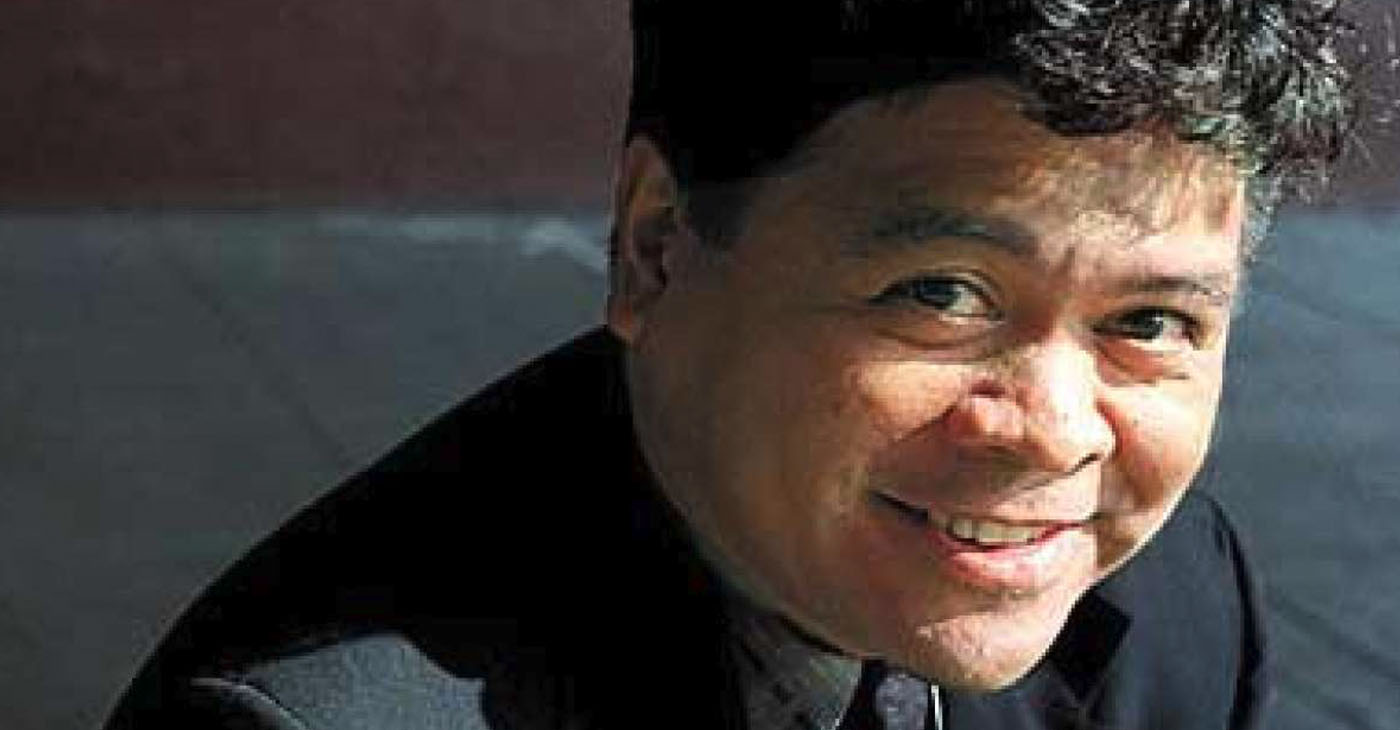
By Emil Guillermo
Don’t be confused about the student loan forgiveness plan President Biden announced recently. Sure, it wasn’t all student debt. But it did address the most egregious debt foisted on students by for-profit predator “educators.” The plan would also definitely help BIPOC borrowers more than not.
And yet, days after the announcement, people are questioning the idea from the Left and the Right.
The Left wants no limits, all debt relieved. The Right wants none of it, and asks “Who’s going to pay for it all?” Of course, they don’t ask that when it was mostly the rich who benefited from Trump tax cuts or COVID PPP payouts.
Bottom-line, we can’t let Joe Biden be talked out of student loan relief up to $10,000 for individuals, with an additional amount for those with Pell Grants.
This plan is focused on regular folks, single people with incomes under $125,000, and married folks with incomes under $250,000.
The plan is also ready-made for BIPOC communities who have suffered specifically from private, for-profit schools. Schools which follow a pattern — preying on peoples’ dreams, getting them to take out expensive student loans, that only result in debt, no degree, and busted dreams.
That was how many private, for-profit schools like Corinthian College and ITT Technical Institute preyed on unwary borrowers, resulting in massive debt forgiveness plans for their students before the general forgiveness plan was announced.
Just this week, the Department of Education announced another $1.5 billion debt relief package for 79,000 borrowers who attended Westwood College. Closed down in 2016, Westwood left students holding the bag until the feds came up with a debt package on Monday.
“Westwood operated a culture of false promises, lies and manipulation in order to profit off student debt that burdened borrowers long after Westwood closed,” said Education Undersecretary James Kvaal in a statement.
With evidence from state attorneys general in Colorado and Illinois, the Dept of Education described how Westwood “routinely misled prospective students by grossly misrepresenting that its credentials would benefit their career prospects and earning potential.”
Specifically, the school promised students jobs in their fields within six months of graduation that would “make them employable the rest of their lives.” Everything was inflated, like a “guarantee of employment pledge” that was never made good.
Sound like any of the for-profit schools that have hooked someone you know to sign up for classes in a business park campus off a highway after taking out a hefty student loan?
Sure, there are schools like the Cal State East Bays and the Laney Colleges, state colleges and junior colleges respectively. They are solid public-non-profit institutions. There are also the expensive traditional private schools like Stanford where people have loans out. The Biden-Harris plan will cover between $10,000-$20,000 of all those loans (including Parent-Plus loans) from those schools.
But for the most part we are talking about predator “private, for-profit” colleges, not the kind of schools that teach you the humanities like history or poetry.
And they sure took many a BIPOC student for a ride.
A Brookings Institute study in 2018 took a long view on student borrowing going back to 1995-96. It found that for-profit borrowers default at twice the rate of public two-year borrowers (52 versus 26% after 12 years). Overall, it found the for-profit students were more likely to borrow and had a default rate four times that of public two-year entrants.
The study also found that student and institutional factors determined default rates. And that debt and default rates among Black college students was at a “crisis level.”
Black BA graduates default at five times the rate of white BA graduates and are more likely to default than white dropouts.
As for the institution, out of 100 students who ever attended a for-profit, 23 defaulted within 12 years of starting college in the 1996 cohort compared to 43 in 2004.
The culprit is clearly predator for-profit schools. If you know someone in debt to those types of schools, let them know the Biden-Harris plan promises some relief.
This isn’t about the moral failings of student borrowers.
This is more about the moral failings of the for-profit predators and holding them accountable. And yet they’re getting a lot more sympathy than any of us BIPOC borrowers they preyed on.
Emil Guillermo is a veteran journalist and commentator. Visit him on www.amok.com









Activism
Oakland Post: Week of March 18 – 24, 2026
The printed Weekly Edition of the Oakland Post: Week of March 18 – 24, 2026
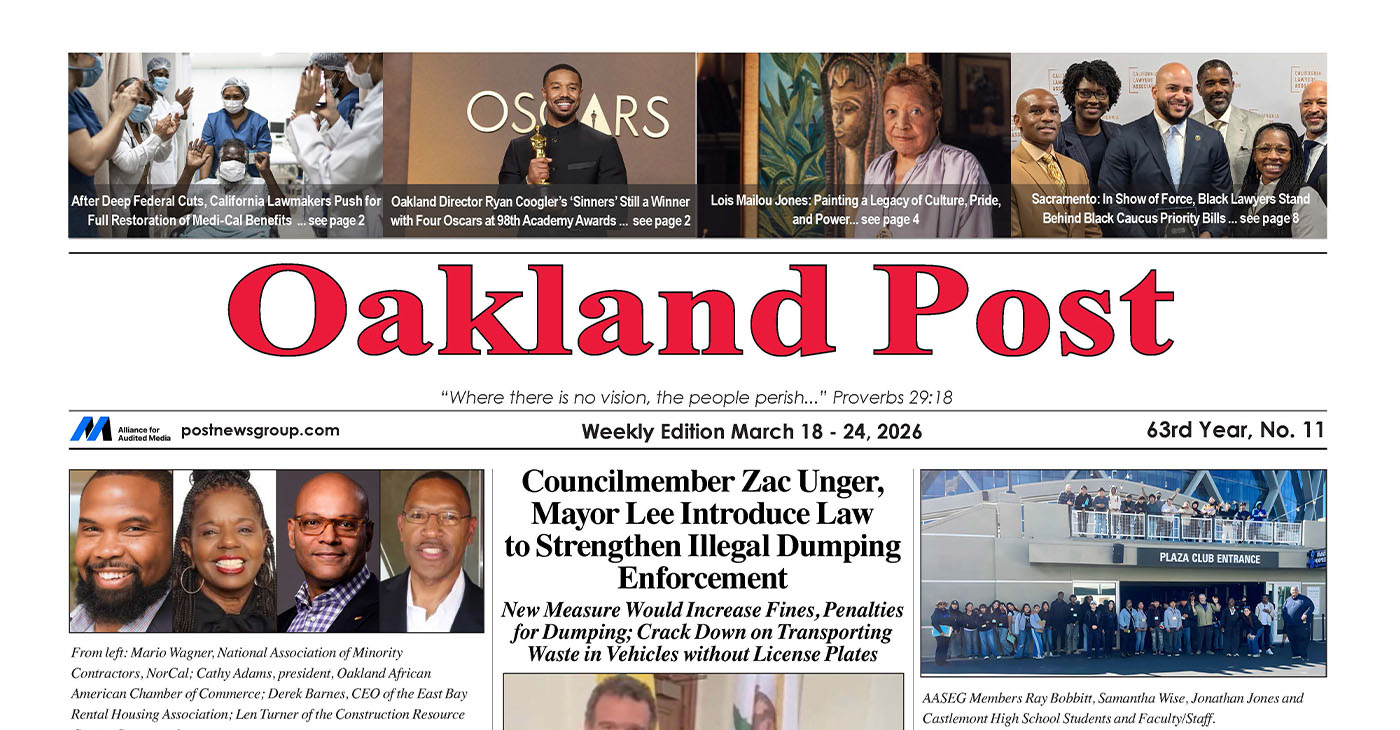
To enlarge your view of this issue, use the slider, magnifying glass icon or full page icon in the lower right corner of the browser window.
Activism
Oakland Post: Week of March 11 -17, 2026
The printed Weekly Edition of the Oakland Post: Week of March 11 – 17, 2026
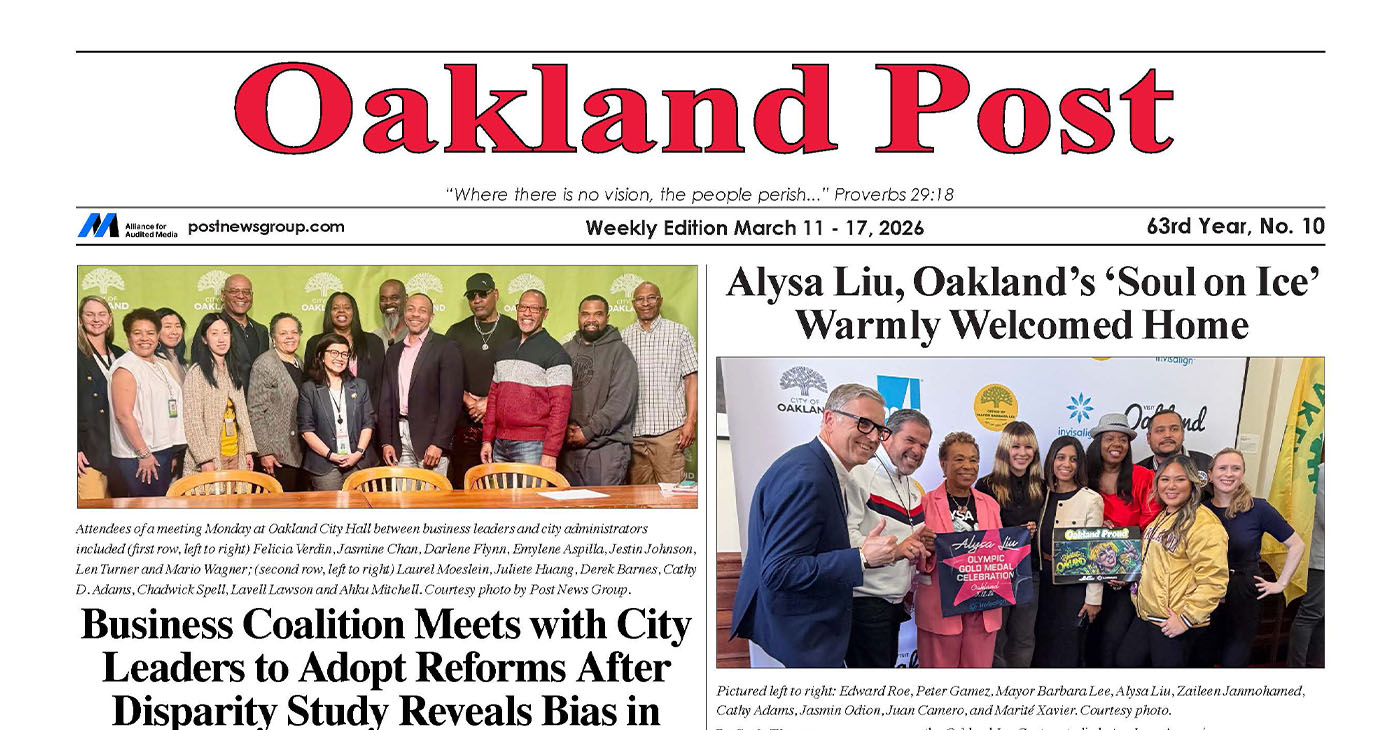
To enlarge your view of this issue, use the slider, magnifying glass icon or full page icon in the lower right corner of the browser window.
Activism
Oakland Post: Week of March 4 – 10, 2026
The printed Weekly Edition of the Oakland Post: Week of March 4 – 10, 2026
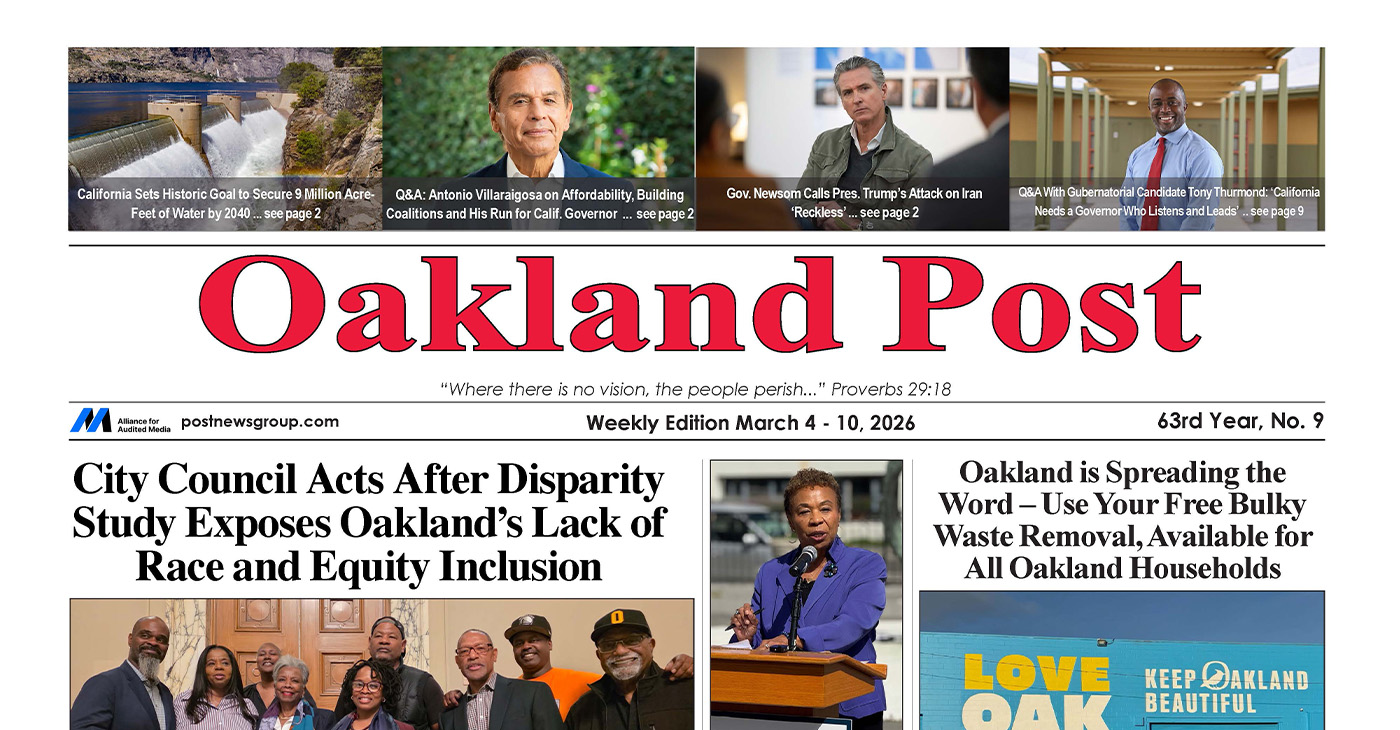
To enlarge your view of this issue, use the slider, magnifying glass icon or full page icon in the lower right corner of the browser window.

WORK FROM HOME
Home-based business with potential monthly income of $10K+ per month. A proven training system and website provided to maximize business effectiveness. Perfect job to earn side and primary income. Contact Lynne for more details: Lynne4npusa@gmail.com 800-334-0540


Black Artists in America, Installation Three Wraps at the Dixon Gallery and Gardens

Grief, Advocacy, and Education: A Counselor Reflects on Black Maternal Health

Future of Florida’s Black History Museum in Limbo

New Research Shows the Many Benefits of Early Learning

South Hampton K-8 Students Among Top 10 Finalists for Samsung’s ‘Solve for Tomorrow’ Competition

Cuba: No Negotiation with US on the President or Political System

Brooklyn Academy of Music Names Jamaican-Born Tamara McCaw as President

Trinidad & Tobego – U.S. Launches WhatsApp Channel for American Citizens in the Country

Oakland Post: Week of March 18 – 24, 2026

AI Innovation vs. Ethics and Environmental Impact

AI, Web3, and Digital Reparations

What If You Owned Your AI Agent?

Season 7, Episode 3 – January Reporter’s Roundtable 📱

Season 7, Episode 3 – January Reporter’s Roundtable

AI, Media, and Power | Part 2, Real-World Impacts and Tradeoffs

Oakland Post: Week of February 11 – 17, 2026

Reflecting on Black History Milestones in Birmingham AL

CITY OF SAN LEANDRO STATE OF CALIFORNIA PUBLIC WORKS DEPARTMENT ENGINEERING DIVISION NOTICE TO BIDDERS FOR ANNUAL STREET OVERLAY/REHABILITATION 2019-21 – PHASE III

Oakland Post: Week of February 18 – 24, 2026

Oakland Post: Week of February 25 – March 3, 2026

PRESS ROOM: NBA Hall of Fame Nominee Terry Cummings Joins 100 Black Men of DeKalb County to Launch Victory & Values Initiative

Trump’s MAGA Allies are Creating Executive Order Plan to Steal the 2026 Midterms

U.S. manufacturing rebounds – how foundry services are adapting to rising demand

OP-ED: One Hundred Years of Black Workers Telling the Truth

Chase Oakland Community Center Hosts Alley-Oop Accelerator Building Community and Opportunity for Bay Area Entrepreneurs

Oakland Post: Week of March 4 – 10, 2026

Poll Shows Support for Policies That Help Families Afford Child Care

Advancements in solar technology that are changing the way we power the world

PRESS ROOM: Civil Rights TV Launches in Selma as the World’s First 24/7 Civil Rights Television Network

Woman’s Search for Family’s Roots Leads to Ancestor John T. Ward – A Successful Entrepreneur and Conductor on the Underground Railroad

Hyundai Ioniq 5 Parking, Safety, and 360 View #shorts

2025 Ioniq 5 New Wiper & Powerful Performance! #shorts

Electric SUV Range: Is 259 Miles Enough? #shorts

EV Charging: How Fast Can You Charge an Electric Vehicle? #shorts

Biometric Cooling… Messaging Seats…Come on! 2025 Infiniti QX80 Autograph 4WD

Charged Up: Witness the Magic of a Fully Electric Car! #shorts

Range Rover Sport PHEV Included…: See What’s Inside This Luxury SUV! #shorts

Invisible Hood View: Perfect Parking with X-Ray Vision! #shorts

AI Is Reshaping Black Healthcare: Promise, Peril, and the Push for Improved Results in California

ESSAY: Technology and Medicine, a Primary Care Point of View

Sanctuary Cities

The RESISTANCE – FREEDOM NOW

STATE OF THE PEOPLE: Freddie

ECONOMIC BOYCOTT DAY!!!!!

I told You So
-
 Activism4 weeks ago
Oakland Post: Week of March 4 – 10, 2026
-
 #NNPA BlackPress3 weeks ago
Woman’s Search for Family’s Roots Leads to Ancestor John T. Ward – A Successful Entrepreneur and Conductor on the Underground Railroad
-

 #NNPA BlackPress4 weeks ago
OP-ED: NNPA Launches 2026 “Leadership Matters” Video Series
-

 #NNPA BlackPress3 weeks ago
Advocates Raise Alarm Over ICE Operation, MOU and Detention Risks in Baltimore County
-

 #NNPA BlackPress3 weeks ago
COMMENTARY: Women of Color Shape Our Past and Future
-

 #NNPA BlackPress3 weeks ago
Pete Buttigieg to Join Mayor Randall Woodfin for Community Town Hall in Birmingham
-

 Activism2 weeks ago
Oakland Post: Week of March 11 -17, 2026
-

 #NNPA BlackPress4 weeks ago
PRESS ROOM: PMG and Cranbrook Horizons-Upward Bound Launch Journey Fellowship Cohort 2
