
History
Opinion: Donald Trump is Not Alone Among Americans in Failing to Understand What a Real Lynching Is


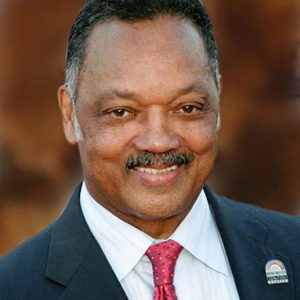
Rev. Jesse L. Jackson, Sr.
Donald Trump’s use of the term “lynching” to describe the ongoing impeachment inquiry in the House naturally sparked bipartisan outrage.
The president and his shameless apologist, South Carolina’s Sen. Lindsey Graham, defended the use of the word, with Graham calling the investigation a “lynching in every sense.”
Surely Graham, who comes from a state that, the Equal Justice Initiative reports, lynched 187 Black people between 1877 and 1950, should know better. He was a member of the Senate when it voted unanimously in December 2018 to make lynching a federal crime, calling the act “the ultimate expression of racism in the U.S.,” and classifying it as a hate crime.
Trump’s casual use of the word is an indication of the sad reality that America has largely failed to address the role of racial terror and violence in our history, and its legacy in distorting our criminal justice system.
The myths of Black criminality that were used to justify racial terror have never been adequately confronted and are reflected in the unprecedented — and still racially skewed — mass incarceration in America.
To this day, no Congress has passed, and no president has signed into law, a bill to outlaw lynching as a federal hate crime.
Trump defended himself, saying that lynching is a “word that many Democrats have used.” That’s true, but that only reinforces the need to confront the truth of the past. In the former states of the Confederacy, lynching and racial terror were used purposefully after the Civil War to reimpose racial subordination and segregation.
In its compelling report, “Lynching in America: Confronting the Legacy of Racial Terror,” the Equal Justice Initiative compiled records of 4,075 “racial terror lynchings” of African Americans in 12 states of the South from the post-Civil War Reconstruction era to World War II. The report shows that “terror lynchings in the American South were not isolated hate crimes committed by rogue vigilantes. Lynching was targeted racial violence at the core of a systematic campaign of terror perpetrated in furtherance of an unjust social order.”
Whatever complaints Republicans may have about an impeachment hearing convened in Congress under its constitutional authority, it surely is not a lynching.
Lynching in the South was not done by fringes of the society taking the law in their own hands. It was often organized by the community’s most prominent people and condoned by officials. Lynchings were often gruesome public spectacles, with victims tortured and murdered in front of picnicking spectators. Their intent was not simply to terrorize Blacks, but to reinforce among whites the myth that Blacks were sub-human.
They were not about controlling crime, but about racial control. Their perpetrators were celebrated, not prosecuted. The Equal Justice Initiative reports that only 1 percent of those committing lynchings were convicted of a criminal offense after 1900. Racial terror in the South succeeded in re-establishing white rule and Black subordination after the Civil War. With whites in control of the criminal justice system, lynching became less prevalent, with mass incarceration and capital punishment taking its place.
Bryan Stevenson of the Equal Justice Initiative has led the effort to create a process for remembering and confronting this shameful past and understanding its legacies in our present. He notes that communities across the South have memorials to the leaders of the Confederacy and the Ku Klux Klan, but have failed to memorialize the innocent victims of racial terror. The contrast with countries like Germany and South Africa, that have sought to learn from the horrors of their history, is dramatic.
For 100 years, the National Association for the Advancement of Colored People campaigned to make lynching a federal crime, initially in the hope that federal intervention would bring the perpetrators to justice, and finally as an expression of truth-telling. The efforts were always blocked by filibusters organized by southern senators.
In 2005, the Senate passed a resolution apologizing to the victims of lynching for their failure to pass anti-lynching legislation. In 2018, the Senate finally unanimously passed anti-lynching legislation for the first time.
In June 2019, the House Judiciary Committee put forth HR 35, the Emmett Till Anti-Lynching Act, for a vote before the House.
Trump’s egregious comment provide the occasion for truth-telling. The House and the Senate should finally act together to put the anti-lynching bill on the president’s desk for his signature, and join in a national teach-in, perhaps a joint session of the Congress — to educate Americans about the reality of lynching and the lies it spread that still need to be dispelled.






Activism
Discrimination in City Contracts
The report was made public by Councilmember Carroll Fife, who brought it this week to the Council’s Life Enrichment Committee, which she chairs. Councilmembers, angry at the conditions revealed, unanimously approved the informational report, which is scheduled to go to an upcoming council meeting for discussion and action. The current study covers five years, 2016-2021, roughly overlapping the two tenures of Libby Schaaf, who served as mayor from January 2015 to January 2023.


Disparity Study Exposes Oakland’s Lack of Race and Equity Inclusion
Part 1
By Ken Epstein
A long-awaited disparity study funded by the City of Oakland shows dramatic evidence that city government is practicing a deeply embedded pattern of systemic discrimination in the spending of public money on outside contracts that excludes minority- and woman-owned businesses, especially African Americans.
Instead, a majority of public money goes to a disproportionate handful of white male-owned companies that are based outside of Oakland, according to the 369-page report produced for the city by Mason Tillman Associates, an Oakland-based firm that performs statistical, legal and economic analyses of contracting and hiring.
The report was made public by Councilmember Carroll Fife, who brought it this week to the Council’s Life Enrichment Committee, which she chairs. Councilmembers, angry at the conditions revealed, unanimously approved the informational report, which is scheduled to go to an upcoming council meeting for discussion and action.
The current study covers five years, 2016-2021, roughly overlapping the two tenures of Libby Schaaf, who served as mayor from January 2015 to January 2023.
The amount of dollars at stake in these contracts was significant in the four areas that were studied, a total of $486.7 million including $214.6 million on construction, $28.6 million on architecture, and engineering, $78.9 million on professional services, and $164.6 million on goods and services.

While the city’s policies are good, “the practices are not consistent with policy,” said Dr. Eleanor Ramsey, founder and CEO of Mason Tillman Associates.
There have been four disparity studies during the last 20 years, all showing a pattern of discrimination against women and minorities, especially African Americans, she said. “You have good procurement policy but poor enforcement.”
“Most minority- and women-owned businesses did not receive their fair share of city-funded contracts,” she continued. “Over 50% of the city’s prime contract dollars were awarded to white-owned male businesses that controlled most subcontracting awards. And nearly 65% of the city’s prime contracts were awarded to non-Oakland businesses.”
As a result, she said, “there is a direct loss of revenue to Oakland businesses and to business tax in the city… There is also an indirect loss of sales and property taxes (and) increased commercial office vacancies and empty retail space.”
Much of the discrimination occurs in the methods used by individual city departments when issuing outside contracts. Many departments have found “creative” ways to circumvent policies, including issuing “emergency” contracts for emergencies that do not exist and providing waivers to requirements to contract with women- and minority-owned businesses, Ramsey said.
Many of the smaller contracts – 59% of total contracts issued – never go to the City Council for approval.
Some people argue that the contracts go to a few big companies because small businesses either do not exist or cannot do the work. But the reality is that a majority of city contracts are small, under $100,000, and there are many Black-, woman- and minority-owned companies available in Oakland, said Ramsey.
“Until we address the disparities that we are seeing, not just in this report but with our own eyes, we will be consistently challenged to create safety, to create equity, and to create the city that we all deserve,” said Fife.
A special issue highlighted in the disparity report was the way city departments handled spending of federal money issued in grants through a state agency, Caltrans. Under federal guidelines, 17.06%. of the dollars should go to Disadvantaged Business Enterprises (DBEs).
“The fact is that only 2.16% of all the dollars awarded on contracts (went to) DBEs,” Ramsey said.
Speaking at the committee meeting, City Councilmember Ken Houston said, “It’s not fair, it’s not right. If we had implemented (city policies) 24 years ago, we wouldn’t be sitting here (now) waiving (policies).”
“What about us? We want vacations. We want to have savings for our children. We’re dying out here,” he said.
Councilmember Charlene Wang said that she noticed when reading the report that “two types of business owners that are consistently experiencing the most appalling discrimination” are African Americans and minority females.
“It’s gotten worse” over the past 20 years, she said. “It’s notable that businesses have survived despite the fact that they have not been able to do business with their own city.”
Also speaking at the meeting, Brenda Harbin-Forte, a retired Alameda County Superior Court judge, and chair of the Legal Redress Committee for the Oakland NAACP, said, “I am so glad this disparity study finally was made public. These findings … are not just troubling, they are appalling, that we have let these things go on in our city.”
“We need action, we need activity,” she said. “We need for the City Council and others to recognize that you must immediately do something to rectify the situation that has been allowed to go on. The report says that the city was an active or inactive or unintentional or whatever participant in what has been going on in the city. We need fairness.”
Cathy Adams, president of the Oakland African American Chamber of Commerce, said, “The report in my opinion was very clear. It gave directions, and I feel that we should accept the consultant Dr. Ramsey’s recommendations.
“We understand what the disparities are; it’s going to be upon the city, our councilmembers, and our department heads to just get in alignment,” she said.
Said West Oakland activist Carol Wyatt, “For a diverse city to produce these results is a disgrace. The study shows that roughly 83% of the city contracting dollars went to non-minority white male-owned firms under so-called race neutral policies
These conditions are not “a reflection of a lack of qualified local firms,” she continued. “Oakland does not have a workforce shortage; it has a training, local hire, and capacity-building problem.”
“That failure must be examined and corrected,” she said. “The length of time the study sat without action, only further heightens the need for accountability.”

#NNPA BlackPress
COMMENTARY: The National Protest Must Be Accompanied with Our Votes
Just as Trump is gathering election data like having the FBI take all the election data in Georgia from the 2020 election, so must we organize in preparation for the coming primary season to have the right people on ballots in each Republican district, so that we can regain control of the House of Representatives and by doing so, restore the separation of powers and balance that our democracy is being deprived of.
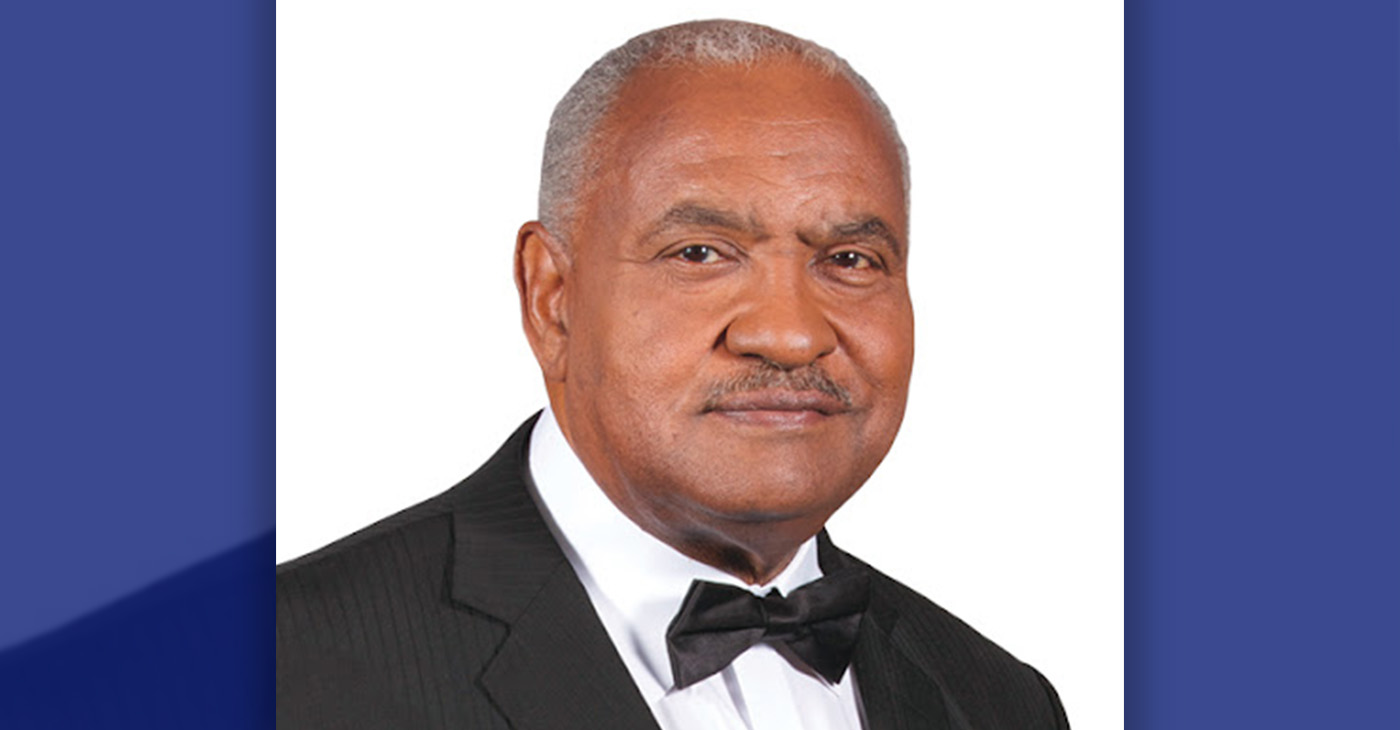
By Dr. John E. Warren, Publisher San Diego Voice & Viewpoint Newspaper
As thousands of Americans march every week in cities across this great nation, it must be remembered that the protest without the vote is of no concern to Donald Trump and his administration.
In every city, there is a personal connection to the U.S. Congress. In too many cases, the member of Congress representing the people of that city and the congressional district in which it sits, is a Republican. It is the Republicans who are giving silent support to the destructive actions of those persons like the U.S. Attorney General, the Director of Homeland Security, and the National Intelligence Director, who are carrying out the revenge campaign of the President rather than upholding the oath of office each of them took “to Defend The Constitution of the United States.”
Just as Trump is gathering election data like having the FBI take all the election data in Georgia from the 2020 election, so must we organize in preparation for the coming primary season to have the right people on ballots in each Republican district, so that we can regain control of the House of Representatives and by doing so, restore the separation of powers and balance that our democracy is being deprived of.
In California, the primary comes in June 2026. The congressional races must be a priority just as much as the local election of people has been so important in keeping ICE from acquiring facilities to build more prisons around the country.
“We the People” are winning this battle, even though it might not look like it. Each of us must get involved now, right where we are.
In this Black History month, it is important to remember that all we have accomplished in this nation has been “in spite of” and not “because of.” Frederick Douglas said, “Power concedes nothing without a struggle.”
Today, the struggle is to maintain our very institutions and history. Our strength in this struggle rests in our “collectiveness.” Our newspapers and journalists are at the greatest risk. We must not personally add to the attack by ignoring those who have been our very foundation, our Black press.
Are you spending your dollars this Black History Month with those who salute and honor contributions by supporting those who tell our stories? Remember that silence is the same as consent and support for the opposition. Where do you stand and where will your dollars go?
Activism
Congresswoman Simon Votes Against Department of Homeland Security, ICE Funding
“They need accountability. Republicans already gave these agencies an unprecedented $170 billion for immigration enforcement, funding they have used to conduct raids at schools, separate families, and deploy a masked paramilitary who refuse to identify themselves on American streets. This bill gives them more funding without a single reform to stop unconstitutional, immoral abuses,” she said.
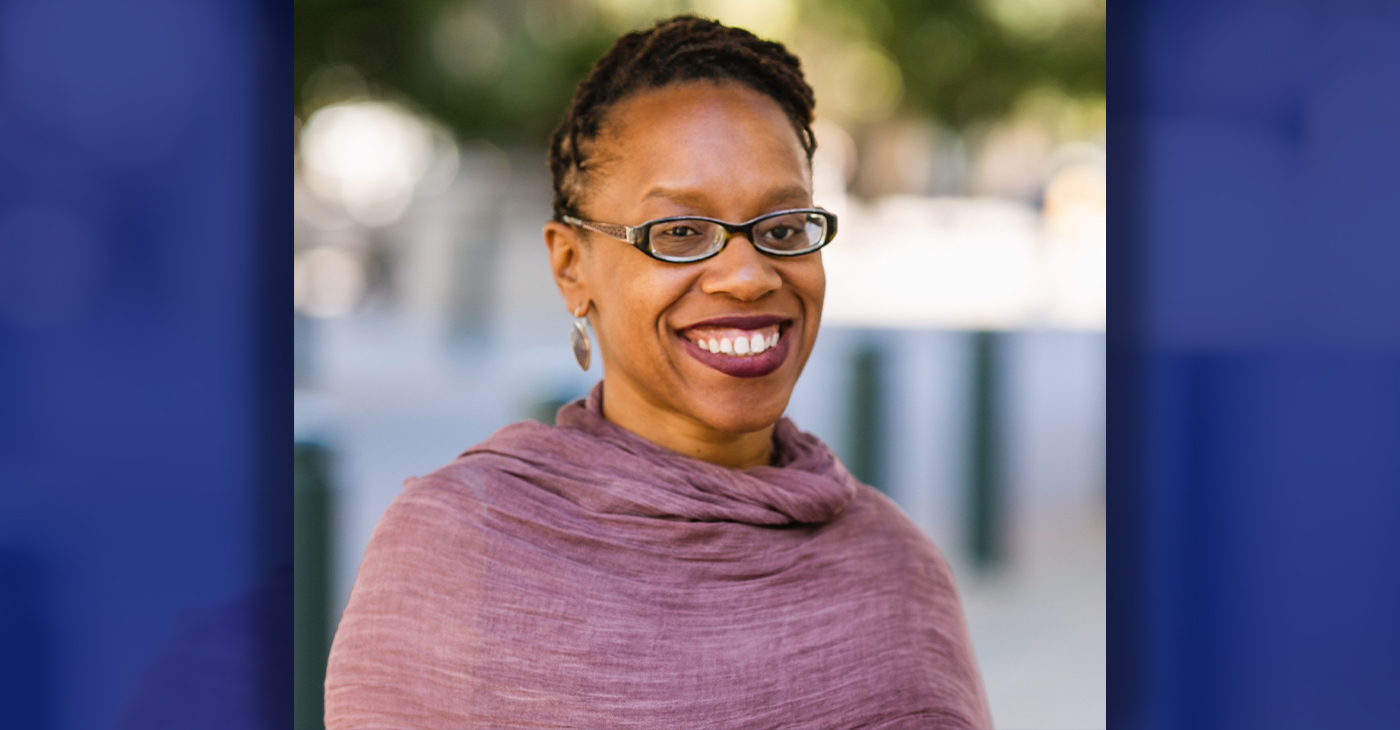
By Post Staff
Congresswoman Lateefah Simon (D-CA-12) released a statement after voting against legislation to fund the Department of Homeland Security (DHS), which supports Immigration and Customs Enforcement (ICE) and U.S. Customs and Border Protection (CPB).
“Today, I voted NO on legislation to fund the Department of Homeland Security through Feb. 13, 2026.
“ICE and CBP do not need more funding to terrorize communities or kill more people,” she said in the media release.
“They need accountability. Republicans already gave these agencies an unprecedented $170 billion for immigration enforcement, funding they have used to conduct raids at schools, separate families, and deploy a masked paramilitary who refuse to identify themselves on American streets. This bill gives them more funding without a single reform to stop unconstitutional, immoral abuses,” she said.
“The American people are demanding change. Poll after poll of Americans’ opinions show overwhelming support for requiring ICE agents to wear body cameras and prohibiting them from hiding their faces during enforcement actions. This is the bare minimum transparency standard, and this funding legislation does not even meet this low bar,” Simon said.
“Republicans in Congress are not serious about reining in these lawless agencies. Their refusal to make meaningful changes to the DHS funding bill has consequences that go beyond immigration enforcement. TSA agents who keep our airports safe and FEMA workers who help our communities recover from disasters are stuck in limbo due to Republican inaction.
“The Constitution does not have an exception for immigrants. Every person on American soil has rights, and federal agencies must respect them. The East Bay has made clear at the Alameda County and city level that we will hold the line against a violent ICE force and support our immigrant communities – I will continue to hold the line and our values with my votes in Congress.”


WORK FROM HOME
Home-based business with potential monthly income of $10K+ per month. A proven training system and website provided to maximize business effectiveness. Perfect job to earn side and primary income. Contact Lynne for more details: Lynne4npusa@gmail.com 800-334-0540


Black Artists in America, Installation Three Wraps at the Dixon Gallery and Gardens

Grief, Advocacy, and Education: A Counselor Reflects on Black Maternal Health

Future of Florida’s Black History Museum in Limbo

New Research Shows the Many Benefits of Early Learning

South Hampton K-8 Students Among Top 10 Finalists for Samsung’s ‘Solve for Tomorrow’ Competition

Cuba: No Negotiation with US on the President or Political System

Brooklyn Academy of Music Names Jamaican-Born Tamara McCaw as President

Trinidad & Tobego – U.S. Launches WhatsApp Channel for American Citizens in the Country

Oakland Post: Week of March 18 – 24, 2026

AI Innovation vs. Ethics and Environmental Impact

AI, Web3, and Digital Reparations

What If You Owned Your AI Agent?

Season 7, Episode 3 – January Reporter’s Roundtable 📱

Season 7, Episode 3 – January Reporter’s Roundtable

AI, Media, and Power | Part 2, Real-World Impacts and Tradeoffs

Discrimination in City Contracts

Oakland Post: Week of February 11 – 17, 2026

Reflecting on Black History Milestones in Birmingham AL

Rising Optimism Among Small And Middle Market Business Leaders Suggests Growth for California

CITY OF SAN LEANDRO STATE OF CALIFORNIA PUBLIC WORKS DEPARTMENT ENGINEERING DIVISION NOTICE TO BIDDERS FOR ANNUAL STREET OVERLAY/REHABILITATION 2019-21 – PHASE III

Oakland Post: Week of February 18 – 24, 2026

PRESS ROOM: NBA Hall of Fame Nominee Terry Cummings Joins 100 Black Men of DeKalb County to Launch Victory & Values Initiative

Oakland Post: Week of February 25 – March 3, 2026

U.S. manufacturing rebounds – how foundry services are adapting to rising demand

Trump’s MAGA Allies are Creating Executive Order Plan to Steal the 2026 Midterms

OP-ED: One Hundred Years of Black Workers Telling the Truth

Advancements in solar technology that are changing the way we power the world

Chase Oakland Community Center Hosts Alley-Oop Accelerator Building Community and Opportunity for Bay Area Entrepreneurs

Poll Shows Support for Policies That Help Families Afford Child Care

PRESS ROOM: Civil Rights TV Launches in Selma as the World’s First 24/7 Civil Rights Television Network

Hyundai Ioniq 5 Parking, Safety, and 360 View #shorts

2025 Ioniq 5 New Wiper & Powerful Performance! #shorts

Electric SUV Range: Is 259 Miles Enough? #shorts

EV Charging: How Fast Can You Charge an Electric Vehicle? #shorts

Biometric Cooling… Messaging Seats…Come on! 2025 Infiniti QX80 Autograph 4WD

Charged Up: Witness the Magic of a Fully Electric Car! #shorts

Range Rover Sport PHEV Included…: See What’s Inside This Luxury SUV! #shorts

Invisible Hood View: Perfect Parking with X-Ray Vision! #shorts

AI Is Reshaping Black Healthcare: Promise, Peril, and the Push for Improved Results in California

ESSAY: Technology and Medicine, a Primary Care Point of View

Sanctuary Cities

The RESISTANCE – FREEDOM NOW

STATE OF THE PEOPLE: Freddie

ECONOMIC BOYCOTT DAY!!!!!

I told You So
-
 #NNPA BlackPress4 weeks ago
Reflecting on Black History Milestones in Birmingham AL
-
 #NNPA BlackPress4 weeks ago
PRESS ROOM: NBA Hall of Fame Nominee Terry Cummings Joins 100 Black Men of DeKalb County to Launch Victory & Values Initiative
-
 Activism4 weeks ago
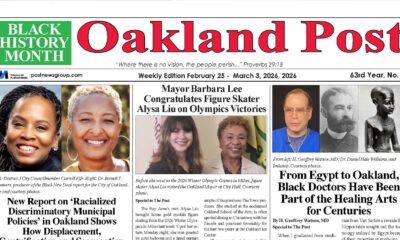
Oakland Post: Week of February 25 – March 3, 2026
-
 #NNPA BlackPress4 weeks ago
Trump’s MAGA Allies are Creating Executive Order Plan to Steal the 2026 Midterms
-
 #NNPA BlackPress4 weeks ago
Poll Shows Support for Policies That Help Families Afford Child Care
-

 Activism3 weeks ago
Oakland Post: Week of March 4 – 10, 2026
-

 #NNPA BlackPress3 weeks ago
Woman’s Search for Family’s Roots Leads to Ancestor John T. Ward – A Successful Entrepreneur and Conductor on the Underground Railroad
-

 #NNPA BlackPress3 weeks ago
OP-ED: NNPA Launches 2026 “Leadership Matters” Video Series
